The cost of relocating to India: iPhone 18 confidentials fully leaked by Tata factories. After the sky-high fine, Apple suffers another heavy blow
India has caused a huge problem! All information about the iPhone 18 has been leaked. After a sky - high fine of $38 billion, Apple has been hit hard again in India.
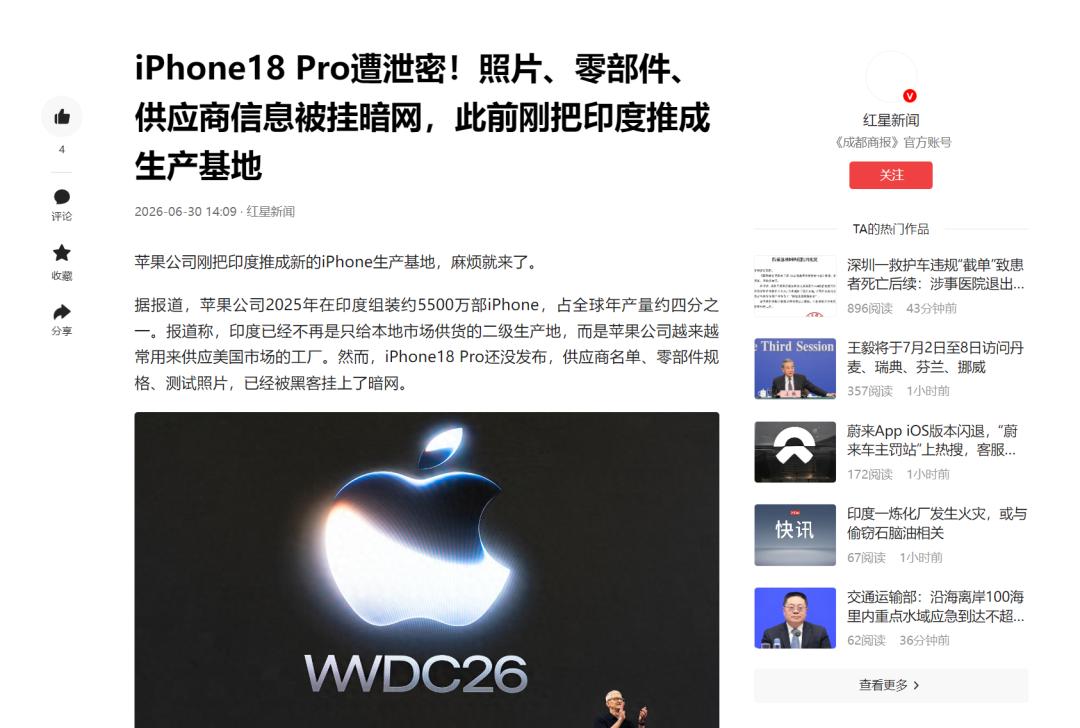
Recently, there has been a major revelation in the digital circle. According to reports from media such as Red Star News and Sina, Tata Electronics, the core contract manufacturer of Apple in India, was attacked by ransomware.
Over 200,000 top - secret documents, totaling 630GB, were uploaded to the dark web by hackers. The full appearance of the yet - to - be - released iPhone 18 Pro series has been made public, shaking the global consumer electronics supply chain.

In fact, the news of Tata's data leak was exposed a week ago. Tata admitted at that time that it had detected a system vulnerability a few weeks ago and had launched an emergency response.
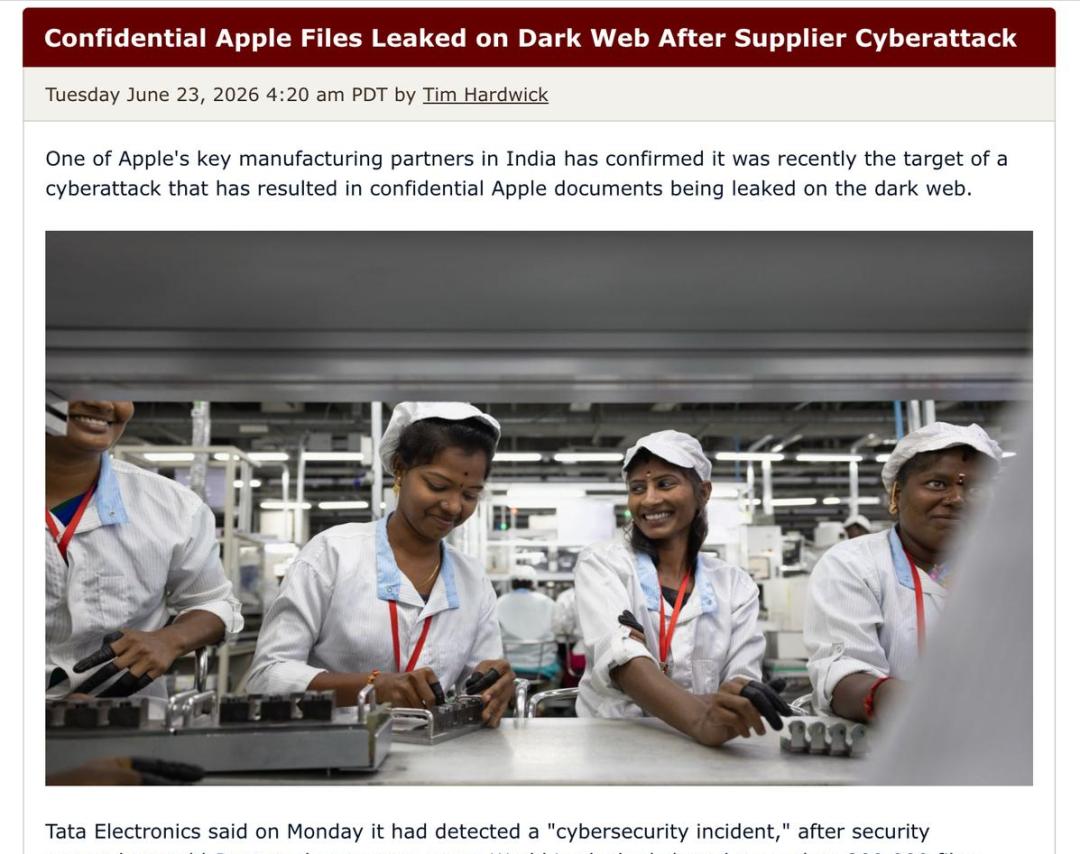
But it didn't say what was leaked, how many customers were affected, and so on.
But now, while Tata remains silent, the hackers have exposed the information. The value of the leaked files this time far exceeds any previous revelations. At least six files detail the information of "hundreds" of components of the iPhone 18 Pro.

The list of hundreds of component suppliers for the iPhone 18 Pro has been fully exposed, including specific details such as the chip configuration on the motherboard, battery components, and camera parts.
The relevant files also include the internal code names used by Apple for the iPhone 18 Pro series, along with photos of the devices taken during the drop - test phase. Even the precise design drawings of the motherboard, the whole - machine drop - test report, and the internal quality - inspection standards have all been leaked.
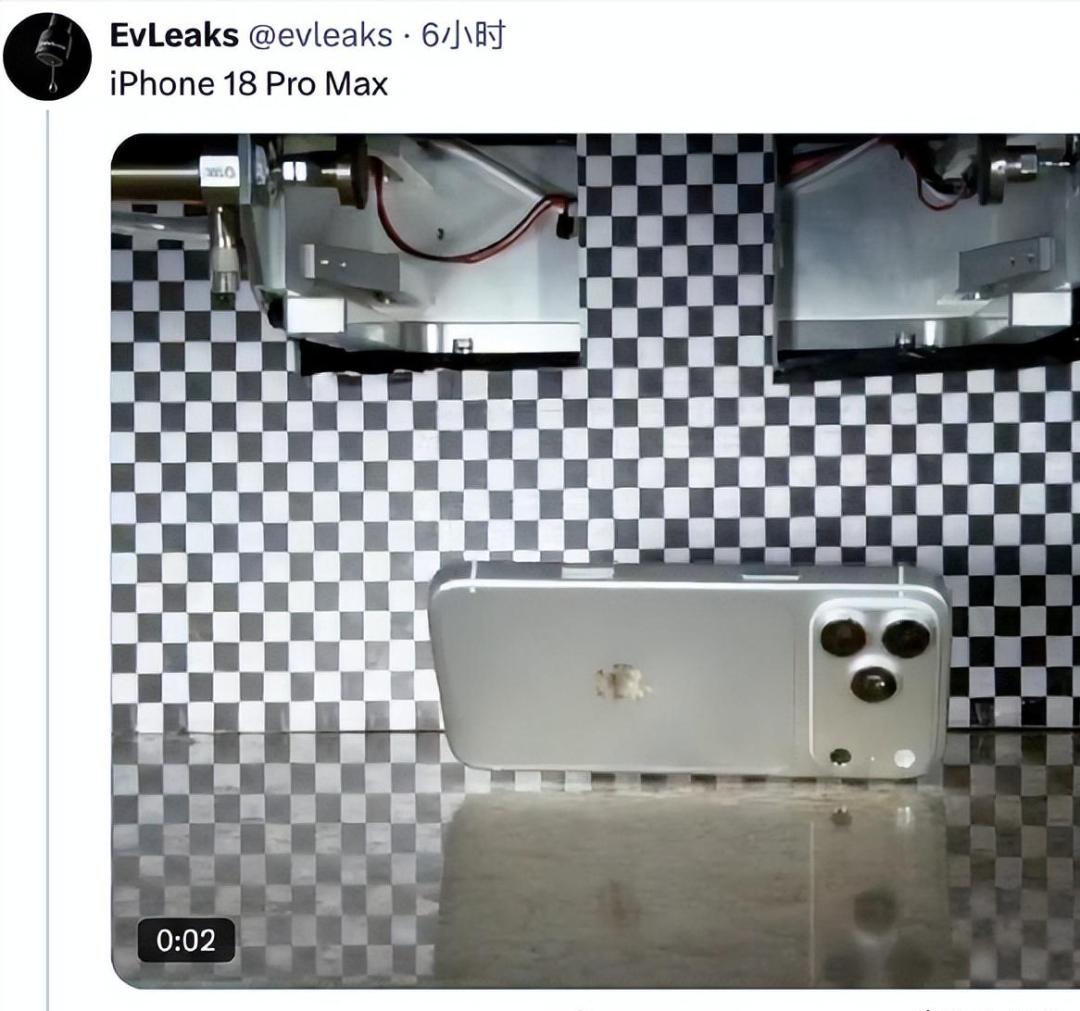
Well - known leaker EvLeaks released a "drop - test" video. The model featured is the silver - gray iPhone 18 Pro Max.
The new model continues the design of the large horizontal matrix lens set from the previous generation. The biggest change in appearance is the color scheme. The iPhone 18 Pro Max brings a brand - new space gray. In addition, the leak also shows versions in deep cherry (deep burgundy), light blue, etc.
This video accidentally exposed an anti - leakage operation within Apple.
According to the leaked information, Apple equips its internal test machines with disguised packaging boxes that display false product renderings. In other words, even for internal testing, Apple takes multiple precautions by using products packaged in disguised boxes.

This means that Apple has a "spy - level" anti - leakage system. If it weren't for production in India, this anti - leakage system would be a strong fortress for Apple.
But Apple is heavily betting on India. Tata Electronics has easily undermined the defense line that Apple painstakingly built, completely nullifying its efforts.
Because of India, the files that Apple least wants the public to see are now downloadable worldwide.

In the past, Apple's information leaks were mostly about harmless appearance and configuration, which could be considered "premature spoilers for marketing purposes."
This time, what was leaked is the supply - chain map— who supplies what to Apple, how much, and how the prices are negotiated have all been leaked. Apple's most core business secrets have now become public resources on the dark web.
Apple has publicly disclosed the list of its suppliers, but it doesn't tell the outside world which company is responsible for which key component, how many alternative suppliers there are, and which processes can only be handled by a few manufacturers. This is the core of Apple's supply - chain management.

Apple can control hardware gross profit, delivery schedule, and quality standards simultaneously by managing the substitution relationships behind every screw, every piece of glass, and every chip with extremely fine granularity.
But now, when competitors get this list, they will know in advance who Apple is collaborating with, what components it is using, and what its cost structure looks like.
Apple's cards have been revealed to everyone. The impact of this leak on Apple
Now, Apple's cards are on the table for everyone to see. The first blow to Apple from this leak is that its bargaining power in the supply chain has been directly halved.
Apple's dominance in the supply chain is based on information asymmetry. Suppliers only know their own quotes and are unaware of their competitors'; the outside world only has a general idea of the suppliers and doesn't know what each one supplies, their market share, or the procurement prices.
Relying on this "black box," Apple can compare prices, negotiate lower prices, transfer orders, prevent suppliers from colluding, and use alternative suppliers to balance leading manufacturers at any time.
Now that the complete BOM list and supplier inventory have been leaked, it's as if Apple's cards are directly spread out on the table. Which suppliers have exclusive contracts, which have alternatives, and the approximate procurement price of each component are all clear.
After suppliers get this information, they will clearly understand Apple's bargaining chips. There is no room for Apple to negotiate lower prices or transfer orders for a certain component.
Apple is transparent to suppliers, and the bargaining power has fallen into the hands of suppliers. When suppliers negotiate contract renewals with Apple in the future, they will have a clear plan.
If Apple can't negotiate lower prices, it means the BOM cost of the supply chain will increase, and the original profit margin will be squeezed.
Secondly, competitors obtaining this information will dilute Apple's competitiveness.
With this list, competitors can directly approach the same suppliers to discuss cooperation, even saving the cost of trial and error.
In the past, Apple could maintain a 6 - to 9 - month technological lead through its exclusive supply chain. Now, this lead time will be compressed to less than 3 months. As soon as you release a product, Android will quickly follow with a similar solution, and the technological premium of high - end models will be severely diluted.
Thirdly, there will be no surprises at the product launch, which will hit sales, and the premium for Apple's official accessories at the initial launch will also disappear.
Now that information about the iPhone 18 series has been leaked, there will be no surprises at the product launch, which will directly hit sales.
Another impact is that with Apple's complete motherboard drawings, appearance dimensions, and component parameters available, counterfeit and accessory manufacturers in Shenzhen can now start making 1:1 replicas, phone cases, tempered films, and third - party accessories will appear in advance.

By the time the iPhone 18 is officially released, third - party accessories will already be all over the Internet. The premium for Apple's official accessories at the initial launch will disappear directly.
Not to mention high - imitation and assembled phones. With the complete BOM list, the difficulty of assembly has been directly reduced.

The combined losses cannot be calculated with just a few billion dollars. It represents the loosening of the entire supply - chain management system. And all of this is just the beginning of Apple's troubles in its India strategy.
This is not the end. Apple's tough times in India are yet to come
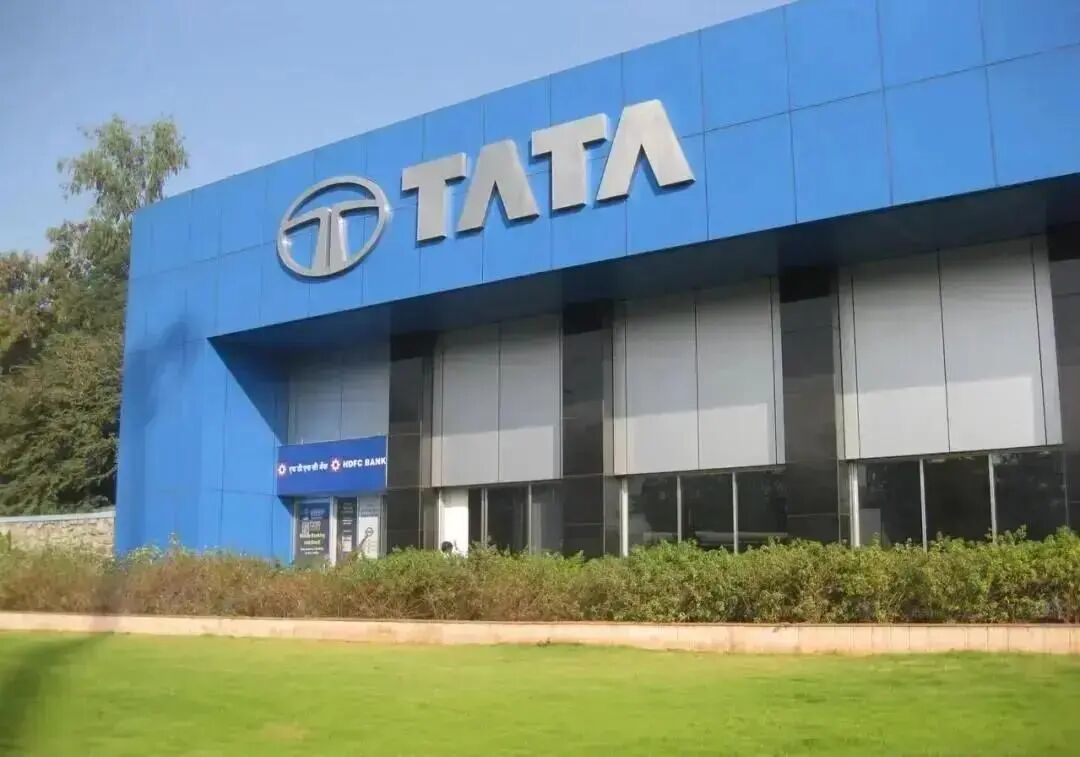
Currently, Tata is at the core of Apple's supply chain as it accelerates the transfer of iPhone production capacity to India.
According to Canalys data, Tata's share of Apple's iPhone exports from India increased from 13% in 2024 to approximately 37% - 40% in 2025 and is now supporting half of Apple's manufacturing in India.

Tata was supposed to be Apple's top partner in its "de - China" strategy and the hope for capacity expansion. However, before the production capacity was fully ramped up, security has collapsed. The internal system's permission management is so lax that ransomware can enter without hindrance.
According to information from the security industry, the entry point for this breach at Tata was a system - vulnerability patch that should have been installed six months ago but was repeatedly delayed; even many core accounts didn't have multi - factor authentication enabled, and weak passwords were easily cracked.
Moreover, Tata's emergency - response ability is extremely poor.
The data started circulating on the dark web as early as June 10th, but Tata didn't publicly admit "detecting a cybersecurity incident" until late June. During those ten - plus days, hackers not only downloaded all the data but also carefully organized, classified, and indexed it.
If it were a Chinese contract manufacturer, abnormal network traffic would trigger an alarm within half an hour, and the spread path would be cut off on the same day. It would be impossible for 630GB of data to be completely downloaded.
However, Apple has only stated that it is "concerned" about the circulation of relevant files on the dark web, is conducting an investigation, and will work with Tata to develop long - term security improvement measures.
In short, Apple won't abandon Tata. Because Apple has no other alternative options in India. Plus, as Apple's sunk costs in its India layout increase, it has no choice but to continue relying on Tata.
This means that Apple has to accept the security risks at Tata's level. Otherwise, all of its investments and production - capacity plans in the past few years will go down the drain.
Apple has now realized a problem. Previously, it only saw India's demographic dividend and was busy building factories and expanding production, lowering standards and giving the green light all the way. Now, it has to pay the price and face the challenges.
Things that seem easy and normal in China are high - threshold tasks in India. Now it's a data leak; next time, it could be product - quality control issues because Chinese engineers are no longer allowed to go