After talking with 5 young entrepreneurs, we found that "one-person company" is really not that simple
Take Back the Initiative in the Workplace: Young People Offer Themselves Jobs
"I don't think you have any talent for architecture at all."
One evening in the autumn of 2020, Wang Qifan, an architecture student who had just started her job a week ago, pedaled her shared bike home with tears streaming down her face. A few hours earlier, her boss's casual comment hit her like a sledgehammer, striking the heart of this girl from a non - top - tier university majoring in architecture.
Perhaps what the boss hoped was to make Wang Qifan fall into self - doubt through this kind of suppression, and let her humbly prove her architectural talent in endless all - night drawing revisions and day - after - day overtime work. But things didn't develop as the boss expected. A senior who had worked with Wang Qifan told her, "You don't have to be confined by your major. If you don't like this job and going to work feels like going to a funeral every day, it's a waste of your wonderful life." Wang Qifan realized that she wouldn't work in the architecture - related field for her whole life. The boss's life was not the life she wanted. Why should a single PUA comment from the boss control her future?
She quit her job and began various cross - border attempts. First, during her postgraduate study abroad, she delved into the financial circle to do marketing. After returning to China, she followed the current trend and joined the new energy industry. After working there for half a year, she caught the wave and switched to a company developing AI interactive video games and short dramas as a game operator. She was like an indefatigable pathfinder, constantly exploring her own boundaries.
But soon, she hit a wall. Because she thought the company's scripts were poorly written, Wang Qifan wanted to write them herself, but was rejected by her leader on the grounds that she was not from a relevant professional background. Since the leader wouldn't give her a chance, she decided to create one for herself. She started teaching herself to write scripts and took orders on Xiaohongshu. By the end of 2024, due to the company's cash - flow problems, Wang Qifan was laid off and received an N + 1 compensation.
With the compensation in hand and having already established an order - taking path, Wang Qifan didn't open any recruitment apps. Instead, she decided to use the money to start a business. She set her sights on the overseas short - drama market. She analyzed several top - selling "CEO Falls in Love with Me" scripts, and with her English ability, she wrote several English short dramas, with each episode controlled between 600 - 1000 words, and sold them in packages of 30 or 45 episodes. This "non - professional" skill that her former leader looked down upon fetched a high price of 15,000 - 20,000 yuan per drama on Xiaohongshu. In her first year of business, Wang Qifan earned 180,000 yuan.
It's not only the workers trapped in the PUA quagmire who want to escape the workplace, but also the top - university students who actively give up offers from big companies.
During this year's graduation season, Alex, a master's graduate from Peking University, opened his email and rejected the offers from top financial institutions and big Internet companies one by one. Before making this decision, he had done many long - term internships in big companies. He worked on social products at Minimax, did quantitative strategies at E Fund, was involved in investment and mergers at Tencent Music, and did venture capital at Sequoia China. In the office buildings of these companies, he had seen many perfect business projects and witnessed products from birth, to popularity, to decline, and to transformation. The more he saw, the more he wondered about his own entrepreneurial opportunities.
Alex started his business "trial" early on. As a heavy user of social apps, he turned his social media account into a top blogger in the dating and relationship field. This year, he noticed an abnormal trend. The monthly active users and paid users of traditional dating apps were visibly shrinking. Many of his fans told him that they were so disappointed with dating apps that they had uninstalled them. However, social media data showed that young people's demand for dating and making friends was increasing, indicating that there was currently a lack of a good product form to meet this demand.
As the old model collapsed and new demands emerged, Alex knew that his entrepreneurial turning point had arrived. He decided to test the waters at a low cost. He opened Xiaohongshu and posted a few posts like "Instead of fortune - telling and personality - testing during a date, why not do it before the date?" to test the market reaction. All the posts went viral. Looking at the continuous likes, he thought, "There's no need to say more. Let's get started." So, a few days ago, a dating app "Aura" that combines "mysticism + AI" matching quietly launched. It took less than thirty days from the idea to the implementation.
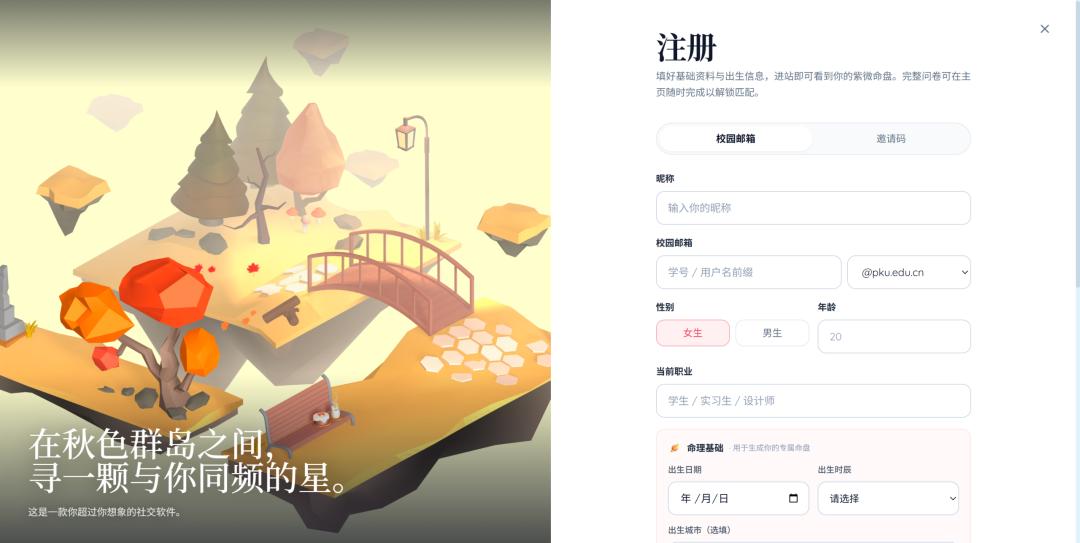
The registration page of Aura
Compared with Alex's high - spiritedness, most young people's escape from the workplace is more like a defensive counter - attack when facing a career crisis.
In June last year, Wen Bing, a programmer working in a foreign financial company, opened his email and an all - staff email popped up. At the subsequent general meeting, the management announced a business line adjustment and the dismissal of all employees. Without any warning, Wen Bing's working life was forced to stop.
The sudden unemployment actually made Wen Bing feel a bit relieved. He hadn't been happy with his job for a long time. As a person who coded every day, he felt the chill brought by AI earlier than outsiders. Although AI wasn't as popular as it is now at that time, "But anyone with a little technical background can see at a glance that AI will definitely replace programmers in the future." Coupled with the approaching "35 - year - old curse", Wen Bing could see the end of his career at a glance - he would eventually be stranded in an embarrassing position where he was unworthy of his position and couldn't move up or down.
He simply gave himself a long vacation. First, he had a great time traveling for a month. After returning home, he lounged around for a few weeks. Then he started trying out freelancing, but all attempts ended in failure. He started a reading self - media account, but later found that he couldn't produce content at a high frequency, so he had to suspend it. Then he did an AI analysis of college entrance examination compositions, but found that his audience was students, and it was difficult to commercialize it.
After a lot of setbacks, hitting walls, and taking breaks, the days slipped by until December last year. Wen Bing suddenly realized that he couldn't "lie around" like this anymore. At least, he had to come up with a way to force himself to go downstairs and exercise. He remembered the self - discipline app he used in college to force himself to study, but after searching the app store, he couldn't find one that met his current needs.
Coincidentally, during that time, there was fierce competition in the domestic large - model field, and the token prices of major manufacturers were very favorable. Wen Bing had the idea of developing his own self - discipline app. He registered a company and equipped it with AI employees. Thus, a standard one - person company was established.
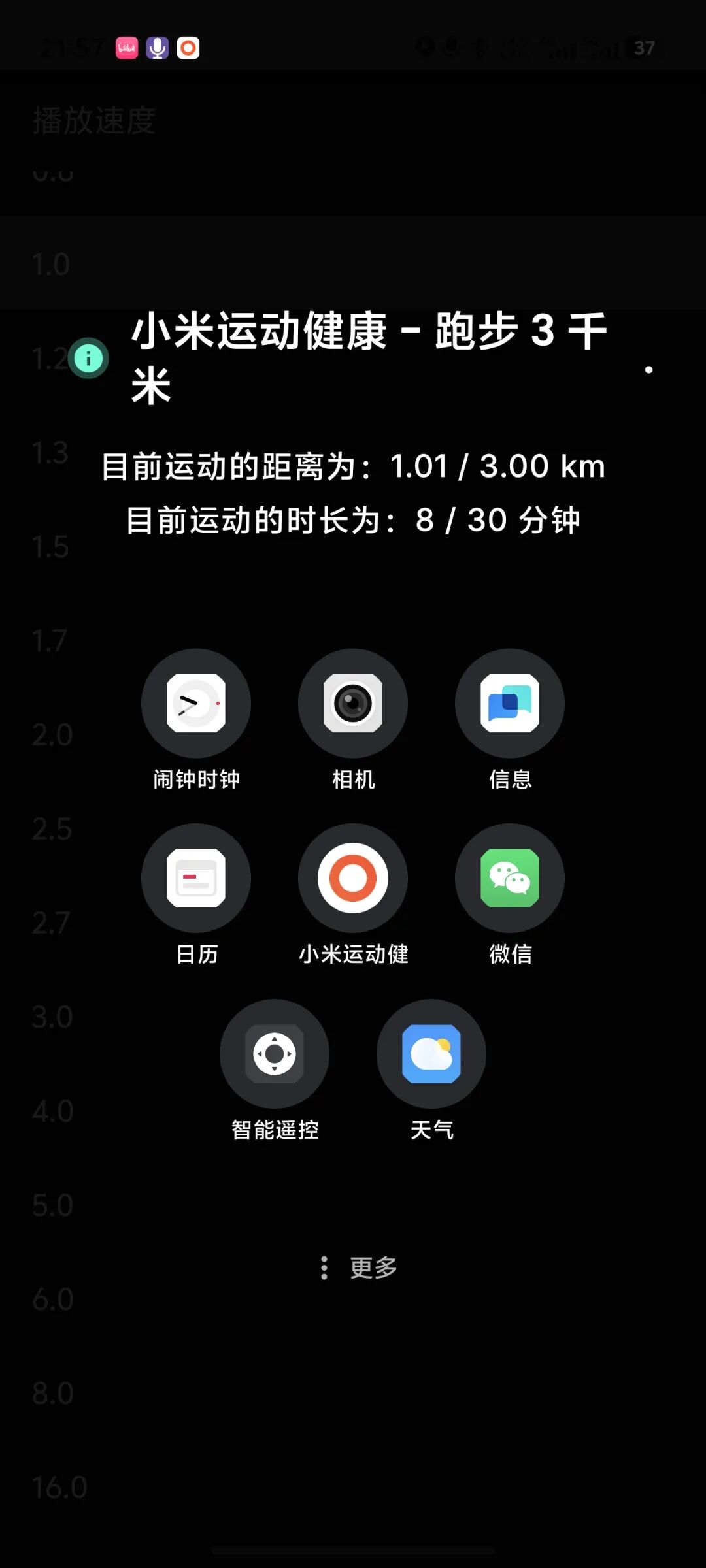
The running goal set by Wen Bing in the self - discipline app
Extreme Freedom: Even the Sound of Typing on the Keyboard Sounds Pleasant
In the past, when entrepreneurs worked alone, they had to turn themselves into all - around warriors. They had to be involved in every aspect, including creativity, R & D, design, marketing, and after - sales. At that time, starting a business meant crossing a very high - threshold narrow door.
But the emergence of OPC has made this heavy iron door disappear. Entrepreneurs no longer need to be proficient in everything. As long as they have a thinking and commanding brain, they can leave all the rough, tiring, and boring repetitive tasks to the tireless AI.
In a sense, OPC is an extremely free entrepreneurial model.
Managing a team is a very time - consuming and energy - consuming thing. Last autumn, Wang Qifan helped a North American friend manage a screenwriting team. To push forward the work progress, she was trapped in repeated communication, negotiation, and urging every day. Whenever it came to manuscript revisions, she not only had to spend a lot of energy to soothe people's emotions but also incur a lot of costs.
But in her one - person company, all these resistances disappeared, replaced by a kind of execution freedom where she can "point and hit".
Wang Qifan built a seamless cooperation network composed of multiple AI tools. The AIs are like an indefatigable assembly line. She sets a quantitative decomposition task, lets Claude crawl and analyze the script structure, and quickly generate a first draft. Then she hands the first draft to ChatGPT for outline review. The two large models interact and compete in the background for more than a dozen rounds until they produce the project Bible and character Bible. At the same time, she also uses Gemini to extract scripts from YouTube videos for benchmark analysis and feeds all the accumulated materials into Notebook LM to build a large script library. After a series of combined actions, there is no delay, no excuses, and Wang Qifan no longer needs to manage the team with great effort.
What is also released is the time imprisoned by work. Even programmers with professional technical backgrounds no longer need to type code line by line.
Last year, Cui Yongxing, a programmer from Suzhou, decided to find a way out for himself before the sense of crisis of "being replaced by AI" hit - he developed a lightweight accounting mini - program. In his vision, accounting no longer requires downloading a cumbersome app, but only needs to send a message to the service account. During the three - month development period, he would go to the library or study room every weekend. But he didn't type the code himself. Instead, he used Vibe coding to let the AI complete 99.9% of the development work, and he only needed to do the subsequent improvement work, which greatly reduced the development time cost.
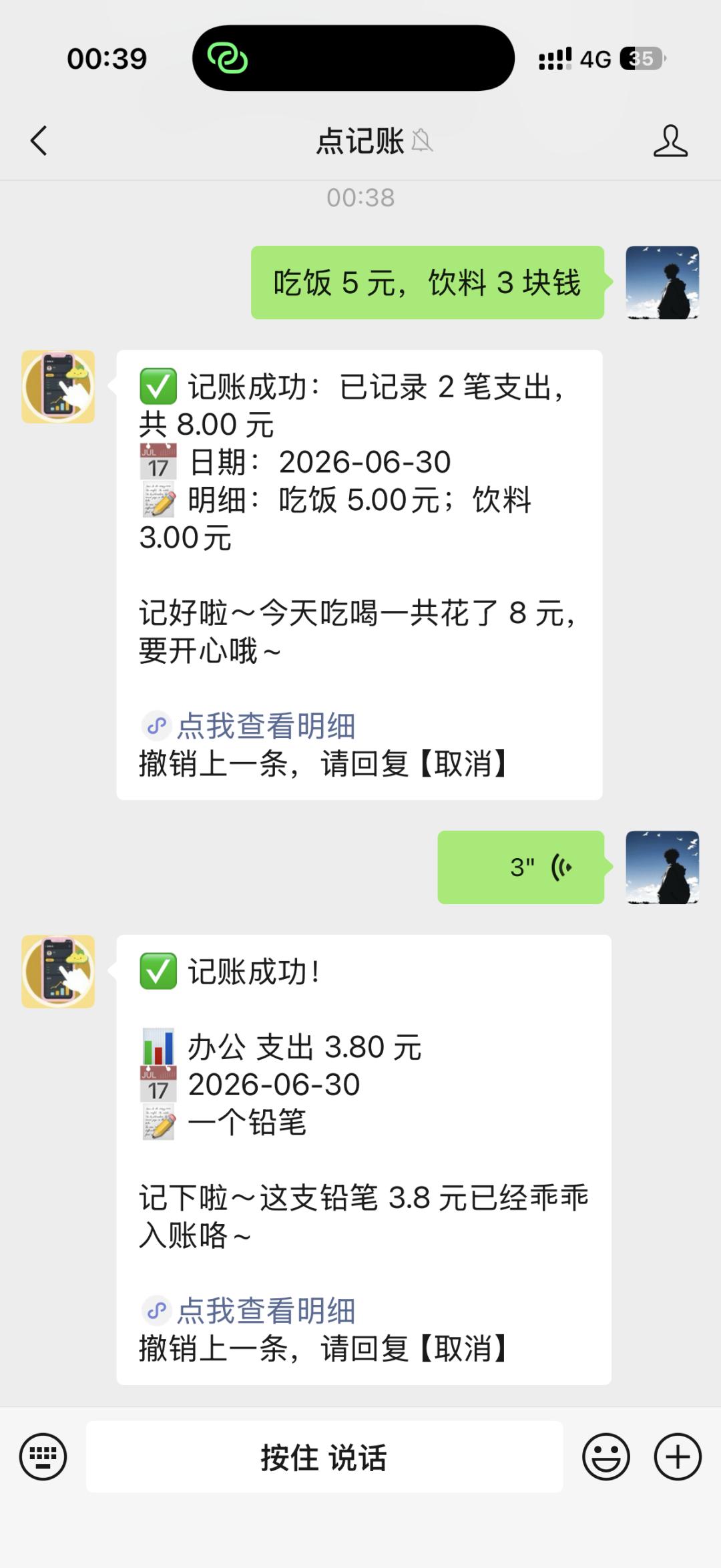
The "Dian Jizhang" mini - program developed by Cui Yongxing
For these entrepreneurs, the real charm of OPC lies in that it completely eliminates the mental exhaustion of the traditional workplace and brings extreme emotional freedom.
Young people are already tired of repetitive and meaningless work. In the traditional organizational structure, what makes them most exhausted is the complex interpersonal relationships, the endless alignment meetings, the painstaking upward management in weekly reports, the need to constantly guess the leader's mood, and even being forced to receive colleagues' complaints and negative energy when they are slacking off at their desks.
But OPC provides a work environment with extremely high emotional value. Here, colleagues are all AIs. There is no undercurrent of office politics, and there is no need to take sides in the complex reporting lines.
Alex enjoys this undisturbed work state very much. Opening his time - recording app, his daily work routine is as follows: First, he forces himself to turn off all AIs and spends two hours having a conversation with himself, recording his thoughts in the mind map. Then he spends half an hour letting the AI intervene and let it extend his inspiration. In the remaining seven hours, Alex turns into a manager, either giving instructions to the AI or listening to the AI's work reports. What trends have been detected among users recently? Which old users have increased their time investment? Which new users haven't even opened the app? As for the boring execution work of arrangement, storage, and operation, 90% of it is completed by the AI.
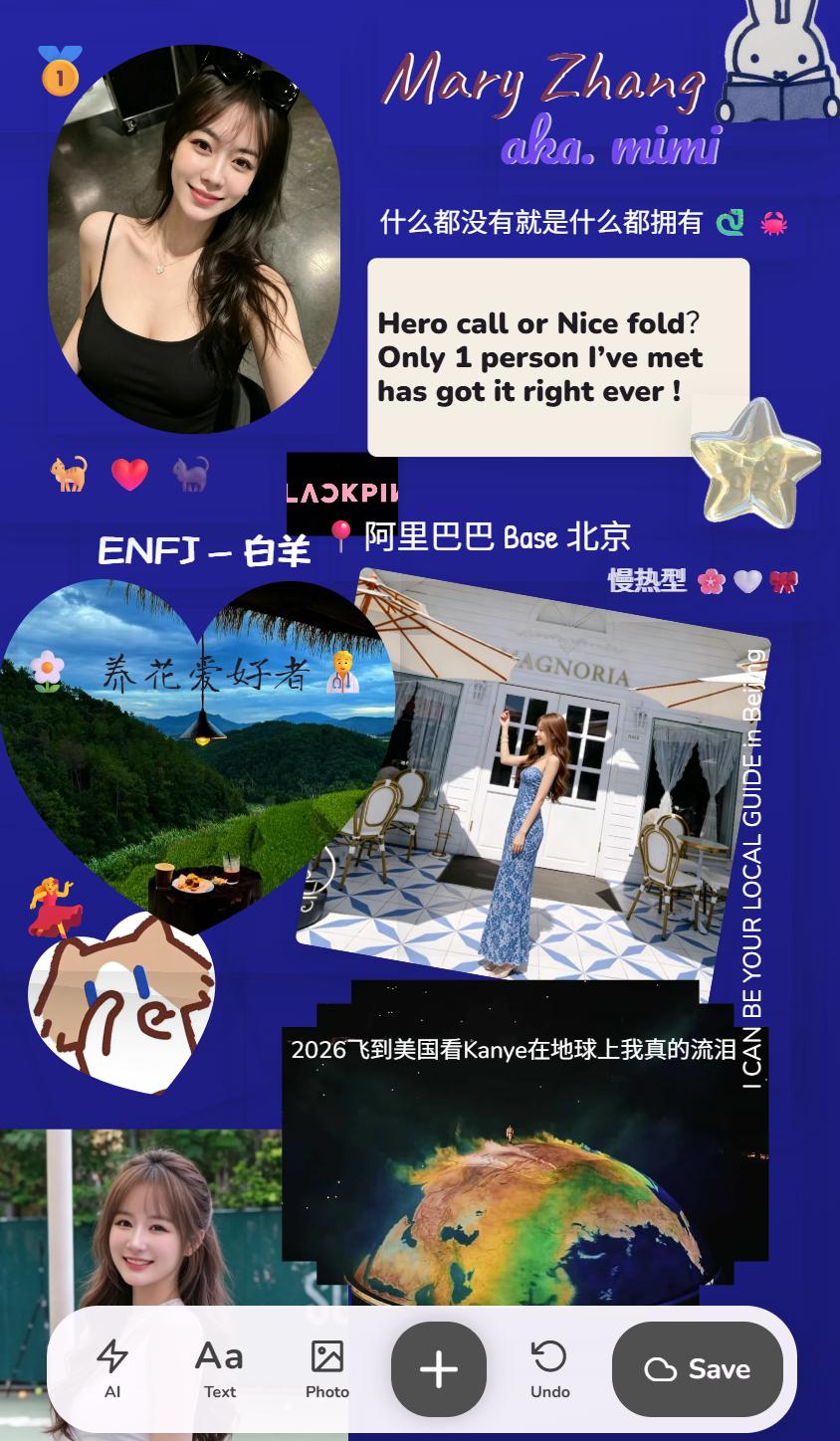
A new function in the internal test of Aura, where users can design their own hand - written journal - style canvases
In the traditional workplace, no matter how many creative ideas young people have, they often can only be responsible for page maintenance in an app, and it's difficult for them to find their own value. But in the OPC model, the rule becomes "I'm in charge of my own territory", and every bit of their effort becomes visible.
Sitting in front of the screen and adjusting the code generated by the AI, Wen Bing feels that he is no longer a replaceable screw in the company, but is completely responsible for his own product. "It's a bit like the difference between writing an essay in the exam room and writing a poem during the summer vacation." Wen Bing said. In the past, he could only type code and fix bugs according to his colleagues' needs, but now he can develop an app called "Lock and Do" according to his own ideas.
When he comes up with a new idea, he can let the AI add a new mode to the app. From the initial monotonous calorie - counting mode, which was just to urge himself to go downstairs and run, it has grown into 10 mechanisms such as the punch - in mode, writing mode, and crazy mode. It also has features like flexible unlocking, forced locking, and anti - detour. Every tiny interaction fully reflects his personal taste and will.
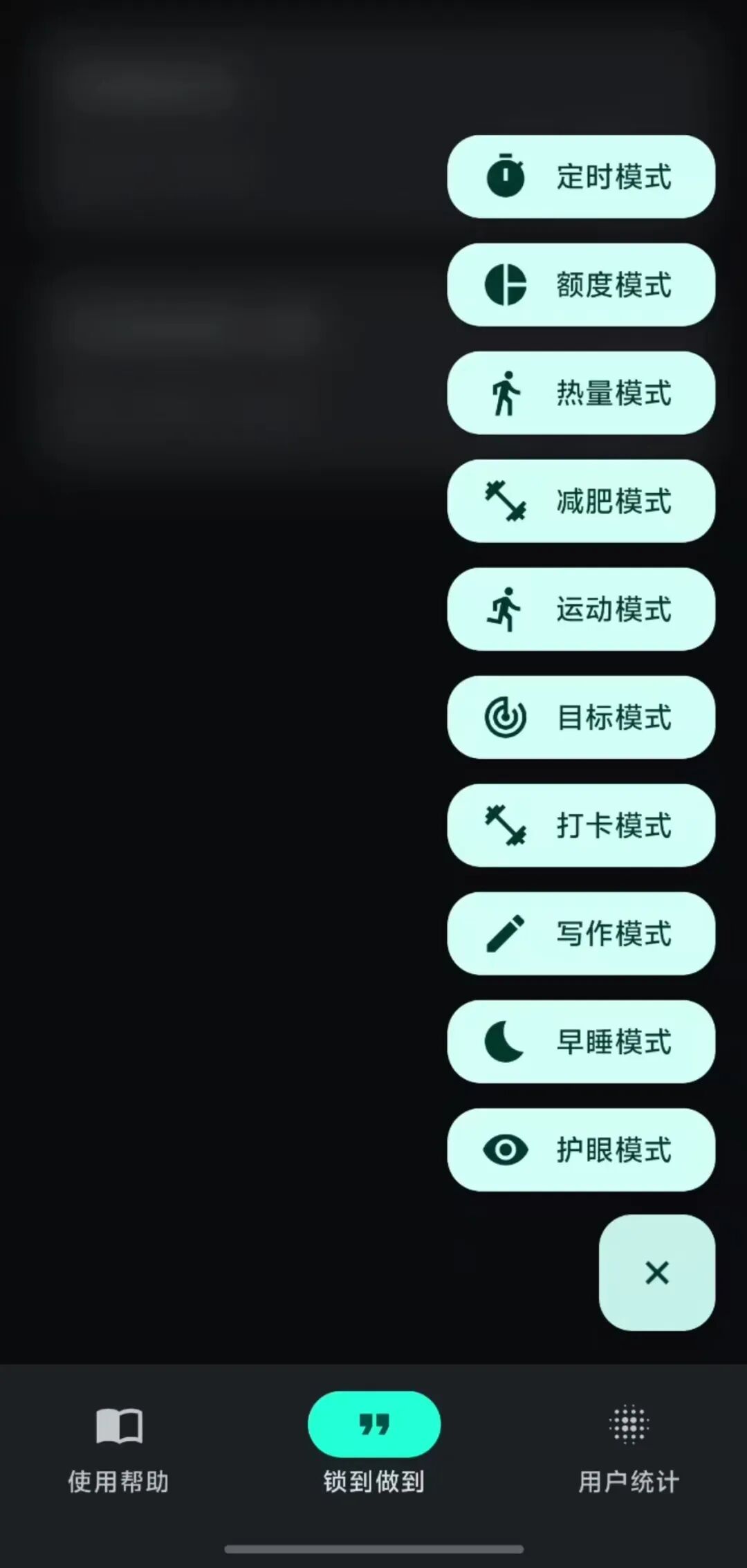
The 10 modes of "Lock and Do"
During the period when the development task was the heaviest, Wen Bing often voluntarily "worked overtime" in front of the computer late at night. It was 12 o'clock and it was time to go to bed, but the function hadn't been developed yet. He tossed and turned in bed and just couldn't fall asleep. He got up and sat back in front of the screen and worked until three or four o'clock in the morning. "Actually, no one is urging you, but your mind just won't stop." He no longer needs to be responsible for the project and its upstream and downstream, and doesn't have to worry that his sudden ideas will damage the integrity of the project and the team. In this extreme freedom, Wen Bing feels that even the sound of typing on the keyboard becomes pleasant.
However, freedom comes at a price. The idea of a "one - person company" sounds great, but in reality, it's not as simple as just bringing in a few AI tools. After the initial enthusiasm, entrepreneurs quickly find that they have to face many hidden challenges and real - world difficulties.
The "Invisible" Partner
When one person acts like a whole team, while enjoying extreme freedom, they must also bear extreme vulnerability.
In the early stage of the project, Wen Bing skipped the traditional market research. Relying on his intuition as a heavy user of self - discipline apps, he planned the prototype of the product. Although he would ask the AI about its thoughts on the project every day and also ask the AI "if there is anything that can challenge me", facing the vast market, there were still many unmet user needs in