Taobao and Meituan are ramping up their competition, and the instant warehouse sector has entered a period of fierce rivalry
In recent months, the ambitious store expansion targets set by Taobao Convenience Stores and Squirrel Convenience have propelled the convenience store flash warehouse, a niche in the instant retail market, into a fierce and intense competition phase.
Within just half a year, Taobao Flash Shopping has twice raised the warehouse expansion target for Taobao Convenience Stores, increasing it from 1,000 to 3,000. Squirrel Convenience, under Meituan, is also accelerating its warehouse expansion. Relevant industry insiders we interviewed said that the peak number of stores is expected to reach 1,500 by the end of this year. As of June 2026, both companies have fewer than 1,000 stores, highlighting the cut - throat competition in the market.
Previously, in the convenience store flash warehouse market, "Huiyixuan" was the only vertical giant with over 3,000 warehouses and a national - scale layout, and it took them four years to achieve this. Other leading brands, such as Xiaochai Shopping and Baihui Boutique, have fewer than 1,000 stores and focus on regional development. For example, Xiaochai Shopping mainly focuses on the southwest region. The majority of the remaining players are small individual warehouses similar to family - run stores.
Convenience store flash warehouses are essentially pre - warehouses focused on the convenience store category and are an important part of the non - food segment in the instant retail market. Compared with traditional offline convenience stores, they have a wider range of SKUs (5,000 - 10,000, while FamilyMart has 2,000 - 3,000) and shallower inventory. They cover a variety of packaged standard products with long shelf - lives, such as daily necessities, food and beverages, beauty and personal care products, electronic accessories, as well as long - tail products like mosquito nets and suitcases.
Before last year, the industry was in the dividend period of new channels, with many opportunities and relatively mild competition. However, the overall development level was low, and issues such as homogeneous supply and extensive management were common. Last year, competition in the instant retail market intensified. After platforms used various methods to attract brands to enter the instant retail market, industry competition and the survival - of - the - fittest process accelerated. The exit of many individual players with insufficient comprehensive capabilities is one manifestation of this.
Now, leading players are further focusing on the "convenience store flash warehouse" niche, directly pushing this still - emerging market into an all - out melee: The expansion speed of the leading brand, Huiyixuan, has significantly accelerated. Since the beginning of this year, its official channels have been releasing monthly store reports. As of June 5th, the number of its stores has exceeded 4,000, with over a thousand new stores opened in just half a year - its speed is comparable to that of Taobao Convenience Stores and Squirrel Convenience.
This intense competition will most likely lead to a reshaping of the entire flash warehouse market landscape.
Platform - based players are accelerating and becoming key forces
Among the players in the convenience store flash warehouse market, Taobao Convenience Stores started relatively late - it was officially launched at the end of October last year, but it has been more proactive and clear - cut in its actions.
This year, Taobao Convenience Stores has continuously increased its subsidy efforts. Some service providers described it as "extremely aggressive".
In terms of traffic allocation, as soon as a new warehouse is established, when users within a few kilometers open Taobao Flash Shopping or search for convenience stores, Taobao Convenience Stores will be ranked first. This year, all franchisees can "pay later after use". They can use over 3,000 SKUs for free for 98 days before paying the goods' payment, which eases the financial burden on franchisees. For reference, according to the official investment promotion materials, for a 150 - 200 square - meter flash warehouse of Huiyixuan, the initial goods' payment ranges from 130,000 to 180,000 yuan.
More direct subsidies are also reflected in rent subsidies and delivery fees. Take delivery fees as an example. Taobao Convenience Stores' phased strategy includes: only 5 yuan for orders within 20 kilograms, and there is no upper limit on the number of subsidized orders. This subsidy policy is beneficial for boosting the sales of large - sized alcoholic beverages - in the instant retail scenario, alcoholic beverages are the category that can most capture users' minds and are also the most common category for attracting new customers.
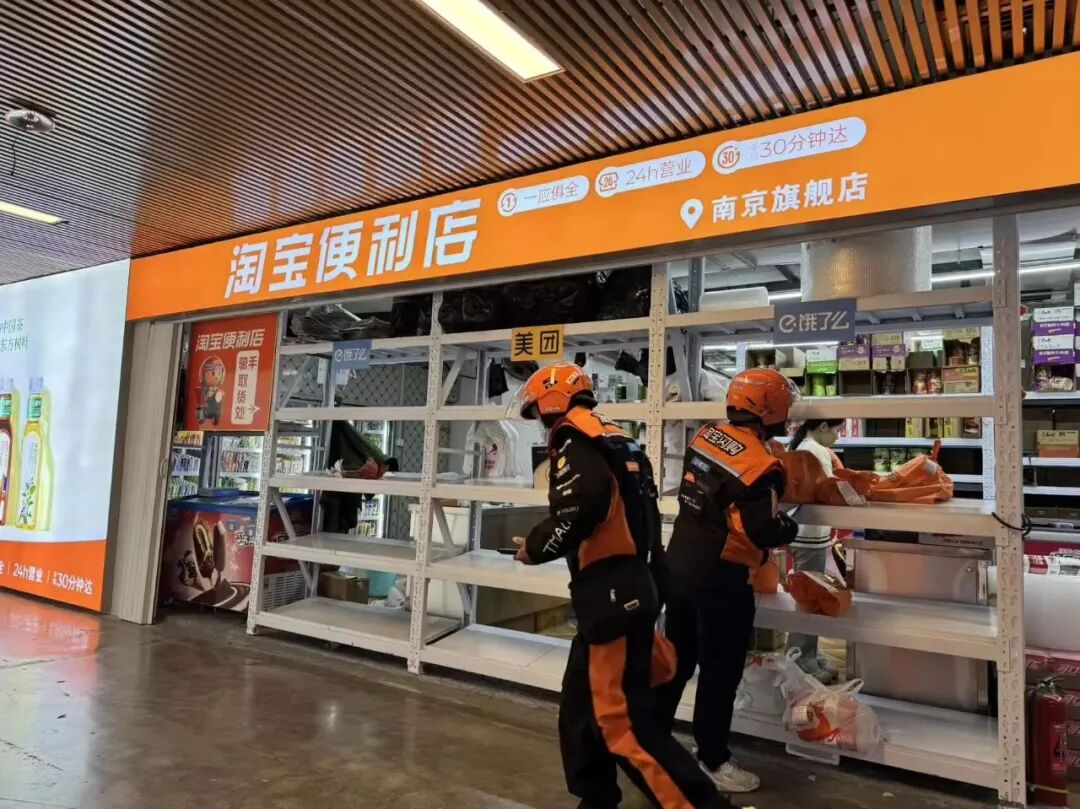
In addition, Taobao Convenience Stores actively "leverages" the industry by cooperating with service providers in each region to be responsible for investment promotion. Some service providers told us that currently, a large part of the service provider group for Taobao Convenience Stores are brand owners of small - scale chain flash warehouses with many years of industry experience. "It's impossible to start from scratch and succeed."
The substantial investment has led to the establishment of over 700 warehouses, approaching the number of Squirrel Convenience, which has been in operation for three years (reportedly over 800).
As an "industry veteran", Squirrel Convenience has also become more "high - profile" this year, strengthening its brand presence among consumers and franchisees. In April this year, Meituan used its main APP to drive traffic to Squirrel Convenience - when users search for "Squirrel Convenience" on Meituan, they can enjoy exclusive full - amount discounts. A detail is that in the first half of this year, Squirrel Convenience put up the sign of "officially self - operated" on the store homepage. It is reported that the order volume of some stores increased by 40% as a result.
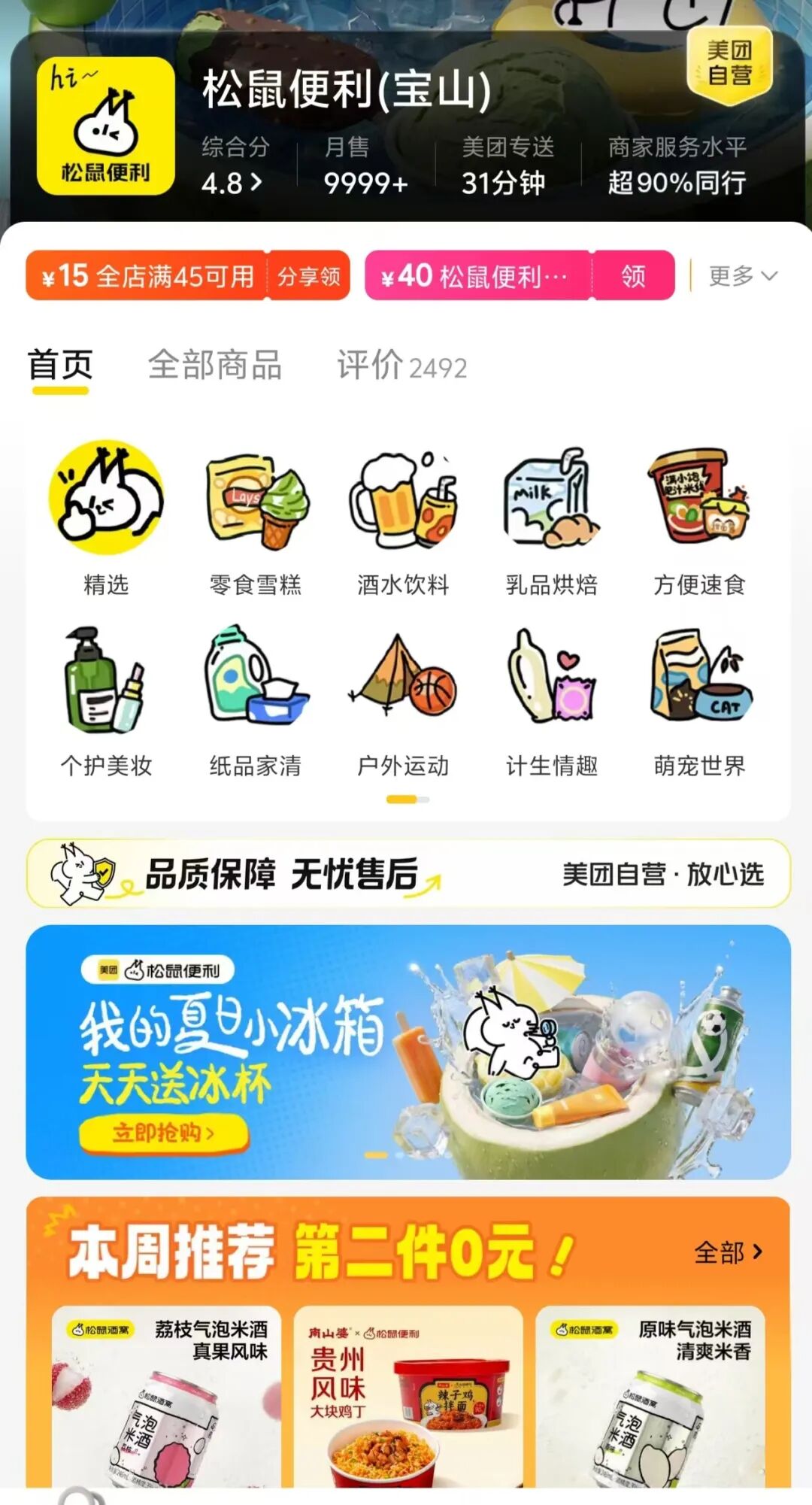
Just last month, Squirrel Convenience, along with Meituan's catering brand "Raccoon Canteen" and alcohol brand "Waima Delivery", appeared at the franchise exhibition, openly offering national franchise cooperation.
If both Taobao Convenience Stores and Squirrel Convenience can achieve their goals by the end of this year, the combined number of brand - based convenience store flash warehouses in the market will exceed 10,000. Of course, the number of warehouses is not the only key indicator for measuring the industry's progress, but it may change the industry landscape.
Before the heavy involvement of platform giants, the flash warehouse market had already passed the initial "wild growth" period and entered the stage of stock competition and individual player elimination.
A senior executive of a chain brand once calculated: In 2021, it was normal for the industry to have an average net profit of 10% - 15%; by 2025, the net profit had dropped to single - digits. This elimination process has also forced the upgrade of the supply side - the past model that relied on low - cost white - label product distribution is being phased out, and the market is shifting towards the pursuit of high - quality and differentiated products.
The accelerated entry of the two platform giants has also become a catalyst for the accelerated reshuffle of the entire industry.
Originally, the flash warehouse market was a "one - super - many - strong" market, and Huiyixuan was an unavoidable giant. It is the only third - party chain brand in the industry that has achieved a national - scale layout with over 4,000 stores. Its leading position is inseparable from the industry background of its founding team. Its founder is Zeng Bin, one of the founders and the former COO of Missfresh. Most of the initial employees also came from Missfresh.
However, its situation is becoming delicate. In its early days, Huiyixuan bet on Meituan and has been on the "Top Ten Brands of Meituan Flash Warehouse" list for three consecutive years. With the accelerated development of Squirrel Convenience under Meituan, their relationship has changed. They are not only in an upstream - downstream cooperation relationship but also competitors, and have already engaged in direct competition in some markets.
"Third - party brands rely heavily on platforms for customer acquisition. Once the platform enters the market, it will definitely favor its own brand, putting pressure on third - party brands," some industry insiders explained.
Perhaps in response to the market changes, Huiyixuan has also significantly accelerated its expansion this year. It opened 1,000 new stores in 2024 and 1,500 in 2025. As of now, with only half of the year passed, it has already opened 1,000 new stores and has established warehouses across the country except in Tibet.
The existing landscape is being rewritten
Although the competition between Taobao Convenience Stores and Squirrel Convenience has just begun, it is foreseeable that their entry will reshape the existing landscape.
In terms of business models, flash warehouses are a pure online fulfillment format without the support of offline natural customer flow. Three core elements - traffic acquisition ability, supply chain ability, and warehouse network density - will largely determine the final outcome - and these are exactly the advantages of platform - based players.
Huiyixuan established its previous industry position based on its relative advantages in these three aspects.
Before the platforms entered the market, the flash warehouse market was in a "regional fragmentation" state. Apart from Huiyixuan with a national layout, most brands focused on regional markets: for example, Xiaochai Shopping and Jiajia Supermarket in the southwest, Baihui Boutique and Yougouduo in the south, AA Department Store in the east, and Legouda in the north. These regional brands each have their own unique selling points. For example, Xiaochai Shopping, which has been on the Meituan Top Ten Brands list for three consecutive years, maintains over 8,000 SKUs all year round. It boosts the customer unit price with a high degree of product variety. There are even rumors in the industry that its single - store sales may be higher than that of Huiyixuan.
And Huiyixuan is the only third - party chain brand with capital involvement from the very beginning according to public information. From the start, it adopted a heavy - investment model of central warehouse + pre - warehouse and direct operation + franchising, which gave it a lighter single - store model and a lower franchise threshold, quickly propelling it to the top in terms of scale.
The so - called central warehouse can be understood as a large - scale warehouse built by the brand locally, where goods are stored in advance closer to the stores for centralized procurement and unified inventory management. Currently, Huiyixuan has the largest number of central warehouses in the industry, mainly distributed in major provincial capitals.
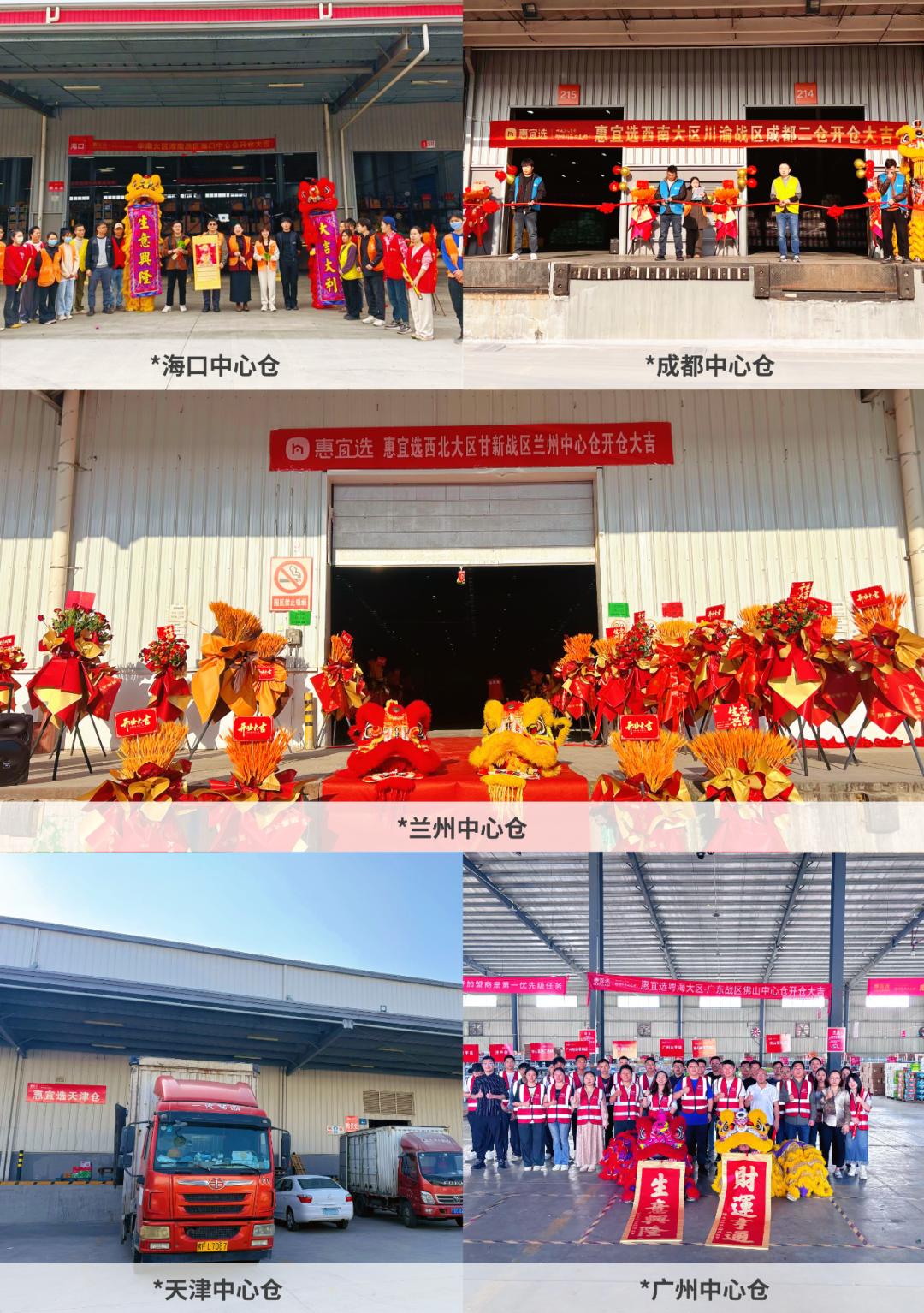
The presence or absence of a central warehouse directly determines the replenishment speed and inventory depth of terminal warehouses. When the front - end stores run out of stock, the central warehouse can quickly replenish the goods the next day. For traditional flash warehouses that purchase goods online, the replenishment cycle can be as long as 3 - 5 days. Faster replenishment leads to shallower inventory and lower goods' payment requirements. According to official data, Huiyixuan's inventory level is only one - third of that of its peers - while its peers need 300,000 - 400,000 yuan for goods' payment, Huiyixuan controls it at 100,000 - 150,000 yuan.
In April this year, Huiyixuan cooperated with JD.com to build warehouses, further improving its warehouse and distribution efficiency.
In terms of traffic, while being deeply tied to Meituan, Huiyixuan has established its own private traffic in its home base, Shandong. It has launched an independent APP and a mini - program and carried out large - scale offline promotion, achieving a high market penetration rate.
Based on this efficient supply chain and traffic strategy, Huiyixuan has developed three types of stores: pure online flash warehouses, Gongcheng front - store - rear - warehouse stores, and Lichen community stores, which have significantly lowered the franchise threshold and attracted a large number of individual entrepreneurs trying to seize the instant retail opportunity.
However, when the industry witnesses the acceleration of platform players, Huiyixuan's once - proud first - mover advantage seems less "robust". The weaknesses of being a third - party brand are being exposed in several core elements.
At the traffic level, outside its home base in Shandong, Huiyixuan highly depends on Meituan's public traffic. A supplier who has cooperated with Huiyixuan told us that Huiyixuan's sales outside Shandong have not fully taken off. As Squirrel Convenience expands on a large scale, it will only become more difficult for Huiyixuan to acquire customers within the Meituan system. Once it loses traffic, its accumulated warehouse and distribution advantages will also be greatly diminished, and franchisees will vote with their feet.
At the supply chain level, in its early days, Huiyixuan accumulated a large number of high - quality direct - supply channels for white - label daily necessities, beauty tools, and small hardware factories, obtaining better product assortments and prices. However, in front of Taobao Convenience Stores, which is backed by the entire Alibaba e - commerce ecosystem, this "low - cost white - label" advantage is instantly nullified. In addition, Huiyixuan still relies on the "bidding model" for product selection from suppliers. Although this can bring short - term low prices, it is difficult to establish long - term and stable cooperative relationships and may even pose potential quality control risks.
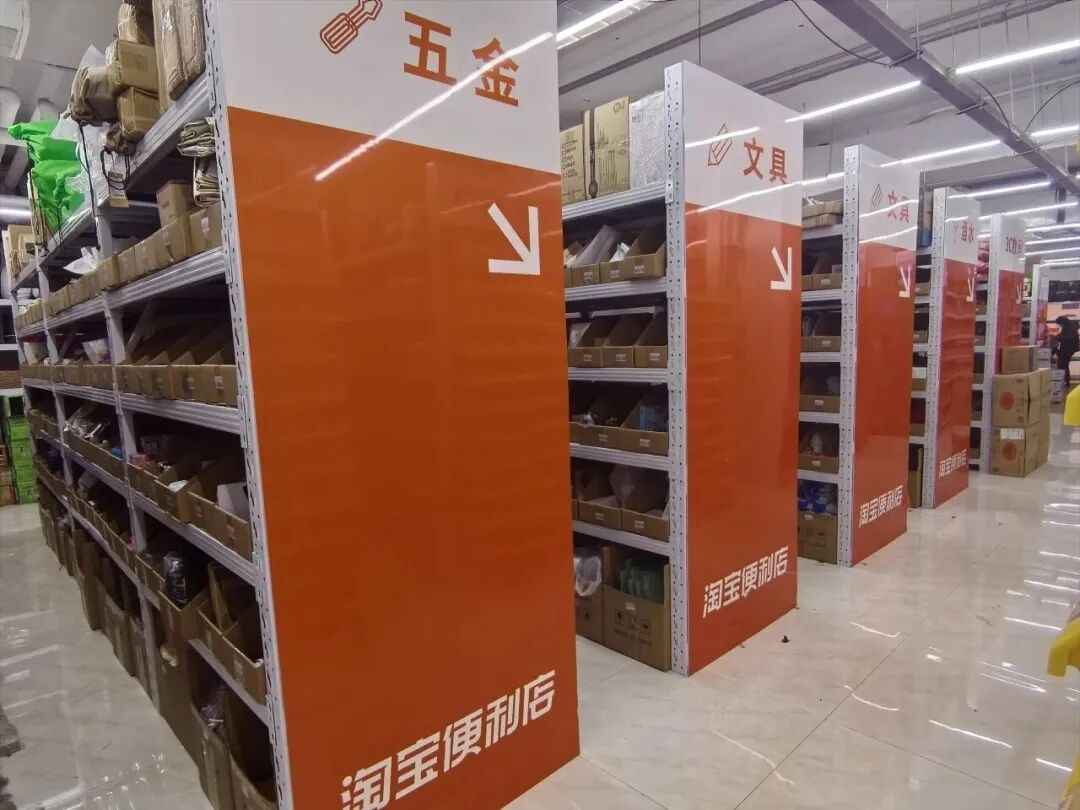
What's even more challenging is brand awareness. Taobao and Meituan have natural user trust endorsements, while Huiyixuan has almost no brand recognition among consumers. In the instant retail scenario, consumers' demands are mostly for emergency needs (such as business trips or travels). When making selections, they value "fast delivery" and "being able to buy everything in one store" more, and their awareness of vertical brands is insufficient. In the eyes of users, without a strong physical brand like Miniso or Watsons, both Huiyixuan and Xiaochai Shopping are essentially just "delivery points". This is the dilemma faced by all third - party flash warehouse brands.
What will determine the outcome in the second half of the competition?
After shedding the initial "wild" nature, when the giants truly enter the market, the second half of the convenience store flash warehouse competition has actually evolved into a showdown between large companies. The key to victory in the future is no longer just about expanding territory but returning to the essence of retail - competing in warehouse network density, supply chain deep - reform ability, and underlying organizational synergy.
Warehouse network density will still be the primary focus of competition. Referring to the densification methods that have occurred in the industry, mergers and acquisitions are a shortcut to quickly build a network, and it is possible that this will happen in the convenience store flash warehouse niche.
However, the more long - term competition will still come down to the supply chain and a complete set of fulfillment services. Currently, both Taobao and Meituan are frantically mobilizing group resources, trying to play completely different cards.
Squirrel Convenience focuses on agility, short - shelf - life products, and private brands. Some relevant industry insiders told us that currently, Squirrel's product assortment is updated very quickly, with new products launched almost every week. It also provides targeted products according to city differences. For example,