Just now, Codex's first hardware was revealed
While the entire AI community is eagerly awaiting Sam Altman and former Apple chief design officer Jony Ive to jointly unveil an iPhone for the AI era, OpenAI unexpectedly announced a keyboard today.
To be precise, it's a Macro Pad that doesn't even count as a full keyboard.
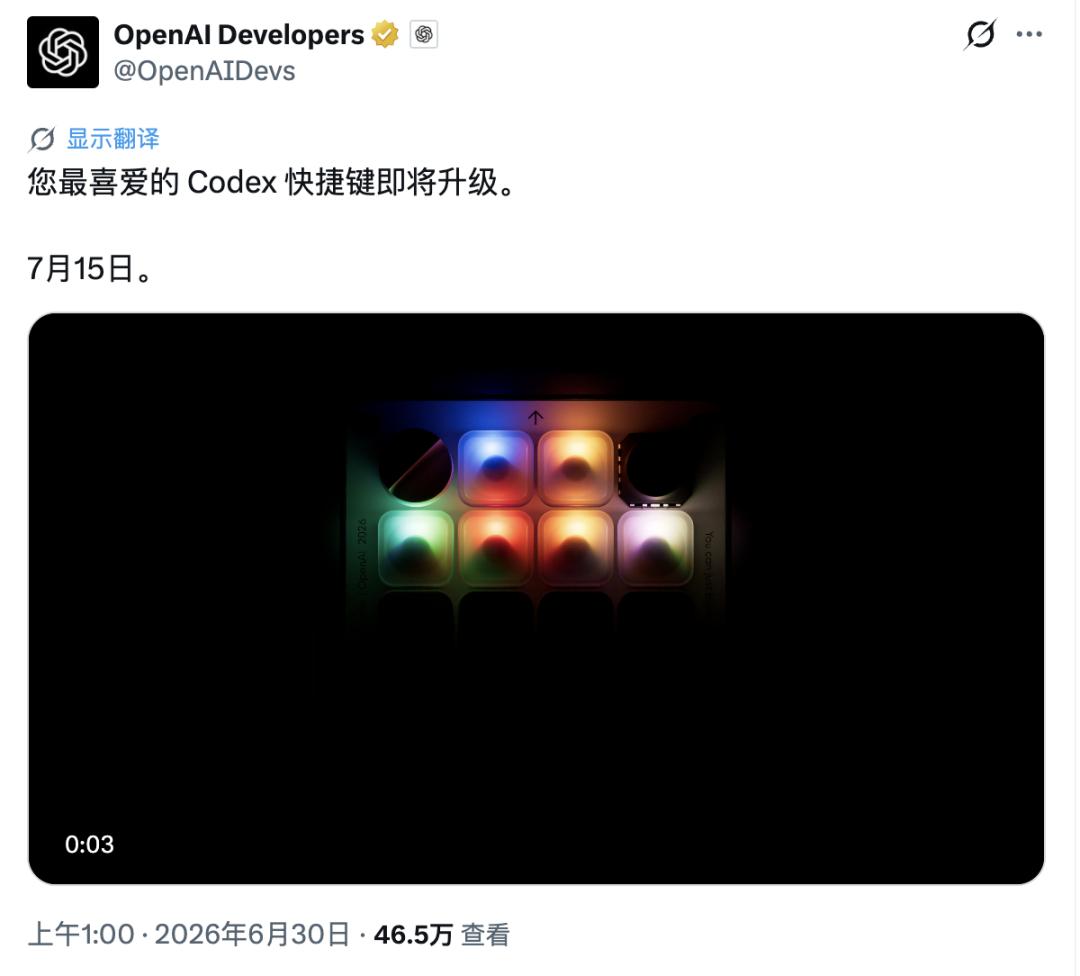
According to The Verge, at the World Expo for Artificial Intelligence Engineers in the past few days, this hardware named Codex Micro was officially revealed. OpenAI spokesperson Dominik Kundel said that this keyboard will greatly improve people's efficiency in using Codex.
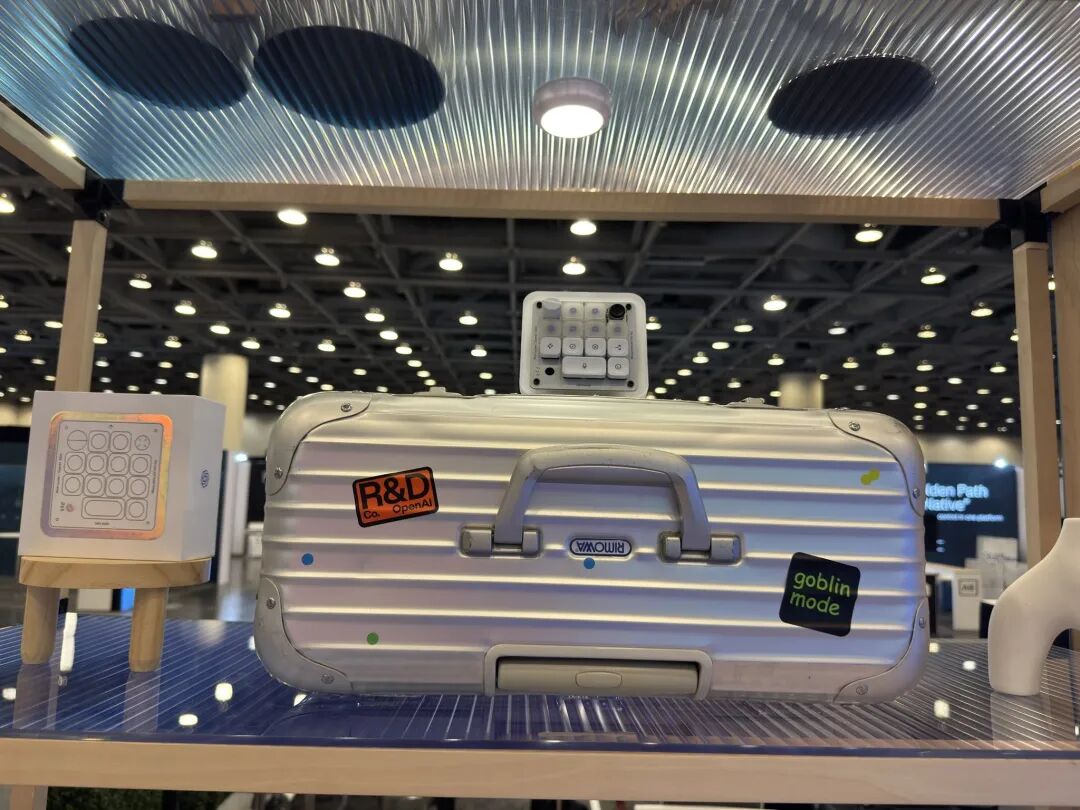
Image source: The Verge, 🔗 https://www.theverge.com/ai-artificial-intelligence/959174/openai-codex-hardware-work-louder
In 2026, when the Humane AI Pin became electronic waste and the Rabbit R1 was ridiculed, OpenAI, standing at the forefront of the AI wave, launched its first hardware product, which has degraded to a physical keypad?
To understand why OpenAI developed such hardware, we need to first look at its partner Work Louder and the bound object Codex.
Work Louder is a peripheral device company with a unique style in the geek circle, specializing in selling customized keyboards with mappable keys, knobs, and switches. Codex, on the other hand, is a powerful AI Coding Agent tool developed by OpenAI, with a weekly active user base of over 5 million.
Judging from the trailer released by OpenAI, the appearance of this co-branded device is extremely similar to Work Louder's Creator Micro 2. The latter is a keyboard equipped with 13 mechanical keys, a joystick, and a touch sensor. It is quite expensive and focuses on "customization".

Moreover, without any surprises, OpenAI's Codex Micro will be deeply adapted to the workflow.
After all, programmers are one of the most efficiency - oriented groups in the world, and they are also the group whose work methods have been most profoundly changed by AI so far. In actual development, frequently copying, pasting, and switching contexts between the IDE and the ChatGPT web version is an extremely fragmented experience.
OpenAI clearly realizes this. They don't need a generic AI assistant button. What they need is a physical console that allows developers to complete code completion, error correction, and version backtracking without taking their hands off the keyboard area while writing code.
In addition, Andrew Ambrosino, who is in charge of OpenAI's Codex desktop application, also mentioned in an interview that Codex has almost become a tool for all employees within OpenAI. The users are not only engineers but also teams from marketing, legal, finance, and communication.
A developer tool that was originally "not very friendly to non - engineers" is now used for file organization, data analysis, release management, reading Slack, and even assisting in video editing. In the future, it's not ruled out that the first group to purchase this Codex keyboard might be OpenAI itself.
Actually, this is not the first time that SaaS software has attempted to be physicalized.
As early as 2023, the design tool Figma collaborated with Work Louder to launch a small mechanical keyboard, Creator Micro, pre - loaded with Figma shortcut keys.
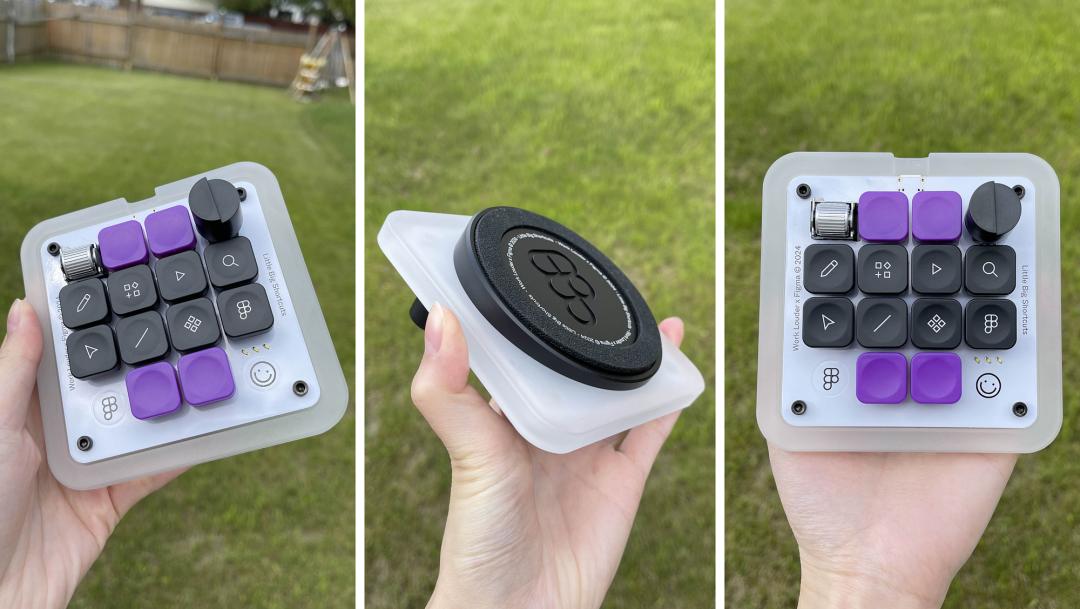
Figma Creator Micro
This combination of software service and customized peripherals is becoming a trendy way for productivity tool manufacturers to enhance user stickiness. And OpenAI's entry into this field adds a layer of meaning of demystifying AI hardware.
In the past three years, we have been bombarded with too many grand narratives about AI hardware.
Entrepreneurs are eager to skip the smartphone era and directly enter the next computing era. As a result, we've seen pins that are clipped to the chest and often overheat and crash, and handheld game consoles with a retro look but can't even order takeout properly.
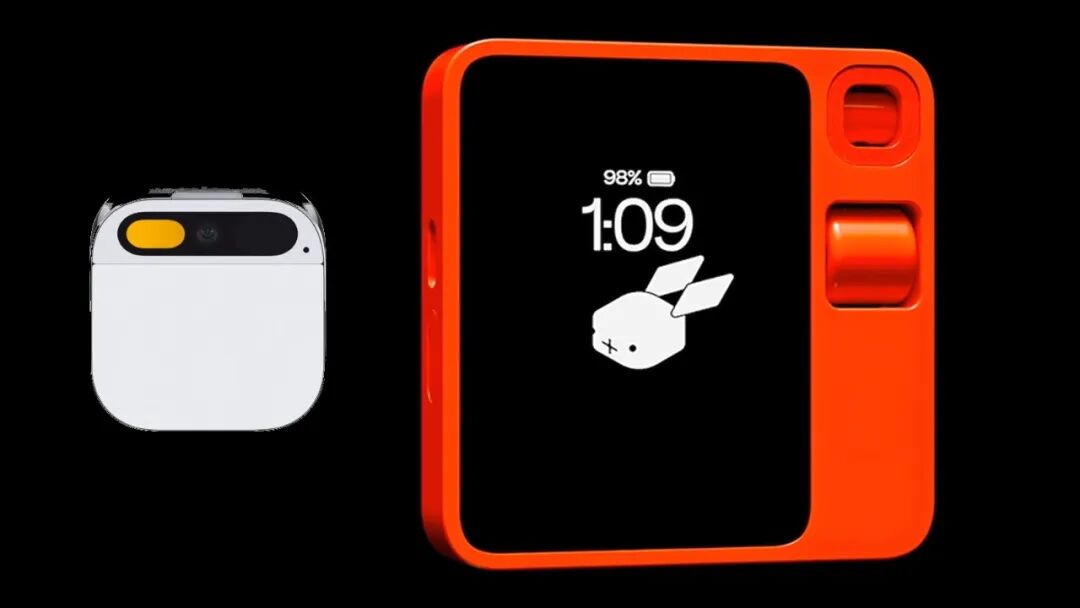
The common mistake of these so - called AI - native devices is that they try to handle everything with voice interaction, but ignore that in front of a desk, the most efficient input methods for humans are still the keyboard and mouse.
As the company that currently understands large models the best in the world, OpenAI knows better than anyone the current capabilities and boundaries of AI. Instead of forcing the creation of an AI phone that is full of gimmicks but hard to meet real needs, it's better to return to the most practical scenario - the productivity desktop.
If a programmer gets used to using the highly ceremonial physical keys on the left - hand side to call Codex with one click, and the knob with excellent damping next to it can be used to adjust the "creativity" threshold of the AI - generated code, will he easily switch to other competitors' tools?
This small keyboard is essentially an "anchor point" that OpenAI places on developers' desktops.
Of course, if you think OpenAI's ambition is only limited to selling keyboards, you're underestimating Sam Altman. The release of Codex Micro is more like an appetizer. Currently, Sam Altman is closely collaborating with former Apple chief design officer Jony Ive to create a real AI - native hardware device.

Jony Ive is a design genius who created the appearance myths of the iMac and iPhone. The combination of him and Altman undoubtedly aims at a cross - era terminal that can truly put general artificial intelligence (AGI) in your pocket.
So, OpenAI's current hardware strategy is very clear: two - pronged approach.
Enterprise/Developer side: Focus on practicality and efficiency. Earn a good reputation and solidify the ecosystem through productivity accessories like Codex Micro, and teach users how to truly use AI in their workflows.
Consumer side: Prepare for a big move. Invest a large amount of money to cooperate with top - notch design teams to explore the next - generation devices that break away from traditional screen interaction, aiming to supplement/replace the dominant position of smartphones.
Compared with the overheating AI pin on the chest, I'm more willing to buy Codex Micro. After all, if I can write code faster, I can get off work earlier today. This is the most simple AGI vision of a working person.
This article is from the WeChat official account “APPSO”. Author: Discovering Tomorrow's Products. Republished by 36Kr with permission.