Why does OpenAI plan to postpone its IPO?
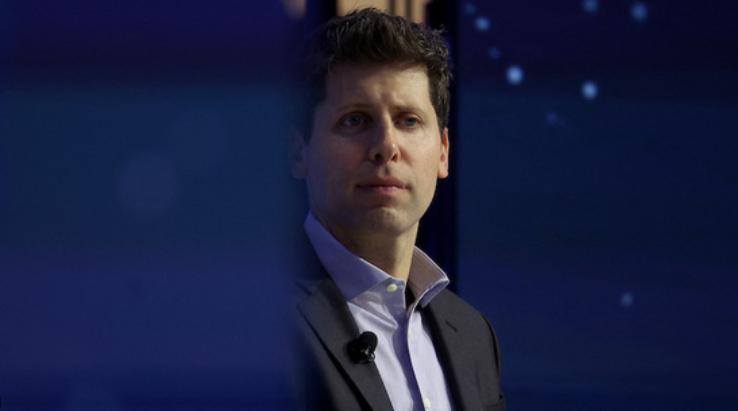
One trillion.
This figure has been repeatedly mentioned in the conference rooms of Silicon Valley, like a spell and also like a pair of shackles.
On June 8th, OpenAI secretly submitted its S-1 filing. The market thought that the listing was just around the corner. Immediately afterwards, a report in The New York Times suddenly slowed down the pace: The company is considering postponing its IPO until 2027.
The reason behind this is straightforward yet heavy: Sam Altman is holding firm to the valuation line of one trillion dollars. The options given by the advisors are quite calm - either wait and get the trillion-dollar valuation before going public, or go public now and accept a discounted figure. Altman's response leaves no room for negotiation: One trillion, no discussion.
On the same day, CNBC disclosed more detailed information. OpenAI has not initiated any pre-IPO investor roadshows, has not probed the pricing, and has not tested the demand. The pre-roadshow meetings will not start until the listing schedule is determined. A person close to the decision-making level revealed that as early as when the filing was submitted in early June, the company's internal management was aware that "it might still take some time", and some things are easier to accomplish in a private state.
Far away in Tokyo, this news has already caused a huge wave in advance.
The Shadow of the Benchmark
What Altman is waiting for may never be a better price, but a narrative that is sufficient to replace SpaceX.
The advisors presented a memorandum that is so calm as to be almost cold, with the protagonist being Elon Musk's SpaceX. This year, it just completed a financing of over $85 billion, and its IPO with a valuation of $1.77 trillion amazed everyone. And then? The stock price has been sliding all the way from a high of $202 to $153, lower than the opening price, and the downward trend shows no end in sight.
This is the mirror right in front of us. The performance of SpaceX is no longer the "first stock in the space economy" in the textbooks, but has become a real disaster used by investment bankers to dissuade clients.
If SpaceX cannot maintain a trillion-dollar valuation in the public market, why should OpenAI?
There is a deeper anxiety hidden behind this question: The fluctuations of SpaceX prove one thing: In today's public market, the pricing of "super unicorns" is not based on faith, but on fear. Fear of interest rates, fear of competition, fear of technological iteration, and even more fear of discovering at a certain time node that those expensive projects called "next-generation infrastructure" have failed to deliver on their commercial promises for a long time.
There is an invisible step between SpaceX and OpenAI. One sells the scarcity in the physical world, and the other sells the substitutability in the digital world. SpaceX has proven the market pricing of scarcity with its reusable rockets, but it is still punished by the public market. And OpenAI has not yet completed this proof. With ChatGPT's 900 million weekly active users, monthly revenue of $2 billion, and the enthusiasm of countless developers, all these things that are worth $85.2 billion in the private market, how much are they really worth in the public market?
Altman is betting that time is on his side. What he needs to show the market is not only growth potential, but also irreversible substitutability. He needs to make the rise of Claude seem like an opponent that can be left behind, needs to let GPT-5 prove its generational advantage, and needs to use several consecutive quarters of record-breaking revenue figures to gradually wipe away the shadow cast by SpaceX. Before that, he will not step onto the pricing stage.
The Vibration of the Chain
While OpenAI is still hesitating, the industrial chain has already reacted violently in advance.
SoftBank lost more than 12% of its market value within two days. The total committed investment of this Japanese investment giant in OpenAI is expected to reach about $65 billion by October. Hiroki Takei, a strategist at Mitsubishi UFJ Morgan Stanley Securities, explained very straightforwardly to Bloomberg: Once OpenAI goes public, it will provide an anchor for public pricing for one of SoftBank's largest private equity holdings. The news of the postponement has made this anchor disappear, and the market can only first release its expectations.
Kioxia, the leading Japanese memory chip manufacturer, also fell 12% immediately afterwards. It is a direct beneficiary of AI infrastructure construction and once briefly topped the market value list of the Nikkei 225 index. Once the IPO schedule of OpenAI is postponed, the expected rhythm of the entire AI computing power investment needs to be recalibrated.
And the most subtle signal comes from the prediction market. Traders on Kalshi are re-betting with real money: The probability that OpenAI will officially announce its IPO before March 2027 is only 59%, and 73% before June 2027. Only about one-third of the contracts indicate that there will be some movement within 2026.
What is even more thought-provoking is that Anthropic may really take the lead.
A Bloomberg report shows that OpenAI's internal management has already anticipated that Anthropic will go public before itself. On June 1st, Anthropic quietly submitted a confidential S-1 filing, with its valuation anchored at $96.5 billion. This figure is already more than $10 billion higher than OpenAI's previous round of valuation. The two companies are almost standing side by side at the starting line of the IPO, but Anthropic has a more compact schedule and once considered completing its listing in October this year.
If Anthropic steps into the spotlight first, regardless of whether its performance on the first day is good or bad, it will become the first yardstick for the public market to price the entire AI industry. OpenAI will be forced to measure its own clothes with someone else's size.
The Speed of Capital Consumption
Postponing the listing does not mean stopping the consumption.
According to The New York Times, citing people familiar with the matter, OpenAI's annual revenue in 2025 was about $13 billion, and its current monthly revenue is about $2 billion. At the same time, its expenditures on data centers, talent recruitment, and corporate sales are climbing at a steeper slope. This is a high-intensity war of attrition, and the bullets come from the $12.2 billion in financing from the private market.
Choosing to stay in the private state is a double-edged sword. On the one hand, it avoids the short-term pressure of being scrutinized every quarter in the public market and allows the company to quietly layout in the deep waters of technology. On the other hand, it also delays the inevitable step of opening the company to public investors: Once that S-1 filing takes effect, the whole world will see the real financial statements of this company known as "the most expensive startup in history".
Before that, the market can only rely on indirect evidence to price it. The stock price of SoftBank, the K-line of SpaceX, the orders of Kioxia, and the valuation race of Anthropic, these fragments are pieced together to form a temporary pricing model for OpenAI. And this model itself is as fragile as a contract barely stitched together with different currencies.
The one trillion dollars that Altman wants is not for vanity. It is the minimum right to speak for a company to mobilize capital in the long term. In Silicon Valley, valuation is not just a number, but power. It is the bargaining chip to attract the world's top talents, the confidence to negotiate computing power contracts with cloud providers, and the capital thickness to maintain independent survival in the geopolitical storm. He once described the listing as "a financing event to be carried out when the time is right".
Now, he is waiting for that "right" moment. He is waiting for the shadow of SpaceX to be swallowed up by a new narrative, waiting for Anthropic to step into the river first to test the depth, and waiting for his own model to prove that he is not chasing a bubble.
An unspoken fact is that when a company is priced at one trillion dollars, what it is selling is no longer a business model, not a technological moat, and not even the discounted future cash flow. What it is selling is an ultimate proposition about the right to replace human intelligence.
No one can answer this proposition with an S-1 filing. It needs ten or even twenty years of reality to slowly prove or disprove it.
Altman chooses to wait. And the price of waiting is to let the entire market continue to grope for pricing in the dark. SoftBank is groping, Kioxia is groping, Elon Musk is groping, and every fund manager who tries to bet on the AI era is groping. In this darkness, the only thing that is shining is the door that Anthropic is about to knock on. Once that door opens, the light will shine in, and OpenAI in the light will no longer be able to hide behind the fog of valuation.
One trillion. This is not just a price tag, but a declaration. And a declaration needs time to redeem.
This article is written based on publicly available information and is only for information exchange purposes. It does not constitute any investment advice.
This article is from the WeChat official account “Jinduan” (ID: jinduan006), author: Mu Yang. It is published by 36Kr with authorization.