Is this World Cup "iconic moment" actually AI-generated fake content?
AI is truly incredibly useful. It's so useful that during the World Cup, there emerged a "crazy parallel universe of AI in the World Cup."
In this universe, there are always stunningly beautiful women shedding tears in the stands, and occasionally, a man with a mustache makes a surprise appearance. In the bar, the Prime Minister of the UK walks in to watch the England game while wearing a Croatia football jersey. During the opening ceremony, the Argentine flag inexplicably flutters, and even more inexplicably, an elephant walks by...
The World Cup, held once every four years, has almost become an anchor point in time.
When the Qatar World Cup four years ago was in its tenth day, ChatGPT was just launched.
By the time the new FIFA World Cup hosted by the United States, Canada, and Mexico kicked off, the world had changed - AI was no longer a novelty; it had become an essential part of daily life.
On the flip side of the story, AI - generated fake content is also running rampant, and the World Cup has become a hard - hit area.
Where are there so many crying beauties?!
A user on Xiaohongshu got into an argument with the "crying beauties in the stands" phenomenon.
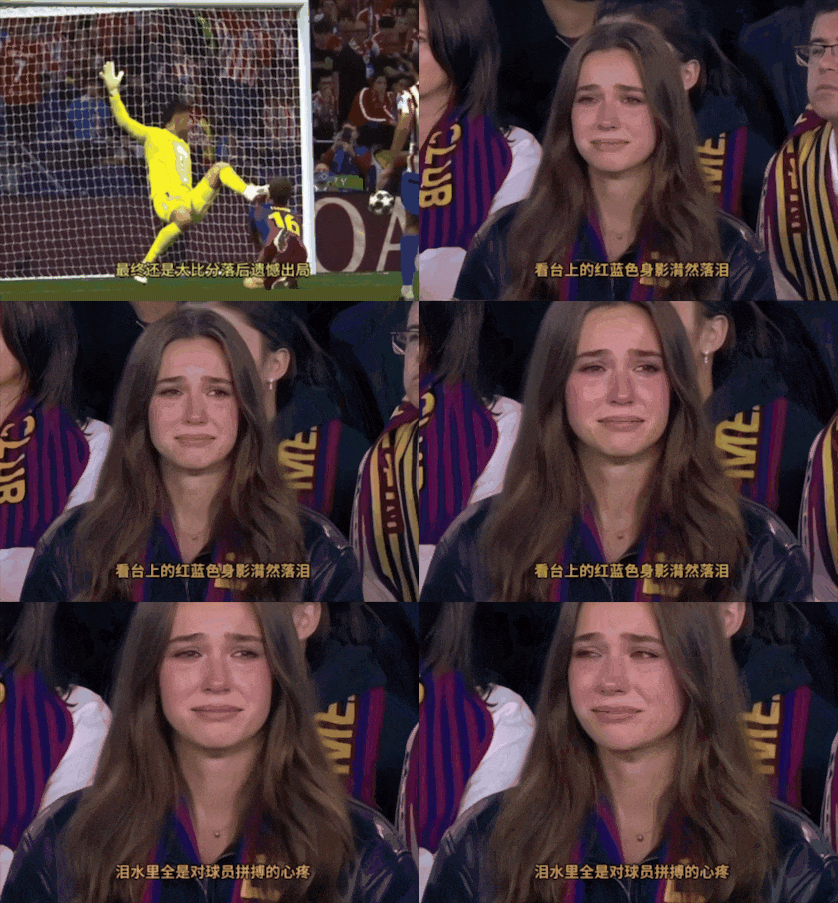
User @Waluojia Damaomao posted that they saw a video of player Fermin Lopez getting injured on the field and a beautiful woman in the stands crying out of distress. Suspecting it was AI - generated, they specifically watched the relevant game and verified their suspicion.
This user found that the footage of the "crying beauty in the stands" did come from a certain game (not during the World Cup), but one of the spectators had their face swapped.
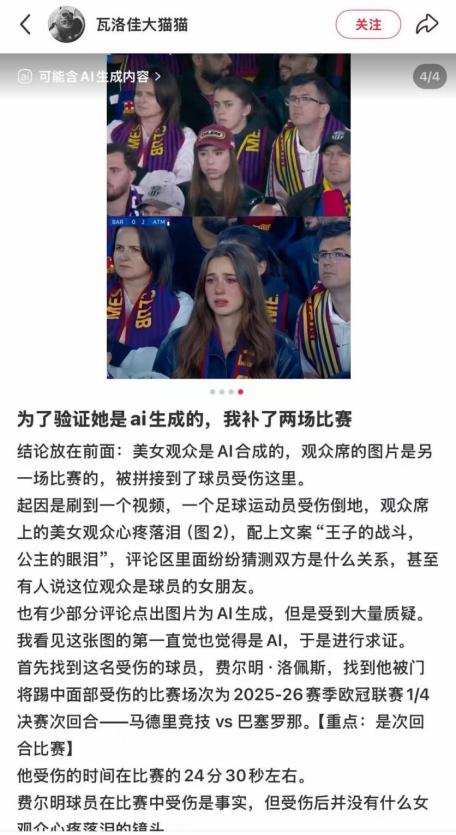
This situation is very common in this World Cup.
The World Cup itself is a huge magnet for traffic, and the "beauties in the stands" are the traffic code. Some content is marked as "AI - generated," while some is used for deception.
This phenomenon is prevalent globally.
The most typical example is a so - called "Brazilian female fan" video. In the video, a woman is sitting in the stands, and a man next to her is staring at her chest. This disgusting video has been reposted in multiple languages. Investigators traced it back to the original Instagram account Chiara Cleo, and the video has nearly 40 million views.
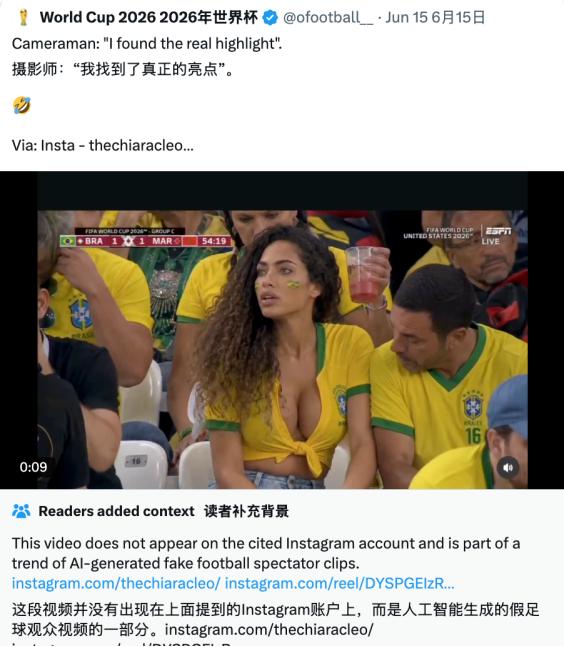
There is business behind it. This account has been posting videos of the same AI - generated female image for a long time. The account itself is an AI influencer with over 340,000 followers and leads to a Fanvue page, an adult content platform similar to OnlyFans.
Besides the "beauties in the stands," there is also the "man with a mustache in the stands."
After the Germany vs. Curaçao game, a so - called "broadcast screenshot" spread on social media. In the picture, a spectator wearing a German jersey looks like a man with a mustache. The picture has spread on multiple platforms and in multiple languages, with millions of views.
The fact - checking network Eurovision News Spotlight under the European Broadcasting Union said that investigators reviewed the game broadcast and found the original spectator shot. They found that there was no so - called "fan with a mustache" in the real picture. ZDFheute used a detection tool and found that the picture had an OpenAI watermark, indicating that it was modified based on the real picture using OpenAI tools.
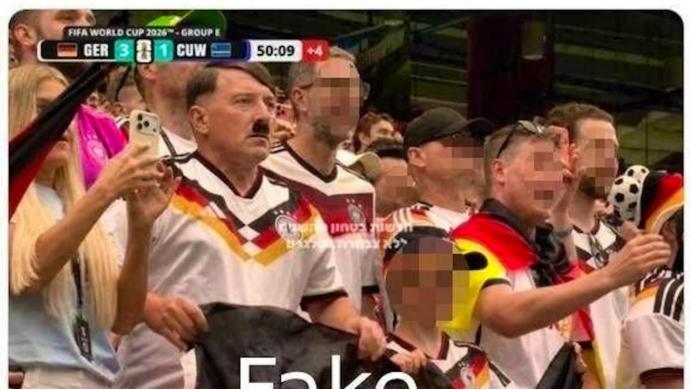
This incident has also caused real harm to the relevant people.
Blue News further interviewed the German fan Jan Weitzel, whose image was faked.
He is from Alsfeld, Hesse, Germany. After the original picture was processed by AI, he was hardly recognizable, but his son was still clearly visible. Due to the viral spread of the fake picture, he reported the case to the police in Germany and the United States and was also questioned by the FBI. Even worse, later, some people continued to generate AI videos based on this fake picture, creating an animation of the German fan giving a Nazi salute.
Actually, since the opening ceremony, AI - generated fake content has been having an impact.
The YouTube channel Focus Lab started a live - stream on June 11 titled "2026 World Cup Opening Ceremony." The content was AI - generated, and the live - stream lasted for 12 hours, with an actual video of about an hour and a half on loop. At its peak, more than 210,000 people were online simultaneously, and the cumulative viewership exceeded 1.42 million.
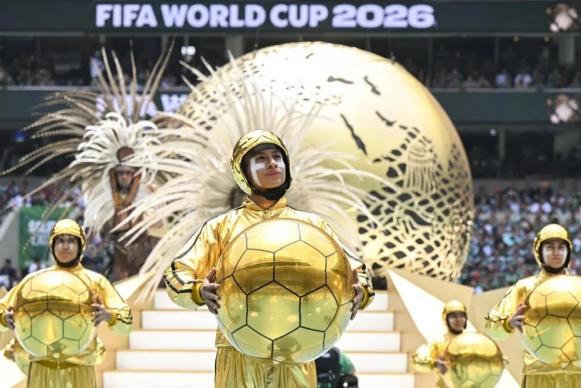
Although the "opening ceremony" featured the Argentine flag fluttering (while this World Cup is hosted by the United States, Canada, and Mexico) and the absurd scene of an elephant walking onto the football field, many people were still deceived.
Shakira, who was supposed to sing at the opening ceremony, was also faked. On June 12, someone posted an AI - generated video on X with the caption "Shakira's performance today was simply legendary. The atmosphere, the moves, the singing - she turned the opening ceremony into her own concert. It was truly epic."
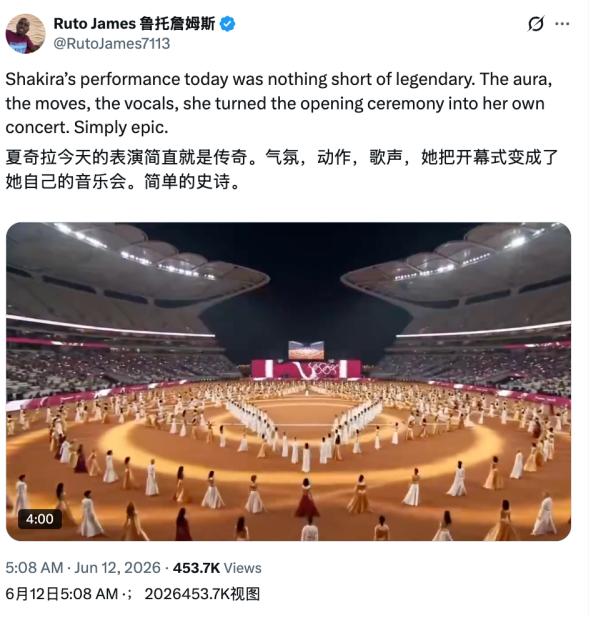
This video attracted 450,000 views. If you open the comment section, you'll find that most people are still being deceived. Even the fake Shakira mentioned a country that wasn't selected for this World Cup, such as Nigeria. This should have been a clue for people to realize the video was fake, but many people in the comment section were touched, saying, "It's so moving that we were mentioned even though our country didn't make it to the World Cup!"
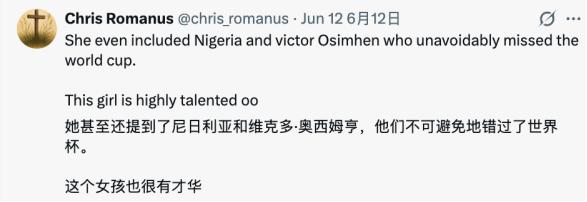
There's no way around it; the level of AI - generated fake content is getting higher and higher.
It's predictable that as the World Cup progresses, the "crazy parallel universe of AI" will continue to expand.
AI - generated fake content aims for more than just traffic
Most of the AI - generated fake content during the World Cup is a traffic - driven business, aiming to attract views.
However, some content has more complex motives behind it.
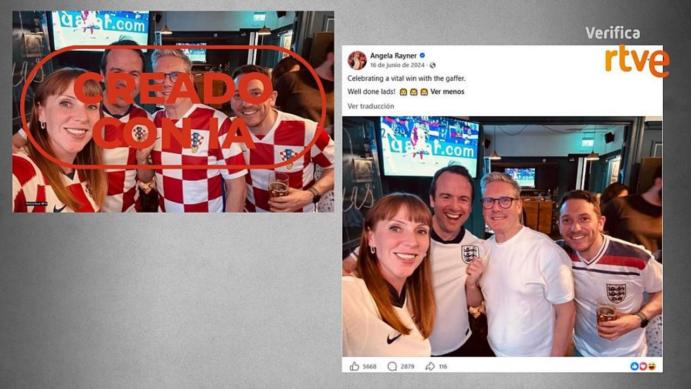
Recently, a picture spread on social media, claiming that UK Prime Minister Keir Starmer appeared in a bar in Dallas during the England vs. Croatia World Cup game, wearing a Croatia national team jersey.
Actually, this picture was modified from a real group photo posted on Facebook during the 2024 European Championship. In the original picture, everyone was wearing England - related clothing, and Starmer was wearing a white top, not a Croatia jersey.
In another incident, a video of the France vs. Senegal game spread on social media. In the video, it seems that Argentine commentator Nicolas Haase referred to both France and Senegal as "African countries" in a tone with racist undertones.
This kind of content is naturally very attractive for traffic, but it's obvious that it also comes with political or character - based humiliation targeted at individuals.
There's another type of more dangerous fake content that directly targets people's wallets.
The FBI issued a warning on May 27, stating that threat actors have imitated the official FIFA website, leading users to think they're interacting with the official brand. The purposes include collecting personal information, selling fake World Cup tickets and high - end match - viewing hospitality products, and may also be used for other malicious activities.
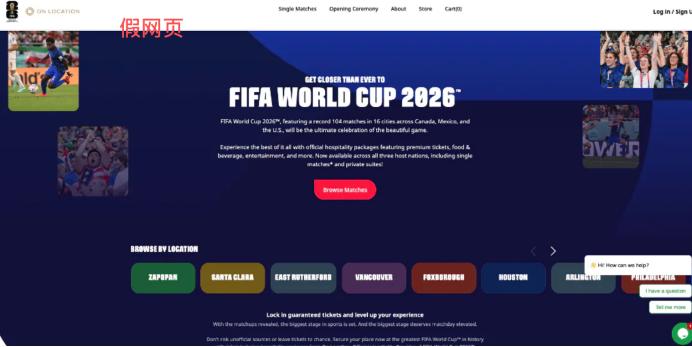
The FBI reminded users to directly type in fifa.com and not to enter the so - called ticket - purchasing pages through search engines or sponsored links.
AP also reported that during the World Cup, the number of fake tickets, fake resales, and fake streaming websites is increasing. Experts say that criminals will use AI to generate more realistic information, pages that look more like regular online stores, fake endorsements, and fake promotional content.
Scammers will also post fake ticket information on social media and then lead buyers to encrypted chat apps like WhatsApp to urge them to transfer money.
AI - generated websites, deep - fake videos, forged audio, and more convincing phishing content are replacing those crude past scams.
Data from the cybersecurity company TrendAI shows that from January to May 2026, more than 13,000 FIFA - themed domain names were registered. By early May, about 1 in every 41 of them was identified as suspicious or malicious.
According to research by FortiGuard Labs under Fortinet, during the same period, more than 13,000 new FIFA World Cup - themed domain names were registered, and about 8.8% of them were judged to be malicious or suspicious.
The cybersecurity company Group - IB found that since August 2025, more than 4,300 fraudulent domain names have been impersonating the official FIFA website.
AI is truly incredibly useful
Of course, AI doesn't just bring deception and chaos to the World Cup. In more scenarios, AI brings more vivid and novel experiences to people.
Take Xiaohongshu, one of the domestic World Cup broadcast platforms, as an example. Erling Haaland, the Norwegian striker who became quite well - known for his "abstract" image, has been the subject of a large amount of second - creation using AI by users. For example, there are AI - generated pictures like "Love and Haaland" in the style of the poster of "Love and the Cosmos," an anime - style Haaland, and a Haaland in traditional Chinese costumes.
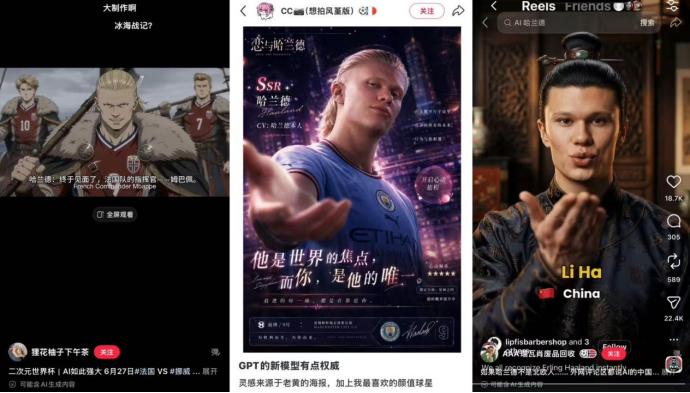
In the end, many people at first glance thought that the Wanglaoji advertisement featuring Haaland was an AI - generated spoof video.
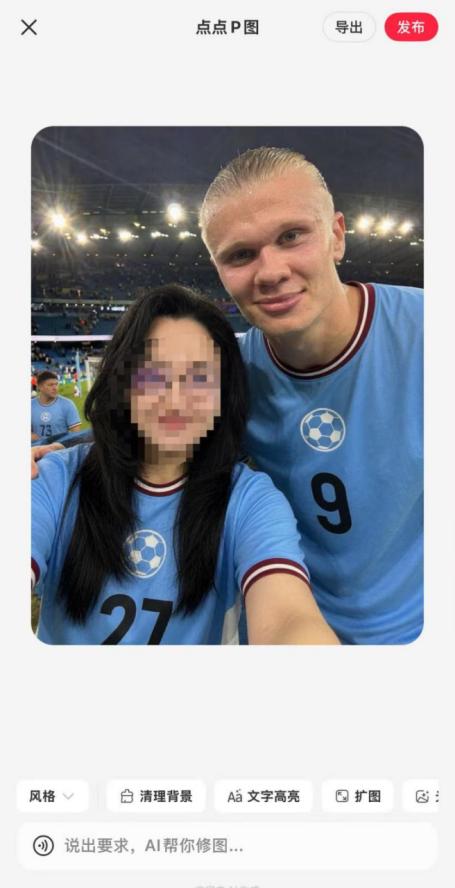
In addition, Xiaohongshu has a function of taking a "group photo with a star player" with one click. After clicking, the service is provided by "DianDian Pitu." After simple operations, users can get a group photo with Haaland, Cristiano Ronaldo, etc. on the game field.
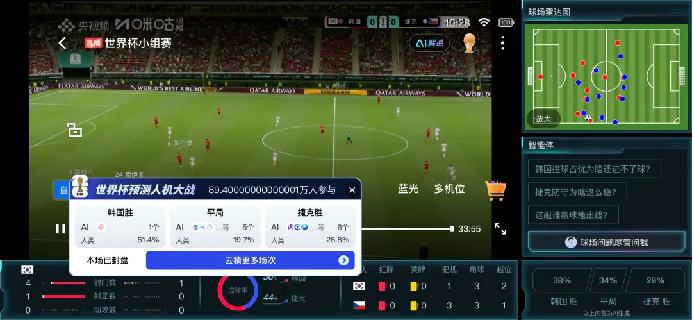
Another broadcaster, Migu, is also promoting the concept of the "AI World Cup" this time.
Migu has launched AI - Zone, which integrates various AI - enabled game - watching functions into one entrance: intelligent commentary, dialect commentary, AI - enhanced field view, an AI intelligent agent for real - time Q&A, running radar chart, star player highlight, ball tracking, key moment recognition, AI prediction, etc.
As an official technology partner of the 2026 World Cup, Lenovo mentioned in an official press release that the AI infrastructure it provides will be used for near - real - time highlights, multi - angle views, and game insights. In addition, AI - driven 3D player avatars can help viewers understand complex rulings such as offside; the referee's perspective footage will also be enhanced with AI anti - shake to make the first - person view during high - speed movement more suitable for broadcast.
A more serious and positive example comes from FIFA's own content governance.
FIFA has a "Social Media Protection Service." This service uses AI to filter offensive content on platforms such as Facebook, Instagram, YouTube, TikTok, and Threads. The goal is to protect players, teams, and event officials and reduce the amount of abuse, hatred, discrimination, and