Jensen Huang admits misjudgment, is the inflection point of quantum computing coming?
At the beginning of 2025, Jensen Huang said that practical quantum computers were still 20 years away. His words sent quantum concept stocks crashing. Two months later, he publicly admitted his mistake at NVIDIA's GTC. After that, he not only invested in leading quantum companies one after another but also directly stated at the Paris GTC that quantum computing was approaching an inflection point. Has the inflection point really arrived? Fang Zhenghao (CEIBS EMBA 2024), the founder of Taiyi Quantum Life, provided a sober reference: Comparing with large language models, quantum computing is roughly at the stage between GPT 2.5 and 3. The underlying capabilities have been established, but there is still a long way to go before it can change the industrial landscape. Fortunately, for the first time, there is a relatively clear schedule for this journey.

01
What is quantum computing?
The basic unit of calculation in the computers and mobile phones we use in daily life is the bit. A bit can only be in one of two states: 0 or 1. All programs, from WeChat to Douyin, are essentially high - speed switches of arrangements and combinations of 0s and 1s.
Quantum bits are different. They can be in a superposition state of 0 and 1 simultaneously, a bit like a coin spinning in the air. Before it lands, both heads and tails are possible. Moreover, two quantum bits can be entangled. Once entangled, no matter how far apart they are, if one changes, the other will change immediately.
These characteristics allow quantum computers to explore many paths simultaneously during the calculation process. Through specific algorithms, the steps that originally required exhaustive search can be significantly reduced. To put it roughly, while others may need to try ten thousand keys, it may only need to try a hundred.
However, the quantum system has a fatal weakness: it is extremely unstable. Even the slightest temperature change, electromagnetic wave interference, or a passing cosmic ray can cause the state of the quantum bit to collapse. You may spend a great deal of effort to create a quantum state that is exploring millions of paths simultaneously, but if the environment touches it casually, it will collapse back to an ordinary 0 or 1, and nothing will be calculated.
Therefore, the real test of quantum computing is not to create quantum bits but to make them stable enough for use. This leads to a key concept: logical bits.
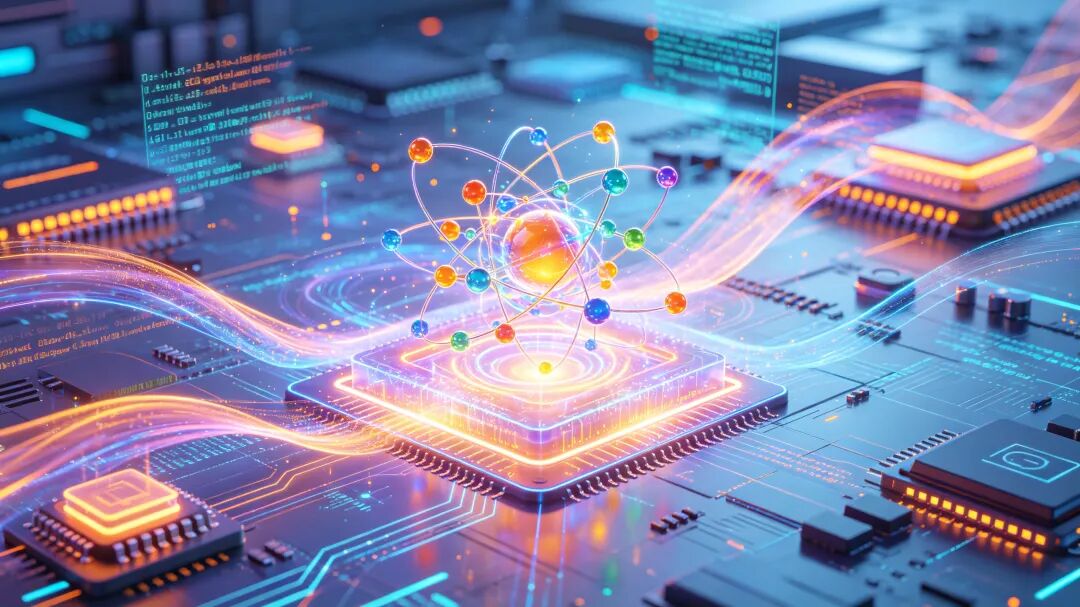
The error rate of a single physical bit is too high, about one - in - a - thousand to one - in - ten - thousand. A practical quantum algorithm may need to run millions or even tens of millions of logic gates. If the error rate of one - in - a - thousand accumulates millions of times, the result will be zero. Scientists' solution is to combine hundreds or even thousands of physical bits through error - correction algorithms to form a reliable logical bit. It's like assembling a well - trained team from a group of scattered soldiers.
It is not difficult to create one or two quantum bits; even university laboratories can do it. However, making thousands of logical bits run stably is a dual - limit challenge in physics and engineering. This is also the reason why the threshold of this industry is extremely high.
In 2019, Google claimed to have built a quantum computer that was faster than the fastest supercomputer at that time in a specific computing task. This was a real engineering achievement, but the task it selected was specifically tailored for quantum computers, which does not mean it can perform well in general tasks.
It can be said that the number of logical bits is the current gold standard for the entire industry. Google, IBM, Microsoft, and various startups all consider the number of logical bits they can achieve as the most important indicator in their roadmaps. Whoever can first produce large - scale, high - quality logical bits will get the ticket to the next stage.
02
What can it do?
Quantum computing cannot do everything. After several years of adjusting expectations, the industry has a relatively clear consensus on its applicable scope. There are three directions with relatively certain advantages.
The first is material simulation and drug R & D. Chemical reactions at the molecular level are essentially quantum mechanical processes. When simulated by traditional computers, the amount of calculation increases exponentially as the molecule size grows, and it quickly becomes impossible to calculate. Currently, the world's largest intelligent computing cluster is the 500,000 NVIDIA graphics card cluster of Elon Musk's SpaceX, but it still cannot accurately simulate a chemical reaction. A quantum computer with about 300 logical bits can perform as much calculation in one hour as this supercomputer can in ten years. For the pharmaceutical industry, even if the R & D cycle of a single drug is shortened by one - third, it may mean a value difference of billions of dollars.
The second is password cracking. Almost all encrypted communications on the Internet, such as logging into a bank, sending a WeChat message, or swiping a credit card, rely on RSA - type encryption algorithms at the bottom. The security is based on the premise that factoring large numbers is extremely difficult. A traditional computer may take trillions of years to crack a high - level password, but a quantum computer is expected to complete it within a reasonable time through special algorithms. In the past, it was thought that tens of thousands of logical bits were needed, but the latest research has reduced this threshold to more than a thousand. The update of the password system usually takes more than ten years, so countries are already preparing in advance.

The third is AI training, which is also a door that has just been opened recently. Quantum computing was previously thought to be unable to perform AI training due to bottlenecks in gradient disappearance and data throughput. However, the latest research has found that it has a great advantage in dimensionality reduction of high - dimensional training data, which can compress the data volume by several orders of magnitude.
This direction is the closest to implementation, and the reason is simple: it requires the fewest logical bits, about 60, far less than the 300 for chemical simulation and the more than a thousand for password cracking. Moreover, the demand for computing power in AI exists in the long term and is willing to pay for it. As long as large models continue to develop, the computing power gap will always exist.
03
The routes are narrowing
There is more than one way to do quantum computing. There are about eight or nine technical routes being advanced simultaneously around the world. Currently, there are mainly five routes that are considered likely to be industrialized within five to ten years:
The superconducting route uses circuits that have no resistance at extremely low temperatures. Both Google and IBM have chosen this direction. They have made the largest investment in the past decade and have also achieved the most obvious progress.
Ion traps use electromagnetic fields to suspend single ions in a vacuum and use lasers to manipulate their quantum states. The advantage is that the quality of the quantum bits is very high and the error rate is low.
The neutral atom route is a bit similar to ion traps but does not require charges. It uses optical tweezers to arrange atoms in an array and currently seems to have more potential for large - scale expansion.
The topological quantum route takes a completely different approach. It tries to make quantum bits more stable fundamentally, but it is the most difficult technically.
Photonic quantum uses photons for calculation, and China has accumulated a lot in this area.
In the past decade, everyone has been trying their own ways, but now the situation is changing: the neutral atom route is starting to attract more and more resources. The key reason is that its performance in large - scale expansion is better than expected.

What does large - scale expansion mean? It means whether the system can still work stably when the number of quantum bits increases from dozens to thousands. The superconducting route has always been struggling with this problem, while the neutral atom route seems to have more staying power.
In recent weeks, several things have happened one after another: Google, which has been working on superconductivity, announced its entry into the neutral atom field. Professor John Preskill, the father of modern quantum computing who proposed the concept of quantum supremacy, founded a neutral atom company himself. The results of several important papers are also based on the neutral atom system.
The significance of this change is not only at the technical level. It indicates that the industry is entering a technology convergence period from a stage of diversified exploration. Once the routes start to converge, talents, capital, and industrial chain support will quickly gather. The goal of large US companies such as Google, IBM, and Microsoft is to deploy quantum computers in data centers by the end of 2029, not just to put one in the laboratory for demonstration, but to connect them to cloud infrastructure so that external users can access them through the network. QuERA even said that it will produce 256 logical quantum bits with ultra - high fidelity in 2028. DARPA has set the schedule for a general - purpose quantum computer before 2033. China has listed quantum technology as the top of the six future industries in the 14th Five - Year Plan.
An interesting reference is Jensen Huang. In January 2025, Jensen Huang said at CES that practical quantum computers might still be decades away, and 20 years was a reasonable time frame. 15 years was too early, and 30 years was too late. His words directly sent quantum concept stocks crashing.
In March 2025, he publicly admitted his mistake at the GTC, saying that he was the first person in history to invite all industry CEOs on stage to explain why he was wrong and established Quantum Day for the first time in the history of GTC. By June 2025, he further clearly stated that quantum computing was approaching an inflection point and revised his previous view. NVIDIA has participated in the $600 million financing of Quantinuum, invested in the $1 billion round of PsiQuantum, and jointly established a quantum research center with Harvard and MIT in Boston.
04
Where is China's competitiveness?
China is not weak in basic research. The team led by Pan Jianwei is at the top level globally, and there are solid achievements in both the photonic quantum and superconducting directions.
However, the distance from the laboratory to the production of products is longer in China than in the United States.
The most core gap does not lie in a single - point technology but in the ability to integrate an entire industrial chain. Quantum computers involve many aspects, including physical hardware, software - hardware coupling, the compilation layer, control systems, error - correction algorithms, quantum gate design and algorithm implementation, and developer tools. There are dozens of sub - systems when disassembled. If any link fails, the whole machine will not work.
Many domestic teams can do very well in certain aspects, but there is still a significant gap in integrating them into a replicable and operable whole - machine solution. In particular, error correction is a relatively prominent shortcoming. There are few domestic research teams specifically working in this direction, and there is a shortage of talent.
However, China also has real advantages. The neutral atom route faces relatively few basic scientific problems. The main bottlenecks are in engineering and scale - up, which happen to be China's comfort zone in manufacturing. The upstream core components are mainly precision optics and general semiconductors. China has reached the global forefront in many sub - directions of precision optics. The industrial competition in quantum computing is not about who has more papers but about who can produce products first, make them stable, and make them affordable.
05
Who will pay the bill?
All cutting - edge technologies have to cross the same threshold: from being usable to being willing to be used.
Quantum computing is currently stuck here. It can still only prove that it is available but cannot prove that it is useful. Currently, the main payers are the government and scientific research institutions, and the industrial sector accounts for about 10%. The reason is not complicated: the problems it is currently good at are too far - fetched for the daily operations of most companies. An e - commerce company will not use a quantum computer to optimize its recommendation algorithm, at least not yet.
What enterprises are buying is not a product but an option, to occupy a position in the future computing power landscape. In three to five years, quantum computing will most likely enter the practical stage. By then, it will be too late to start from scratch. Leading enterprises in fields such as AI, embodied intelligence, new energy, and biopharmaceuticals have already participated through investment or cooperation and are conducting verification projects at the algorithm level.
This also determines that the commercialization rhythm of quantum computing will not be like that of the Internet. It is more like the chip industry: the upfront investment is extremely heavy, the return cycle is extremely long, but once the critical point is crossed, the moat is extremely deep. The first place where real commercial value is generated will most likely appear in the intersection of AI and quantum computing.
By the way, optical computing and quantum computing are two different paths. Optical computing uses photons instead of electrons for matrix operations, which is essentially an enhancement and supplement to the existing chip architecture; quantum computing is used to solve problems that traditional computing cannot solve at all. In the future, the two will most likely coexist at different computing levels.
The story of quantum computing has been told for a long time, but things have indeed changed around 2025. It is not a single - point breakthrough but a series of changes overlapping with each other: the routes are converging, the schedule is becoming clear, and the number of logical bits is growing steadily. More importantly, the computing power hunger of