28 companies in line, is the beauty IPO sector witnessing its strongest recovery in three years?
The beauty industry has entered a new era of full - industrial - chain capitalization.
After three years of dormancy, the IPO of the beauty industry has heated up again.
From 2020 to 2021 was the "golden window" for Chinese beauty companies to go public. Leading brands such as Betaine and Proya successively landed on the A - share market, driving the industry to usher in the first wave of capitalization. After that, as the A - share IPO review became stricter and the listing pace of consumer companies slowed down, the capital story of beauty companies once cooled down.
The change occurred after 2025. Companies such as Maogeping and Ruoyuchen successfully went public, bringing a demonstration effect. In 2026, the IPO fever further spread from individual companies to the entire industrial chain.
In 2026, the beauty IPO market has gradually recovered comprehensively, but it presents a completely different pattern from before. From May to June, the initial public offering applications of Shandong Yinuo Biology and Jiakai Biology were approved, and Zhejiang Meitong Aromatherapy was listed on the New Third Board; the IPO status of Jihechang New Materials changed from "submitted for registration" to "registered". Even earlier, companies such as Weiqi Technology, Fuyin New Materials, and Bairuiji successively passed the review. At the same time, brands and service providers such as Chando, Proya, Marubi Biotechnology, and Half Acre Garden flocked to submit listing applications to the Hong Kong Stock Exchange.
Before even half of 2026 has passed, 28 beauty industry chain companies are in different stages of going public, covering the entire chain including raw materials, packaging materials, brands, e - commerce operations, retail, and testing. The industry is entering a new era of full - industrial - chain capitalization.
28 companies are rushing towards IPO, covering the entire beauty industry chain
The most obvious change in the beauty IPO market in 2026 is the increase in the number of queuing companies and the wider coverage of links.
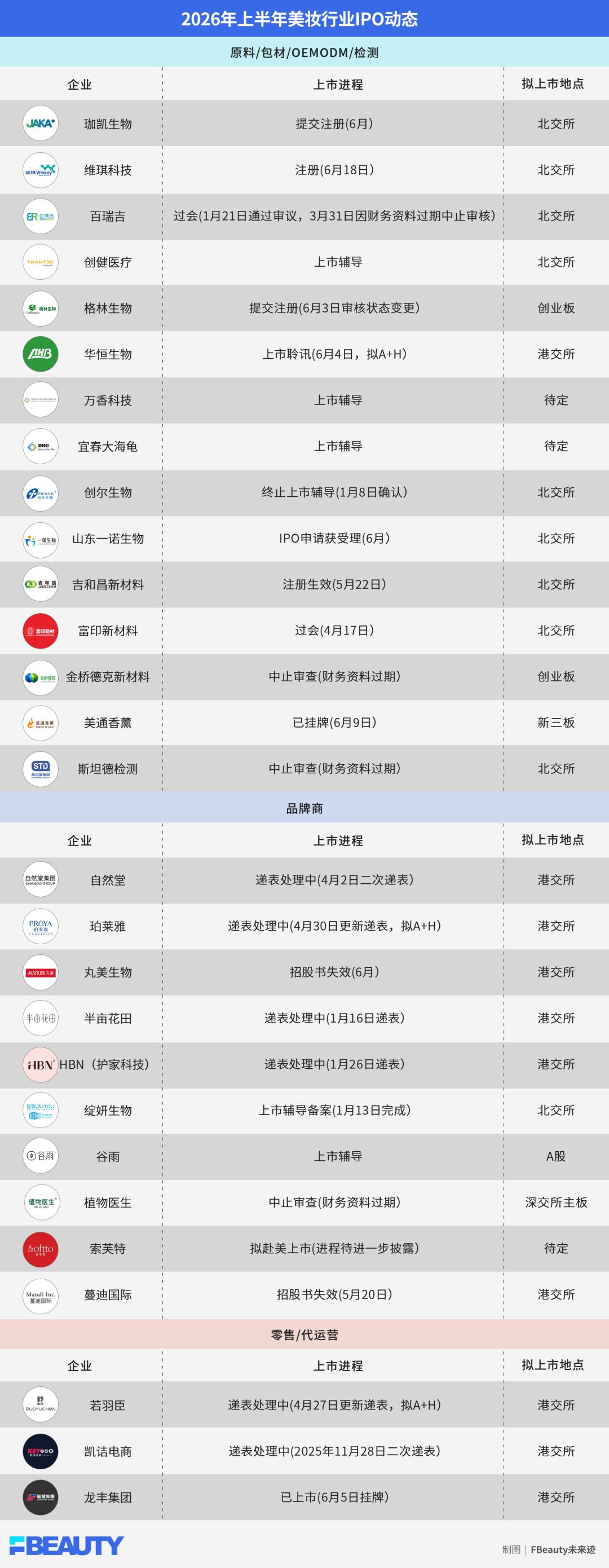
The group of companies with the fastest progress at present are mainly concentrated in the upstream of the industrial chain.
Bairuiji was the first to pass the review of the Beijing Stock Exchange on January 21 this year, becoming the first beauty raw material company to pass the review in the first half of the year. However, on March 31, it applied to suspend the review due to the expiration of the financial report and the need to supplement audit matters, and has not been officially listed yet.
In the second quarter, the pace of upstream companies passing the review has significantly accelerated.
On May 6, Weiqi Technology, with skin active polypeptides as its core products, successfully passed the review. It submitted for registration on May 15, and its status changed to "registered" in June. It is expected to become the "first stock of polypeptide raw materials". According to the research report of Frost & Sullivan, in the Chinese cosmetics polypeptide raw material industry, Weiqi Technology ranks first in the industry with a 6.6% share.
The progress of Green Biology is also worthy of attention. The Shenzhen Stock Exchange disclosed that Green Biology passed the review on the Growth Enterprise Market at the end of May, and its review status changed to "submitted for registration" on June 3. This is already the third time for Green Biology to attempt an IPO on the Growth Enterprise Market in six years. It has entered the global supply systems of international giants such as Givaudan, DSM - Firmenich, Symrise, and Procter & Gamble, and maintains long - term and stable cooperation.
Different from the upstream companies concentrating on sprinting for the A - share market, the main battlefield of brand owners and service providers has almost completely shifted to the Hong Kong Stock Exchange.
In the first half of this year, 8 brands and service providers have submitted listing applications to the Hong Kong Stock Exchange or are in the process of handling, including leading beauty companies such as Chando, Proya, Marubi Biotechnology, Half Acre Garden, and Shenzhen Huojia Technology, the parent company of HBN. Among them, Proya and Marubi Biotechnology are both seeking dual - listing on the A - share and H - share markets.
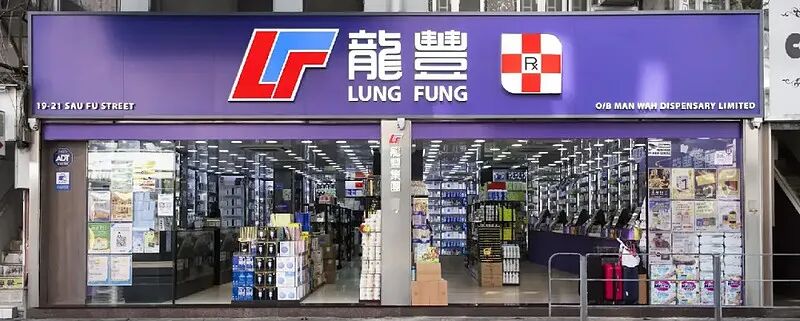
There has also been new progress at the retail end. Longfeng Group, known as the "first stock of Hong Kong - listed drugstores", passed the listing hearing of the main board of the Hong Kong Stock Exchange on May 17, officially entered the prospectus period on May 28, and was officially listed on June 5, becoming the beauty retail company with the fastest IPO process in the first half of 2026.
However, the recovery does not mean that all companies can pass the IPO smoothly.
Currently, there are still about 6 companies whose IPO processes are in a stagnant state due to reasons such as the expiration of the prospectus and the expiration of financial materials. For example, Chuang'er Biology, once regarded as a candidate for the "first stock of collagen dressing", officially suspended its more than ten - year IPO process at the beginning of 2026; the prospectus of Mandi International, which focuses on minoxidil products, expired on May 20, and it has not updated its listing application yet; Dr. Plant, which is aiming to be the "first A - share beauty single - brand store stock", was also suspended from review due to the expiration of its financial materials.
This shows that although the beauty IPO has indeed recovered, it has not entered a stage of "easy listing". The capital window has reopened, but the review threshold has also been raised simultaneously.
Why does the A - share market favor raw material companies?
The most significant change in the first half of 2026 is that upstream companies in the industrial chain have broken through collectively in the A - share market.
Behind this is first of all the support of performance. Many raw material companies that have already gone public or are in the IPO process have still maintained relatively high growth in recent years. For example, the revenue of Heyuan Biology increased by 89.80% year - on - year in 2025; the net profit of Weiqi Technology increased by 67.06% year - on - year in 2024 and still maintained a 28.6% growth in 2025.
This has made the capital market re - recognize the value of upstream beauty companies. In the past, investment hotspots in the beauty industry were mainly concentrated in the downstream brand end, believing that brands had higher premium capabilities and consumer awareness. However, as the beauty industry enters the "efficacy era", raw material innovation has become a pre - emptive barrier for brand competition. Upstream companies with independent R & D capabilities and core raw material technologies are being re - recognized by capital for their profitability and growth potential.
At the same time, the structural changes in the A - share review environment have also made it easier for raw material companies to be included in the "hard - tech" narrative.
From January to April 2026, the A - share market reviewed a total of 62 companies applying for initial public offerings, and 61 of them passed the review. In the first quarter, 46 companies were reviewed, a year - on - year surge of 475% compared with 8 companies in the same period of the previous year. The Beijing Stock Exchange has become the main force in the review, with 190 companies in the review queue, accounting for 63.12% of the entire market. The average time from acceptance to passing the review has been shortened by 15 days compared with the previous period.
A financial industry insider told "FBeauty Future Trace": "Judging from the general trend of A - share IPOs in the first half of this year, technology stocks are generally okay, and some even get support from the IPO green channel, but the consumer sector is still not doing well overall."
In other words, the A - share market is not relaxing its requirements for beauty companies, but rather favors companies with R & D attributes, technical barriers, and industrialization capabilities. From the polypeptide raw materials of Weiqi Technology, to the plant anti - allergy agents of Jiakai Biology, and then to the plant squalane of Yichun Big Sea Turtle, what capital pays attention to is not only the current revenue and profit, but also whether the company can form long - term barriers in a certain niche technology direction.

Herbal extracts of Jiakai Biology, source: official website of Jiakai Biology
Industrial policies are further strengthening this trend. In April this year, 5 beauty industry standards such as the "General Rules for Technical Requirements of Biotechnological Raw Materials for Cosmetics" were introduced, marking an important step in the construction of China's cosmetics raw material standard system. Standard construction, technology accumulation, and industrialization capabilities are jointly reshaping the capital value of upstream beauty companies.
Therefore, this round of intensive breakthroughs by upstream companies is not accidental. It reflects the capital market's re - judgment of the focus of the value chain after the Chinese beauty industry has shifted from marketing - driven to R & D - driven.
Why are beauty brands flocking to the Hong Kong stock market?
In contrast to the rapid progress of upstream companies in the A - share market, the main battlefield for brand owners to go public has almost completely shifted to the Hong Kong stock market.
"FBeauty Future Trace" found that Proya and Marubi Biotechnology, as leading domestic brands, are seeking "A + H" dual - listing in the Hong Kong stock market. There are three considerations behind this.
Firstly, the Hong Kong stock market is more suitable for carrying the internationalization narrative of brands. Proya clearly stated that the issuance of H - shares aims to "accelerate the internationalization strategy and the development of overseas business", and Chando listed "establishing international brand awareness" as its core goal. For domestic brands that are accelerating their overseas expansion, the Hong Kong stock market is not only a financing platform but also a window to showcase the brand value and internationalization potential to global investors.
Secondly, the Hong Kong Stock Exchange has continuously become a gathering place for new consumer companies' IPOs. As of now, there are about 2,700 listed companies in the Hong Kong stock market, covering mainstream sectors such as catering and tea, beauty and personal care, trendy toys and cultural and creative products, and retail chains. It has been the main gathering place for new consumer companies to go public in recent years. In the past few years, beauty companies such as Maogeping and Linqingxuan have all chosen to list on the Hong Kong stock market, which also provides a reference path for later - comers.
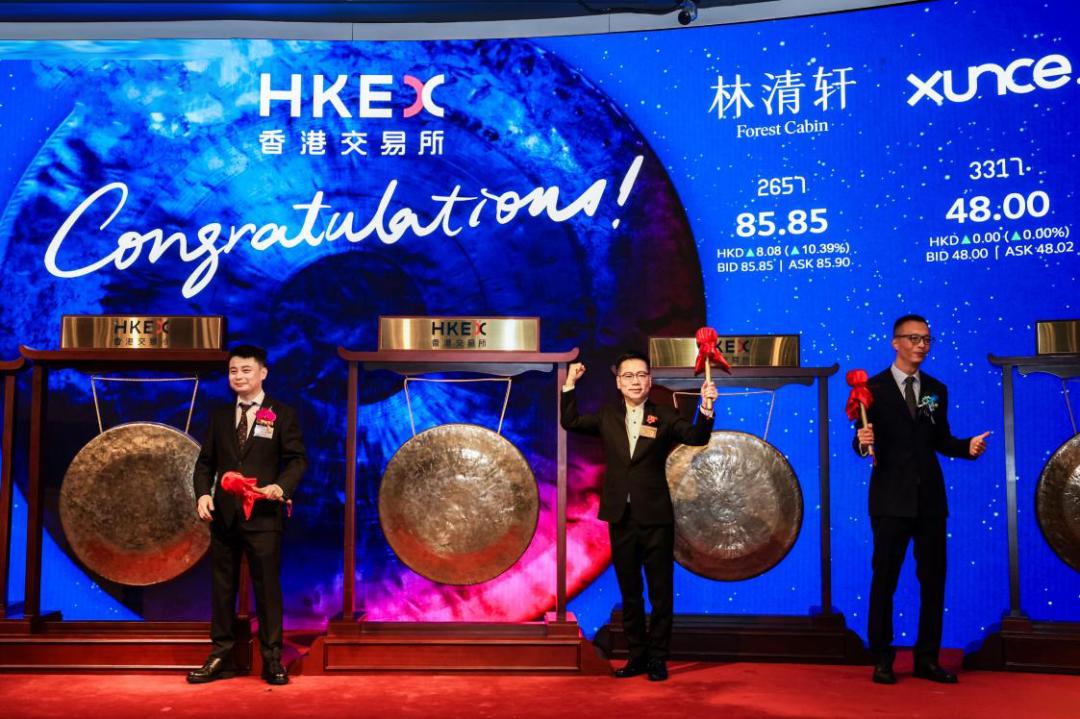
Linqingxuan rings the bell at the Hong Kong Stock Exchange
In March 2026, the Hong Kong Exchanges and Clearing Limited issued the "Consultation Paper on Review of Listing Mechanism Competitiveness", proposing to lower the market value and revenue thresholds for companies with different voting rights and to expand the scope of confidential IPO applications. If the policy is implemented, it will further enhance the attractiveness of the Hong Kong stock market to growth - oriented consumer companies.
Thirdly, the A - share market's review of the "technological content" of brand owners is becoming increasingly strict.
Compared with raw material companies, although brand owners have stronger consumer awareness and larger revenue scales, in the context of the A - share market, they still need to answer questions about R & D capabilities, core technologies, independent production, and supply chain stability. For many brands, the Hong Kong stock market is not only an active layout for internationalization but also a practical choice to bypass the phased review pressure.
At the same time, the "A + H" model is accelerating its spread among leading beauty companies. Proya, Marubi Biotechnology, and Ruoyuchen have successively promoted the issuance of H - shares, and Huaheng Biology has also launched an impact on the Hong Kong Stock Exchange from the Science and Technology Innovation Board. In 2026, two billion - level "A + H" projects, Muyuan Foods and Dongpeng Beverage, have been born in the Hong Kong stock market. The demonstration effect of leading enterprises is paving the way for later - comers.
If Proya and Marubi Biotechnology successfully complete their dual - listings, leading domestic brands will further open up the international capital market narrative and may also drive more domestic beauty companies to re - evaluate their capital paths.
However, the Hong Kong stock market does not mean a low threshold. For brand enterprises, whether they can support a higher valuation still depends on the quality of growth, brand barriers, overseas layout, and profitability. The capital market will no longer just pay for the "domestic brand story" but will value more whether the enterprise can convert brand potential into stable cash flow and long - term growth.
Has the situation of beauty brands in the A - share market changed as the industry enters the era of "full - industrial - chain capitalization"?
Overall, the most prominent feature of the beauty IPO market in the first half of this year is that capitalization has fully penetrated from the downstream brand end to the upstream supply chain and mid - stream service providers, and the penetration speed far exceeds expectations. Previously, listed companies in the beauty industry were mainly concentrated in the brand end. Now, companies in various links such as raw material suppliers, packaging material suppliers, e - commerce operators, retailers, and testing service providers have landed on the capital market. The beauty industry is entering the era of "full - industrial - chain capitalization".
This trend will profoundly reshape the value distribution pattern of the beauty industry. In the past, downstream brand owners occupied most of the profits in the industrial chain, and the bargaining power of upstream suppliers and mid - stream service providers was relatively weak. However, as upstream companies and mid - stream service providers are listed one after another, their capital strength and industry voice will be significantly enhanced, and the profit distribution in the industrial chain will be more balanced.
Although the beauty IPO market was generally active in the first half of the year, the challenges cannot be ignored.
On the one hand, regulatory reviews are still becoming stricter. The core focus of regulatory reviews is extending from traditional financial compliance to the authenticity of core technologies, financial authenticity, business compliance, information disclosure quality, and sustainable operation ability. Even raw material companies need to prove that they are not simply labeled as "specialized, refined, characteristic, and innovative" but truly have R & D capabilities and industrialization barriers.
The Beijing Stock Exchange is also strengthening this trend. In March this year, the Beijing Stock Exchange launched a re - inspection of IPO companies that have passed the review, covering more than 10 companies, accounting for about one - third of all companies that have passed the review. For example, Weiqi Technology was asked about the sustainability of its performance growth, Fuyin New Materials was required to explain the impact of shareholding on behalf of others and trademark infringement disputes, and Bairuiji has not been listed yet due to financial material issues nearly four months after passing the review.
This means that going public is no longer a "one - time exam" but a continuous review of the long - term operation quality and technical barriers of the enterprise.
On the other hand, the valuation differentiation in the secondary market is forcing the reconstruction of the pricing logic in the primary market. The stock prices of currently listed beauty companies have fluctuated frequently. For example, the so - called "star stocks" are experiencing varying degrees of valuation corrections, which has affected the valuations of beauty companies on the way to going public to a certain extent.