Please stop obsessing over content Agents. Why not figure out what the point is first?
In the second week of June, the keyword "physiological aversion to AI faces" trended on Weibo.
The definition of AI faces emerged from this: the stereotypical high forehead, big eyes, narrow nose, and fair skin, which are called "generic faces", "factory - set faces", "modeled faces"...
From "physiological aversion" to "nausea", the aversion of some audiences is evident.
In fact, the negative impacts of AI - generated content have begun to spill over. Liu Jin, a supporting actor in the ancient - costume drama "Qiao Chu", was regarded as an AI - generated character by many audiences because of her stiff expressions and empty eyes. She had to respond by saying that she "had a modeled face".
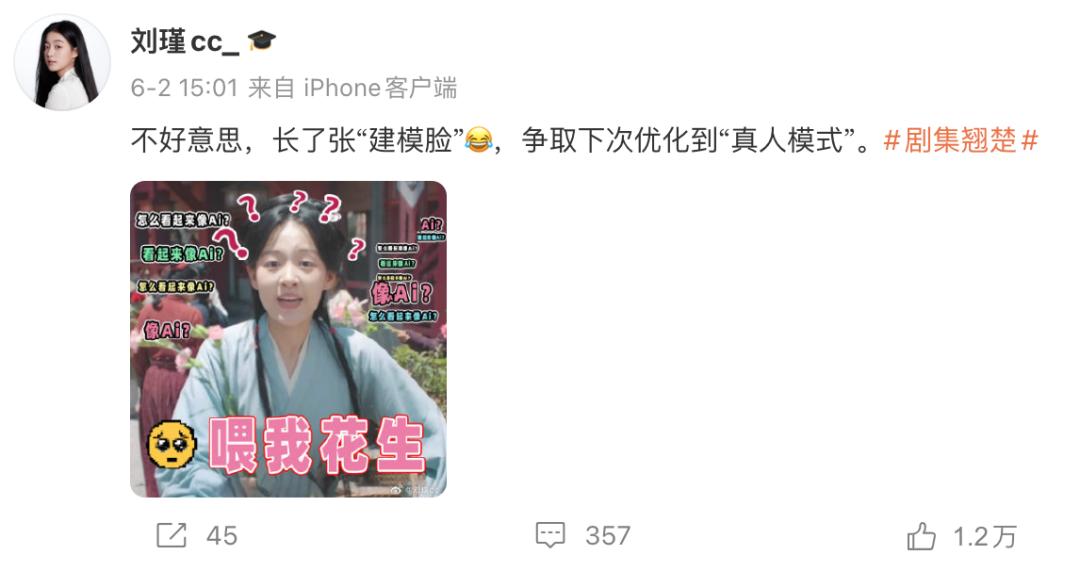
Screenshot from Weibo
Currently, a real - life actor has to publicly explain being suspected of being an AI. Audiences now default to looking at every face with suspicion.
The strange thing is that while audiences are starting to feel "nauseated" by AI faces on the screen, the supply side is still ramping up efforts.
Content agent products from various big tech companies are emerging in an endless stream.
On June 13th, Tencent's TDream was exposed, focusing on "interactive movie - game creation" and allowing one - click login via WeChat and QQ. Earlier, Meitu's RoboNeo was upgraded to "Imaging Creation Agent Teams", claiming to provide a "cyber service provider team" for OPC. Ji Meng has put the Agent mode on the homepage, Xiaoyunque has evolved to version 2.0, Alibaba has launched Wanjing Yike, and there is also a long - awaited WeChat/Video Account AI agent... The slogans of these products are quite similar: one - click generation, one - click video production, and everyone can be a director.
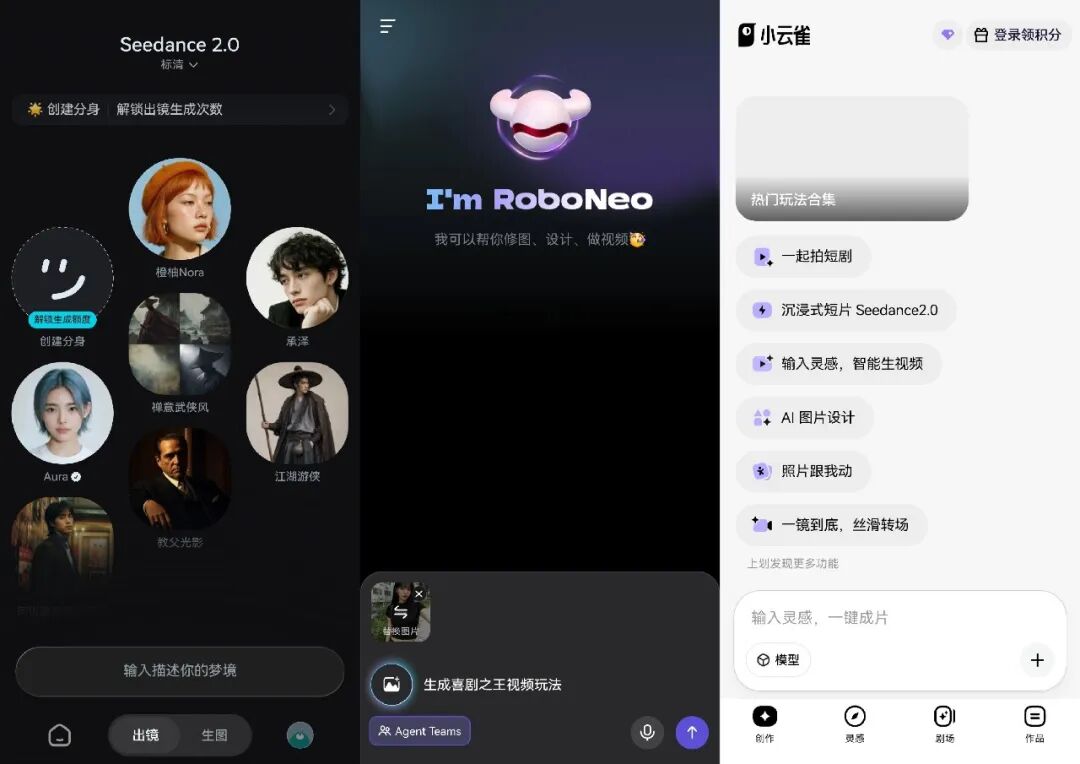
Some content agents
On one hand, audiences are gradually developing a rebellious psychology towards AI content. On the other hand, big tech companies hope that more agents can improve production efficiency.
These two curves are going in opposite directions. Almost no one cares about whose problems these numerous content agents are actually solving.
There are at least two things that platforms focusing on content agents haven't figured out.
First, the supply of this kind of content already far exceeds the demand.
Production efficiency and consumption efficiency are two different things.
In the past six months, AI has led to exponential growth in the former, while the latter has remained largely unchanged. The number of TV dramas, short videos, and comic dramas that an audience can watch in a day is limited. This upper limit is actually the same as it was three to five years ago and has not changed since the emergence of agents.
Reducing the marginal cost of a single piece of content to almost zero only amplifies production capacity, not the audience's attention.
The data on the production side is already there. The "Guidelines for Micro - Short Drama Creation" in the first quarter of 2026 released by the China Audio - Visual Association shows that in the first quarter of 2026, about 128,000 micro - short dramas were launched in the entire industry, among which about 122,000 were AI - generated micro - short dramas, accounting for more than 95%.
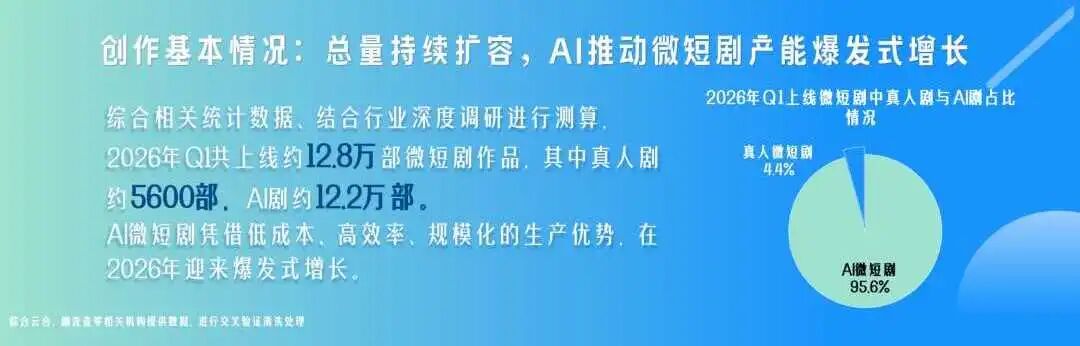
China Audio - Visual Association's "Guidelines for Micro - Short Drama Creation"
Platforms are of course aware that a single tool can't be sold at a high price, so they want to revitalize the scale of agents through entrances and distribution. However, entrances only redistribute attention, and distribution only moves the surplus from one pool to another. The total viewing time remains unchanged. When the cost of producing an AI - generated piece of content approaches zero, the rational choice is to produce infinitely until the average revenue also approaches zero.
This is not prosperity; it's more like deflation.
Each additional content agent is like pouring another ladle of water into an already over - supplied pool.
What's more worthy of vigilance is that the measurement criteria themselves are off - target.
Today, the industry evaluates a content agent based on generation speed, single - piece cost, and the number of incoming creators, all of which are supply - side indicators. The completion rate, re - watching rate, and willingness to pay, which truly determine the value of content, are not used to score agents. After all, only at this point will someone mention that an agent is just a tool, and the producers are ultimately responsible for the profits and losses.
Second, audiences have started to develop a rebellious attitude towards AI content.
The physiological aversion to AI faces is, in the final analysis, a spontaneous aesthetic resistance, similar to the audiences' opposition to stiff green - screen performances and actors reading out numbers as lines in the past.

Screenshot of an AI video generation
It is a signal of the overall vigilance of the demand side towards AI content. After all, all current tools for improving production efficiency default to the same premise: AI - generated content is a cheaper and neutral alternative. As long as the quality is on par and the price is lower, audiences will accept it all.
Once labels like "physiological aversion" start to appear, this premise is actually overturned. AI content has begun to become a negative emotional label. If it's free, it's okay. But once an attempt is made to charge for this type of content, it will inevitably lead to a greater backlash.
What's more troublesome is that this aversion is structural and difficult to disappear with model iterations. The core lies in the high overlap of training data for text - to - image and text - to - video models of various companies, and the optimization goals all point to the same "high - attractiveness" statistical average. So, no matter which tool is used, the generated faces tend to converge to the same face.
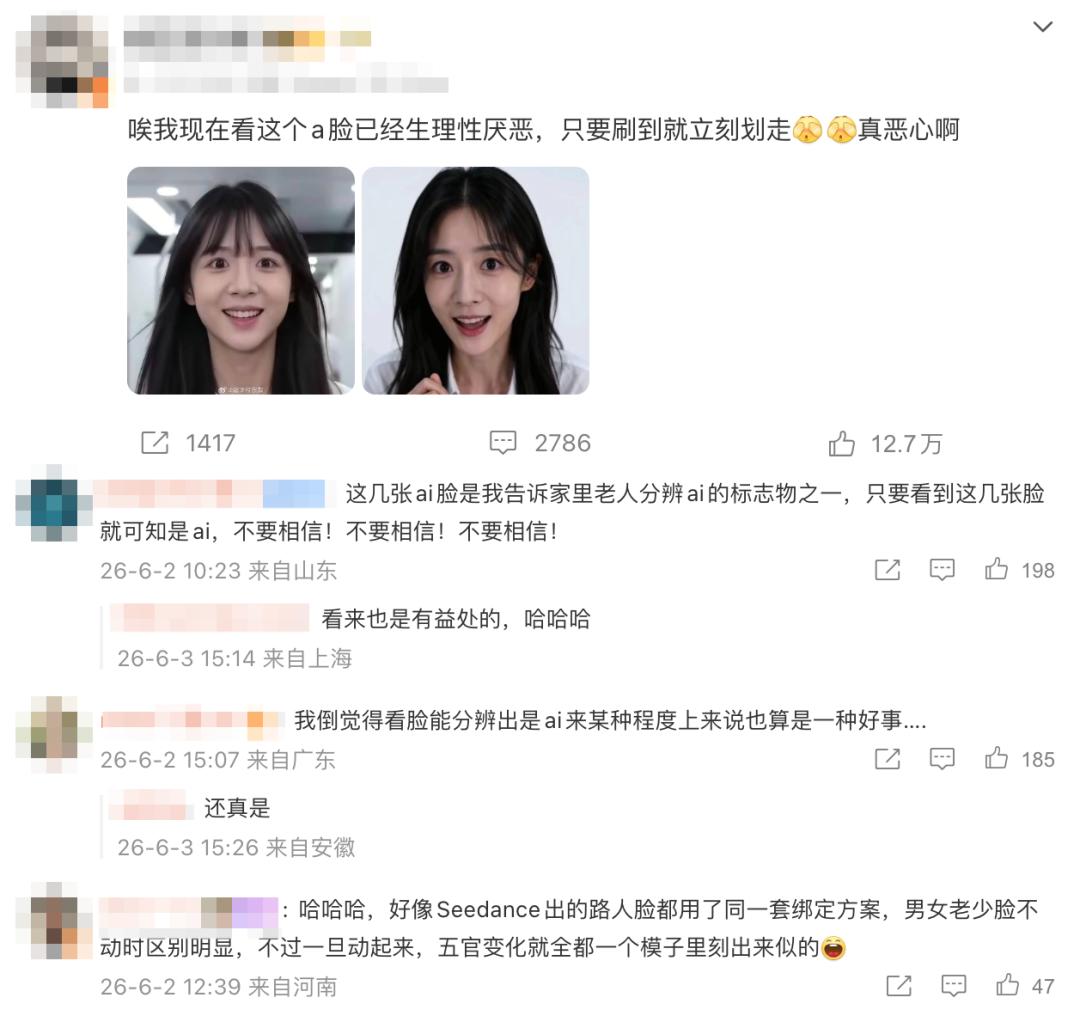
Screenshot from Weibo
The more tools there are, the more identical faces there are, and the faster aesthetic fatigue and aversion set in. One - click agents push this homogeneous production to the extreme, which is equivalent to mass - producing what audiences dislike the most.
Once this premise is removed, the whole logic becomes a negative feedback loop.
The more useful the agent is, the more AI content is supplied; the more content is supplied, the faster the aversion comes; the deeper the aversion, the more severely the AI content is discounted, and the less valuable the cost savings of the agent become.
A significant portion of the money big tech companies invest in content agents is actually accelerating the consumption of the demand - side assets of their own products.
With oversupply and audience aversion, one - click content agents are almost in the worst position - they are simultaneously exacerbating the surplus and accelerating the aversion.
So, is there no proper way to use AI in the content industry? Yes, but it needs to be applied in the opposite direction.
Ke Ling and iQiyi's Na Dou Pro can serve as a control group.
Ke Ling is becoming more and more like a professional film - making tool. In the past six months, it has added capabilities such as intelligent storyboarding and camera movement that are in line with professional processes, and has participated in the special - effects production of large - scale ancient - costume TV dramas like "Taiping Nian".

Ke Ling AI assists in generating scenes for "Taiping Nian"
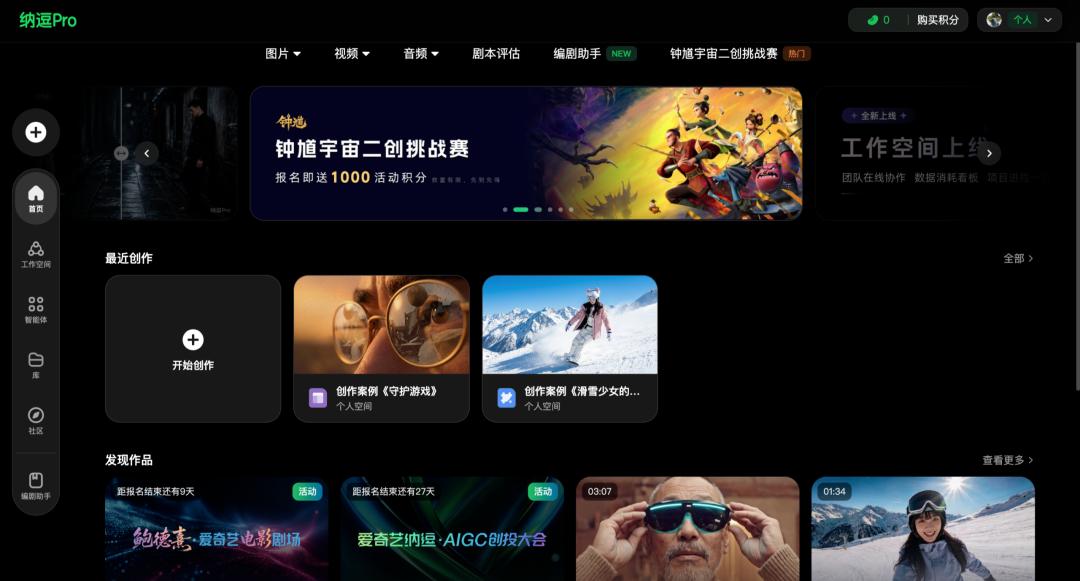
iQiyi's Na Dou Pro has developed specialized intelligent agents for screenwriting, art, storyboarding, and visual effects. Each module is integrated into the original division of labor in the film and television industry to serve professional creators rather than replace them.
According to iQiyi, it aims to shift creation from "trial - and - error generation with uncertain results" to "goal - oriented and controllable creation". For example, the movie "Evil Thoughts" produced by iQiyi used Na Dou Pro. It relied on the agent to quickly test and establish the special - effects art style, which improved the overall production efficiency from the side. The final decision on the finished product is still made by professional production personnel.
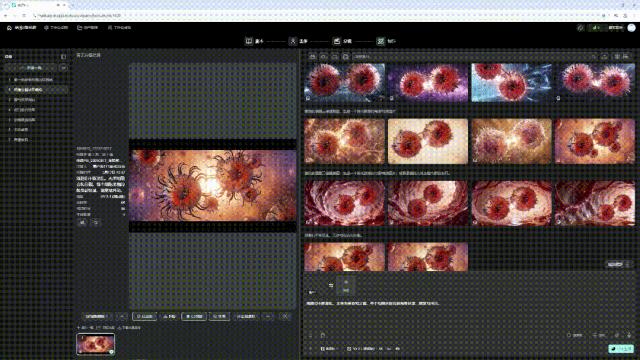
Testing with Na Dou Pro for "Evil Thoughts"
The difference is quite clear: The subtext of one - click agents is that AI becomes the author and human creators step back; the subtext of tools like Na Dou is that AI serves as a tool, and humans remain in their original positions but with more efficient creative tools.
It also bypasses the second problem.
For tools integrated into the workflow, the final decision - makers are still the director, art designer, and screenwriter. The output goes through human aesthetic judgment and won't have that unified "factory - set" feeling. What audiences actually dislike more is the same old assembly - line products. The use of AI itself is not the original sin. If the traces of real people are reflected in the creation, the effect of AI won't become a reason for rejection.
Of course, Na Dou Pro also has its own ambitions, such as having an IP library and a revenue - sharing closed - loop and signing hundreds of artists. How to evaluate this part is another matter. But at least in terms of product form, breaking AI into callable professional capabilities and integrating them into the existing process is much more honest and safer than trying to save everyone by pressing a single button.
What the content industry should eliminate most now is the arrogance of thinking that a single sentence or a single draw can replace screenwriters, actors, and directors. Recognizing AI as a tool rather than pretending it's a creator will lead to a longer - term development. Before figuring this out, adding one more one - click content agent only means more low - quality content surplus and more audience aversion, without any clear way out.
This article is from the WeChat official account "Yiyuguancha" (ID: yiyuguancha). The author is the Yishu Team, and it is published by 36Kr with authorization.