Even high school graduates can now join SK Hynix's R&D department. In the AI era, do we still need to fiercely compete for academic credentials?
High - school graduates can now join the chip R & D department.
On June 17, according to Yonhap News Agency, South Korean storage giant SK Hynix officially announced that the rigid requirement in its recruitment criteria stating that "applicants must have a four - year bachelor's degree or above" has been officially abolished.
Positions in "technological ivory towers" such as R & D, chip design, and device engineering, in the past, are now open to high - school and junior - college students who have the skills to submit their resumes.
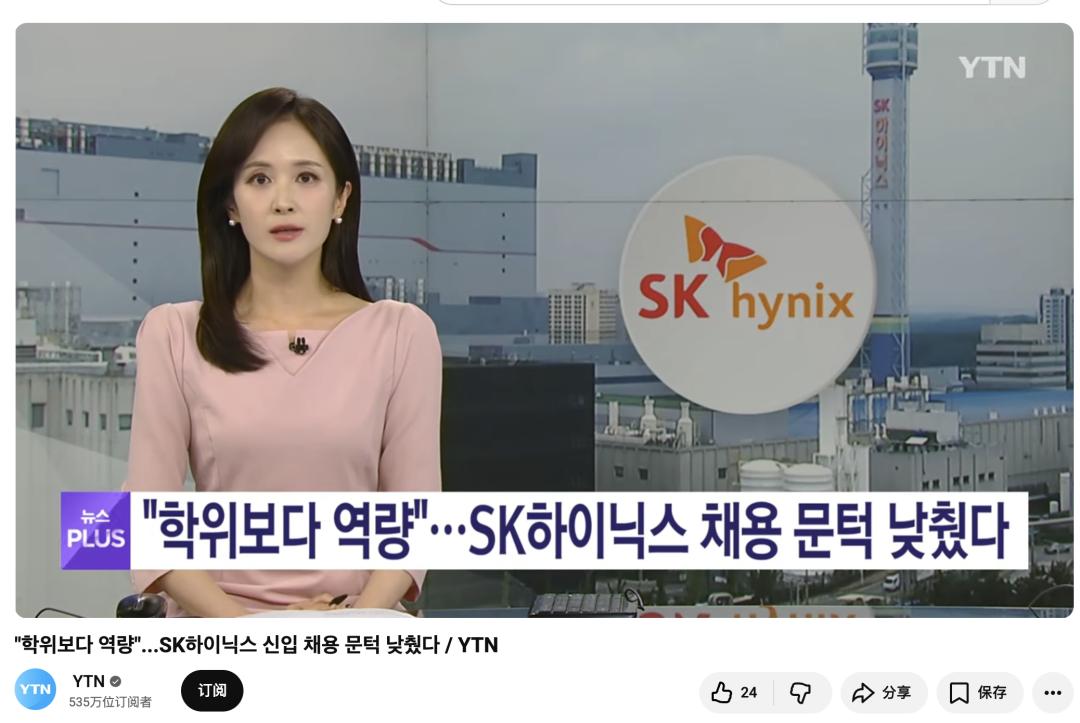
Attached subtitle translation: "Competence is more important than academic qualifications"... SK Hynix lowers its recruitment threshold | Image source: A screenshot from a video of South Korea's well - known TV news channel YTN 🔗 https://www.youtube.com/watch?v=Xv97rpOW8Js
Conversely, production - line positions that previously only recruited high - school and junior - college students are now open to bachelor's and master's degree holders.
With this two - way opening, academic qualifications are no longer a prerequisite for entering a position. In South Korea, a country where academic qualifications are highly competitive and diplomas from SKY universities (Seoul National University, Korea University, and Yonsei University) are highly regarded, this move is truly astonishing.
According to OECD data, the higher - education completion rate among South Korean youth aged 25 to 34 is as high as 71%, ranking first among member countries for many years. In such a highly competitive place, for the leading chip giant to say that "diplomas are no longer important" is quite abnormal.
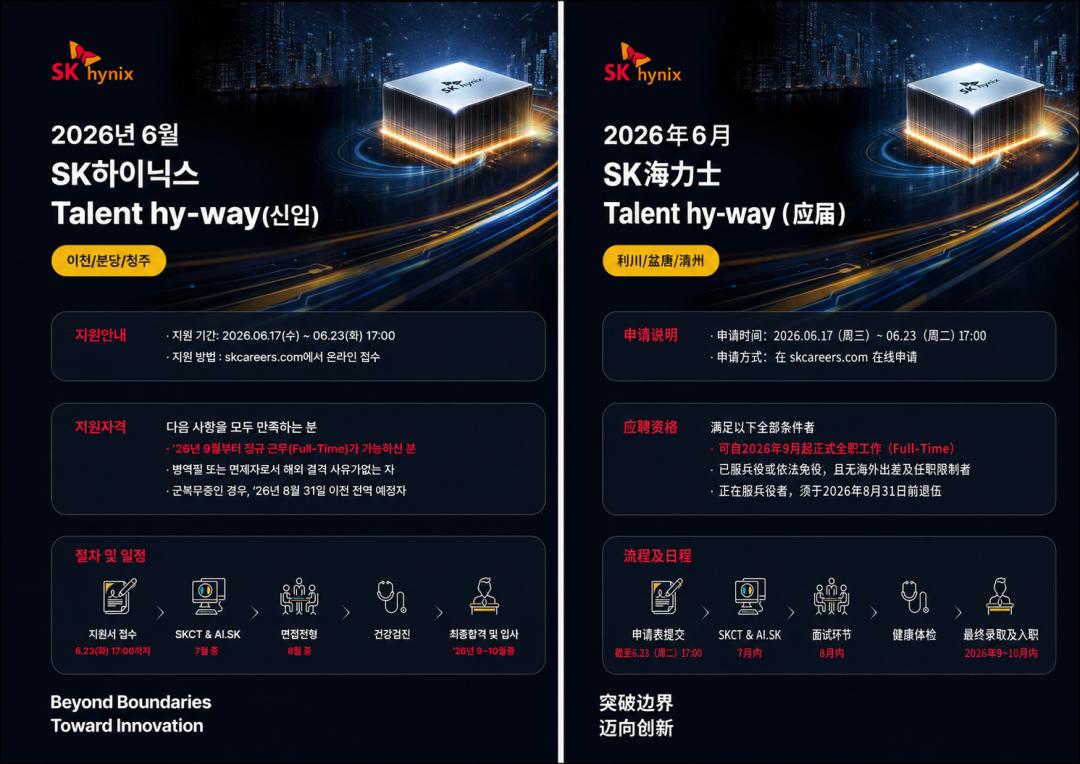
The Chinese version translated by AI on the right side of the picture is for reference only.
In the AI era, companies are looking for people beyond diplomas
Regarding this move, SK Hynix's official reason is that the AI industry is changing too rapidly, and the real competitiveness of talents can no longer be measured by a single degree or a standardized resume.
In their view, in the past few decades, what kind of students did universities produce in batches? They were standardized white - collar workers capable of basic data processing, official document writing, junior programming, and logical induction.
These are exactly the tasks that today's AI can do the fastest and is most likely to replace.
Especially when AI can complete routine chip - design code generation, test - case writing, and preliminary yield - data screening at a much faster speed than humans, companies no longer need a four - year - educated instruction - execution machine.
What they need are interdisciplinary talents who can pose extremely complex problems, define the boundaries of new system architectures, and have strong interdisciplinary intuition.
However, it should be noted that SK Hynix's announcement this time refers to "recruitment of new employees," that is, recruitment of fresh graduates and entry - level positions.
South Korean large enterprises usually implement a system of recruiting new employees at the same time each year. They recruit a batch of new people regularly, and these new employees enter the organization from grass - roots positions. Then they gradually move up through internal assessments, years of service, and job rotations.
When a high - school graduate can apply for an R & D position, it means he can enter the candidate pool and undergo a job - competency assessment; however, this does not mean that he has the same chance of being hired as graduates from Seoul National University, Yonsei University, or KAIST.
After entering the candidate pool, for positions such as R & D, chip design, and device engineering, programming ability, basic knowledge of semiconductor physics, project experience, problem - solving ability, and the speed of learning new technologies are still important factors to consider.
It is reported that this talent - selection concept is deeply influenced by Chey Tae - won, the chairman of the SK Group. Chey Tae - won highly summarized the core survival abilities that individuals must possess in the AI era as irreplaceable "muscle" characteristics:
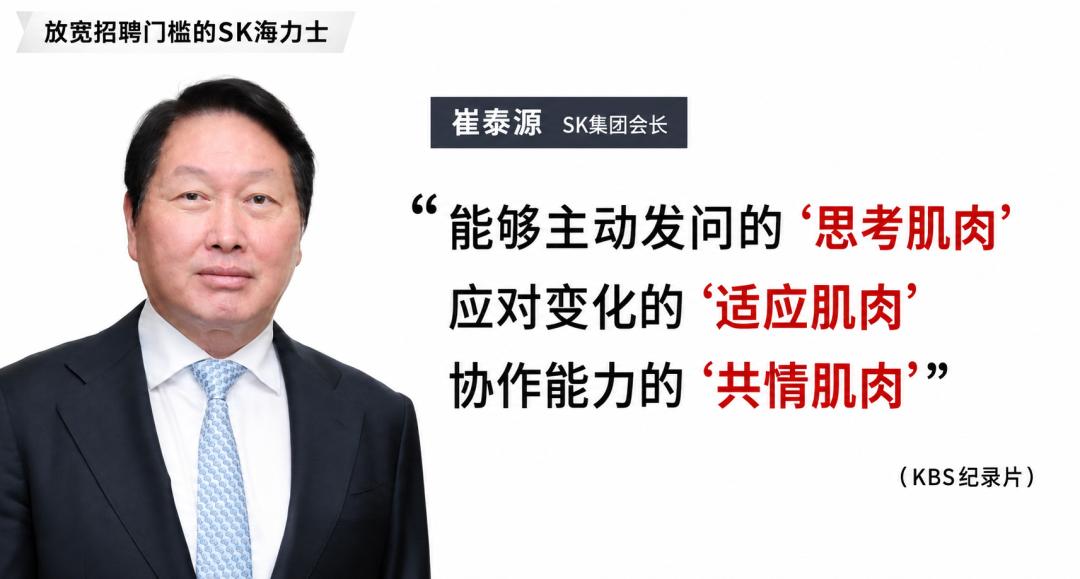
Thinking Muscle: The ability to explore the underlying nature of things, pose creative problems, and re - define the boundaries of problems in a complex information environment.
Adaptation Muscle: The ability to quickly adjust one's mentality in the face of failure and adapt to new technologies nimbly in an environment of rapid technological change.
Empathy Muscle: And unique human empathy, collaboration ability, and physical perception skills cultivated through activities such as music, art, and sports, which machines do not possess.
In addition, to better screen talents, SK Hynix has also developed an AI assessment system: It dynamically generates customized questions to remotely evaluate the real abilities of interviewees - how they solve problems under real pressure, their values, and whether they fit the company culture.
However, entrusting the judgment of human value entirely to an AI assessment may not necessarily be fairer.
Screening by diploma is at least open, traceable, and relatively transparent. For an AI assessment that is defined by the company itself and dynamically generates questions, there are still no answers to questions such as what the standards are, whether it will introduce new biases, and whether those judged "unsuitable" can appeal.
In this reform, another aspect of opening up that is easily overlooked is allowing bachelor's and master's degree holders to apply for production - line positions.
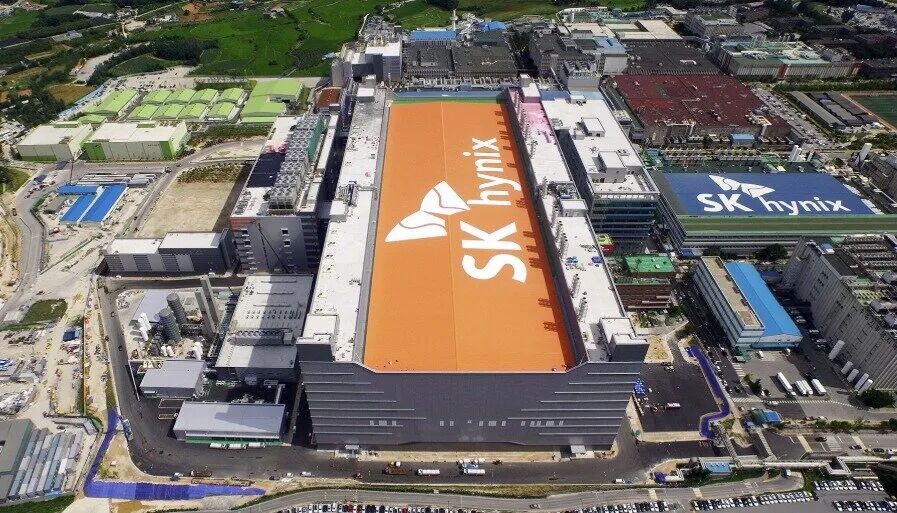
The outside world still has an old - fashioned view of chip manufacturing and believes that "working in a factory" is a labor - intensive assembly - line job. But in fact, advanced semiconductor manufacturing in the AI era is already a highly automated and data - driven engineering system.
In unmanned factories, front - line positions need to process a large amount of sensor data, conduct yield analysis using digital twins, and perform predictive maintenance on equipment - the technical content is even higher than that of many junior office white - collar jobs.
More realistically, due to the extremely generous bonuses for production - line positions at SK Hynix, a ridiculous phenomenon has emerged: A large number of bachelor's and master's degree holders deliberately conceal their highest academic qualifications in their resumes to apply for lower - level positions in order to get in.
Behind this, it actually circles back to the AI wave itself.
The reason why advanced wafer fabs can offer such generous rewards is that the construction of AI infrastructure is creating unprecedented industrial profits.
As the leader in HBM, SK Hynix has reaped one of the biggest benefits from the current AI computing - power arms race. That's why it has the confidence to no longer rely on diploma screening. Instead, it opens its doors wider and uses more complex ability assessments to find people who can truly create value.
Now, by abolishing the diploma restriction, it also reduces the upside - down phenomenon of concealing educational backgrounds.
In short, when the evaluation method shifts from "looking at diplomas" to "looking at abilities," the level of academic qualifications itself is no longer something to be guarded against. Whether it's moving up or down, the threshold loses its meaning.
The impact of AI on jobs is not limited to this. A 2025 study by Stanford's Digital Economy Lab based on ADP salary data found that among occupations most exposed to AI, there was a 16% relative decline in employment for early - career workers aged 22 - 25. Positions such as software development and customer service were particularly affected.
Data from the job - search platform Handshake also confirms this: The number of entry - level and internship positions for fresh graduates has decreased year - on - year, while the average number of applications per position has increased significantly. It has become more difficult for new graduates to find jobs.
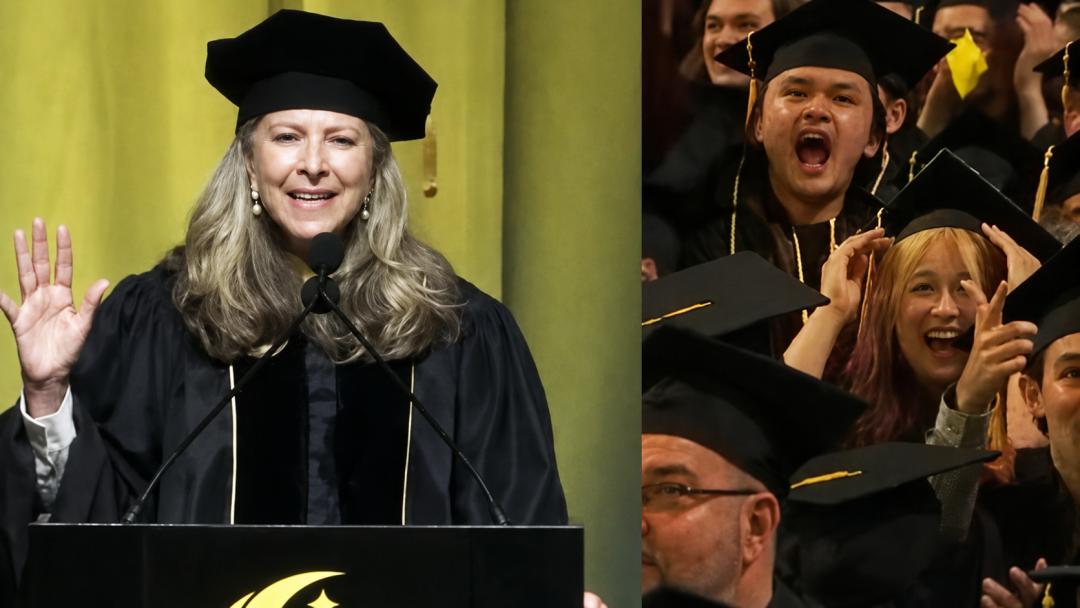
PricewaterhouseCoopers gave a more pointed judgment in its "2026 AI Employment Barometer":
AI is dividing the labor market into "two tracks." One track consists of professional positions that require high - order judgment, complex design, and strategic planning. AI amplifies the output of these people, and their wages are rising faster. The other track consists of ordinary positions that are affected by AI, where both the threshold and the bargaining power are being lowered.
The traditional career ladder of "starting from a junior position for a few years and then gradually moving up" is being hollowed out in the middle. Some companies prefer to use AI to replace standardized junior jobs rather than spend high costs training traditional graduates lacking practical experience.
When the bottom of the career ladder is eroded by AI, education, companies, and society must all rethink the starting point of talent cultivation.
The king of AI memory is also at the edge of the cycle
By now, you may easily come to a straightforward conclusion: the theory of the uselessness of diplomas is winning again.
But the situation is not that simple. One of the reasons why SK Hynix can abolish the diploma threshold is that it has sufficient rewards to absorb the talents that will flow in after opening the door.
In September 2025, benefiting from the AI dividend, SK Hynix, under multiple - party negotiations, signed a ten - year agreement with the labor union and did something that no South Korean company dared to do: it abolished the cap on the "profit - sharing bonus not exceeding 1000% of the basic salary" and directly put 10% of its annual operating profit, with no upper limit, into the employee bonus pool.
Moreover, the bonus is distributed in a flexible way: 80% is paid immediately, and the remaining 20% is postponed for two years, with a fixed annual return of 10%. Employees can also convert up to half of their bonuses into company stocks.
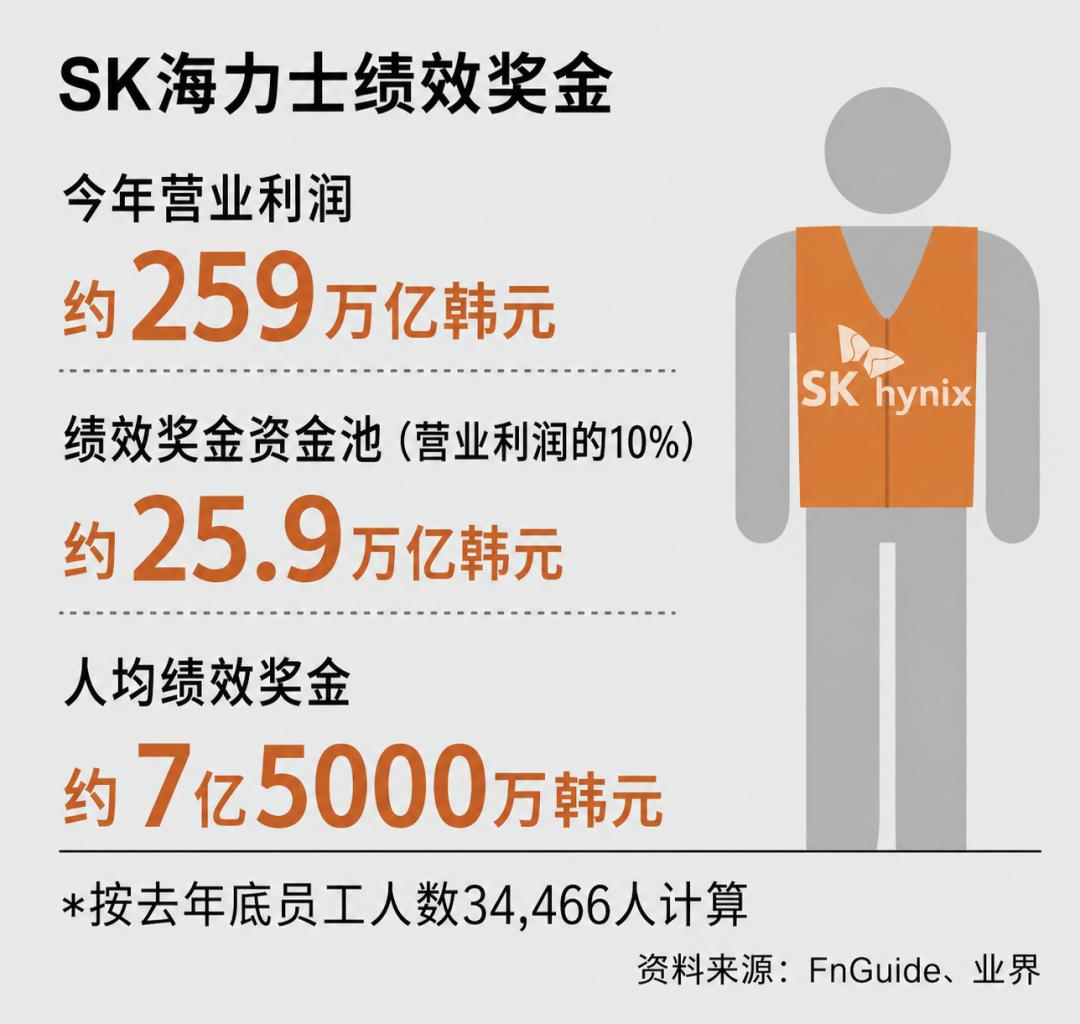
It is worth noting that in 2025, the average bonus per employee at SK Hynix was about 140 million won (about 6.5 million yuan). Securities firms predict that if profits continue to grow, the bonus for ordinary engineers in 2026 may even reach several million yuan.
The huge bonuses are also changing South Korea's career - discrimination chain. In the past, doctors, lawyers, and senior civil servants were the most sought - after in the marriage market. Now, SK Hynix employees have also become popular. Going on a blind date wearing an SK Hynix work - uniform is even regarded as a sign of financial strength.
The semiconductor dividend has also spilled over into consumption and the real - estate market. South Korean media reported that the consumption of luxury cars, jewelry, and high - end watches has increased, and many customers are from the semiconductor industry. The housing prices in industrial clusters such as Hwaseong and Pyeongtaek have also been rising.

In other words, this confidence ultimately comes from the most core infrastructure business in the AI era - HBM.
Simply put, HBM is the "memory" of AI chips.
Large - model training requires a large amount of data. The bandwidth of traditional planar memory is too low, and the latency is too high to meet the needs of NVIDIA's graphics cards. HBM stacks multiple DRAM chips vertically using through - silicon via (TSV) technology, breaking through the "memory wall" and increasing the bandwidth to several times that of traditional DRAM.
The drawback is the high cost, with a premium that can be 5 to 6 times that of traditional DRAM.

However, NVIDIA's AI accelerators cannot function without it. As a result, SK Hynix's financial reports have been soaring. In the first quarter of 2026, SK Hynix's revenue reached 52.58 trillion won, a year - on - year increase of 198%. Its operating profit was 37.61 trillion won (about 166.1 billion yuan), a year - on - year increase of 405%. The operating profit margin was 72% - a heavy - asset manufacturing industry with a higher profit margin than Apple.
In terms of market share, SK Hynix accounts for about 58% of the global HBM market and holds about 70% of NVIDIA's HBM4 orders.
In May this year, SK Hynix's market value officially exceeded $1 trillion, becoming the third Asian company with a market value exceeding $1 trillion.