Dynamic Island is emerging as the new iconic feature in the AI era.
In the autumn of 2022, the iPhone 14 Pro was released. What really went viral on social platforms was neither the chip nor the camera, but the deformable black notch at the top of the screen, the Dynamic Island. It hides the ugly cut-out in a flowing black area, where notifications, incoming calls, and playback progress expand and contract.
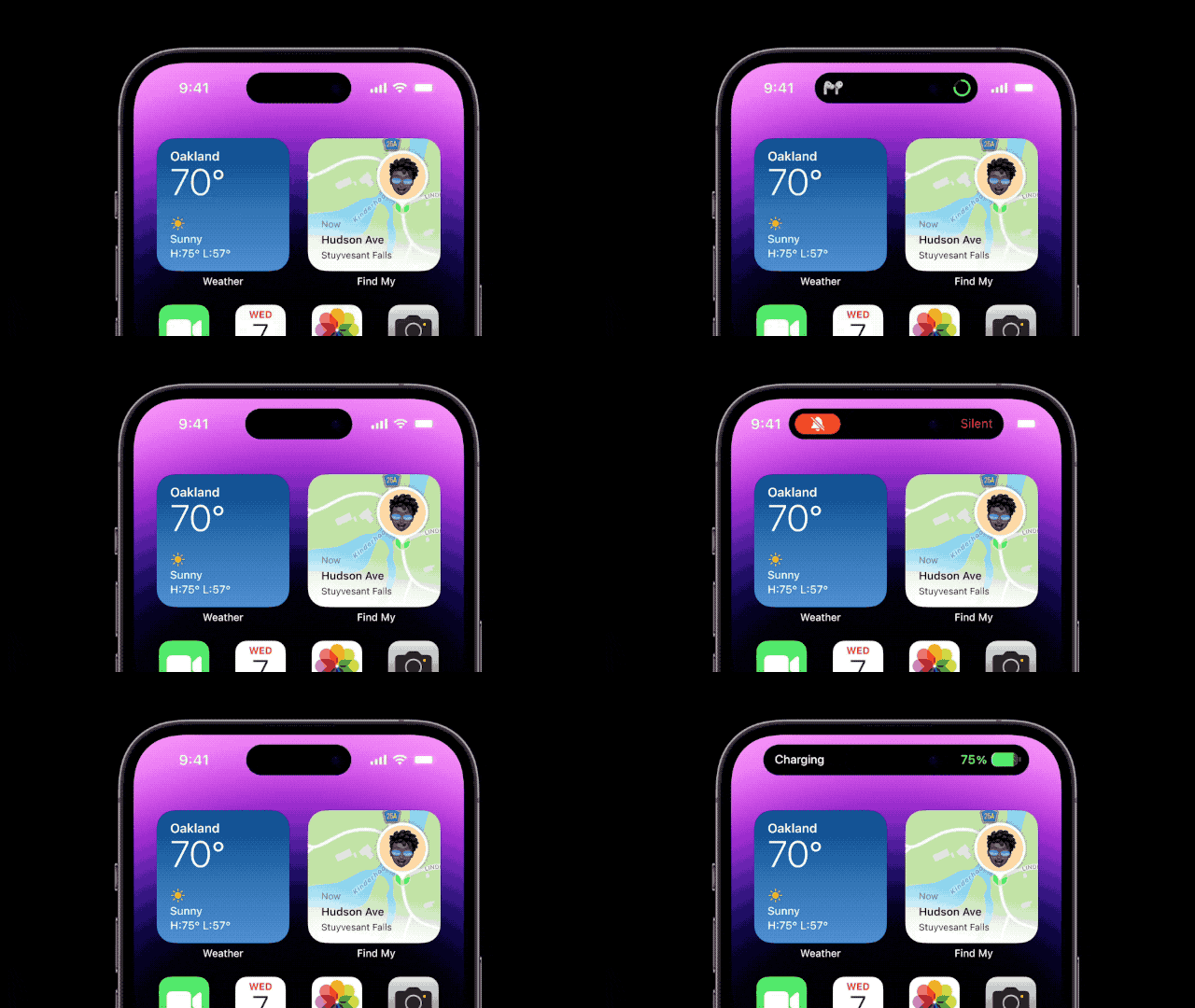
At that time, even Apple itself couldn't really explain how it came about. In an interview, Apple's design director, Alan Dye, admitted that the origin of the Dynamic Island concept was "hard to trace," while software chief Craig Federighi described it as "a very Apple-style development case," meaning that the hardware and software teams worked back and forth for a long time before this feature emerged.
No one at that time thought that four years later, this once-despised notch would become a prime entry point that Apple, Android manufacturers, and every AI assistant would want to grab.
From the Notch to the Dynamic Island
The journey of the Dynamic Island has been full of ups and downs. Initially, it was a remedial solution implemented by Apple through technological innovation to cover up the design flaw of the notch screen. In the era of full-screen displays, there had to be a place for the front-facing camera and facial recognition components. At first, a notch was left at the top of the screen, which was very unsightly and was quite unpopular at the time.
Apple's solution was ingenious. They simply turned this cut-out area into a stretchable and deformable black bar, commonly known as the black "pill," and then let information such as notifications, status, incoming calls, navigation, and playback controls flow within it. Coupled with Apple's unique interactive design aesthetics, the flaw instantly became a highlight.

After the Dynamic Island became popular, the Android camp almost rushed in, and it has become the norm in recent years. As of early 2026, except for a few models such as Nubia and Red Magic that focus on gaming, most leading mobile phone manufacturers have created their own "islands."
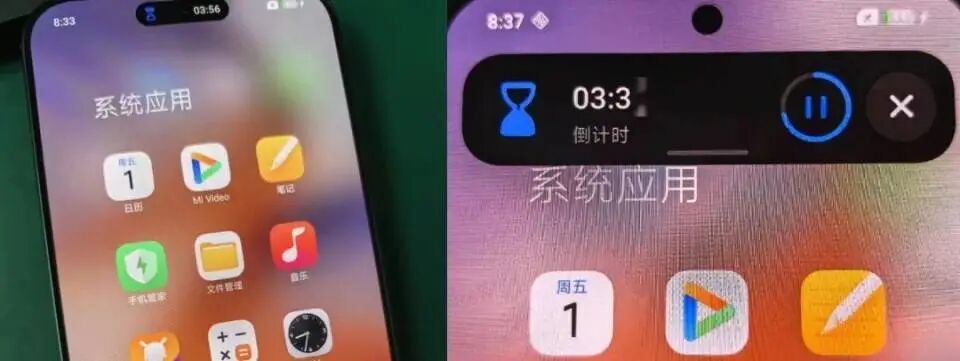
Although it was not born out of some groundbreaking innovation at the beginning, it has to be said that now the Dynamic Island is not just a UI detail. It has successfully integrated into the Apple ecosystem and users' lives, and has gradually become an "island" that everyone wants to stand on because Apple has equipped it with an important ability: Live Activities.
Different from ordinary push notifications, Live Activities are simply a type of card that can be continuously updated on the lock screen and the Dynamic Island. It can refresh the content frequently within a few hours, and also allows you to directly tap for interaction: You can see at a glance on the Dynamic Island how many minutes your takeaway will arrive, what the score of the ball game you're following is, and the fitness timer you're running, without having to repeatedly open the app.
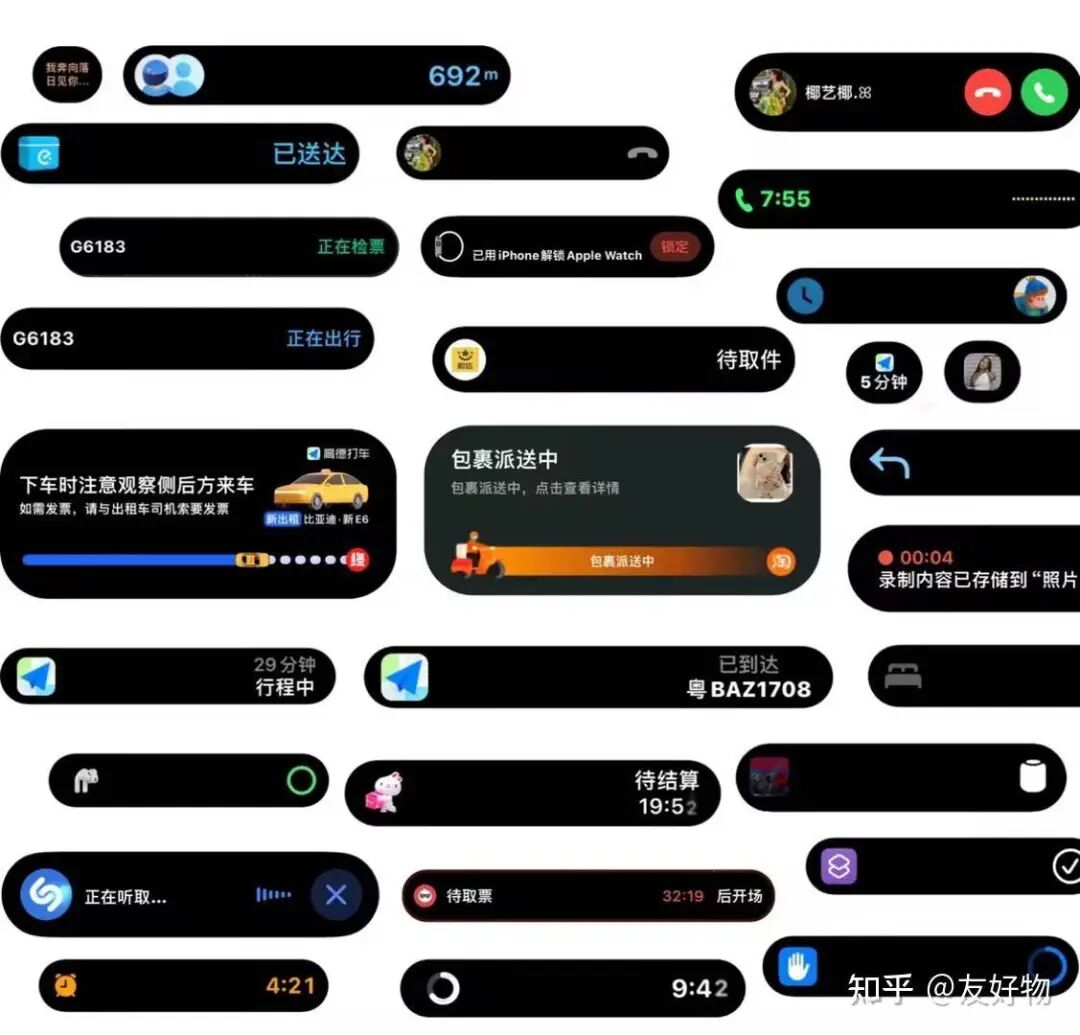
Image source: Zhihu user @Youhaowu
This design hits a real need, so the Dynamic Island quickly changed from "good-looking" to "useful." It is high-frequency, always present, and users can see it as soon as they look up, making it a natural prime display area.
Because it is such a prime location, trouble soon followed. The language learning app Duolingo was found by users to be using the Dynamic Island and live activities on the lock screen to push a membership promotion called "Super Offer" with a countdown style, which looked exactly like a marketing pop-up. Later, other apps were also found to be stuffing ads onto the Dynamic Island.
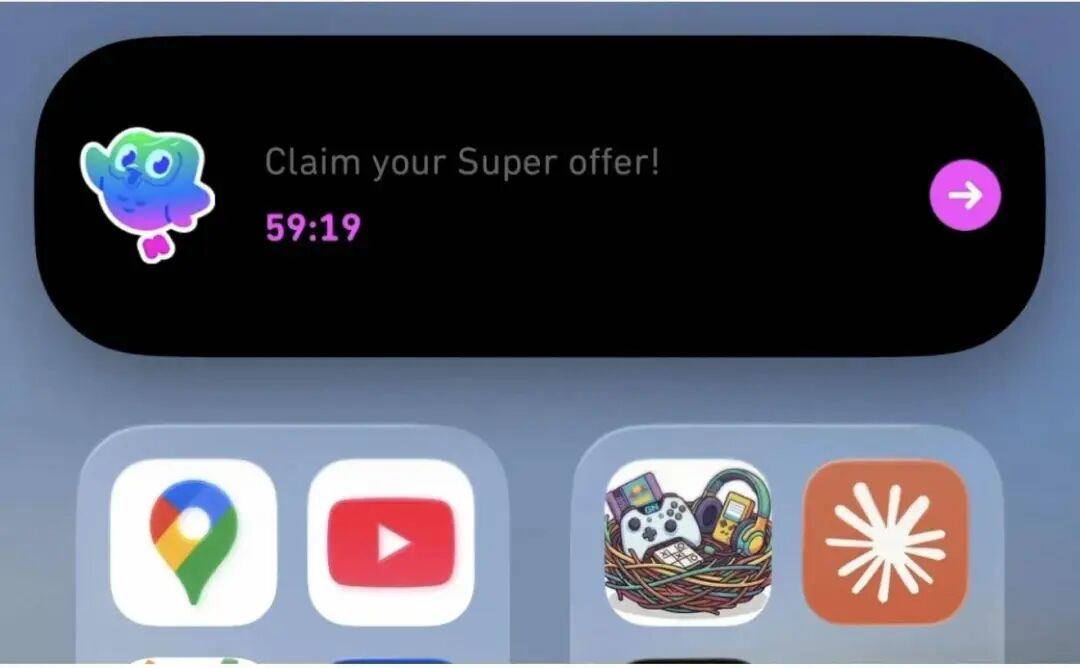
In fact, Apple clearly stipulates the design specifications for Live Activities in the developer documentation, stating explicitly that "Do not use Live Activities to display advertisements or promotional information. Live Activities are designed to help users keep track of ongoing events or tasks at any time, so they should only be used to display information directly related to the event or person."
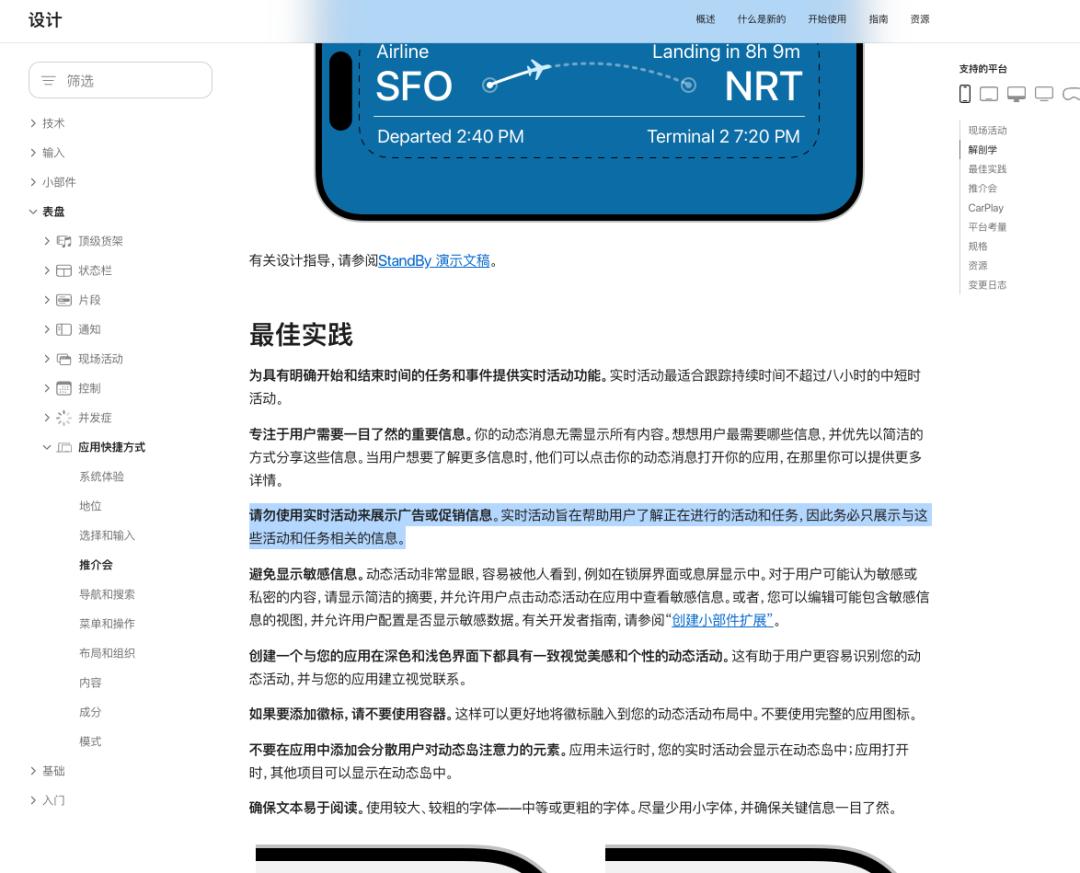
Image source: Apple Developer Documentation
Duolingo's excuse is that this is "just recommending our Super membership to ordinary users, not an advertisement." However, that card with a countdown looks more like an advertisement than a status reminder. It's not hard to guess the motivation behind it. Duolingo's paid members have always accounted for only about 5% of the total users. For it, the Dynamic Island, a window that users can see as soon as they look up, is almost an irresistible promotion location.
Duolingo is not an isolated case. Lei Technology's review found that as early as 2024, Pinduoduo used the Dynamic Island to remind users to claim coupons. Baidu, Himalaya, and JD.com have all been photographed by netizens doing similar things. Even some video platforms have learned this trick and popped up a live activity to promote an S-level drama on users' Dynamic Islands before it premiered.

The essence of these behaviors is to package marketing information as "status reminders" and use the system-level entry for higher exposure. The Dynamic Island is becoming a gray area for traffic exposure. The more valuable this notch becomes, the more likely it is to be misused. Users who receive the pushed ads have reacted directly. Many people have said on the spot that they will uninstall Duolingo to protest and have called on Apple to remove it from the app store.
But soon, things changed.
Attention everyone, AI is coming to the island!
What really pushed the Dynamic Island into the spotlight were several events that occurred one after another since June. At the WWDC 2026 on June 8th, Apple released a brand-new Siri AI. Federighi's exact words on stage were that Apple was going to "bring the next generation of Apple Intelligence and launch Siri AI, a significantly smarter, more knowledgeable, and more capable Siri."
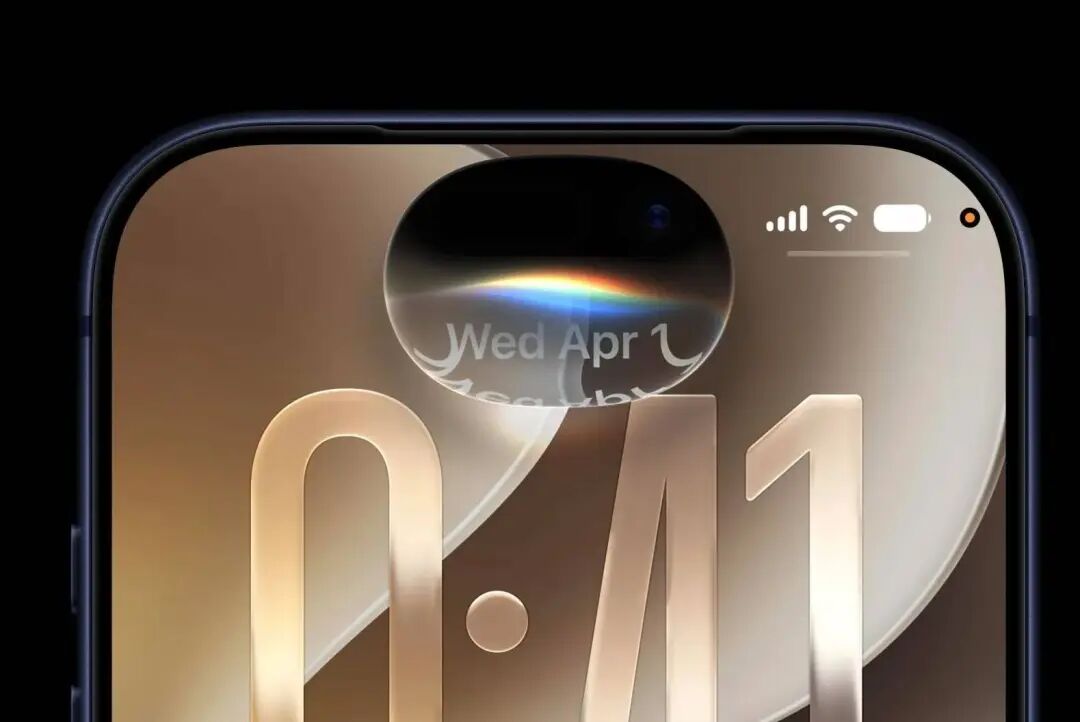
This generation of Siri has been completely rewritten. Its interaction method is more like ChatGPT, capable of multi-round conversations and understanding the content you're looking at on the screen. The most crucial change is precisely on the Dynamic Island. Federighi specifically described this detail in an interview. He emphasized that the Siri assistant "emerges from the Dynamic Island in a very beautiful way, made of Liquid Glass material. You can press the side button or simply call out 'Siri' to wake it up."
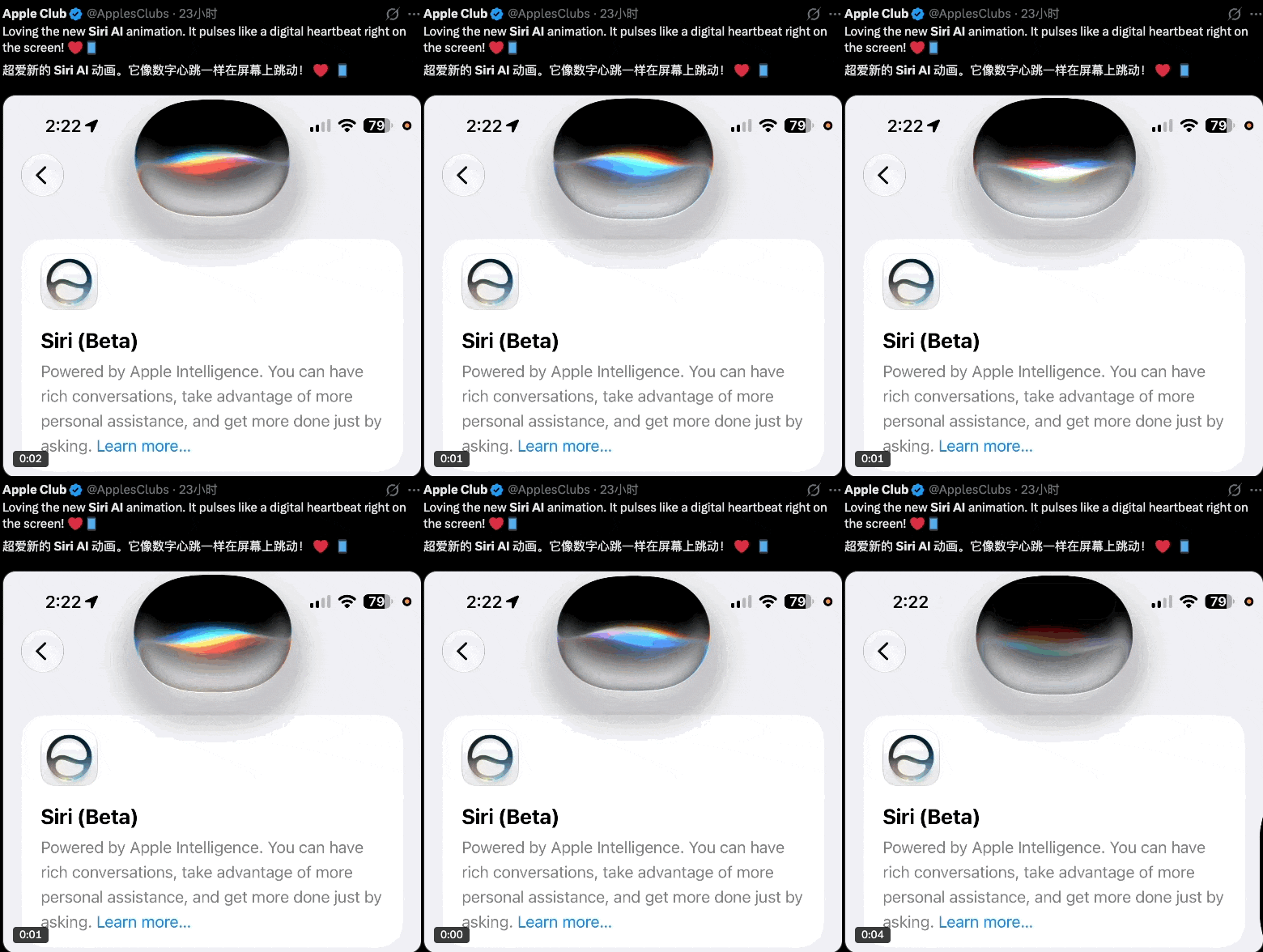
That is to say, Siri has for the first time a form specifically designed for the Dynamic Island. It is no longer a separate full-screen pop-up window but emerges from that notch. In fact, as early as the end of May, Bloomberg released a preview based on the design draft it obtained in advance, saying that Apple's AI assistant would "reside" in the Dynamic Island, which has now been confirmed.
As soon as the news spread, two days later on June 10th, the digital blogger "Digital Chat Station" reported that a domestic iterative operating system had completed the development of "bringing the AI voice assistant to the island" before the official release of iOS 27. He also added in the comment section that he had seen the specific system. The outside world generally speculates that this system is Xiaomi's Pengpai OS 4, and it is the "Super Xiaoai" after the combination of Xiaoai Tongxue and its own intelligent agent that has come to the island.
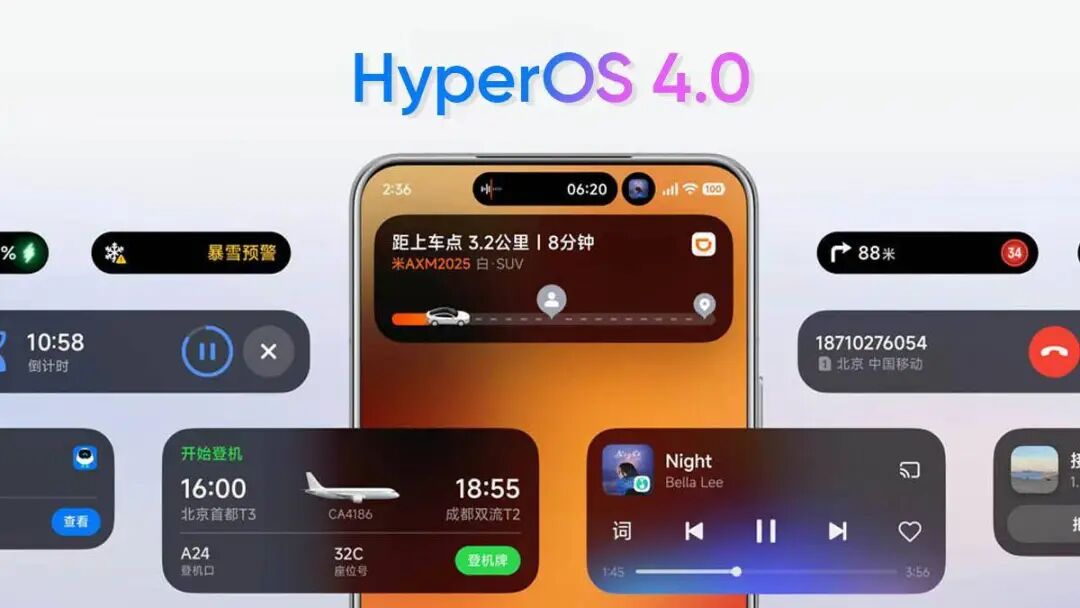
Not only big manufacturers, but independent developers are also coming to the island
It's not just Apple and big mobile phone manufacturers that have their eyes on this inch of screen. In the past one or two years, independent developers have also taken advantage of the trend of AI programming to start their own small projects around the Dynamic Island.
In contrast, what they often target is not the notch on the iPhone but the one at the top of the Mac. When vibe coding became popular, more and more people started handing their work directly to AI programming assistants like Claude Code, Codex, and Cursor, letting them write code and run commands in the background on their own. New problems also followed. These agents would stop and wait for you to click "agree" from time to time. If you weren't staring at the terminal, you wouldn't know how far they had progressed.
So a type of specialized small tool emerged, with surprisingly consistent ideas of moving the running status of AI agents into the notch of the Mac. The open-source tool developed by developer farouqaldori moves the approval requests that pop up every time Claude Code needs to perform an operation directly to the notch area of the MacBook. You just take a look and click, without having to switch back to the terminal window.
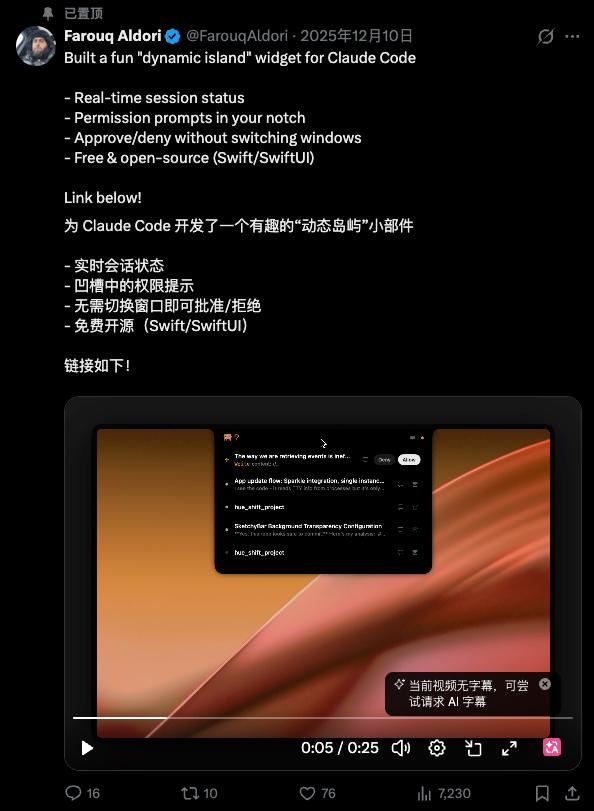
After these tools were recommended by developer bloggers, a series of similar projects such as Vibe Island, Ping Island, MioIsland, and EchoIsland quickly emerged. Some support more than a dozen different AI programming assistants at once, and some have extended their reach from the Mac to Windows.

There are also some that take advantage of the feature of the Dynamic Island being close to the camera and develop it into a "teleprompter." When speaking in a remote meeting, you can look at the camera while also looking at the manuscript, avoiding the problem of your eyes wandering around. This is especially beneficial for interview scenarios.
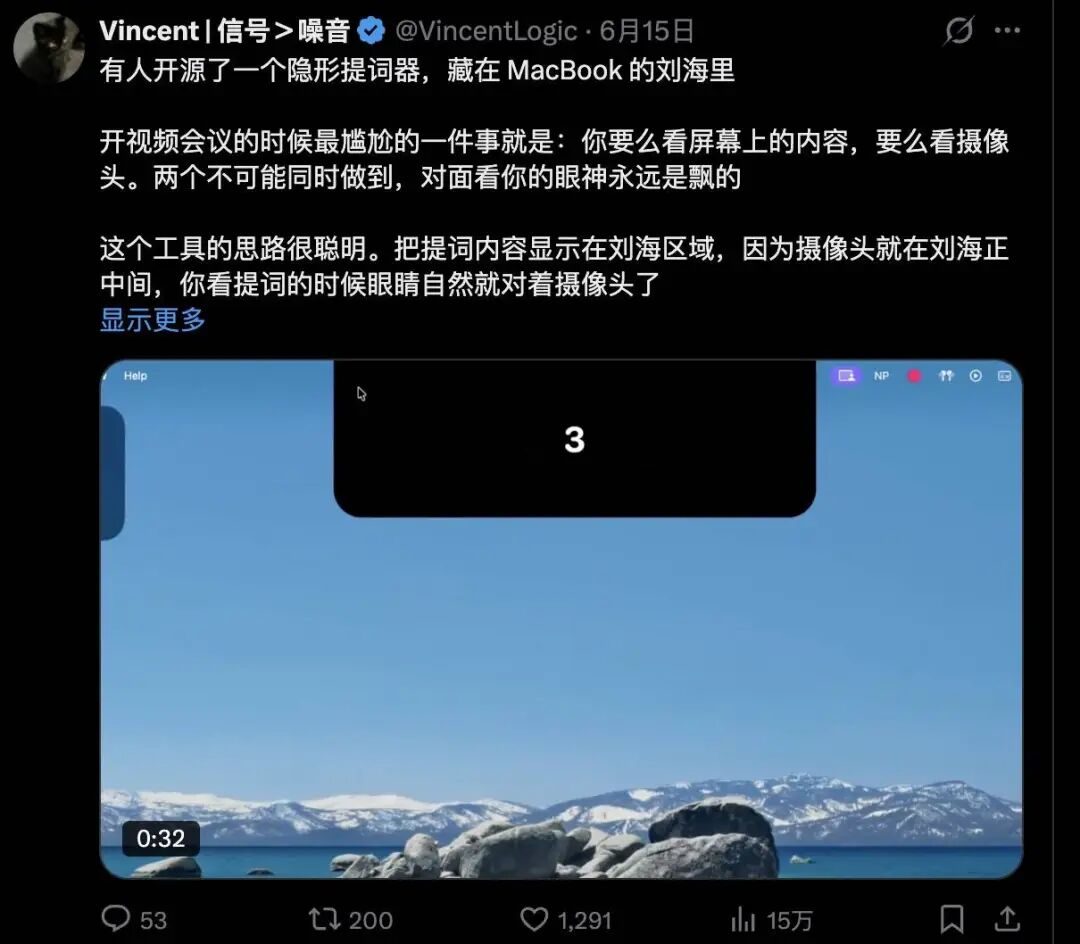
Of course, the iOS side is also active. Third-party apps like "Island Widgets" have stuffed real-time network speed, heart rate, countdown to the end of work, and even an electronic pet into the Dynamic Island, developing hundreds of different ways to use it. The latest interesting way is to turn the Dynamic Island into the exit of a Polaroid camera, and the entire design and engineering are supported by Codex.
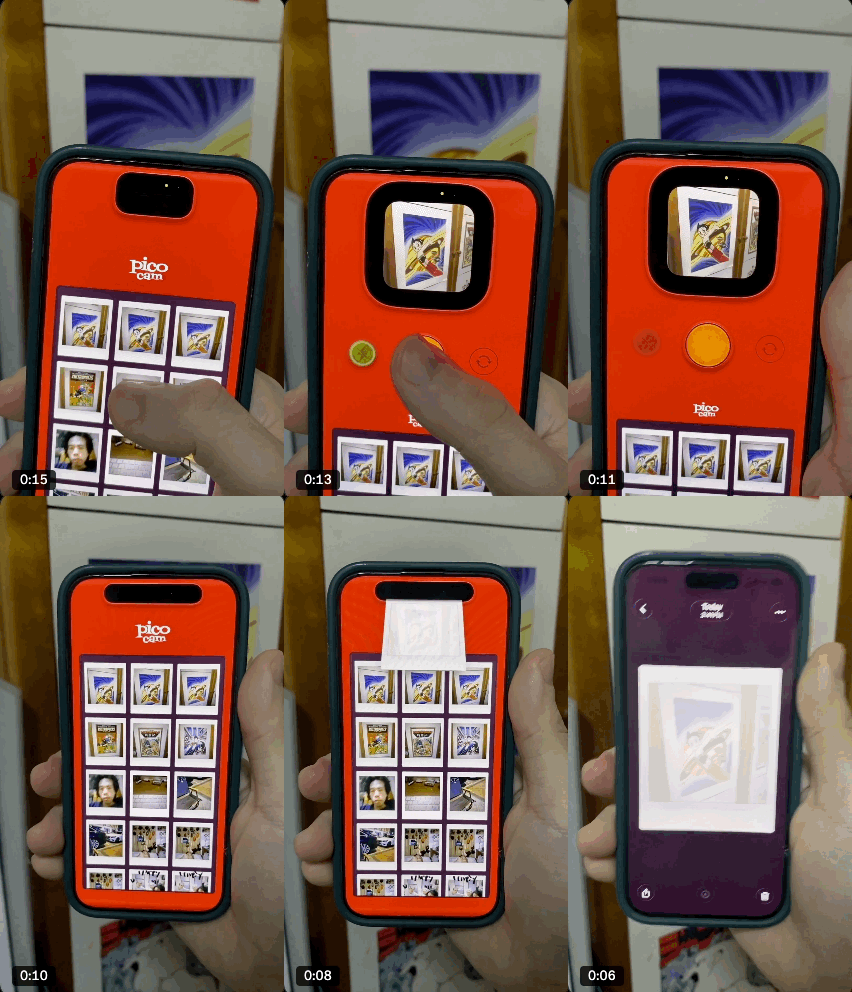
Most of these projects were developed by one or two people in their spare time, trying and writing code with the help of AI. They may not be large in scale, but they just show one thing: the Dynamic Island is no longer Apple's exclusive territory. From big manufacturers to individual developers, everyone has smelled the same signal. You can still create a lot of things in a place as small as a fingernail.
Why the Dynamic Island? A developer described it very aptly: The agent runs in the cloud, and the Dynamic Island is its shadow on your lock screen. You don't have to keep an eye on it all the time. Just take a look at that notch, and you'll know how far it has progressed.
From this perspective, the adaptation of the Dynamic Island to AI is not just a marketing slogan but a perfect match in terms of structure. The System Orchestrator that Apple connected to Siri is, according to the official statement, the key to the entire system's privacy architecture. It needs to coordinate the scheduling of