Token cost calculation is in full swing, and Seedance is starting to head towards the "outside the Fifth Ring Road" market.
Recently, Seedance 2.0 mini was launched, reducing the cost of video production to $0.5 per second, which is half the price of Seedance 2.0.
Although there is some shrinkage in resolution, it comes with a lower price and faster speed.
The low - key release of Seedance 2.0 mini indicates a change in the product strategy of ByteDance's AI video models. In the past, the focus was on creating high - quality products, while now, price is given more importance. Behind this, it actually reflects the change in market demand.
On the demand side, changes have already occurred. In the past, many companies engaged in AI short dramas and advertising used models to see if the desired effects could be achieved. Now, the production process of AI short dramas has been established, and the market demand has changed. Now, when companies choose models, the question becomes "how much it costs to produce the content".
This precisely reflects that the necessity of AI video models has increased, but at the same time, the sensitivity to price has become higher.
The reality is that in fields such as streaming media, short dramas, and advertising, there is an increasing need for AI to reduce costs and increase efficiency. However, the cost of trial - and - error may be getting lower. For small and medium - sized enterprises in these fields, the company with lower Token consumption per unit of creativity may have a leading advantage in cost and gross profit margin.
This might also be the reason why ByteDance wants to create a "lightweight" Seedance 2.0.
So, will a mini version of Seedance 2.0 be the ultimate solution for the entire industry?
In the second half of the video - generating AI era, Seedance expands beyond the "fifth - ring road"
Recently, an interesting piece of news about large companies emerged.
Not long ago, Tencent announced an internal rule, canceling the unified quota of external model Token for all employees and switching to a differentiated and dynamic allocation (the original quota was about $2000 per month).
Tencent is not the only one doing this. Many large companies have started to adjust their Token allocation strategies. The reason behind this is the sharp increase in Token consumption and soaring cost expenditure. Even large companies have to be more careful with their Token spending.
The official statement is to improve the efficiency of Token use and avoid waste. But ultimately, it is because of the cost problem caused by the increase in Token consumption scale.
It should be noted that among the users of AI models, large companies have the strongest purchasing power and the highest willingness to pay.
If large companies are like this, what about other users?
The same question applies to the AI video field. Will AI short - drama companies, advertising companies, and e - commerce companies keep paying for Tokens without restraint? Especially when the entire industry is facing growth challenges, if Tokens become more expensive than actors in the future, how can cost reduction and efficiency improvement be achieved?
This is a very real problem.
Actually, from the perspective of purchasing power, the AI video - generating market also has an "inside the fifth - ring road" and an "outside the fifth - ring road".
The "inside the fifth - ring road" refers to professional film and television giants in the P - end, such as Industrial Light & Magic and MORE VFX, which are visual - effects giants.
These giants have higher requirements for effects, longer production processes, and more complex models, but they have strong purchasing power, similar to large companies like Alibaba, Tencent, and ByteDance.
After all, for a visual - effects blockbuster, the post - production cost can reach $100 million - $200 million. If AI technology can replace 15% - 20% of it, it will still be a huge market.
Seedance 2.0 entered this market with excellent effects, but the upper limit of market penetration is quite obvious.
Because AI still cannot support long - narrative capabilities in terms of long - video stability, character consistency, and controllability of picture content. So it may not be able to achieve high - penetration implementation in industrial - level movie production in a real sense.
Among the current main paying users of AI video generation, the ones with growth are actually e - commerce short - video teams, local advertising agencies, short - drama production companies, and independent creators.
This is a typical "outside the fifth - ring road".
Due to relatively limited purchasing power, although the demand for AI video generation from these users is increasing, the cost issue is becoming more and more crucial. And because their purchasing power is limited, their demand for video - generating Tokens is easily affected by price factors.
Especially, the use of AI video models to produce commercial content has passed the trial stage. Everyone has realized the necessity of AI video models, so the demand is greater, and the requirements for cost are also more stringent.
Especially in the reality that the commercialization of short dramas is facing difficulties.
Data shows that in the first quarter of this year, about 128,000 micro - short dramas were launched in the entire industry, of which AI micro - short dramas accounted for more than 95%. Many teams produced 3 AI short dramas in a month, with a total profit of only $300,000 - $400,000. In the past, a high - quality drama could earn $700,000 - $800,000 in revenue.
After the introduction of AI, the production cycle of short dramas has been shortened, but the supply has increased, making commercialization more difficult. Therefore, the AI investment budget of short - drama companies may also be reduced.
The launch of Seedance 2.0 mini seems to indicate that ByteDance has realized this problem and is trying to provide a solution.
The mini version is a good idea. Firstly, it reduces costs and expands demand. Secondly, it continues to increase the commercialization space of AI video models.
In essence, Seedance 2.0 mini is more like a compromise solution. Internally, it compromises on Token consumption costs. Externally, it expands potential paying users and extends AI video generation to more industries. Since the AI business line cannot rely on Doubao, it still needs Seedance to take the lead.
The real intention of Seedance 2.0 mini is not just "simplifying the configuration".
In the current AI video field, the primary issue in commercialization is not how much money to earn, but how to firmly integrate into the daily production chain, just like WPS and Photoshop in the past.
Why did WPS grow rapidly back then?
For individual users and most small and medium - sized enterprises, WPS is free, sufficient for use, and more importantly, it can firmly occupy the key office and production chains. So, even in the current era when AI office has become mainstream, WPS still has its place.
Therefore, the core of the product strategy of Seedance 2.0 mini at $0.5 per second is actually the same as that of WPS. It is not only for commercialization but also for establishing user habits and occupying key nodes.
Can Seedance 2.0 mini achieve this?
Most likely, it can. After all, Douyin has an ecosystem of tens of millions of creators and its own live - streaming e - commerce ecosystem. Whether it is personal creation, e - commerce material creation, or AI short dramas, ByteDance has no shortage of users or an ecological environment of capabilities.
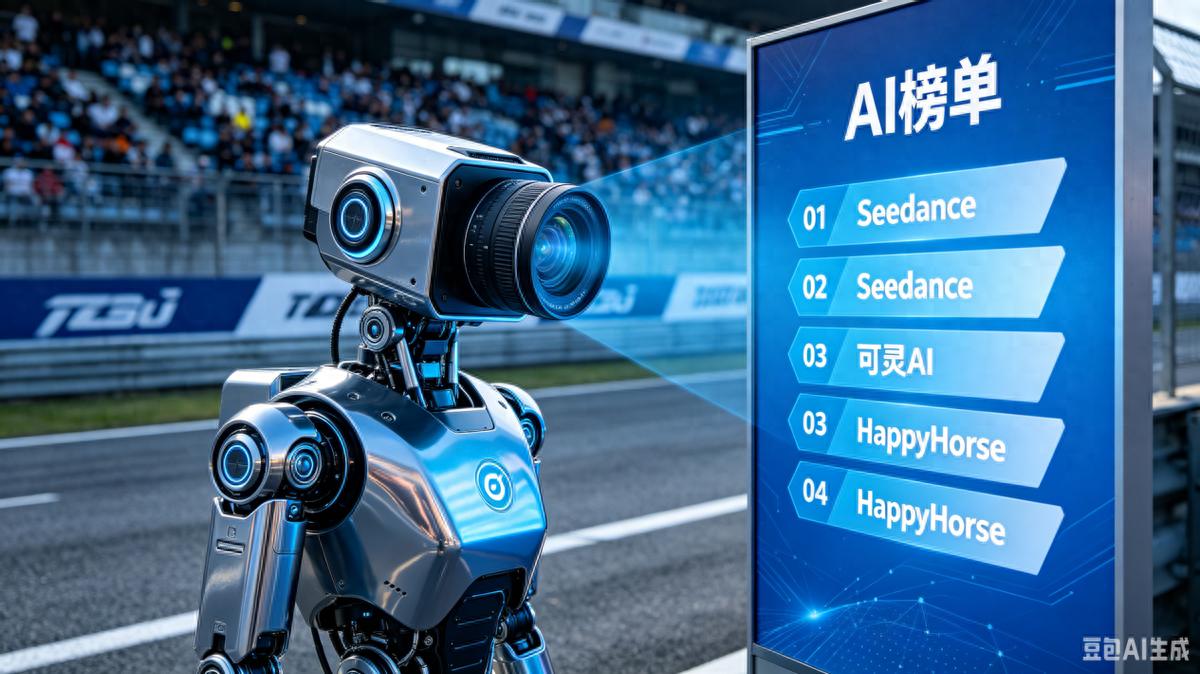
More importantly, in terms of the proportion of Token consumption, Seedance also has a great advantage. According to AI Press statistics, based on the daily consumption proportion, Seedance currently occupies more than 80% of the market share, KeLing accounts for about 14%, WanXiang 2.7 accounts for about 4%, and HappyHorse accounts for less than 1%.
So, ByteDance has a share advantage. After Seedance 2.0 mini expands beyond the "fifth - ring road", this advantage will be further consolidated.
Ultimately, Seedance 2.0 mini is essentially a strategic adjustment by ByteDance in response to the changing industry demand. As for whether it will be an industry - wide solution, it may not be.
The decisive battlefield of video AI is not the model itself
The commercial implementation of video AI models does not necessarily rely entirely on the "outside the fifth - ring road".
There is also room for in - depth development in the "inside the fifth - ring road".
On the one hand, this is an area where even Seedance needs to continue to make breakthroughs. In this market, no one is more advanced than the others. Everyone is on the same starting line and needs to deeply explore the P - end market.
On the other hand, from the perspective of implementation, when AI video models are implemented in the P - end, the capabilities of the AI model are important, but they are not the decisive factor.
For the needs of professional production scenarios, usability and good performance are one aspect. Being able to deeply integrate with the current SOP process may be more important than the model capabilities themselves.
Take photo - editing as an example. Meitu Xiuxiu has a fast - growing user base, and the product is very easy to use, and the key is that it is free. However, in the advertising industry, people still use AE and PS. Although Adobe's products are charged, for professional production, they have been integrated into the SOP production process and have occupied the habits of most professional users.
For professional users, you can do without PS for photo - editing, but you cannot do without the complete set of digital creative workflow created by Adobe.
In this sense, innovation in the process and the formation of product habits may be as important as the development and iteration of new video AI model versions.
Take the same example of office software. Why can DingTalk and Feishu stand out from ERP software?
It is not because of their advanced technology, but because DingTalk and Feishu have created SOP management and work processes that conform to the management and business habits of most companies.
The implementation of video AI models is the same.
Ultimately, no matter how powerful the AI model technology is, implementation depends on scenario application. The one that is most deeply integrated into the existing work process and has the strongest user habits will win.
Therefore, in the process of deeply implementing video large models in the P - end, since the problem of the technical upper limit is difficult to solve, it might as well be compensated by innovative processes and strong user habits.
In the direction of innovative processes, some players have also made attempts.
For example, recently, Seko, an AI video - creation platform under SenseTime, launched the "Infinite Canvas".
With this product, users can automatically generate a plan with characters, scenes, and shot lists based on a single - sentence inspiration. Then, on the canvas workflow, they can freely adjust the shot order and make fine - tuned modifications and adjustments to the pictures, just like using a mind map.
Compared with ByteDance's release of Seedance 2.0 mini, this new product may not seem like a big move. However, the "Agent batch + canvas fine - tuning" creation mode represents more of a thinking mode of integrating and innovating AI in the professional production SOP process.
Is this kind of innovation useful? At least the market recognizes it. It is reported that starting from the third season of the popular AI comic drama series "The Treasure - Gathering Immortal Basin", the relevant product capabilities of the Infinite Canvas will be used in the creation of new works.
Actually, the quality of video content does not necessarily have to be improved entirely by AI technology.
Seko's product proves that no matter how powerful the AI model is, it ultimately needs to be combined with the innovation of tool products and professional production SOP to be fully realized.
After all, when working on a video project, it's not just about having good shot effects. It involves the division of labor and cooperation in a complex process, as well as multi - step and long - chain decision - making and execution.
In this market, KeLing AI also has rich implementation experience.
In May this year, KeLing AI launched a native 4K - resolution video - generation function, supporting professional capabilities such as simultaneous audio - video output, action and expression migration, and long - video generation. It also has features suitable for professional workflows, such as native custom shot lists and multi - subject collaborative creation.
KeLing AI still has strong competitiveness in the professional film - and - television creation market.
In terms of commercialization, KeLing is also progressing relatively fast. Data shows that in the first quarter of 2026, its single - quarter revenue exceeded $65 million, with a year - on - year growth of more than 300%. As of March 2026, its annualized revenue run - rate (ARR) was close to $500 million.
After Kuaishou decided to spin off and list KeLing, there were also reports that the American private - equity giant General Atlantic participated in the first - round financing.

According to Tianyancha APP information, on June 6, 2024, the official website of the "KeLing" video - generation large model was officially launched, which is only two years ago. The rapid commercialization progress of KeLing AI actually shows the value of the professional - level market from the side.
Goldman Sachs predicts in its latest research report that the global AI video - generation and editing market size will increase from about $3 billion in 2025 to about $29 billion in 2030, a ten - fold increase in the next five years.
This highly valuable market is still growing. This is the real opportunity for KeLing AI, HappyHorse, and SenseTime's Seko.
Creativity always has a cost and is never cheap. This simple truth remains as firm as ever in the AI era.
The competition of video large models is essentially a replication of an ancient competition: in history, sharper tools may not win the era. Those who truly win are always the ones who can turn new tools into new habits.
In this sense, the current expansion of Seedance 2.0's territory is not the end, and latecomers are far from being out. At present, the moat has not solidified. As long as players are still in the game, each of them still holds their own possibilities.
This article is from the WeChat official account "Internet Jianghu", author: Evin, editor: Liu Zhicheng, published by 36Kr with authorization.