The middle class no longer wants to stay in hotel showrooms.
01
Before the Dragon Boat Festival, my old friend Xiao Hei invited me to have tea. He has been running business outside all year round, and the location in his WeChat Moments changes to a different city every now and then.
I joked with him that if he keeps staying in hotels like this, he should have already earned platinum or titanium membership points in various hotels.
Xiao Hei smiled and said that he did have the cards, but the price he paid was that every morning when he opened his eyes, he had to take a few seconds to collect himself before he could remember where he slept last night.
His words sounded like a joke, but upon closer thought, they were a bit stinging.
For a hotel, it's not uncommon to receive negative reviews. What's truly terrible is that guests check in, sleep, and check out without any emotional response, and in the end, they can't even remember the name of the hotel.
As more and more hotels are designed in the same model room layout, not being able to remember a hotel actually means there's no compelling reason to choose it next time.
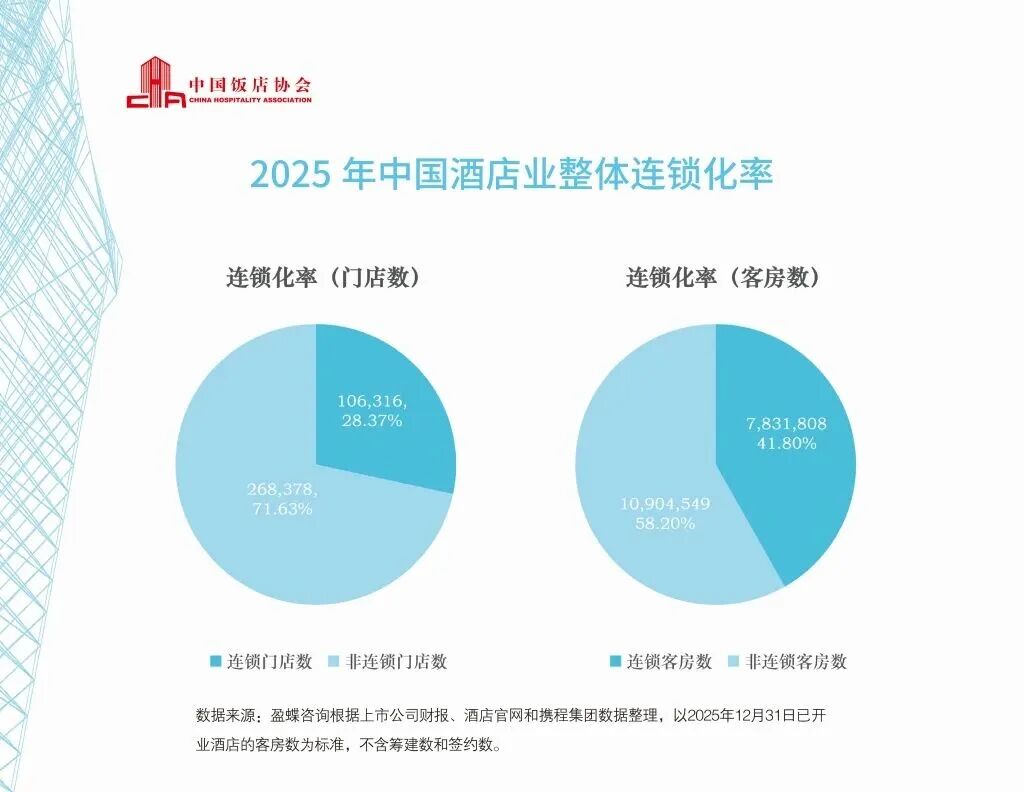
What's even more worrying is that as the chain rate of domestic hotels continues to increase, consumers' feeling of staying in the same kind of place no matter where they go is being further amplified.
The "2026 China Hotel Industry Development Report" released by the China Hotel Association in April this year shows that as of the end of 2025, the chain rate of mid - range hotel rooms had reached 58.05%.
With the supply chain system so mature, to be honest, many hotel brands have entered a state of rapid replication. They just need to change the appearance and color, and a new store can quickly open.
But for domestic consumers, this can be a nightmare.
Because many chain brands only pursue rapid scale - up without considering individuality, frequent hotel guests who are tired of staying in hotels feel like they are having large - scale industrial pre - made dishes from sleeping at night to having breakfast. They can't remember anything special, and the newer the hotel, the more complaints there are.
Over time, guests may not be able to tell which hotel is bad, but it's hard for them to say which one is good. In the end, they can only say: All chain hotels seem to be the same!
This is exactly where the real trouble of hotel homogenization lies.
When the experience can't be differentiated and the premium space is restricted, the industry can only resort to low - cost competition, and finally end up in a cut - throat competition in the same price - depressed market.
02
Is there a way out for mid - range chain hotels other than involution?
Actually, it's not difficult. The key lies in whether a hotel is designed for efficiency or for people in the current era of extreme standardization.
To put it simply, it depends on whether it has really noticed the real pain points of today's guests.
Last month, when I was visiting friends in Madrid, Spain, I had coffee with some local mid - range hotel peers. As we were chatting, they got interested and asked me if I knew a Chinese hotel brand called Atour. They said they were studying it recently and thought there were some things they could apply in Europe.
What puzzled them was how a brand with a significantly different experience could emerge in such a highly standardized domestic chain hotel market.
I thought for a while and said that Atour has indeed been a sample that has been repeatedly studied in China over the years. What supports it is not that it does everything better, but rather that it has stabilized the sense of humanity within the standardized system.
Coincidentally, before I went to Spain, Lao Liu, who often stays in hotels, voluntarily talked to me about a Light Residence in Zhongguancun. Compared with Atour, this brand is more popular, but he unusually detailed his check - in experience to me.
Lao Liu first mentioned the lobby. There were green plants and bookshelves in the blue - gray space, and the lighting was very soft. It didn't look like the regular chain hotels in the impression. In his own words, he felt relaxed as soon as he entered the door and didn't feel oppressed.
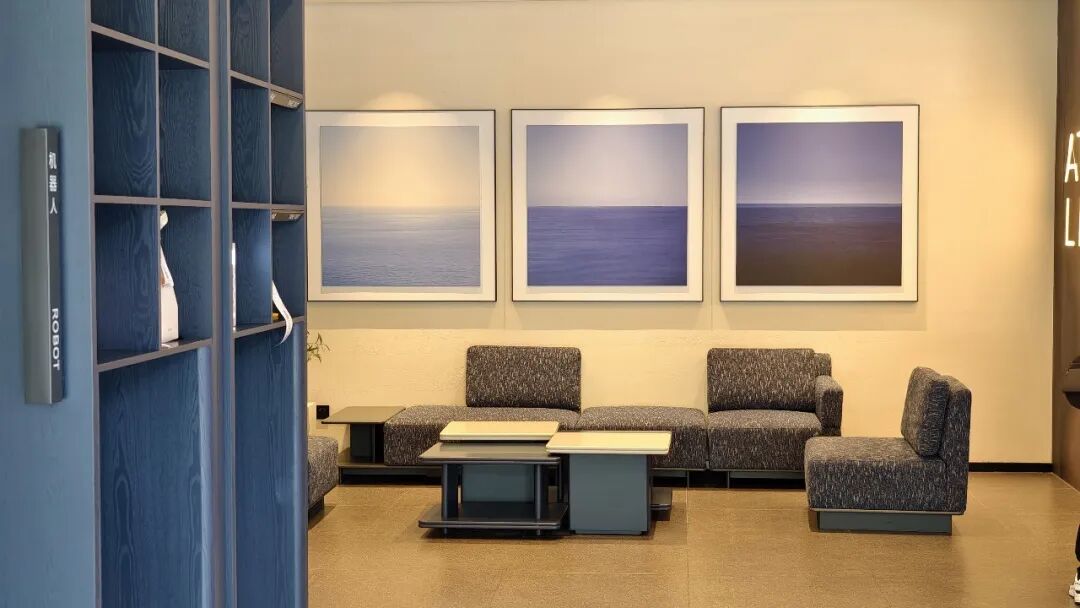
Photo provided by the interviewee
When checking in, Lao Liu found a QR code next to the front desk. After scanning it, a "island map" popped up on his phone, with places to eat nearby and how to get out marked in advance for him.
Later, the hotel's customer service was also added to his phone. If he wanted to connect to the Wi - Fi at night or find the laundry room temporarily, he didn't have to call the front desk. He could find the answer by flipping through his phone.
For people who often stay in hotels, these are not big things, but asking one less question and waiting one less moment can really save trouble.
There was also an interesting thing. On the day of check - out, I went to pick up Lao Liu to catch an early - morning high - speed train. He was strolling around with a box in his hand and told me it was a breakfast blind box. He could take it away or have it sent to the room. He didn't have to stick to the breakfast time before 10 o'clock, which was very suitable for someone like him who likes to sleep in.
I thought at that time that it was quite rare for a hotel not to make guests rush and instead follow the guests' schedules.
After hearing this, those Madrid peers also thought it was quite novel. At this point, I also remembered another small thing that happened when I stayed at Light Residence.
When "Black Myth: Wukong" was at its most popular, I was on a business trip and stayed at the hotel. I was surprised to find that I could play the game in the room. I was very tired from work that day. After playing a couple of rounds lying in bed, most of my fatigue was gone.
Objectively speaking, if these services are taken out separately, they may not be worth a big deal. They just leave some points that guests are likely to remember in a very subtle way.
If we think deeper, what Atour's founder, Yelv Yin, said about standard personalization probably means this: Rather than blindly piling on individuality, it's better to continuously identify the segmented needs of guests and then turn these needs into product capabilities that can be standardized and replicated.
But while personalization is important, another very realistic premise is to have a comfortable stay.
Homestays have had a hard time in recent years. The photos with heavy filters look nice, but the sound insulation is poor, the hot water is inconsistent, and when there are problems, there's no one to turn to, which has damaged the reputation of the entire industry.
So emotional value is just the icing on the cake. When mid - range chains start to add personalized experiences, their original stable advantages in the sleep system, supply chain, and membership system will truly stand out.
In fact, these basic capabilities are exactly the parts that many domestic non - standard accommodations find it difficult to maintain in the long run.
Hearing this, my Spanish friends nodded repeatedly, sighed that the mid - range market in China was too competitive, and then asked me about the room rates.
I said it was about 300 - 800 yuan per night. They were quite surprised and thought that in this price range, the experience provided by Chinese mid - range hotels was significantly different from that of European products at the same price.
03
The reactions of European peers reminded me that domestic mid - range hotels have entered a new stage.
The reason is simple. In the 1.0 era of Chinese chain hotels, the industry first had to solve the problem of whether there were standards. Standardization can indeed enable hotels to expand rapidly, but it also makes the experiences gradually similar.
In other words, whether a hotel has complete facilities can no longer be a significant difference. What really sets the distance is whether the personalized experience can be perceived and remembered by guests.
The players who can first create differences in guests' accommodation experiences will get the entry ticket in an earlier round of competition.
Meanwhile, in an era when consumers are more and more concerned about cost - performance, hotel operators also need to change the way they calculate.
Of course, it's necessary to calculate how much it costs to build a guest room. But this calculation shouldn't only focus on the opening day. Whether guests remember the hotel, whether they will come back, and whether the room rate can be maintained in a few years also determine whether this business is profitable.
After all, the construction cost is a one - time expense, while repeat purchases and word - of - mouth bring long - term returns.
What guests ultimately remember are often some small details that exactly meet their needs. Once these seemingly trivial details are done right, it's easiest to get them to come back.
Because it's not difficult for peers to follow up on small surprises and IP co - branding. What's really difficult is how relaxed the space should be, when the waiters should step forward, and whether they can tell what the guests need before the guests even speak.
There are no ready - made templates for these. They can only be polished slowly in each store and each service.

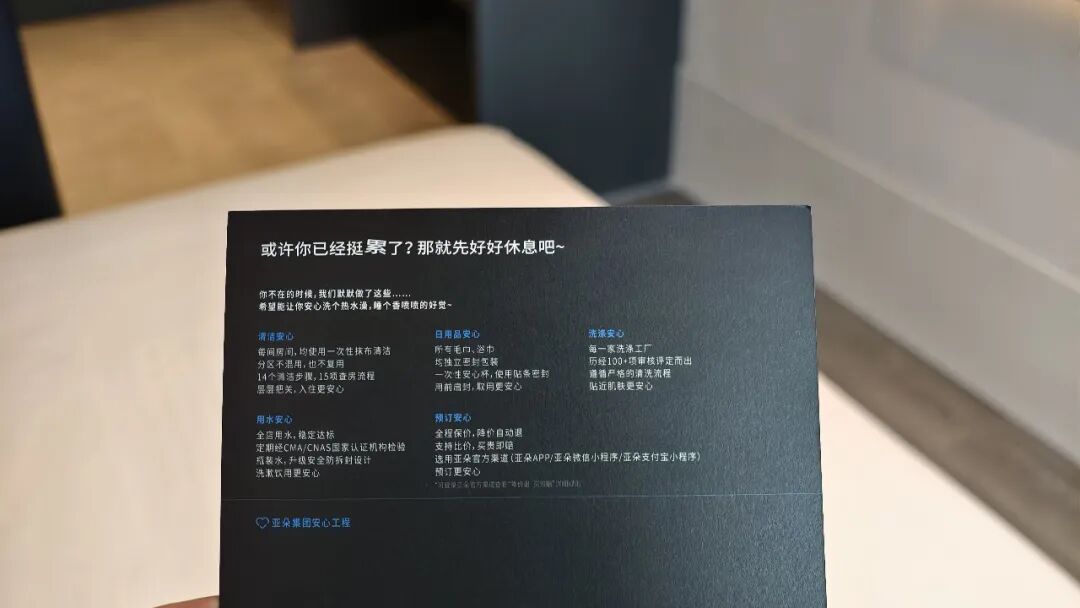
The unused bath towels in Light Residence are wrapped in plastic bags / Photo taken by Travel Industry
Some time ago, I accompanied a friend to check out at the Light Residence in Zhongguancun. As we were about to get in the taxi, the front - desk clerk chased after us, out of breath, and stuffed us a bottle of iced mineral water.
A bottle of water doesn't cost much, but those few steps the front - desk clerk took to chase after us were enough to make us remember that stay.
In addition, during the economic contraction period, how to reduce costs and increase efficiency can better show the strength of a chain hotel brand.
In recent years, under the pressure of cost reduction, many mid - range hotels have cut corners on things that guests touch every day. As a result, they saved some money on the surface but lost the guests' good - will.
This kind of cost - saving method makes guests uncomfortable, and in the long run, it won't please the franchisees who invest money either.
Truly mature cost reduction doesn't mean making everything cheaper. It's necessary to distinguish where to save and where not to save.
Take the latest version 3.3 of Light Residence as an example. An investor friend told me that before building the hotel, the developer told him that the spaces with low - frequency use could be re - planned, but the high - frequency contact points such as the touch of bed linens, the lighting levels, the wall texture, and the stability of furniture should be fully retained.
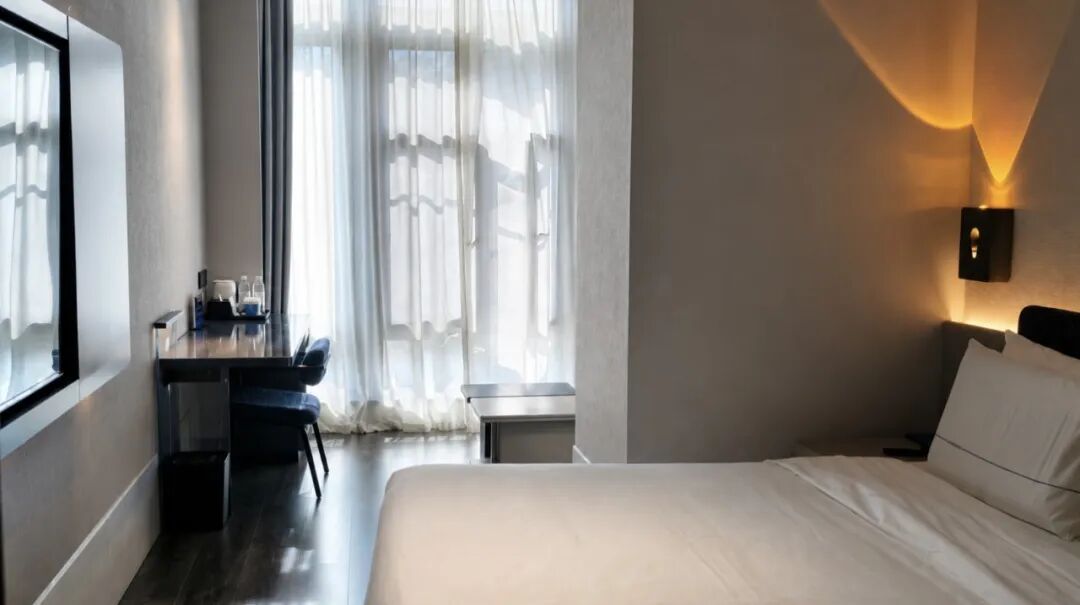
The guest room of Light Residence version 3.3 / Photo taken by Travel Industry
So perhaps the dividing line for domestic mid - range hotels today is how to find elastic space within the hard - cost constraints.
It's neither about endlessly piling on configurations nor sacrificing guests' experiences for low prices. One has to strive to do well the parts that guests can most easily perceive within a limited budget.
As domestic chain hotels have developed to this point, it's time to shift from price competition to differential competition. As the industry progresses, guests' experiences will also improve.
Optimistically speaking, according to the evolution speed of domestic hotels, maybe it won't be long before Xiao Hei, Lao Liu and others open their eyes and no longer have to identify which city they are in by looking at the skyline outside the window.
This article is from the WeChat official account "Travel Industry", author: Theodore Xishao. Republished by 36Kr with authorization.