The first batch of college students who started entrepreneurial robotics ventures have secured hundreds of millions in financing.
The robotics track is welcoming a group of special CEOs: They haven't graduated from school yet, but have already founded their own robotics companies and received hundreds of millions of yuan in financing.
Not long ago, a 25-year-old doctoral student from Tsinghua University received over 500 million yuan in financing. His name is Qin Shentao. He was born in 2001 and is currently pursuing a doctorate at the School of Vehicle and Mobility at Tsinghua University. In his third year of doctoral studies, he founded the embodied intelligence company OriginFlow. This company has just completed a Pre-A round of financing worth 500 million yuan.
At the beginning of 2025 when Qin Shentao started his business, another embodied intelligence company called "Zero Power Robotics" was incubated from the Tsinghua AI & Robot Laboratory. The founder is Min Yuheng, a master's student at Tsinghua University. One and a half years later, this company has completed five rounds of financing and reached the A round.
Liu Songming, also a doctoral student at Tsinghua University, founded the embodied intelligence company "Jiangxian Technology" during his doctoral studies. Just six months after its establishment, the company received 500 million yuan in angel investment from institutions such as Meituan and Shunwei Capital. Recently, the company completed a Pre-A round of financing led by Shunwei Capital.
Similar stories are playing out at many universities in China. Chen Hao, a direct doctoral student in the School of Mechanical Engineering at Shanghai Jiao Tong University since 2022, founded an embodied intelligence company called EagleView Intelligence before graduation. It has received three rounds of financing within half a year and recently secured a Pre-A round of financing worth tens of millions of yuan from Yuanhe Origin. Lu Qi's MiraclePlus has also invested in this company twice.
A very obvious change is that in the past, entrepreneurs in the robotics track were at least industry veterans, or those who switched from other industries such as intelligent driving, or researchers like university professors. Now, many of the founders in the robotics field haven't even graduated yet, but are already being chased by capital for investment.
If we broaden our perspective, the "age-lowering" trend in the entire AI industry has even spread to high schools. Hot money is not only chasing college students and doctoral students but also high school students are being recruited by large companies.
A
To understand this wave of student CEOs, Qin Shentao is a sample worth examining closely.
In 2001, Qin Shentao was born in a mountain village in Jincheng, Shanxi. He has always had good academic performance and was a good student in the eyes of teachers and classmates. In 2019, he was admitted to the School of Mechatronic Engineering at Harbin Institute of Technology (HIT).
HIT can be regarded as an important cradle of talents for China's robotics industry: China's first arc welding robot was born here, and academician Cai Hegao and others established the country's earliest doctoral program in robotics. The founders of robotics companies such as Leju Intelligence, Woan Robotics, and Standard Robotics all graduated from here.
It was also here that Qin Shentao showed great interest in robotics. He conducted scientific research projects based on the force perception system of legged robots and won first prizes in the National College Students' Digital Design Competition of Mechanical Products and the National College Students' Mathematical Modeling Competition.
In terms of coursework, Qin Shentao also performed excellently. Since entering the university, Qin Shentao has scored over 90 points in more than 40 courses, and many of his courses were close to full marks, ranking first in his major.
Excellent people are always hardworking. During the summer vacation of his sophomore year, Qin Shentao stayed on campus to do scientific research projects and participated in the research of the perception project of the research group. In his junior year, Qin Shentao became the first junior undergraduate at HIT to receive both the President's Medal and the May 4th Youth Medal.
Qin Shentao has achieved results in academics, competitions, and scientific research. Then what? This is a question that Qin Shentao has always been thinking about.
His answer to himself is: "I've always wanted to establish a closed-loop among academics, scientific research, and technological innovation. Most of the time, people can only do well in one aspect. But if one has a clear way of thinking, can cut to the essence and grasp the key points, these three things are actually the same thing. I can integrate them and do all three well."
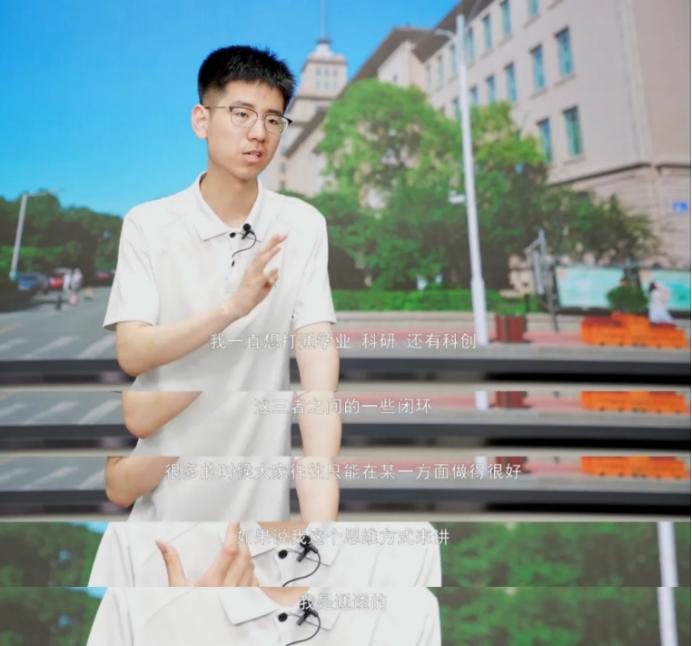
Source: WeChat official account of Harbin Institute of Technology
With this idea, Qin Shentao first got in touch with entrepreneurship at HIT. During his college years, he founded the "Tiandao" team as the initiator and person in charge. The project "Multi-robot Collaborative System for Future Smart Communities" under the team was settled in the HIT College Students' Entrepreneurship Incubation Park. It also connected with the State Key Laboratory of Robotics and System and received financial support and project guidance.
In his senior year, Qin Shentao entered the Shenzhen Institute of Technology and Innovation founded by Professor Li Zexiang and participated in the entrepreneurship incubation program of Lu Qi's MiraclePlus. According to "Investment Circle" report, at that time, Qin Shentao already had a vague idea about the neural interface base model, and some investors were willing to invest. However, Qin Shentao didn't take action because he thought the timing was not right and there was no particularly good application scenario.
After graduating from HIT, Qin Shentao continued his studies and entered the School of Vehicle and Mobility at Tsinghua University for a doctorate. Until August 2025, in his third year of doctoral studies, Qin Shentao decided to start a business. He named the company OriginFlow and entered the embodied intelligence track.
At this time, the domestic and international embodied intelligence track was in full swing, and the focus of the industry was shifting to the training of embodied intelligence models. However, a common bottleneck was that the data supply required for training large models was insufficient and inaccurate. The entire industry was waiting for data.
There were mainly two types of existing solutions in the market at that time: one was real - machine remote operation data, which was too costly; the other was simulation data, which had controllable costs but there was always a gap with reality.
Qin Shentao took a different approach and decided to do data collection based on the principle of surface electromyography (sEMG) technology.
One month before Qin Shentao registered his company, in July 2025, Meta just published a technological achievement: a non - invasive neural motor interface that, when combined with a wristband, can make "mind control" a reality. Its underlying technology is based on surface electromyography (sEMG), which reads the electrical signals generated by muscles to understand the body's movement instructions.
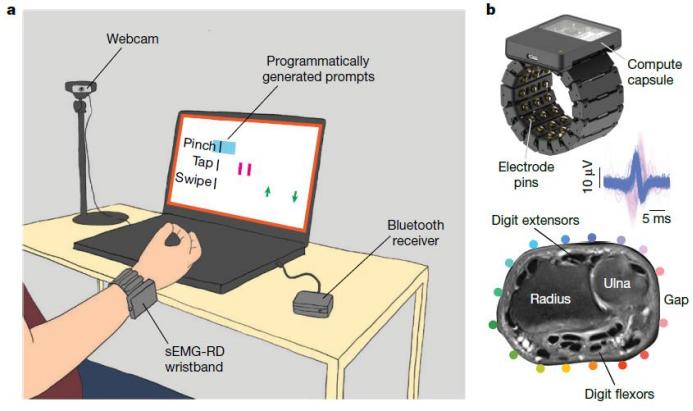
SEMG wristband (Source: Meta)
The underlying technology adopted by OriginFlow is also based on neural electromyographic signals. OriginFlow developed a collection paradigm called NeuroScale. It uses a non - invasive motor neural interface as an entry point to extract the neural electromyographic signals (sEMG) from the skin surface and then translates the signals into hand data using a self - developed model.
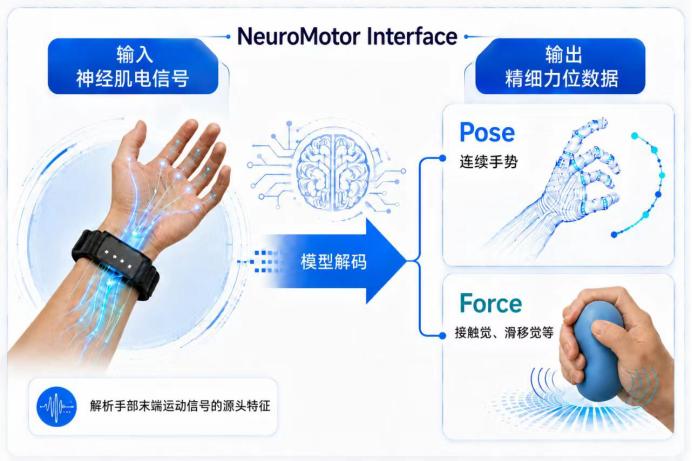
Source: OriginFlow
There aren't many companies in China taking this path currently.
In just a few months, Qin Shentao quickly secured multiple rounds of financing. According to Qichacha, from December 2025 to May 2026, within half a year, OriginFlow completed three rounds of financing and reached the Pre - A round. There were as many as 10 investors behind it, and shareholders such as BlueRun Ventures and Oasis Capital made multiple heavy - weight investments in the tens of millions of yuan scale.
"A natural entrepreneur," Cao Xi, the founding partner of Monolith Capital, described Qin Shentao like this. Now, this young man from a rural area in Shanxi stands at the forefront of the embodied intelligence track at the age of 25.
B
In this industry, there are many young people like Qin Shentao. They are at the forefront of scientific research, exposed to the most cutting - edge technological achievements in the industry. They learn while honing themselves in practice and finally start a business at an appropriate node.
Min Yuheng, born in 2000, founded Zero Power Robotics while still a master's student at Tsinghua University.
In 2020, Min Yuheng was selected to enter the Mingyue Science and Innovation Experimental Class at Chongqing University, under the tutelage of Li Zexiang. This is a university class aimed at cultivating entrepreneurs, and the only core courses in daily life are advanced mathematics and college physics.
Here, Min Yuheng chose robotics engineering and started his entrepreneurial journey, and Li Zexiang became one of the people who had the greatest influence on Min Yuheng's entrepreneurship.
Min Yuheng's first entrepreneurial attempt was in the second semester of his freshman year. He chose the commercial cleaning robot track. However, there were already many leading enterprises in the market at that time, and the competition was fierce. This entrepreneurial attempt ended in failure.
The second was an ice - making machine project, and Min Yuheng served as the CTO. This project was very successful and is still operating in Shenzhen. It has also received A - round financing. Although Min Yuheng withdrew midway, this experience gave him a profound understanding of entrepreneurship.
After that, Min Yuheng began to think about where the opportunities in the industry were. At that time, he was in the stage of being recommended for postgraduate studies. After several months of observation, he believed that it was the embodied intelligence industry, a historical wave that might surpass the scale of the Internet.
So Min Yuheng chose Tsinghua University. In April 2024, Min Yuheng joined the Tsinghua AI & Robot Laboratory.
Those who can enter this laboratory are already excellent enough, but Min Yuheng is special. He has entrepreneurial experience and understands the market and commercialization. In less than a month, he convinced eight senior students to start a business with him.
The core team of Zero Power was formed at that time. In October 2024, the team released the first humanoid robot Z1. In January 2025, Min Yuheng registered and established Zero Power Robotics, focusing on creating all - around household robots with cleaning capabilities. It completed three rounds of financing within six months after its establishment and has currently completed hundreds of millions of yuan in financing and reached the A round.
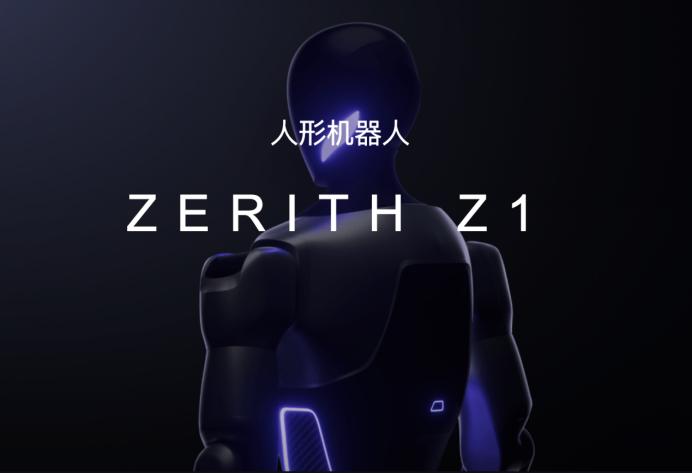
Source: Zero Power Robotics official website
Also in 2025, Liu Songming, a doctoral student at the ISR Lab of Tsinghua University, founded Jiangxian Technology.
Liu Songming was recommended to the Department of Chemical Engineering at Tsinghua University with a gold medal in the chemistry competition. However, because of his love for computers, he finally transferred to the Department of Computer Science. In his junior year, Liu Songming met Professor Zhu Jun, who led him into the field of AI. During his doctoral studies, Liu Songming continued to study under Professor Zhu Jun.
Liu Songming's resume is also very impressive: from his freshman to junior years, his grades always ranked first in his grade; in 2022, he won the Special Scholarship for Undergraduates, which is the highest honor for undergraduates at Tsinghua University, and only 10 students in the whole school are awarded this. He also has many first - author papers in top international conferences such as ICML and NIPS.
After starting his business, he released an embodied model for fine manipulation of high - degree - of - freedom dexterous hands in just four months, enabling complex operations such as unscrewing bottle caps with both hands. Jiangxian Technology completed four rounds of financing and reached the Pre - A round within six months of its establishment, attracting investments from Wang Xing and Lei Jun.
In this wave of student CEOs, similar stories are playing out in more universities.
Chen Hao, a master's and doctoral student at Shanghai Jiao Tong University, is also the same. He is a direct doctoral student and has published four top - journal papers during his doctoral studies. During his studies, he founded the embodied intelligence flying robot company EagleView Intelligence, the world's first company focusing on embodied intelligence flapping - wing robots.
In November 2025, the company received seed - round financing from MiraclePlus six months after its establishment; in April 2026, MiraclePlus made a follow - up investment in its angel round; in May this year, it received Pre - A round financing from Yuanhe Origin.
Shenyang Lindong Bionic Technology Co., Ltd., a company specializing in underwater intelligent robots, was founded in February 2024 by Chu Yichen, a doctoral student at the School of Mechanical Engineering and Automation of Northeastern University. It was selected for the MiraclePlus Startup Camp in the spring of 2024 and received 300,000 US dollars in financing from MiraclePlus.
There are even younger entrepreneurs who start businesses during their undergraduate years. Duan Yubing, the founder of Fabricated Robotics, is an undergraduate student in the School of Mechanical Engineering and Automation at Northeastern University in the class of 2022. He registered and established the company in August 2024 and received a Seed + round of financing from MiraclePlus in March this year.
There are many young people like these who enter the embodied intelligence track and receive financing before graduation. By reviewing their experiences, some commonalities gradually emerge: they have all met their mentors, either good teachers or helpful friends.
For example, Li Zexiang, whom many entrepreneurs mentioned, especially likes to invest in student teams and has successfully invested in and incubated DJI; Lu Qi, the founder of MiraclePlus, is also enthusiastic about investing in young people and often gives speeches at universities to discover industry talents; and Liu Songming met Professor Zhu Jun during his college years, who led him to find the innovative challenges he had been dreaming of.
A mentor is just a guide. Whether they can make a name for themselves depends on themselves. Because what really enables these young people to move from the laboratory to the business battlefield is their own judgment of the industry and the courage to go all out.
It's not difficult to understand why young people choose the embodied intelligence track. This is an emerging industry with low maturity and no monopoly by giants, which can accommodate their ideals and ambitions. Wang Xingxing, who is about to lead Unitree Robotics to the A - share market, entered the quadruped robot track to start a business because he thought clearly: an emerging field is a field worth trying for students and young people, with low maturity and less intense competition.
Realizing this, these student CEOs who haven't graduated yet use what they've learned, address industry pain points, and find the right timing to carve out a path in front of industry veterans.
C
In the face of the great wave of the times, young people are not willing to be just bystanders. Correspondingly, the attention and competition for young people are no longer limited to the embodied intelligence industry but have spread to the entire AI field.
Guo Hangjiang, a 22 - year - old senior student at Beijing University of Posts and Telecommunications, developed an AI product called MiroFish in ten days with a laptop and less than