Survey: The cooling 618, the post-2000s generation who place orders quietly
During this year's 618 shopping festival, the beauty consumption no longer seems to be as "spectacular" as in the past.
The festival period has been shortened, the rules have been simplified, and the level of discussion has cooled down. Brands are no longer blindly emphasizing the soaring GMV. But have young people really lost interest in buying, and has the big promotion lost its appeal? Recently, FBeauty Future Traces surveyed 1,000 post - 00s beauty consumers and found that the real situation is not that simple.
During this seemingly cooling - down 618, the beauty consumption of post - 00s is actually on the rise. On the contrary, more than 95% of the respondents either planned to buy or had already bought beauty products. Compared with last year's 618, nearly 57% of post - 00s said that their beauty budget had increased this year, among which 23.03% significantly increased their budget.
There is an interesting contrast in this set of data: less excitement, but more budget; less impulse, but no stop in placing orders. So, what exactly are they buying, and how do they shop during the 618?
To buy or not to buy? Post - 00s just place orders silently
Judging from the survey results, post - 00s' enthusiasm for participating in the 618 beauty consumption is not low.
When asked "Do you plan to buy beauty products during this year's 618?", 55.85% of the respondents said they planned to buy, and 39.63% said they had already bought. The total of the two reached 95.48%. Only 0.1% clearly stated that they "didn't plan to buy".
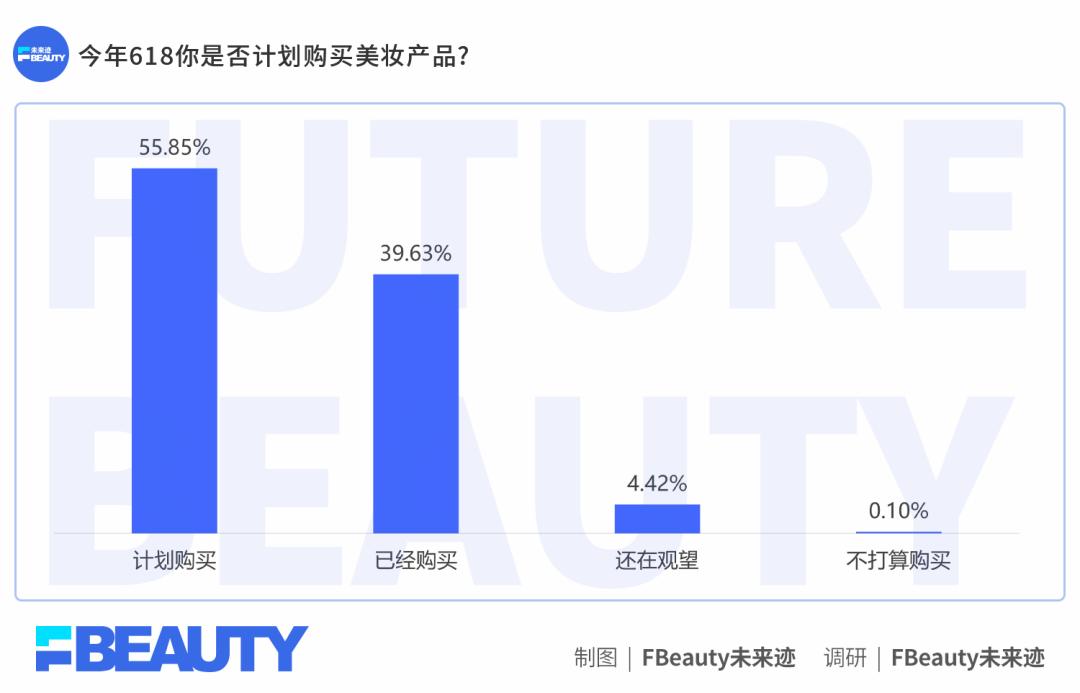
That is to say, although the outside world generally feels that the popularity of 618 has cooled down, for post - 00s, the big promotion is still an important node for buying beauty products. The difference is that they are no longer strongly driven by full - reduction, stockpiling, and low prices as in the past. Instead, they are clearer about what they want to buy and why.
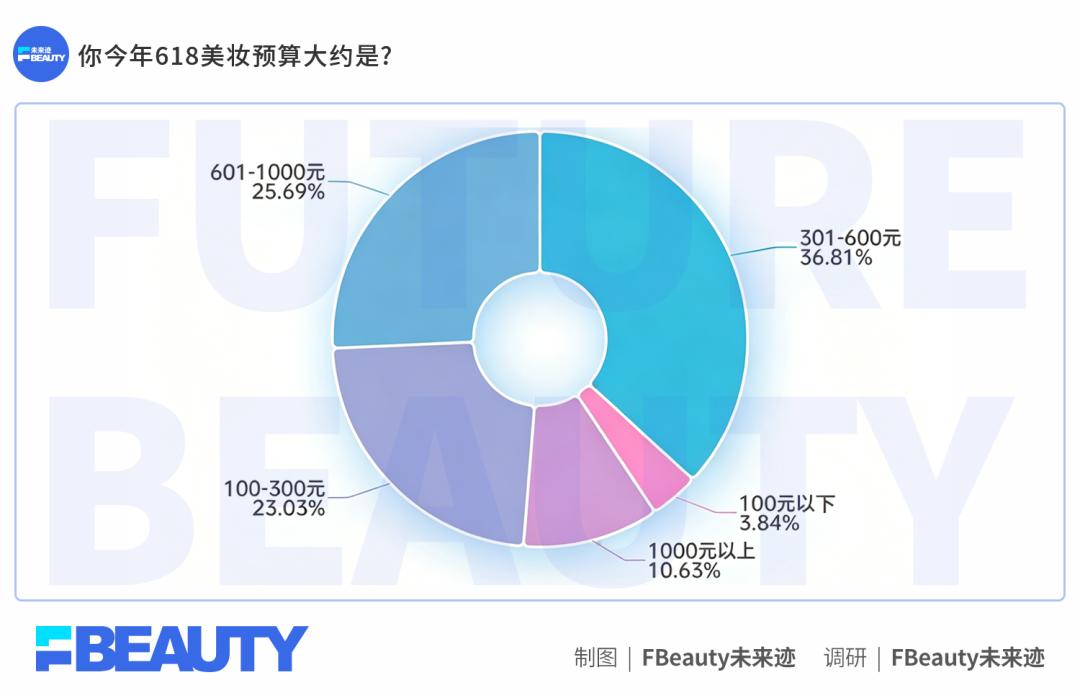
The change in the budget also confirms this. Compared with last year's 618, 33.86% of post - 00s said that their beauty budget had increased slightly, and 23.03% said it had increased significantly, with the total approaching 57%. At the same time, more than 60% of consumers' budgets were in the range of 300 - 1000 yuan. Among them, the proportion of 300 - 600 yuan was the highest, reaching 36.81%; the proportion of 601 - 1000 yuan was 25.69%; and the budget above 1000 yuan also reached 10.63%.
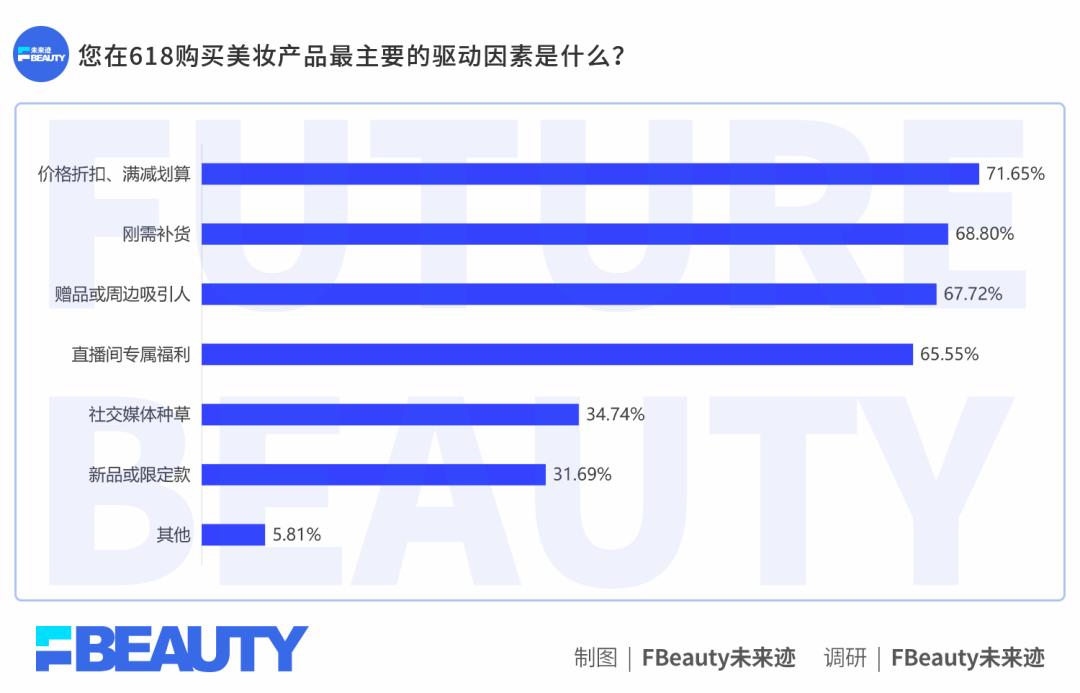
In terms of the driving factors for purchase, price discounts and full - reduction deals still ranked first, accounting for 71.65%; replenishing essential items followed closely, accounting for 68.8%; and attractive gifts or peripherals accounted for 67.72%. This shows that the price advantage of the big promotion is still effective, but it is no longer the only reason.
More notably, the ideal 618 consumption of post - 00s is undergoing obvious changes. 40.16% of the respondents chose to "buy less, but each item is really suitable for themselves"; 24.7% chose to "take the opportunity of the big promotion to buy products they usually can't afford"; only 15.06% pursued "buying the most things at the lowest price".
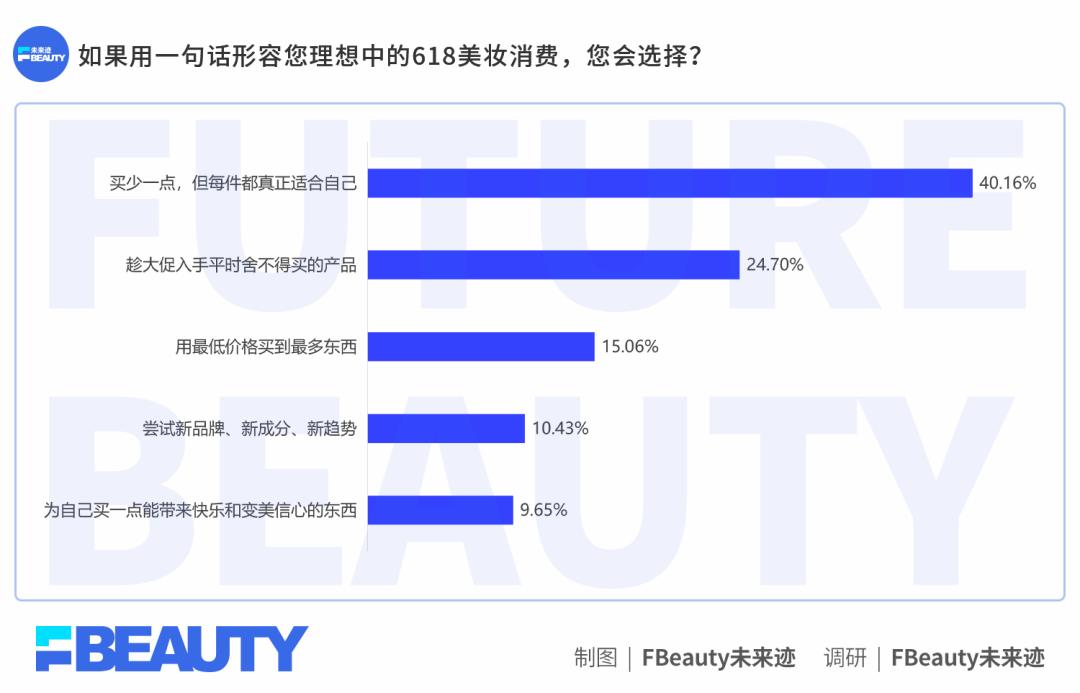
In other words, the consumption logic of post - 00s has changed from "buying more to make a profit" to "buying the right things to be worth it".
This is also why "waiting for discounts on high - price products during the big promotion" has become a notable detail. Nearly a quarter of consumers choose to buy products they usually can't afford during the 618, indicating that they are not impulsively consuming after being stimulated by low prices. Instead, they have long put their favorite products in the shopping cart and are waiting for a more suitable price window.
The beauty consumption of this generation of post - 00s is less about "blindly rushing" and more about "long - planned".
For brands, 618 is still an important sales occasion, but it is no longer just a node for creating conversions with low prices. Consumers are willing to spend money, but only if the products meet their needs, the gifts are valuable, and the prices are reasonable.
Skin care, makeup, and sunscreen become necessities during 618, and brand preferences are clearer
When post - 00s enter the 618 beauty consumption field, what are they buying? There is also a clear direction.
In terms of product categories, skin care, makeup, and sunscreen are the three most core necessities. The survey shows that the purchase rate of skin care products is 71.65%, that of makeup is 70.08%, and that of sunscreen is 66.34%, all exceeding 60%. In contrast, the purchase rates of body care, perfume, and hair care products are 30.22%, 28.35%, and 25.39% respectively.
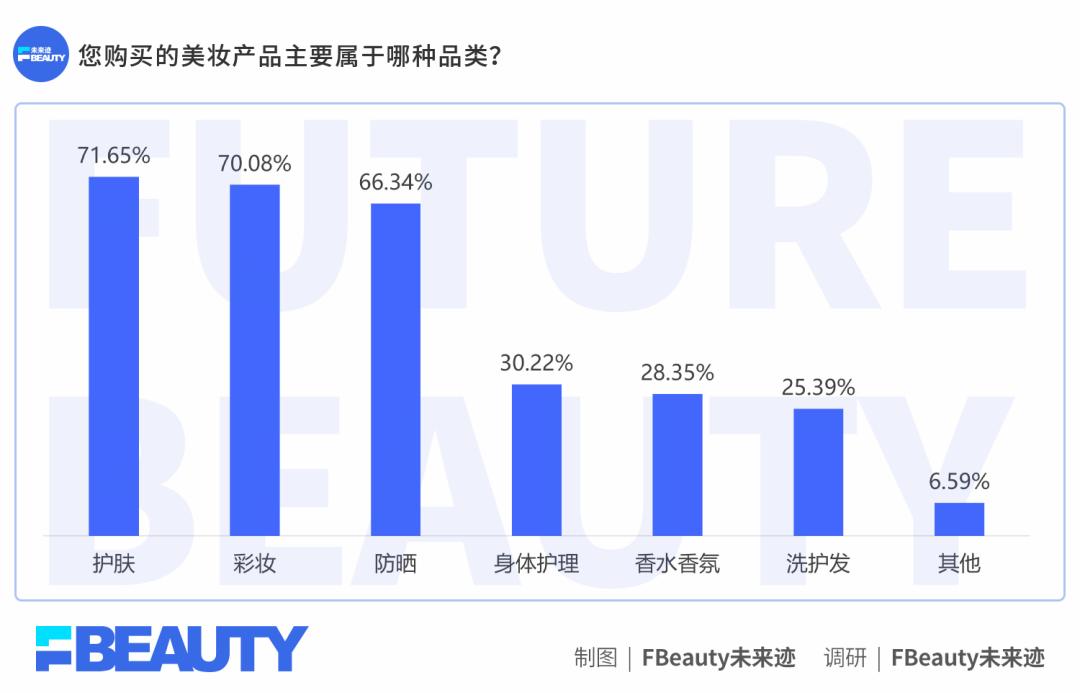
This shows that in the 618 shopping carts of post - 00s, the categories that are given the highest priority are still those that are used frequently in daily life and have stronger demand certainty. Skin care is responsible for long - term stability, makeup meets the need for makeup expression, and sunscreen becomes a necessity with the change of seasons. The 618 is not a "blind purchase" without a purpose, but a concentrated replenishment and upgrade around core categories.
Looking at brand preferences, post - 00s' choices are clearer than expected.
Among skin care brands, L'Oréal Paris and Proya rank at the top, with purchase rates of 53.94% and 50.59% respectively, almost tying as the most popular skin care brands among post - 00s. These two brands have one thing in common: they both have a price range accessible to the public and strong efficacy expression and popular product awareness.
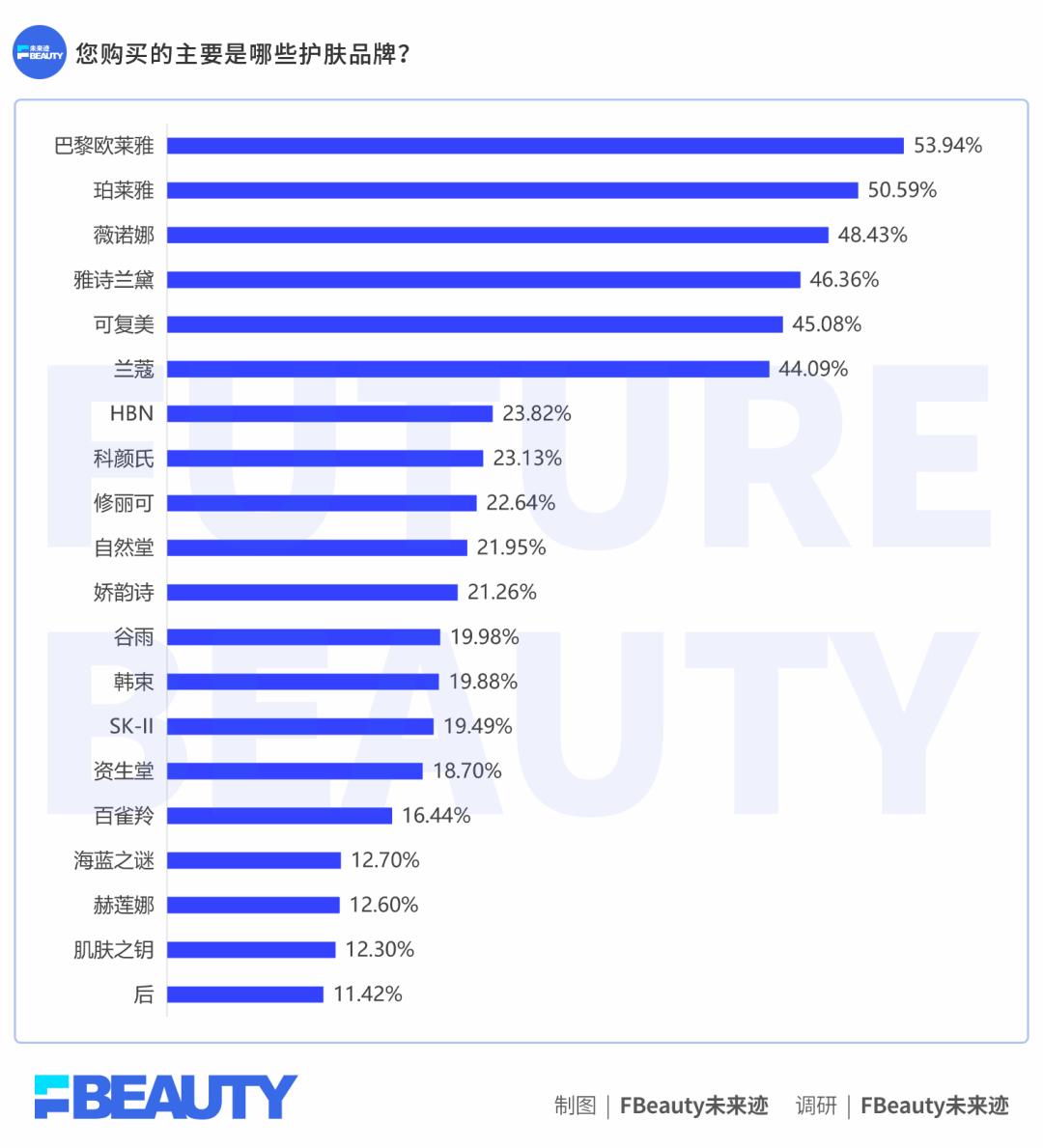
Following them are Winona, Estée Lauder, Kefumei, and Lancôme, with purchase rates of 48.43%, 46.36%, 45.08%, and 44.09% respectively. This shows that post - 00s do not exclude well - known brands in skin care, nor do they only buy domestic products. What they really value is whether the brand can find a balance between efficacy, price, and trust.
The performance of domestic efficacy brands is particularly worthy of attention.
Both Winona and Kefumei have entered the top ranks of skin care brand purchase rates, indicating that the segmented concepts of sensitive skin, repair, and efficacy skin care have formed a strong perception among post - 00s consumers. Among high - end brands, Estée Lauder and Lancôme belong to the first echelon, while luxury beauty brands such as La Mer, Helena Rubinstein, and Cle de Peau Beauté, although having strong brand awareness, have a relatively smaller proportion in the actual purchases of post - 00s.
The brand preferences in makeup can better reflect the breakthrough of domestic products.
The survey shows that the three makeup brands with the highest purchase rates among post - 00s are Mao Geping, Caitang, and Florasis, all of which are domestic brands, with purchase rates of 31.3%, 29.63%, and 27.66% respectively. Then come high - end makeup brands such as Yves Saint Laurent, Dior, and Chanel, followed by professional makeup brands such as NARS and MAC.
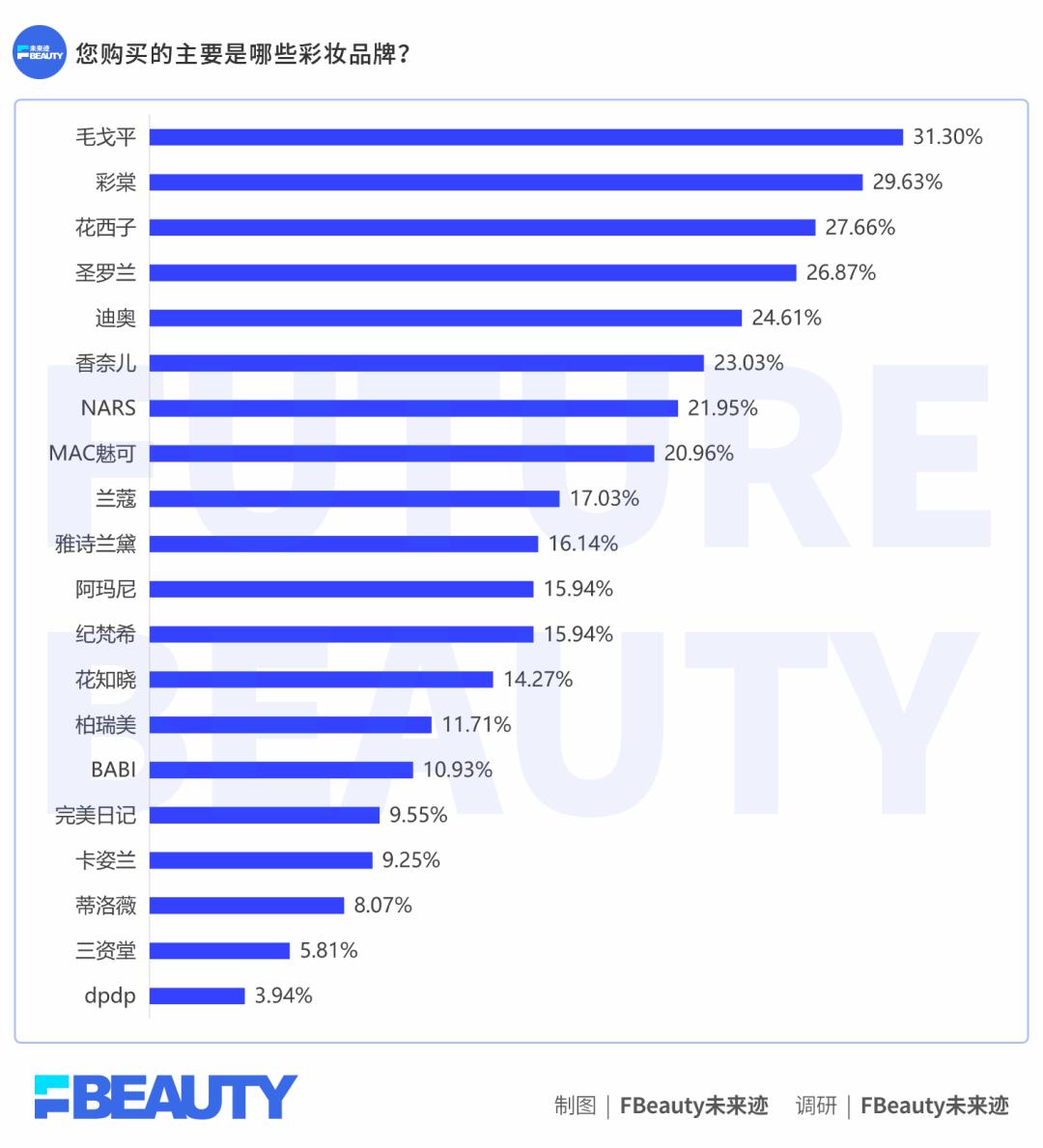
This set of data sends a clear signal. In the field of makeup, domestic products have surpassed the role of "alternative products" and established strong advantages in aesthetic expression, product experience, and understanding of local makeup. In particular, the Chinese makeup system and contouring base makeup logic represented by Mao Geping and Caitang are becoming the reasons for young consumers to actively choose.
The brand preferences in sunscreen are a bit unexpected.
Among the sunscreen brands purchased by post - 00s, Proya ranks first with a purchase rate of 38.98%, surpassing professional sunscreen brands such as Anessa and Mistine. Anessa and Mistine are tied for second, both with a purchase rate of 37.5%; L'Oréal and Winona follow closely, with rates of 37.4% and 34.74% respectively.
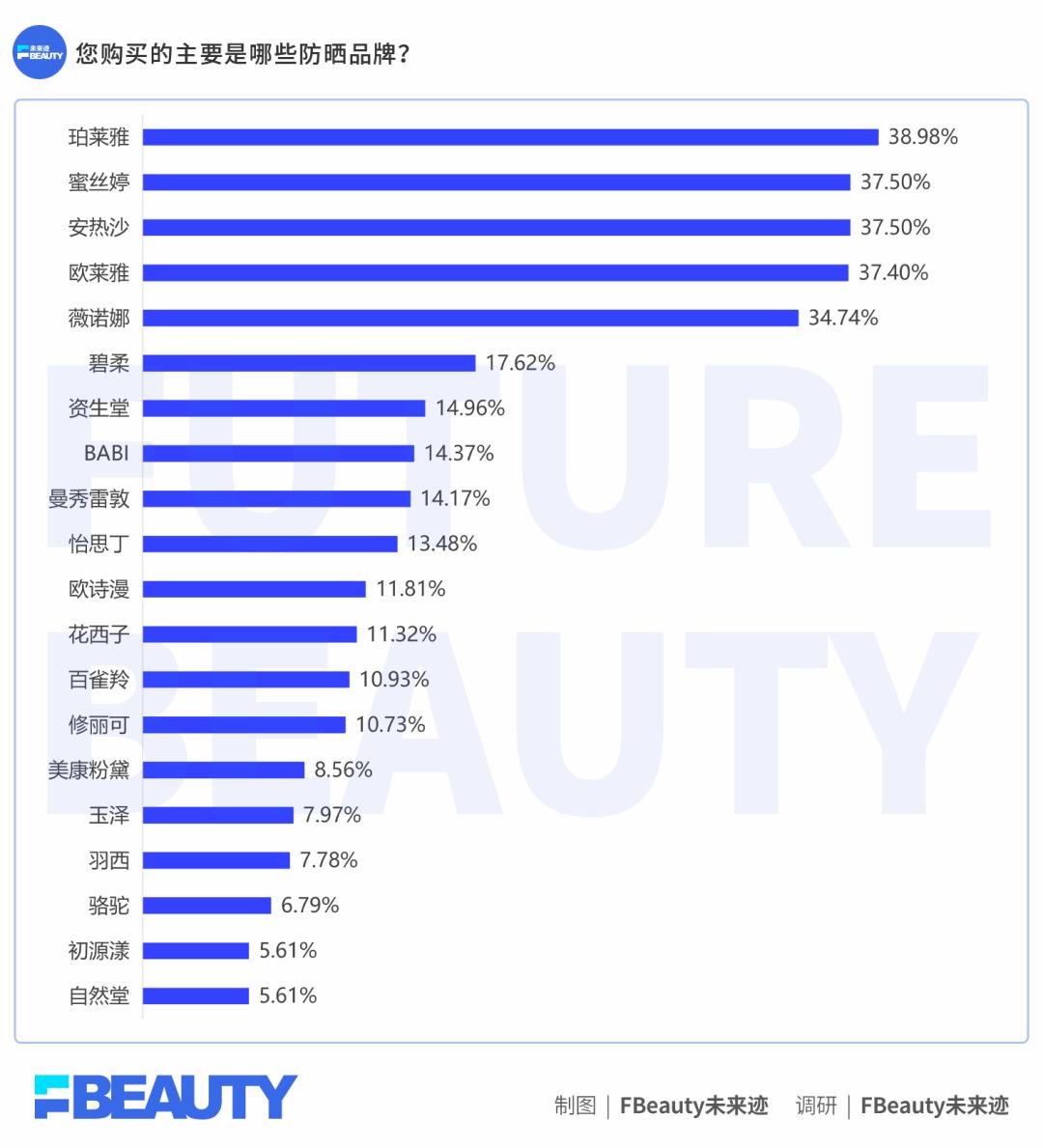
This shows that the competition in the sunscreen market is expanding from "professional sunscreen awareness" to a competition of "comprehensive capabilities of skin care brands". Proya's first - place ranking indicates that its brand awareness has extended from the main line of skin care to the sunscreen category; Winona's entry into the top five is closely related to its awareness of sensitive skin. For post - 00s, sunscreen is no longer just about "not getting tanned", but also needs to take into account skin feel, mildness, ingredient safety, and skin - care synergy.
This set of survey results also overlaps with the announced 618 pre - sale period lists.
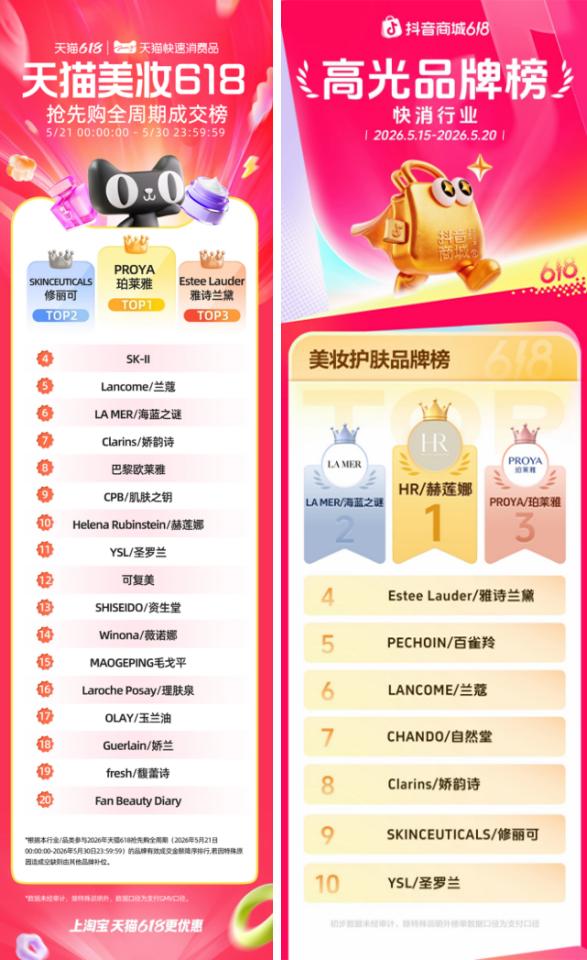
In the full - cycle transaction list of Tmall Beauty's 618 early - bird purchase, Proya ranks among the top and becomes a representative of domestic leading brands; in the first - stage highlight brand list of Douyin's 618, Helena Rubinstein, La Mer, and Proya rank among the top three in the beauty and skin - care brand list. The platform lists and consumer surveys together point to a fact: international well - known brands remain stable, leading domestic products are getting real purchase conversions, and the consumption choices of post - 00s are becoming more hierarchical.
For skin care, look at efficacy and trust; for makeup, look at aesthetics and expression; for sunscreen, look at scenarios and skin feel. The beauty consumption of post - 00s is no longer simply divided by "well - known brand/domestic product" or "cheap/expensive", but is reordered according to category needs and usage experience.
How about the basic market of domestic products? Nearly 70% approve, but the "worthiness" needs to be recalculated
If what post - 00s buy during the 618 reflects their consumption preferences, then how they view domestic products can better reflect the next competitive direction of the beauty industry.
The survey shows that post - 00s have a relatively positive overall attitude towards domestic beauty products. 30.91% of the respondents said they highly approved of domestic products, and 38.88% said they somewhat approved, with the total approaching 70%. Only 8.46% clearly stated that they "didn't trust much".
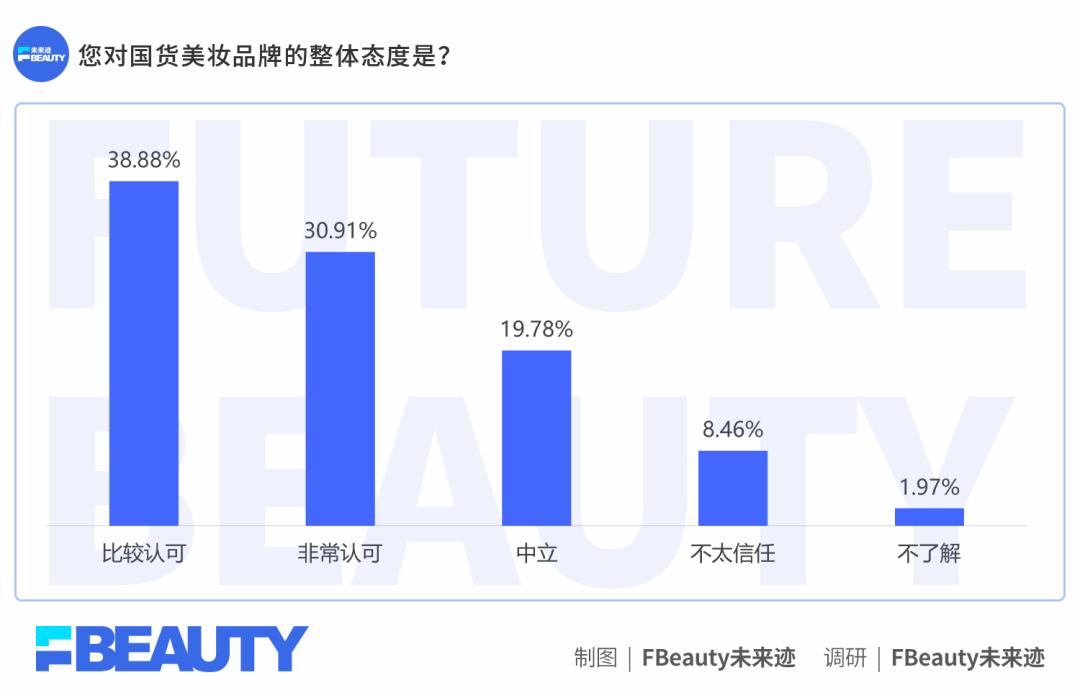
This shows that domestic products are no longer "optional alternative options" in the minds of post - 00s. Whether it is efficacy skin care, makeup, sunscreen, hair care, or body care, domestic brands have entered the mainstream choice pool of young consumers.
Post - 00s approve of domestic products mainly because of the cost - performance ratio.
When asked about the main reasons for choosing domestic beauty products, 74.8% of the respondents chose "high cost - performance"; 71.56% chose "better understanding of the skin type of Chinese consumers"; 68.9% chose "obvious progress in ingredients and efficacy". This shows that post - 00s' approval of domestic products is not just emotional support, but is based on product strength and local research.
