The robots that China's four major manufacturers are betting on still can't fold the pillowcases at home properly.
This might be the most valuable ball of paper in the world.
Not long ago, at a press conference, an Autonomous Variable robot recognized a ball of paper casually thrown on the ground by CEO Wang Qian. Then it autonomously planned a route, completed the grasping, and threw it into the trash can.
After multiple rounds of financing, the cumulative financing amount of this domestic robot company has approached 3 billion yuan.
Among the investors of Autonomous Variable, there are well - known capitals such as Xiaomi Strategic Investment and Sequoia China. It is also one of the few domestic embodied intelligence companies that have received investments from major companies like ByteDance, Meituan, Alibaba, and Xiaomi.
The enthusiasm of capital largely comes from the story of household robots it portrays.
According to the information released by Autonomous Variable before, robots equipped with the new - generation embodied large model WALL - B will enter real households and undertake basic household chores such as organizing shoe cabinets, sorting garbage, simple storage, and cleaning countertops.
The action of autonomously picking up the ball of paper at the previous press conference was just a part of its demonstrated capabilities.
It also cooperated with 58 Daojia to implement human - robot collaborative housekeeping in Shenzhen: the robot is responsible for some standardized and repetitive household chores, while the cleaners are responsible for in - depth cleaning and on - site support.
The outside world's expectations for Autonomous Variable have reached the peak.
However, with nearly 3 billion yuan in financing behind a ball of paper, what really intrigues onlookers is: if it can really understand the real world, can it enter ordinary households and do some real work for people?
Recently, a robot cleaning test in a real household gave a rather "both funny and annoying" answer.
The cleaning robot gets stuck at the door first
This real - household test came from a report by Vista Kan Tian Xia. The tester was a Shenzhen user named "Xianyu".
He spent 149 yuan to place an order for the "robot cleaning" service jointly launched by Autonomous Variable and 58 Daojia on a mini - program. According to the service description, within 3 hours, the robot would attempt to complete basic household chores such as organizing, tidying up, and folding clothes.
But this time, besides an embodied intelligence robot in the spotlight, there was also a cleaner and an engineer responsible for on - site support when entering the door.
Moreover, the "test" of this cleaning task started from the moment of entering the door.
The first question appeared at the door.
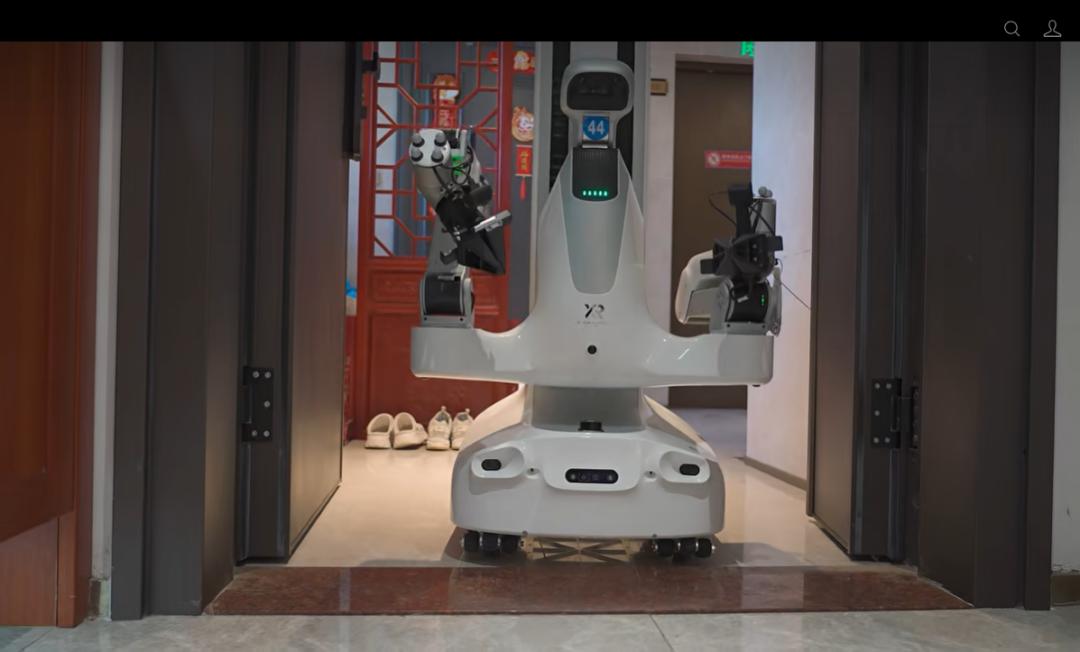
This robot uses a wheeled chassis, is about 1.6 meters tall, and weighs hundreds of kilograms. It is difficult for it to enter a household scene on its own like a sweeping robot. Xianyu lives on the second floor. Fortunately, there is an elevator in the building. Finally, with the help of a Huolala driver, the robot was sent into the house.
If it were an old community without an elevator, this service might stop downstairs before it even starts.
However, the problems didn't end after entering the door.
Its activity range is basically limited to the living room. It can't cross the threshold easily, can't get into the bedroom, and it's not convenient to enter the bathroom, let alone freely switch between different rooms.
At the press conference, it faced a ball of paper; in an ordinary household, the first opponents became elevators, thresholds, furniture, sundries, and narrow spaces.
After the robot finally entered the door smoothly and reached the working place, there was still a 3 - hour household chore test waiting for it.
The first task was to organize the desk.
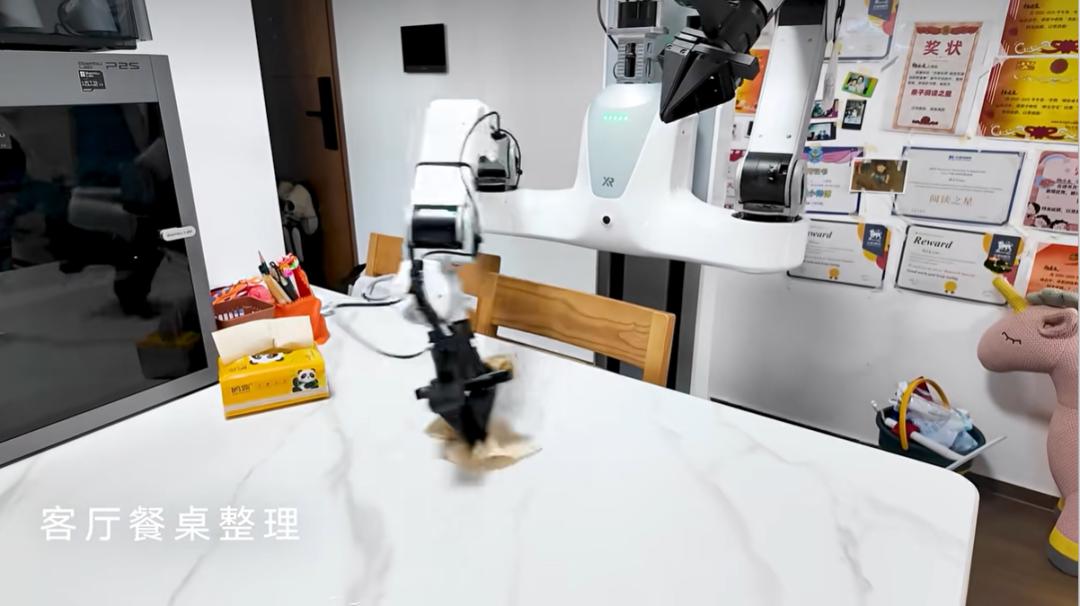
In human understanding, the definition of "organizing the desk" is diverse, but generally it means putting stationery back in place, removing sundries, and leaving commonly used items within easy reach. But for the Autonomous Variable robot in "Xianyu"'s home, "organizing the desk" seems more like "moving objects".
It picked up the things on the table, put them down, picked them up again, and put them down again. The things did move, but the desktop didn't become significantly tidier. After watching, Xianyu finally did it himself.
The second task was to arrange shoes.
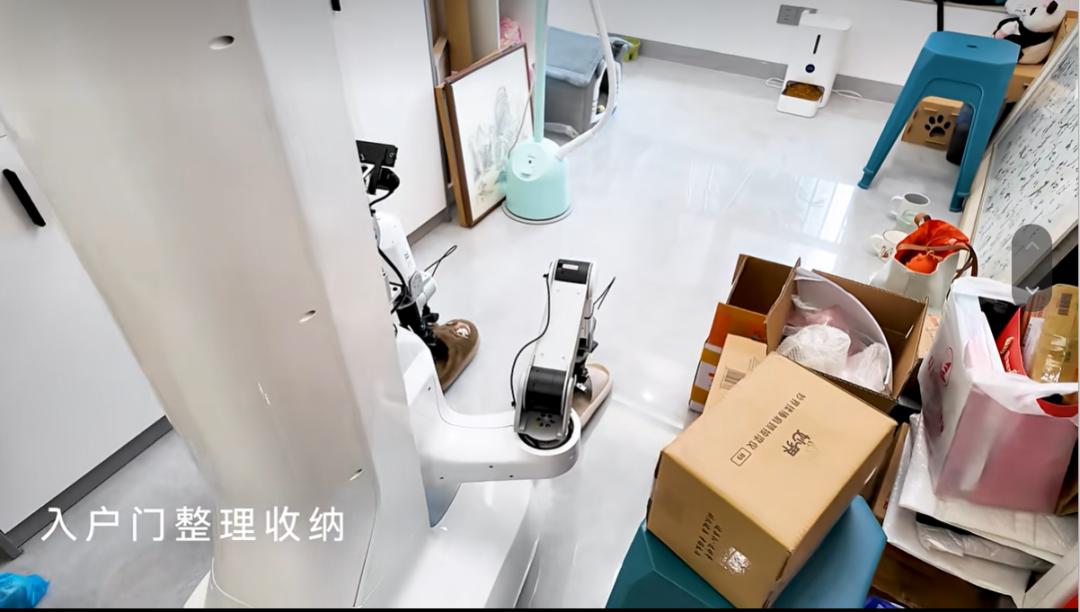
This task is simple. Shoes are just shoes. Pick them up, arrange them neatly, and put them back in the shoe cabinet, then the task is completed.
But for the robot, it can recognize shoes and move them, but its understanding of "putting away shoes" remains on the surface. Two shoes should be in pairs, face the same direction, and be easy to take out the next time you wear them. This should be the real value of the household chore of arranging shoes.
After the robot worked hard for a while, it finally just moved the shoes near the shoe cabinet and declared "arranging shoes finished".
However, compared with the first two tasks, the most dramatic one is folding the pillowcase.
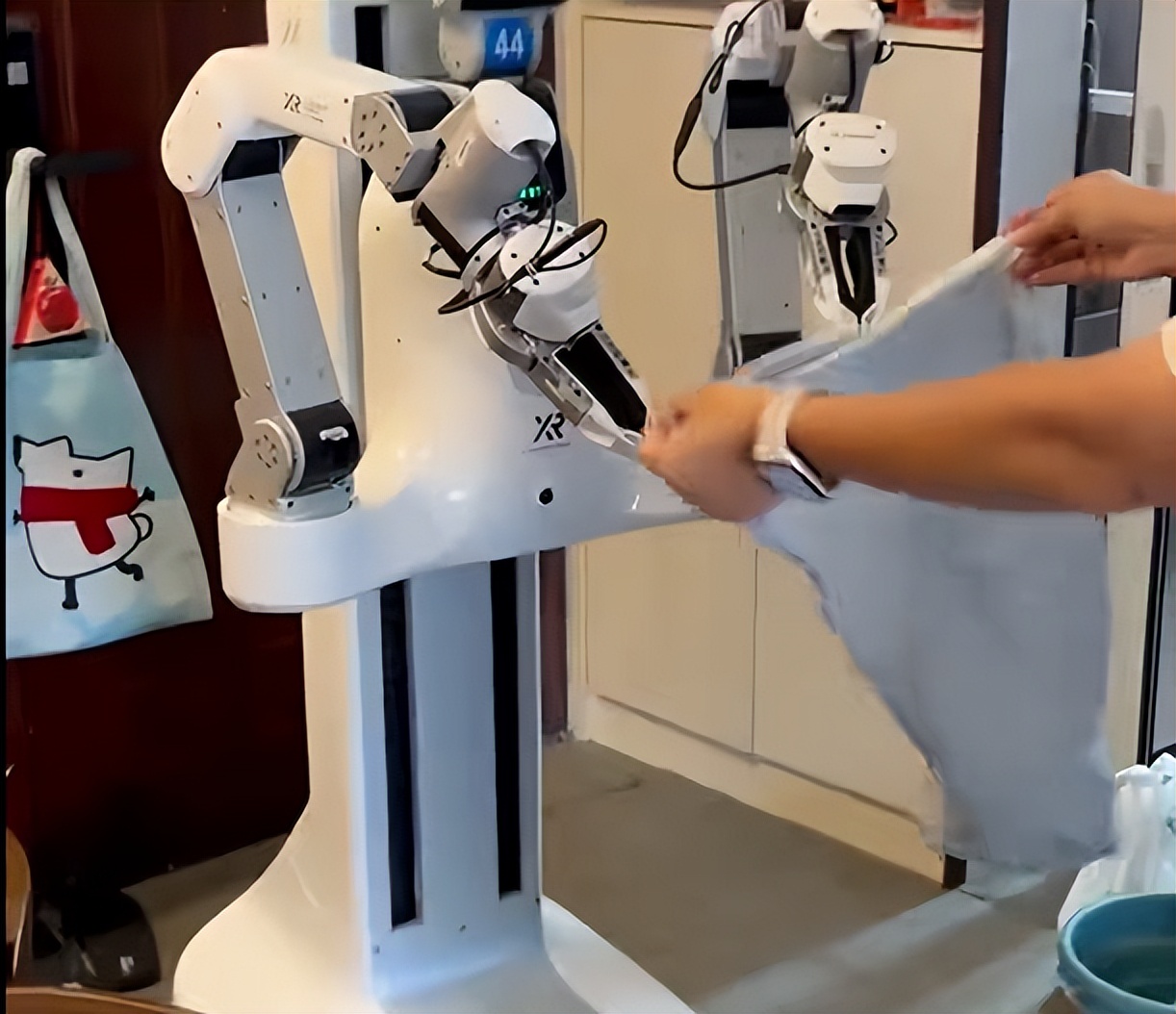
This is a trivial matter that humans hardly need to think about, but it has become a big problem for the robot.
Fabric is difficult to handle. The pillowcase will slip, wrinkle, and deform. If the gripper is too light, it can't hold the fabric; if it's too heavy, it's easy to distort the fabric. As soon as it pulls open one corner, the other side may roll into a ball; just when it manages to flatten it a bit, the fabric slips out of the gripper.
Fortunately, the robot finally completed the task and folded the pillowcase into a square, but it took more than ten minutes. While the cleaner standing beside just shook and stretched it, and could finish the same thing in a few seconds.
After these three scenarios and several hours of work, this 149 - yuan robot cleaning service finally ended. But the robot's performance this time is indeed in contrast to the highlight moment of smoothly picking up a ball of paper at the press conference.
This time, the robot did enter a real household and did start working.
But its "work" this time is more like a product trial in a real household. Not only does it need to be followed by technical maintenance personnel, but when something goes wrong, it's still the familiar cleaner waiting on the side who can solve the problem instantly.
This also brings a more realistic question to the forefront: why do the robots that can run and jump online "become stupid" as soon as they enter the living room?
Robots are not born to do housework
As early as the 1980s, artificial intelligence scholar Hans Moravec put forward a counter - intuitive judgment: it is relatively easy for a computer to complete high - level tasks such as playing chess, calculating, and logical reasoning; it is much more difficult for a machine to have the perception and action ability of a human infant.
This judgment comes from three "defects" that robots have.
The first defect is the high dependence on a standard environment.
At the press conference site, the environment was relatively controllable: the ground was flat, the light was stable, there were limited obstacles, and the task boundaries were clearer. What the robot had to handle was a relatively clear task chain of seeing the ball of paper, walking over, picking it up, and then throwing it into the trash can.
But in a household scene, the light changes throughout the day, children may throw toys anywhere, and a chair may be moved five centimeters. For every subtle change, the robot has to re - recognize, judge, and plan its actions.
If there is a lack of sufficient real - household data and on - site generalization ability, the robot will have difficulty reacting quickly to these subtle changes. Even an error of only five centimeters is enough to make the robot fail to grasp and even knock a vase on the table to the ground.
Stanford AI Index 2026 gave a set of rather eye - catching data: in simulation manipulation tasks like RLBench, the success rate of robots can reach 89.4%; in real - household tasks, the success rate is only about 12%.
The second defect is the lack of common sense.
Just because a robot can recognize a "shoe" doesn't mean it knows the shoe should be put in the shoe cabinet; just because it can recognize "paper" doesn't mean it knows whether it's waste paper, a sticky note, or materials casually placed on the table by the owner.
Humans constantly accumulate life experience and know whether something should be thrown away, where it's convenient to put things, what is considered tidy, and what is considered cleaned up. For robots, these judgments have to be gradually learned through models and data.
As for the last defect of the robot, it's the hand.
Manipulating flexible objects is currently recognized as a "tough nut" in embodied intelligence. As shown in the previous example of folding the pillowcase, most current robots only have position control and torque control. They don't know that the pillowcase is soft or where it has slipped to during the folding process.
But when humans work, in addition to using their eyes, they also adjust the force by feeling. Many robots now rely more on vision and force control, and their tactile feedback is far less delicate than that of human hands.
Therefore, the combination of these three defects makes housework, which seems to have the lowest threshold, the most difficult problem for embodied intelligence.
In response to the robot's defects, Autonomous Variable's solution is the "large model".
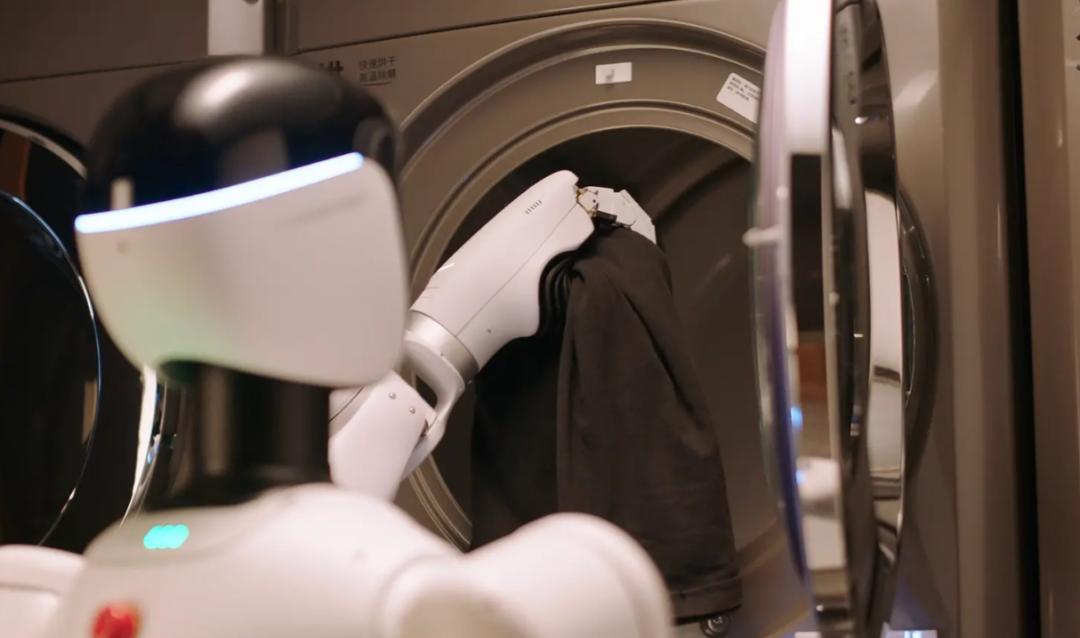
According to the information it released before, Autonomous Variable is advancing from vision - language - action models like WALL - A to the new - generation embodied large model WALL - B. It wants the robot to process vision, language, action, physical prediction, and body perception together.
Put simply, the robot should not only be able to "pick up shoes" but also understand where to put them; not only be able to "pick up a pillowcase" but also understand what state is considered folded; not only be able to "pick up a ball of paper" but also judge whether the paper should be thrown away.
This path sounds reasonable, but it always can't avoid one problem: data.
However, the cost of obtaining household data is extremely high and there are privacy risks. This also explains why Autonomous Variable is willing to cooperate with 58 Daojia to promote the robot cleaning service to the C - end.
The price of 149 yuan is difficult to cover the cost of the robot, the engineer, and the cleaner coming to the door, but it can exchange for valuable "real - machine data". Every time the robot gets stuck in front of the threshold or puts the shoes in the wrong place, it is contributing to the "world model".
The problem is that although data can be gradually supplemented, users and the market may not be willing to wait all the time. Capital can pay for imagination first, while users only pay for results.
Picking up a ball of paper at the press conference made the market see the hope of "robots entering households"; but this test at "Xianyu"'s home exposed a real problem: at least for now, household robots are still far from becoming real household labor.
Optimistically speaking, Autonomous Variable has at least brought the robot into a real household; realistically speaking, it is more like a new employee just starting on - the - job training.
As for when it can become a default part of ordinary households like washing machines and sweeping robots, it probably has to learn one thing first:
Don't let humans clean up the mess for it.
Reference materials:
Vista Kan Tian Xia, "We Experienced the 149 - Yuan Robot Cleaning Service and Found That It Still Needs Two 'Nannies' to Work"
This article is from the WeChat official account "Blue Word Plan", author: Huang Xiaobin, published by 36Kr with authorization.