Everyone is footing the bill for the 700 billion tab.
Three and a half years after the explosion of generative AI, the market has reached a new point of divergence: optimism is still accelerating, while skepticism is also accumulating. Judging whether a "bubble" is coming is not enough to explain the current complexity. The "AI Belief and Bubble" series will look for key variables from different perspectives of the market, technology, industry, and companies. This article is the third in the series.
"We are indeed limited by supply because of the availability of advanced manufacturing processes for SoCs," said Cook during Apple's second - fiscal - quarter earnings call when answering analysts' questions. This is the second time Apple CEO Cook has mentioned the insufficient production capacity, almost repeating the view from the first - fiscal - quarter earnings call word for word.
The supply - chain problem has occurred to Cook, the "supply - chain master," which is a concrete microcosm of the siphoning of resources by artificial intelligence.
Even the most resourceful housewife can't cook a meal without rice. Xiaomi and Huawei have also encountered the same problem.
"The price of memory has increased too much. We hope you can understand our sincerity," and "We are under great pressure. We've really tried our best," said Lei Jun and Yu Chengdong, the two "godfathers of the Chinese mobile phone industry" born in 1969. Facing the sky - rocketing price of storage, they had to pour out their grievances in front of the camera.
Chinese and American mobile phone giants have been "strangled" by the supply chain one after another, which is due to a figure - 70 billion US dollars. This is the estimated AI capital expenditure of the seven Silicon Valley giants in 2026, among which Amazon ranks first with 20 billion US dollars.
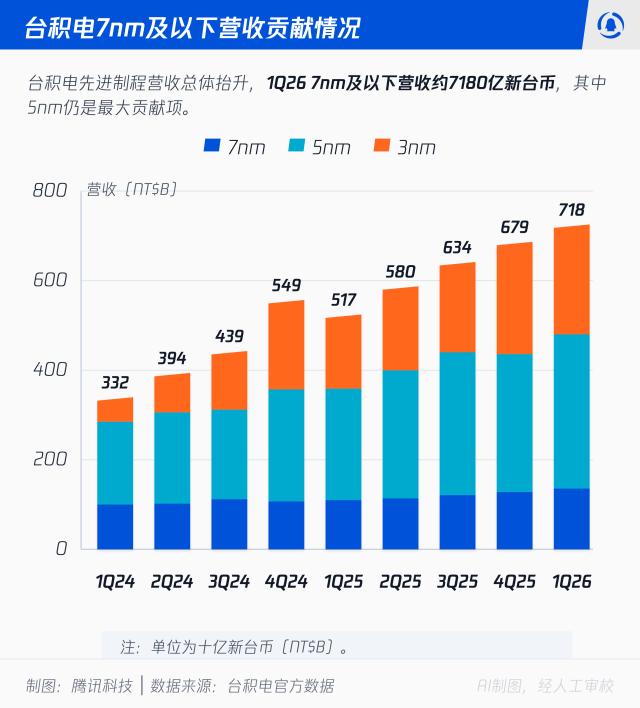
The Silicon Valley tech giants have used their financial power to buy up TSMC's advanced production capacity and snap up all the available memory chips on the market. It can be said that as long as it is related to this industry, all products and production capacity will be bought out. This is also the reason why when Huang Renxun simply said, "Marvell is the next company with a trillion - dollar market value," Marvell's stock price soared by 32.52% at the close of trading that day.
In contrast, on one hand, there is the "jubilation" in the artificial - intelligence industrial chain, while on the other hand, Lei Jun, Yu Chengdong and others are moving forward under pressure.
01
The Old Giants "Lose" Their Say
The old giants that have "lost" their say in the supply chain are those without the "AI label."
I specifically mentioned Cook's label of "supply - chain master" earlier. During his 15 - year tenure as CEO, Apple's overall gross profit margin has increased by at least 7 percentage points, with a single - quarter high of 49.27%. There are two key reasons for this. One is that Apple's service gross profit margin has raised the average, and the other is self - developed chips.
Apple self - develops chips such as the A - series and M - series. With more than 200 million iPhones and tens of millions of Macs sold each year, it continuously reduces the cost per unit.
All of this is inseparable from TSMC's production - capacity support.
Apple started outsourcing the production of A - series chips to TSMC in 2014 and became its largest customer in 2015. Since then, it has held the top position for more than a decade, and Apple has usually been the first to use TSMC's most advanced processes. However, in 2025, TSMC's largest customer became NVIDIA.
Among TSMC's top five customers now, except for Apple and Qualcomm, NVIDIA, Broadcom, and AMD are all "computing - power suppliers."
Sliding down from the throne of the largest customer means losing the priority for OEM discounts and incremental production capacity, and the gross profit margin will also be directly under pressure. The most direct way to solve this problem is to raise prices.
Investment banks Jefferies and JPMorgan have both mentioned that to alleviate the problems of production - capacity supply and rising OEM fees, Apple may adopt a strategy of increasing the price by 50 US dollars for every 1000 US dollars.
"The production capacity of 3nm is indeed tight now," said Wu Zihao, a former TSMC engineer in charge of building factories. "If your products sell well and you want to increase production capacity, but there isn't enough, you definitely can't increase it."
According to TSMC's Q1 2026 earnings, the revenue from 5nm + 3nm processes accounted for 61%. Coincidentally, the revenue contribution from HPC (High - Performance Computing) business, including AI servers, GPUs, and data - center CPUs, was also 61%.
Due to the continuous heavy investment of Silicon Valley giants, TSMC's production - capacity squeeze will shift from cyclical to structural. The demand from non - AI customers that rely on advanced processes, such as mobile phones and PCs, will continue to be squeezed.
So, Cook was tight - lipped about how to deal with it, but he mentioned several times, "We will evaluate a series of options. I don't want to be more specific now."
Although Cook is reluctant to talk, the result will be nothing more than price increases and the magnitude of the increase, and it is the ordinary consumers who will bear this wave of price hikes.
Both Xiaomi and Huawei are self - developing chips, and they will encounter similar problems. However, for domestic manufacturers, the shortage of memory supply is a more tricky problem with a higher priority for solution.
In March, Counterpoint mentioned in a report that in the first quarter of 2026, the prices of mobile memory soared (DRAM increased by more than 50%, and NAND increased by more than 90%). The proportion of memory cost in the total BOM (Bill of Materials) for entry - level products rose to 43%, which forced smartphone manufacturers to adjust the BOM structure, reduce configurations, and increase the retail price.
I mentioned in the article "The 100 Days of 'Memory Price Surge': The Forced Death of Budget Phones" that this structural change has the most direct impact on low - end phones - in the short term, selling one unit means losing money, and some manufacturers have to cut related product lines.
"After the inventory is sold out, production will stop in the short term," a storage - industry researcher revealed earlier.
"According to our prediction, the price of memory will continue to rise, and the selling price of mobile phones will have to increase accordingly. Mobile phones may become more and more expensive. If you plan to change your phone in the next year, I strongly recommend that you do it now," Lei Jun said at an exchange meeting on May 21, paving the way for the continuous price increases in the future.
Lu Weibing further emphasized in his supplementary speech that the price of future flagship phones will exceed 10,000 yuan. This change also means that the Internet - based mobile phones that focus on "high - end hardware" may completely bid farewell to history.
A new era has ended an old era.
NVIDIA, which stands at the upstream of the artificial - intelligence industrial chain, has a latest quarterly gross profit margin of 74.9%. SK Hynix's single - quarter operating profit margin has soared to 72%. TSMC's gross profit margin is also constantly hitting new historical highs, reaching 66.25% in Q1 2026.
In contrast, Apple has pulled its gross profit margin above 40% through its service business, while Xiaomi's overall gross profit margin is only 22%. The profit distribution in the industrial chain has shown a serious tilt.
The upstream AI chip, HBM, and advanced - process OEM enterprises have earned most of the profits. The downstream automobile manufacturers and consumer - electronics manufacturers are being squeezed by both rising costs and market competition, and their profits are getting thinner and thinner.
In addition to cutting product lines, listed companies that are pushed to the red line of losses may also have to resort to layoffs to reduce costs and improve efficiency.
02
Competing for Electricity with the Community
When people talk about Huawei, they often emphasize its aggressive all - industrial - chain layout. To put it bluntly, it's "You can't do everything." However, from the perspective of supply - chain security, this logic is self - consistent.
In fact, Silicon Valley companies are also doing the same thing to ensure their supply - chain security, such as ensuring power supply. Amazon CEO Andy Jassy has repeatedly emphasized in earnings calls that "the biggest limiting factor is power."
To date, it can be said that the biggest contradiction in the development of artificial intelligence in Silicon Valley is the contradiction between the rapidly expanding demand for computing - power growth and the backward power - grid infrastructure.
In January, Microsoft published a blog post titled "Building Community - First AI Infrastructure," which mentioned that most of the power - transmission infrastructure in the United States has been in operation for more than 40 years and is operating at full capacity. At the same time, due to the disruption of the supply chain of transformers and high - voltage equipment, the upgrade of existing lines has been repeatedly postponed. Building a new power - transmission line usually takes 7 to 10 years due to land - approval restrictions, which seriously mismatches the explosive growth of AI computing - power electricity demand.
In terms of ensuring energy supply for data centers, the solutions of the giants vary.
Among them, Google spent 4.8 billion US dollars to acquire the power - generation company Intersect Power. Zuckerberg is betting on nuclear energy and has signed a total power - supply agreement of 6.6GW with three nuclear - energy companies, Vistra, TerraPower, and Oklo. The most radical one is Musk, who directly bought an entire power - plant equipment from overseas and shipped it back to the United States. He also arranged a team to investigate China's photovoltaic industry and purchase related equipment.
Everyone must be curious about how much power the Silicon Valley giants actually need.
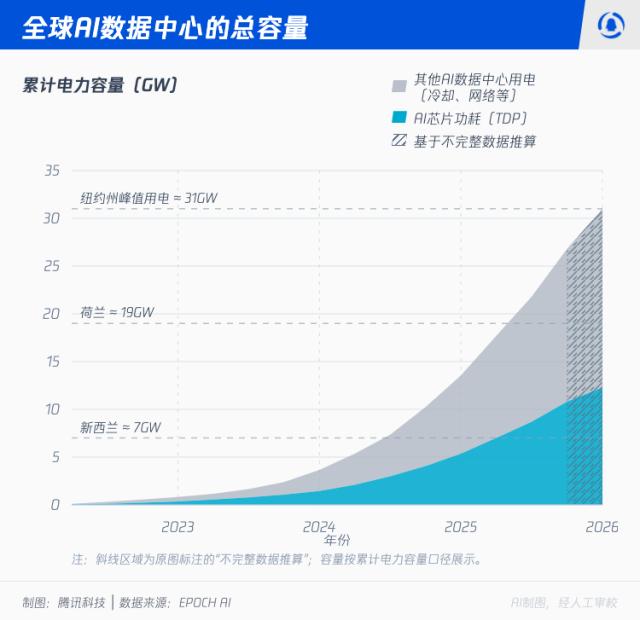
A tracking report by the research institution EPOCH AI at the beginning of the year showed that including chips, racks, cooling systems, and network equipment, the total capacity of global AI data centers has soared to 30GW (equivalent to the peak electricity consumption on the hottest day in the history of New York City). Running at full capacity 24 hours a day throughout the year, the estimated electricity consumption is 262.8 billion kWh.
Calculated at the median industrial electricity price/agreement electricity price for large customers in the United States of 0.08 US dollars per kWh, the annual electricity bill for a 30GW data center is 21.02 billion US dollars. However, compared with the annual capital expenditure of 700 billion US dollars, it's just a drop in the bucket.
However, financial power also has its limits and cannot solve all problems.
In April, Reuters reported that xAI built a fossil - energy power plant with a total capacity of 200MW in Southaven, Mississippi (adjacent to Memphis, Tennessee) to expand its Colossus 2 data center without permission. Soon after, it was sued by environmentalists. The indictment claimed that the facility produces up to 1,700 tons of carcinogenic formaldehyde, carbon monoxide, and nitrogen oxides (NOx) that cause severe smog every year, making it the largest single industrial pollution source in the area.
During the trial of the case, instead of shutting down the original 27 turbines, xAI brought in 6 new gas turbines to connect to the grid for power generation, directly challenging the existing rules and order.
Compared with the environmental and health problems caused by the expansion of power - grid infrastructure, the passive increase in community living costs is a more practical issue.
An institution under Harvard Law School mentioned a concept in the report "Exploiting the Public Interest": Power companies socialize the costs of data centers through electricity prices - by providing preferential discounts to data centers and using their monopoly position to share costs, the public is forced to subsidize the infrastructure needs of tech giants.
As the largest state - owned power supplier in the United States, the Tennessee Valley Authority (TVA) significantly increased the wholesale base electricity price for local areas twice in a row in 2023 and 2024, forcing the Memphis Light, Gas and Water (MLGW) to follow suit and pass on the cost.
On top of these two consecutive increases in the base electricity price, combined with the "natural - gas peak - shaving fuel surcharge" in summer and winter on the power grid caused by the continuous operation of data centers, local families in Memphis actually face a monthly electricity bill that has soared by 12 to 15 US dollars during peak - electricity - consumption periods.
The Institute for Energy Economics and Financial Analysis (IEEFA), a top US think - tank, clearly calculated and pointed out in a report titled "Projected Data - Center Growth Sends PJM Capacity Prices Soaring Tenfold": "The soaring price in the power - grid capacity market is expected to cause the average residential electricity bill in Western Maryland to increase by 18 US dollars per month and that in Ohio to increase by about 16 US dollars per month."
In March, Trump convened Silicon Valley giants at the White House and decided to give the green light to tech companies to build their own energy systems. At that time, he also clearly emphasized that he didn't want the public to pay high electricity bills for the expansion of data centers.
"We need to tell large tech companies that they have the obligation to solve their own energy needs. You can build your own exclusive power plants next to your factories/data centers so that ordinary people won't bear the cost shifted by you," Trump said.
03
Artificial "Financial - Asset Assembly Line"
The Silicon Valley giants are burning money like crazy to expand their data centers, and their free cash flow is being rapidly consumed. So, they are "using all means" to raise funds and have employed a variety of financing tools, including equity financing and borrowing.
In the past year, Google's parent company issued more than 85 billion US dollars in debt in 6 different currencies and markets, and the total debt exceeded 100 billion US dollars. It has just launched a round of equity financing with an initial scale of 80 billion US dollars, which was later expanded to 85 billion US dollars due to strong subscription. Among them, Berkshire Hathaway subscribed for 10 billion US dollars.
During the same period, Broadcom, in cooperation with Apollo and Blackstone, established the AI XPV computing - power financing platform (with an initial scale of 35 billion US dollars), focusing on AI chips and data - center infrastructure. BlackRock and Microsoft are also promoting similar SPV projects.
Public data shows that as of the end of 2025, Meta, xAI, Oracle, and CoreWeave have raised more than 120 billion US dollars through means such as SPV for data - center construction, and this trend continued to expand at the beginning of 2026. Morgan Stanley estimates that the global hyperscale cloud giants will borrow up to 500 billion US dollars through various means in 2026.
In data - center financing, the SPV holds relevant assets, including land, buildings, racks, and power contracts. External capital - mainly pension funds, insurance companies, and annuity funds - completes the financing by purchasing bonds or equity issued by the SPV. After the data center is built, the tech company then leases computing power from the SPV entity through a long - term lease contract.
This constitutes the first step of the artificial "financial - asset assembly line."
For tech giants, through the SPV method, relevant debts will not appear on the balance sheet