The new CEO of DingTalk also has to settle "old scores"
The future of DingTalk is not just about verbal responses.
On June 11th, according to a report by Phoenix Tech: Alibaba announced a management adjustment for DingTalk. Chen Hang stepped down as the CEO of DingTalk, and Chen Yusen, a post - 90s tech geek, took over.
As a post - 90s tech - savvy manager, Chen Yusen faces significant challenges. The DingTalk left by Chen Hang is a successful yet contradictory gateway.
By integrating organizational structure, messaging, meetings, approvals, forms, documents, low - code development, and enterprise applications, DingTalk has become one of the most important infrastructures for enterprise collaboration in China. However, its success also stems from strong reach, strong reminders, and strong management certainty.
This set of capabilities was effective in the mobile Internet era but may become risky in the AI era. AI won't automatically correct the organization; instead, it will amplify it. Under DingTalk's original product logic, if AI only refines the "visibility of work," it may shift from being an assistant to a supervisor. The recently highly - discussed article "Trapped in DingTalk" mainly exposes this issue.
Chen Yusen's public profile offers another possibility.
From his early public sharing on security engineering to his later expressions around MuleRun, Agent, and AI Native, he seems more like an "executive - style" tech manager. Based on the information pieced together from the topics he discusses, he is more concerned about how the system truly operates, about boundaries, permissions, risks, and whether AI can transition from a co - pilot to continuously completing tasks.
DingTalk's change is not just a simple leadership change; it's a moment of accountability.
It needs to prove that the organizational gateway it has accumulated over the years can not only enable managers to see work but also allow most users to efficiently complete work with the help of AI. Here, work is not just about faster information flow but also about closing the loop of tasks, permissions, responsibilities, and results within the enterprise.
A change in leadership also means a possible change in the narrative. Judging from Chen Yusen's background, DingTalk's proposition may shift from how to AI - enable a collaboration product with a strong management flavor to how to transform a collaboration gateway into an execution system in the AI era.
1
Who is Chen Yusen, from Security Engineering to an Agent - oriented Executive
What DingTalk needs at this moment is not a CEO with a "perfect resume."
According to Titanium Media, Chen Yusen was born in 1992 and has won numerous championships in top - level domestic and international computer security competitions. At the age of 22, he founded the cybersecurity company Changting Technology, which was later acquired by Alibaba Cloud due to its outstanding technical strength, and Chen Yusen joined the Alibaba ecosystem. With his outstanding performance in the technology and business fields, he was included in the Forbes Asia "30 Under 30" list.
From public information, Chen Yusen's connection with Alibaba began during his time at Beijing Changting Technology.
In 2014, Chen Yusen and others founded Beijing Changting Technology, focusing on the R & D of enterprise - level network security services and solutions. In 2015, as a representative of Beijing Changting Technology, Chen Yusen gave a presentation titled "Farewell to SQL Injection" at the Alibaba Security Summit.
This forms his first layer of background: security engineering.
SQL injection is not a trendy concept, but it's a good entry point for understanding enterprise software. It focuses not on how beautiful the interface is but on where the system boundaries are, whether the input is trustworthy, how permissions are isolated, how exceptions are intercepted, and how risks are engineered out.
Chen Yusen graduated from the Qiushi Science Class of Zhijiang College at Zhejiang University. He entered the field of network attack and defense in his college days and was a member of the famous network security technology competition and research team "Blue Lotus Team" from Tsinghua University. Most of his partners who started the business at Changting Technology also came from this team.
In the PPT of "Farewell to SQL Injection," the expression of the then 23 - or 24 - year - old Chen Yusen was very youthful.
For example, this one.
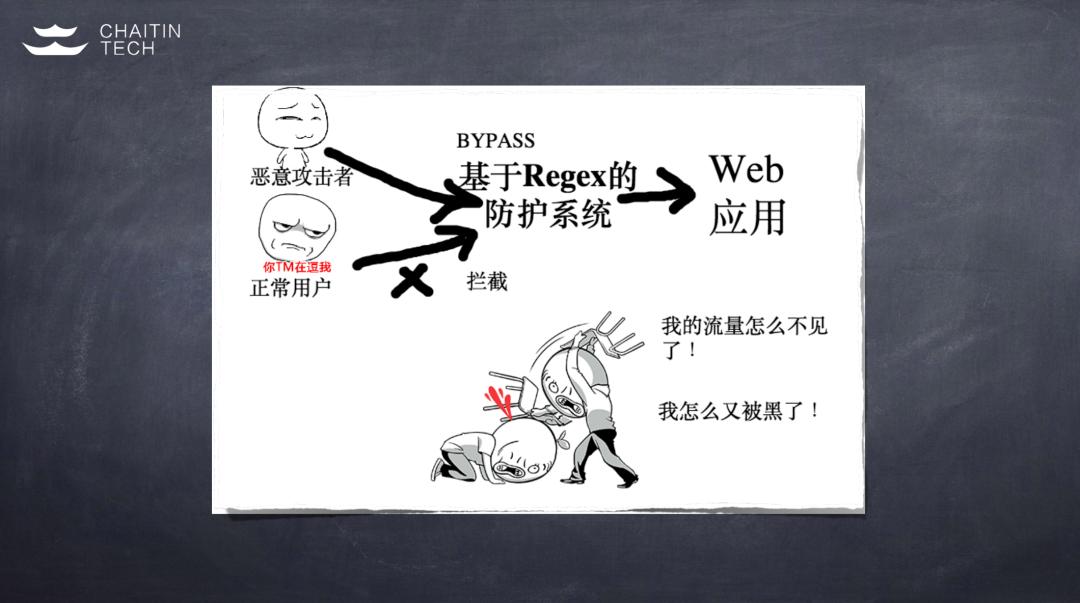
For instance, this one.
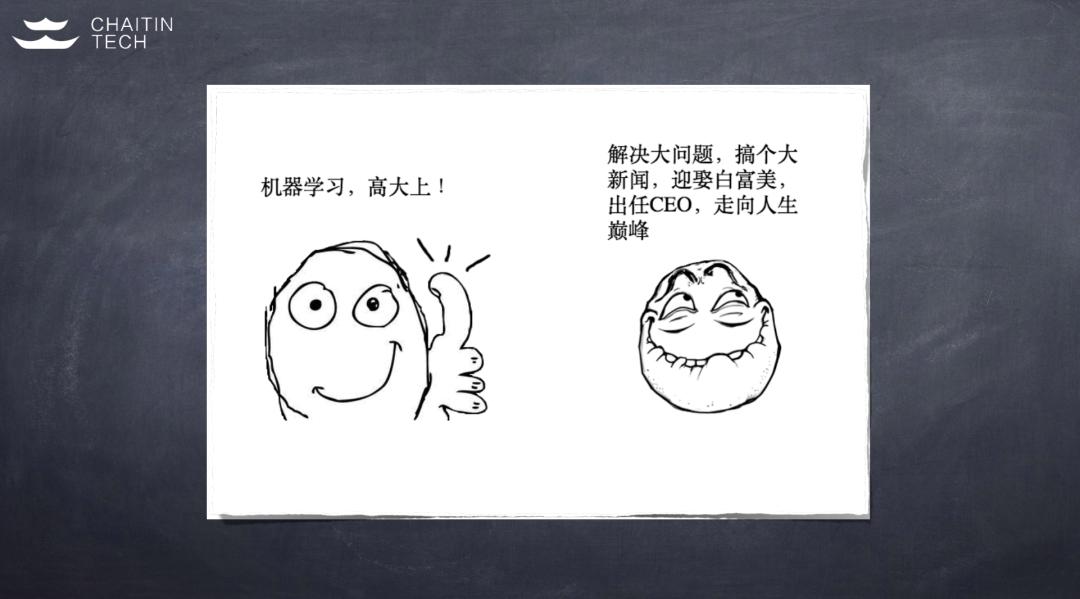
And there are also some with a bit of a nerdy style.
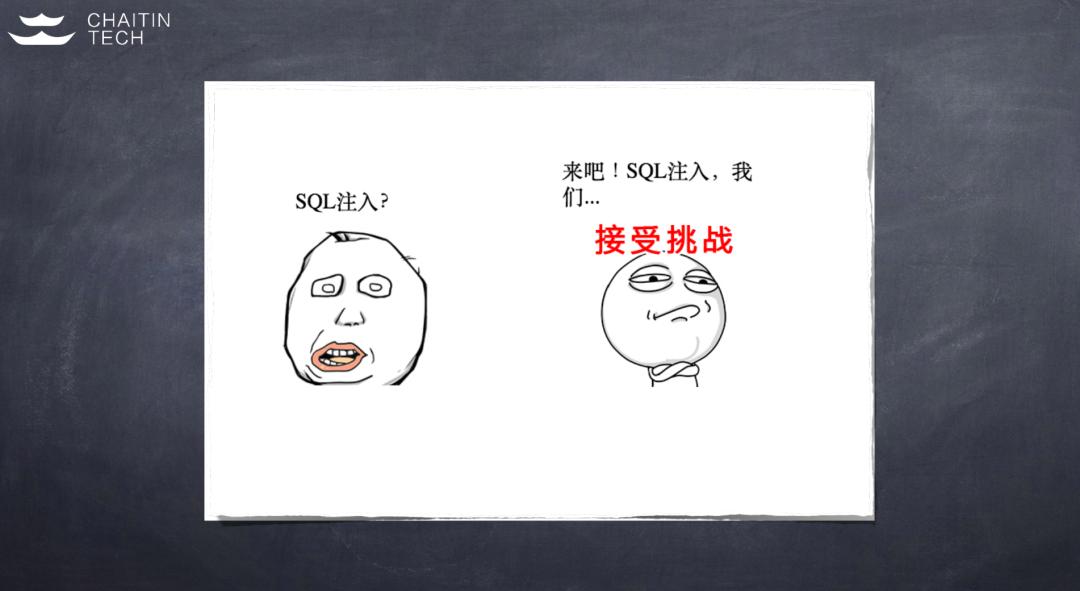
With emojis, internet memes, and complaints, Chen Yusen explained the relevant protection systems, technical difficulties, and values.
Chen Yusen's second profile is that of an Agent - oriented executive.
In May 2026, at the same Hangzhou Alibaba Cloud Summit, Chen Yusen shared as the person in charge of the self - evolving Agent trading platform MuleRun. In the new round of AI Agent startup exploration, Chen Yusen is in charge of the MuleRun project. He believes that when AI has programming capabilities, it will become a bridge for humans to complete all work on the computer.
The core assumption of this platform is that with Vibe Coding significantly lowering the development threshold, a large number of non - technical people can encapsulate their knowledge into AI Agents by describing work processes, achieving personal work automation.
This startup is in line with the sharing theme at the Alibaba Cloud Summit. In the sharing, he divided the evolution of AI into two stages: Copilot and AI Native. Copilot is like a co - pilot, and humans are still the main executors; in the AI Native stage, work will be reorganized around AI, and humans will shift from being step - by - step executors to standard - setters and result - checkers.
This statement is not an isolated one.
Several studies on AI Native software engineering also repeatedly emphasize the same thing: True AI Native is not about adding an assistant beside the old process but about allowing AI to enter the complete lifecycle from intention, planning, execution to verification.
Many early Agent products followed the "shelf" approach: creating an Agent Marketplace (a trading and collaboration platform for AI agents), allowing users to select financial agents, sales agents, customer service agents, and writing agents like choosing plugins.
But Chen Yusen later mentioned that what users really want is not a single Agent but the ability to continuously solve problems. In other words, enterprise customers don't pay for "having an AI assistant" but for getting a task finally completed.
This is highly similar to DingTalk's current predicament.
DingTalk used to be good at recalling people, delivering messages, pushing approvals to responsible persons, and turning meeting minutes into documents.
But the requirements in the AI era have changed. The system may need to do more than just remind salespeople to follow up with customers. It should also automatically summarize customer information, generate follow - up plans, complete CRM fields, schedule meetings, form next - step tasks, and request human confirmation at key nodes. The new requirements are not just about recording a meeting but also about breaking down the commitments in the minutes into tasks, assigning them to people, and tracking the results.
If DingTalk in Chen Hang's era proved that a collaboration product could become an enterprise work gateway, then Chen Yusen, who takes over, needs to answer: How can this gateway develop the execution ability that matches DingTalk?
2
DingTalk Left by Chen Hang: The Victory and Backlash of Strong Reach
What Chen Yusen faces is not a brand - new product. DingTalk has rich scenarios and resources but also carries the strong inertia of the past.
DingTalk is not a failed product.
On the contrary, it is one of the few products in China's To B software history that has truly penetrated the enterprise organization. Enterprise WeChat relies on the WeChat relationship chain, and Feishu relies on ByteDance's internal product aesthetics and collaboration methods. DingTalk was able to stand out initially not because of its mildness but because it clearly addressed the managers' anxieties.
This anxiety stems from roles, power, and human nature itself. It can be denied but cannot be ignored: Has the message I sent been seen? Has the task I assigned been executed? Can the people and affairs in the organization be quickly brought into a system?
Functions like DING, read/unread status, organizational structure, approvals, attendance, meetings, and group chats are often criticized as sources of pressure today. But in the context of enterprise mobileization at that time, they did meet the needs of some users with payment capabilities.
This is the first legacy left by Chen Hang: strong reach.
Strong reach is not a negative term. Without it, it would be difficult for DingTalk to bring small and medium - sized enterprises, manufacturing enterprises, schools, government organizations, chain stores, and sales teams into a unified work scenario. It brought certainty to enterprise management in the mobile Internet era. A boss no longer has to worry about messages being buried in WeChat groups by emojis and casual chats, and a department head can more easily know where the process is stuck.
However, strong reach is also a double - edged sword.
It is naturally closer to the senders, managers, and organizational order rather than the recipients, executors, and individual feelings. The more successful DingTalk is, the more stable this product characteristic becomes. It is not just about creating a tool but about re - distributing visibility within the enterprise: who can see whom, who can remind whom, who can urge whom, and whose status will be recorded.
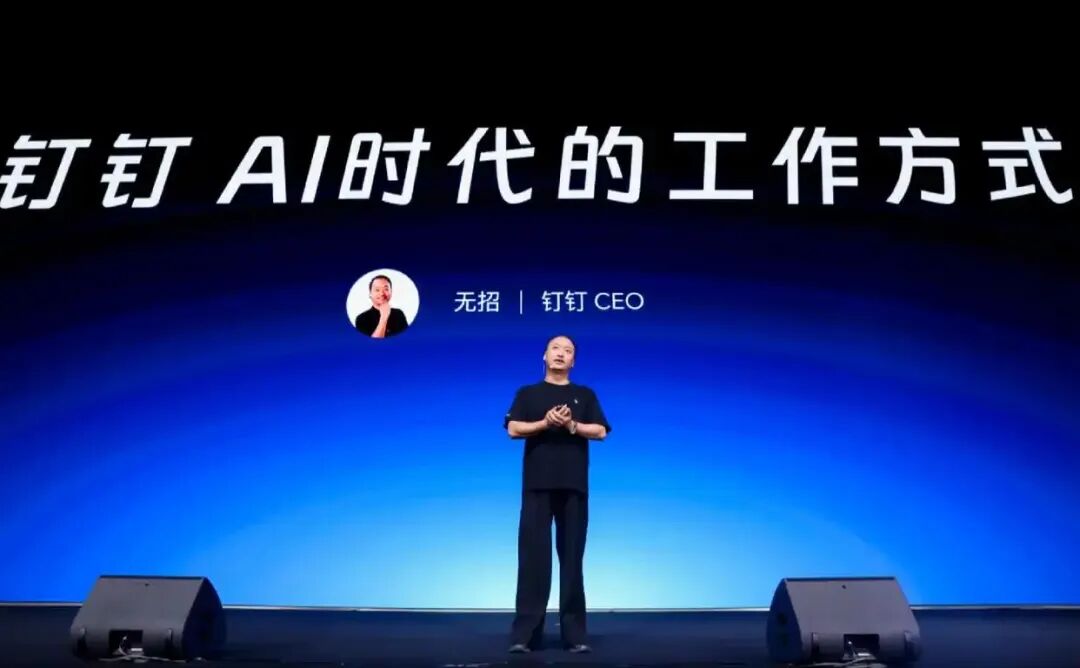
The reason why "Trapped in DingTalk" became popular is not only that it wrote about the internal management problems of DingTalk but also that it magnified the familiar DingTalk temperament of external users into a dramatic sample within the organization.
In the ONE project, there were many product - level disputes about card read status, rank weights, morning dashboards, daily reviews, discovery page commercialization, and card access scope. These disputes, on the surface, are about product choices, but in essence, they are all about the same question: Whose side is AI on?
Once these weights are incorporated into the algorithm, AI is not just filtering information but re - encoding organizational power.
For a product whose core involves the organization, the power it understands will naturally flow into the product's details. And this is the problem: Will an AI product developed by a high - pressure organization naturally tend to turn high - pressure into system capabilities? When the team itself promotes the product in a high - pressure way, how can it ensure that the product doesn't push the same logic to enterprise customers?
The DingTalk left by Chen Hang is in this contradiction.
On the one hand, it has the context that enterprise AI desires the most: organization, identity, messaging, meetings, approvals, documents, forms, low - code development, and business connections. On the other hand, its product characteristic makes it easier for AI to serve management visibility rather than work completion.
This is not just Chen Hang's problem, nor is it just DingTalk's problem.
When any old gateway is AI - enabled, it will first call on its most familiar capabilities. Search products will first turn AI into a better answer gateway, content platforms will first turn AI into a more efficient production and distribution tool, and collaboration products will first turn AI into a stronger information - organizing and organization - reaching tool.
But DingTalk's old capabilities are too obvious, which makes its backlash particularly prominent.
3
If DingTalk Also Moves from Copilot to Native
In December 2025 and January 2026, Chen Yusen appeared on the LatePost podcast twice.
In the program, the same thread can be seen: His view is that software can be quickly developed for specific scenarios of a small number of people, just like "3D printing." After Vibe Coding and Claude Code lower the threshold, non - technical people can encapsulate their experience, SOPs, and processes into Agents.
Of course, these concepts and judgments may not be directly applicable to DingTalk, but they also show his way of looking at AI: AI is not just about adding an efficiency plugin to the existing organization but will change the organizational division of labor itself.
Chen Yusen also gave a more radical judgment: The efficiency gap between AI Native organizations and non - AI Native organizations will be at least 10 times.
How to understand Native? It needs to be considered together with its counterpart, Copilot.
For example, a sales manager opens DingTalk in the morning and sees that AI has summarized yesterday's customer meeting and reminds him of three pending tasks: providing a quote to the customer, confirming legal terms, and scheduling a review next week. This is Copilot.
At this stage, AI helps him see and organize information and reminds him of actions, but the person who actually executes is still him. He has to find the quote template himself, involve the legal department himself, update the CRM himself, schedule the meeting himself, and judge whether the task is completed himself.
If it moves towards Native, the same scenario will become a different way of working.
AI first reads the customer history, contract templates, product price permissions, and the minutes of the last meeting, and automatically generates a quote draft. It may also create an approval or collaboration task with context when it finds that a certain clause needs legal confirmation. In this process, humans are no longer the step - by - step handlers but the ones who set standards, approve key actions, and check results.
This is the difference between Copilot and Native. Roughly speaking, Copilot is "I help you," and Native is "This task is completed by the system and humans together." The former improves personal efficiency, and the latter reconstructs the workflow.
The software engineering field has long had a clear explanation of this issue.
For example, the paper "The AI - Native Software Development Lifecycle" published in 2024 proposed that AI - native software development will integrate AI into the entire process of planning, design, implementation, testing, and maintenance, and shift the role of humans from the main implementer to the verifier and confirmer.
The research paper "Towards AI - Native Software Engineering (SE 3.0)" defined the next stage as "intention - centered, conversational" development. Humans and AI are no longer in a single - point Q&A relationship but closer to a collaborative relationship.
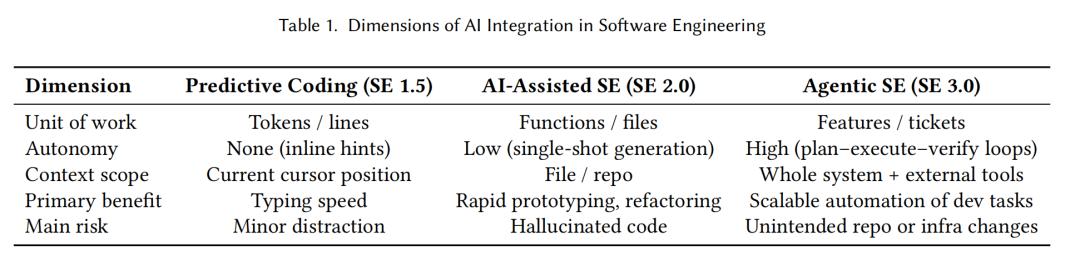
Source: Screenshot from "Towards AI - Native Software Engineering (SE 3.0)"
This article divides the evolution of software engineering into several stages: classic software engineering (SE 1.0), predictive coding (SE 1.5), AI - assisted software engineering (SE 2.0), and the further