A veteran in autonomous driving decides to develop the "tactile sense" for robots | muShanghai Field Notes
36Kr "Workplace Bonus" (ID: ZhiChangHongLi)
"In 2026, the key to success in embodied intelligence lies in who can first establish a closed - loop business model."
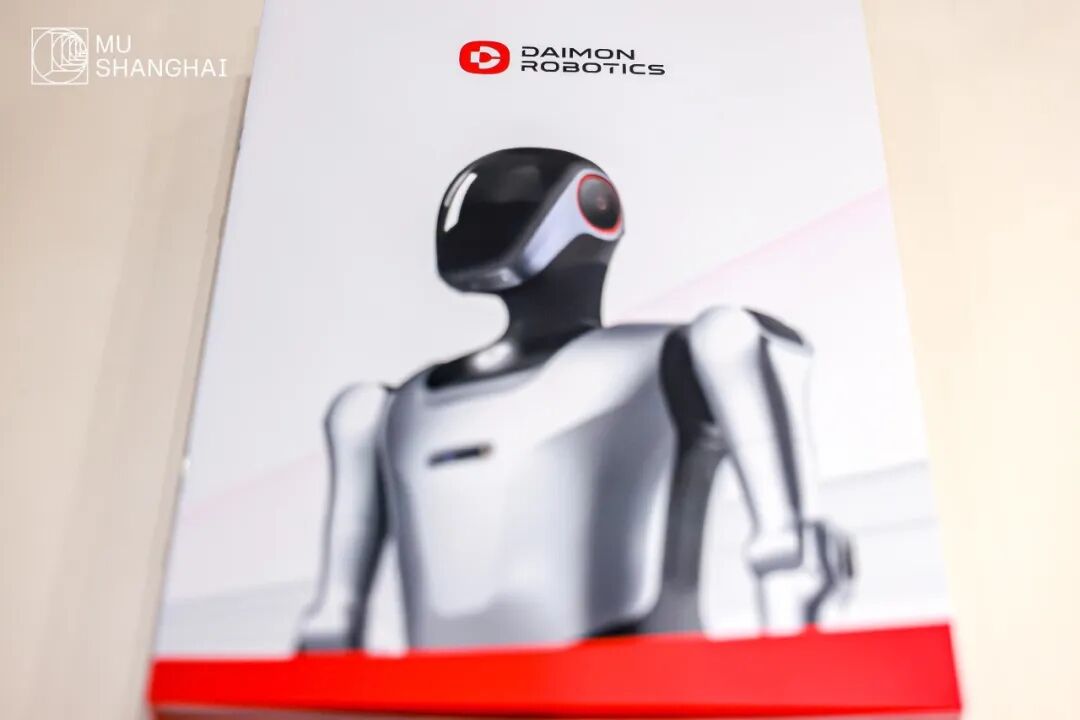
In the previous notes from the event site, we mentioned that "Daimeng Robotics" is a company incubated from the Robotics Research Institute of the Hong Kong University of Science and Technology. The founding team all have technical backgrounds.
Recently, Daimeng Robotics completed a 100 - million - level Series A financing, jointly invested by Huichuan Industrial Investment (an industrial fund under the global industrial control giant Huichuan Technology) and China Telecom. With the strategic entry of Huichuan Technology and China Telecom, combined with the continuous support of leading CVCs such as China Mobile Chain - leader Fund, Lenovo Capital and Incubator Group, and China Merchants Capital, Daimeng has formed a diversified ecosystem supported by "top - tier industrial capital and leading venture capital". Its team has expanded from dozens to about 150 people, most of whom are algorithm and R & D engineers.
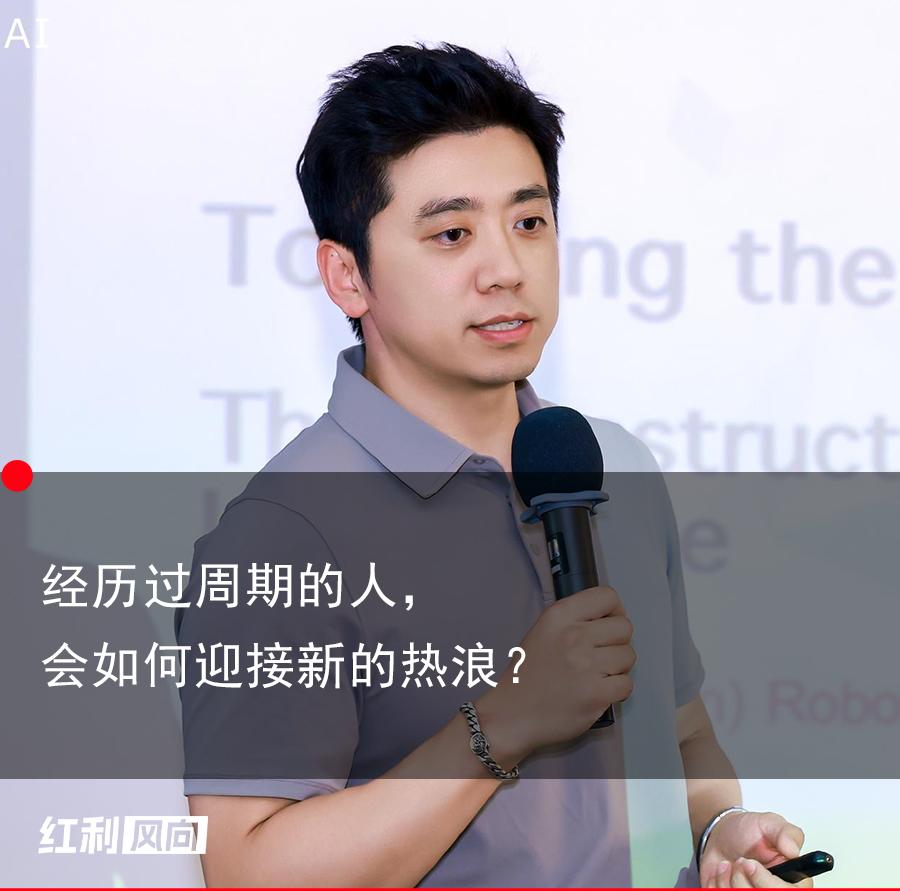
During the muShanghai Robotics Week, Zhang Dong (CCO), the partner and Chief Commercial Officer of Daimeng Robotics, accepted an exclusive interview from "Workplace Bonus".
Zhang Dong once studied electrical engineering and automatic control at the Technical University of Munich in Germany. After that, he entered the autonomous driving industry and has long been responsible for global business and industrial implementation.
Now, he is responsible for productization, commercialization, and global market expansion at Daimeng: integrating tactile sensors, data collection toolchains, model verification capabilities, and customer scenario requirements to form a deliverable, replicable, and scalable business solution.
In the field of embodied intelligence, Daimeng has chosen a very narrow niche: touch. Zhang Dong's judgment is that the robotics industry currently lacks neither robot bodies nor demonstration videos. What it lacks is the data that can enable robots to truly "work", especially contact - rich information containing tactile sensations.
Daimeng's goal is to make touch an infrastructure. Its closed - loop logic is: use sensors as the data entry point, use toolchains to form a data closed - loop, use open - source data sets to occupy an ecological position, and ultimately let customers pay for "data + solutions".
The following is the full text of the exclusive interview, edited and organized by "Workplace Bonus".
From autonomous driving to robotics, what similar bubbles have you seen?
Zhang Dong : Autonomous driving in China has gone through several cycles. Ten years ago, there were many companies working on autonomous driving, but only a few have survived in the end. In the early stage of the industry, there was no clear path. As long as there were new technologies and new stories, companies could get funding. In the early stage of the industry, there was also a short - term mindset, and capital - driven factors were stronger than business - driven factors.
The companies that have truly survived and thrived are often those that are down - to - earth, have their own clear strategies from the beginning, and stick to their strategies even when facing setbacks, without overly relying on more capital. Raising funds is for business development. In essence, whether it is financing or even an IPO, it is just a means for business, not an end.
Embodied intelligence is now a bit like autonomous driving back then, but the evolution cycle will be faster. It will definitely experience fluctuations, but the adjustments will also be rapid. In the long run, the market value is indeed significant.
Why is the closed - loop business the key to success in 2026? Where is Daimeng in its closed - loop development?
Zhang Dong : The biggest bottleneck in the current robotics industry is the lack of data, especially when it comes to operational tasks. Contact - rich information containing tactile sensations, which is information from the real physical world, cannot be replaced by text and visual data.
Daimeng focuses on tactile data for its business. We have targeted the pain point of the lack of tactile data in robots and aim to solve this problem thoroughly. However, the key to solving this problem is not just providing a single component, but making touch an infrastructure and an ecosystem.
This year, we have mainly been working on the data business. Global large - scale companies, including those in North America and China, are purchasing our data for verification. With the same amount of data, the improvement effect and performance ceiling for models will be very high.
At present, our commercialization mainly focuses on three types of capabilities: First is tactile sensors and end - devices. Second is data collection and data services. Third is the solution capabilities for model verification and scenario implementation. In the short term, the revenue structure will change according to customer needs, but in the medium and long term, we value the compound value of data and solutions more.
What exactly does the "tactile infrastructure" refer to? Will it be considered a slow - paced business?
Zhang Dong : We don't want to just provide customers with a single - point hardware. Many times, what customers really lack is not a sensor, but how to collect, use, and verify the value of tactile data for models and tasks.
So, the "tactile infrastructure" we mentioned is not a single product, but a set of closed - loop capabilities centered around tactile data.
The first layer is the data entry point. Tactile sensors can be integrated into different forms such as dexterous hands, two - finger grippers, data gloves, and tele - operation devices, covering different scenarios such as industrial, commercial, and household. It solves the problem of "how to collect real physical contact information".
The second layer is the data toolchain. After having the entry point, we also need to solve how to collect, label, clean, map, and reuse the data. For example, non - body data collection, body data collection, six - degree - of - freedom tele - operation devices with force feedback, five - finger data collection grippers, data gloves with visual - tactile capabilities, and toolchains for mapping the collected data to different end - effectors are all designed to enable tactile data to truly enter model training and task verification.
The third layer is scenario - based delivery. Customers ultimately don't want to buy a set of equipment, but hope to improve the operation ability of robots in specific tasks. So, we will combine sensors, collection devices, data toolchains, and model verification capabilities to form solutions for customer scenarios.
This is also the reason why we talk about the "3D product matrix": Device is the entry point, Data is the core asset, and Deployment is the value implementation. In the short term, this is indeed a business that requires investment and patience. But in the medium and long term, what is truly scarce is not the hardware itself, but high - quality, reusable tactile data that can improve model capabilities.
You have open - sourced a 10,000 - hour tactile data set. Aren't you worried about weakening your charging ability?
Zhang Dong : We're not worried. Open - sourcing has two - fold value: First, it allows more people to use our data, so that they can recognize the high - quality tactile data of Daimeng and accelerate the development of embodied intelligence. Second, through the feedback from ecological partners and customers, we can quickly iterate our product system.
If leading robot body manufacturers like Tesla and Figure develop their own tactile solutions, how will you defend?
Zhang Dong : Tesla also develops many things from chips to algorithms in - house in the automotive field, but this hasn't prevented the emergence of giant suppliers in the autonomous driving industry chain. For example, there are the largest giants in the battery and autonomous driving chip sectors. The industry will ultimately have a division of labor. We just need to focus on our core advantages.
36Kr "Workplace Bonus" (ID: ZhiChangHongLi)
Your team all have technical backgrounds. How do you make business decisions?
Zhang Dong : When making decisions, market and technical personnel will sit together and discuss. Usually, there are two aspects: One is to conduct forward - looking insights into cutting - edge technologies, including algorithms and large models in the embodied intelligence industry. The other is to focus on the needs of the industry and customers. We find an intersection point, and this point is the direction of the product roadmap.
Some of the latest academic achievements can bring value in the short term, while others need industrial verification. Some of the customer needs are in line with the long - term industrial strategy, while others are just temporary. We need to distinguish these.
Daimeng highly values dialogue and debate within the company. The management will have intense discussions on different opinions and express their views freely. Many things become clear through debate. But the most important thing for a startup is the trust among the team members. Our team has the advantage of similar ages and complementary backgrounds. Some have experience in North America, some in Europe, some are technical experts, and some are in business. Everyone is firmly committed to the common goal.
You have an empirical thinking style, while the team has an academic deduction thinking style. How do you reconcile these two?
Zhang Dong : I tend to think about various pitfalls in the industrialization process first, such as those in productization, customer scenarios, delivery, and organizational management. Because I have experienced the process of autonomous driving from a technological boom to large - scale implementation, I am very clear about how many non - technical problems a technology will encounter from the laboratory to the customer site.
Many members of the founding and R & D teams have academic backgrounds. They are more sensitive to cutting - edge papers, new models, and new methods, and are more willing to deduce the technological direction from the first - principles. Our discussions often occur between these two perspectives: Can a new piece of knowledge really be transformed into product value? Does it solve the real problems of customers, or is it just technically impressive? Who are the competitors? What is our differentiation? Even if something is right in itself, is it really the right time for us to do it?
Before joining Daimeng, I had discussions with the founding team for several months. During this process, there were many ideological collisions, and I also realized that we looked at problems in very different ways. But this difference is actually very valuable. Industrial experience can help the team avoid some pitfalls in commercialization and delivery, and the academic and technical perspectives will also constantly remind me not to be restricted by past experience.
So, I think the truly important thing is not who convinces whom, but whether we can find an intersection point among technological frontiers, customer needs, and company resources. The most precious things for a startup are a sense of direction and trust. As long as everyone believes in the same goal, intense discussions are actually a good thing.
What kind of people is Daimeng looking for now? How can non - professional people enter the field of embodied intelligence?
Zhang Dong : For the business team, I hope that the sales end has a customer - centric mindset, strong strategic insights, and industrial awareness. Since the new solutions and product forms in this industry have not yet been finalized, salespeople need to help customers develop implementation solutions from a strategic perspective. People on the product end need to have a good understanding of algorithms and large models, and the team should be more AI - Native.
In addition, people with overseas backgrounds are my key recruitment target because we are targeting the global market.
For young people, first of all, they should have a strong curiosity about things, be motivated, believe in the arrival of this era, and have a sense of mission. Second, in addition to their love for science and engineering, they should also have an interest in humanities and social sciences and have a good "human sense". Ultimately, robots will enter the consumer market and face people. Third, they should have good emotional intelligence and soft skills, be long - term oriented, and be able to work steadily. This industry is currently quite impetuous, and most people may just want to make money. What we really need are people who can stay calm.
You previously worked in autonomous driving. How can your overseas market operation experience be applied to the overseas expansion of robots?
Zhang Dong : One characteristic of the robotics industry is that the gap between China and North America in terms of cutting - edge implementation is not that large. China has advantages in complete hardware, supply chains, and application scenarios, while North America is more aggressive in algorithms, large models, and the density of top - tier talents. For a company like ours in the upstream, we cannot just focus on a single regional market. Instead, we need to maintain high - frequency interactions with the most cutting - edge model companies, robotics teams, and industrial customers globally.
The value of this interaction is not just to get orders, but to help us judge the real evolution direction of the industry. The problems raised by customers are often closer to the product roadmap than internal closed - door discussions. So, I always say that customers are our product managers. We need to reverse - define our products and toolchains based on customers' tasks, data requirements, model verification results, and deployment feedback.
However, global expansion is not simply selling products overseas. Culture, regulations, local delivery, customer decision - making chains, and partner systems will all affect whether a technology can be truly implemented. An important lesson from autonomous driving is that technological leadership is just the first step. A company that can achieve large - scale success must also have productization capabilities, business strategy capabilities, and global delivery capabilities.
So, in the overseas expansion of robots, we must consider both technology and business. We need to understand the most cutting - edge models and algorithms, as well as customer scenarios, regional differences, and industrial cooperation methods. Only in this way can tactile data and toolchains not be isolated products, but basic capabilities that can enter the global robotics industry chain.
How does your company use AI to improve efficiency?
Zhang Dong : The average age of our team is around 30, and there are many people with algorithm and R & D backgrounds. So, everyone has a high acceptance of AI tools. In many cases, there is no need for management to promote it. People will naturally use AI in R & D, product, marketing, and sales work.
I think the value of AI for a startup is not just to improve the efficiency of a single link, but to change the team's working methods. In the past, many people were stuck in execution details. Now, some repetitive, organizational, and analytical work can be assisted by AI. The team then has the opportunity to spend more time on higher - level issues, such as product definition, customer need judgment, technology route selection, and cross - team collaboration.
We don't have a dedicated role to promote AI - enabled office work internally yet, but the management is thinking about whether we can use a more systematic way to integrate R & D, product, sales, delivery, and management processes in the future. We don't want to just stack a few single - point SaaS tools. Instead, we hope to form a horizontal workflow base to make the flow of information, tasks, knowledge, and decision - making processes smoother.
Recently, we have also been communicating with some large - model and AI tool teams. For us, the core is not to chase hot trends, but to find scenarios that can truly improve organizational efficiency and productization speed.
Before joining Daimeng and the robotics industry, was there a moment when you were impressed by an opportunity?
Zhang Dong : For me personally, moving from autonomous driving to robotics is not a completely leapfrog choice, but a continuation on the same value line.
Autonomous driving made me truly understand for the first time that a complex technology needs to go through long - term tests of productization, engineering, commercialization, and globalization to enter the real world. The same is true for