36Kr Research | 2026 Report on China's Industrial Supplies Manufacturing and Distribution
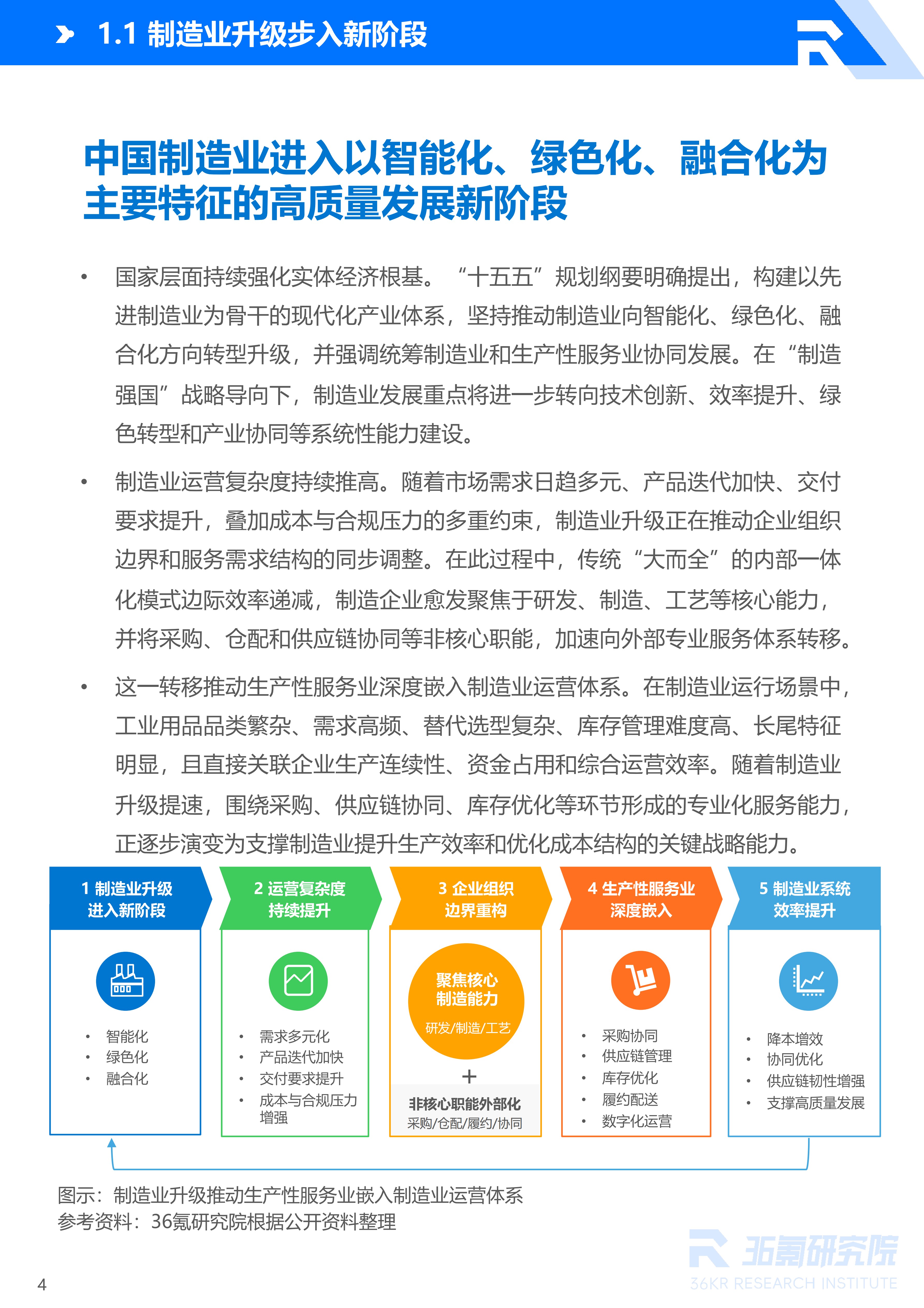
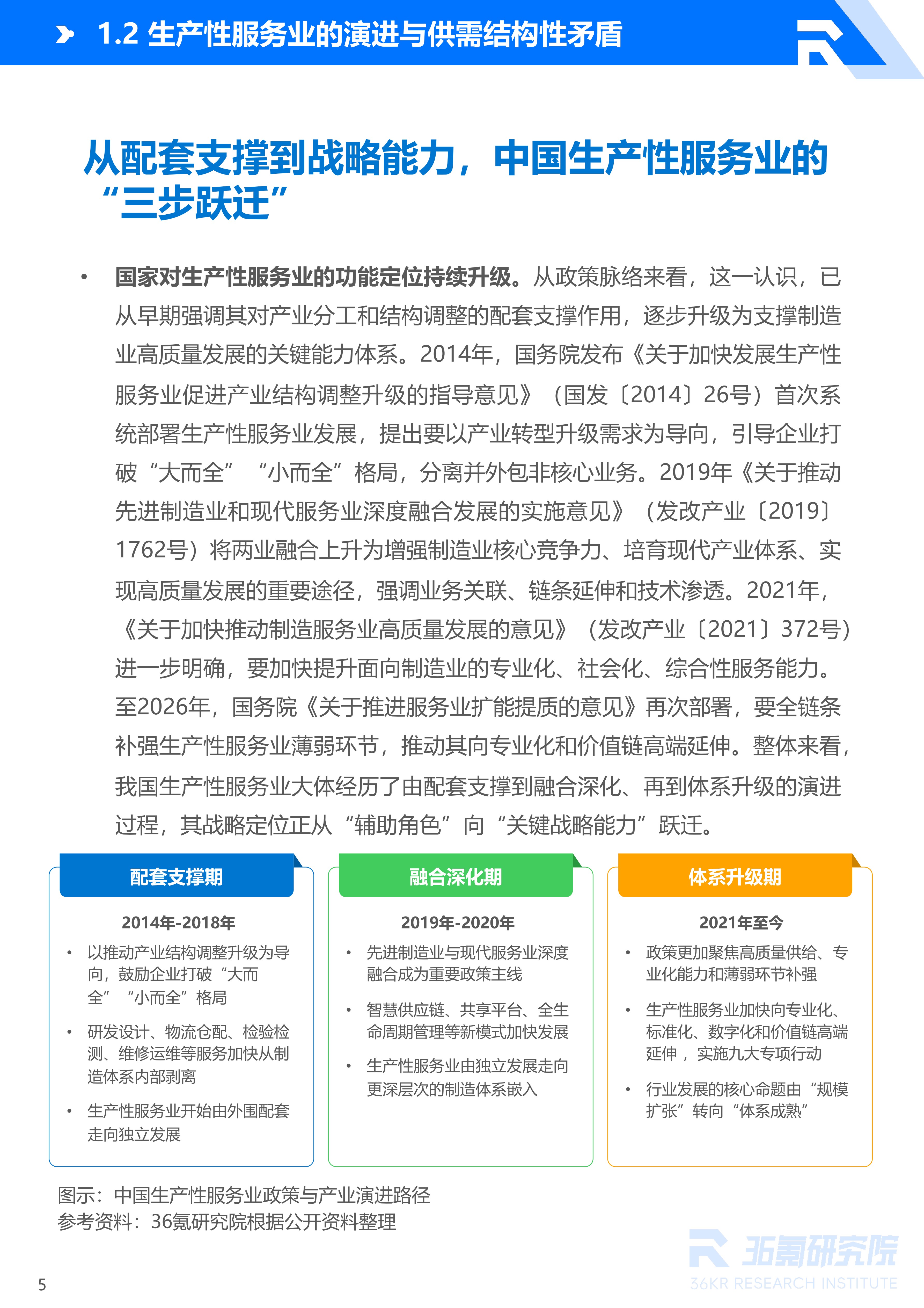
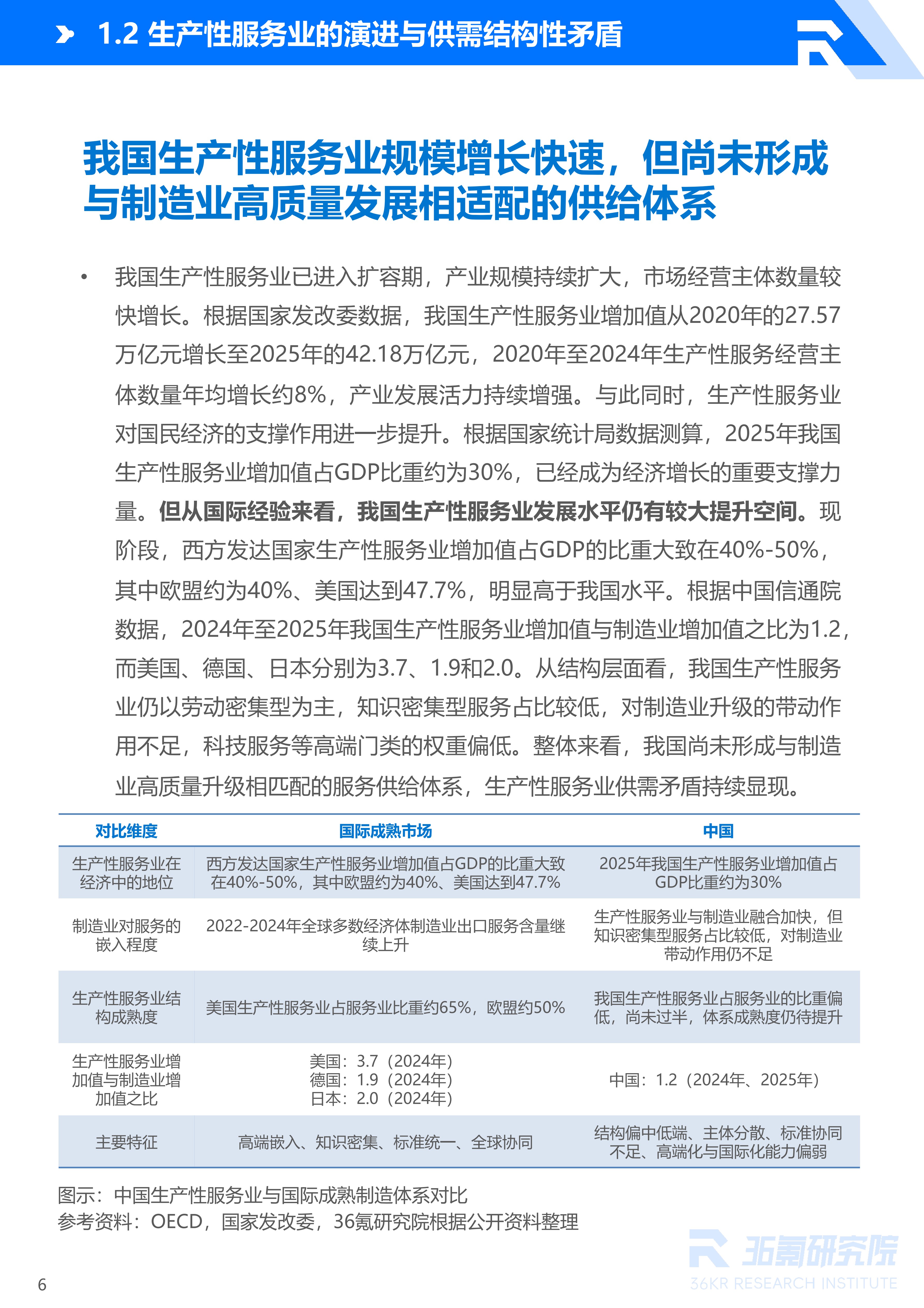
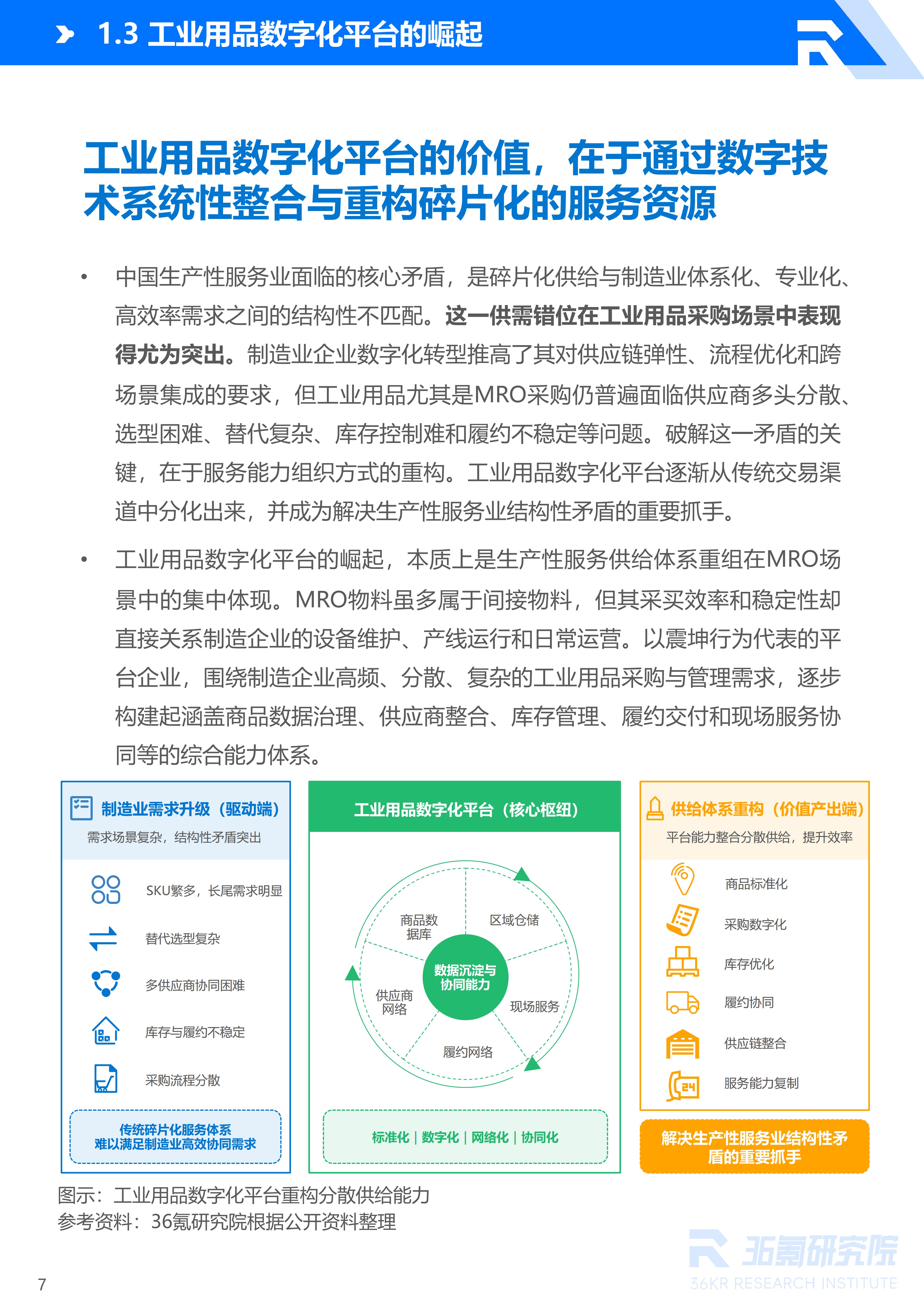
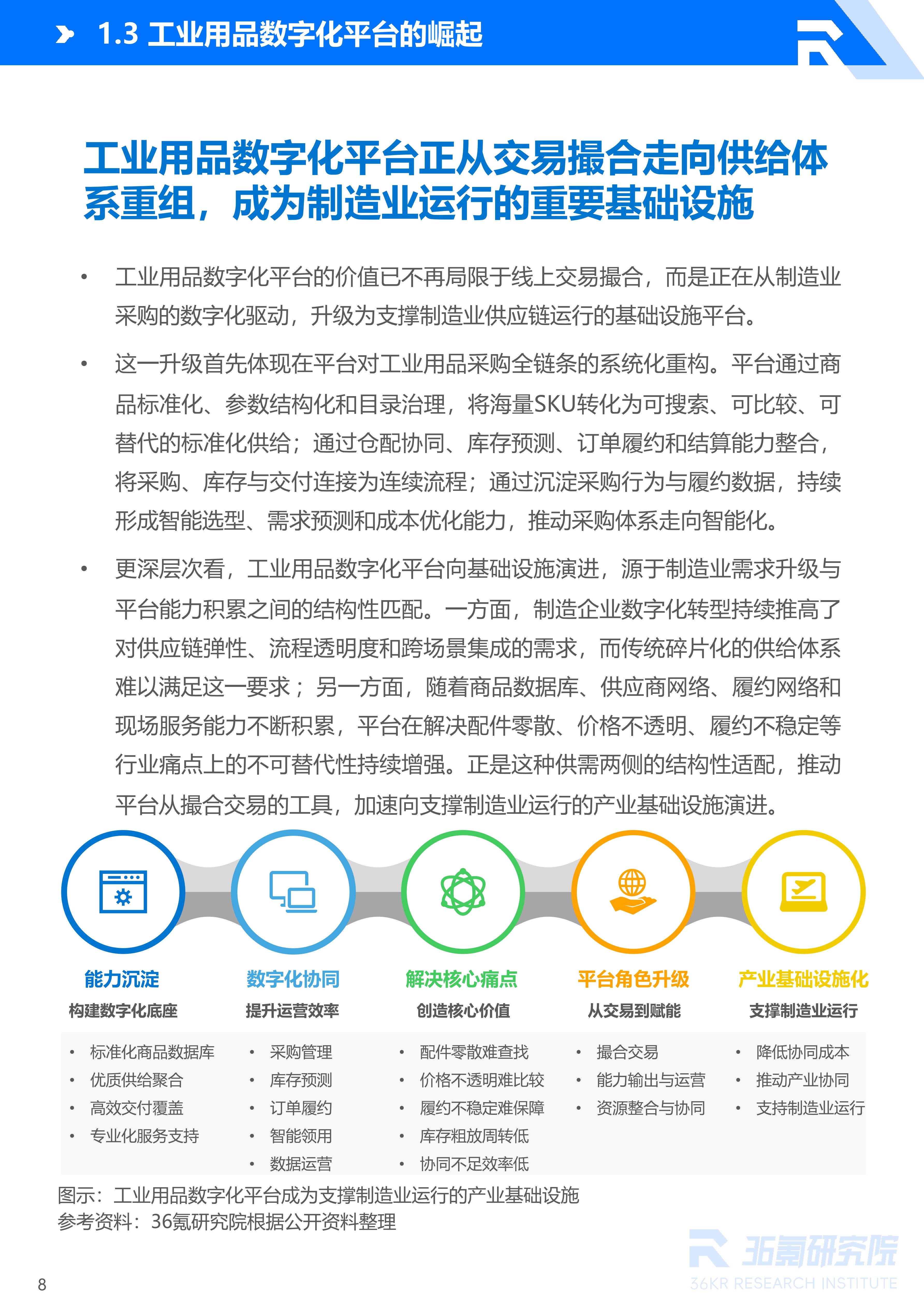
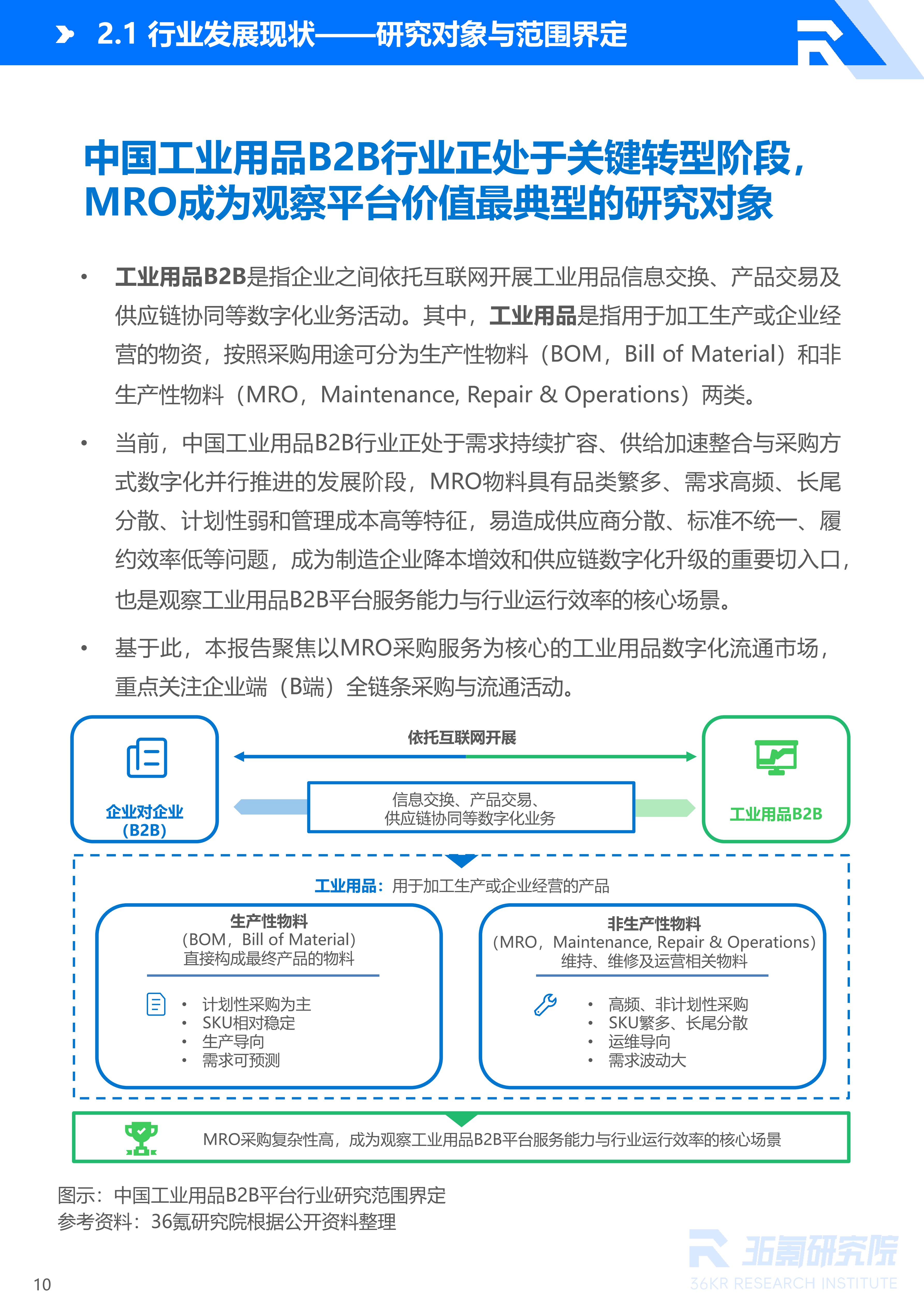
Currently, China's manufacturing industry is entering a new stage of high - quality development characterized by intelligence, greenness, and integration. As market demand becomes increasingly diverse, product iteration accelerates, and delivery requirements rise, coupled with multiple constraints of cost and compliance pressure, the marginal efficiency of the traditional "large - scale and all - inclusive" internal integration model is decreasing. Manufacturing enterprises are increasingly focusing on core capabilities such as R & D, manufacturing, and processes, and accelerating the transfer of non - core functions such as procurement, warehousing and distribution, and supply chain collaboration to external professional service systems, promoting the in - depth integration of producer services into the manufacturing operation system. As high - frequency, decentralized, and complex basic materials in the daily operations of manufacturing enterprises, industrial supplies, especially MRO materials, are directly related to equipment maintenance, production line operation, safety production, and comprehensive operation efficiency. However, for a long time, industrial supplies procurement has generally suffered from problems such as scattered suppliers, non - unified product parameters, difficult model selection and price comparison, insufficient performance stability, and extensive inventory management, which have become important pain points in cost reduction and efficiency improvement in the manufacturing industry and the digital upgrading of the supply chain. Against this background, digital platforms for industrial supplies have emerged from traditional trading channels. Through digital technology, they systematically integrate and restructure fragmented service resources and gradually upgrade to important infrastructure supporting the operation of the manufacturing industry.
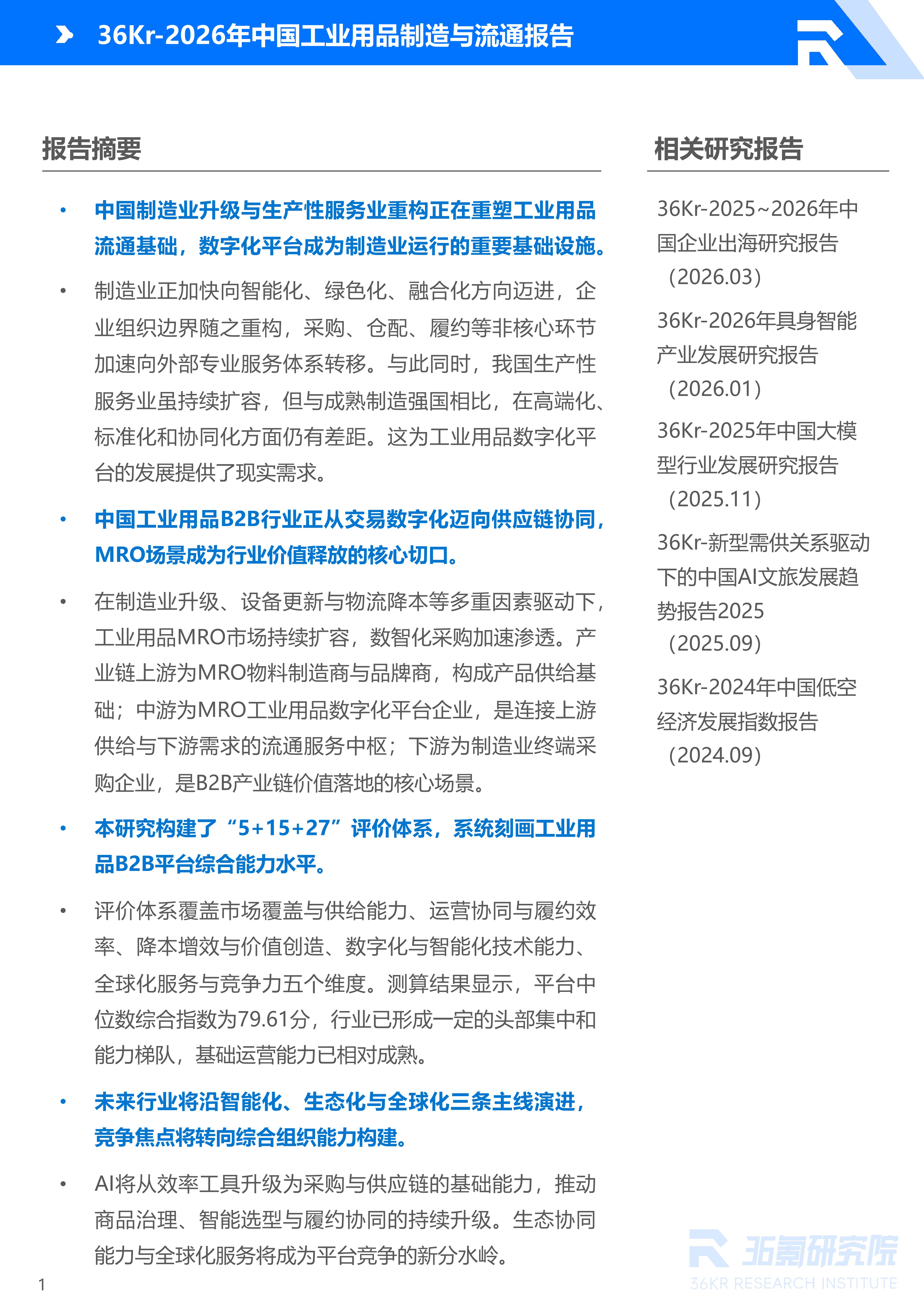
The industrial supplies B2B industry is moving from transaction digitization to supply chain collaboration, and MRO has become the core entry point for value release
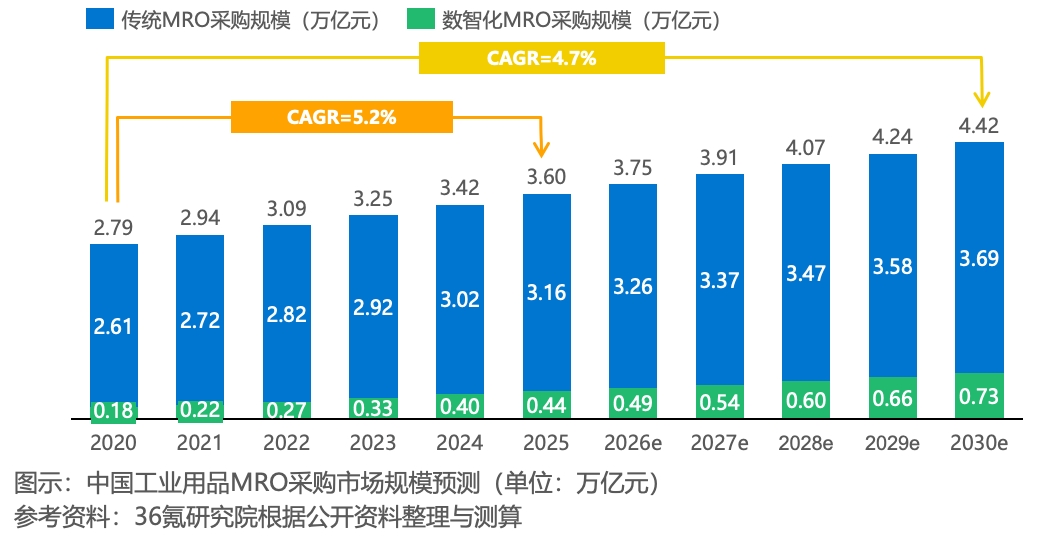
Driven by multiple factors such as manufacturing industry upgrading, equipment renewal, and logistics cost reduction, the industrial supplies MRO market continues to expand. According to the calculation of 36Kr Research Institute, the scale of China's industrial supplies MRO procurement market has increased from 2.79 trillion yuan in 2020 to 3.60 trillion yuan in 2025, with an average annual compound growth rate of about 5.2%. It is expected to reach 4.42 trillion yuan by 2030. Meanwhile, digital and intelligent procurement is accelerating its penetration. In 2025, the scale of China's digital and intelligent MRO procurement market is about 0.44 trillion yuan, with a penetration rate of about 12.3%. It is expected to increase to about 0.73 trillion yuan by 2030, and the penetration rate will increase to 16.6%. Currently, MRO procurement still mainly relies on traditional offline channels, but the growth rate of digital and intelligent procurement is significantly higher than that of traditional channels, and the procurement system of the manufacturing industry is undergoing structural changes. At this stage, the focus of industry growth is shifting from simple online substitution to deeper value - added links such as category management, supply chain collaboration, inventory optimization, and performance efficiency improvement.
The platform is upgrading from a trading channel to an organizer of supply chain capabilities, and AI is reconstructing product management and procurement decision - making
The industrial supplies B2B industry uses the mid - stream digital platform as a hub to promote efficient collaboration between the upstream supply side and the downstream procurement side. Through product standardization, parameter structuring, and catalog management, the platform transforms a large number of SKUs into digital supplies that can be searched, compared, and substituted. By integrating warehousing and distribution collaboration, inventory forecasting, order fulfillment, and settlement capabilities, it connects procurement, inventory, and delivery into a continuous process. On this basis, AI is upgrading from an efficiency tool to the underlying capability of procurement and the supply chain, deeply involved in product data management, intelligent search, intelligent model selection, intelligent price comparison, demand forecasting, inventory optimization, and early warning of performance exceptions, promoting the platform to upgrade from a digital procurement tool to an intelligent supply chain service system. From the perspective of the industry pattern, calculated by the transaction volume in 2024, the CR10 of China's MRO industrial supplies procurement service industry is about 1.5%, far lower than 30% - 45% in the United States. The leading platforms still have a large space for share growth, and the industry is in a stage of concurrent concentration improvement and capability deepening.
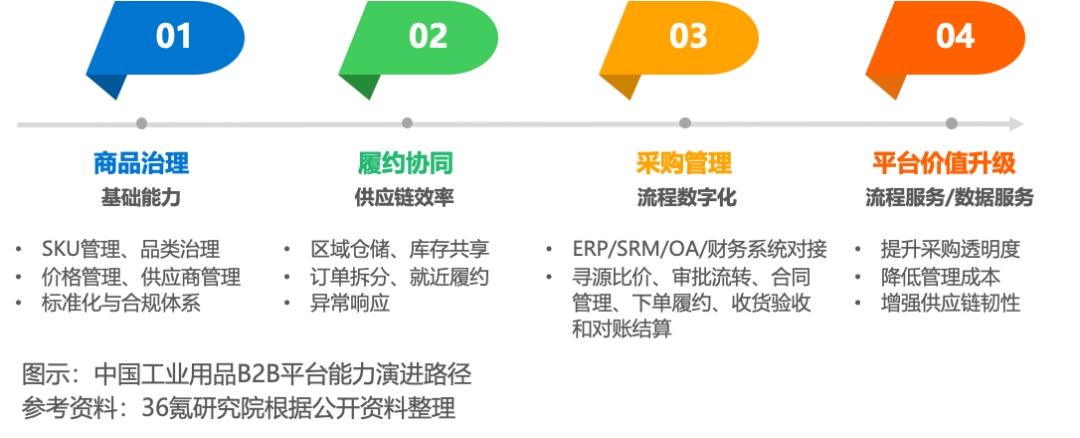
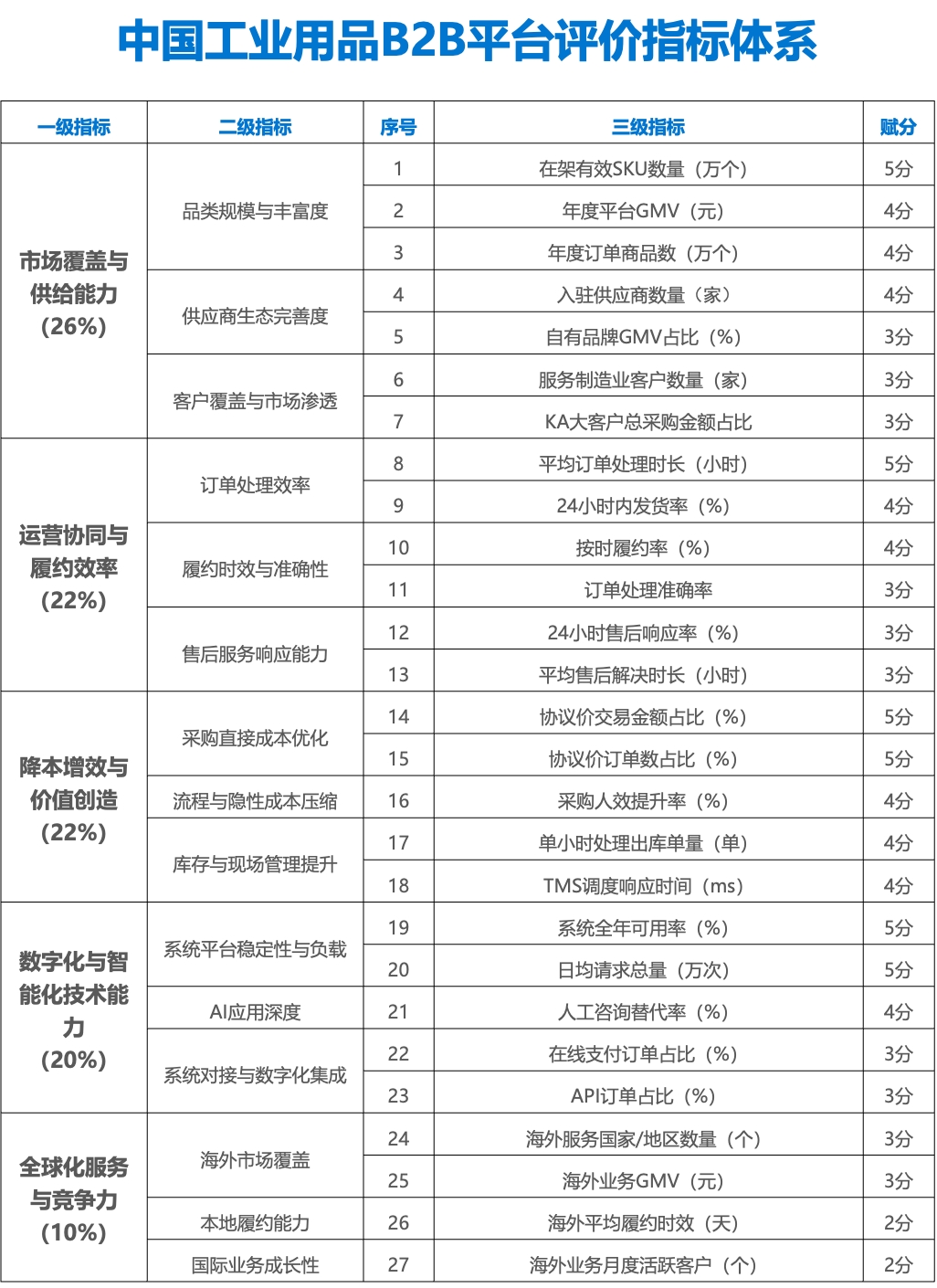
The "5 + 15+27" evaluation system depicts the comprehensive capabilities of industrial supplies B2B platforms, and the basic operational capabilities of the industry are maturing
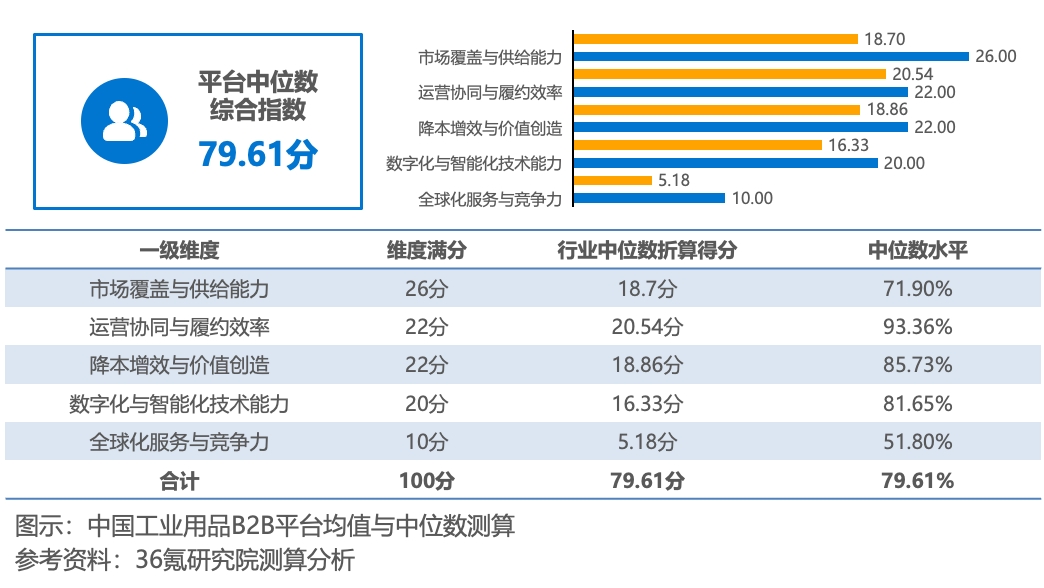
36Kr Research Institute has constructed a "5 + 15+27" evaluation index system covering five dimensions, including market coverage and supply capabilities, operational collaboration and performance efficiency, cost reduction and value creation, digital and intelligent technology capabilities, and global service and competitiveness, with the platform's support capabilities for the manufacturing industry as the core. The calculation results show that with the average comprehensive index of the platforms as the benchmark of 100 points, the median comprehensive index of the platforms is 79.61 points. The industry has shown obvious characteristics of head concentration and capability echelons, presenting a stepped pattern of "mature basic operations, gaps in scale and digitization, and early - stage globalization". Among them, the median level of the operational collaboration and performance efficiency dimension reaches 93.36%, while the global service and competitiveness dimension is only 51.80%, which is the area with the most obvious differentiation in current industry capabilities.
In the future, China's industrial supplies B2B industry will evolve along three main lines: intelligence, ecologicalization, and globalization
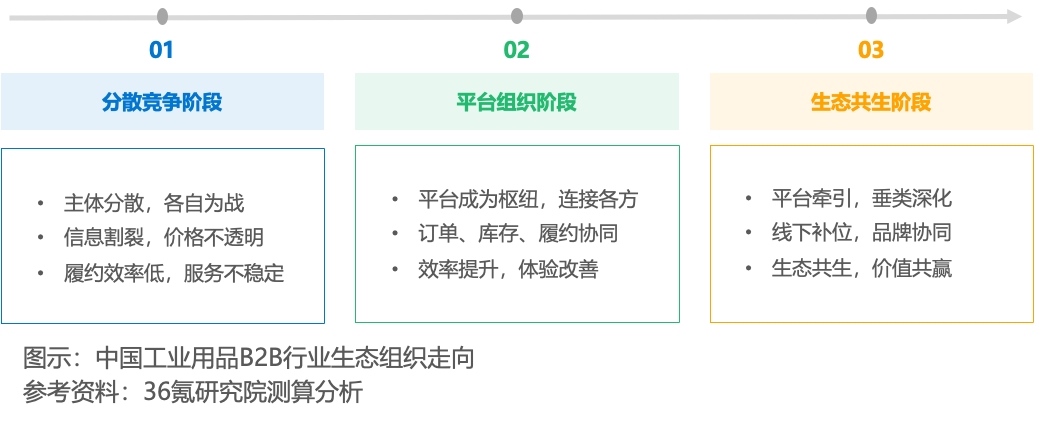
In the future, AI will upgrade from an efficiency tool to the basic capability of industrial supplies procurement and the supply chain, promoting the continuous upgrading of product management, intelligent model selection, and performance collaboration. Data assets will become the core barrier for long - term competition of platforms. Meanwhile, the industry ecosystem will move towards a hierarchical and symbiotic pattern of "led by comprehensive platforms, co - existing with vertical platforms, and collaborating with offline service providers", and the relationship between platforms and brand owners and suppliers will shift from channel cooperation to supply chain collaboration. In the global dimension, as China's manufacturing industry moves from "manufacturing going global" to "system going global", the globalization process of platforms will extend from cross - border product sales to MRO procurement and supply chain services in overseas factories, project sites, and regional operation networks. Ecological collaboration capabilities and global services will become the new dividing line for platform competition.
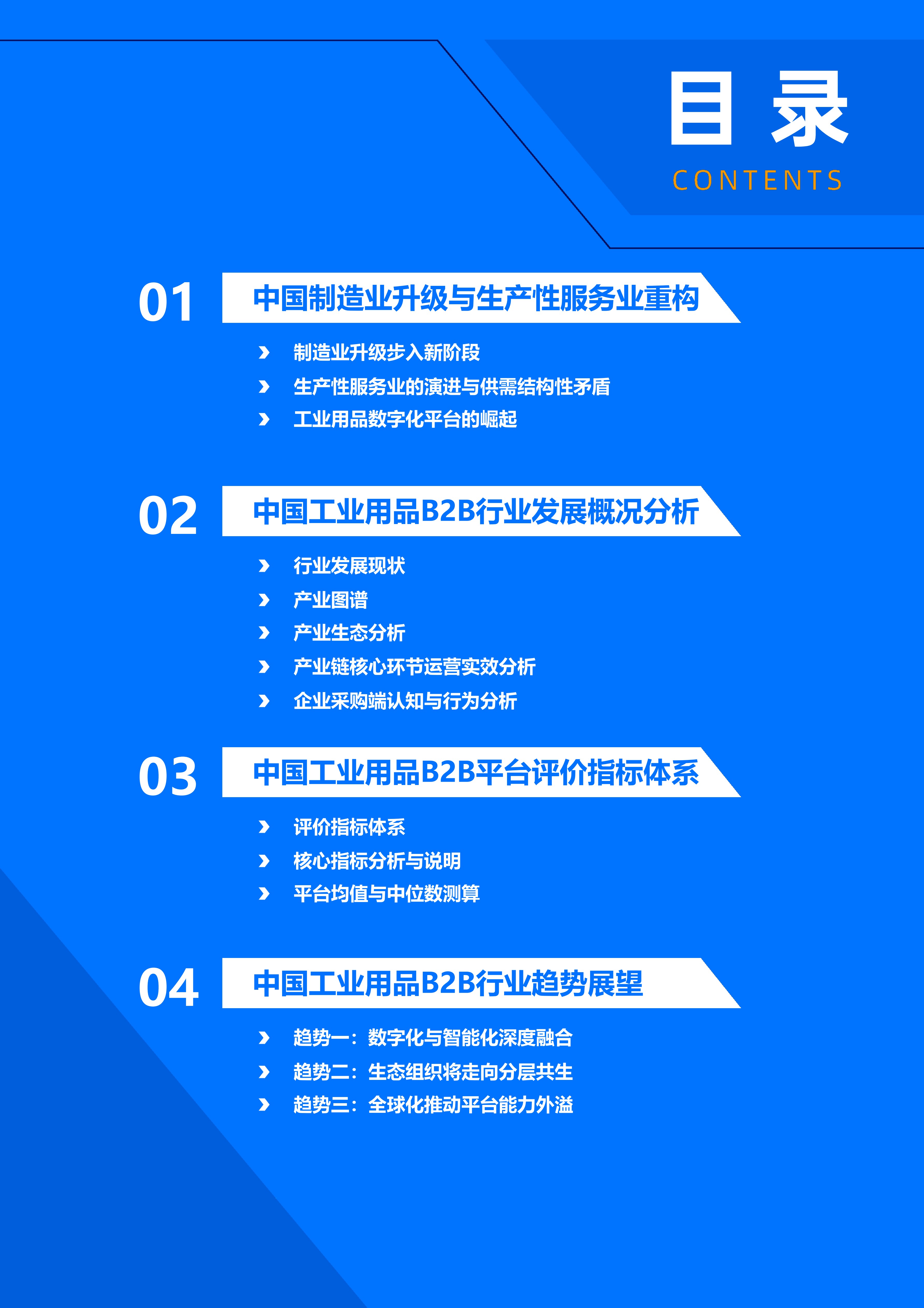
The key research questions in this report are as follows:
- How does the upgrading of China's manufacturing industry and the reconstruction of producer services reshape the foundation of industrial supplies circulation? What role does the digital platform play?
- What are the core policies and market driving forces for the development of China's industrial supplies B2B industry?
- What is the development level of the scale of China's industrial supplies MRO market and the penetration rate of digital and intelligent procurement?
- What are the structural characteristics and new development trends of the upstream, mid - stream, and downstream of the industrial supplies B2B industry chain respectively?
- How can mid - stream platforms achieve value upgrading through SKU management, performance collaboration, self - owned brands, and AI capabilities?
- Through what paths can the cost - reduction and efficiency - improvement value of the platform be realized in the entire procurement chain? What are the effects of typical cases?
- What are the characteristics of the regional, industry, and scale distribution of manufacturing customers and their digital procurement behaviors?
- How does the "5 + 15+27" evaluation system depict the comprehensive capabilities of platforms? What do the calculation results of the platform average and median indicate?
- Along which main lines will the industrial supplies B2B industry evolve in the future? How will the focus of competition shift?
For more wonderful content, please refer to "China's Industrial Supplies Manufacturing and Circulation Report 2026". Click Download Link, extraction code: c4iz