Most people didn't understand the Kimi's World Cup prediction
It's another midsummer.
The college entrance examination has just begun, and a group of "AI test-takers" have unexpectedly emerged. Having different AI models take the college entrance examination and then comparing their scores has become an overused routine in the past three years.
While competitors and the media are still arguing heatedly about the score differences in Chinese compositions and math problems, Kimi steps forward and says: The midsummer of 2026 belongs not to the college entrance examination, but to the World Cup.
Last night, Kimi directly released a more than 200-page "2026 World Cup Event Analysis and Prediction Report" and generously launched a "Share Trillions of Tokens" activity simultaneously. The scale and the solid logic of this report even exceed the special research reports of many top consulting firms on sports events.
At first glance, this seems to be a traffic-driving routine similar to having AI take the college entrance examination. However, if we carefully analyze the technical foundation that involves the collaborative deduction of more than 300 agents, the nature of the matter is different.
Kimi's World Cup prediction activity is far more than just predicting scores and the champion. It uses football as a sandbox to test the decision-making logic of AI in complex, non-linear, and chaotic real-world scenarios. This is what most people don't understand.
In this era of agents, what people value is how much work AI can do, rather than how high its IQ is. In the past three years, writing college entrance examination compositions and solving math problems were merely demonstrations of AI's performance ability; predicting the World Cup, on the other hand, is an assessment of AI's survival and decision-making abilities.
As the World Cup is about to kick off, AI is starting to shift from generating copywriting to making predictive decisions, achieving another leap in model capabilities in the history of AI evolution.
01
Chaos Simulation in the Real World
Why is World Cup prediction a more advanced training ground than the college entrance examination?
The college entrance examination tests a student's knowledge accumulation over three years. However, under the Transformer architecture and the reinforcement learning paradigm, the knowledge that humans accumulate over three years can be fully absorbed by the model in just a few minutes.
In other words, the questions in the college entrance examination are closed, and their scope does not exceed the boundaries of high school knowledge. Almost all questions have standard answers. Except for Chinese and English compositions, questions with standard answers perfectly meet the requirements of the reinforcement learning training set. For compositions that test human aesthetics, the model only needs to "memorize" high-scoring articles written by humans and combine them with simple logic to easily get high scores.
This kind of assessment is effective for humans with limited memory and learning abilities, but it is just a comparison of the reproduction ability for AI models.
However, the World Cup is different. This once-every-four-year event is filled with open, chaotic, and non-compressible uncertainties. The existence of the word "upset" proves that there is never a so-called standard answer for each game. From a macro perspective, the World Cup is one of the microcosms of the real world, constantly testing AI's cognitive modeling of the world.
In the eyes of many, predicting the World Cup is no different from the "diving" of "Paul the Octopus." However, there is no such thing as "luck" in Kimi's report. In Kimi's view, describing the World Cup as a "football game" is not accurate. A more precise term should be a "low-signal-to-noise ratio time series inference problem."
Facing the expanded tournament system with 48 teams and 104 games, what AI needs to handle is not just the past win-loss relationships of the teams, but also a vast amount of environmental variables:
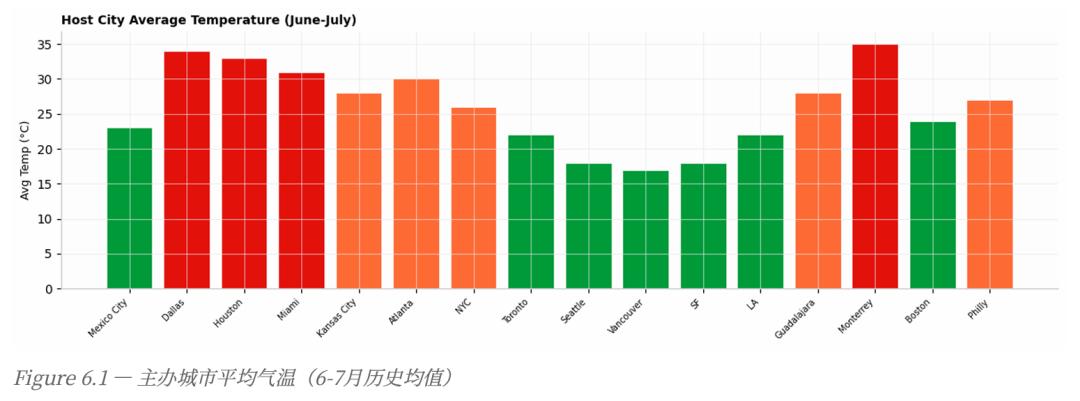
For example, the "invisible tax" of environmental physiology:
The Kimi model introduces the WBGT (Wet Bulb Globe Temperature) index, comprehensively considering multiple scientific indicators such as radiation, humidity, and wind speed that directly reflect the human body's heat dissipation efficiency. The model not only needs to calculate the loss coefficients of high-intensity running distance and passing decision time in high-temperature city stadiums like Dallas and Miami but also convert them into "performance discounts" through sports physiology data.
These complex calculations may seem like armchair theorizing, but they acutely point out that for the German team, which relies on a high-pressure playing style, this "environmental tax" may be a key variable in determining the outcome of the knockout stage.
For example, the "Prisoner's Dilemma" in the tournament system game:
Under the new tournament system with 48 teams, the qualification probability of the third-placed teams in the group stage has been significantly optimized. The Kimi model accurately predicted the possibility of a "tactical draw," that is, after the strong teams secure their qualification, to avoid facing the title contenders in the high-risk half of the bracket, a certain Nash equilibrium will be triggered.
Although Chinese football fans are very good at simulating this kind of score calculation game, it is far more complex than simple technical statistics. It requires the model to understand the various "motives" of the coaches and the rational choices of the players regarding physical energy allocation in the later stages of the game.
For example, the recursive spread of injury relevance:
Injuries are always regarded as inevitable accidents, but Kimi does not view injuries in isolation. Instead, it uses an injury tracking agent to substitute them into the Monte Carlo simulation to quantify the degree of damage to the entire tactical chain caused by the injury of key players. For example, the recovery curve of Spanish player Rodri after ACL surgery mentioned in the paper is a good example: when a midfield metronome is absent, the consequence is not only a decline in defense but also a reconstruction of the entire midfield's passing trajectory.
In fact, this is the "commercial infrastructure" attribute that general AI should have.
People don't need Kimi to be just a simple chat window. It must become a general decision support system capable of handling macro geopolitics, micro sports physiology, and probability game theory.
This is also the declaration that Dark Side of the Moon makes to the world in the midsummer of 2026: The future of AI lies not in writing more touching poems, but in understanding and predicting the operating rules of the physical world.
02
From Single-point Prediction to Organizational Thinking
In Kimi's World Cup prediction this time, what most shocked the technology circle was not the performance of the model itself, but the Agent Swarm architecture launched by Dark Side of the Moon.
In the traditional single-model logic, AI is very likely to fall into a fixed mindset due to confirmation bias. Simply put, for a model trained based on historical data, strong teams will always be strong, and weak teams will always be weak. If so, the charm of football will disappear.
Therefore, Kimi assembled a research team with more than 300 agents, and the division of labor among these more than 300 agents is very clear:
Strategic level: Responsible for the macro perspective, identifying the so-called "champion curse" and the age cycle of winning the championship;
Tactical level: Responsible for the vertical field, calculating various quantitative indicators such as expected goals and expected threats;
Execution level: Responsible for quantifying off-field factors and evaluating the geographical and climatic impacts of 16 stadiums.
Division of labor alone is not enough. In an agent swarm, these more than 300 agents also need to be able to communicate and collaborate with each other. Therefore, how to handle the differences between the prediction results of agents has become the core issue.
For this reason, Kimi introduced an "Agent Debate Protocol."
For example, when the agent responsible for market odds believes that the German team is "systematically underestimated," the agent responsible for historical data will refute from the perspective of the recency bias of "eliminated in the group stage for two consecutive tournaments." The system will automatically trigger a debate process from Level 1 to Level 4, and even invite a special agent responsible for arbitration to give the final ruling.
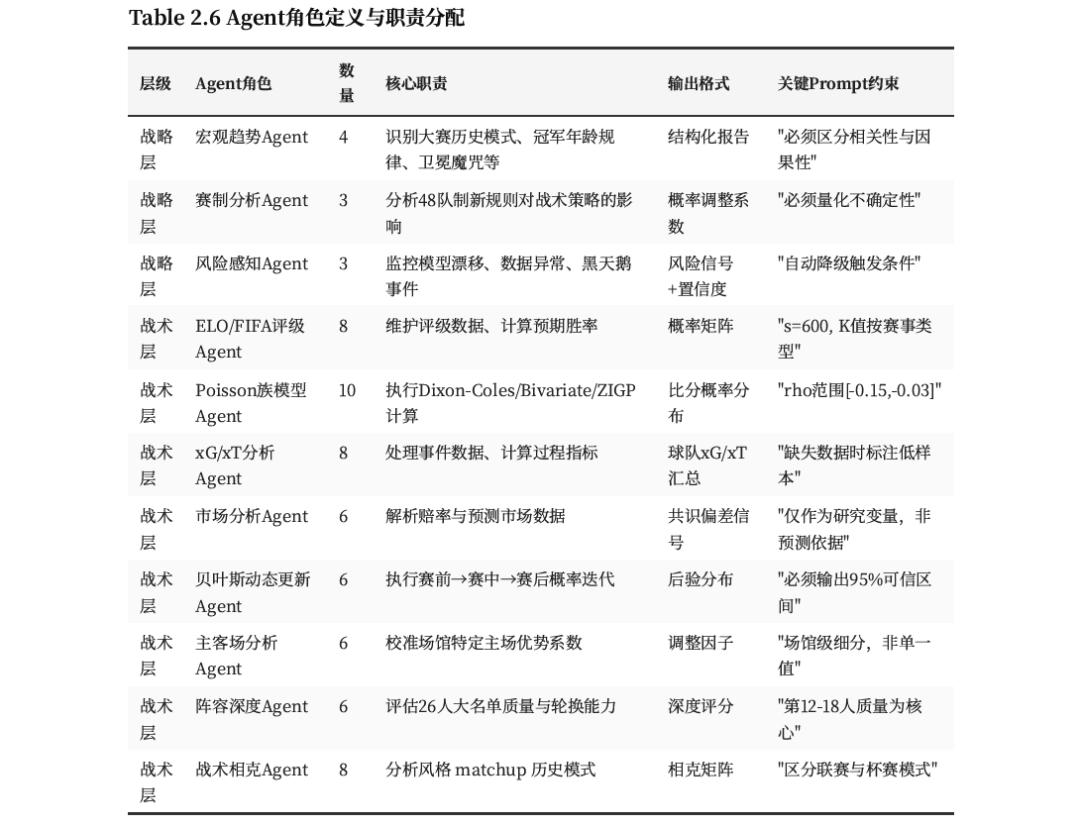
This working mode, which is very similar to that of humans, may have brought work efficiency that exceeds that of FIFA. And the business metaphor of this architecture is also worth learning from: In complex decision-making, the "advanced" nature of AI is reflected in presenting the process of correcting thinking intuitively and transparently to people. Whether it can give the correct answer in one sentence is actually not that important.
When Kimi can automatically identify the differences between different agents and quantify the confidence of the differences, and even automatically trigger a downgrade signal when the difference is too large, this "honest" algorithm is far more valuable than those black-box models that hide the logic: It can not only give predictions but also perfectly show the boundaries and confidence intervals of the predictions, which is the core of modern quantitative finance and complex decision-making systems.
03
AI is Redefining Probability and Value
Dark Side of the Moon repeatedly emphasized a view in the report:
Any model that claims to be able to predict the result with 100% accuracy is arrogant.
This cognitive humility is not only a scientific attitude but also a sophisticated business narrative: They position the complex market odds as a "consensus bias research variable" to identify the irrational pricing in the market caused by public sentiment. The most memorable examples are the consecutive upsets of the German team in the 2018 and 2022 World Cups.
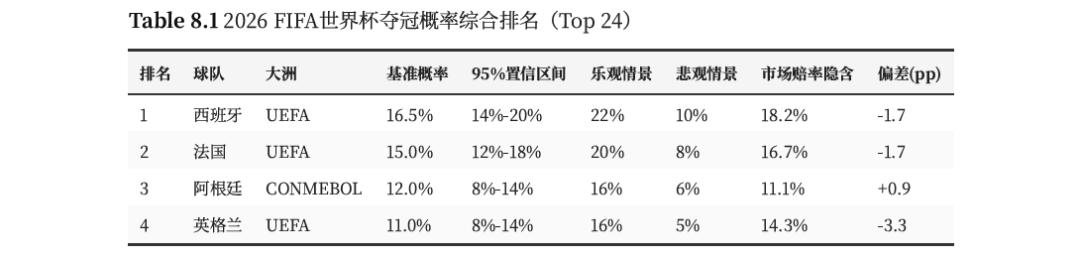
This statement is not only about the World Cup but also about the entire financial market. Kimi's World Cup prediction activity provides people with a brand-new business perspective: The core value of AI-assisted decision-making is actually to "identify" the market, rather than "play games" with the market.
When the model determines that the German team has been marked as the 6th or 7th favorite to win the championship by the market odds, but its tactical evolution and the real probability of winning the championship given by the data model are much higher than the market perception, what Kimi is actually doing is a "value investment" action. That is to say, the value of AI lies in helping football fans strip away market sentiment and see the logical truth hidden by the irrational pricing of the public.
For corporate executives, this logic can be completely transferred: When everyone in the company reaches a "consensus" on a certain market prediction, the moment of the greatest risk has arrived. It is no exaggeration to say that any enterprise needs a "correction system" like Kimi to point out those variables that are most easily forgotten in time.
AI is not used to tell people "what the market is thinking," but to tell people "what the market may be wrong about."
04
The Philosophy of Probability and "Irreducible Randomness"
The redefinition of value does not mean negating the significance of probability. Behind a series of game results and qualification predictions, Kimi demonstrates an organic combination of two top philosophies in probability theory:
One is Frequentist, which symbolizes rigor: Kimi calculates the winning probability of each participating team in millions of game result combinations through 100,000 Monte Carlo simulations, which is the certainty in the era of big data.
The other is Bayesianism, which symbolizes flexibility: After each game, the agent needs to update the prior probability in real-time based on the latest on-site feedback information, including but not limited to the player's condition, the referee's penalty scale, and sudden weather changes.
It has both the weight of historical precipitation and the sensitivity of immediate response, perfectly conforming to decision-making science. Kimi's dynamic mechanism solves one of the biggest pain points in business decision-making: How should the model correct itself when the environment changes suddenly.
In addition, the model used by Kimi to predict the World Cup also mentions an inspiring "time-decay likelihood weighting," that is, assigning different weights to the game data at different time nodes: The weight of a goal scored in the 90th minute may be much higher than that of a goal scored in the 45th minute.
Through this in-depth analysis of information noise, the model can distinguish which are the actual trends and which are just random fluctuations in the vast amount of data. The essence of decision-making is to dynamically adjust the confidence distribution of the future based on the continuously updated information flow. This is true for the World Cup and the market as well.
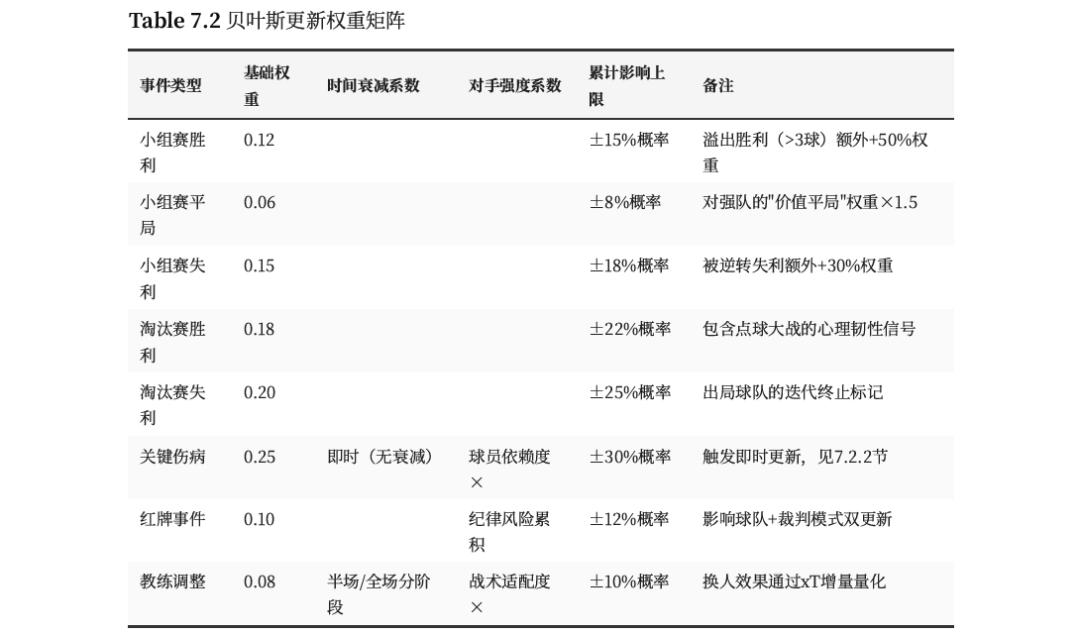
The most touching sentence in this more than 200-page paper is:
35% of the uncertainties belong to the "unknown unknowns," which is part of the beauty of football and the last fortress of human competitive sports that cannot be conquered by algorithms.
In an era where the speed of technological replacement far exceeds that of means of transportation, it takes more courage to admit the boundaries of AI than to promote its capabilities.
Kimi frankly provides a "model downgrade protocol": When emergencies such as red cards, VAR misjudgments, or even social media public opinions occur, the system will directly mark it as "highly uncertain" and immediately stop giving arbitrary quantitative predictions, waiting for manual intervention or data feedback.
It has to be said that in the current domestic AI environment, this strategy fully demonstrates the business wisdom of Dark Side of the Moon. Establishing trust by admitting boundaries is the most sophisticated and reasonable approach.
AI should not be packaged as an always-correct "God." In essence, it is just a reliable "co-pilot": In a smooth situation where everything is normal and running stably, it can provide extreme computing power support; in an adverse situation when a black swan event occurs, it must sound the alarm in time and hand over the control to the decision-maker.
Cognitive humility makes Kimi look more like a rational decision-making partner. And the best decision is always the result of the collaboration between AI computing power and human judgment.
05
From the World Cup to the Future of AI Business
Dark Side of the Moon did not choose to let Kimi participate in the college entrance examination immediately. Instead, it let Kimi handle injuries, fight against high temperatures, and calculate the deviation between odds and probabilities on the World Cup football field.
Going