The AI siege amid the "model-perfect face" controversy has punctured the trust crisis in the film and television industry
Recently, an oolong caused by being "too perfect" has pushed the true - false game in the film and television circle onto the hot search.
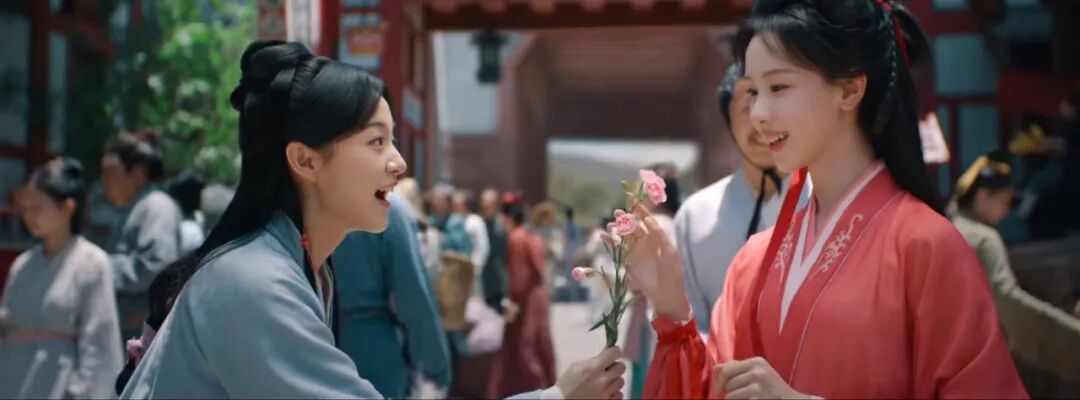
After the ancient - costume revenge drama "Qiao Chu" premiered in June, the topic of "suspected AI actors in Qiao Chu" sparked heated discussions. The flower - selling girl in the drama had smooth and regular facial lines. Coupled with the one - click skin - smoothing filter in the ancient - costume drama, at first glance, she really didn't look like a real person. In addition, the actress's eyes seemed a bit vacant, and the micro - expressions were lacking. The whole set of actions carried a hint of mechanicalness. With these multiple factors combined, it precisely hit all the stereotypes that audiences have about AI actors.
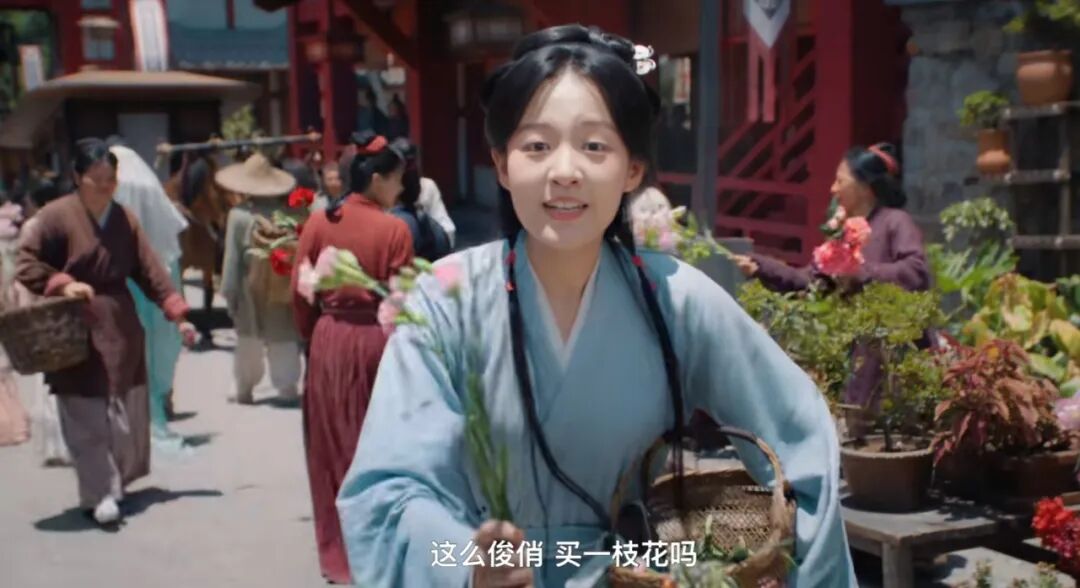
Just as the audience collectively turned into cyber detectives, Liu Jin, the actress who played the flower - selling girl, quickly posted a Weibo to refute the rumors: "Sorry, I have a 'model - like face'. I'll strive to optimize it to the 'real - person mode' next time." Without a lawyer's letter or a pitiful essay, a self - deprecating remark easily ended all the doubts. The drama hasn't even started getting scores on Douban yet, but this wave of rumor - refuting deserves five stars.
It's rather ridiculous that a real - life actress has to prove that she is a real person, and a "perfect" face has become a sin. Behind this is the haunting of the uncanny valley theory, the collective stress response of the audience to AI actors, and even more, a ridiculous spectacle staged by the film and television industry at the boundary between truth and falsehood.
When the audience smells the scent of AI on real people
Why was a flower - selling girl with not many scenes "identified as an AI" across the whole network overnight?
There are a long list of reasons. Her face had such sharp bone structure that it seemed to be exported from a modeling software. Her skin was so smooth that the pores seemed to have disappeared. The generous skin - smoothing and soft - light filters used by the crew pushed all the details into the "non - human" deep end. After analyzing frame by frame, some netizens declared firmly: "If this is a real person, I'll eat my phone with sauce on the spot."
In the past, when faced with such situations, the audience would at most complain that "the acting is really bad". But now, the world has changed from "a huge makeshift crew" to "a huge AI stage". Whether bad acting is a sin or not is another matter, but it will probably trigger the audience's instinctive defense mechanism due to the uncanny valley effect.
In 1970, Japanese robotics expert Masahiro Mori proposed that when the similarity of an object to a human being soars to a certain critical point, human beings' degree of favorability will drop sharply, and they may even find it eerie and creepy. Something that is too much like a human can be hair - raising, while a non - human puppet may seem cute. This is the uncanny valley effect.
You won't be afraid of a pure robot, but an AI - synthesized human face falls right in the valley of the uncanny valley. Its facial features are taken from real data, but the expression is so empty that it seems to be staring into the void, just like a "warm - blooded dummy". The flower - selling girl in "Qiao Chu" was identified as an AI because her performance, which was "like a human but not entirely", was enough to confuse the audience's visual processing system in the brain.
The public's rejection of the "pseudo - human feeling" is not something that has happened overnight. Film and television works such as Pixar's animated short film "Tin Toy" and Warner Bros.' "Beowulf" have all caused controversies due to the uncanny valley effect. In addition, although the science - fiction movie "Final Fantasy: The Spirits Within" released in 2001 was regarded by the media as a masterpiece of CG technology, due to the immature motion - capture technology at that time, the movie also made many audiences feel uncomfortable.
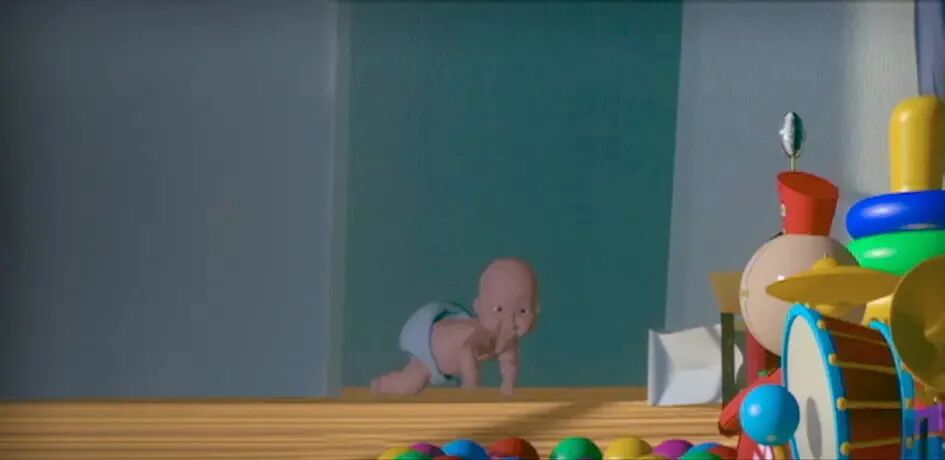
In other words, the audience's vigilance against "fake people on the screen" is a long - latent psychological defense line. AI technology has just stepped on the accelerator, bringing this issue that was originally only concerned by a few people into the public view and pushing the audience's aversion to real and fake human faces to the maximum.
This aversion finally found the most dramatic outlet in this oolong. When the audience punched, they found that the flower - selling girl was not an AI but a real person. It's just that her face happened to be very "standard", and the drama's filter happened to push this standard to the critical point of "fake". Coupled with her lack of professional ability, a perfect misunderstanding was born.
It's not hard to find that reality has gradually become surreal. Film and television technology is desperately trying to make fake people look like real people, while the audience is desperately trying to find fake people among real people. The two sides have collided at the bottom of the uncanny valley, creating a ridiculous spectacle staged by the current film and television industry at the boundary between truth and falsehood.
The actress Liu Jin resolved this public - opinion crisis with a humorous response, but is it all over? It's just the beginning.
Behind the trust crisis
Is an economic account that the audience is calculating
The core of the "Qiao Chu" oolong is essentially a trust crisis caused by the abuse of AI technology in the film and television industry. The audience no longer easily believes that the "real people" on the screen are real. This "anxiety about authenticity" is spreading like a tide across the entire cultural and entertainment industry.
Two months ago, the domestic film and television industry stepped up its business layout in the field of AI actors. Some officially announced the launch of an "AI artist library", and some sent digital actors to debut. Subsequently, the rumor that "AI actors will be used for roles below the second male lead" has made the industry and the audience panic. The statement that "real - life shooting may become an 'intangible cultural heritage' in the future" sounds like a science - fiction comedy, but at least for the audience, it is becoming a reality.
In recent years, AI has rapidly penetrated the film and television industry chain in the name of "cost - reduction and efficiency - improvement". The huge cost advantage has made small and medium - sized film and television companies flock to the AI short - drama track. When actors wake up, they find that their competitors have become codes.
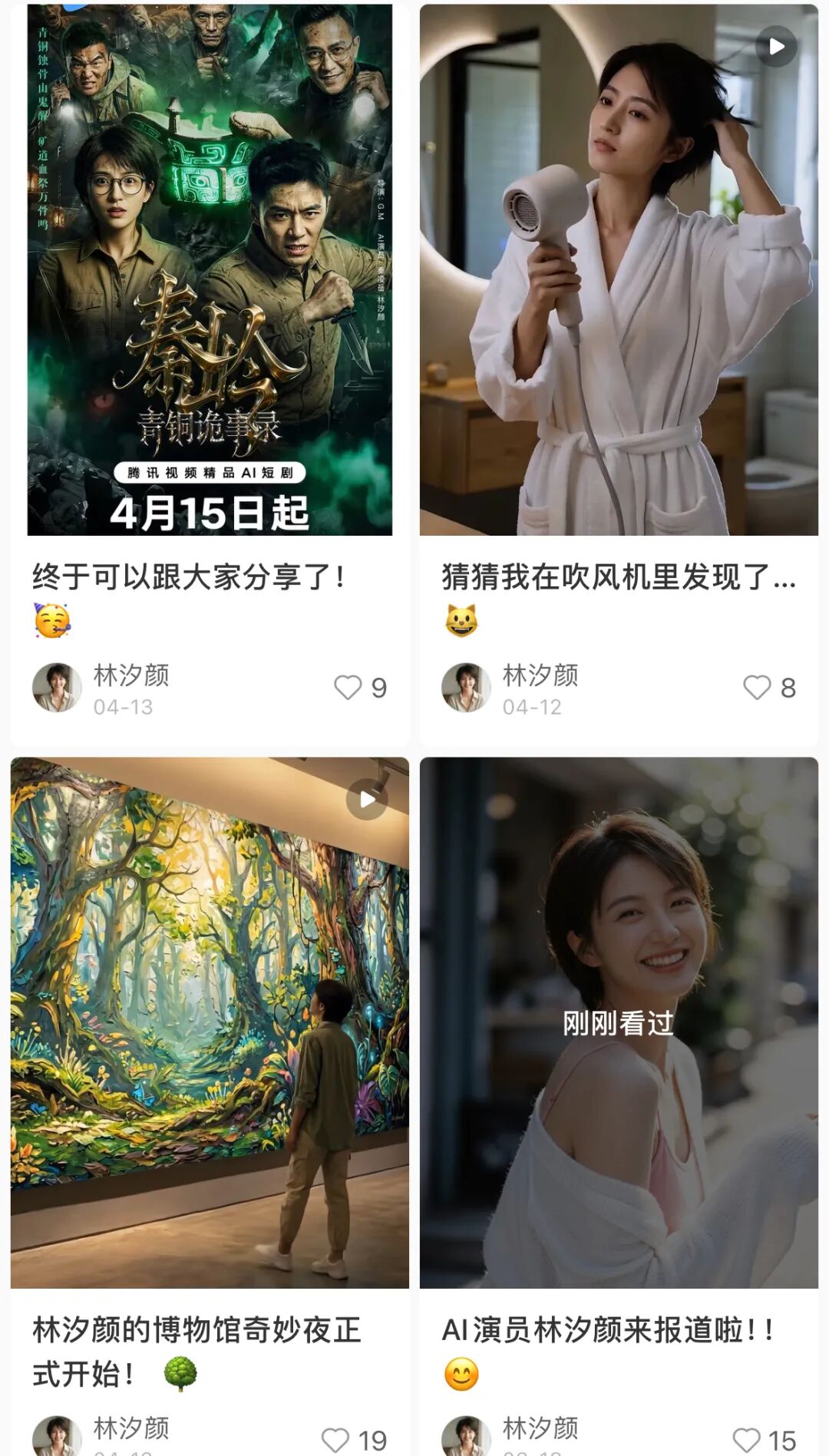
In order to pursue "low - cost and high - appearance", AI short dramas mass - produce virtual actors with regular facial features and stiff expressions, which are flooding the short - video platforms. In the first quarter of 2026 alone, AI short dramas accounted for more than 95% of the micro - drama market, and real - life short dramas are almost becoming a rare species. Audiences who have been exposed to AI content for a long time have gradually formed a reverse aesthetic logic: "Perfect = AI, Flawed = Real person", just like a large - scale conditioned - reflex training.
It is against this background that the audience quickly fired their shots in the "Qiao Chu" incident. In the absence of a clear "authenticity identification mechanism", the audience without the right to know is like being in a dark forest. Platforms and production companies are exploring cost - reduction through technology, actors are worried that their digital doubles will be "employed in the cloud" without authorization, and the audience in the middle looks at everyone like an AI.
Of course, the audience's resistance to AI is not only due to the uncanny valley effect, not just the fear of indulging in a cyber entertainment field without a sense of life. Essentially, it is also an economic account. The film and television industry aims at cost - reduction and efficiency - improvement. AI actors can indeed reduce costs, but for the audience, if they are asked to pay the same price for AI actors or AI content, sorry, the audience also needs to "reduce costs".
After the AI wave swept through the cultural and entertainment industry, the game industry embraced AI earlier than the film and television industry. The entire industry then entered an unprecedented high - frequency "AI identification" rhythm. Any evidence of suspected AI can become a boomerang aimed at game manufacturers. Comments like "It's obviously an AI - generated image. How can they make money with this" and "Why are the gacha draws in AI games so expensive" surround almost every controversial game in the industry.
Most of the time, whether a game manufacturer has used AI is something that can neither be proven nor disproven, especially for the mature products of large companies. However, the film and television industry is different. At present, lack of facial recognition, lack of acting depth, and stiff micro - expressions are all common problems of AI actors. Although there are "miscarriages of justice" like the "flower - selling girl in Qiao Chu", most of the time, "identifying AI" in the film and television industry is much easier than in the game industry.
Ultimately, the fundamental reason why the audience has the ability to identify authenticity when watching dramas is that when "cost - reduction" only benefits the production side and not the consumption side, this deal is ultimately not cost - effective. This is the real pain point behind the trust crisis.
A pricing game about "how much is a person worth"
Now, "Qiao Chu" and the actress have proved their innocence. This oolong has also brought a wave of attention to Liu Jin. Her self - deprecating Weibo post has received over ten thousand likes, and the comments are full of messages like "Sister is so beautiful", "Sister, we support you", and "Applauding for sister". A supporting actress who was unknown has gained popularity because of being "suspected of being an AI". In a way, it's a blessing in disguise.
But on the other hand, if the "flower - selling girl" had been proven to be an AI actor, the plot would probably not have been so relaxed. The drama might have been labeled as an "AI drama", and a large number of one - star negative reviews would have flooded the rating area. The audience's anger would have spread from the AI actor to the entire crew and even the platform, triggering a deeper trust crisis.
Of course, AI actors have been used in short dramas for a long time, but few have made it onto the hot search. The incident of the "flower - selling girl" being suspected proves that the audience is obviously more sensitive to the use of AI actors in long - form dramas. So, an unavoidable question arises: What is the future of AI actors that have been making a lot of noise in the past six months?
The answer may be more complicated than expected. Hollywood is a ready - made reference. Just like in China, as long as AI actors are involved, the industry and the audience are almost on edge. After the virtual actress Tilly Norwood made her debut at the Zurich Film Festival, because her production company was seeking an American agency, it directly triggered strong protests from the actors' union. The movie "Deep in the Grave", which used AI to "resurrect" the late actor Val Kilmer, was shrouded in negative public opinion even before its release.

Against this background, Hollywood has started to draw a line for AI content and AI actors. In May 2026, the organizer of the Academy Awards officially announced that starting from 2027, all AI - generated performances and scripts will be completely prohibited from participating in any awards. But this is not the most fatal.
The actors' union proposed a "Tilly tax" proposal at the beginning of 2026, requiring a special fee to be levied on AI - synthesized characters that replace real - life actors, making the cost of using AI equivalent to hiring real people. In essence, it is using an economic lever to bring AI back to the same starting line as a "cheap substitute".
So, is the path of AI actors really feasible? The audience is calculating the economic account, and the actors are also taking collective action to fight against their code opponents. From Zhang Ruoyun, Yu Hewei, Wang Churan, etc. quickly cutting off their "AI authorization", to Zhao Youting, Feng Yuanzheng, Ma Li and others publicly expressing their opinions, the leading actors in the industry are not only safeguarding their own rights and interests, but also speaking up for many mid - level and new actors.
This is no longer a battle of aesthetics, but a pricing game about "how much is a person worth". The Academy Awards has drawn a red line with a ban, the actors' union has raised the threshold with the "Tilly tax", and the audience has already laid out their accounts on the table. AI can indeed reduce costs, but it reduces the costs on the production side and increases the debt on the trust side.
Perhaps, one day AI actors will find their own place, but before that, they have to cross three thresholds: the audience's wallets, the rights and interests of real - life actors, and a national AI - identification test that no one wants to be deceived in again.
This article is from the WeChat official account "Mirror Image Entertainment". Author: Zhu Qing'an. Republished by 36Kr with authorization.