Orders are exploding! A dark horse robot enterprise has emerged unexpectedly in Tianjin
A highly iconic order has emerged — the investment community has learned that HeLi (Tianjin) Robot Technology Co., Ltd. announced that it has continuously won large - scale procurement orders and carried out cooperation around intelligent systems for underground and underwater operations, with a cumulative amount of tens of millions of yuan.
Beyond the amount, the greater signal of this order lies in that HeLi has entered the most irreplaceable part of oil and gas development. Thousands of meters underground and in the deep - sea high - pressure environment, the core components must operate stably for a long time. The procurement itself is a comprehensive verification of technology, delivery, and trust.
The founder, Hou Lidong, is a post - 80s generation. He is a professor and doctoral supervisor at Northeast Petroleum University and has worked at CNOOC Energy Technology & Services Limited and Weatherford for many years. In 2016, he founded HeLi in Tianjin, starting with downhole tools and core components and gradually expanding to special - purpose robots and solutions for deep - earth and deep - sea operations. In the past few years, investors such as Daoyang Capital, Shenzhen High - tech Investment Group, Tianjin Binhai Industrial Investment, and CICC Capital have successively supported HeLi, and the company has raised more than 550 million yuan in total.
Now, the successive implementation of orders is like a footnote to the company's past decade: the answer to robot industrialization is not only in the most popular tracks but also hidden in places like underground and deep - sea areas, which are invisible but most test real capabilities.
Led by a professor, embarking on the journey of special - purpose robots
The story of HeLi Robot starts with Hou Lidong.
Hou Lidong, a post - 80s generation, was born in Qiqihar, Heilongjiang. He studied at Northeast Petroleum University for his undergraduate degree. After graduation, he joined CNOOC Energy Technology & Services Limited as a front - line engineer. It was an era when China's offshore oil and gas development was advancing rapidly. Oilfields, offshore platforms, and downhole operations constituted the earliest on - site experience of his career. It was also on the front line that he saw the reality that high - end equipment had long relied on overseas sources.
At that time, many advanced equipment on offshore platforms, from underwater robots to high - end downhole tools, came from foreign manufacturers. Once the equipment malfunctioned, the on - site often had to wait for overseas engineers and spare parts. The rent of drilling platforms was extremely high, and every shutdown meant a real - money cost.
"When will these devices bear the Chinese trademark?" This thought, like a seed, became the foreshadowing for his entrepreneurship.
In 2008, Hou Lidong joined Weatherford, an international oilfield service giant. Here, he gradually realized that the real gap was not in individual equipment but in the closed - loop formed by core components, system integration, and engineering verification.
It wasn't until 2016 that Hou Lidong decided to start a business and founded HeLi in Tianjin. At that time, many people around him advised him that although the call for domestic substitution had been around for many years, few had truly succeeded. His answer was simple: "Precisely because it's difficult, someone has to do it."
After that, Hou Lidong returned to Northeast Petroleum University, becoming a full - time second - level professor and doctoral supervisor, and continued to conduct in - depth research on the R & D of intelligent products and core components. His past experiences ultimately led him to the same question: Can these key pieces of equipment really be made by a Chinese team?
HeLi has entered the most difficult and error - intolerant parts of oil and gas development. "Only by mastering the design and production of every 'bolt' can we avoid being restricted during product iteration," Hou Lidong deeply understands that for equipment in extreme working conditions, we cannot entrust the 'life - gate' to others.
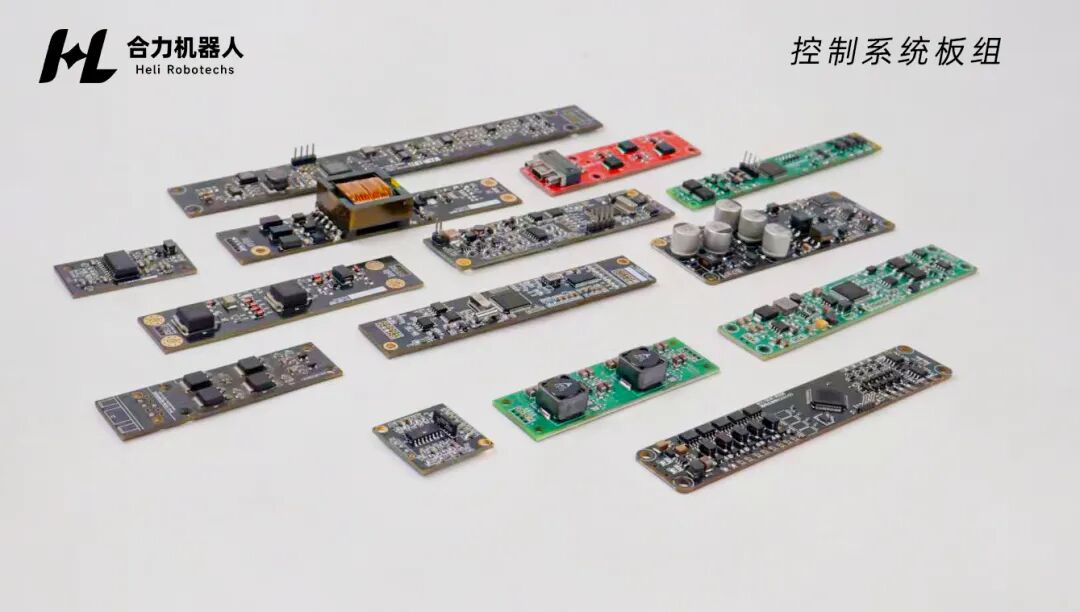
The more difficult the task, the deeper the capabilities need to be developed. The company started with core components and carried out R & D around underlying aspects such as micro - motors, micro - pump valve systems, high - temperature reducers, single - core carrier communication, integrated drives, power modules, and main control circuits. These components may not seem prominent, but they are the foundation for a piece of equipment to operate stably in harsh environments.
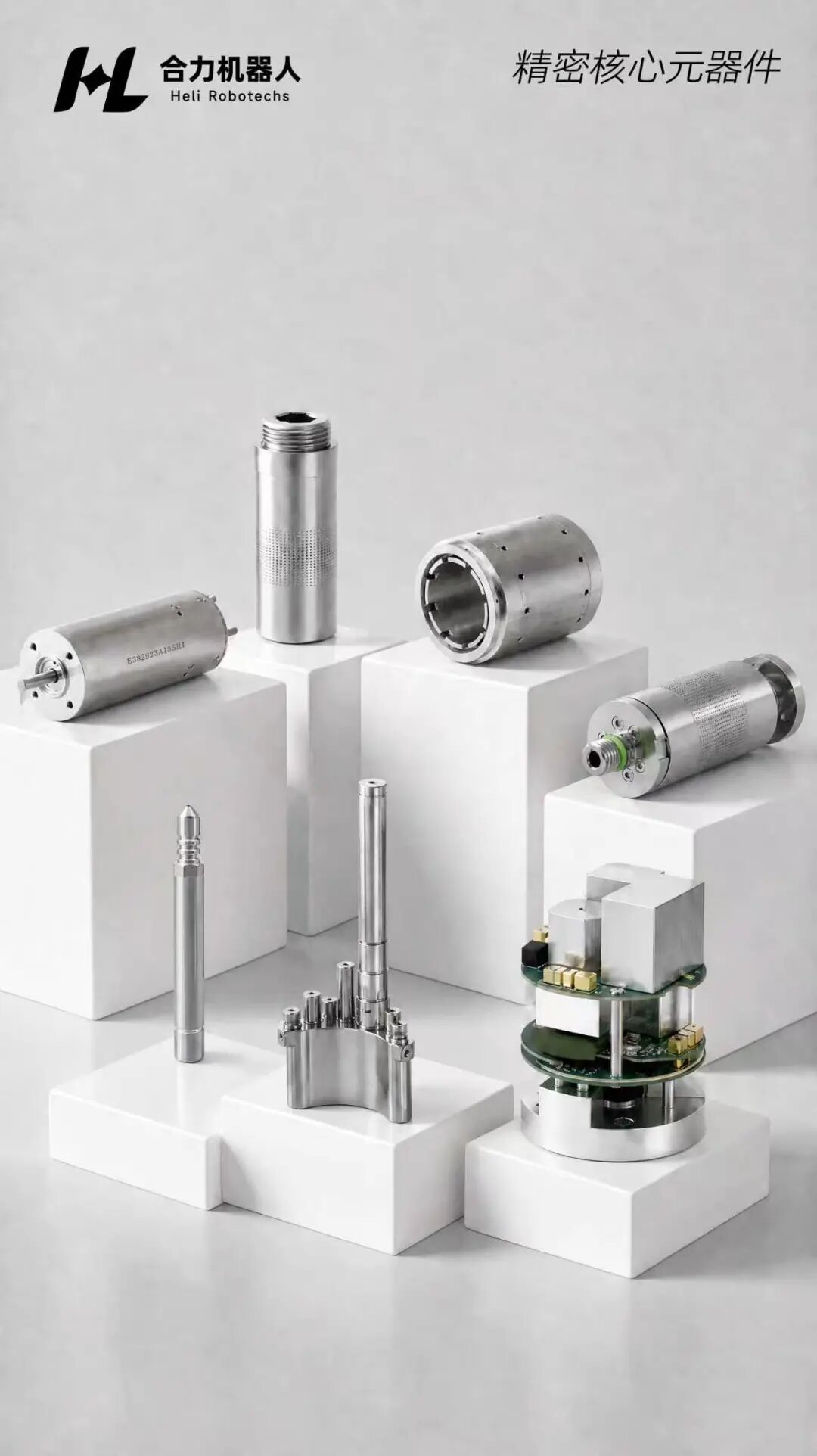
Having core components alone is not enough. HeLi has independently developed intelligent high - end downhole tools, such as intelligent rotary steering systems, intelligent electronically controlled large - diameter high - thrust separate injection and production systems, intelligent electric - drilling dense and continuous fracturing systems, and high - temperature - resistant measurement - while - drilling instruments. These products have overcome multiple technical challenges such as ultra - high temperature, ultra - high pressure, intelligent control, and reliable communication, providing new solutions for the efficient development of oil and gas resources.
Underground, no single link can fail. The real difficulty of such products lies in stability and system coordination under extreme working conditions. Take the electronically controlled intelligent injection and production system as an example. It integrates high - temperature and corrosion - resistant stepless throttling control technology, two - way communication technology between the surface and downhole, multi - parameter integrated sensing and data fusion technology, and high - temperature electronic control packaging technology in a narrow downhole space. It is a complex system with extremely high requirements for stability.
It can be said that the technical level of the downhole injection and production system is directly related to the efficiency and cost of oil and gas extraction. Successfully developing such products means that HeLi has all the capabilities from core components to system integration in extreme scenarios.
After the technical chain was established, the company's capabilities were no longer limited to the downhole. By focusing on extreme scenarios, HeLi has gradually developed products and solutions such as work - grade/special - grade underwater robots, ground multi - complex interactive robots, all - electric intelligent well - completion systems, and subsea Christmas tree control systems.
To date, HeLi has successively undertaken several national - level major scientific research projects such as the key electronically controlled valve technology for subsea Christmas trees and has obtained qualification certifications in fields such as aerospace and weaponry. It has become a national - level key specialized and sophisticated "little giant" enterprise with more than a hundred invention patents.
The seed sown many years ago is now growing into an answer in the deep - earth and deep - sea areas.
Investors gather, and HeLi continuously wins super orders
Quietly, a group of investors have stood behind HeLi.
First, in 2020, HeLi completed a total of 60 million yuan in Series A and Series B financing, led by Daoyang Capital, with a post - investment valuation of 900 million yuan.
One year later, Shenzhen High - tech Investment Group led a Series C financing of approximately 150 million yuan. In 2022, Tianjin Binhai Industrial Investment took over and led a Series D financing of 175 million yuan. In 2023, CICC Capital became the new leading investor, with a Series E financing of 72 million yuan.
After several rounds of financing, HeLi has raised more than 550 million yuan in total. In fact, for a long time, HeLi was not easy to define. It started with oil and gas equipment and served energy customers. When outsiders looked at it, they often first thought of it as an oil and gas tool company.
A turning point occurred during a roadshow. After an investor listened to HeLi's introduction of high - temperature micro - motors and hydraulic systems, the investor asked a follow - up question: Can this electro - hydraulic servo micro - system be used in robot joints, drives, and even aircraft steering gears in addition to the oil and gas field?
That was a crucial question. Hou Lidong didn't answer directly but instead showed a miniaturized hydraulic drive unit that had been delivered to a research institute on the spot: It was only the size of a fist but could output extremely high power in a 200°C environment. After a long silence, the investor made a judgment: HeLi is not an ordinary oil and gas tool company; it is making the "brain and muscles of robots in extreme environments."
It was from here that HeLi was re - understood. Oil and gas are just the starting point. The reusable core components, drive systems, and system integration capabilities accumulated around extreme working conditions are the real value of this company.
However, the recognition at the roadshow still needs to be tested in the industrial field.
"We're not afraid of the hardships of technical research. The most difficult part is that after the products are developed, customers are afraid to use them," Hou Lidong recalled. The performance of the company's products is comparable to or even surpasses that of imported products, but the first reaction of oilfield customers is often the risk. If a product fails thousands of meters underground, the well - repair cost can easily reach millions. Who will bear the responsibility?
This is also the most realistic threshold in the oil and gas equipment industry. The tolerance for errors in downhole and deep - sea scenarios is extremely low, and customers make decisions very cautiously. There is a long process of testing, verification, and trust - building between the prototype and procurement. This is the step that HeLi needs to take.
The first paying customer was a leading domestic oilfield technology service company. At that time, the company was troubled by the delivery cycle of imported downhole tools. HeLi was given the opportunity to work on a marginal well with a significant decline in production. For the customer, it was like a cautious trial; for HeLi, it was a crucial step into the real - world operation scenario.
The result exceeded expectations. HeLi's products not only met the performance requirements but also helped the customer significantly improve the recovery rate. It was also from this cooperation that HeLi gradually entered the procurement catalog of industry giants. In the past year or so, HeLi has successively received multiple procurement orders, with a cumulative amount of tens of millions of yuan, covering key underwater equipment and core components such as downhole intelligent injection and production systems.
HeLi has been on this path for ten years. Thousands of meters underground and in the deep - sea high - pressure environment are places that are invisible to the outside world but where no mistakes can be made. The confidence of a country's high - end equipment often lies in these silent but crucial links.
The answer to robot industrialization is hidden in the deep - earth and deep - sea areas
Since this year, the robot track has been quite lively.
News of financing, valuation, and mass production has emerged one after another, and a number of companies have been quickly pushed into the spotlight. However, the real dividing line in the industry is emerging: real orders, stable delivery, and continuous repurchase are gradually becoming more important answers. In other words, the new battlefield for robots has shifted to the industrial field.
Hou Lidong is not surprised by this.
In his view, this wave of enthusiasm comes from the resonance of multiple factors. The continuous maturity of AI, sensors, and drive technologies, as well as the demand for aging and automation, are also driving the industry forward. Amid the excitement, he has a more sober judgment: the short - term implementation ability of general humanoid robots in unstructured environments is being overestimated, while the system - level reliability of special - purpose robots in extreme working conditions is being underestimated.
The reason is not hard to understand. Many current robot demos are eye - catching, but there is still a long way to go in engineering before they can truly enter factories, households, and complex on - site environments. Robots should not only "look like humans" but also work stably in real environments.
"People are more likely to see the 'hands' and 'legs' of robots, but they may not notice the 'heart' and 'nerves' in the deep - earth and deep - sea areas," Hou Lidong said. The latter doesn't have much display effect and can only be built up bit by bit through materials, processes, and time.
For this reason, the first to succeed may not be the most popular ones. Hou Lidong believes that the scenarios that will first form large - scale value are those that replace "dirty, tiring, and dangerous jobs": high - risk environment inspections, deep - sea and downhole operations. After all, customers are not just buying "intelligence" but something that can "save people, save money, and reduce risks." As long as it can solve one of these problems, there will be a market.
The real start of robot industrialization does not lie in building a prototype but in whether it can become a standard part in factories like PLCs and servo motors: being integrated into the system by engineers, operating stably, and being continuously used by customers.
As Hou Lidong said, in the future, the industry still needs to cross several thresholds: the emergence of leading companies with stable profits; the appearance of Chinese brands with real international competitiveness in the core component field; and the procurement logic of end - users no longer being just "supporting domestic products" but truly finding them useful and cost - effective.
From a global competition perspective, the advantages of China's robot industry may first emerge from complex scenarios. Deep - sea areas, downhole operations, mines, factories, ports, and mountainous power grids... China has no shortage of such rich industrial scenarios, which continuously present real problems and force robot companies to make their solutions more reliable, durable, and easier to deliver.
This is China's opportunity. The complete supply chain brings cost advantages, and complex scenarios bring faster iteration. The next round of competition in the robot industry may be decided in these places that most test real capabilities.
This article is from the WeChat official account "Investment Community" (ID: pedaily2012), written by Wang Lu and published by 36Kr with authorization.