Elon Musk's SpaceX Roadshow PPT: 60 Pages, Valued at $1.77 Trillion
After a series of maneuvers by Musk to merge xAI and SpaceX, the underlying ambition is now clearly laid out in the latest IPO roadshow PPT.
The most explosive thing is no longer rockets, but AI ——
SpaceX no longer presents itself as a rocket company, but as a "future infrastructure company" spanning space, communication, and AI computing power.
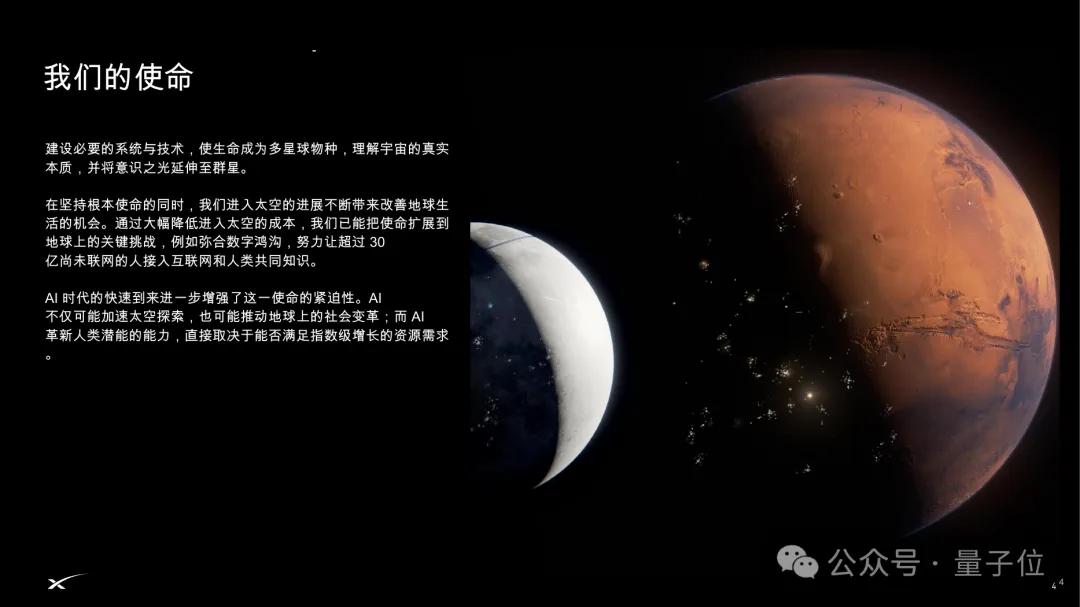
△
The 60 - page PPT weaves together clues from SpaceX, xAI, X, Terafab, and orbital AI computing power into a grand narrative.
Currently, for SpaceX, rocket launches are just the first layer. What can truly support the $1.77 trillion valuation given by the capital market is AI compute infrastructure.
60 - page Roadshow PPT
We'll go through the detailed content page by page. The key points include:
- Basic information about the IPO;
- The new positioning of the trinity platform and core data of the three major businesses;
- Greater opportunities unleashed by AI;
- How the $1.77 trillion valuation is derived.
Basic Information about the IPO
SpaceX plans to list on the NASDAQ, issuing 555.6 million shares at an issue price of $135 per share. The expected pricing date is June 11.
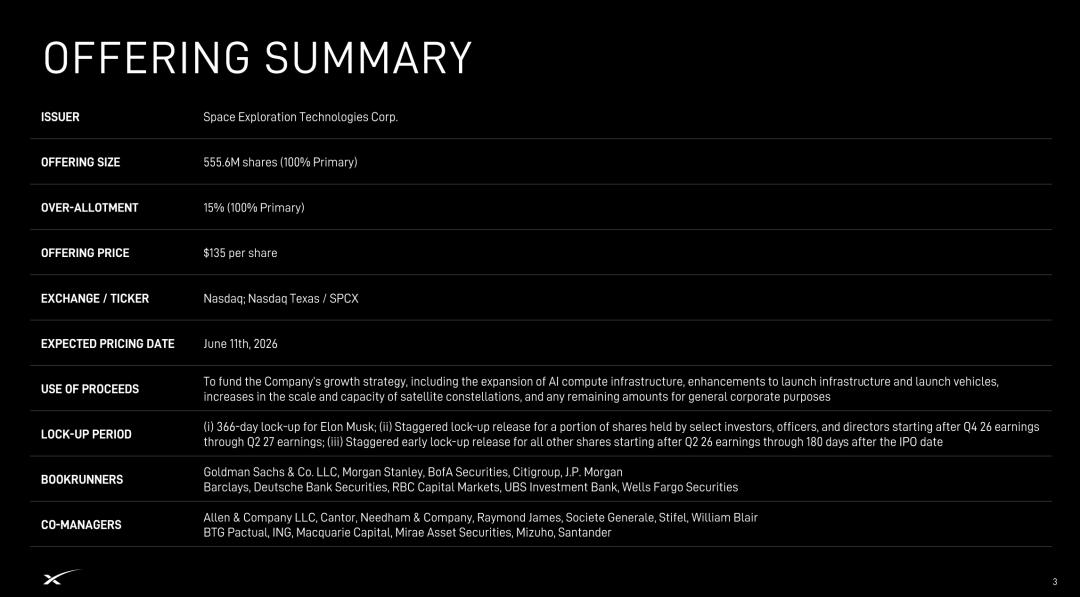
The funds raised will be used to support the company's overall growth strategy, including expanding AI computing power infrastructure, upgrading launch facilities and launch vehicles, etc. The remaining funds will be used for the company's daily operations.
New Positioning of the Trinity Platform
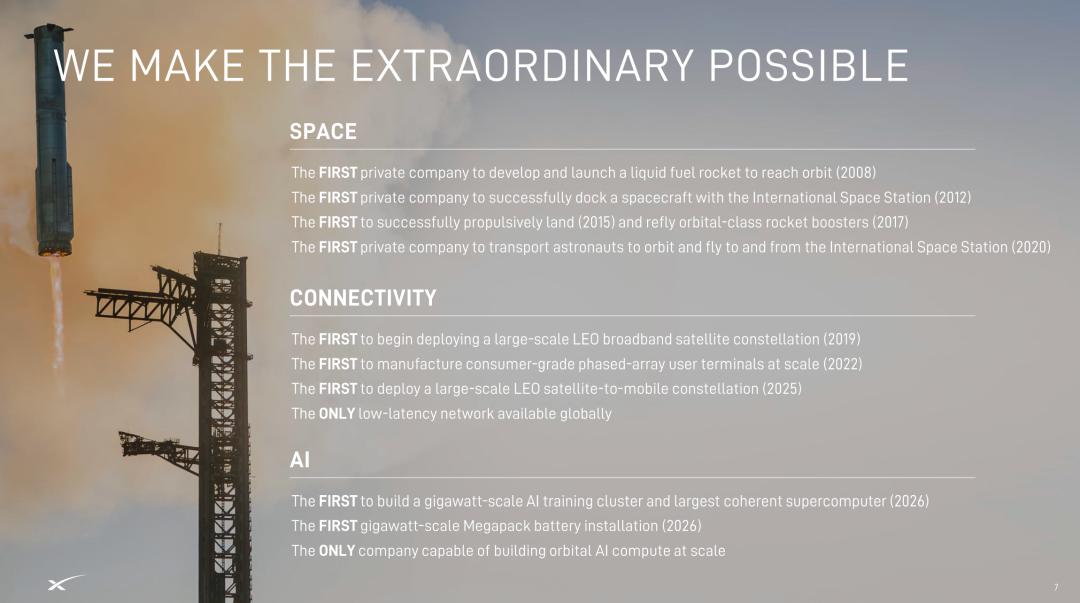
Notably, in this PPT, SpaceX has given itself a new positioning: The only company that simultaneously builds future infrastructure integrating hardware and software in the three major fields of space, communication, and AI.
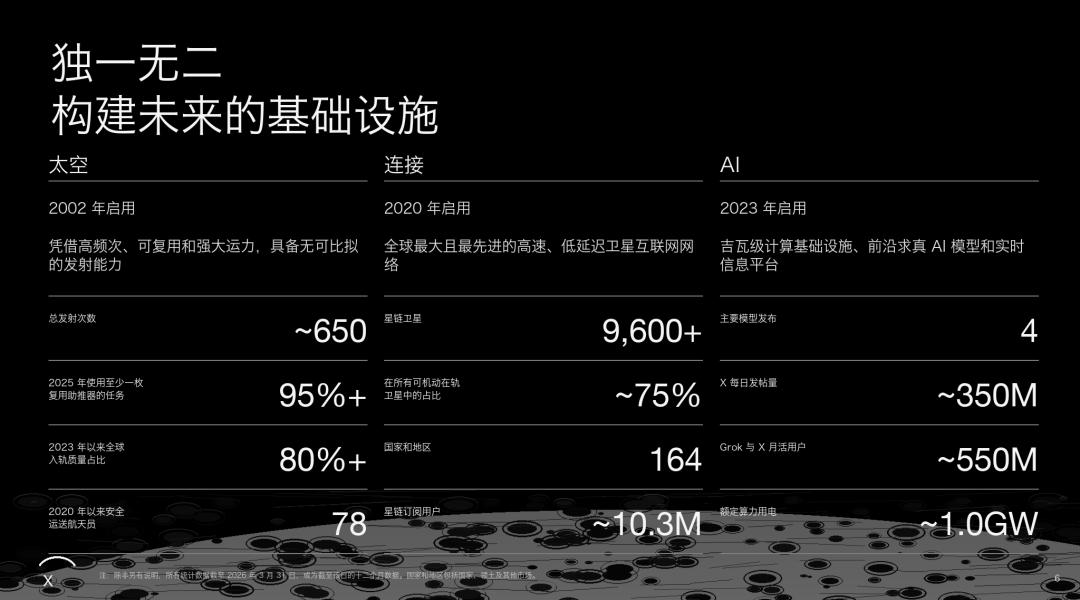
In terms of space, since its launch in 2002, SpaceX has launched approximately 650 times in total. In 2025, over 95% of the missions used at least one reusable booster. Since 2023, the mass of payloads sent into orbit has accounted for over 80% of the global total. Since 2020, it has safely transported 78 astronauts.
AI is the part that started the latest among the three major business segments. In fact, it encompasses the work of both xAI and X (formerly Twitter).
△
After the merger with xAI, SpaceX's core advantages are no longer limited to rocket launches and satellite communications, but also cover the emerging trillion - dollar AI market.
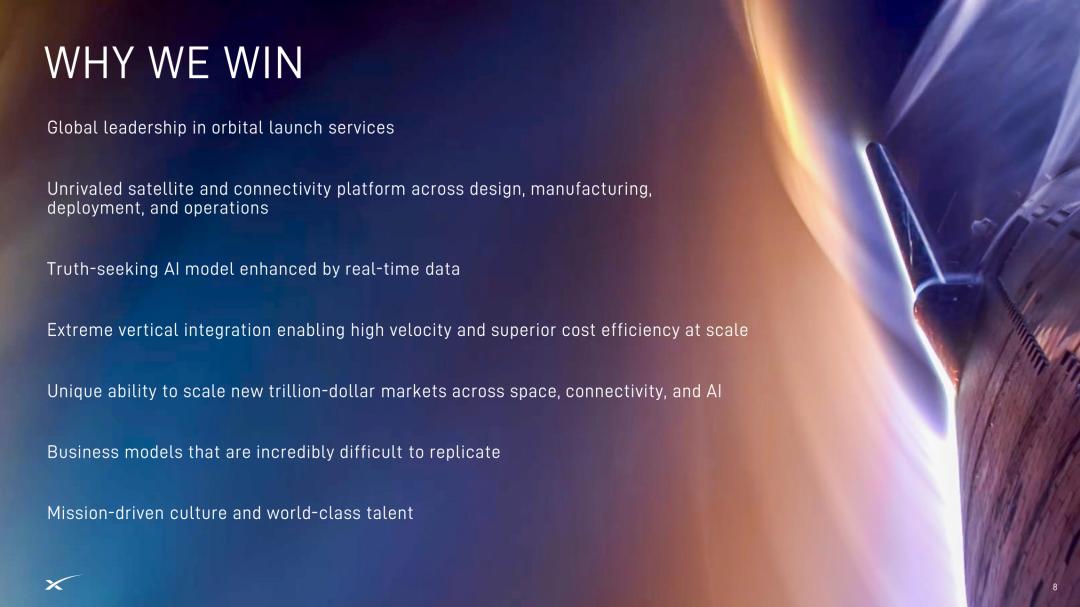
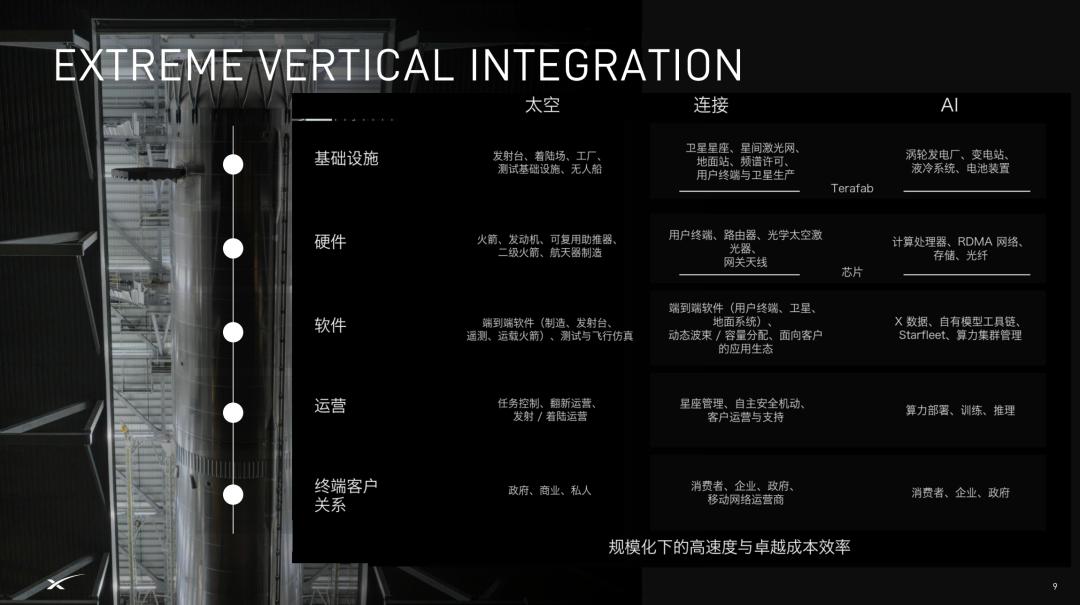
Moreover, in all three segments, from infrastructure, hardware, software, operations to end - customer relationships, SpaceX is committed to extreme vertical integration.
That is to say, SpaceX doesn't just focus on one single link, but takes autonomous control of every link to achieve faster execution speed and higher scale - cost efficiency.
In the field of AI, SpaceX aims to achieve autonomous control from infrastructure aspects such as power generation and liquid cooling, to hardware aspects such as chips and storage, then to data, model toolchains, computing power deployment, model training and inference... all the way to sales to consumers, enterprises, and governments at the end - user level.
△
The PPT marks two key capability nodes.
Terafab: Corresponds to the infrastructure construction capabilities for communication and AI.
Chips: Corresponds to the underlying hardware capabilities for communication and AI, including communication hardware and AI computing power hardware.
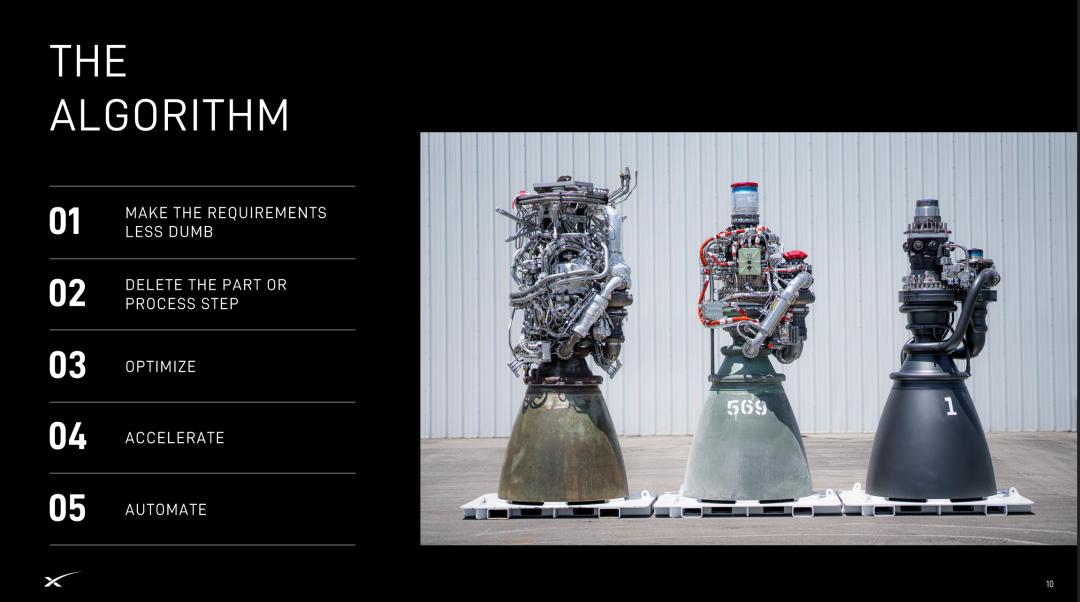
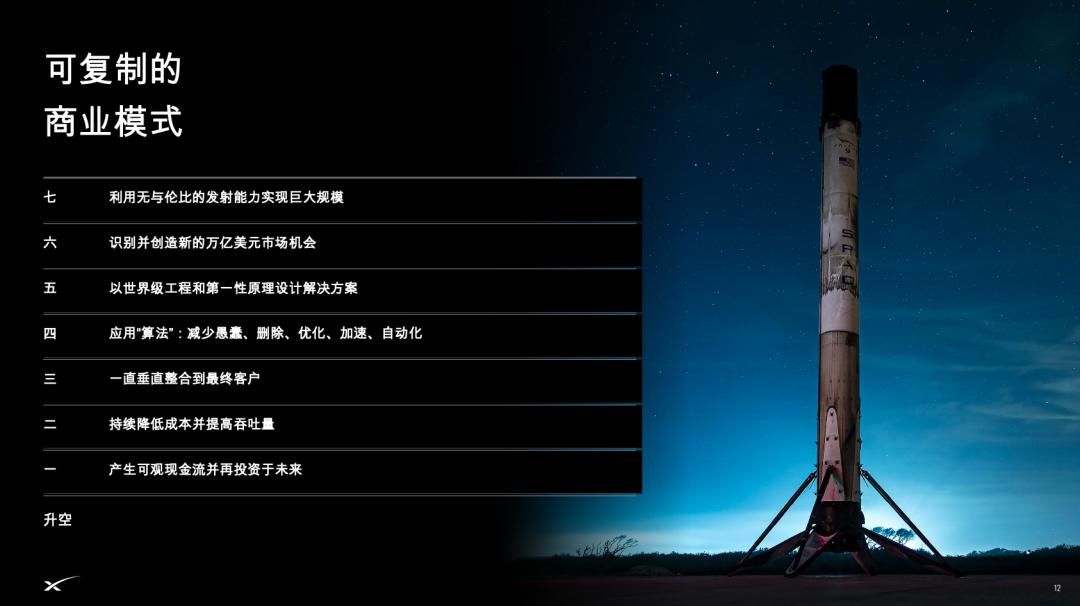
In a very Musk - style way, SpaceX has attached a five - step working method: Streamline redundant requirements, eliminate ineffective components and processes, optimize comprehensively, speed up operational efficiency, and automate the entire process.
SpaceX emphasizes that under such a complete system, its business model is replicable.
△
Greater Opportunities Unleashed by AI
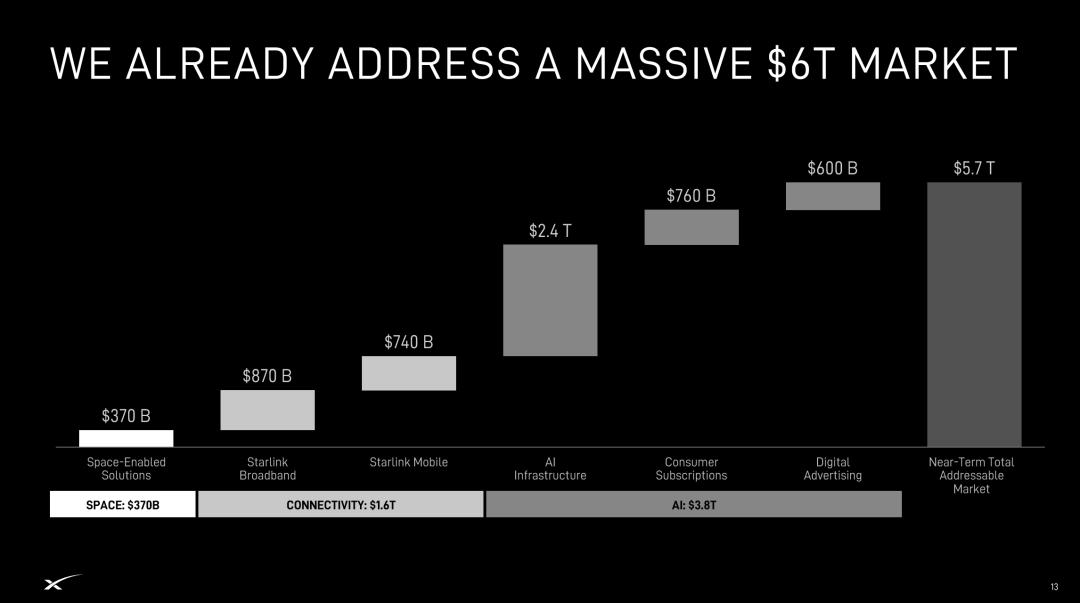
Based on the three major business segments, SpaceX has already covered a $6 trillion market.
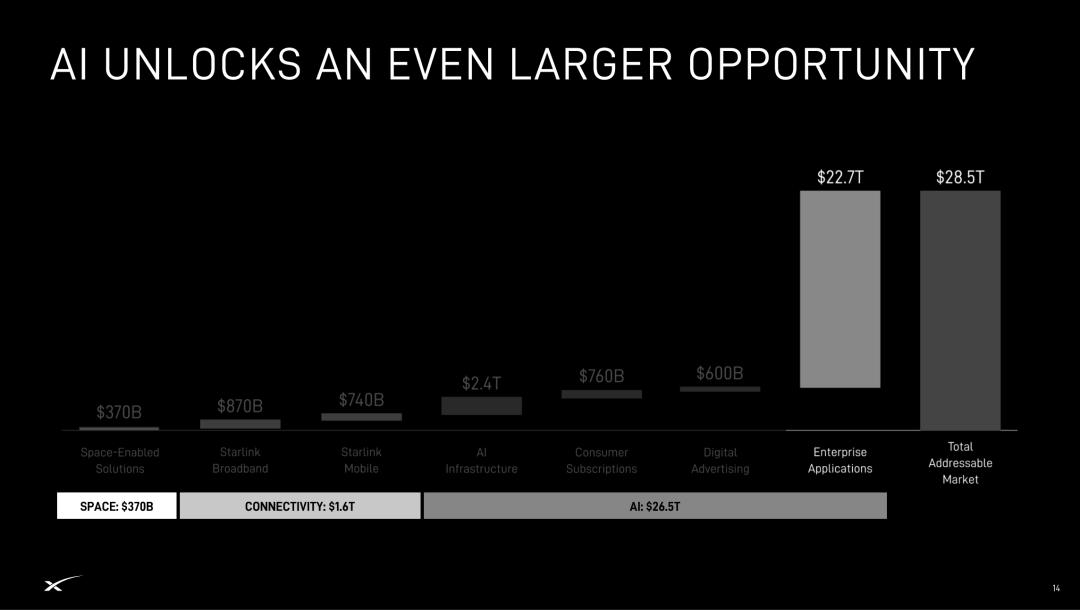
Moreover, AI is bringing even greater opportunities. In the long run, SpaceX believes it will cover a $28.5 trillion market, of which AI accounts for $26.5 trillion.
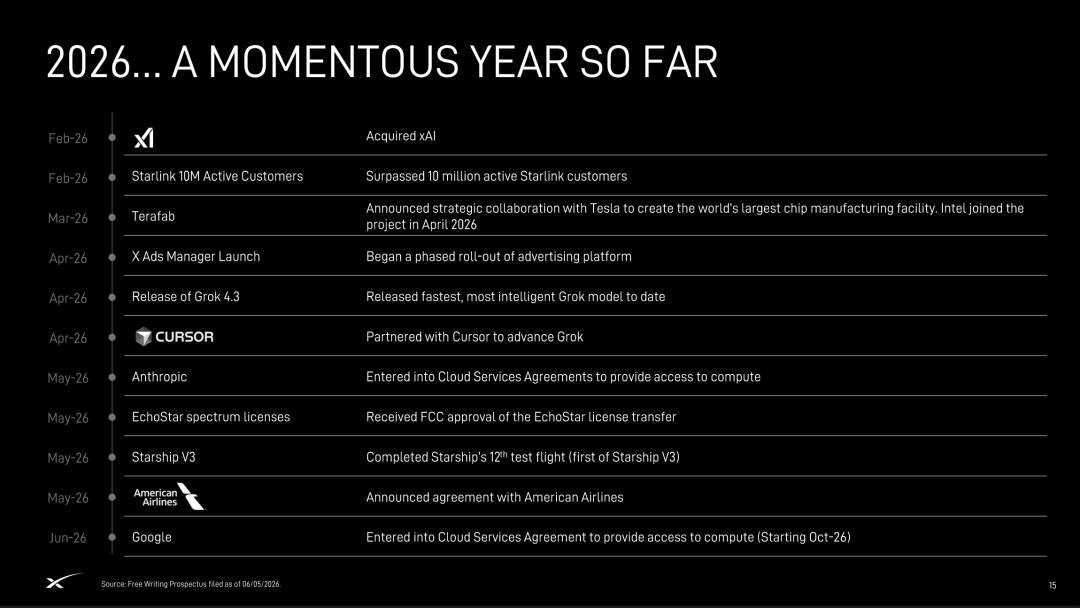
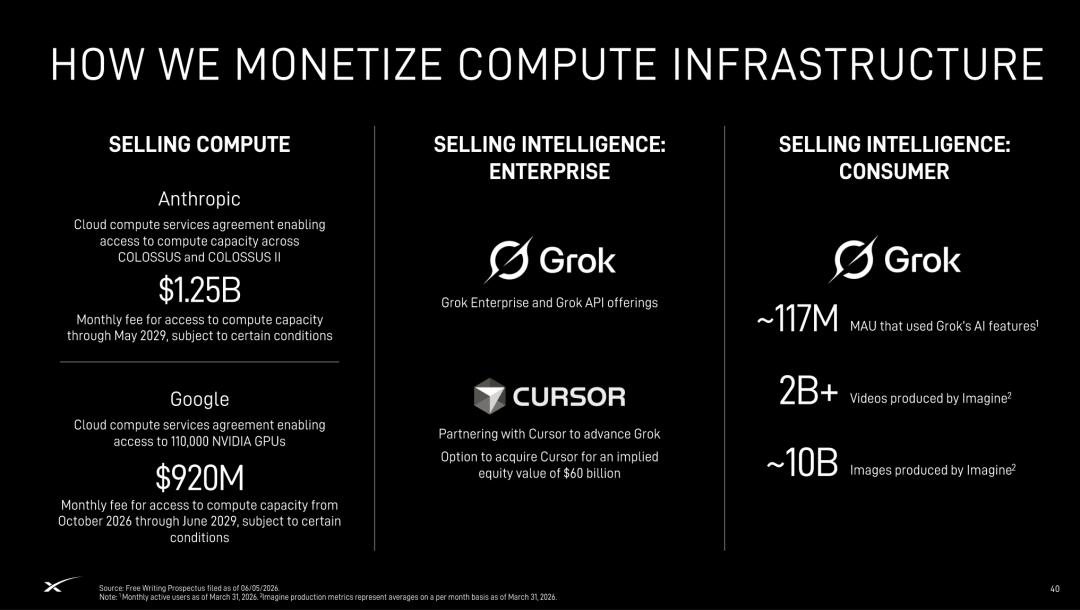
Therefore, 2026 is crucial for SpaceX. Acquiring xAI, collaborating with Tesla to build the world's largest chip factory Terafab, absorbing the technical strength of Cursor, and signing computing power service agreements with Anthropic and Google... All the measures taken this year are now explained.
In the next two years, SpaceX plans to achieve the following goals. The key point: Start developing space AI computing power in 2028.
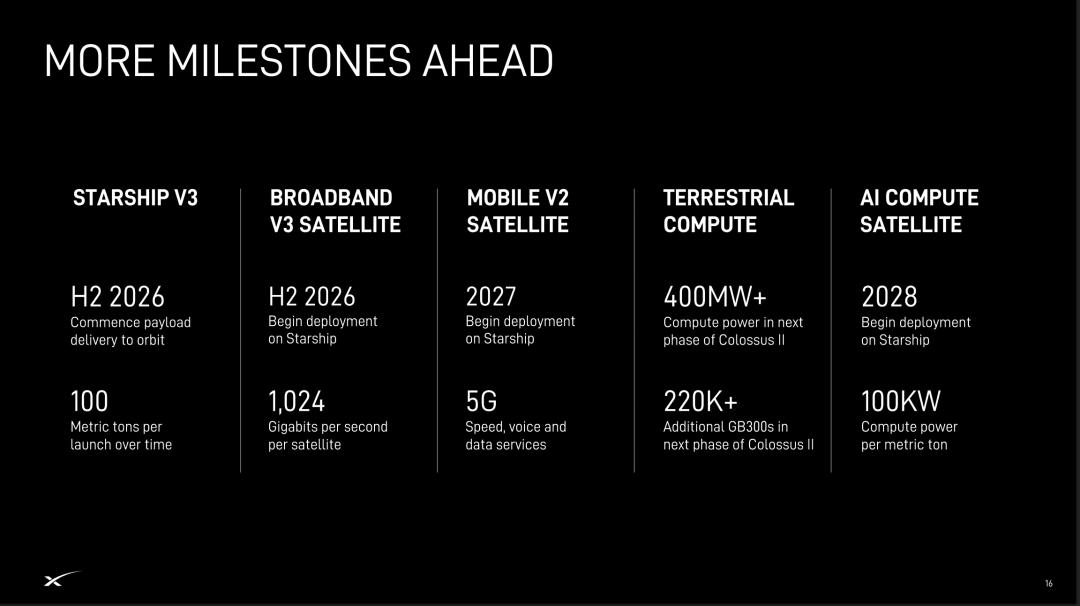
Roadmap for Orbital AI Computing Power
In the specific business layout, it is important to note that this roadshow PPT reveals SpaceX's roadmap for orbital AI computing power.
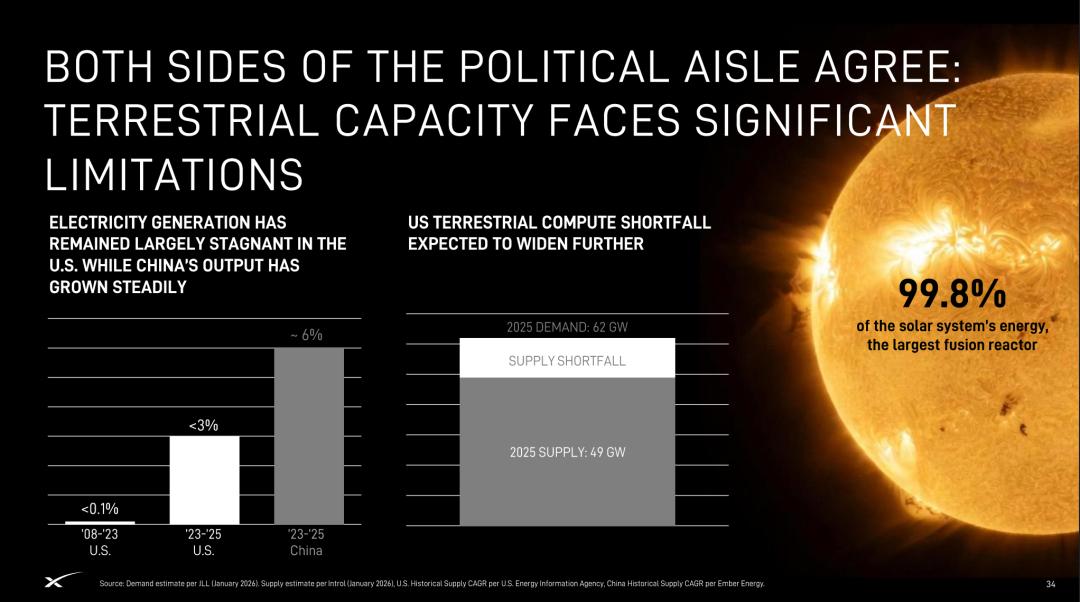
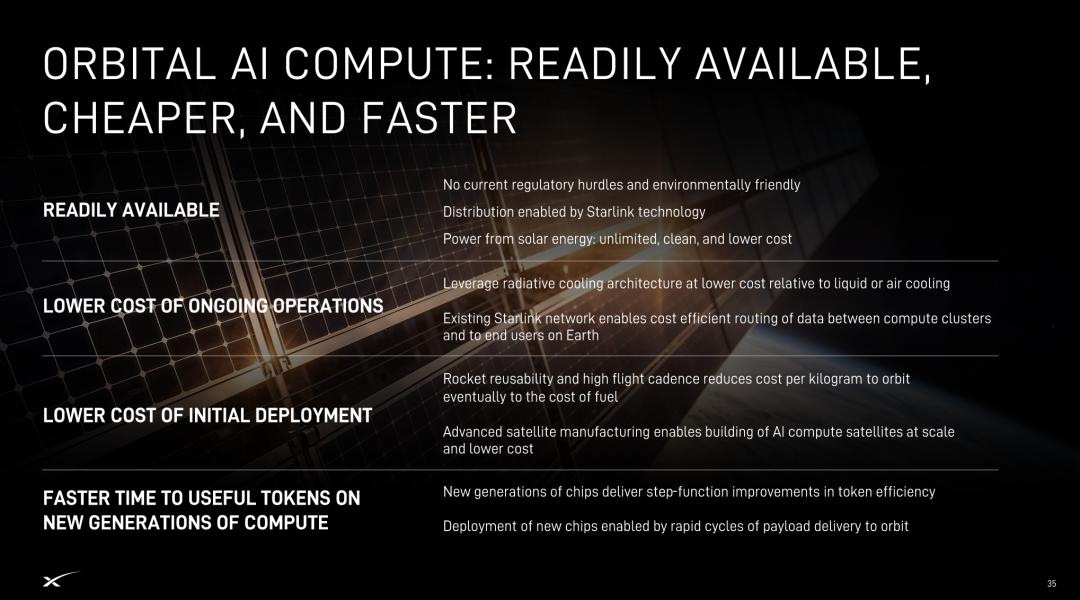
SpaceX already has the key technical capabilities to achieve space computing power deployment:
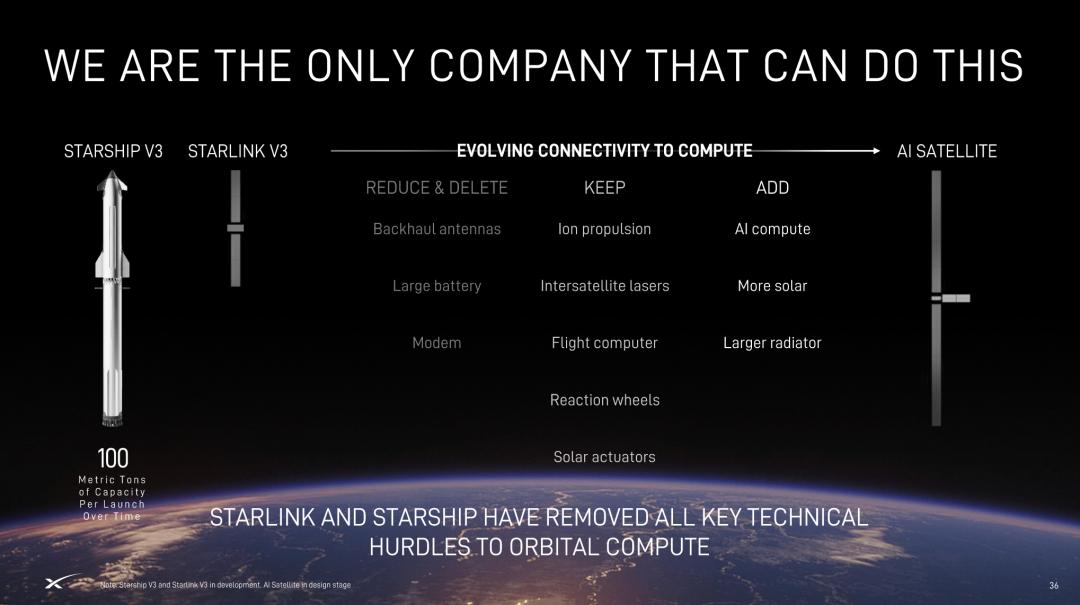
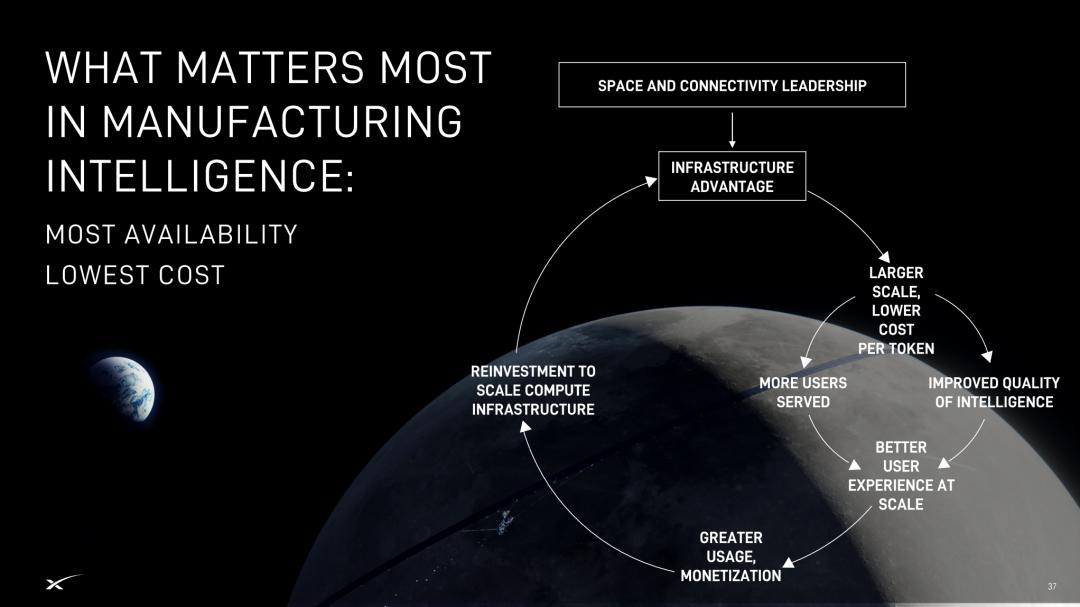
When the orbital AI computing power link is in place, a new flywheel for SpaceX will be formed:
The leading position in space and communication capabilities will bring advantages in AI infrastructure, and then result in more available computing power and lower token costs. As a result, AI intelligence will be further enhanced → the experience of a large number of users will improve → more users will be served → there will be more usage and better commercialization → the money will continue to be invested in computing power infrastructure → the advantages of AI infrastructure will be strengthened.
How the $1.77 Trillion Valuation is Derived
In terms of infrastructure, through a series of integrations with xAI and others, SpaceX has already achieved market layouts in computing power itself, enterprise - level intelligence, and consumer - level intelligence.
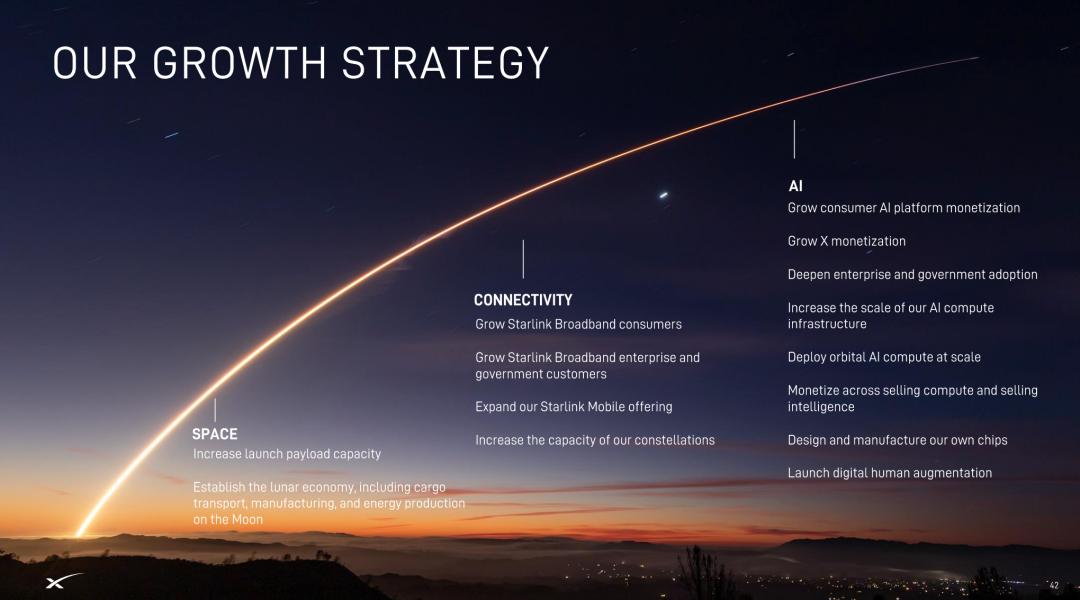
However, the key to supporting the $1.77 trillion valuation lies in the "future".
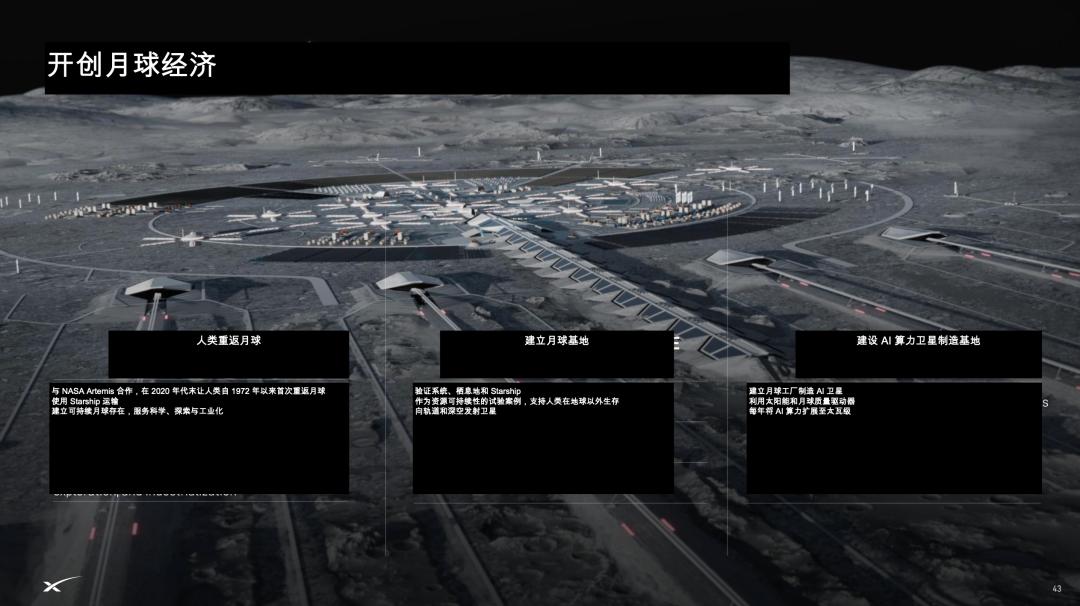
This includes the outlook on the lunar economy under the trinity foundation of space, communication, and AI.
△
And there are more new market opportunities in the vast expanse of the universe.
