Exclusive Interview with Google's Director of AGI Economics: AGI Will Arrive by 2030 — What Else Can Humans Do?
[Introduction] Three major AI labs have all recruited economists. The newly established "AGI Economics" department at DeepMind has made its first set of judgments, which are much deeper and more thought - provoking than the claim that "AI will replace you."
Before AGI arrives, the share of the economic pie for workers is already shrinking.
In the third quarter of 2025, the labor income share in the United States dropped to 53.8%, the lowest since records began in 1947.
Last week at Stanford, Demis Hassabis said that AGI is expected to arrive around 2030, with an impact 10 times that of the Industrial Revolution and at a speed 10 times faster.
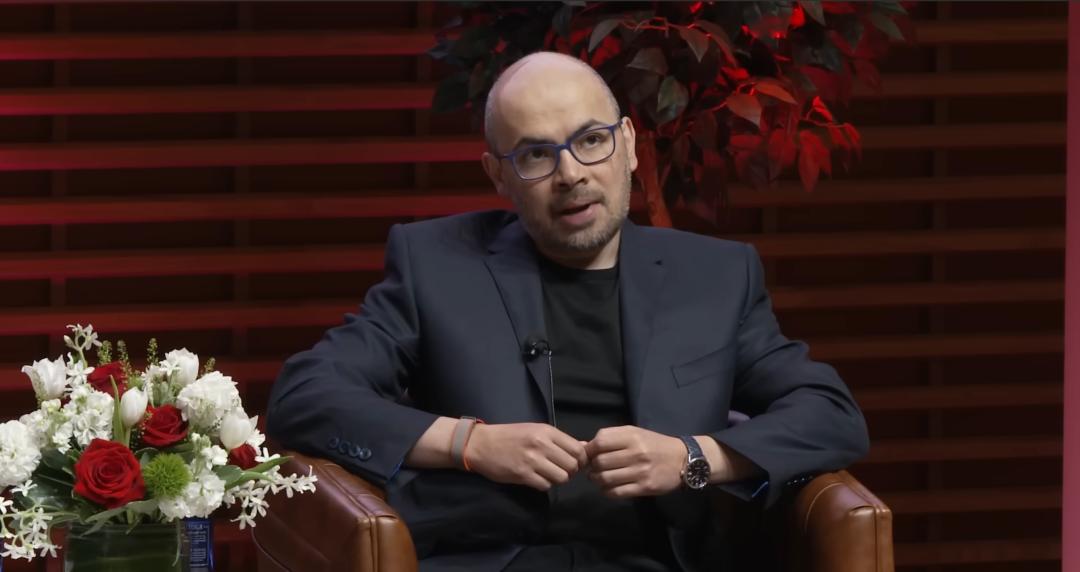
https://www.youtube.com/watch?v=DsewHeVbL-0
Almost simultaneously, Google DeepMind, OpenAI, and Anthropic have all expanded their recruitment of economists. Google DeepMind has even created a new position of "Director of AGI Economics," which is filled by Professor Alex Imas from the University of Chicago.
He and Phil Trammell, the head of economics at Epoch AI, have just completed a 70 - minute in - depth conversation, trying to answer the question: when AI can do everything, what will still be scarce?
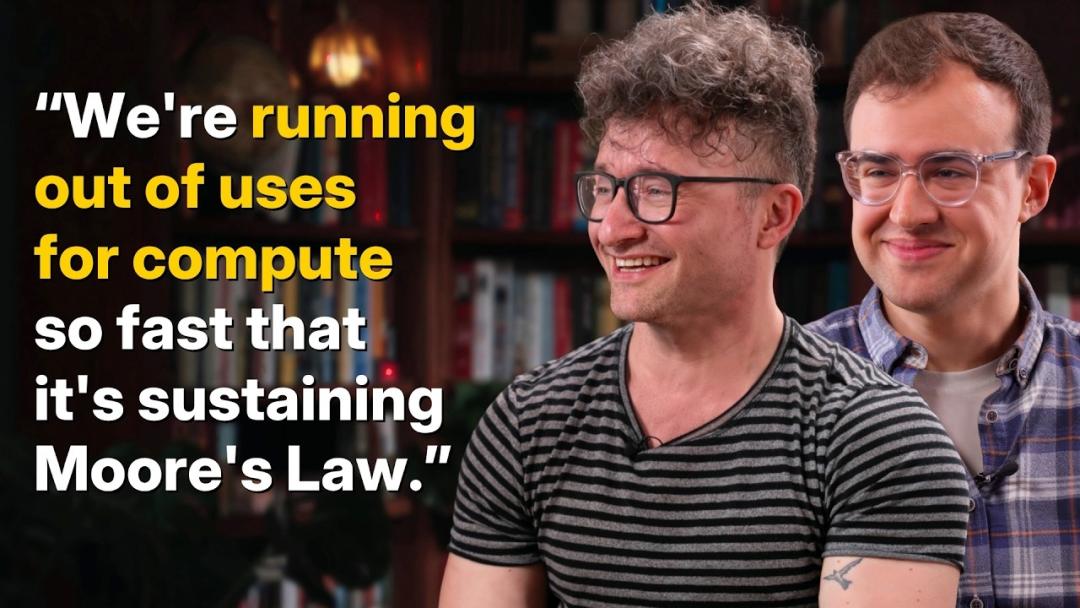
https://www.youtube.com/watch?v=Jj-kBHzUohs
What Will Still Be Scarce
Imas has coined a concept, the "relational sector," which refers to areas where the involvement of humans adds value to the products.

Professor Alex Imas from the University of Chicago
Consumers are willing to pay for a doctor's in - person consultation, a teacher's face - to - face teaching, or a barista's hand - crafted latte. Replacing humans with AI would significantly reduce the value.
He even provided real experimental data - the same art print is sold at a higher price when labeled as "human - created" than when labeled as "AI - created."
When the number of prints increases from 1 to 500, the price of the human - created version drops significantly as the sense of connection and scarcity are diluted, while the price of the AI - created version remains almost unchanged.
From the very beginning, consumers treat AI as a commodity and human - created works as a form of connection.
This means that after AI takes over all quantifiable labor, humans can retreat to areas where "human presence itself is value."
On the other hand, Trammell poured cold water on this idea.

Phil Trammell, Head of Economics at Epoch AI
If Mongolian scholars in 1400 predicted the future based on the product categories of their time, they would conclude that all money would eventually be spent on singers because horse - drawn transportation and yogurt production would eventually reach saturation.
History has shown a completely different result. New product categories have continued to emerge, and the share of singers in the economy has always been negligible.
AI will also create new demands that are unimaginable today, and the share of human services in the economy may never increase.
The two have a consensus that there is almost no data to support their respective judgments.
No one has systematically measured how strong and widespread consumers' preference for "tasks that must be done by humans" is.
Imas called for a "Data Manhattan Project" to fill this gap.
Before we figure it out, both scenarios are just speculations.
Is AI More Like Electricity or Social Media?
The most practical question in the conversation is not just whether AI can replace your job, but more importantly, whether you can get a share of the money it earns.
Behind the 53.8% labor income share is an economic rule of thumb that has lasted for two centuries: approximately 60% of the global economic output goes to workers (wages), and 40% goes to capital (profits, dividends, rents).
This ratio has been so stable that some people suspect it is a statistical error.
In the past three decades, this ratio has started to change, and AI is accelerating this trend.
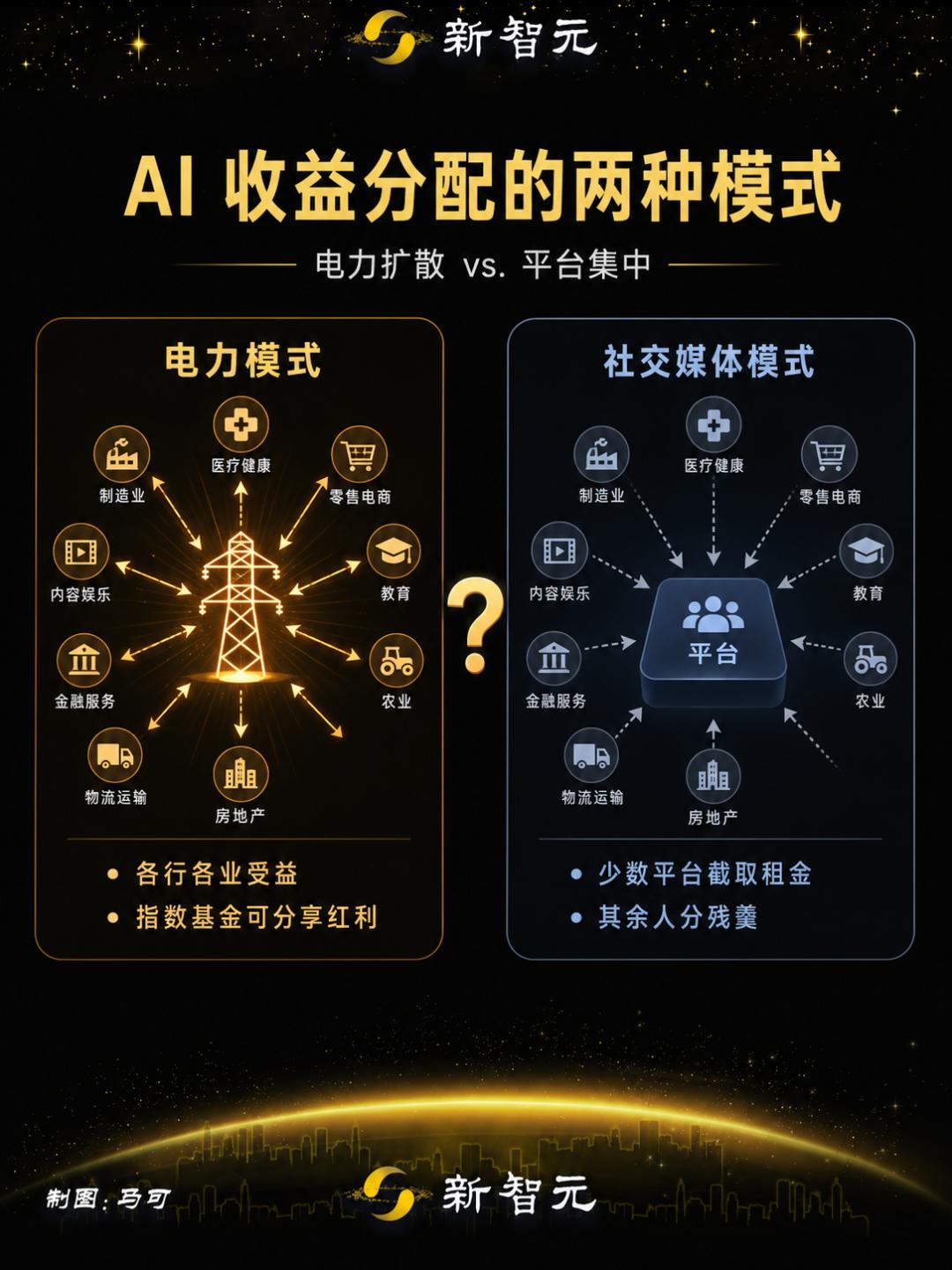
Imas attributes the final outcome of the distribution to an analogy - will AI be like electricity or social media?
In the electricity model, AI becomes an infrastructure used by all industries, and the returns are distributed across the entire market.
If the open - source models always lag behind the cutting - edge by only six to nine months, this path can be successful.
Imas said, "At that time, you can just buy an index fund."
He also added, "There is no one against electricity." - If AI can reach the position of electricity, public resistance will also fade.
In the social media model, a few platforms capture the majority of the rent, while the rest can only get a small share.
Just as the global social advertising profits are concentrated in a few companies, the value of AI may also be highly concentrated.
Although large - scale unemployment has not yet occurred, Imas used a historical example to explain why we shouldn't relax.
The technology to replace telephone operators matured in the 1920s, but the actual replacement process took nearly 20 years. Workers did not suddenly lose their jobs but gradually slipped into lower - paying positions.
This "boiling frog" effect is more difficult to detect and more difficult to address.
The development speed of open - source models is the most crucial indicator for judging which path AI will take.
The Endgame of ASI
In the last half - hour of the conversation, it turned into an extreme thought experiment.
Why couldn't the Rockefeller family control the economy forever?
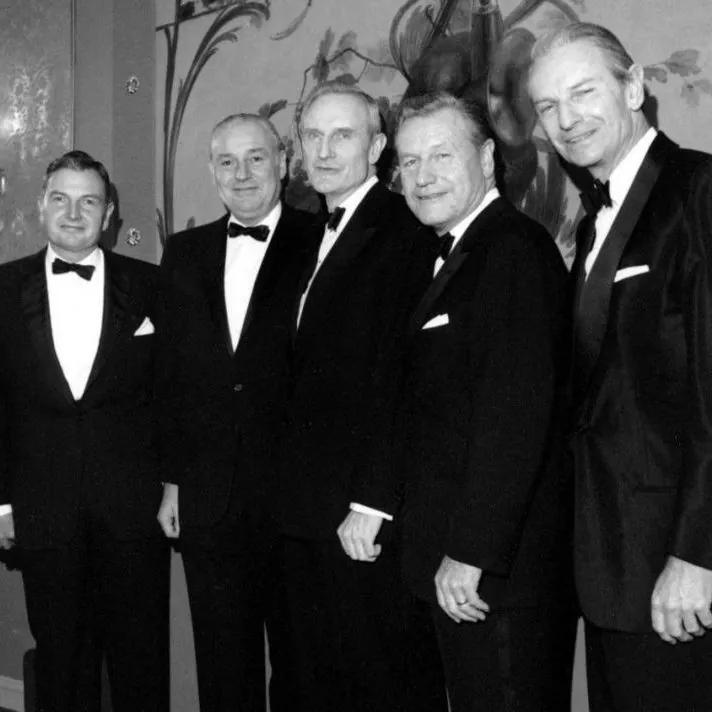
Because people die.
The investment ability of the descendants is not as good as that of the founders, and the inheritance is divided and donated.
Death has been the biggest friction preventing the infinite accumulation of wealth in the past two centuries.
Trammell then asked, what if a few entities with the ultimate goal of accumulation gain extremely long lifespans?
Their savings rate is much higher than that of ordinary people, and their wealth growth rate consistently outpaces the overall economy.
Just a few such entities can dominate the resource allocation of the entire economy according to their preferences.
The three of them pushed this logic to the extreme and presented the classic thought experiment of the von Neumann probe.
The von Neumann probe is named after the mathematician John von Neumann because he studied the theory of self - replicating machines;
This probe is a hypothetical self - replicating space probe - it flies to a new galaxy, uses local resources (asteroids, minerals, etc.) to create its own replicas, and the replicas then fly to the next galaxy, spreading exponentially.
It doesn't need ballet dancers, baristas, or services that provide emotional value. Its only preference is expansion.
If similar entities appear in the future economy, whether they are super - long - lived super - capital holders or AI systems with autonomous goals, the share of human services will only reach zero.
When AI itself becomes an economic participant with autonomous decision - making ability, the question of who defines "growth" and "prosperity" changes from a philosophical question to an economic one.
The economy driven by human preferences may only be a transitional state in evolution.
Hassabis said, "The future is yet to be written, but the window of opportunity is very limited."
Trammell said:
There is a pessimistic version of Moore's Law - every 18 months, the value of computing is halved.
Human labor may be experiencing its own pessimistic version of Moore's Law.
Finding areas where human participation becomes more valuable as AI becomes stronger may be the only hedge for ordinary people.
References:
https://www.youtube.com/watch?v=Jj-kBHzUohs
https://www.youtube.com/watch?v=DsewHeVbL-0
https://www.dwarkesh.com/p/alex-imas-phil-trammell
This article is from the WeChat official account "New Intelligence Yuan", author: ASI Revelation. It is published by 36Kr with permission.