AI headphones are understood by professionals, and the barrier lies in integrating into workflows
How much have you spent on AI tools recently?
It could be a transcription membership, a recording time card, a subscription to a large - language model, or a tool that helps you organize meeting minutes.
After AI entered the workplace, many changes haven't been incorporated into company processes yet, but they have already shown up on personal bills.
The popularity of AI headphones coincides with this overflow of efficiency - related spending.
Putting aside the distant imagination of new interfaces, the aspect of AI headphones that is more easily understood by users lies in the daily voice tasks that professionals have to handle: not understanding clearly, not recording completely, and not expressing clearly.
These needs aren't flashy, but they are close to daily life.
AI headphones leverage the existing wearing habit and place AI right at the scene where the sound occurs. Thus, they present a more verifiable reason for purchase.
This also leads to the next question: When these basic capabilities gradually become standard, what's more worth watching for AI headphones is whether they can follow a voice and integrate into the subsequent, longer - term work.
01 After the tide of imagination recedes, what remains is the verifiable voice capability
While all hardware is trying to reshape the interaction interface, the popularity of AI headphones no longer relies on concepts to support it.
In the first quarter of 2025, the global shipments of TWS headphones reached 78 million units, a year - on - year increase of 18%. During the same period, Lotu Technology monitored that the sales volume of AI headphones on major domestic e - commerce platforms reached 382,000 units, a year - on - year increase of 960.4%, and the sales scale has exceeded that of the whole year of 2024. Traditional audio brands, mobile phone manufacturers, translation device companies, and even Internet giants are all rushing to embed AI into headphones.
However, looking beyond the bustling appearance, the real changes worth noting are actually more restrained.
AI headphones haven't become the all - powerful in - ear super assistant presented at product launches. Instead, the capabilities that have been successfully implemented first are highly concentrated on specific tasks such as translation, transcription, and noise reduction.
This is not a coincidence.
Headphones can intervene immediately during calls and meetings. In real - world work, AI headphones first address three types of voice - related problems:
First, it's the language time - lag in "understanding".
Real - time translation is a natural scenario for headphones to enter. Brands like Timekettle and iFlytek have long targeted international conferences, business negotiations, and foreign trade exhibitions. In the product introduction of Timekettle's W4 Pro, the scenarios have been extended to phone calls, audio - video, and online meetings, and the translation results can further generate meeting summaries and review records. What these products are betting on is not how new the "translation" technology is, but the small yet crucial losses in cross - language communication. Failure to understand can lead to missed requirements, and a slight delay can disrupt the rhythm. Bringing translation right to the ear essentially means regaining the time difference in the communication process.

Image source: Timekettle
Next, it's the laborious post - meeting work of "recording".
Interview transcription, meeting minutes, and to - do item extraction constitute the most cumbersome voice tasks of the day. Products like viaim are clearly positioned: they directly target meetings and phone calls, convert recordings into text, and then generate summaries and to - do lists. The core change is not just an additional recording entry, but rather pinning the recording action to the scene where the sound occurs. What consumes people the most in a meeting is often not the meeting itself, but the time spent piecing together scattered information after the meeting.
Finally, it's the "clarity" in speaking.
Call noise reduction is an old topic, but AI has re - anchored it to efficiency. In subways, exhibition halls, and open - plan offices, whether a call can be clearly received by the other party directly determines whether collaboration will go awry. Anker's Soundcore Liberty 5 Pro series uses AI chips for active noise reduction and call clarity, and the Pro Max also integrates recording, transcription, and action item extraction into the charging case.
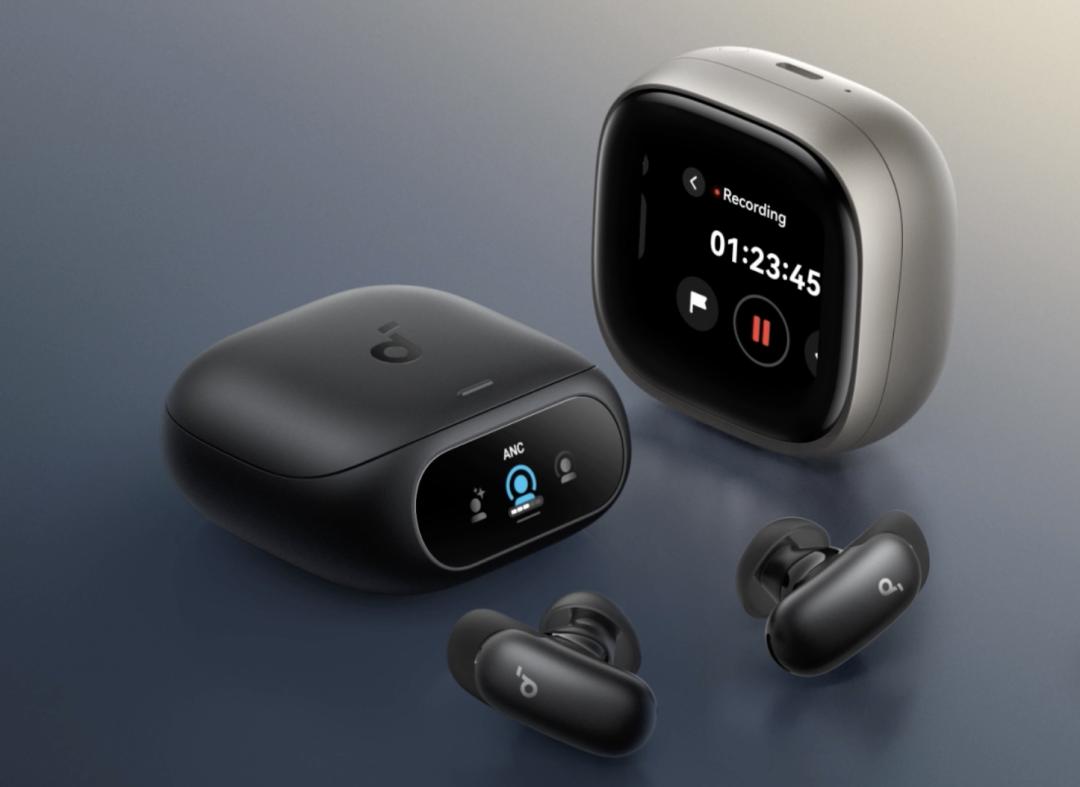
Image source: Soundcore
Understanding, recording, and speaking clearly all point to the same thing: The value of traditional headphones lies in the auditory experience, while the extra value of AI headphones is realized after the sound ends.
The imagination of new interfaces can be left for the distant future. AI headphones have first proven a smaller and more specific point: When voice becomes a work burden, those who are willing to pay first are often the ones who sift through a large amount of voice information every day.
02 The self - funded efficiency of professionals is taking on a hardware form
There is an unspoken understanding in today's workplace - spending one's own money to buy work efficiency.
A recent survey by the Massachusetts Institute of Technology (MIT) pointed out that although only about 40% of companies provide formal AI tool support, in over 90% of companies, employees are already using personal AI tools spontaneously. Zhaopin data shows that nearly 80% of professionals use AI tools at work. This phenomenon known as the "Shadow AI Economy" is essentially the lag in corporate technology adoption, which quietly shifts the systematic efficiency gap to individual professionals.
When professionals are strongly willing to pay for efficiency, this overflowing consumption will naturally flow along the workflow to tools that are closer to the work scene.
AI headphones happen to target the most complex part of the workplace: voice tasks.
The profile of the first - wave buyers is not vague. iFlytek's AI translation headphones are mainly for business negotiations, international conferences, and overseas work and study, while its meeting headphone series solves the problems of "forgetting during meetings and finding it troublesome to organize". The real users in the reviews are foreign trade workers who travel across borders, meet clients in the morning, visit factories in the afternoon, and connect with domestic teams for reports at night.
In such positions, voice is not just background noise but work material. Behind each conversation, there may be requirements, responsible persons, and next steps.

Image source: pinterest
But digging deeper into this logic: Why does it have to be headphones to handle these voices? Why not a mobile app, a professional AI voice recorder, or those more stylish AI brooches and AR glasses?
The core lies in the extremely low action cost and its proximity to the sound source.
Mobile apps require unlocking, searching, and clicking, which can be a hindrance in fast - paced communication. Professional AI voice recorders or recording pods, although accurate in sound collection, are still "external" devices that need to be taken out and placed in position. As for new forms like AR glasses, most are currently limited by weight, battery life, and a more obvious sense of social intrusion.
In contrast, the special feature of headphones is that they are already on - site. As long as they are worn on the ears, they are at the physical location where the sound occurs. They don't require extra attention to start or aim at the sound source and are closer to a seamless standby state.
The smartest thing about AI headphones is that they don't require users to establish a whole new set of interaction rules but instead hide AI in an already - accepted daily action.

Image source: viaim
The workplace doesn't believe in romanticism. The reason AI headphones have attracted attention is that in the most voice - intensive environment, they can address the most urgent real - world needs of professionals with minimal friction.
However, whether this momentum can last depends on whether they can follow a voice and integrate into the subsequent complex workflow.
03 Basic functions will become widespread, and the workflow is the real barrier
Once headphones start to actively process information, the business is no longer just about selling hardware.
Traditional headphones are often a one - time purchase, while AI headphones provide continuous cloud services. Whether it's iFlytek Tingjian's charging method that combines free quotas, time - based packages, and membership subscriptions, or Plaud, which has over 2 million users and offers a 300 - minute monthly quota in its basic plan and requires users to purchase higher - level plans after exceeding the quota, all reveal an objective reality: As long as voice processing relies on cloud services, the costs of computing power, storage, bandwidth, and operation and maintenance will make it easier for manufacturers to adopt a continuous - charging model.
Many translators promote "two - year free data" as a selling point, which also reminds users that cloud - based translation and voice processing are never free.
However, this transitional model of "one - time hardware purchase and monthly AI subscription" is facing a silent takeover by system - level capabilities.
In the fall of 2025, Apple integrated Live Translation into its AirPods system and made it backward - compatible with some older models; Google's Live Translate also further expanded across platforms to the iOS and Android ecosystems. As Apple presented in its release of Apple Intelligence, the native solution is: "Powerful intelligence must be deeply embedded in the system's underlying layer and based on individual contexts." System - level players are more likely to package these basic capabilities into their existing ecosystems and spread the costs of models, devices, and services across a large user base.
In this trend, transcription, translation, and summarization will gradually become standard features of operating systems, office software, and large - language model applications. If independent AI headphones still rely solely on single - point functions to justify their premium, their moat will quickly narrow.
What can truly form a barrier is integrating from single - time dictation into a more complex workflow.
Ma Xiao, the CEO of Future Intelligence, said at the launch of the viaim iFlytek Intelligent Agent Headphones: "What users really need is not more scattered functions but a work system that can continuously receive, process, and produce results from information." The "project" function launched by viaim this time centralizes multiple recordings, external audio, and document materials under the same project, client, course, or research topic in one space, enabling AI to understand not just an isolated recording but the continuously accumulated context.
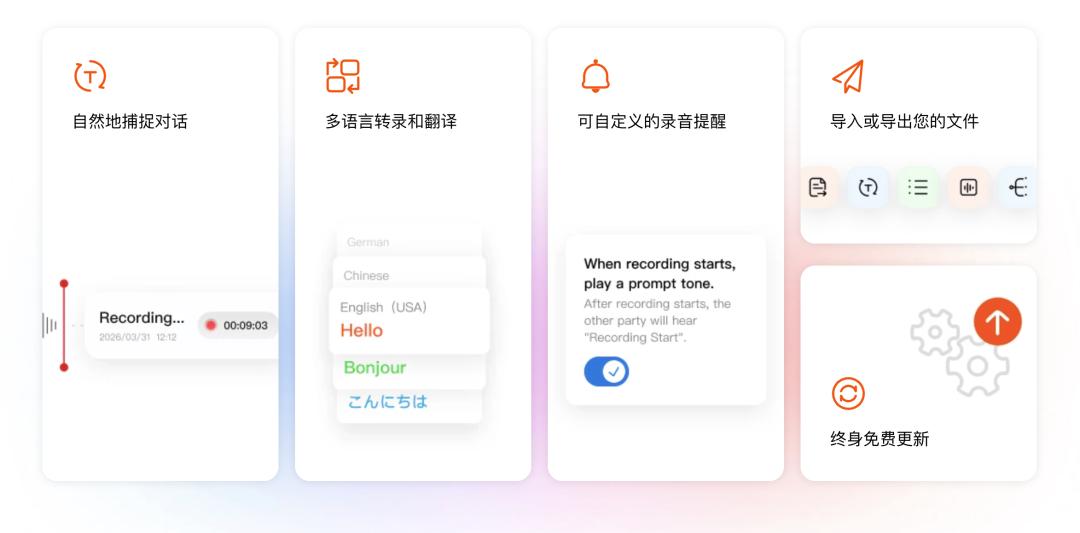
Image source: viaim
Of course, all high - level capabilities cannot be separated from the hardware foundation.
For professionals who need to wear headphones during their daily commutes and consecutive meetings, if the sound quality is poor, the connection is unstable, or the wearing experience is uncomfortable, even the smartest AI will be left unused. Hardware is always a business where the weakest link matters. A physical flaw is enough to wear down users' long - term patience.
Basic functions will be gradually absorbed by the system, but each person's real - world workflow won't easily yield to a pair of headphones.
In the end, what AI headphones compete on is not the concepts presented at product launches but the ability to provide stable results in a real, noisy environment and smoothly integrate into the daily work chain that professionals rely on.
What they need to handle is not just the voice but also the real tasks behind it.
In the past decade or so, the evolution of consumer electronics has always been about competing for users' attention and hands. Screens are getting brighter, and information flows are getting denser. The emergence of AI headphones seems to offer an opposite possibility - they are close to the body but try not to be intrusive.
Professionals spending their own money on efficiency ultimately want to buy back some certainty in the increasingly fast - paced work.
However, it's worth examining that AI hardware shouldn't just be a tool to push individuals towards an even faster pace. When transcription and summarization become effortless, the mission of the tool shouldn't just be to make the over - loaded operation seem normal.
Technology pursues efficiency externally but should ultimately return to enriching life internally.
This may be the most valuable essence beneath the hustle and bustle of the hardware wave.
This article is from the WeChat official account "AI Things Are Heating Up", author: Shen Ziyan. Republished by 36Kr with permission.