100,000 km with 97% battery health: CALB and Harmony Intelligent Mobility's "Giant Whale Battery Platform"
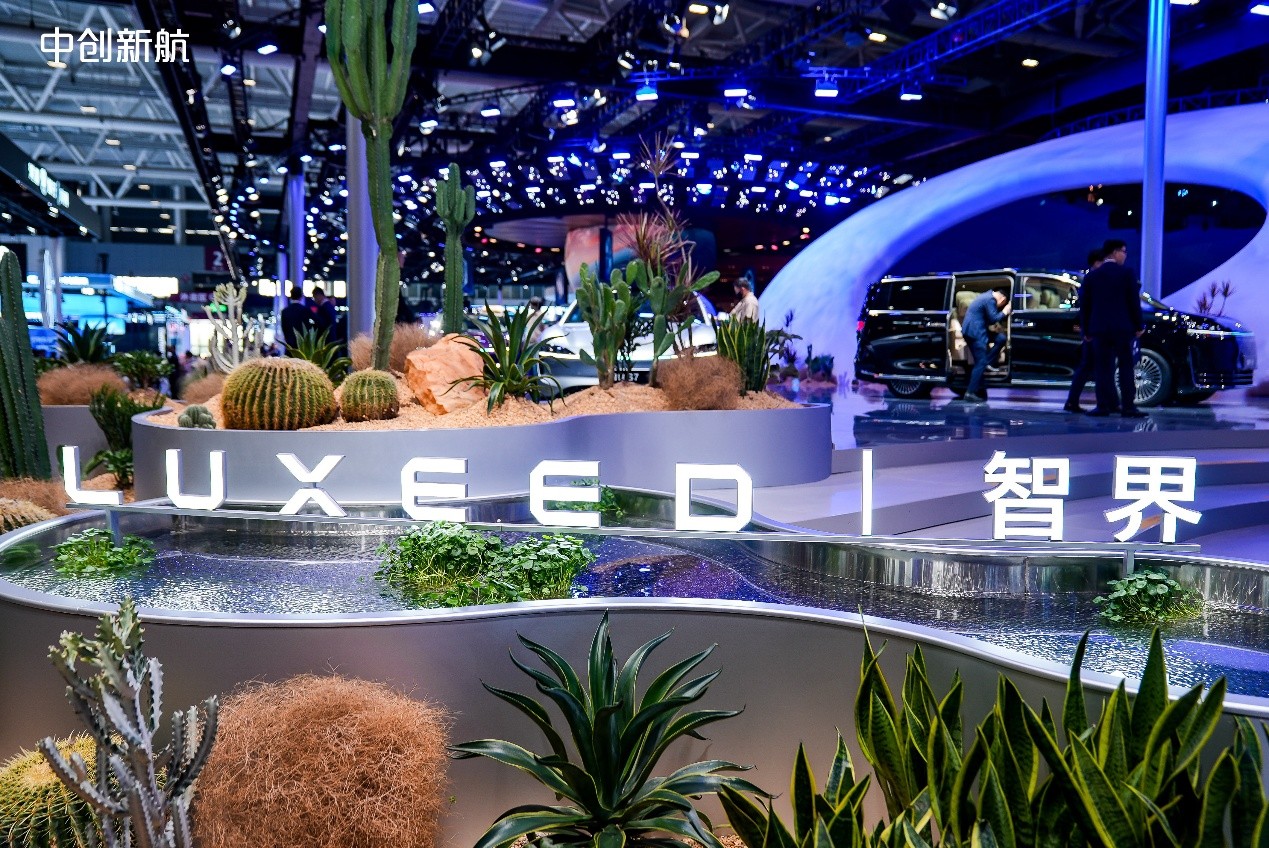
On the opening day of the 2026 Guangdong-Hong Kong-Macao Greater Bay Area Auto Show, there was not a single competing model in Hall B2 of the Shenzhen International Convention and Exhibition Center. Hongmeng Zhixing took over the entire hall, and more than fifty exhibition vehicles were on display - from the 150,000-yuan Shangjie H5 to the nearly one-million-yuan Zunjie S800, from extended-range to pure-electric vehicles, from shooting brake coupes to full-size flagship MPVs. An ecosystem covers all mainstream vehicle categories.
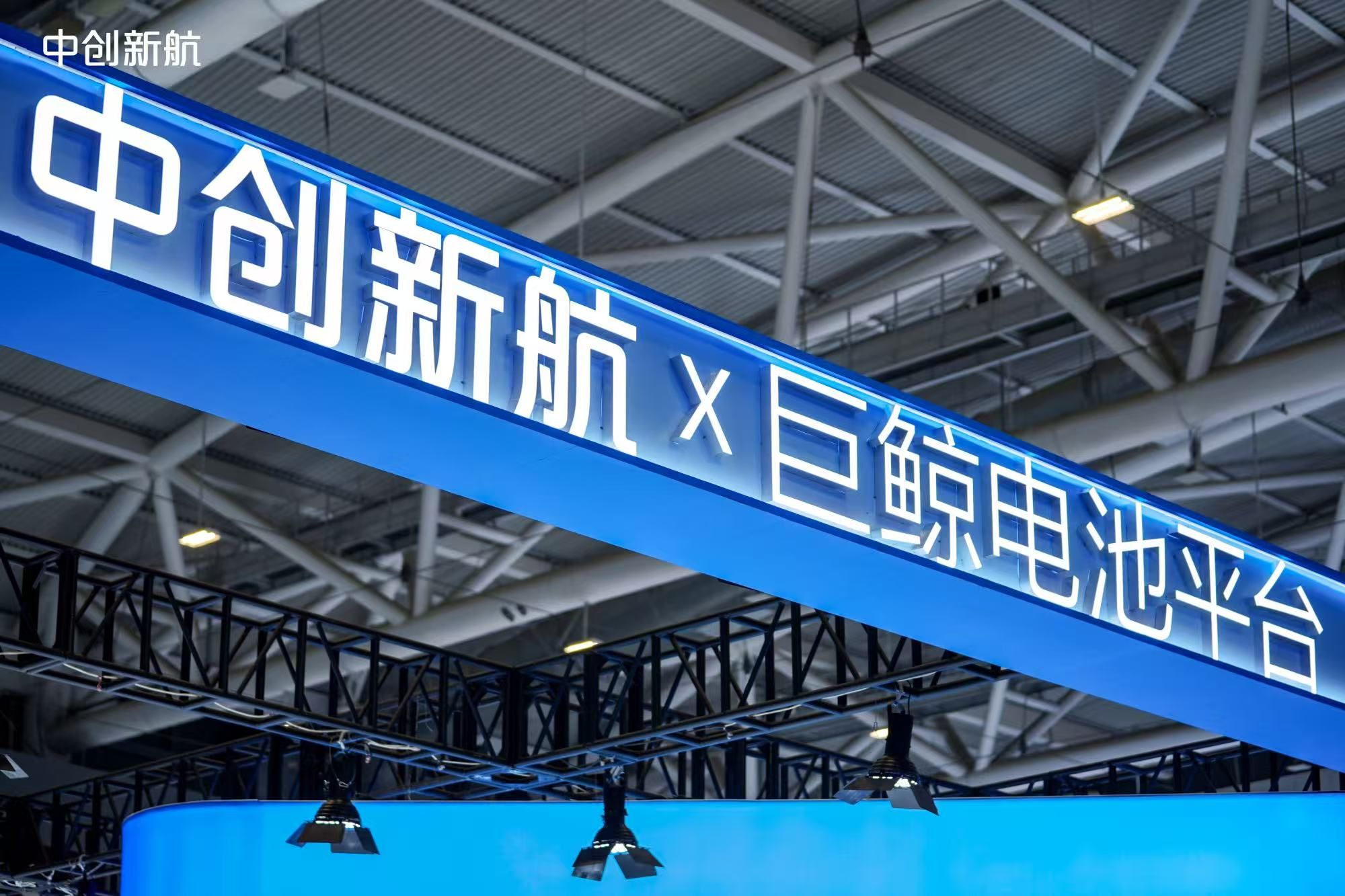
Different from the previous strategy of automobile manufacturers focusing on "new car premieres", this time Hongmeng Zhixing innovatively set up a core supply chain collaborative display mode in the exhibition hall, bringing the power battery suppliers to the forefront.
The signal is clear: Hongmeng Zhixing has made battery safety a technical infrastructure for the entire product line without grading, and is also actively showing the market how its battery partners meet the requirement that "safety is the greatest luxury".
The Logic of the "Giant Whale": Not "Buying Batteries", but "Setting Standards"
To understand what CALB means to Hongmeng Zhixing, one must first understand Huawei's cognitive framework regarding batteries.
In November 2023, Huawei first launched the "Giant Whale" 800V high-voltage battery platform at the AITO launch event. In just over two years, it has completed two iterations and upgraded to version 3.0. As of the beginning of this year, this platform has been installed in more than 1.3 million Hongmeng Zhixing vehicles, and over 150 million battery cells have maintained a safety record of zero spontaneous combustion. This means that Huawei's core requirements for battery suppliers are not about "meeting standards" or "quoting prices".
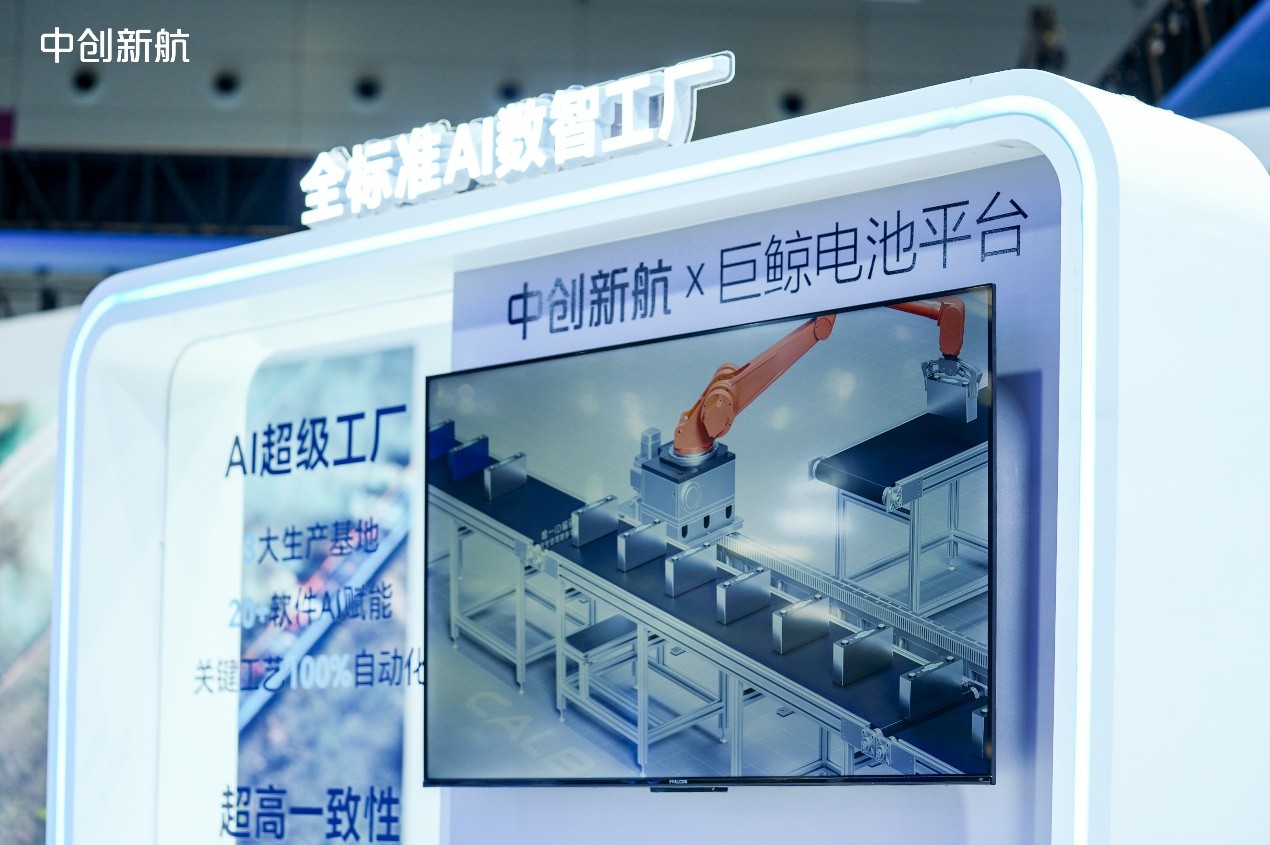
What they need is a partner that can rely on its self-developed strength to stably reproduce extreme consistency, withstand extreme verification far beyond national standards, and have the intelligent manufacturing ability to be traceable throughout the entire life cycle.
In this system, Huawei's core work is to define the safety indicators and technical access specifications for the battery system. Product R & D, process implementation, large-scale mass production, and batch quality control are all independently completed by the power battery manufacturers based on their own technologies and production line resources.
And CALB obviously has such capabilities.
"Whole-Vehicle-Level Testing" and "97% after 100,000 Kilometers": CALB's Data Narrative
As the latest technological coupe of Hongmeng Zhixing, the Shangjie Z7/Z7t is equipped with Huawei's Giant Whale battery platform across the entire series, and CALB is one of the battery suppliers.
In Hongmeng Zhixing's verification process, these batteries are not released after passing the national standards but are put through whole-vehicle-level extreme tests:
- Challenge of simultaneous and sequential scraping of the bottom by three balls: The bottom of the whole vehicle is subjected to complex surface impacts simultaneously. After a high-energy impact of 300 joules at the bottom, the battery system does not leak, catch fire, or have a cracked shell.
- The bottom of the whole vehicle is roasted by an open flame for 150 seconds and then left stationary for 12 hours: The battery system does not catch fire or explode, and the vehicle can still drive normally after roasting.
- The bottom of the whole vehicle is punctured and left stationary for 12 hours: The battery system does not catch fire or explode, far exceeding the national standard baseline.
Now let's look at the long-term empirical data.
If the extreme test is a victory in the "destructive experiment", then the data performance after service is directly related to the users' confidence in daily vehicle use.
A CALB ternary lithium battery pack that has served for 103,600 kilometers on the AITO R7, equivalent to the 5 - 8-year vehicle use cycle of an ordinary family, still has a health degree of 97% after testing - while the general expected range of battery health degree for 100,000 kilometers in the industry is only between 75.6% and 89.3%.
The significance of this figure is not just "durability". In the valuation model of second-hand electric vehicles, the battery health degree basically determines the residual value curve.
It means that the battery hardly becomes a shortcoming that drags down the vehicle's residual value during the entire vehicle use cycle - it takes another step towards solving the most difficult triangle in new energy vehicles: safety, range, and residual value rate.
Penetrating from the Flagship Downward: CALB's "Possibilities for the Entire Series"
Looking back at the starting point of this line, when the Giant Whale platform made its debut with the AITO S7 at the end of 2023, CALB had already supplied ternary batteries for the 82 kWh version; by March 2026, when the Shangjie Z7/Z7t was filed with the Ministry of Industry and Information Technology, CALB's name was officially written into the publicized supporting list of Hongmeng Zhixing's new vehicle series; and at this Greater Bay Area Auto Show, CALB and the Giant Whale platform appeared together.
The conclusion pointed to by this trajectory is clear:
CALB's entry into Hongmeng Zhixing is not an ordinary "short-listed procurement" but a deeply trusted relationship jointly confirmed by both parties after a long period of parallel verification, standard alignment, and mutual trust in production lines.
Once the underlying logic of this relationship is established - Huawei defines the platform standards, and CALB undertakes and solidifies the safety baseline with its "intelligent manufacturing" ability - then the extension to a wider product matrix of Hongmeng Zhixing is no longer a conjecture that needs to "prove feasibility" but an implementation issue of "when to promote".
After all, when a battery partner can achieve a 97% health degree after 100,000 kilometers, zero thermal runaway in six whole-vehicle-level extreme tests, and control the production line accuracy at the micron level - it is very likely to be locked in as the preferred choice.
At today's auto show, fifty Hongmeng Zhixing vehicles are densely parked in Hall 2. In the quietest corner, there lies the most thought-provoking footnote to this story:
In the future competition of electric vehicles, on the surface, it is an arms race of intelligent driving chips and cockpit ecosystems, but at the core, it is always about who can make that several-hundred-kilogram battery work safely and without dragging down the residual value for ten years.
And we also have reason to believe that as CALB is included in the Giant Whale platform series, its penetration rate in the entire Hongmeng Zhixing vehicle series will surely become higher and higher. In the future, we may see it on more new Hongmeng Zhixing models.