Between ten megacities, there is a frantic push to build high-speed railways.
01
The Second High - speed Railway between Guangzhou and Shenzhen Has Been Put on the Agenda
In the past two days, the "15th Five - Year" plans of Guangdong Province, Shenzhen City, and Guangzhou City have been announced successively. All three plans mentioned the same proposition: The Second High - speed Railway between Guangzhou and Shenzhen.
The "15th Five - Year" plan of Guangdong Province states that it will steadily promote... projects such as the Second High - speed Railway between Guangzhou and Shenzhen and the Guangzhou - Zhuhai (Macao) High - speed Railway. The "15th Five - Year" plan of Guangzhou City states that it will conduct research on the construction of... new channels for the Guangzhou - Shenzhen High - speed Railway and other projects. The "15th Five - Year" plan of Shenzhen City states that it will initiate the preliminary work on the Second High - speed Railway between Guangzhou and Shenzhen and the Shenzhen - Dongguan - Zengcheng Intercity Railway at an appropriate time.
All three plans emphasize one thing: in the next five years, efforts will be made to promote the research, planning, and application work of the Second High - speed Railway between Guangzhou and Shenzhen. This means that the question of whether to build the Second High - speed Railway between Guangzhou and Shenzhen has been resolved, and the next step is to determine the route.
Actually, the project of the Second High - speed Railway between Guangzhou and Shenzhen was included in the "Plan for the Connectivity of Infrastructure in the Guangdong - Hong Kong - Macao Greater Bay Area" issued by the National Development and Reform Commission in 2020.
The general route is to connect the three megacities of Guangzhou, Dongguan, and Shenzhen.
The slow progress is mainly due to the discussion on the route. Currently, the mainstream route starts from Shenzhen Airport East Station, passes through the central area of Dongguan, Baiyun Airport Station, and ends at Guangzhou North Station, and connects northward with the Guangzhou - Qingyuan - Yongzhou High - speed Railway, forming a new high - speed railway channel from Shenzhen to the north and southwest regions.
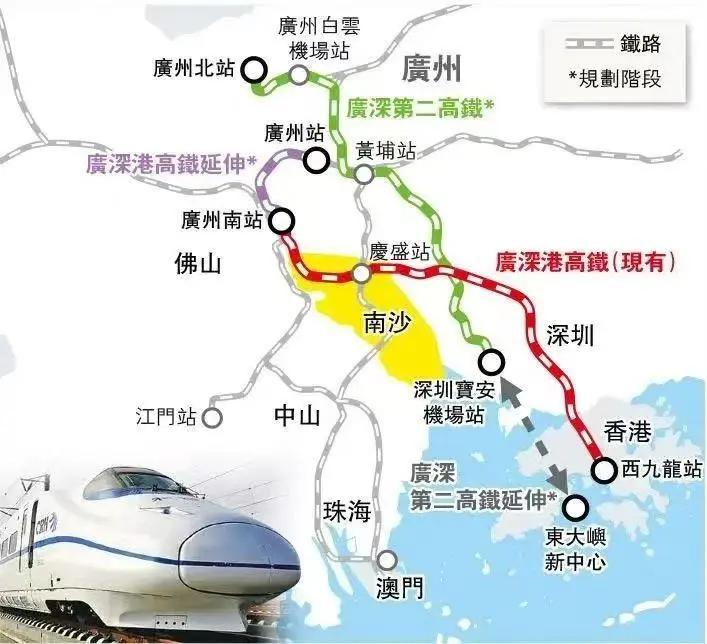
Dongguan is the most active. Dongguan wants to build Dongguan Central City Station relying on the Second High - speed Railway between Guangzhou and Shenzhen.
However, Guangzhou and Shenzhen have their own ideas. In particular, there are different demands regarding station location, route direction, and air - rail intermodal connection. In addition, since the route passes through the densely built areas in the Pearl River Delta, the difficulties and costs of land acquisition, demolition, and pipeline renovation are relatively high. The project is also conducting a comparison of multiple technical solutions between wheel - rail high - speed railways and high - speed maglev trains. Moreover, the sharing of cross - regional investment and financing and the division of operation rights and responsibilities have not been fully finalized. Multiple differences have continuously prolonged the preliminary demonstration period.
However, in the face of the increasingly saturated traffic flow, the construction of the Second High - speed Railway must be put on the agenda, which is also the fundamental reason clearly emphasized in the plans of Guangdong, Guangzhou, and Shenzhen.
This means that all problems will be solved in the next five years, and it is highly likely that the Second High - speed Railway between Guangzhou and Shenzhen will be applied for and construction will start within the next five years.
02
Megacities Are Desperately Building High - speed Railways
Compared with the Second High - speed Railway between Guangzhou and Shenzhen, the construction of high - speed railways between other megacities is significantly faster.
For example, between Chengdu and Chongqing: The Chengdu - Chongqing Middle - line High - speed Railway, which connects Chengdu and Chongqing, has entered the full - scale track - laying stage and is expected to open in 2027.

This high - speed railway starts from Chongqing North Station in the Chongqing hub, passes westward through Liangjiang New Area, Shapingba District, Bishan District, Tongliang District, and Dazu District in Chongqing, as well as Ziyang City and Chengdu City in Sichuan Province, and finally leads to Chengdu Station in the Chengdu hub. The total length of the main line is about 292 kilometers, and the designed speed is 350 kilometers per hour.
Although the designed speed is 350 kilometers per hour, the official revealed last year that the CR450 EMU, known as the "world's fastest high - speed train," is undergoing operational assessment on the Shanghai - Chongqing - Chengdu High - speed Railway. After the opening of the Chengdu - Chongqing Middle - line High - speed Railway, it will operate at a speed of 400 kilometers per hour, and it will only take 50 minutes to travel between Chengdu and Chongqing at that time.
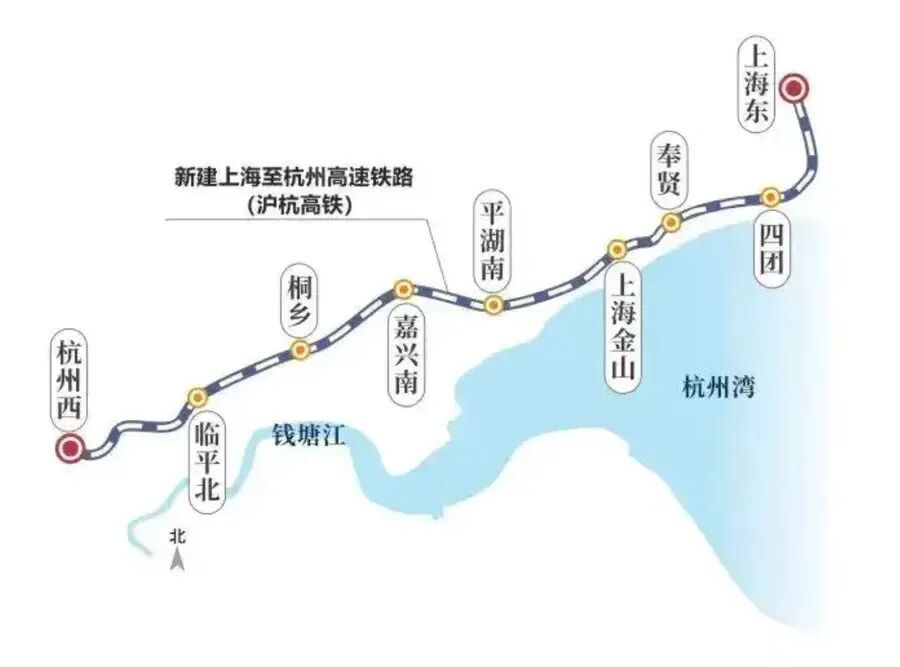
For example, between Shanghai and Hangzhou: China Railway Shanghai Bureau Group Co., Ltd. recently announced that the entire Shanghai - Hangzhou High - speed Railway will start construction within 2026. This line connects Hangzhou West Station and Shanghai East Station, with a designed speed of 350 kilometers per hour. After the opening, the commuting time between the two places will be reduced to 40 minutes.
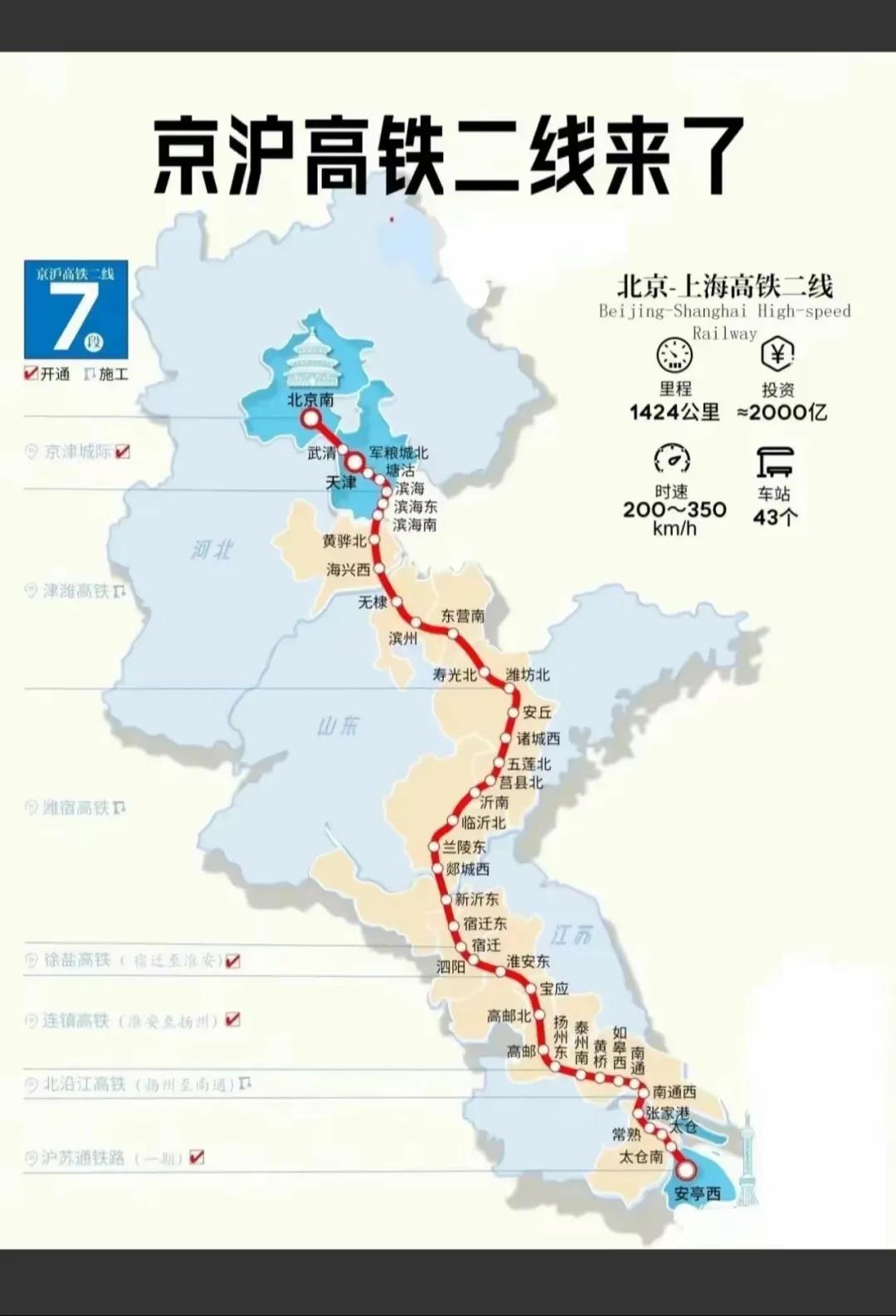
For example, between Beijing, Tianjin, and Shanghai: The Second Beijing - Shanghai High - speed Railway has already started construction. Different from the First Beijing - Shanghai High - speed Railway, this line is composed of sections and approved in batches, and it is expected to be fully connected and open to traffic in 2028.
For example, between Chengdu, Chongqing, Wuhan, and Shanghai: The Shanghai - Chongqing - Chengdu High - speed Railway along the Yangtze River is also under rapid construction. Like the Second Beijing - Shanghai High - speed Railway, this line is also composed of multiple sections and is part of the "Eight Vertical and Eight Horizontal" high - speed railway network. It starts from Shanghai, passes through Jiangsu, Anhui, Hubei, and Chongqing, and ends at Chengdu Station in Sichuan. It runs through 4 provinces and 2 municipalities directly under the Central Government, with a total line length of about 2,100 kilometers, and is expected to be fully completed before 2030.
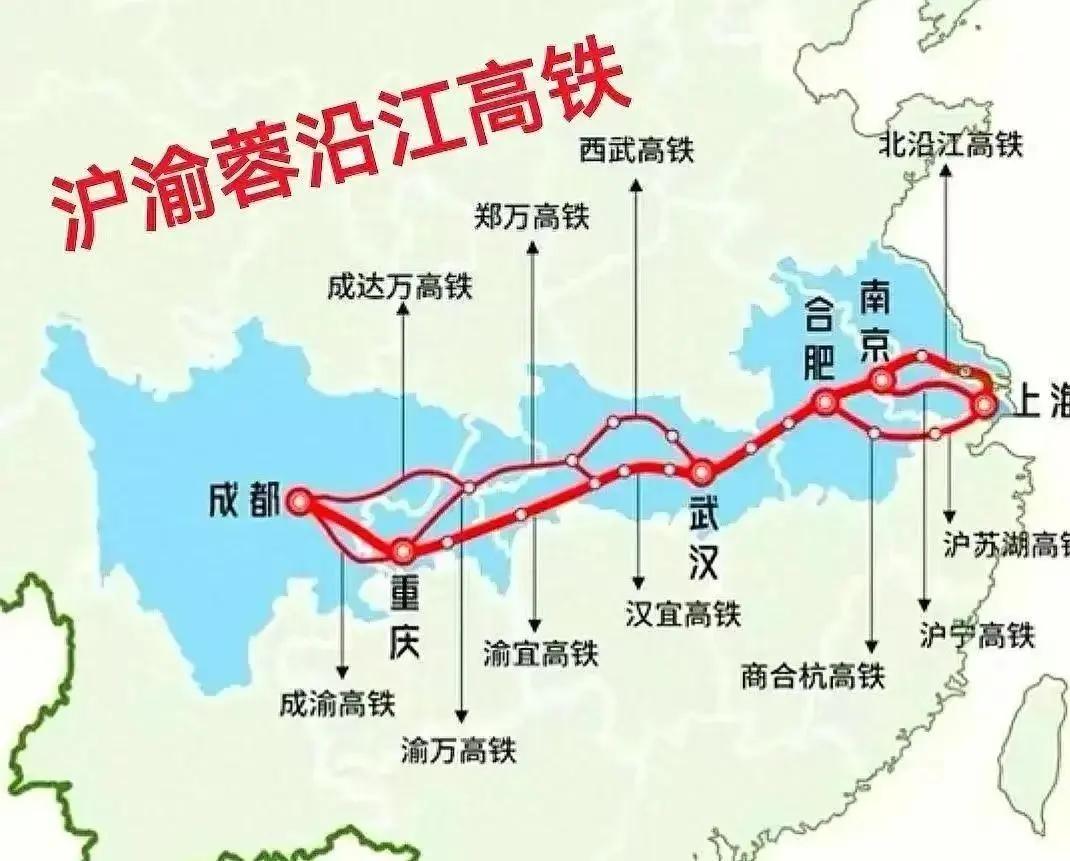
The high - speed railways under construction and the Second High - speed Railway between Guangzhou and Shenzhen, which is being studied and planned, just cover the top ten megacities in China.
This also means that megacities are frantically building high - speed railways.
Here is a digression. The terms "first - tier," "second - tier," "third - tier," and "fourth - tier" cities that we often mention are not officially defined. They were initially invented by institutions and have become a common practice over time, but there is no standard reference line.
In the official classification of city levels, there is a clear dividing line: the permanent population in the urban area. A city with a permanent urban population of over 10 million is considered a megacity. According to the official results announced by the National Bureau of Statistics and the Ministry of Housing and Urban - Rural Development, there are 10 such cities: Beijing, Shanghai, Guangzhou, Shenzhen, Tianjin, Chengdu, Chongqing, Wuhan, Hangzhou, and Dongguan.
03
Why Are High - level Cities Still Building High - speed Railways Continuously?
The key question is, isn't it said that the threshold for high - speed railway construction has been tightened? Why are high - level cities still building high - speed railways continuously?
Yes, not only for high - speed railways, but also for subways and intercity railways, the thresholds have been tightened. Regarding subways, the first - round planning applications of ordinary prefecture - level cities are no longer accepted. Even for central cities, new plans may be restricted due to insufficient passenger flow intensity. Some lines may be cut, or the overall plan may not be approved. Regarding intercity railways, at the beginning of this year, the official issued the "Opinions on Promoting the Healthy and Sustainable Development of Intercity Railways," which set new thresholds for intercity railways, plugged some loopholes, and excluded many cities from the qualification to build intercity railways.
As for high - speed railways, as early as 2021, the official issued the "Opinions on Further Improving the Work of Railway Planning and Construction," which raised the threshold. The document clearly states that the construction of parallel lines to existing high - speed railways should be strictly controlled. In principle, new parallel lines shall not be built for existing high - speed railways with a capacity utilization rate of less than 80%. New railway projects should be implemented in strict accordance with the plans approved by the state. The functional positioning, construction sequence, and construction standards of projects within the plan shall not be adjusted at will. In principle, projects not included in the plan shall not start construction.
In addition, the document of that year also stipulated:
First, for the main high - speed railway channel lines that connect provincial capitals and megacities, with a two - way passenger flow density of more than 25 million person - times per year in the near future and a proportion of long - distance and medium - distance passenger flow of more than 70%, a design speed of 350 kilometers per hour can be adopted.
Second, for high - speed railway lines that connect relatively large prefecture - level and above cities, with a two - way passenger flow density of more than 20 million person - times per year in the near future and prominent network functions, conditions for a design speed of 350 kilometers per hour can be reserved.
Third, for regional connection lines of high - speed railways with a two - way passenger flow density of more than 15 million person - times per year in the near future, a design speed of 250 kilometers per hour can be adopted.
Fourth, for intercity railway lines, in principle, a design speed of 200 kilometers per hour or less should be adopted.
That is to say, for lines connecting provincial capitals or megacities and above, the design speed is 350 kilometers per hour. For lines connecting relatively large prefecture - level cities, the design speed of 350 kilometers per hour can be reserved. For lines connecting ordinary prefecture - level cities, the design speed is 250 kilometers per hour for bullet trains. For intercity railways connecting neighboring cities, the design speed should be less than 200 kilometers per hour. More importantly, if a parallel line is to be built for a high - speed railway, the capacity utilization rate of the existing high - speed railway should be higher than 80%.
The Second Beijing - Shanghai High - speed Railway currently under construction, the second high - speed railway between Shanghai and Hangzhou (the Shanghai - Hangzhou High - speed Railway), the Chengdu - Chongqing Middle - line High - speed Railway, and the Second High - speed Railway between Guangzhou and Shenzhen under research and implementation all meet the conditions.
For example, the Second Beijing - Shanghai High - speed Railway. Currently, the Beijing - Shanghai High - speed Railway connects Beijing and Shanghai. It is the busiest and the only profitable high - speed railway in China. The Beijing - Shanghai High - speed Railway is 1,318 kilometers long, running through three municipalities directly under the Central Government (Beijing, Tianjin, and Shanghai) and four provinces (Hebei, Shandong, Anhui, and Jiangsu), connecting the Beijing - Tianjin - Hebei and the Yangtze River Delta economic zones, covering 10 cities with a GDP of over one trillion and 6 cities with a population of over ten million. The total population along the line exceeds one - fourth of the country's total.
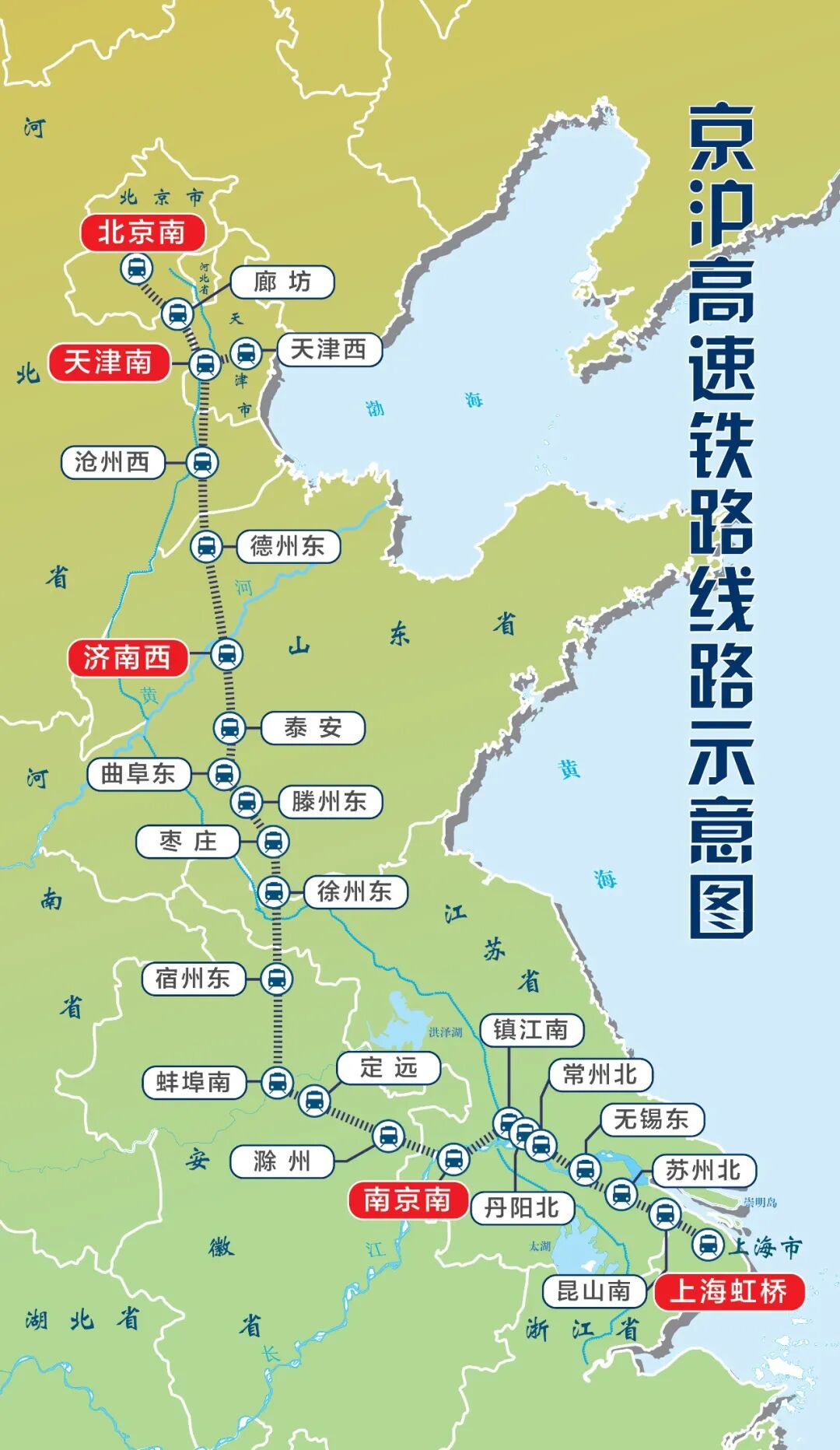
The coverage and route determine that its busyness must be at the top level, making it the most profitable high - speed railway in China.
Data shows that in 2025, the revenue and profit of the Beijing - Shanghai High - speed Railway reached a new record. The Beijing - Shanghai High - speed Railway Company achieved an annual total operating income of 43.062 billion yuan, a year - on - year increase of 2.15%; the net profit attributable to shareholders of the listed company was 13.172 billion yuan, a year - on - year increase of 3.16%. It earns a net profit of 36.09 million yuan per day on average.
In terms of passenger flow, data shows that from 2011 to 2025, the Beijing - Shanghai High - speed Railway has cumulatively sent more than 2 billion passengers, and the average daily number of trains has increased from 131 to 597.
Since January 26 this year, the Beijing - Shanghai High - speed Railway has even achieved "subway - like" operation. During peak hours, the shortest departure interval is only 3 minutes, reaching the ceiling of the transport capacity under the existing hardware conditions. The passenger volume is already saturated, so in the past few years, the Beijing - Shanghai High - speed Railway has continuously increased its fares. There were fare increases in 2020 and 2021. The fare has increased from 553 yuan at the beginning of its opening to 662 yuan, a 20% increase. There was another fare increase recently. On May 11, the Beijing - Shanghai High - speed Railway issued an announcement that the announced fares of some EMU trains on the Beijing - Shanghai High - speed Line and the Hefei - Bengbu High - speed Line will be increased by 20%.
For example, the Shanghai - Hangzhou High - speed Railway. Currently, there