Breaking! Anthropic calls on all staff to stop AI research
Jay from Aofeisi, QbitAI | WeChat official account QbitAI
Important discovery: The self - evolution of AI has begun.
This is the bold claim that Anthropic just made in a long - form blog post.
Our internal data shows that Claude is accelerating AI development, and this may be a path of Recursive Self - Improvement (RSI).
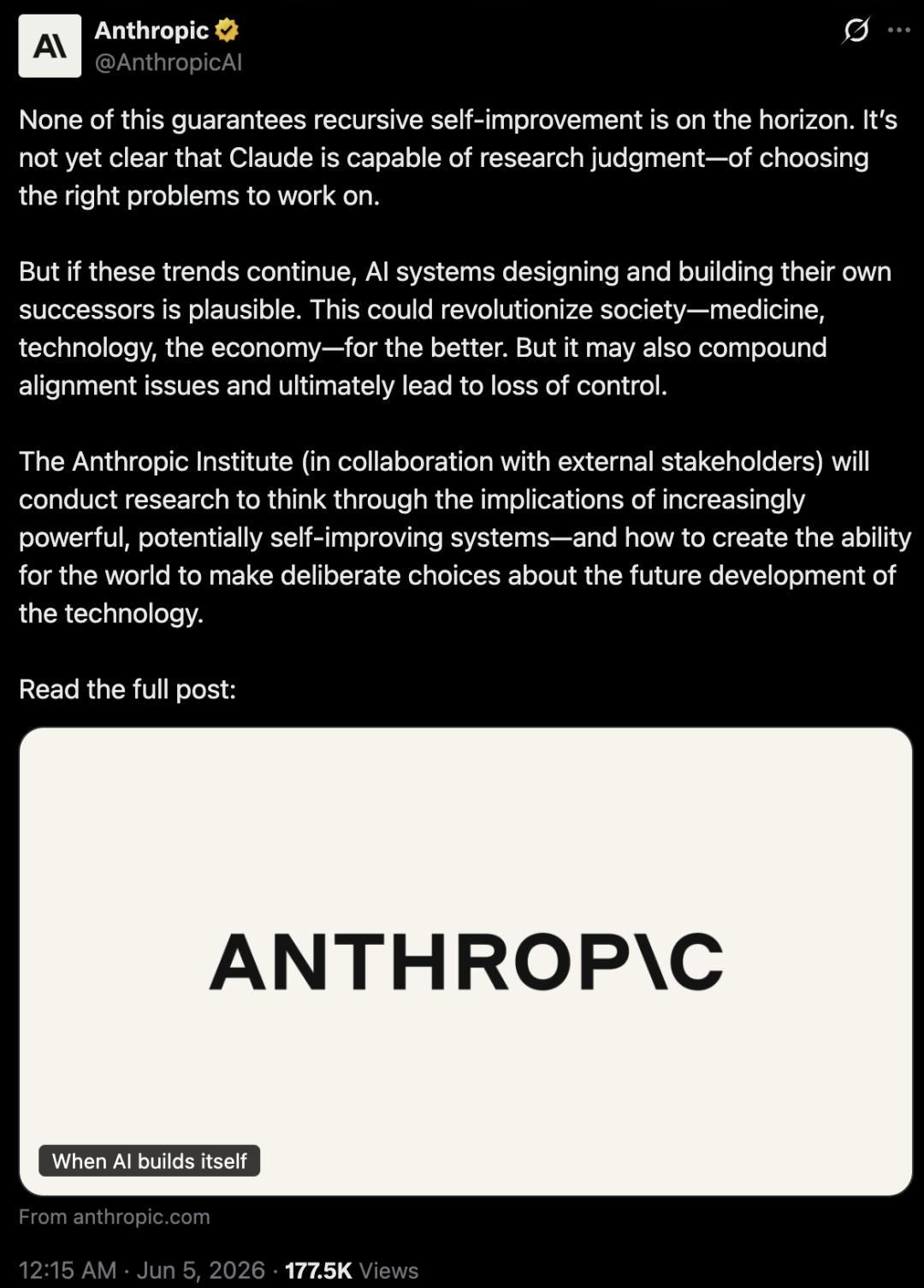
This is not "alarmist talk". After reading the article, Anthropic is really backing its claims with data —
As of May this year, over 80% of Anthropic's code was written by Claude.
Before the release of Claude Code, this figure was only in single digits.
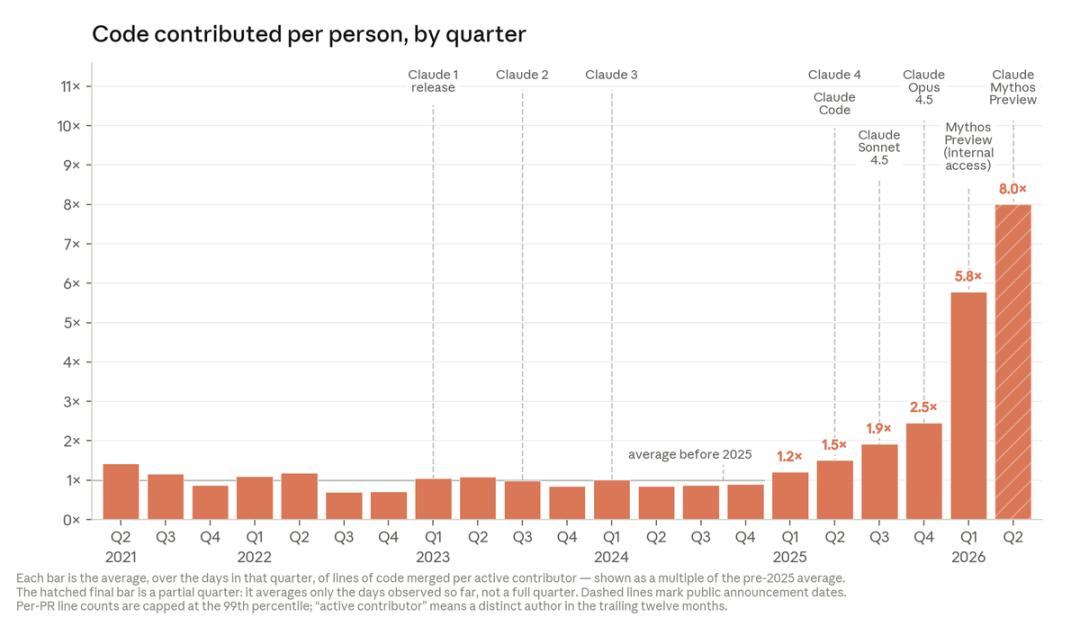
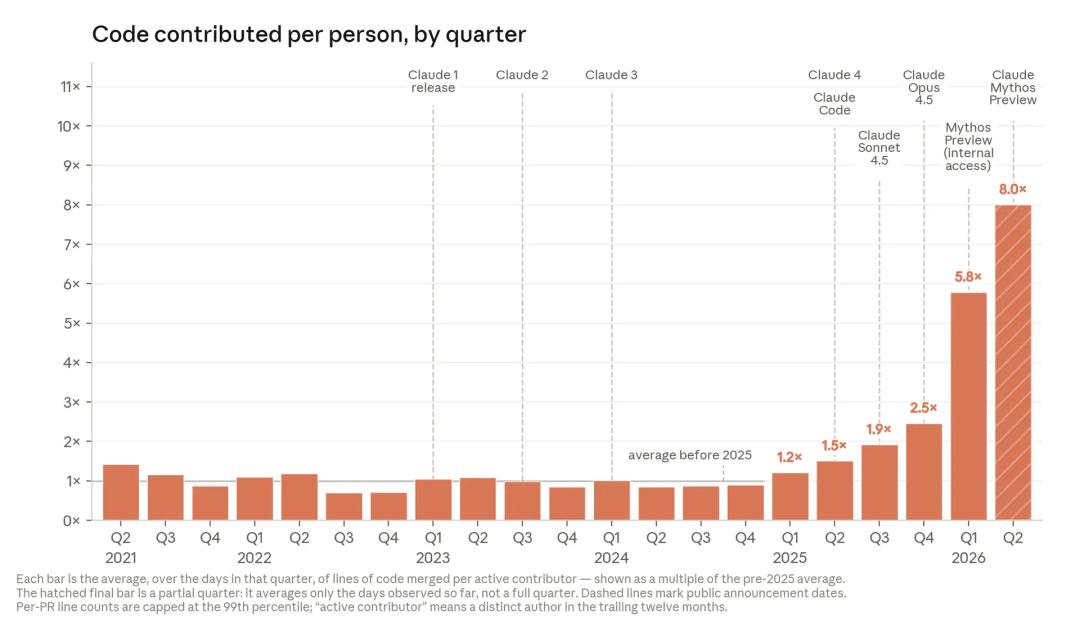
Meanwhile, the average quarterly code output of Anthropic engineers is eight times that of 2021 - 2025.
What's more important is the quality —
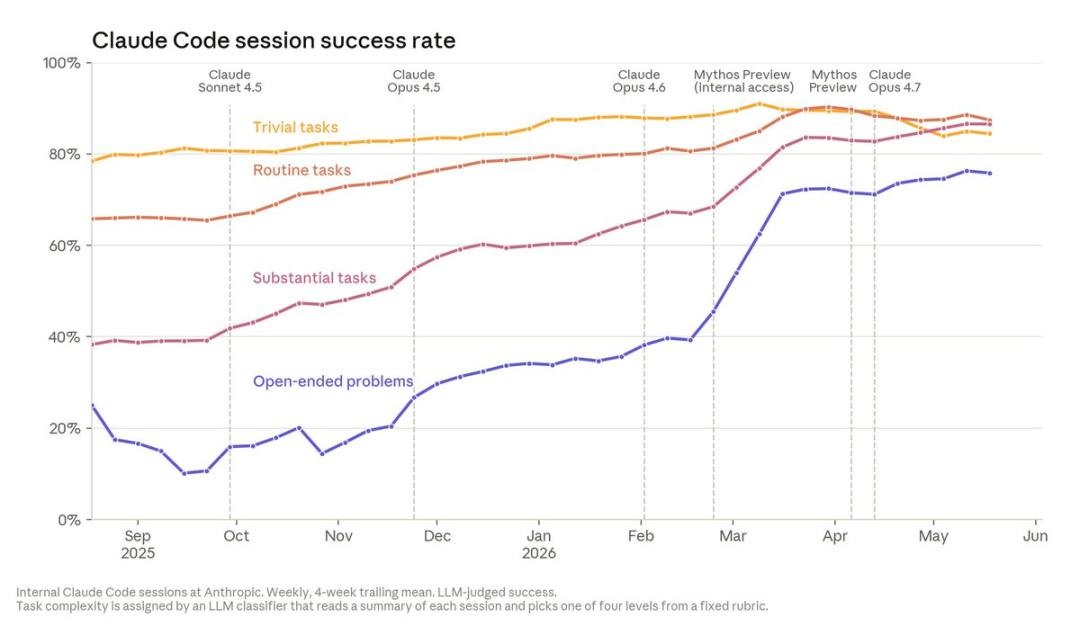
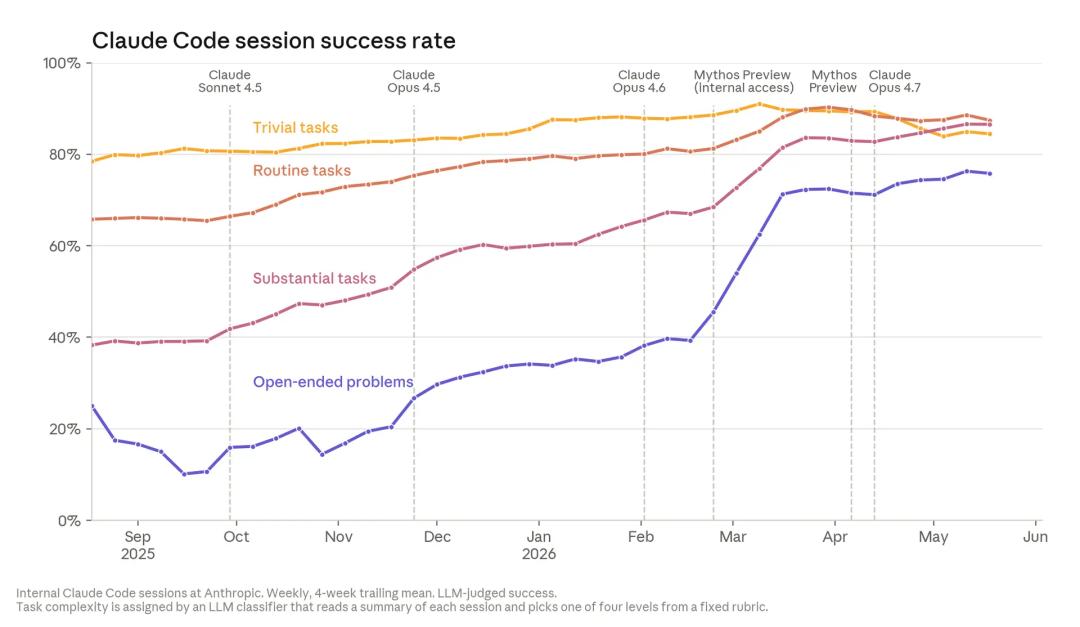
In the most open - ended and vague programming tasks where even the form of the answer is uncertain, Claude's success rate is now 76%, compared with only 26% six months ago.
A jump of 50 percentage points in half a year.
Many engineers within Anthropic already think that the quality of the code written by Claude is on par with that of humans.
It is expected to exceed human - written code within this year.
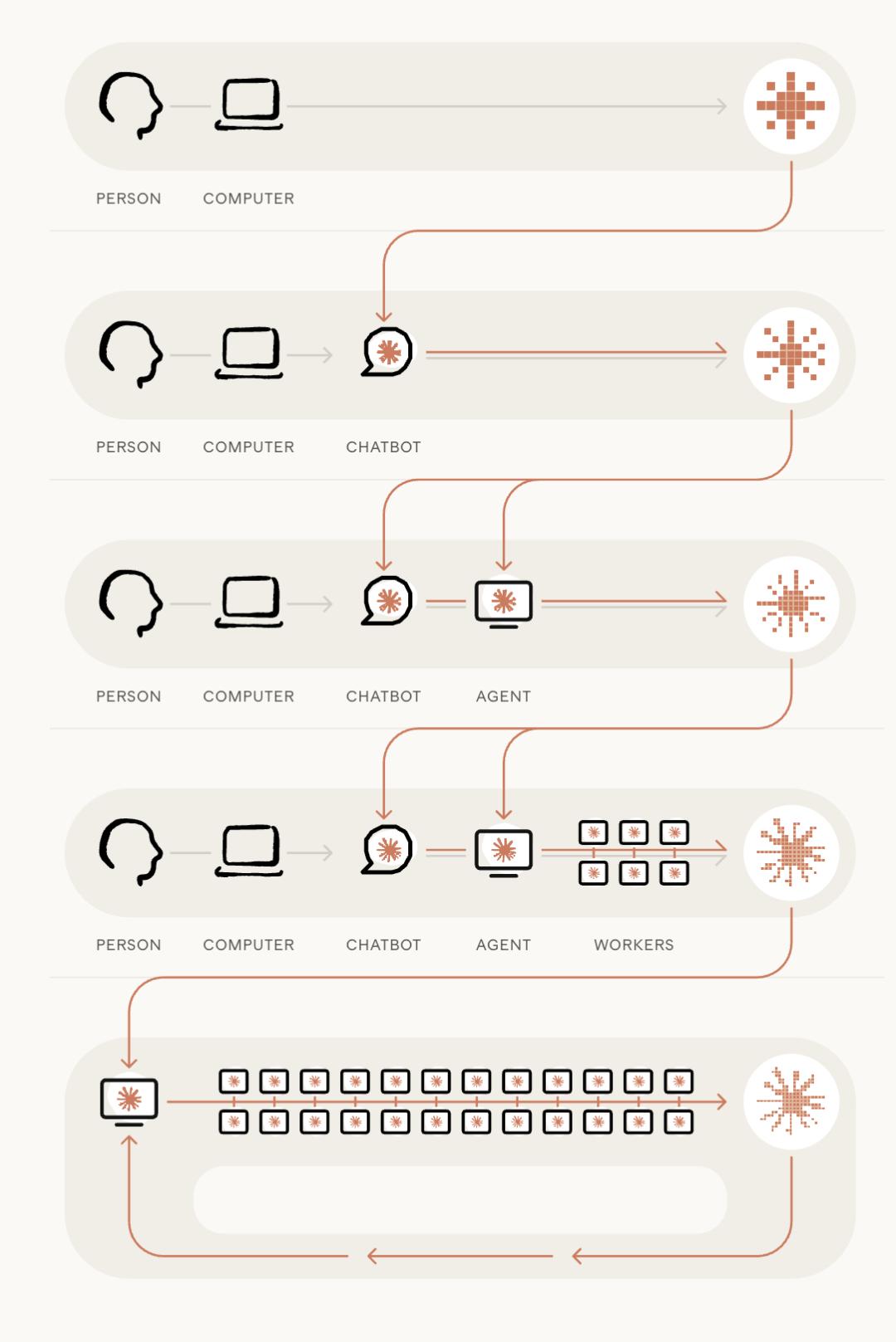
Anthropic also emphasizes that if this trend continues, it is entirely possible for AI to design and build the next - generation AI on its own.
This could completely change society and bring huge benefits in the fields of medicine, technology, and the economy. However, it could also exacerbate the alignment problem and ultimately lead to loss of control.
Therefore, Anthropic takes the lead in calling for:
If there is a verifiable mechanism to ensure that all AI labs are not secretly competing, we are willing to slow down or even pause.
In addition, there are many interesting views and facts in Anthropic's blog post.
The following is a more reader - friendly version after sorting.
Enjoy.
Anthropic's Long - Form Statement Sets the Tone
Moore's Law for the AI Circle Has Arrived
Anthropic has created a new measurement dimension called "the duration of tasks that AI can complete independently".
In March 2024, Claude Opus 3 could handle software tasks that would take humans about 4 minutes.
One year later, Claude Sonnet 3.7 could handle tasks for 1.5 hours.
Another year later, Claude Opus 4.6 could handle tasks for 12 hours.
And the latest Mythos, in its internal testing, shows:
It can work continuously for "at least" 16 hours, which has reached the upper limit that the METR test framework can measure.
This doubling speed has accelerated from once every 7 months to once every 4 months.
If the trend continues, in 2027, it may be several weeks.
Claude Has Written Most of Anthropic's Code
As of May 2026, over 80% of the code in Anthropic's codebase was written by Claude.
Before the release of Claude Code, this figure was always in single digits.
This change is also reflected in the working methods of engineers.
In the first four years of Anthropic, the number of lines of code merged by engineers per day remained basically the same.
In 2025, when Claude started writing code on its own, the number of merges suddenly soared.
Now, in the second quarter of 2026, the amount of code merged by engineers per day is eight times that of 2024.
However, has the quality of the code been compromised as the quantity has increased?
Anthropic says that the number of times engineers have to correct Claude has been decreasing over the past year.
This can be seen in the benchmark, as shown in the following figure.
In all types of tasks of varying difficulty, Claude's success rate has increased significantly without exception.
So, Anthropic now uses Claude to review code.
Yes, all changes submitted to the codebase will first go through Claude's automatic review to check for bugs, security vulnerabilities, and other defects.
They found through retrospective analysis that if this automatic review had been in place for every change, about one - third of the bugs that caused online incidents on claude.ai would have been caught before going live.
Keep in mind that the engineers who wrote that code are among the world's top experts in building AI systems.
Claude is catching their mistakes.
A Magnifier for Creativity
Next, let's look at Claude's level of participation in research.
Anthropic has a convention that every time it releases a new model, it gives Claude a piece of code for training a small - scale AI model and asks it to optimize the running speed to the fastest while ensuring correctness.
In May 2025, Claude Opus 4 achieved a 3 - fold acceleration.
In April 2026, Claude Mythos Preview achieved a 52 - fold acceleration.
For reference, a skilled human researcher can barely achieve a 4 - fold acceleration in 4 to 8 hours.
In less than a year, Claude has surpassed humans.
In April 2026, Anthropic gave Claude an AI security research task, roughly asking "Can a weak model reliably supervise a strong model?", and then let Claude propose hypotheses, conduct experiments...
Let's first talk about the performance of humans. Two human researchers spent about a week narrowing the gap by 23%.
And Claude, after about 800 hours and spending about $18,000 on computing power —
Narrowed the gap by 97%.
Where Are We Heading?
By now, the conclusion is clear.
The role of humans in the AI development process is shrinking at every stage.
Claude writes the code. Claude reviews the code. Claude conducts experiments much faster than humans. Claude is starting to design experiments on its own...
Humans' last comparative advantage now is research taste and judgment.
But how long can this advantage last?
Anthropic says in its blog that they're not sure.
One possibility is that "research taste" is like other things that AI couldn't do before. First, it can't do it, and then suddenly it can.
Just like AI's understanding of humor, demonstration of theory of mind, and solving of language puzzles, all of which have followed the same curve.
Another possibility is that even if Claude never learns true research taste, with the current acceleration trend, the workload that each human researcher can direct has already increased several times.
You don't need AI to completely replace your thinking. As long as it takes care of all the "execution" tasks, you only need to make the 5% of decisions about the direction.
Three Futures of RSI
At the end of the blog, Anthropic depicts three possible evolutionary directions for this "self - evolution" trend.
1. Stagnation.
Those exponential curves are actually S - curves.
Perhaps research judgment cannot be solved by scaling and requires a completely new architectural breakthrough.
Or, the bottleneck lies in energy, chips, or the physical supply chain of computing power.
However, even if AI's capabilities stagnate at today's level, it will still bring significant changes to the world.
Recently, in Project Glasswing, Mythos Preview discovered over ten thousand high - risk and serious - level software vulnerabilities in the world's most critical systems within the first few weeks of its launch.
2. AI continues to accelerate, but humans still hold the reins.
Organizational efficiency will increase exponentially. A company of 100 people can do the work of 10,000 or even 100,000 people.
Anthropic thinks we are probably moving towards this scenario.
But they also noticed an interesting phenomenon, which is the manifestation of Amdahl's Law in organizations.
Claude writes code very fast, but code review has become the new bottleneck. A large number of new ideas, new tools, and new experiments are emerging explosively, far exceeding the organization's ability to digest them.
The bottleneck doesn't disappear; it just shifts to the next stage.
3. AI achieves complete recursive self - improvement and starts to create the next - generation version of itself.
In this scenario, the development speed of AI depends entirely on computing power. Humans step back to the positions of supervision, verification, and review.
If this really happens, this ability will probably be transferred to other scientific fields, such as medicine, materials, and energy, leading to a full - scale take - off.
Of course, another possible future is the failure of alignment.
In this case, the deviations will gradually accumulate during the AI's self - iteration process, and ultimately — complete loss of control.
OMT
The above are the most crucial views of Anthropic regarding self - evolution this time.
To be honest, at first, I didn't take it too seriously. After all, Anthropic is about to go public. Isn't this just a typical "Anthropic - style" public relations move?
You know what? This time, it might really be different.
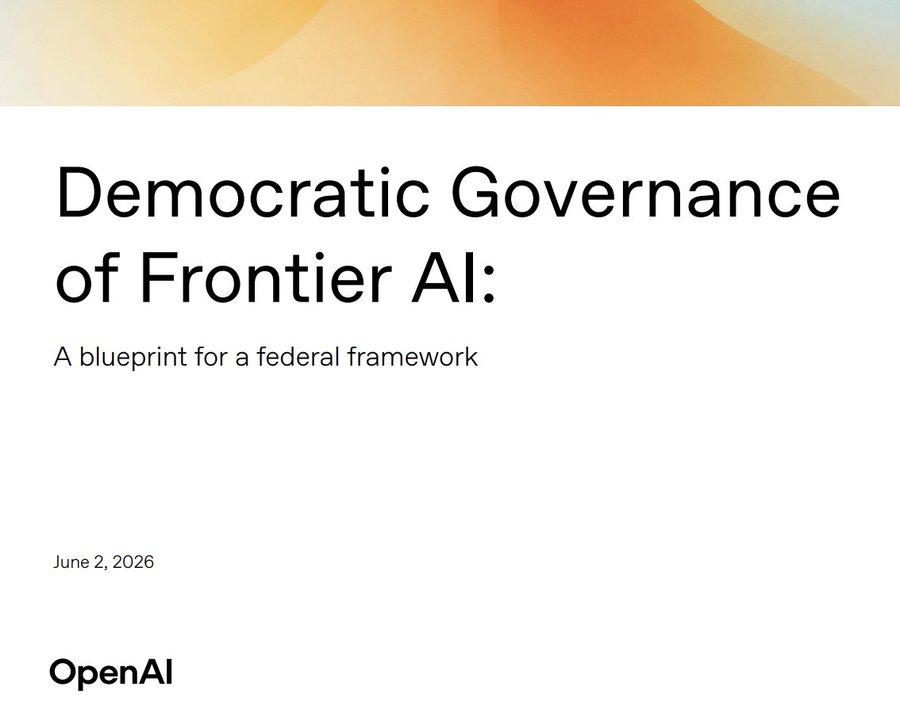
Because just a few days ago, OpenAI also published a similar blog post:
We are also seeing early signs of self - evolution in today's systems: the development of AI itself is being accelerated by AI. We expect this to intensify the competitive pressure between developers and countries and bring governance challenges that existing institutions cannot handle.
The singularity seems to be coming faster than anyone expected.
Blog: https://www.anthropic.com/institute/recursive-self-improvement
Reference links: [1]https://x.com/kimmonismus/status/2062517474277675102[2]https://x.com/anthropicai/status/2062568873321513443
This article is from the WeChat official account "QbitAI". Author: Focus on cutting - edge technology. Republished by 36Kr with permission.