Baidu at a Crossroads
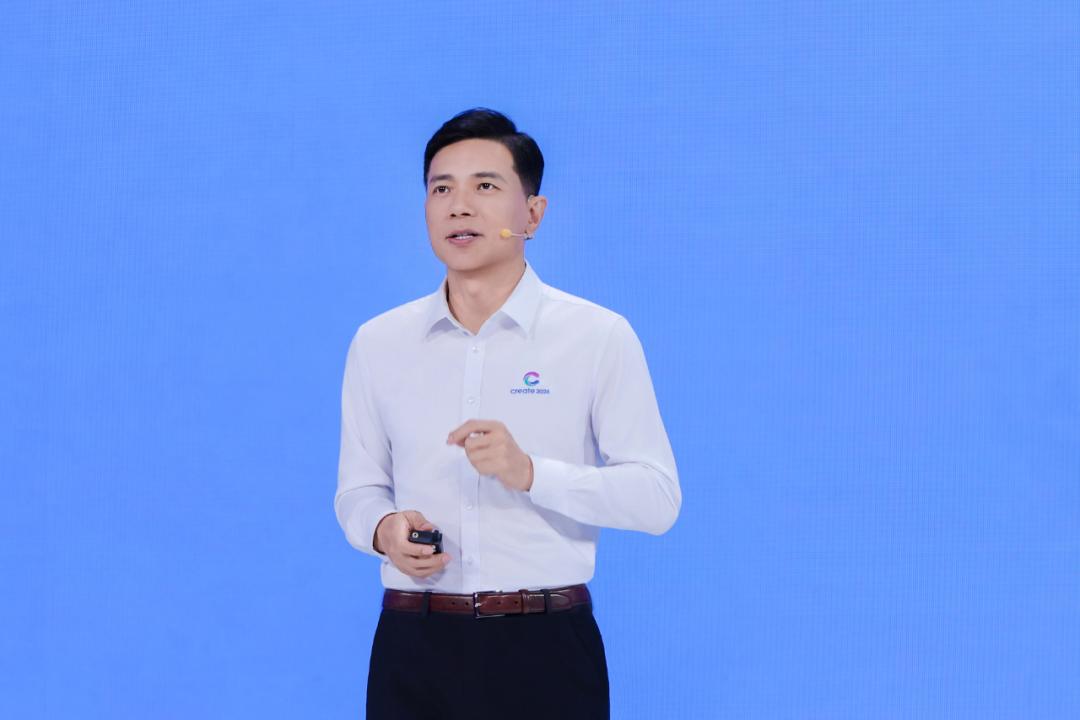
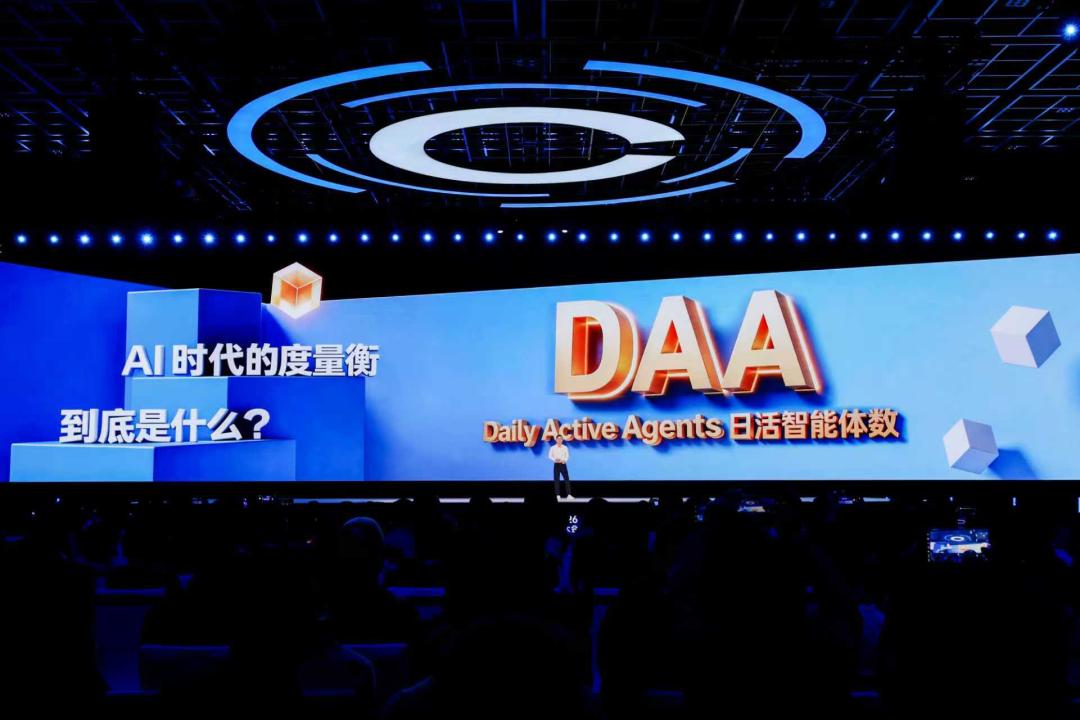
In May this year, Robin Li, the founder of Baidu, announced a new metric for the AI industry at the "Create 2026 Baidu AI Developers Conference": DAA (Daily Active Agents), the number of daily active intelligent agents.
His explanation is: Tokens don't necessarily represent the end - game. They only represent costs, not benefits. To measure the prosperity of a platform and its ecosystem, we should look at DAA - how many agents are working for humans and delivering results.
The developers and investors present had mixed views on this. Some regarded it as Baidu's "new ticket", while others thought that just introducing a new concept was not enough to define Baidu's future. Behind the controversy, an undeniable fact has been reflected in the financial report: Baidu's two growth curves are getting infinitely close.
On May 17th, Baidu released its financial report for the first quarter of 2026. Its general business revenue was 26 billion yuan, a year - on - year increase of 2%. Among them, the AI business revenue was 13.6 billion yuan, accounting for 52% of Baidu's general business revenue, and it has been growing for multiple consecutive quarters. This is also the first time that the proportion of Baidu's AI business revenue has exceeded half. During the same period, the traditional online marketing revenue was 12.6 billion yuan, a year - on - year decline of 22%.

Source: Zhongtu Image Library
The other side of the inflection point comes at a cost. During the period, Baidu's net profit attributable to shareholders was 3.4 billion yuan, a year - on - year decline of more than 55%.
A senior executive of an AI company told "China Entrepreneur": "Baidu's 'falling behind' in the wave of large models is the most puzzling. It was the earliest to invest in AI. Many leaders of ByteDance's Seed and Tongyi Qianwen businesses came from Baidu, and Baidu occupies half of the leading figures in the intelligent driving companies. There is also a natural coupling between search and AIGC's C - end application scenarios, but Baidu has failed to stay in the first echelon."
QuestMobile data shows that as of March 2026, the monthly active user scale of AI - native apps has reached 440 million. Among them, the monthly active users of ByteDance's Doubao, Alibaba's Qianwen, and DeepSeek are 345 million, 166 million, and 127 million respectively, ranking among the top three AI - native apps in China. Baidu's "Wenxin" app has fallen out of the top ten.
On one hand, there is a structural breakthrough led by AI; on the other hand, there is short - term pressure on profits. Baidu needs a more decisive "gear - shifting" moment: using the profits from the old track to pave the way for the growth of the new track.
According to "China Entrepreneur", since this year, Baidu has carried out a series of product planning and organizational changes in its Mobile Ecosystem Business Group (MEG), clearly integrating product lines with users at the center. The independent Wenxin app has formed a closer linkage with internal portals such as Baidu Search and Baidu Wenku.
Correspondingly, Baidu has also carried out a series of organizational and personnel arrangements. At this moment, what tests Baidu is not only technology but also the strategic determination and organizational resilience of a technology giant.
Challenges and Pains
Over the past two decades, search has been the foundation of Baidu. However, in the AI era, the way users obtain information has been reshaped. The shift from "search - click - read" to "ask - AI gives direct answers" may seem similar to search. But the real difficulty lies in Baidu's more "conservative" route selection after years of AI technology accumulation, and the conflict between AI applications and Baidu's cash - cow "pay - for - ranking" model.
At the end of April this year, an unnamed Baidu employee told "China Entrepreneur" that he "uses Doubao and DeepSeek more often" for daily information searches. As of now, "Baidu's ability to develop C - end products is not on the same level as ByteDance's."
The R & D head of a vertical large - model in a leading company analyzed from an industry perspective: "Robin Li clearly stated at the beginning of developing large models that he would not do open - source. This choice has both advantages and disadvantages."
Open - source and closed - source are essentially different companies' judgments on technology paths and business models. In the view of the aforementioned person, the open - source strategy was the key to the rapid iteration of the AI industry in the past two years, while Baidu chose a more closed path at the beginning. Closed - source can protect core technologies and build differentiated barriers, but it does suffer in terms of ecosystem expansion speed.
Deeper pressure lies in organizational and ecological synergy. "Baidu's internal product planning is too complex. There are apps like Wenxin, Wenxiaoyan, and Wenxinyuge... A bunch of products with names that are hard to tell apart." A person in the industry close to Baidu said that each department in Baidu has its own path planning, and it seems that people often "collide". The products are highly homogeneous, resources are scattered, and the user experience is fragmented.
In the ByteDance ecosystem, Doubao, Douyin, and Jimeng have formed a close synergy from tools to platforms.
"For example, if I want to use AI to create an image, I can find many renderings on Douyin. People can also @Doubao in the comment section, and it can give feedback. They really 'come from users and go to users'." The aforementioned person said. This year, he has clearly felt that Doubao is evolving from a chat tool to a search - type entrance, and user stickiness is being formed. "Sometimes it seems a bit stupid, but it's fun, and I can accept it."
In contrast to the C - end, Baidu's AI Cloud has performed well in the B - end.
According to a third - party report, in Q1 2026, Baidu's market share in the self - developed GPU cloud market reached 40.4%, ranking first in China; in the Chinese AI application public cloud service market, its share rose to 30.7%. The AI needs of automobile manufacturers, banks, and central state - owned enterprises are largely met by Baidu's platform. Especially in the automotive and financial fields, customers highly recognize Baidu's technology implementation ability.
However, in the 13.6 billion yuan of AI revenue, the intelligent cloud accounts for nearly 65%, and the revenue from the application side has not increased but decreased. This means that Baidu's current position in the AI industry chain is more of an infrastructure provider rather than a 'gold - digger'. From another perspective, this is also Baidu's strategic choice of "building the road first, then running the cars": first build a solid computing power foundation, and then naturally extend to the application layer.
The aforementioned R & D head emphasized to "China Entrepreneur" that the industry competition is shifting from competing in computing power to competing in data engineering: "Among the large - model companies that are doing well now, several have done more down - to - earth work at the code level. Essentially, it's still a matter of investment. It depends on how much is invested in patents and how much energy is put into data processing."
In terms of technological accumulation, Baidu is not lagging behind. Public data shows that as of the end of 2024, Baidu has publicly applied for more than 27,000 AI patents globally (22,000 in China, with 12,000 authorized), covering the entire stack of AI fields such as deep learning, natural language processing, and computer vision.
In terms of self - developed "Kunlun Chips", Baidu's determination for long - term investment can also be seen. The third - generation Kunlun Chips have been stably operating on a cluster of ten thousand chips, providing an independent and controllable computing power foundation for the training and inference of the Wenxin large model, and will optimize Baidu's cost advantage in the long run.
However, what will be tested next is whether the high - growth of B - end orders can support the entire narrative of Baidu's AI.
Organizational Changes: "Making Decisions Faster"
External market changes have also catalyzed a major reorganization of Baidu's organization.
According to media reports, at the end of 2025, Baidu launched the "largest - scale" adjustment in its history. The total number of employees decreased from 41,300 in 2022 to 35,900. Positions in AI Cloud and intelligent driving were retained as priorities, and resources were further tilted towards AI.
In 2026, the top - down organizational and business restructuring has continued to accelerate. In January, Baidu Wenku and Baidu Netdisk were integrated into the PSIG (Personal Super - intelligent Business Group), and Wang Ying, the vice - president of Baidu Group, reported directly to Robin Li. At the end of April, Baidu announced the cancellation of the letter - based rank labels that had been used for many years and unified them into a digital system, aiming to "break the barriers between professional and management positions".
Source: Respondent
According to incomplete statistics, in the past year, many core executives have left Baidu, including Zhao Shiqi, the vice - president of Baidu and the general manager of Baidu Search (the person in charge of the Baidu App R & D Center), the person in charge of Baidu Search AI products, and Chen Yingmei, "Robin Li's first management trainee".
What attracted the most attention was the newly established Model Committee (BMC) in May this year. In November 2025, Baidu had already set up two parallel departments, the Basic Model R & D Department (BMU) and the Application Model R & D Department (AMU), directly under the jurisdiction of Robin Li.
According to public information, the members of the BMC are composed of young researchers with a deep understanding of large models. They will coordinate the R & D work of Baidu's large - scale basic models and application models and report directly to Robin Li. The BMC adds a coordination layer above the BMU and AMU, marking the formal formation of this organizational structure after the establishment of the new model R & D departments last year.
These actions point to the same goal: shortening the decision - making chain and allowing front - line technical judgments to reach the top decision - making level faster.
The aforementioned R & D head expressed his approval of Baidu's design: "All problems ultimately come down to 'people'. Robin Li wants young people to report directly to him because he hopes to find some capable and motivated people to do something different. He is under great pressure, and Baidu can't just be a training ground for AI talents."
Compared with start - up companies, for established large companies to innovate, the most difficult thing to balance is often the "historical burden" at the organizational level.
A senior executive of a large - model company who has led a team in a large company for more than a decade told "China Entrepreneur": "The companies that are doing well in large - model development currently have relatively young employees. How can they be retained? We can't manage them in the traditional, step - by - step, assembly - line way. Lin Junyang left Alibaba recently because he couldn't stand this management model, so he left."
Alibaba's "Damo Academy" also faced a similar structural dilemma and eventually "scattered like stars in the sky". "The early positioning of the Damo Academy was innovation, but later, affected by costs and profits, there were requirements for self - sufficiency. It's still driven by business logic. There's no way around it."
Therefore, the ultimate promoter and result still point to the determination of the top decision - making level to make tough choices.
"The double - push of business goals and the pressure on team leaders brings too much uncertainty. Sometimes you have to control innovation. With the uncertainty of the time point and the reverse - push of business goals, the technical solutions can only be tightened. In the end, the organization can only focus on what the boss cares about the most." The aforementioned person said.
Intelligent Agents: Baidu's Next Move
At the Create 2026 Baidu AI Developers Conference, Robin Li launched four intelligent agent products in one go: the general intelligent agent DuMate, the code intelligent agent Miaoda 3.0, the digital human intelligent agent Baidu Yijing, and the decision - making intelligent agent Fumou 2.0.
Among them, DuMate has reached the SOTA level in multiple international authoritative Agent Benchmark evaluations. It can operate software, process files, and connect business systems. After the release of Miaoda 3.0, the app and enterprise version were launched simultaneously, and users can generate applications by describing them in natural language. Baidu Yijing is positioned as the world's first full - scenario multi - intelligent agent digital human platform.
While introducing the DAA concept, Robin Li emphasized the importance of "applications". He believes that the AI industry is shifting from a "model - centered" to an "application - centered" approach, and intelligent agents will become the new entrance.
From the establishment of Baidu's Deep Learning Research Institute in 2013, to the proposal of "All in AI" in 2017, and now to the full implementation of large models and intelligent agents, Robin Li has been investing in AI for more than a decade without wavering. This long - termism is rare among Chinese Internet entrepreneurs.
Source: Respondent
"People are now concerned about how far AI can develop. The key is whether the boss can see the upper limit of the product and dare to invest. I believe that many senior executives in Chinese companies haven't seen it clearly yet." The aforementioned R & D head told "China Entrepreneur". Robin Li's willingness to continuously bet on the intelligent agent direction reflects his judgment on the technological end - game, "but compared with American companies, Chinese companies still face great pressure."
However, Baidu still has time. Since this year, the market education of the intelligent agent ecosystem has just been completed, and the commercialization path has shifted from C - end consumption to coding - based payment. The answer is still being explored.
"The real high - frequency commercial growth points haven't been found yet. Baidu's pressure is that others are rushing to occupy the entrance." An employee who has worked at Baidu for many years told "China Entrepreneur". Just as ByteDance has occupied the Douyin entrance, Doubao has also obtained continuous iterative data and user feedback.
Baidu's opportunity lies more in the combination of the search entrance and intelligent agent products. For example, DuMate is directly embedded in the Baidu App, covering hundreds of millions of daily active users. In addition, Baidu has 20 years of accumulation in Chinese data processing, search logs, and knowledge graphs, which is still sufficient to build unique competitive barriers.
"Qianwen has done the best in open - source, with very fine - grained data. It can break down some PDFs and web pages very finely; Zhipu's underlying data is also good." The aforementioned R & D head pointed out, "The core is how to choose strategies. Doing distillation definitely has limited value." As Alibaba adjusts its open - source strategy and Doubao prepares to implement a payment plan, the open - source degree and commercialization strategies of domestic large - model companies have also been put on the agenda.
However, from the financial report, the inflection point of Baidu's revenue structure has emerged, and the time window is becoming more specific and urgent. Baidu not only needs to figure