BYD officially announced its self-developed humanoid robot, and the "Yao-Shun-Yu" plan was exposed: it has been secretly developed for 4 years
BYD, a heavyweight player, has entered the field of embodied intelligence.
Recently, Li Ke, the executive vice president of BYD, said in an interview with the "You're Invited" column of BYD Shareholder Planet: BYD is currently advancing its humanoid robot project.
She said in the interview that at this stage, BYD is focusing on industrial robots, and BYD itself is the largest user of its industrial robots. Meanwhile, BYD is also promoting the R & D of humanoid robots.

(Image source: BYD)
Li Ke said that Chinese robots "lack a brain", while American robots "have a well - developed brain but under - developed limbs". In the future, BYD needs to develop "truly usable robots with both a well - developed brain and limbs". If such robots enter the market, BYD itself will also be the largest buyer, and these robots can be used as shopping guides in overseas stores to solve the problem of labor shortage.
As for the production and manufacturing of humanoid robots, Li Ke said that BYD doesn't necessarily have to produce humanoid robots by itself. Instead, it can build an open platform to develop self - developed robots or cooperate with other companies in robot R & D. However, Li Ke also said that BYD's marketing system is "the most powerful" and "the most globalized", and it also has strong production and manufacturing capabilities and excellent execution ability.
This is the first time that BYD has disclosed information related to its humanoid robot business. Before this, BYD has been deeply involved in this field for four years.
According to the report in "Industrial Robots", BYD's humanoid robot, codenamed "Yao, Shun, and Yu", was officially launched in 2022 and belongs to the 15th Division in charge of electronic integration and intelligence. In addition, in BYD's recruitment of master's and doctoral graduates in 2025, there are relevant positions responsible for embodied intelligence research, with the research direction focusing on humanoid and bipedal robots.
As a group spanning businesses such as batteries, automobiles, and electronics, what are BYD's advantages in entering the field of embodied intelligence, and what changes will it bring to the industry? Why are car - making enterprises flocking to the field of embodied intelligence now?
What has BYD, a company with multiple cross - border experiences, fished out from its "technology pond"?
Seeing BYD's entry into the field of embodied intelligence, some people may think that BYD is "not focusing on its main business" and is not concentrating on car - making but instead getting involved in robots.
However, in fact, BYD's car - making business itself started as a cross - border venture.
When BYD was first established, it was a battery company, starting from the R & D of rechargeable nickel - cadmium batteries and later moving on to lithium - ion batteries, and supplying batteries to brands such as Motorola and Nokia.
In 2003, BYD acquired Xi'an Qinchuan Automobile Co., Ltd. and entered the automotive industry. In 2005, the BYD F3 was launched.
According to the conventional scenario, for a battery factory that acquires a car brand, the battery business and the automotive business may develop independently without much intersection.
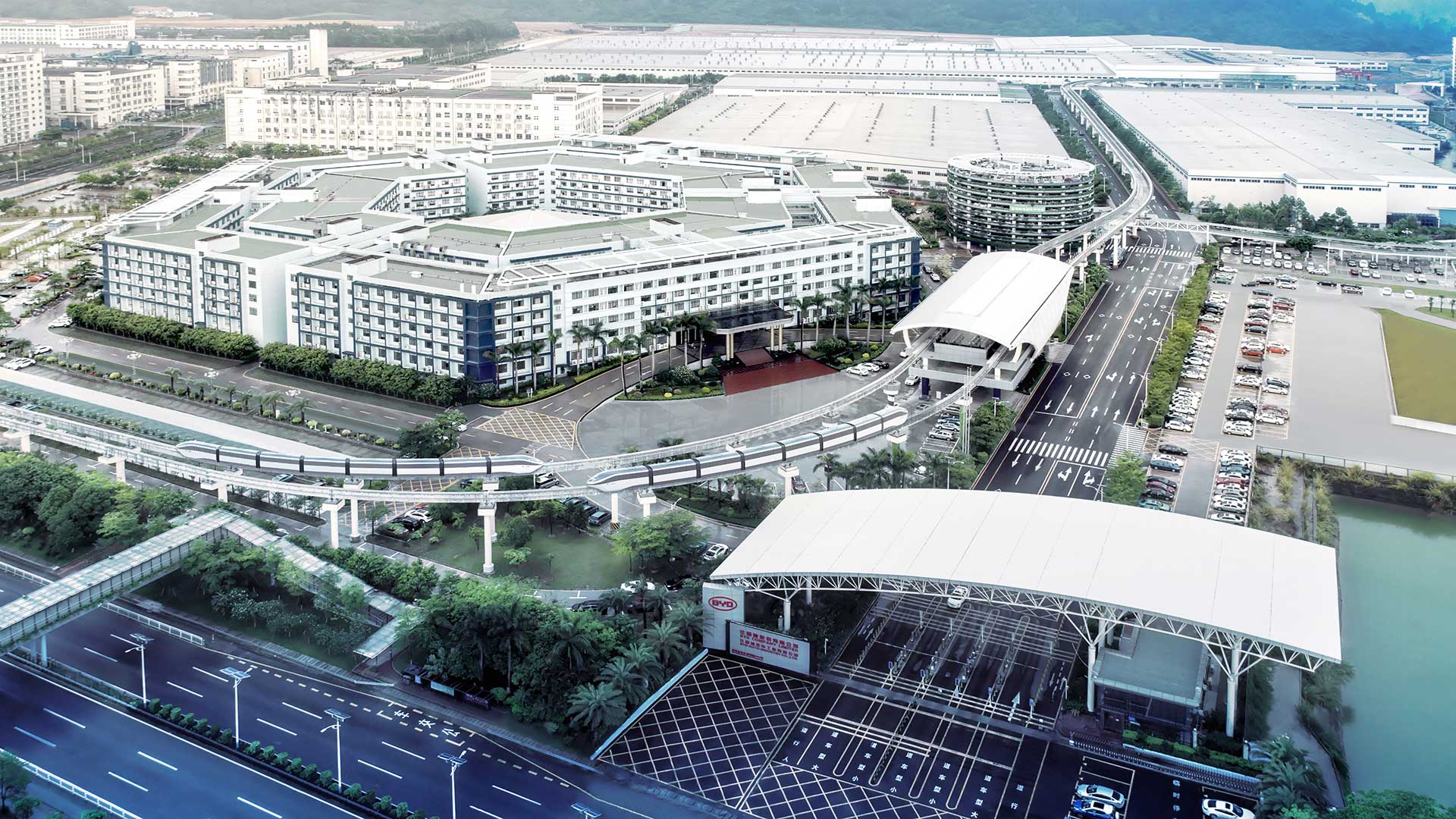
However, as we all know, from the first plug - in hybrid model F3DM to electric buses and taxis, and now firmly establishing itself at the forefront of new - energy vehicle brands, BYD has not only made its cross - border automotive business one of its main businesses but also achieved coordinated development with its "original business" of battery production, growing and strengthening together.
(Image source: BYD)
Currently, in the second half of the competition for electrification and intelligence in the automotive industry, BYD has also started to continuously focus on the intelligent direction.
In 2024, Wang Chuanfu publicly stated that BYD had established an intelligent driving team of 4000 engineers at that time. In the same year, Wang Chuanfu said that BYD would invest 100 billion yuan in the development of intelligent technologies that combine artificial intelligence and automobiles to achieve a comprehensive intelligent upgrade of the entire vehicle.
Choosing to enter the field of embodied intelligence is also one of the important directions for BYD's transformation towards artificial intelligence.
Moreover, as a large - scale manufacturing group spanning fields such as batteries, automobiles, 3C, consumer electronics, and chips, BYD has inherent advantages in the field of robot manufacturing. It has relevant business coverage in motors, electronic controls, batteries, processors... and even contract assembly.
In this regard, is BYD's entry into the field of embodied intelligence still considered "not focusing on its main business" as some people say?
Moreover, the technologies that BYD has shown to the outside world are not all of its capabilities. There may be some excellent things hidden in BYD's "technology pond".
In the interview with Li Ke by BYD Shareholder Planet mentioned at the beginning of the article, Li Ke also said that when the "fish" in the technology pond grow up, they will be fished out and put on the platform, and they will be "activated" immediately.
It can be seen that in terms of technology R & D, BYD often doesn't start R & D when industry demand emerges. Instead, it conducts pre - research on technologies first. When industry or its own demand appears, it fishes the "fish" out of the "pond" and quickly applies the technologies.
In recent years, BYD's officially announced technologies such as Yunlian, Tian Shen Zhi Yan, the fifth - generation DM technology, and fast charging are all manifestations of the implementation of the "technology pond" concept.
So, in the field of embodied intelligence, will BYD "fish out" a "big fish" from its technology pond and shock the industry in a BYD - style way?
According to BYD's style, Dianchetong (ID: dianchetong233) speculates that BYD might be brewing something big in the field of humanoid robots?
New - energy vehicle manufacturers are embracing humanoid robots
In addition to BYD, many new - energy vehicle manufacturers have also carried out R & D in the direction of humanoid robots, and some brands have already launched specific results.
Tesla, which started the earliest, launched the first - batch mass production of its humanoid robot Optimus Gen - 3 (Tesla's third - generation general - purpose humanoid robot) at its Fremont factory in California in May this year.

(Image source: Tesla)
According to media reports, in April, one month before the first - batch mass production of Optimus Gen - 3, 50 units of Optimus Gen - 3 were officially delivered to Tesla's Shanghai Gigafactory, responsible for four major processes: vehicle seat installation, interior assembly, parts handling, and quality inspection. Its work efficiency reaches 85% of that of humans, and it can work continuously for up to 10 hours.
Among domestic new - force vehicle manufacturers, XPeng's first humanoid robot, IRON, was officially unveiled at the XPeng Technology Day in 2025.
In the first - quarter earnings report of XPeng Group this year, XPeng officially announced that the new - generation IRON for the mass - production version is planned to be unveiled in the third quarter of this year, with the goal of achieving mass production of high - level humanoid robots by the end of this year. It will first be used on a trial basis in XPeng stores and will be delivered to customers starting next year.
He Xiaopeng said: "Starting from next year, the hardware revenue and AI model revenue of humanoid robots will be one of the important driving forces for the revenue and gross profit growth of XPeng Group."
Li Auto's humanoid robot project is also in progress. In January this year, Li Xiang officially announced the entry into the field of humanoid robots in an online all - staff meeting and aimed to promote the product to complete its debut and practical application as soon as possible.
In March this year, according to the report of the media "Yijian Auto", Li Auto's humanoid robot team, codenamed "Nexus", has been secretly developing products for nearly a year. Two products, a two - wheeled robot and a bipedal robot, have been planned. The two - wheeled robot is mainly targeted at factory scenarios and is planned to be publicly released within this year.
Li Xiang himself also said in an interview podcast with Luo Yonghao that "embodied intelligence has two stages. Autonomous driving is the first half of embodied intelligence, and general - purpose humanoid robots are the second half."
That is to say, while car - making enterprises have just completed the electrification transformation in the "first half" of electric vehicles and are promoting the level of intelligence in the "second half", some brands have already started to layout the "second half" of the field of embodied intelligence?
A new round of "arms race" among car - making enterprises has begun, from intelligent driving to chips and then to robots
BYD, Tesla, XPeng, and Li Auto have all entered the humanoid robot field, and the competition among new - energy vehicle manufacturers has entered a new area.
In previous years, car - making enterprises "competed" in terms of charging, battery life, and energy consumption. In recent years, they have started to "compete" in areas such as assisted driving, self - developed chips, and in - vehicle large models. Now, with the emergence of embodied intelligence, the cycle for car - making enterprises to compete for technological high - points is getting shorter, while the intensity is getting higher.
This may mean that the "elimination round" in the automotive field in the future will be extremely fierce. Car - making enterprises with no technological content or technological content lagging behind the times will be mercilessly eliminated by the times.
Moreover, this time, the competition among car - making enterprises has crossed industries into the field of embodied intelligence. So, what impact will the competition among car - making enterprises have on the "old players" in the embodied intelligence industry? Will there be robot brands that collapse due to the impact of the automotive industry?
The future battle may be very fierce. Good luck to all players.