618 Home Appliance Shake-Up: Price Wars Ebb, "Speed Wars" Intensify
In recent years, e-commerce promotions have become increasingly low - key.
The same goes for this year's 618. There are fewer spats between platforms, and the slogans of "the lowest price in the industry" have also toned down a lot. Many industry insiders feel that although sales are growing, they are no longer sky - rocketing; consumers are still making purchases, but they are more rational.
Among the reasons, there is consumers' disenchantment with big promotions, and platforms' deliberate efforts to downplay the cut - throat competition. However, there is also a crucial real - world factor: it's not that merchants don't want to engage in cut - throat competition, but they simply can't afford to.
For example, in the home appliance industry, instead of starting a price war during the 618 promotion, there has been a wave of price increases. The price of air conditioners has risen by about 10% - 15%; the overall price of TVs has increased by 5% - 20%, and the price of some high - end refrigerators has been raised by more than a thousand yuan...
Since manufacturers can't compete on price, they have to compete on service and delivery speed. Gree, Xiaomi, Midea have reached strategic cooperation with Meituan Flash Sale; JD.com and Tmall have launched the "delivery and installation in one" service; Suning has upgraded its "store - warehouse integration" strategy...
Brands that want to win are still in the competition, but how to fight this battle and who can truly emerge victorious is no longer simply about who offers the lowest price.
Home Appliance Prices "Rise Instead of Fall"
For consumers, the 618 in previous years was a great opportunity to snap up products at the "lowest price across the network". However, this year, consumers who want to buy home appliances have already made their purchasing decisions in advance.
Since the beginning of this year, the home appliance industry has witnessed a long - awaited "price increase wave". Mainstream home appliance brands such as Midea, Haier, Hisense, and TCL have successively issued price increase notices, with an overall increase ranging from 5% to 20%.
Moreover, this wave of price increases has affected almost all home appliance categories.
At the end of last year, the air - conditioning industry took the lead in raising prices. Many air - conditioning companies such as Hisense, Aux, Midea, TCL, and Hitachi successively announced price increases, with the increase ranging from 3% to 10%.

Entering 2026, affected by the shortage of memory and chips, TV brands such as Midea, Haier, Hisense, and TCL have also successively issued price increase notices. A salesperson at a home appliance store said that the overall price of TVs has increased by 5% - 20%, and the price of individual high - end products may increase by up to 30%.
In addition, home appliance categories such as refrigerators, washing machines, and water heaters have all seen varying degrees of price increases.
According to a report by 36Kr, the prices of first - grade energy - efficient refrigerators and washing machines have generally increased by 5% - 10%; the price of mid - to high - end water heaters has increased by 3% - 6%; and the price of kitchen appliances has increased by at least 10%.
This wave of collective price adjustments in the home appliance industry has quickly spread to the consumer side. On social media, many netizens said they "regretted it to the core" because they went to the mall to shop just half a month later, and the prices of most home appliances had "changed drastically".

Behind this round of home appliance price increases, the core reason is that the cost has risen too quickly.
The latest data from the Shanghai Futures Exchange shows that as of the end of May, the main - contract price of Shanghai copper has exceeded 100,000 yuan per ton. Compared with the fourth quarter of 2025, the price of copper per ton has increased by 10,000 yuan, and the cost of a single air conditioner has increased by 200 - 300 yuan.
As the second - largest raw material for home appliances, the price of plastic has also increased significantly. Affected by the geopolitical conflict in the Middle East, the international oil price has increased by more than 60% this year, driving up the price of plastic raw materials. In March alone, the price of ABS plastic used for home appliance shells has increased by more than 50%.
The explosion of AI computing power demand has also squeezed the production capacity of storage chips, leading to a significant increase in the price of DDR memory used in home appliances. A salesperson for TCL color TVs said that due to factors such as the increase in the price of storage chips, the price of TVs will increase by about 8% in the future.
Under the triple - pronged attack, if home appliance enterprises do not raise prices, they may not even make a profit.
In the first quarter of 2026, Midea's net profit was 12.675 billion yuan, a slight year - on - year increase of 2.03%; Gree's net profit was 6.082 billion yuan, a year - on - year increase of only 3.01%; and Haier's net profit was 4.652 billion yuan, a year - on - year decrease of 15.22%.
If the three giants of the white - goods industry are in such a situation, let alone a large number of small and medium - sized home appliance brands.
According to a research report by Shanghai Shenyin Wanguo Securities, in the first quarter of 2026, 63 home appliance listed companies achieved a total revenue of 391.5 billion yuan, a year - on - year increase of 4.73%; and a net profit attributable to shareholders of 30.98 billion yuan, with a year - on - year growth rate of only 0.08%, almost standing still.
The vast majority of enterprises are struggling to maintain under the heavy cost pressure. Improving profitability is the top priority, so a price war is naturally out of the question.
Moreover, even if home appliance enterprises want to engage in a price war, consumers may not be willing to buy.
Since the third quarter of last year, the marginal effect of national subsidies has begun to decline. Data from Aowei Cloud Network shows that in the first quarter of 2026, the retail scale of China's home appliance industry (excluding 3C) was 172.6 billion yuan, a year - on - year decline of 6.2%, and in March, it declined by 12.5% year - on - year.
Simply put, most consumers who need to replace home appliances have already done so. When consumers make purchases during the 618 promotion, they are more concerned about quality upgrades rather than simply being attracted by low prices. Naturally, home appliance manufacturers also need to compete in a different arena.
Manufacturers Start to "Compete on Service"
Therefore, manufacturers have begun to turn their attention to "service", a corner that was previously ignored in the smoke of price wars, and now it has become the new main battlefield.
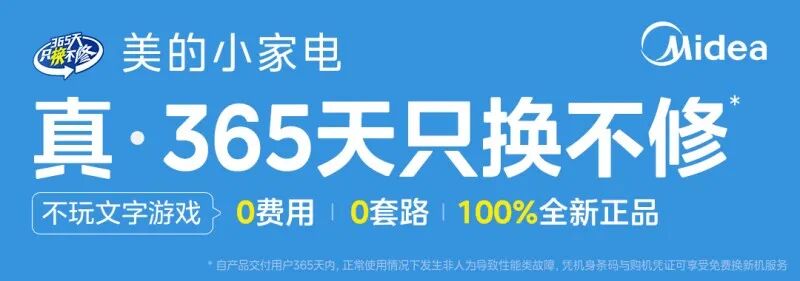
Since last year, more and more manufacturers have started to invest resources in service. For example, air - conditioning brands such as Gree, Xiaomi, and Aux have all proposed a 10 - year warranty; Midea has comprehensively upgraded its "replace instead of repair" commitment, providing a "replace instead of repair within 365 days" service for small home appliances.
During this year's 618, manufacturers have gone to great lengths to improve the consumer experience, and "delivery speed" has become the most crucial factor.
Gree has launched an "air - conditioner disassembly, delivery, and installation in half a day" service, and 13,000 Gree stores across the country will join Meituan Flash Sale; 10,000 Xiaomi stores under Xiaomi have also joined Meituan Flash Sale.
Recently, Suning.com also announced the upgrade of its instant retail strategy, upgrading the "store - warehouse integration" network and the "delivery and installation in one" service capabilities to layout the instant retail track. Currently, some stores under Suning have begun to pilot the "24 - hour + full - category" business model.
E - commerce platforms are also not to be outdone. In March, JD Logistics announced the further upgrade of its home appliance and home furnishing delivery and installation in one service, and will extend its professional after - sales service network to townships and streets.
