Post-2000s Entrepreneurs Take Center Stage, "Go Big or Go Home" | 36Kr Offline Meetup Phase 2

"What hinders the process of discovering truth is not lies, but extremely incisive wrong opinions." When facing all kinds of ignorance in the Age of Enlightenment, the German physicist and satirical writer Georg Christoph Lichtenberg playfully wrote down this famous quote.
Many misjudgments are dangerous precisely because they seem overly correct. They can explain the world in a short period, and it's easy for them to remain in place in the form of "consensus" even after the world has changed.
AI has also gone through a similar chaotic stage. In the past two years, people have been used to understanding this change with some simple indicators: who has more GPUs, who has trained a model with larger parameters, and who has burned more Tokens. As a result, an invisible competition of "Token consumption" once became popular in Silicon Valley to prove who is the most AI Native company.
However, the reality is that Token consumption can measure the degree of investment, but it cannot measure the direction of investment - if the direction is wrong, the consumption itself is a waste. This is also where Tokens are most easily misinterpreted.
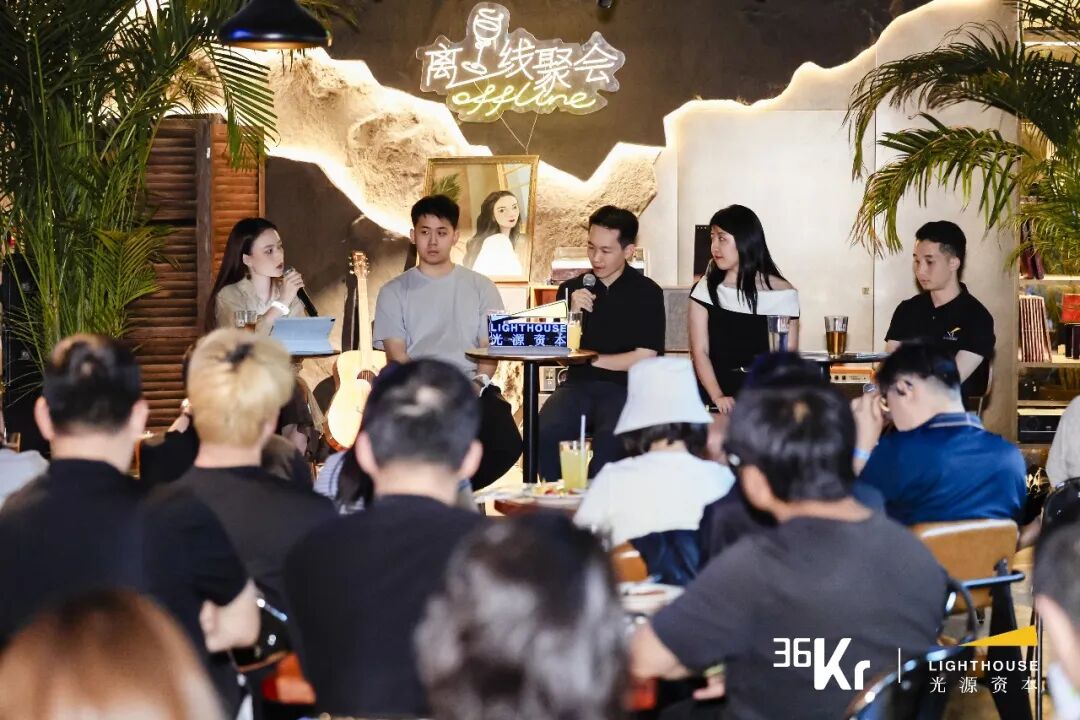
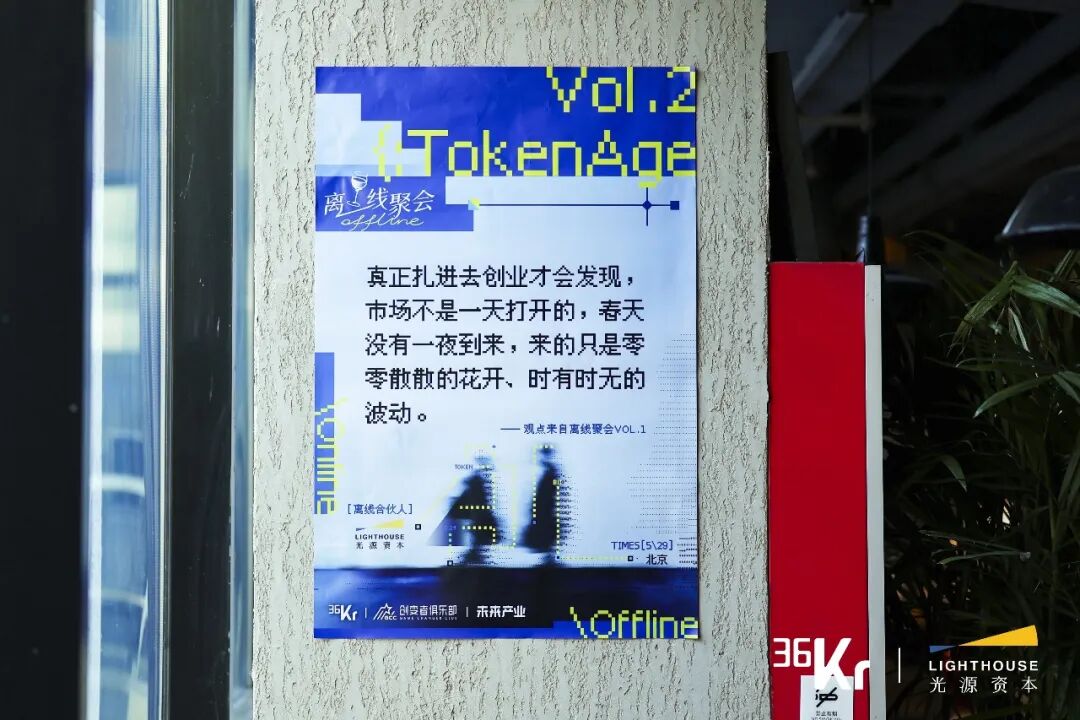
On the evening of May 29th, 36Kr, in collaboration with Lightspeed Capital, held the second offline gathering, "TokenAge," in Beijing. This time, we don't focus too much on consumption. Instead, we pay more attention to what AI productivity brings, such as a judgment, an iteration, an entrepreneurship... When AI becomes "productivity" itself, how can we leap into the future?
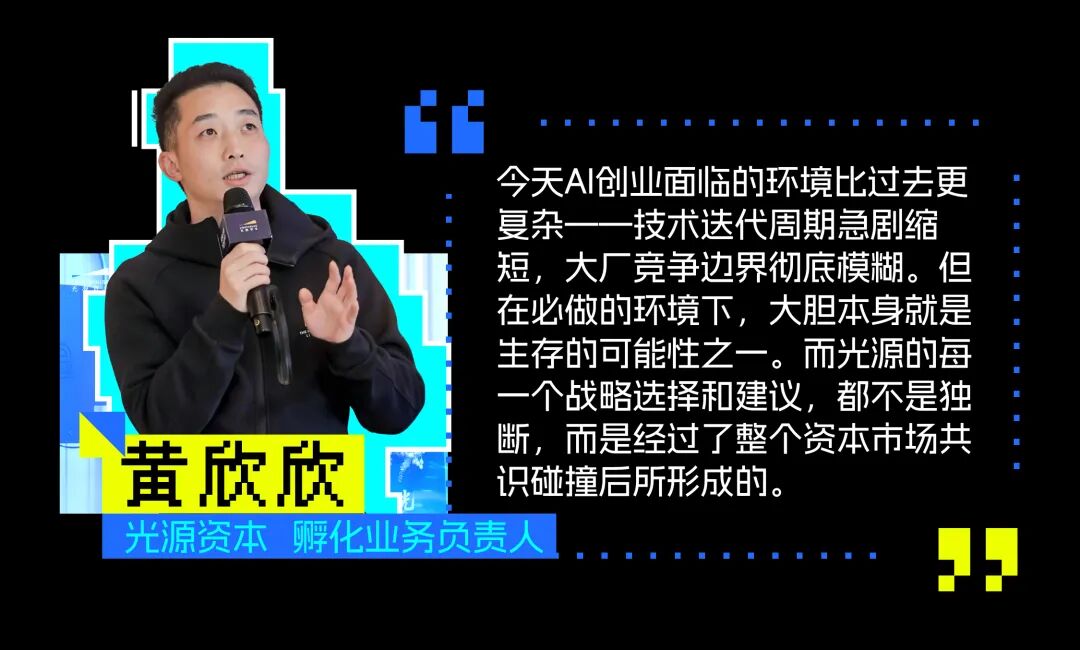
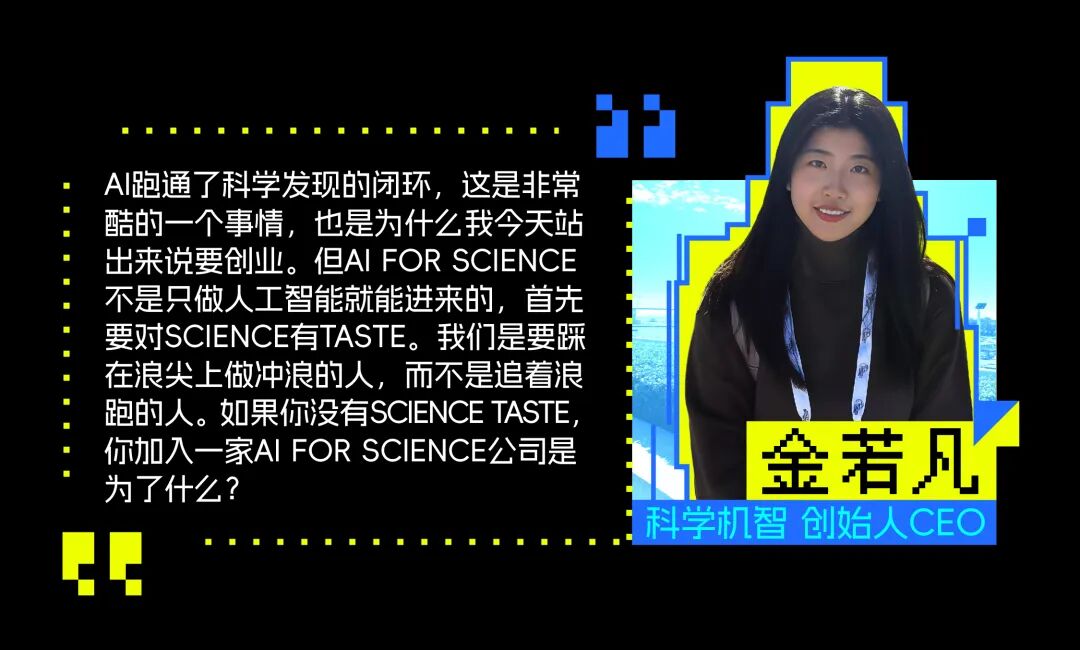
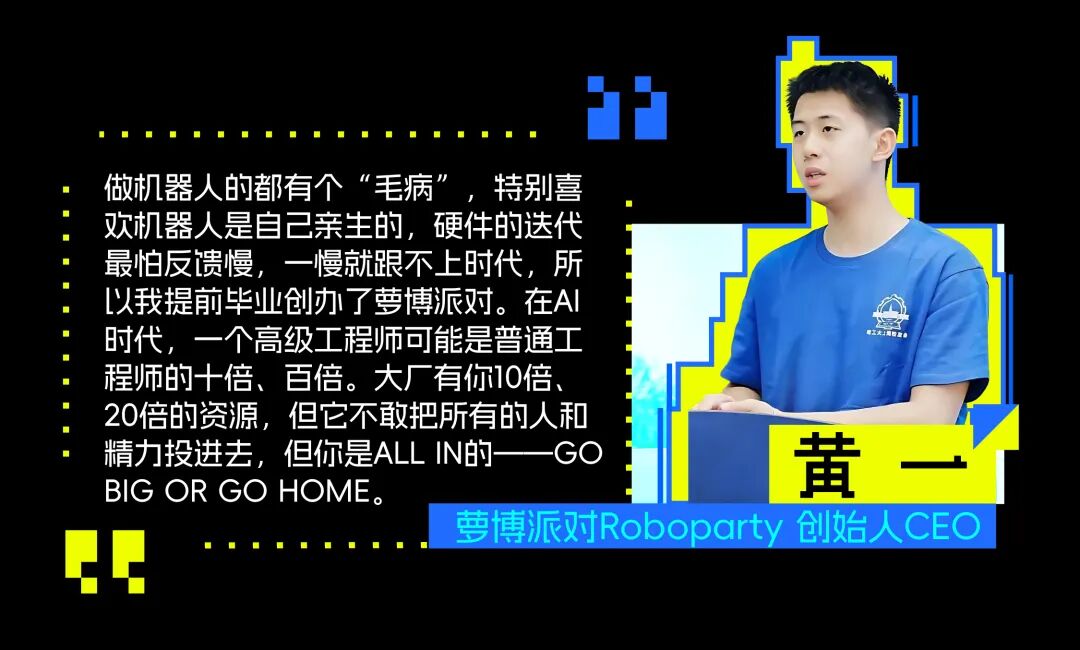
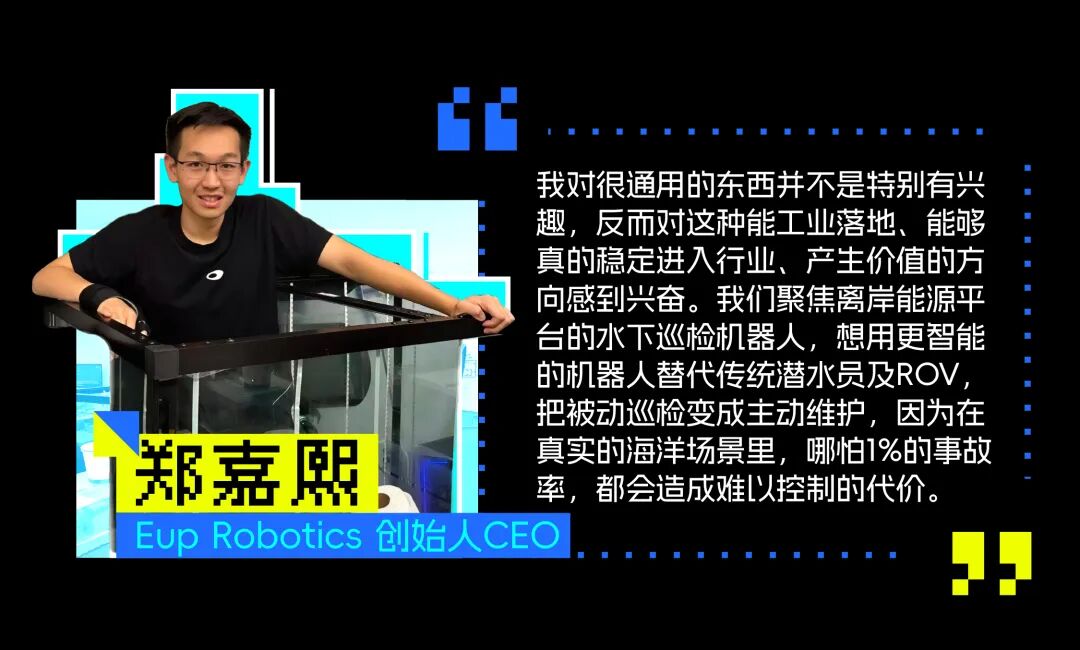
We invited four guests who are at the forefront of AI entrepreneurship: Huang Yi, the founder of RoboParty, who is working on fully open - source bipedal humanoid robots; Zheng Jiaxi, the founder of Eup Robotics, who focuses on underwater inspection robots for offshore energy platforms; Jin Ruofan, the founder of Science Witty, who wants to explore the "AGI moment" of AI for Science with Agent products; Huang Xinxin, the person - in - charge of the 3i Industrial Innovation Incubator of Lightspeed Capital, who was an entrepreneur in the mobile Internet era and now focuses on discovering and accompanying AI frontier technology entrepreneurs from scratch.
In fact, RoboParty, Eup Robotics, and Science Witty are all enterprises incubated by Lightspeed Capital.
This should be the offline gathering of 36Kr with the highest proportion of post - 2000 founders on stage. But youth doesn't confer privilege here. Today's young entrepreneurs are being scrutinized more strictly. They are expected to know more about AI, deliver products faster, prove commercialization earlier, and clearly answer why they are worth investing in.
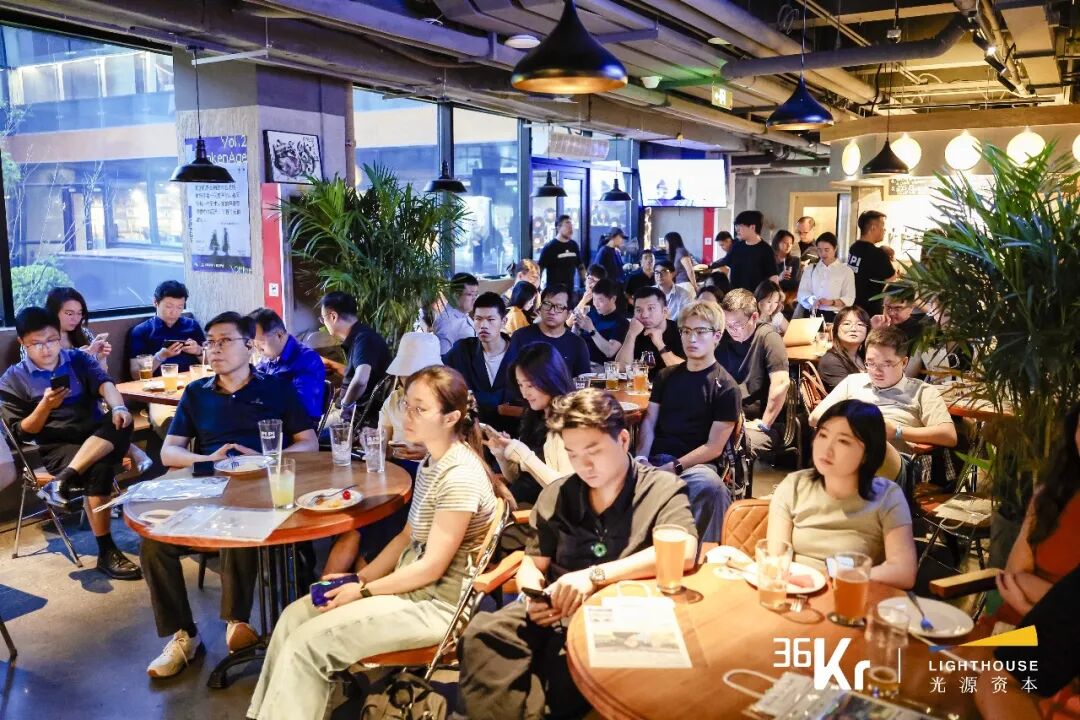
Correspondingly, compared with the grand narrative of replacement, dozens of entrepreneurs, investors, and those promoting AI in their respective organizations off - stage are more concerned about practical issues: "How should companies reorganize themselves in the AI era?" "Why hasn't AI brought a significant increase in organizational efficiency?"
Since the Industrial Revolution, the popularization of each general - purpose technology has led to similar questions: After the emergence of machines, how should factories reorganize labor? After the emergence of the Internet, how should enterprises reorganize information? After the emergence of the mobile Internet, how should platforms reorganize transactions...
Each era has its own answers. Now, let's take a look at the entrepreneurial paths, organizational iterations, and self - evolution in the AI era from the selected cases.
If you want to get the full - version sharing content, you can listen to the podcast audio at the end of the article; for a more authentic experience, you're welcome to come to the event in person (the QR code is at the end of the article).
Starting from AI, explore the path to solve real - world problems
Zheng Xuanle, the founder and CEO of Lightspeed Capital, once mentioned a judgment. He believes that the mobile Internet creates value by connecting everything, while AI is productivity itself, more like "electricity." When it is introduced into various robot hardware through software engineering, it will form an end - to - end solution and create value.
The experiences of the three founders on stage provide specific examples from different directions. When AI becomes the underlying technological change driving this round of entrepreneurship, new solutions are emerging for old problems.
Jin Ruofan first felt this change when she saw the early version of ChatGPT in 2022. "How can it perform so well in few - shot and zero - shot generalization tasks? But why doesn't it cut into tool invocation? Why isn't there a professional knowledge base to support more complex scientific research processes?" She saw the possibility of AI solving more scientific problems and started trying multi - agents in 2022. By July 2025, the Science Witty team developed the world's first self - evolving biomedical multi - agent. After the paper was published, it was quickly cited, and the open - source code was also used as a benchmark by peers.
The feedback on the results was beyond expectations. She has a friend who does virus research. Due to security and confidentiality concerns, he only "briefly mentioned a little" in very simple words. But after inputting the vague information, the model not only guessed what he was doing but also proposed a real scientific hypothesis, closing the loop of scientific discovery. "This is a really cool thing. That's why I'm standing here today to start a business."
The real value of this example lies in that it indicates a change in the scientific research paradigm. In the past, scientists had to switch back and forth between papers, databases, codes, tool software, and experimental platforms. A large amount of knowledge was scattered in people's experience and unstructured data and processes. What Jin Ruofan wants to do is to make Agent an entry point to build a unified scientific research environment that connects "AI - tools - experiments - feedback" and achieve a closed - loop of AI - Native scientific research execution and collaboration.
Huang Yi, who is working on robots, chose a path of robot AGI starting from hardware. He may be the youngest founder of a humanoid robot company in China. He was admitted to Harbin Institute of Technology in 2023 and "built" a bipedal robot named AlexBot with a cost of less than 20,000 yuan in his dormitory during his freshman year. He started his business in 2025.
He said that people in the robotics field have a "problem," "they especially like robots to be their own creations." During his internship, Huang Yi was debugging robots and wanted to make changes. However, the feedback cycle was too long. And hardware iteration is most afraid of slow feedback. Once it's slow, it can't keep up with the times and "miss the whole big wave." So he declined the invitation from a large company and graduated early in his junior year to found RoboParty.
Huang Yi's concept of full - stack open source is not simply open - sourcing code. Its core products include the Atom series of humanoid robots and the Roboto open - source ecosystem platform, which features full - stack open source of hardware blueprints, control codes, etc. By lowering the development threshold of hardware, software, and supply chain, it allows more developers to participate in the ecological co - construction.
Although this is a controversial path, Huang Yi also mentioned at the event that "full open source doesn't mean no commercialization." In fact, after the release of RoboParty's first - generation fully open - source product, it received more than 120 orders. "Institutions and large companies often choose to repurchase twenty or thirty units instead of manufacturing and producing on their own based on the open source."
He understands it as the "smiling curve" of products, believing that "design and brand are the most expensive, while the manufacturing link has the thinnest profit." The value of open source is not to enable everyone to build the same robot, but to allow more universities, developers, and research institutions to enter the ecosystem through RoboParty.
Zheng Jiaxi is also in the robot entrepreneurship track, but he is facing a seemingly more "heavy" field. Eup Robotics focuses on underwater inspection robots for offshore energy platforms, which is a typical To B hard - technology direction. The application scenario is the complex and harsh real - world marine environment.
He hopes to use AI technology to reshape traditional solutions and solve industrial problems. This preference for technology and products also determines the path choice of Eup Robotics to some extent. "I'm not particularly interested in things that may be very general. Instead, I'm excited about directions that can be industrially implemented, stably enter the industry, and create value. The real marine scenario has extremely high requirements for safe operations. (In the past), even a 1% accident rate could cause very difficult - to - control costs."
Eup Robotics' products focus on the IMR field. It wants to use more intelligent underwater robots to replace traditional divers and ROVs, transform passive inspection into active maintenance, and provide cost - effective, autonomous, and resident underwater detection and light - intervention services for application scenarios such as offshore wind power, oil and gas platforms, and port terminals. Its first - generation product is under accelerated research and development.
Three companies, three young founding teams, all starting from AI in different directions, boldly innovating, and providing new solutions and creating value for the industry.
Huang Xinxin mentioned that today's AI entrepreneurs face double challenges: the technology iteration cycle is sharply shortened, and the competition boundaries of large companies are completely blurred. There is no longer a safe haven like in the mobile Internet era, and entrepreneurs can no longer survive by information asymmetry or model innovation. In this environment, "boldness itself is one of the possibilities for survival."
Lightspeed Capital focuses on early - stage incubation. It values the boldness and enterprising spirit of young entrepreneurs. It also noticed the different paradigm changes between the two generations of entrepreneurship waves from the Internet to AI earlier, so it decided to heavily invest in technology - driven entrepreneurship at an early stage.
At this stage, Lightspeed's core strategy is divided into three steps: First, "follow the most excellent people" and discover top - notch young people with a consensus from large companies and the academic circle; second, actively converge directions based on industry insights and lock in potential teams in corresponding fields before opportunities emerge; third, transform ten years of FA and investment experience into entrepreneurial common sense to help young founders avoid pitfalls in strategic selection, team building, and financing rhythm.
"All direction judgments are not made arbitrarily but formed through repeated collisions with the capital market to reach a consensus." Huang Xinxin mentioned that this generation of young people has a low material desire, a high technical starting point, and a more pure entrepreneurial motivation - "what they have learned meets the opportunities of the era, and it would be a waste not to act." This is also the underlying confidence for Lightspeed to heavily invest in this group of post - 2000 entrepreneurs.
What does an AI Native organization look like?
In addition to the choice of entrepreneurial paths, one of the most core questions at this gathering is about the organizational form. What exactly does an AI Native company look like? Is a young entrepreneurial team the standard?
Many companies think that buying AI tools, installing Copilot, opening Agent accounts, and encouraging employees to use large models means they have completed AI transformation. But the reality is not that simple.
A project manager in charge of the reform of the hardware R & D process described a very specific dilemma during the on - site interaction session. In the hardware R & D process, models can already participate in decision - making, generate solutions, and are even better than humans in some specific tasks. However, organizational systems, job values, and processes have not changed synchronously. The core know - how in the industry is in the hands of experienced senior engineers, but these people may not be willing to accept AI; when promoting reforms from top - down and skipping the middle - layer, conflicts constantly arise at the most detailed level.
His final question was, "Why has the single - point AI intelligence increased tenfold or a hundredfold, but the organizational intelligence has not reached the same level?"
Jin Ruofan believes that this is because many companies only have single - point intelligence and have not formed organizational intelligence. Taking AI - based drug discovery as an example, there have been a large number of vertical models in the past, but the value they bring is still limited. "In most cases, it is still dominated by humans." What Science Witty wants to do is to connect experiments, human - machine interaction, and dynamic feedback into a closed - loop, so that the judgments behind each step can be absorbed, reused, and evolved by the system. This is the problem that an AI Native scientific research organization needs to solve.
"Only when an organization can fully understand and control the innovation ability brought by Agent can it enter the level of organizational intelligence. Only then can you really see a tenfold or hundredfold increase."
Individually, Zheng Jiaxi's work style itself is a sample of an AI Native approach. He no longer writes code line by line but uses vibe coding to complete the entire architecture and code base. He hands clear ideas and judgments to AI, lets AI output in the form of code, and moves up to the product