Ride-hailing drivers, who are earning less and less, have transformed their cars into "mobile malls" — serving freshly ground coffee and even offering 8-yuan haircuts.
Who would have thought that when taking a ride, you could also order a freshly brewed coffee?
In Jiangmen, Guangdong, a ride-hailing driver moved a coffee machine into the front passenger seat and named it "Red Light Coffee", with a cup costing up to 29 yuan. In Shanghai, a passenger almost thought they got in the wrong car when they got in. The center console, windows, and sunroof were all hung with jade pendants, and there were raw stones piled at the foot of the front passenger seat. The whole car was like a mobile jewelry store. In Suzhou, a taxi parked in the parking lot, with a sign reading "Haircut for 8 yuan" standing in the trunk, which attracted many fellow drivers to line up specifically to get a haircut from him. In Harbin, a driver hung the handmade bean mosaics made by his daughter all over the back seat. Unexpectedly, after one trip, the fare was 10 yuan, but the bean mosaics were sold for 93 yuan, and the side business income exceeded the main business.
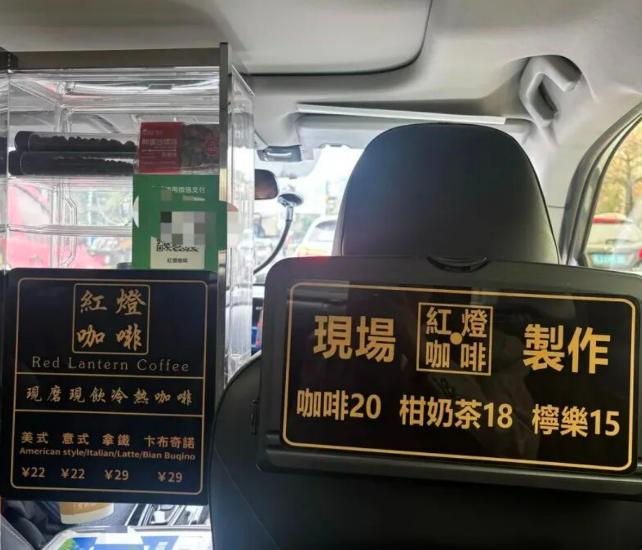
Image source: Xiaohongshu @Peppercorn
Ride-hailing cars across the country have started selling handicrafts, snacks, fast food, and even providing KTV song-ordering and automatic massage services. How has an ordinary car become the latest "mobile department store"?
01 What side businesses are ride-hailing drivers engaged in?
If in the past, ride-hailing drivers competed in who could pick up orders faster and provide better service, now, more and more drivers are starting to compete in another thing - who has a more creative side business.
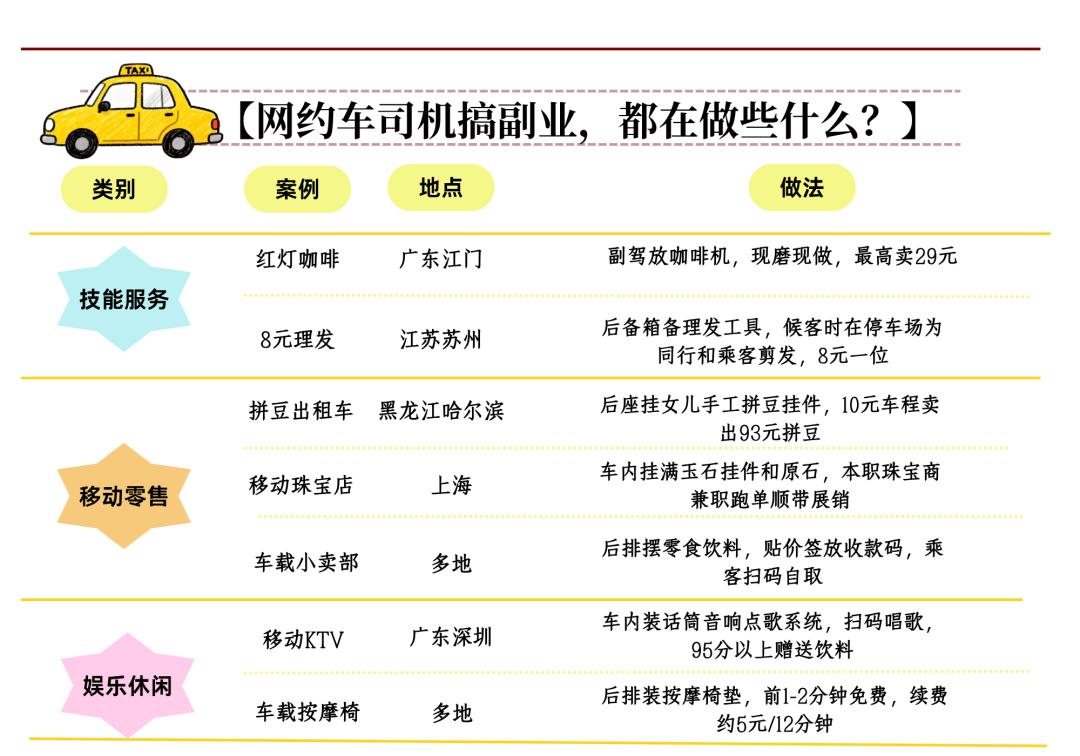
If you look through social platforms, you will find that ride-hailing cars across the country are being transformed into all kinds of unexpected forms. Some sell coffee, some sell snacks, some sell jade and antiques, and some even turn the car compartment into a barbershop, KTV, and massage parlor. Roughly speaking, these side businesses can be divided into three categories: skill-based services, mobile retail, and entertainment and leisure.
Produced by Hydrogen Business
The most well-known one is the skill-based service type.
Recently, a ride-hailing driver in Jiangmen, Guangdong, directly moved a coffee machine into the front passenger seat. As soon as passengers got in the car, they could see two black and gold menu boards with the eye-catching words "Red Light Coffee" written on them, as well as the promotional phrases "Freshly brewed" and "Made on the spot". The menu shows that American and Italian coffees are sold for 22 yuan, lattes and cappuccinos cost up to 29 yuan, and there are also drinks like lemon soda and milk tea.
Some passengers recalled that the driver was explaining the difference between cappuccino and American coffee all the way, and the car was filled with the aroma of coffee, but the driver didn't actively promote anything throughout the journey. Many netizens sighed: "A Didi with coffee definitely won't stink."
In Jiangmen, this kind of operation seems particularly reasonable. As a well-known hometown of overseas Chinese, Jiangmen has always had a strong coffee culture. The number of local coffee shops has exceeded 1,500, and the number of coffee shops per 10,000 people even exceeds that of some first-tier cities. In a sense, this driver just moved the coffee obsession of Jiangmen people from street-side shops into the car compartment.
Another well-known one is the "8-yuan barber" in Suzhou.
Wang Gaoyuan, a 33-year-old driver, used to be a barber for 7 years and then switched to driving a taxi. After finding that he often had nothing to do during waiting time, he simply moved a hair clipper, scissors, and comb into the trunk and set up a "mobile barbershop" in the parking lot. A small flag had the simple and direct words - "Haircut for 8 yuan" written on it.
For taxi drivers who are constantly on the move, this business precisely hits the demand. A haircut in a barbershop usually costs twenty or thirty yuan, while Wang Gaoyuan only charges 8 yuan and cuts hair neatly. Slowly, the drivers in the parking lot all knew that there was a barber with good skills here, and many people lined up specifically to get a haircut from him. Sometimes, passengers who just got off at Suzhou North Station would also can't help but come over to experience it when they saw this scene.
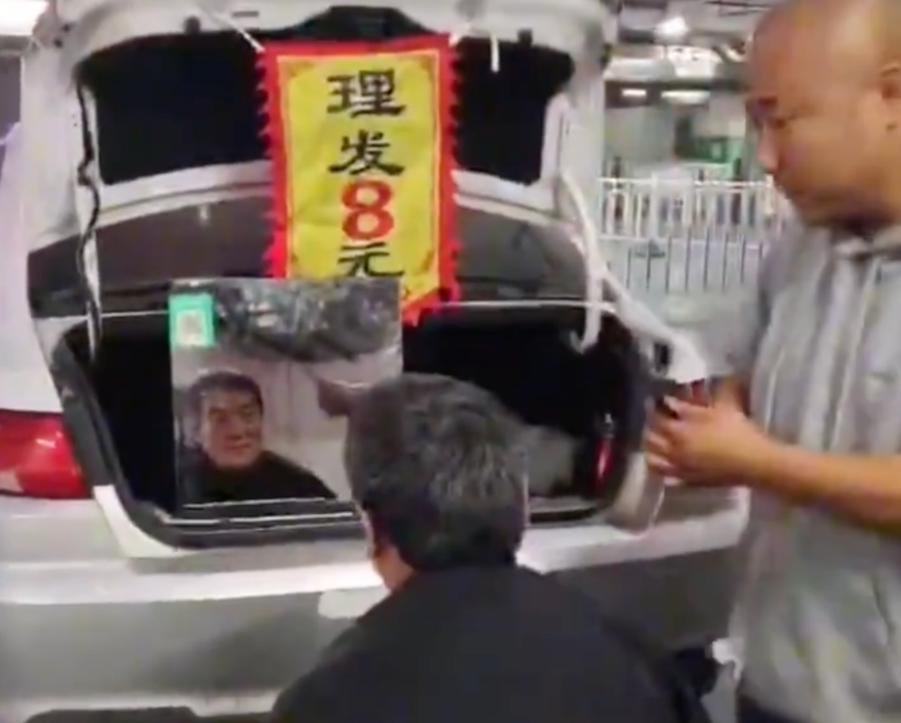
Image source: Yangtze Evening News
If skill-based services sell craftsmanship, then the second type of side business - mobile retail, sells goods.
The "bean mosaic taxi" in Harbin may be the most representative case. A taxi driver hung the bean mosaic pendants handmade by his daughter all over the back seat. Bears, cats, and rabbits were lined up in colorful rows. Originally, he just wanted to show his daughter's works, but unexpectedly, many passengers actively asked about the prices. The driver found that the income from these handicrafts sometimes even exceeded the fare itself. On the most exaggerated day, for an order with a 10-yuan fare, 93 yuan worth of bean mosaics were sold in the end.
There are many similar mobile retail cases. A passenger in Shanghai got into a "jewelry car". When they opened the door, they almost thought they got in the wrong car: the center console was hung with jade pendants, strings of beads and ornaments were hanging from the windows and sunroof, and there were several raw stones piled at the foot of the front passenger seat. The car was filled with a luxurious atmosphere. The driver explained that he originally ran a jewelry store and drove a ride-hailing car in his free time. He put some affordable jade on the car for display, and passengers could buy them if they liked.
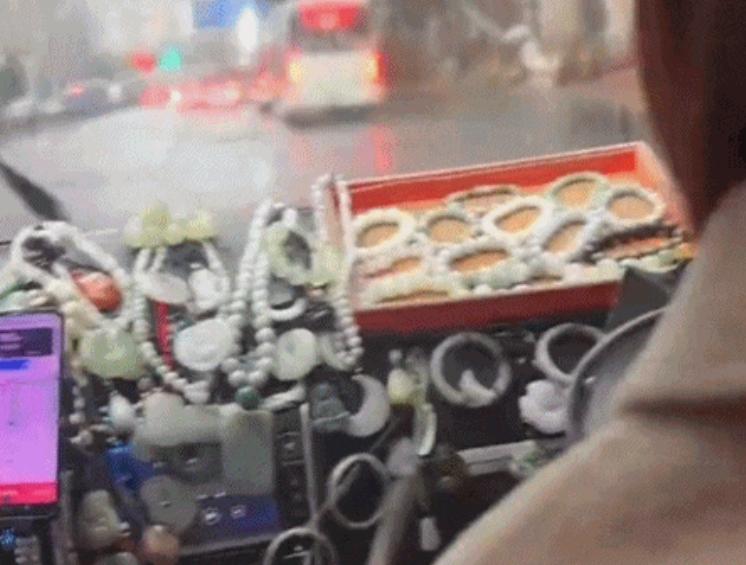
Image source: Xinwenfang
Many drivers have also transformed the back row into a small convenience store. Spicy strips, squid shreds, melon seeds, mineral water, and QQ candies are neatly arranged. Each item has a price tag on it, and there is also a payment QR code beside it.
A netizen from Guangdong shared that when he took a taxi with his child, he originally only wanted to spend 15 yuan to reach the destination. However, his child kept buying snacks along the way. In the end, the fare was 15 yuan, and the snacks cost 30 yuan, with a total consumption of 45 yuan.
"Oh no, I've encountered a real'shopping cart'."
The third type of side business has started to evolve into the entertainment and leisure track, mainly focusing on providing emotional value.
A ride-hailing driver in Shenzhen transformed the car compartment into a mobile KTV. The lighting atmosphere in the car was fully set up, and there were microphones, speakers, and a song-ordering system. Passengers could scan the QR code to order songs, and the driver would clap to cheer them on after they finished singing. In addition, he also put a small refrigerator in the car. If passengers forgot to have breakfast or needed to drink water, they could scan the QR code to buy drinks and snacks. If a passenger got a score of over 95 on the APP for singing, he would even give a bottle of drink as a gift.
Some passengers who love to sing were pleasantly surprised as soon as they got in the car. Someone originally only planned to take a 3-kilometer ride. After finding that they could sing in the car, they directly changed the destination to more than ten kilometers away, sang all the way, and even picked up two friends on the way to sing together.
"I had a great time singing in the taxi, my emotions were high, and I reached my destination. Shenzhen people really value efficiency."
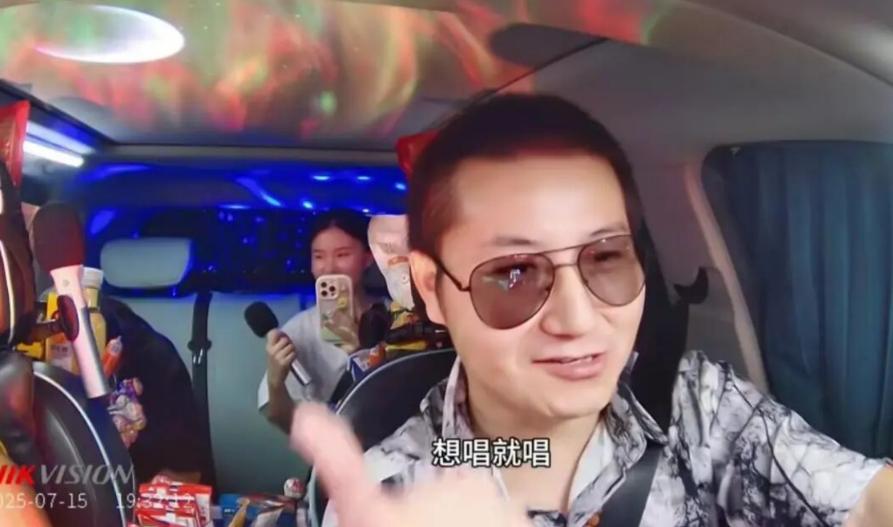
Image source: Jimu News
Some drivers have also put massage chair cushions in the car to provide paid massage services. The first 1 - 2 minutes are free for experience, and it costs about 5 yuan for 12 more minutes of massage.
Many passengers find it novel and take the opportunity to have a shoulder and neck massage when they get in the car. Of course, some people have also encountered unexpected "torture". Some netizens posted that after they had a rib fracture and took a ride-hailing car, as soon as they carefully sat in the back row, the seat suddenly started the massage mode and began to pound their backs crazily.
"At that moment, I felt like I was going to break into pieces."
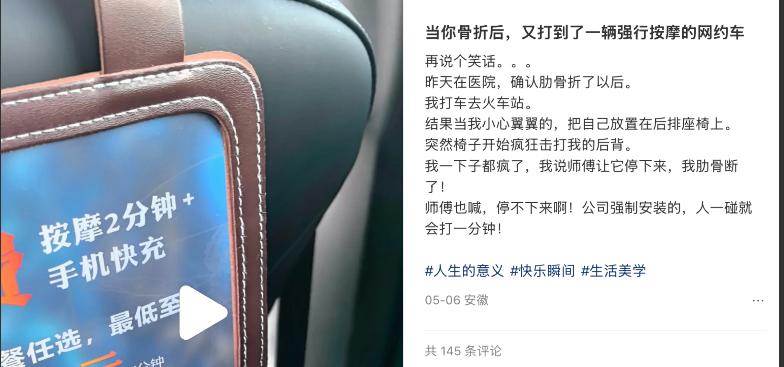
Image source: Xiaohongshu @Battle Axe Cosplay Creation
02 Is the ride-hailing car becoming "Howl's Moving Castle"?
Behind these diverse side businesses points to the same reality: More and more ride-hailing drivers are looking for new sources of income besides the fare.
In the past few years, the "iron triathlon" composed of food delivery, express delivery, and ride-hailing has always been regarded as the last buffer zone in the flexible employment market - if you're unemployed, you can drive a car as a transition; if you can't find a better job, you can also maintain basic income by taking orders.
But now, this "shelter" itself is also becoming crowded.
In April 2026, the Shenzhen Municipal Transport Bureau released an operation report showing that the city's ride-hailing market was generally saturated. The average daily order volume per car was about 13, and it clearly "warned" practitioners to "make rational decisions". Similar situations have also occurred in Guangzhou, Huizhou and other places: the number of vehicles has been continuously increasing, but the order growth rate has slowed down significantly. Many vehicles have an average daily order volume of less than 10.
The income pressure is more direct. Data from the China New Employment Forms Research Center shows that the average monthly income of ride-hailing drivers across the country in 2025 was about 7,623 yuan. Although the number seems not low, according to the statistics of Shudu Ride-hailing, after the platform takes a commission of 18% to 20% and deducts costs such as car rental, charging, insurance, and maintenance, in the end, the daily net income of top drivers is about 300 to 380 yuan, that of middle drivers is only 140 to 180 yuan, and that of bottom drivers is even less than 100 yuan.
At the same time, the industry competition has been intensifying. In the past year, many drivers have felt a decrease in orders and an increase in idle driving time. Some people found that their monthly turnover dropped from more than 8,000 yuan to less than 7,000 yuan; some people sighed that now, there are even people scrambling to take orders with a "1-yuan per kilometer" fare. Data shows that the average idle driving rate of ride-hailing cars across the country has been maintained between 38% and 45% for a long time. This means that when drivers are online for 10 to 14 hours, nearly half of the time is spent driving without passengers.
"The so - called unemployment fallback path is also crowded with people."
In this context, the appearance of coffee machines, bean mosaics, jade, snacks, and massage cushions in the car is no longer just a curious online anecdote, but a real survival strategy.
More importantly, the ride-hailing car itself is actually a business scenario that has been underestimated for a long time.
For many passengers, the car compartment is not just a transportation space. An average trip lasts 15 to 30 minutes. When they are thirsty or hungry and want to eat something, when it rains and they want an umbrella, or even just being touched by the in - car atmosphere and wanting to buy a souvenir, these are all real needs.
From this perspective, the so - called "in - car economy" essentially transforms the originally idle travel time into consumption time and turns the single transportation scenario into a commercial space with service, retail, and experience attributes. Compared with setting up a stall, ride-hailing cars face new potential customers every day and naturally have a long contact time, so the transaction efficiency is actually higher.
In fact, this is not a new concept.
Around 2016, when the sharing economy and new retail were at their hottest, there was a wave of "in - car convenience store" startups in China. Projects such as gogo+ Car Bar and Mobile Go (Magic Express) successively received financing and tried to transform taxis and ride-hailing cars into mobile retail terminals. Drinks, snacks, tissues, and umbrellas were neatly hung behind the seats. Passengers could scan the QR code to buy them, and drivers would get a share from the sales. Some projects claimed that some drivers could increase their income by thousands of yuan per month, and those with high sales even exceeded ten thousand yuan.
At the same time, Uber in the United States also cooperated with a startup company called Cargo to sell daily necessities such as snacks and data cables in the car, hoping to improve the passenger experience and create additional income for drivers under income pressure.
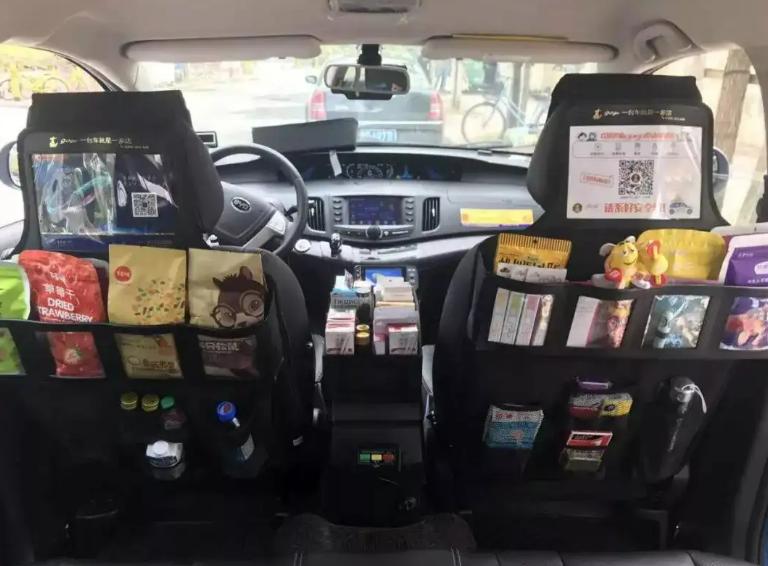
Image source: Perspective on New Retail
In other words, the idea of turning the car compartment into a "mobile convenience store" has been seriously tried before. Those drivers who are selling coffee, bean mosaics, and jade today are just continuing on the same path - when the transportation capacity is becoming less and less valuable, the car compartment itself has become a new business field.