Raised 1 billion yuan in financing within 3 months, another robotics unicorn emerges
Today, a new unicorn has emerged in the embodied intelligence track.
Robot company Stardust Intelligence announced the completion of a Series B financing round: it raised funds three times in a row within three months, with a cumulative financing amount exceeding 1 billion yuan and a valuation exceeding 10 billion yuan.
The lineup of investors is also quite special: in addition to state-owned background institutions such as Liangxi Science and Technology Innovation Industry Phase II Mother Fund, Yangzhou Longtou Core Chip, and Zhongbo Juli, industrial capitals such as Thundersoft and Kede Education have also entered the fray. This means that investing in robots is no longer just about VCs betting on the future; local governments, listed companies, and the industrial chain are all placing their bets.
A significant change is taking place: some players in the industry are finally getting real orders.
Stardust Intelligence revealed to Pencil News that it has received multiple "thousand-unit orders" in industries such as retail, industry, and scientific research and education, and has achieved real batch deliveries.
In the past two years, the biggest problem in the robot industry has always been: robots can move but no one buys them; they can be demonstrated but cannot make money. Now, the situation is starting to change.
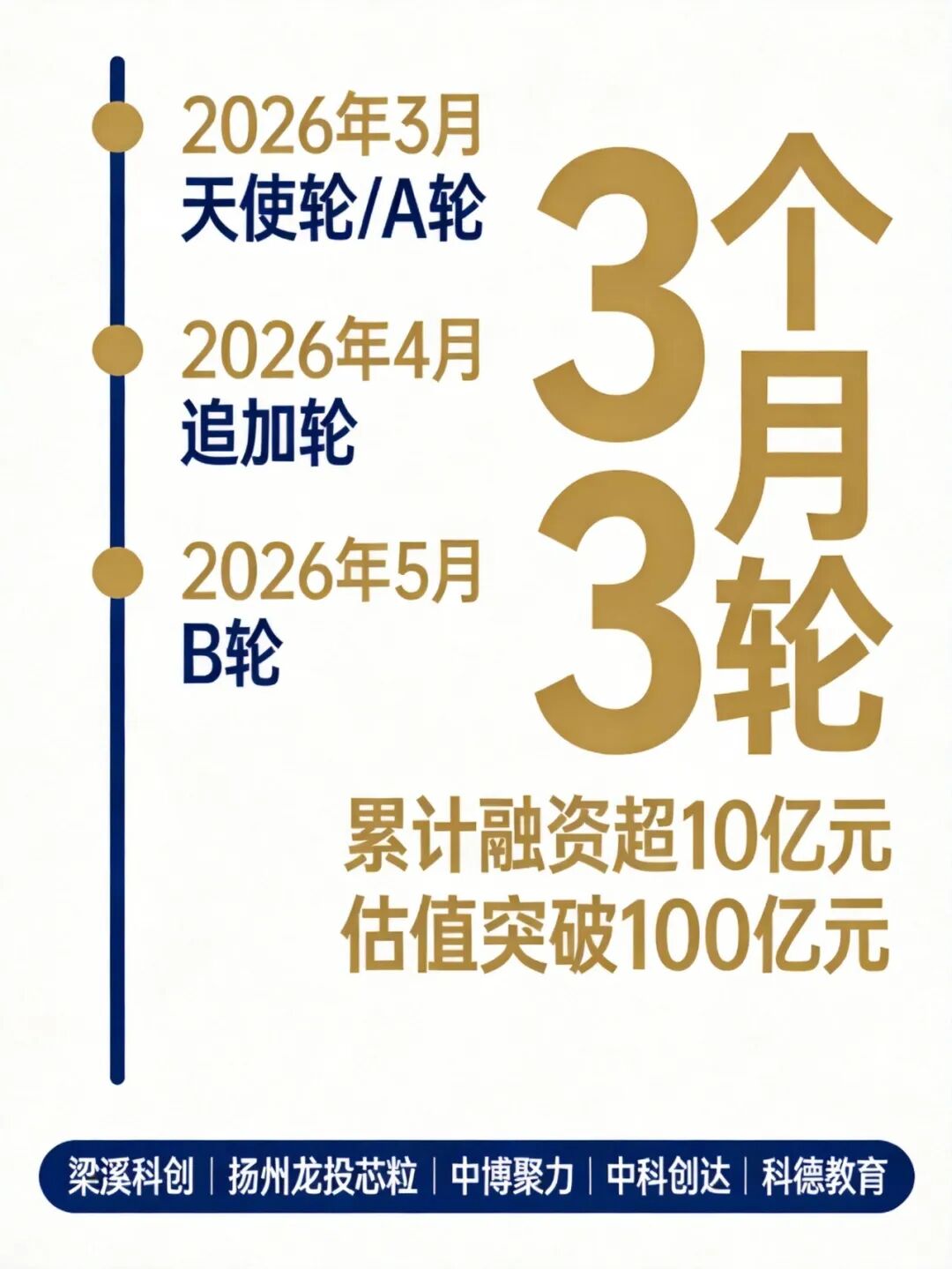
Financing history of Stardust Intelligence
01 Three Details
There are three details worth noting in Stardust Intelligence's latest financing round.
First, the price has come down. On May 27th, Stardust Intelligence launched the T1 robot, priced at 89,900 yuan. Previously, humanoid robots often cost hundreds of thousands or even millions of yuan, more like laboratory equipment. Now, at 90,000 yuan, it is starting to approach the price range that some merchants are willing to pay.
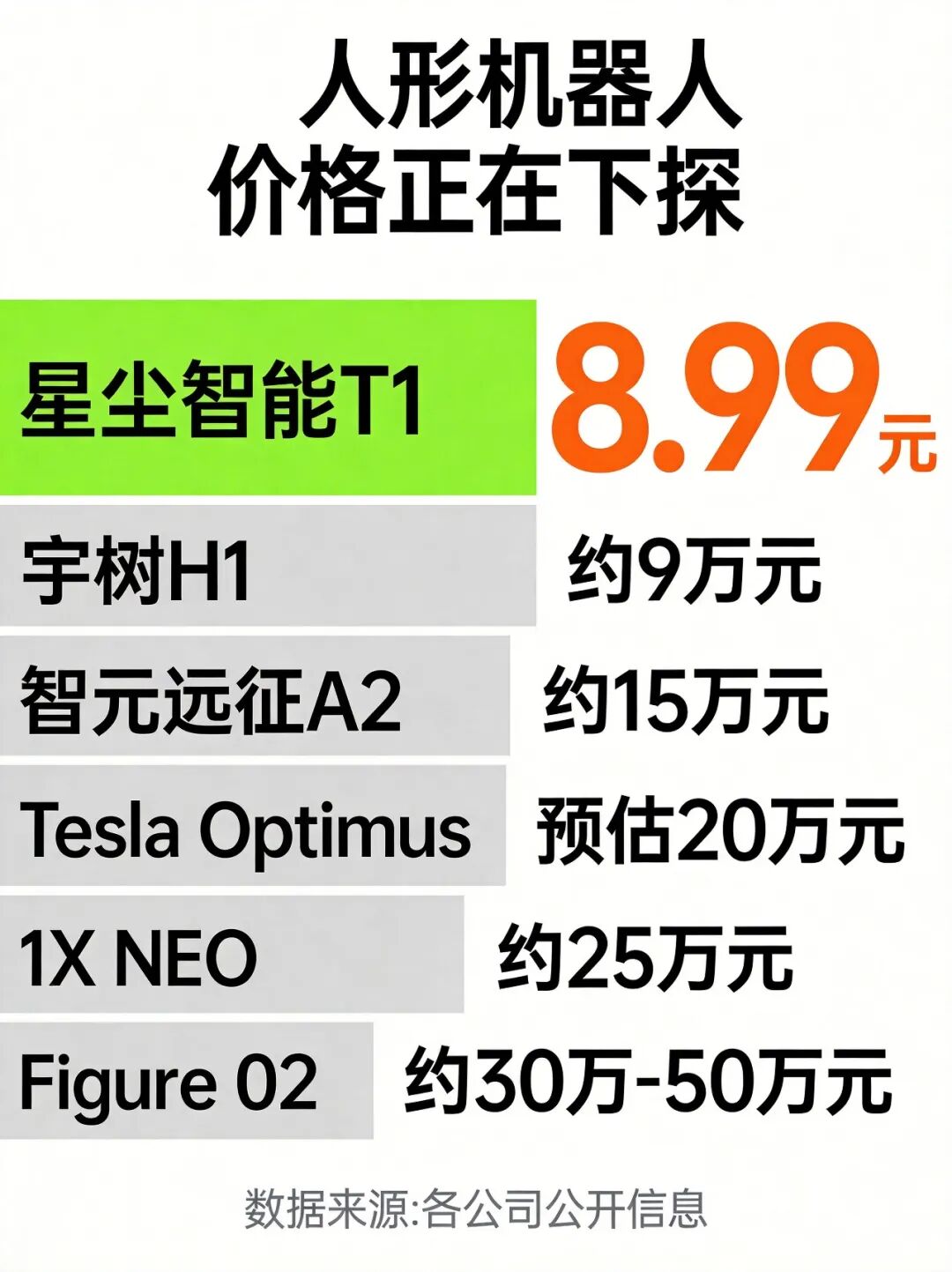
Price comparison of mainstream humanoid robots
Second, mass production has begun. The S1 robot had delivered over a thousand units by the end of 2025, and the T1 started shipping on June 1st this year. The biggest pitfall in the robot industry is that although the technology is great, the robots cannot be produced. Whether they can be mass-produced is much more important than whether they can do somersaults.
Third, investors are starting to scramble for territory. After Thundersoft made its investment, it directly signed an order for thousands of units with Stardust Intelligence, targeting factories and shopping malls. The Yangzhou Jiangdu Economic Development Zone also joined hands with Stardust Intelligence to establish a center, focusing on tourism, hotels, and public services.
To put it simply, capital is no longer just betting on technology; it is scrambling for the places where robots will work in the future.
02 Crazy Investment in Robots
Why? Because robots are finally getting close to "making money".
In the past few years, there has been a huge problem in the embodied intelligence industry: everyone talks about AGI and the future, but no one knows where robots will make money first. But now, several of the most realistic business scenarios have emerged.
The first scenario is retail.
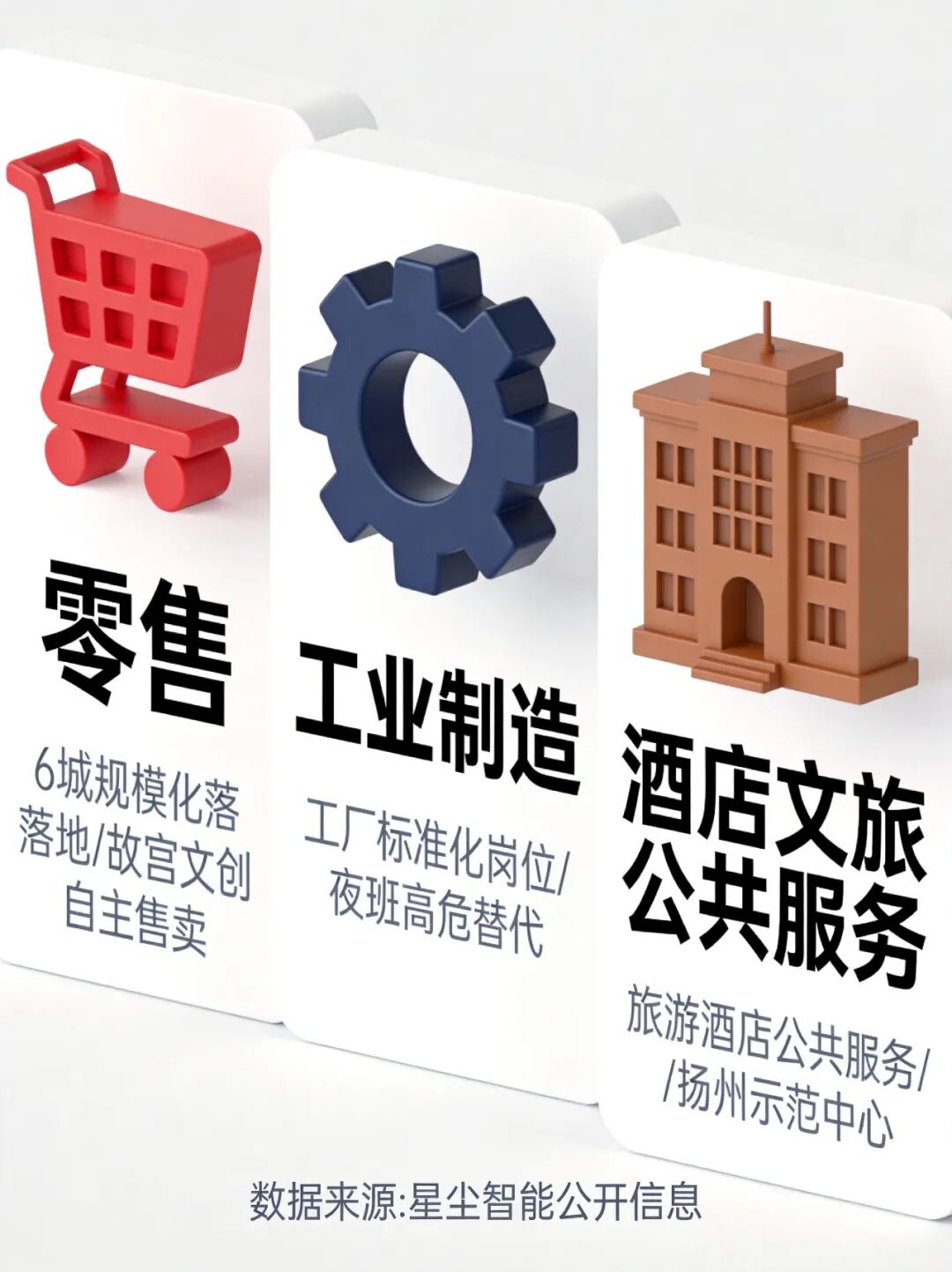
Stardust Intelligence disclosed that its AI retail solution has been scaled up and implemented in six cities across the country. For example, robots can independently sell goods in the Forbidden City cultural and creative scenarios.
Why is retail the easiest to implement first? Because the environment is fixed, the actions are repetitive, and the data is easy to collect. Robots don't need to be "completely human-like"; they just need to be more stable than humans.
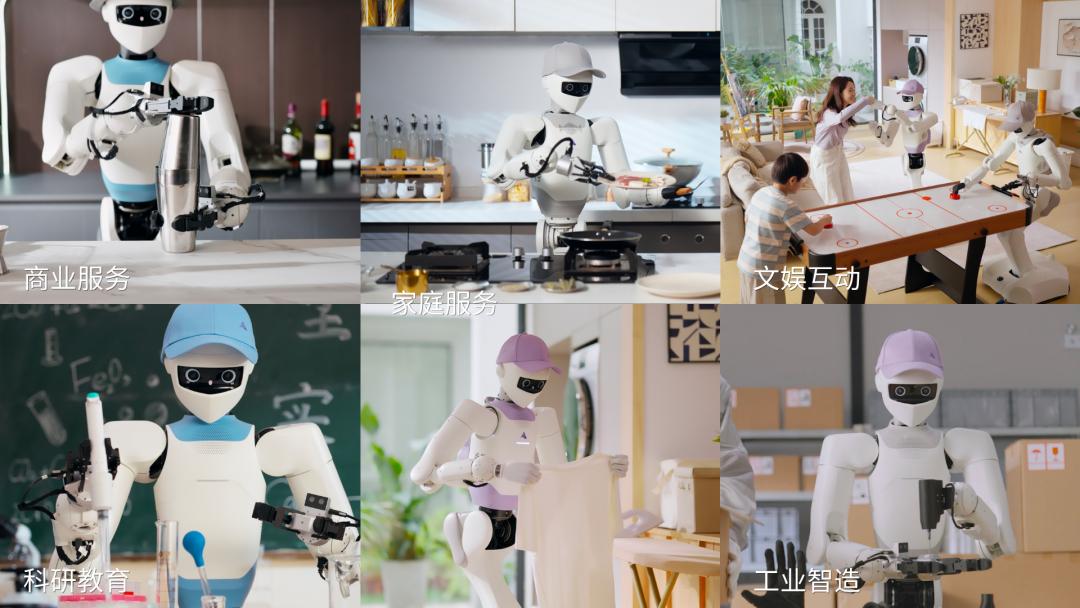
Stardust Intelligence recently launched the new product T1, priced at less than 90,000 yuan
The second scenario is industrial manufacturing. This is the market that almost all robots are vying for now.
The reason is simple: factories are already highly standardized, and there is a long - term shortage of workers in many jobs, especially night shifts, repetitive operations, and high - risk positions, where the demand for robots is the strongest.
The third scenario is hotels, cultural tourism, and public services. These scenarios have a common feature: large passenger flow, standardized actions, and the need for long - term repetitive labor.
The greatest value of robots is not to "replace all human work", but to take over those highly repetitive and low - value - added positions first.
There is also a more important change: the industry has now shifted from "competing on models" to "competing on real - world data", that is, physical AI.
To put it simply, in the past, large models mainly relied on Internet data. In the future, robots need to consume real - world data, such as how to grab a cup, how to open a door, how to avoid pedestrians, how to serve dishes in a restaurant, and how to interact with customers.
These things cannot be learned from the Internet; they can only be learned through repeated training in real scenarios. So what is truly scarce in the robot industry now is not "big models that can talk", but who can obtain real - world data the fastest.
This is also why local governments, retail, hotels, and factories are becoming important, because they can provide real scenarios.
03 Who Has Made Money?
Currently, there are mainly two types of companies that have started to make money.
The first type is companies that sell robot bodies, including Unitree, Zhipu, Stardust, Figure, 1X, etc., especially those that can achieve mass production and reduce costs.
Since the industry has entered the "delivery era" from the "laboratory era", the company that can lower the price of robots is more likely to get orders. For example, Stardust emphasized this time that the price of the T1 has been reduced to 89,900 yuan.
The second type is companies that sell "scenario solutions". Now, many customers are actually not buying robots but "robots + scenarios", such as hotel robot service solutions, shopping mall retail robot solutions, factory automation solutions, and education training solutions.
It is understood that Stardust has started to cooperate with the vocational education system to provide solutions of "real - machine training + digital courses + enterprise certification". Behind this is actually a large new market: in the future, many schools will start to train "robot operators".
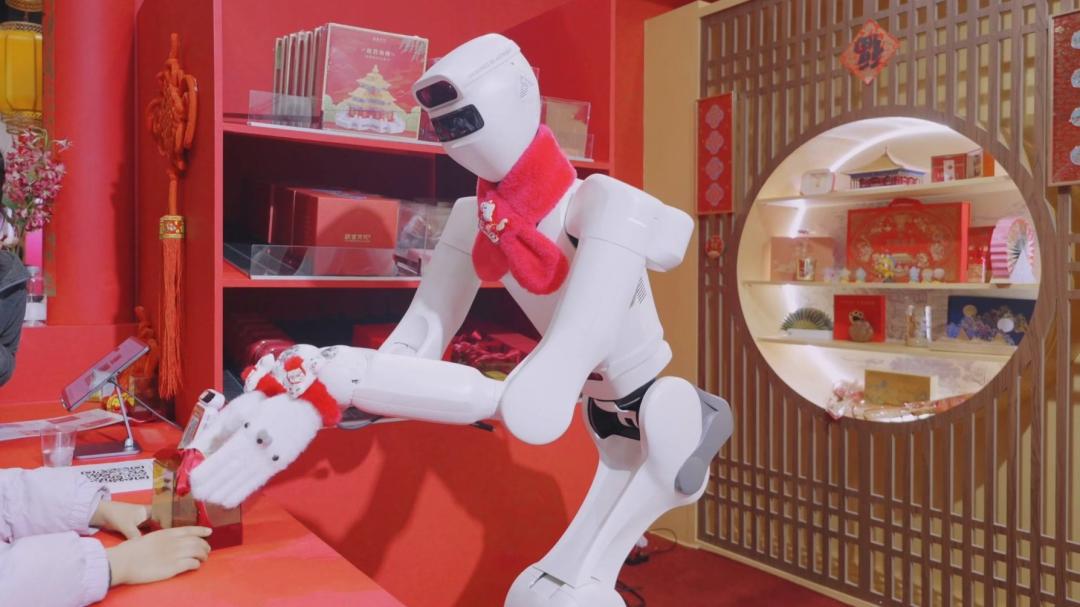
Stardust Intelligence S1 is independently selling Forbidden City cultural and creative products
Now, the sources of the most profitable orders are becoming clearer.
The first major customer is factories, because factories can easily calculate ROI (return on investment). If a robot can replace two - shift workers, the enterprise will place an order quickly.
The second major customer is the commercial service industry, including hotels, shopping malls, catering, and cultural tourism. These industries have a long - term shortage of workers, and labor costs are getting higher and higher. Even if robots only replace a part of the repetitive labor, there is commercial value.
The third major customer is the government and the education system, which is also a very obvious new change this year.
Local governments are massively building robot demonstration areas, AI application centers, industry - education integration bases, and intelligent manufacturing parks.
Because many cities have realized that robots may become the core of the next round of industrial competition, just like new energy vehicles did back then. The education system is also starting to plan ahead for "robot talents".
This is also why the robot industry has suddenly exploded recently - because capital has started to believe that this industry is no longer just a "future story", but that some people are actually starting to make money.
This article is from the WeChat official account “Pencil News” (ID: pencilnews), author: Pencil News. Republished by 36Kr with permission.