1.6 billion Windows users rushed into the Agent era overnight.
The Microsoft Build 2026 Conference opened in San Francisco.
Tonight, CEO Nadella took the stage and delivered a stunning keynote speech -
Windows is the best platform for running Agents.
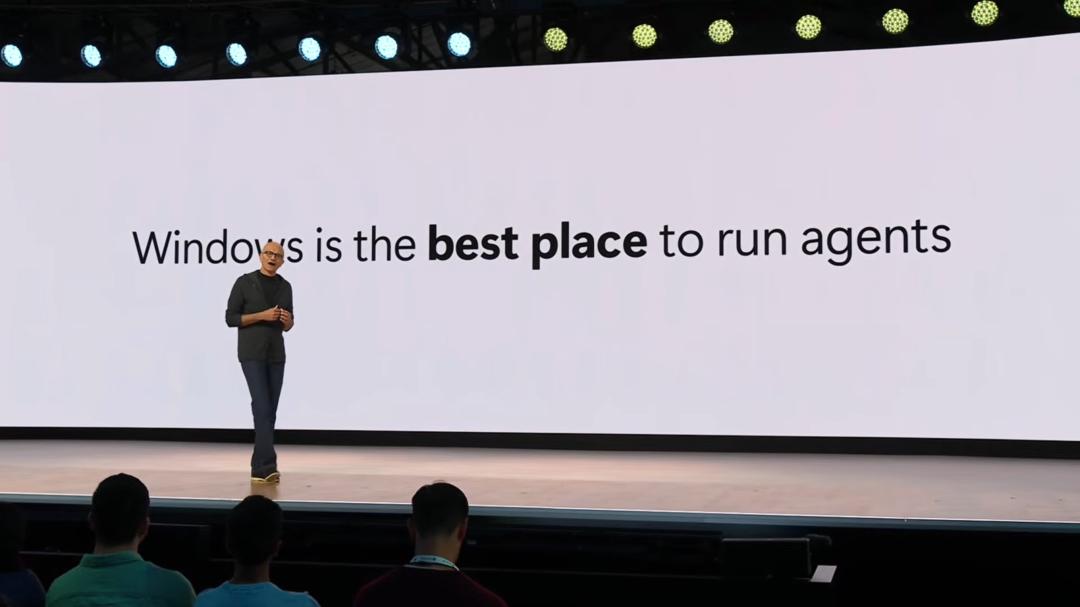
Actions speak louder than words.
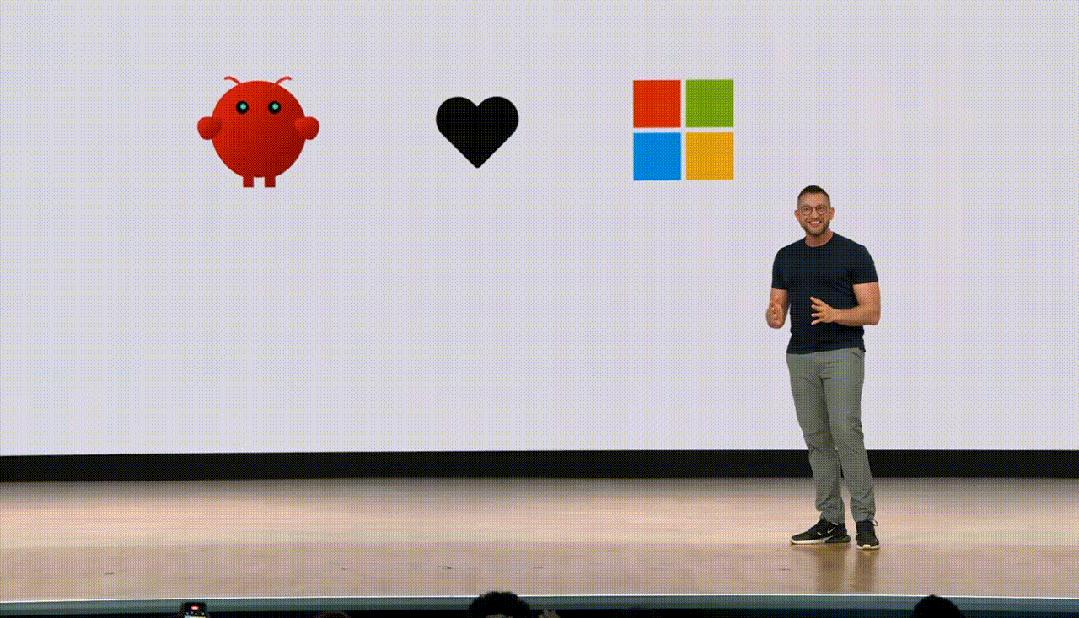
Immediately afterwards, "the Father of Lobster", Peter Steinberger, made a surprise appearance at the scene and officially announced that Windows can fully run OpenClaw!
Moreover, Copilot has also undergone an epic evolution -
A new category of Autopilots has emerged. The first member is called Scout, a long - term Agent with its own identity and license, capable of autonomous operation 24/7.
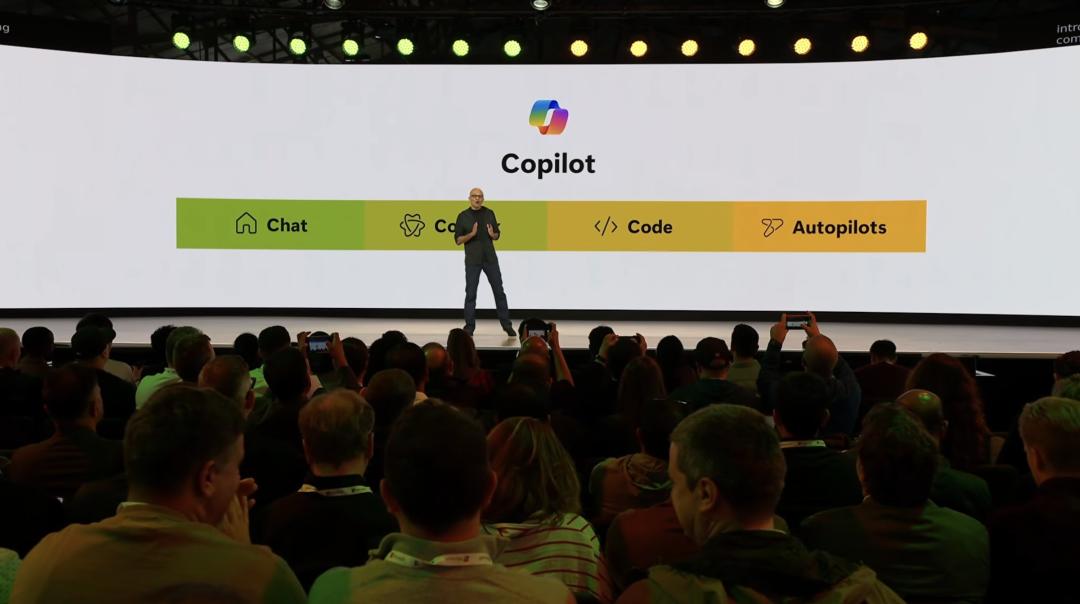
This summer, with the combination of Chat, Cowork, Code, and Autopilots, Copilot will transform into a super - app.
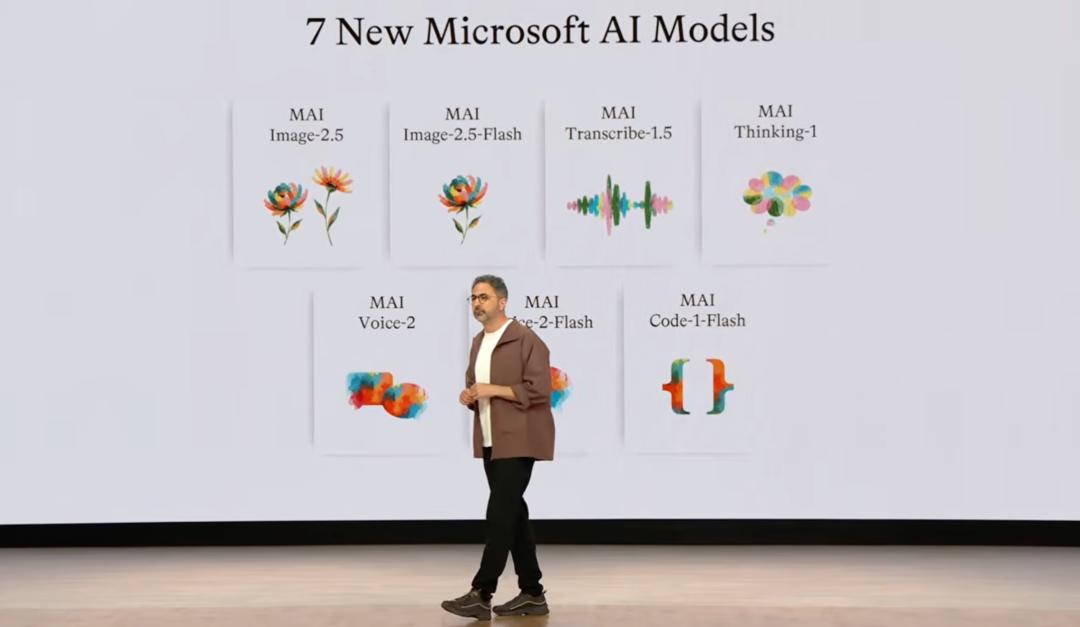
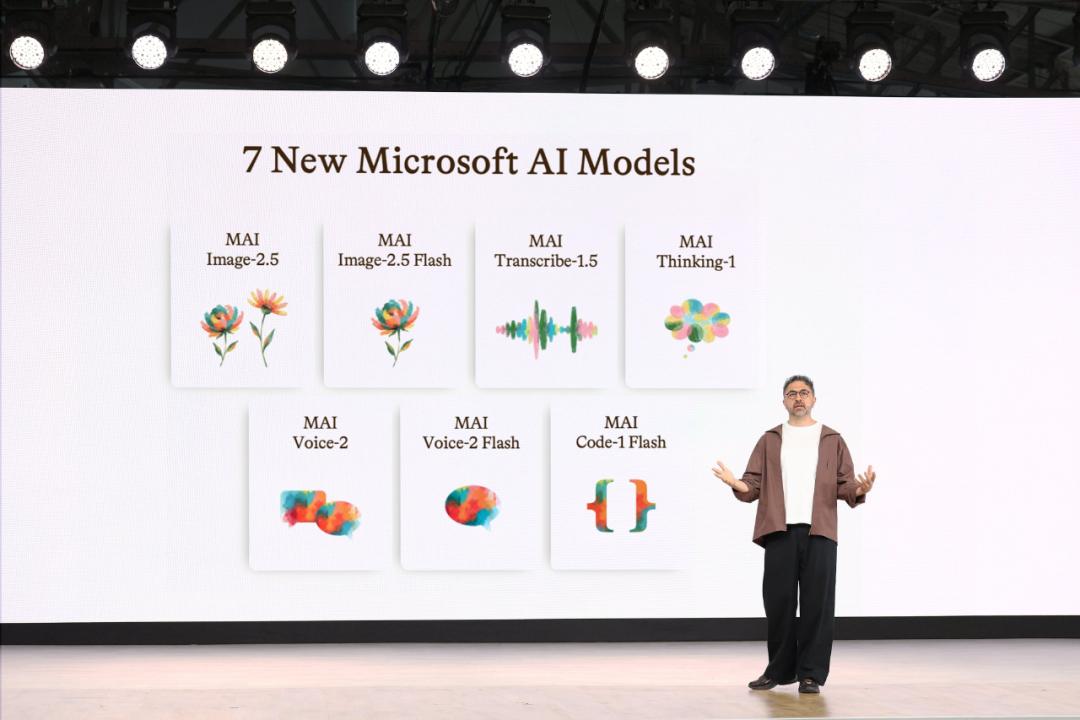
Sulaiman was also busy. He introduced seven self - developed MAI models in one go, covering everything from inference to programming to voice.
The two - and - a - half - hour speech was full of highlights. Here's a quick overview of all the key points:
The Copilot super - app will be launched this summer, and Scout will become the first enterprise - level autonomous Agent.
Seven MAI models are released simultaneously. MAI Thinking 1 without distillation reaches the same level as Opus 4.6.
The MXC operating system - level Agent sandbox is introduced, and OpenClaw officially lands on Windows.
The Surface RTX Spark + the new Aion edge - side model allows three local models to run simultaneously.
Project Solara, a new wearable form specifically designed for Agents.
The Majorana 2 quantum chip increases the reliability of qubits by 1000 times.
The Father of Lobster Takes the Stage, and OpenClaw Enters the Windows Ecosystem
To build an Agent platform, you first need to control the wildest one.
OpenClaw has reached 295,000 stars on GitHub in just half a year. It's incredibly powerful but also so wild that no one dares to deploy it in the company's internal network.
Today, Peter Steinberger, the Father of Lobster, took the stage and officially announced that OpenClaw has officially joined the Windows ecosystem.
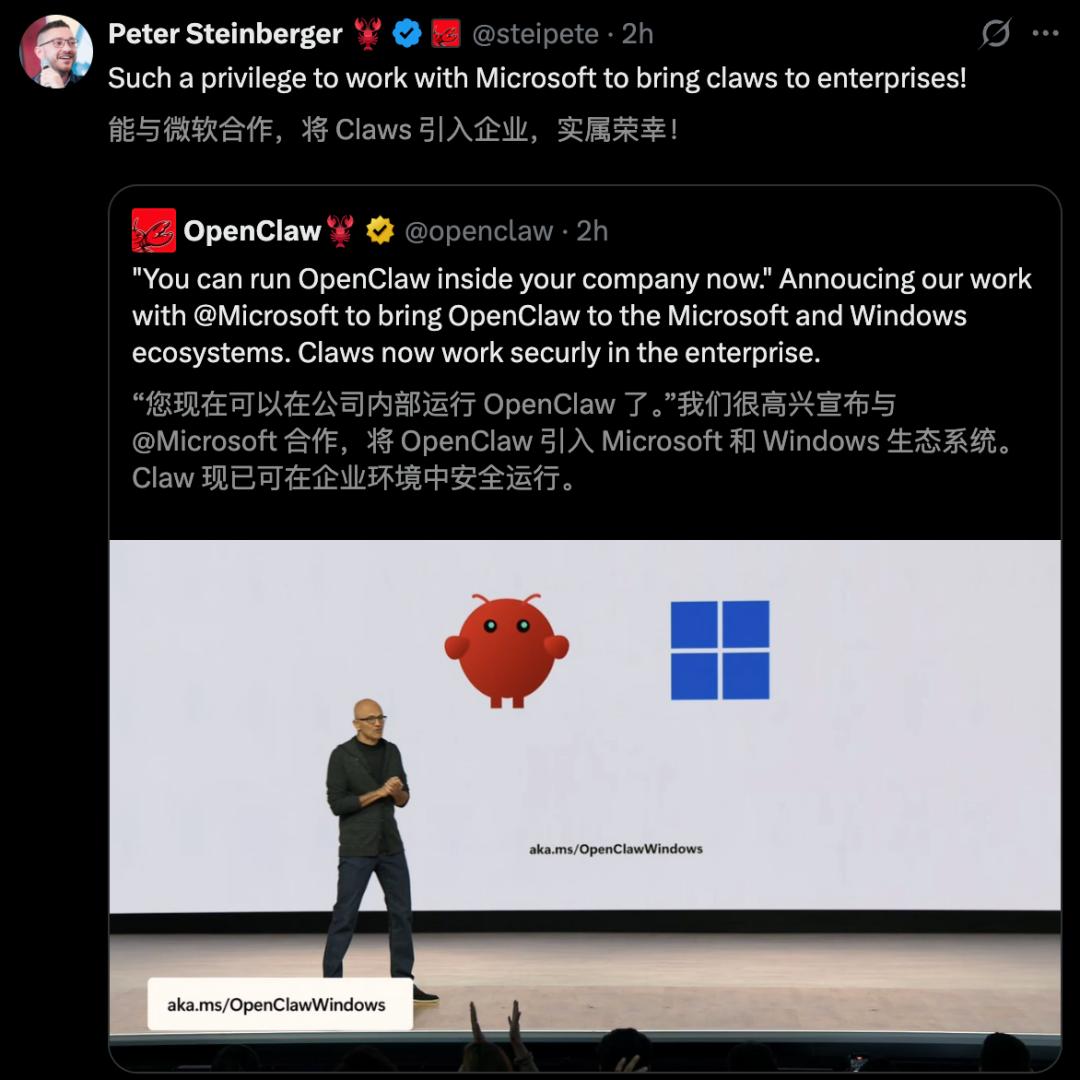
The key behind this is the newly launched MXC (Microsoft Execution Container) by Microsoft.
This is an operating system - level Agent sandbox policy layer. It defines which files an Agent can access, whether it can access the clipboard, and whether it can connect to the Internet. These policies are enforced by the Windows kernel.
There are four levels of isolation to choose from.
Process - level isolation is used for lightweight tasks, session - level isolation is for user separation, virtual machines (including WSL) provide stronger boundaries, and Windows 365 offers a completely isolated cloud environment.
The on - site demo was quite thrilling.
The engineer asked OpenClaw to delete all files on the desktop, but it was firmly restricted by the read - only sandbox of MXC. 94 pictures remained intact.
The Father of OpenClaw said, "I'm really happy to see a Claw trying to delete all the files on your desktop but failing. Six months ago, it would definitely have succeeded."
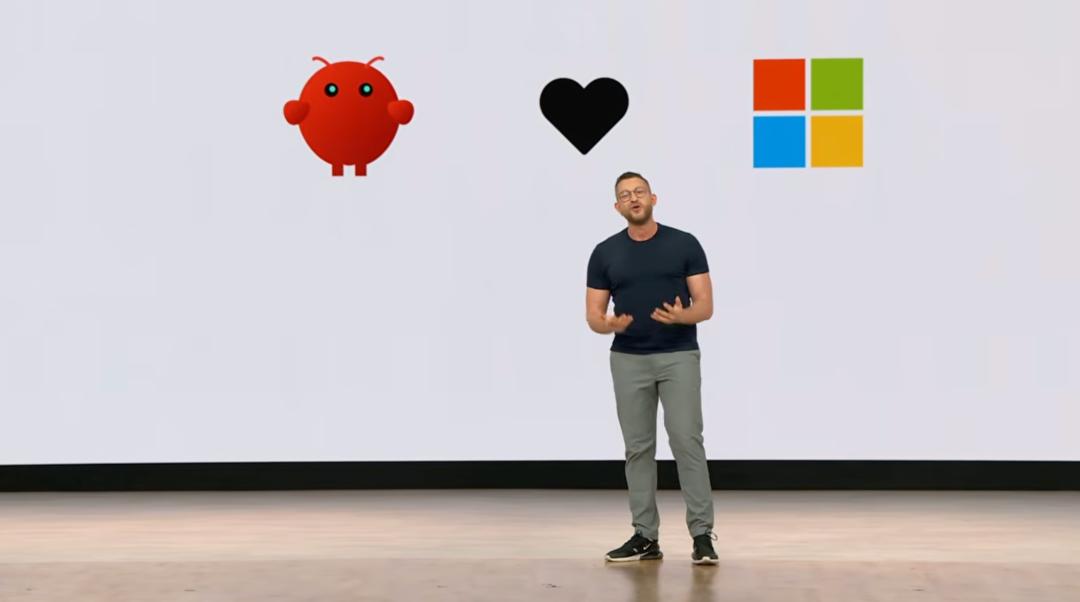
On - site, he also announced the establishment of the OpenClaw Foundation, a truly non - profit organization, to ensure that OpenClaw remains open and neutral.
It can be used with any model and any operating system.
The enterprise - level issues of the open - source Lobster have been solved. But what about Microsoft's own Agents?
Copilot Gets a Major Upgrade, and the Agent Super - Entry is Here
The desktops of 1.6 billion Windows users are about to welcome a new species.
This time, Microsoft has finally made up its mind to create its own "super - entry" - Copilot.
In the past two years, Microsoft's Copilot strategy has had a well - known weakness: it's too fragmented.
Chat is in Microsoft 365, Cowork is the multi - step task delegation added last year, GitHub Copilot is in VS Code and the terminal, and Windows Copilot is another entry point.
This fragmentation has made enterprise IT administrators exhausted, constantly switching between five or six management back - ends.
Workers are also suffering. They have to jump back and forth between different scenarios, watching the context disappear instantly.
Today, Nadella finally gave the ultimate answer: integrate!
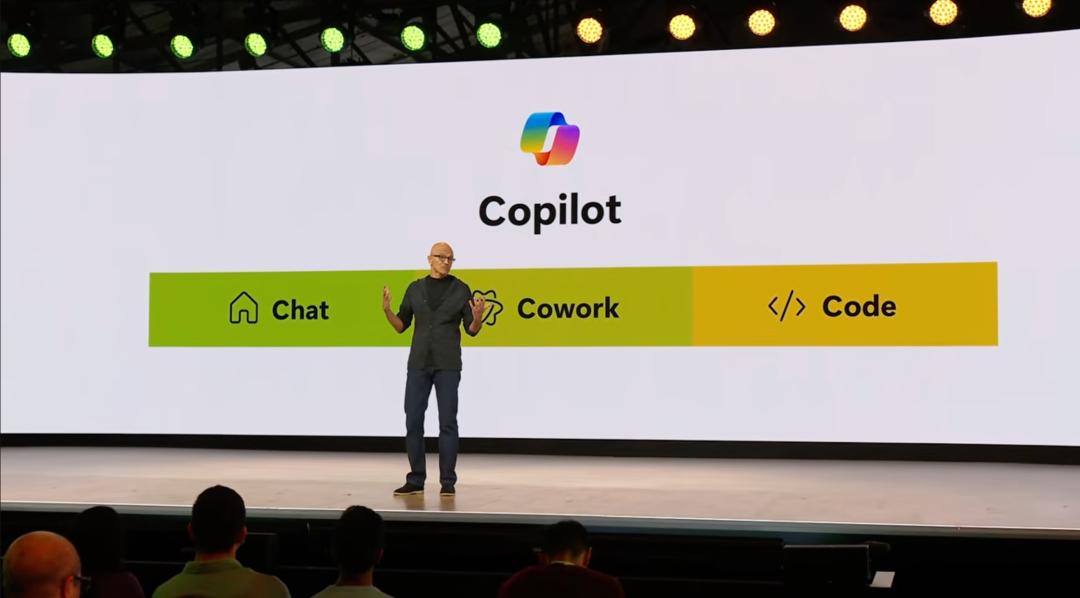
The first step is Chat. The best model combined with the enterprise knowledge graph is already online.
The second step is Cowork. Delegating multi - step tasks to AI for execution, such as generating documents, analyzing data, and cross - application collaboration, is also online.
The third step is Code. Bringing the programming capabilities of GitHub Copilot to all knowledge workers will be integrated this summer.
All three are unified in the same Copilot super - app. One entry point, one set of identities, and one context.
Scout is Here, the First Enterprise - Level Lobster
However, this time, Microsoft has also brought a fourth major capability - Autopilot.
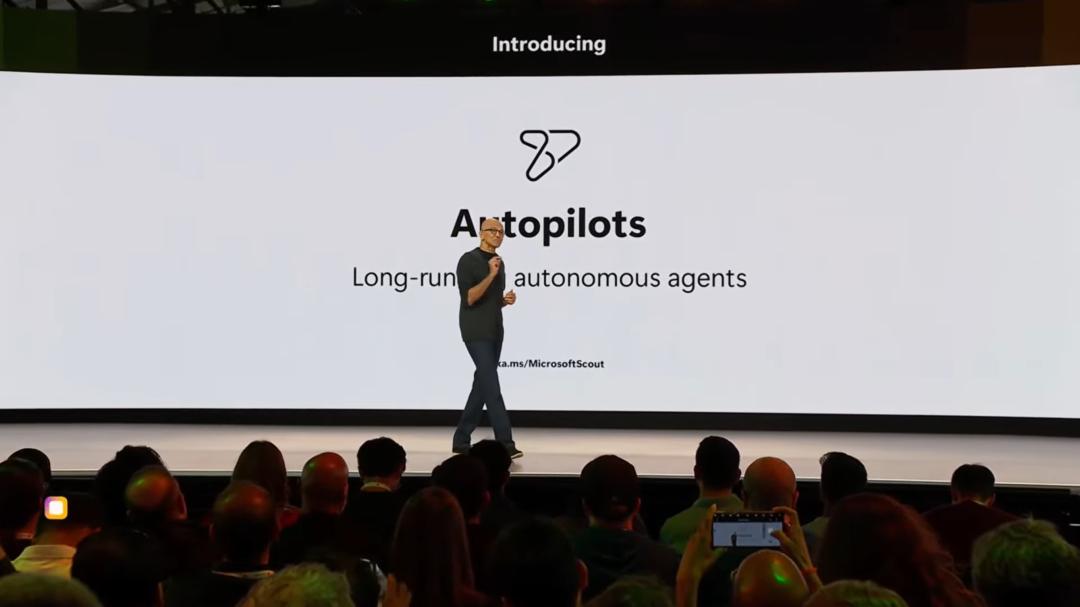
Its definition is clear: "Autopilot is an enterprise - level lobster."
Autopilot is a long - term autonomous Agent with complete enterprise compliance capabilities, running in the tenant.
It can have its own name, personality, custom connectors, context, and memory.
Does it sound like OpenClaw? Yes, but there is a key difference. Autopilot has built - in enterprise - level control from the very beginning.
The first Autopilot is called Scout.
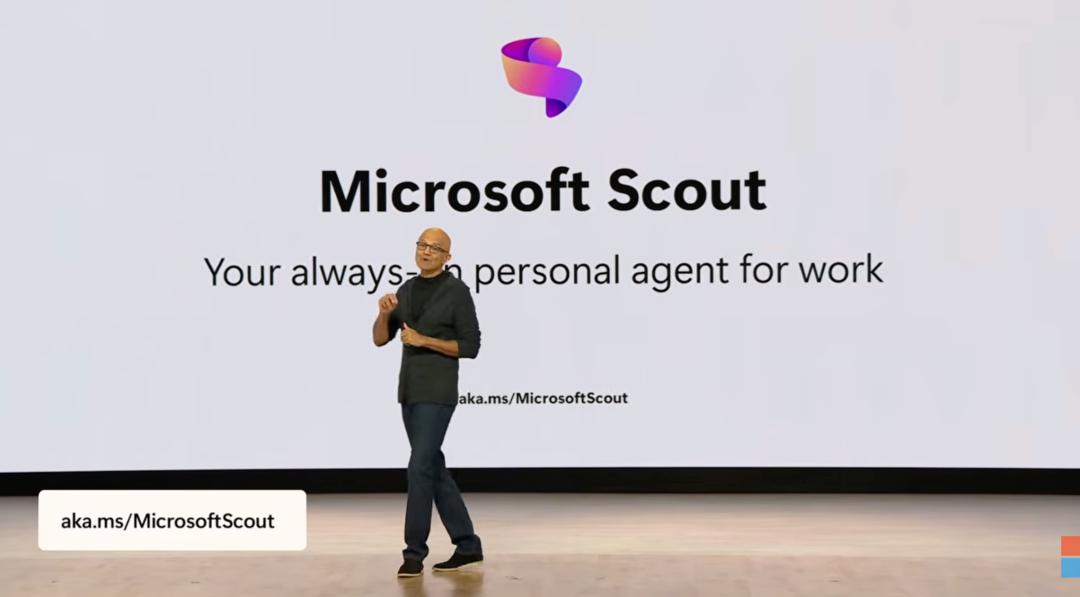
Scout can join Teams group chats and automatically handle discussion threads. It can also stay in Outlook and monitor emails.
It has its own identity and productivity license, existing as an independent digital employee.
Since today, Copilot Frontier users can already try out Scout.
Nadella said that in the next few months, a whole "digital team" of Autopilots will be built in Copilot, and Scout is just the first one.
Chat is responsible for conversations, Cowork is for execution, Code is for programming, and Autopilot is for autonomous operation.
The four - in - one Copilot is the super - entry that Microsoft is betting on.
Seven Self - Developed Models are Launched Simultaneously, and 0 - Distillation Reaches the Level of Opus 4.6
The final heavy - hitter at the conference was left to Microsoft's AI leader, Sulaiman.
As soon as he took the stage, he dropped a number that silenced the whole audience:
Since starting to work on AI, the computing power used for training cutting - edge models has increased by 1 trillion times. That's a 12 - order - of - magnitude increase in computing volume over 15 years.
In the next three years, this number will increase by 1000 times.
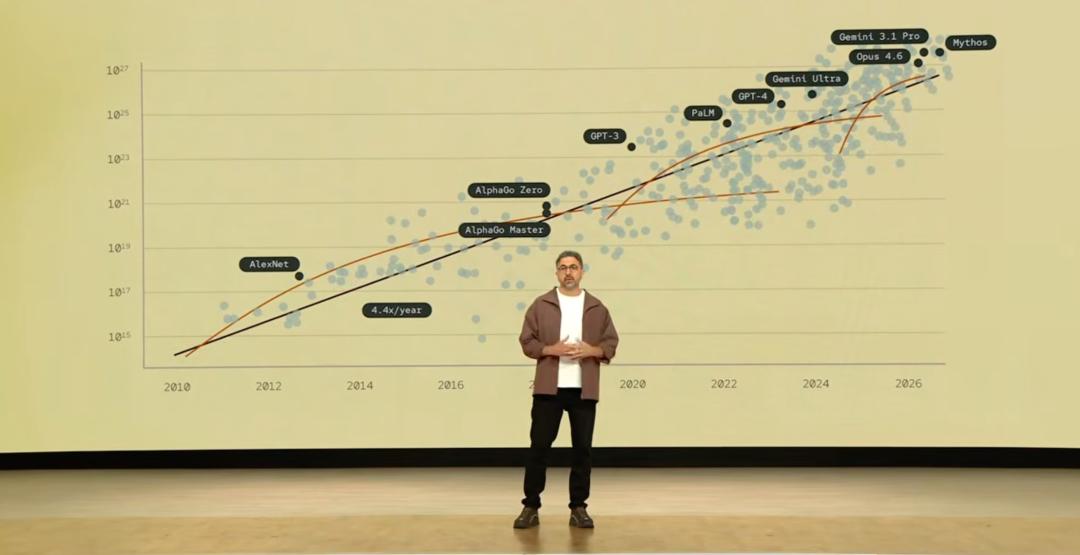
Immediately afterwards, he introduced seven MAI full - modality models in one go.
Programming Reaches the Level of Opus 4.6, Truly Impressive
MAI Thinking 1 is Microsoft's first self - developed inference model.
It has a MoE architecture, with a total of about 1T parameters, 35B active parameters, a 256K context window, and it scored 53% on the SWE - bench Pro, reaching the same level as Anthropic's flagship Opus 4.6.
It scored 97% in the AIME 2025 mathematical reasoning. In a blind test by the independent evaluation agency Surge, human reviewers preferred it to Sonnet 4.6.
But beyond the numbers, what Sulaiman repeatedly emphasized was "zero - distillation".
MAI Thinking 1 did not distill knowledge from any third - party cutting - edge models. It was developed from scratch using clean data with enterprise - level commercial licenses.
The 5B Coding AI is Also Very Powerful
MAI Code 1 Flash is a coding model with only 5B parameters, specifically optimized for VS Code and GitHub Copilot CLI. It scored 51% on the SWE - bench Pro.
Its size is roughly equivalent to that of the Haiku level, with lower costs, but its programming ability is comparable to that of the flagship models.
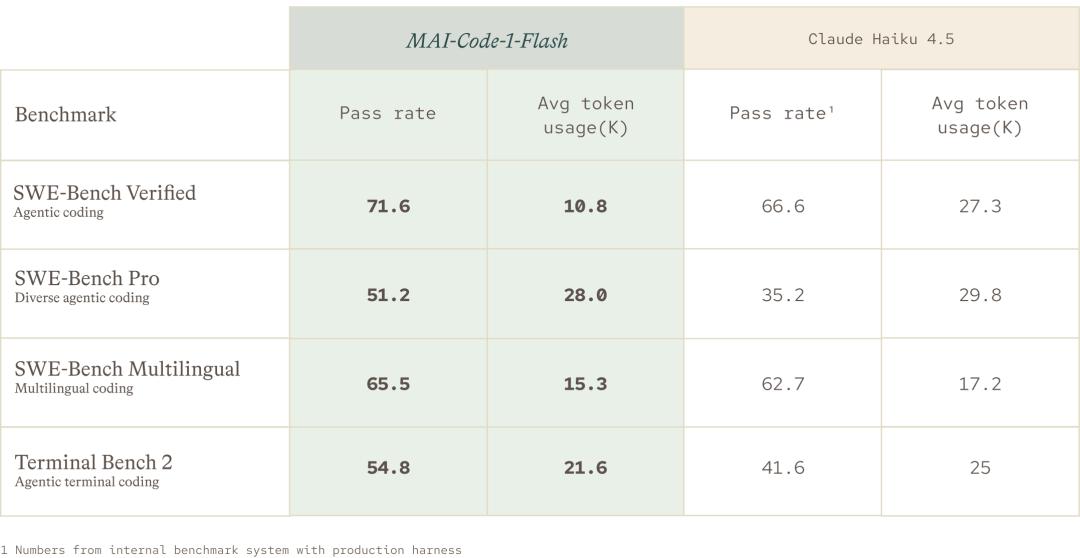
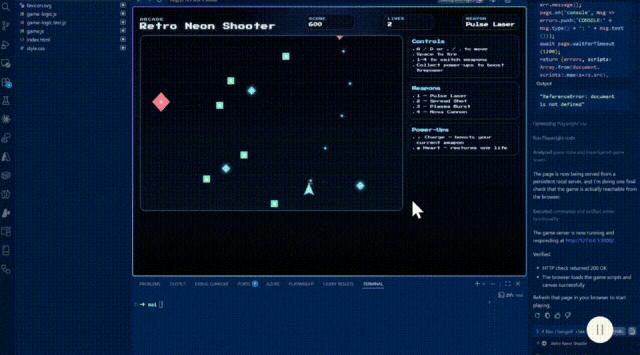
In addition, MAI Code 1 Flash also achieved good results in mathematics, scientific knowledge, instruction - following, and agent coding tasks.
Today, this model is already writing code for global developers in VS Code.
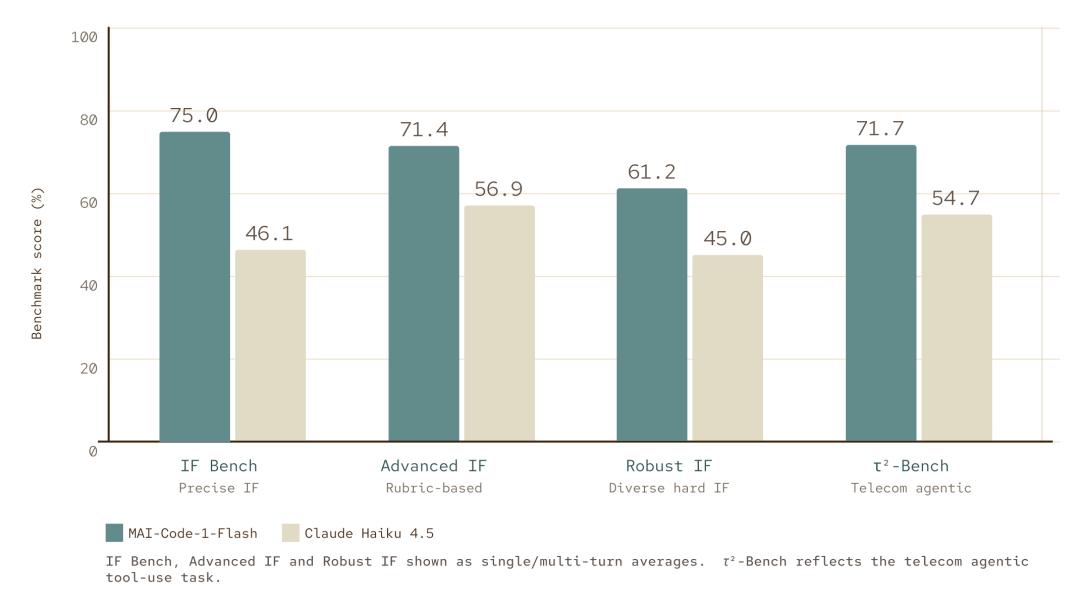
Ranked Second, Crushing Google's "Banana"
MAI Image 2.5 and its Flash variant are Microsoft's first self - developed models that cover both text - to - image generation and image editing.
It ranks third in the text - to - image Arena ranking and second in the image editing ranking, surpassing Google's Nano Banana Pro.
The two variants have different positioning. 2.5 pursues maximum fidelity and professional - level performance, while Flash follows an efficient production route.
It is currently running in PowerPoint, and OneDrive is also being integrated.
