Why do old foreign shopping malls become more profitable as they age?
For a long time, domestic commercial projects have been deeply influenced by the "department store era", with their core value focusing on the ability to organize commodities. When consumers enter shopping malls, their main purpose is to complete commodity purchases; the competitiveness of projects also more depends on brand combinations, location conditions, and passenger flow scale.
However, with the maturity of e - commerce channels, the high dispersion of commodity supply, and the rise of experiential consumption, emotional consumption, and social needs, the functions of commercial spaces are changing. Shopping malls are no longer just places for commodity transactions, but are increasingly becoming composite spaces for dining and socializing, parent - child activities, health and leisure, public services, and community connections.
City - level commercial and high - end luxury projects still take retail capabilities as the core. However, such projects have extremely high requirements for the city's level, customer group structure, and brand resources, and the volume of high - end luxury that a city can bear is also relatively limited. For most commercial projects, regional consumption and community consumption are a broader and more stable foundation.
The problem is that many traditional projects failed to complete the functional transformation in a timely manner after the decline of department stores, the diversion of e - commerce, and the change of consumption habits, and gradually lost their attractiveness in the new commercial environment. In contrast, many old projects in overseas mature REITs and listed commercial real estate platforms have been in operation for more than a decade, two decades, or even longer, but still maintain resilience in passenger flow, tenant sales, and revenue. Their common experience is not simply to introduce new brands or carry out partial renovations, but to continuously re - embed shopping malls into the daily lives of cities and communities, transforming them from traditional commercial projects into "living infrastructure".
01.
Australia's Scentre Group (SCG): Creating a Community Living Space
Scentre Group (ASX: SCG) was listed in 2014 and is one of the largest shopping mall owners and operation platforms in Australia and New Zealand. As of the end of 2025, SCG manages 42 Westfield shopping malls in Australia, with an asset scale of approximately A$51.2 billion. Strictly speaking, SCG is not a single REIT, but a stapled property group listed in Australia. However, since its core business is to hold, operate, and manage shopping mall assets, and uses FFO and distribution as important indicators, it is often regarded as a mature listed commercial real estate platform or a "REIT - like" case.
In recent years, SCG has re - positioned Westfield from a traditional shopping mall to a "community - type living infrastructure". The company emphasizes that the community and its connection with the community are the core of its business. In 2025, its 42 Westfield projects held approximately 21,000 cultural, community, and membership activities, attracting 540 million visits. In the past five years, SCG has invested approximately A$32 million in local communities. More importantly, SCG has brought community participation forward to the asset renewal and urban planning process. It participates in municipal planning discussions such as the layout of the town core area and the overall urban planning, and also absorbs the opinions of local residents in its own project adjustments. Community connection is no longer just a corporate social responsibility, but has become part of the asset management model.
Westfield Knox is a representative case of SCG. This project is located in Melbourne, opened in 1977, and was expanded twice in 1990 and 2002. In 2021, taking advantage of the withdrawal of Myer department store, SCG invested A$355 million in a phased renovation, disassembling and re - organizing the functions of the large - scale space released by the original department store. The first floor of the original department store was transformed into a fresh food and gourmet market centered around two major supermarkets, Woolworths and ALDI, and was equipped with an upgraded Food Court and a large number of catering brands; the second floor was reconstructed into a lifestyle retail area, introducing fashion, beauty, youth products, and home furnishing industries; the third floor cooperated with the local government to introduce a public library of approximately 2,000 square meters and co - working spaces. The project also added a children's swimming school, a FIBA - standard basketball court, an outdoor children's play area, and upgraded parking, public facilities, and sustainable equipment. After the renovation, the passenger flow and sales in 2024 increased by 42% and 39% respectively compared with 2021, and in 2025, the passenger flow and sales further increased by 5.2% and 5% year - on - year.
The value of the Westfield Knox renovation does not lie in "how much retail area has been increased", but in transforming the low - frequency department store space into high - frequency living functions. The supermarket and gourmet areas are concentrated on the lower floors, serving the commuting, picking up and dropping off children, and daily supplies of surrounding residents; the basketball court, swimming school, library, children's activities, and family dining areas extend the stay time and increase the frequency of repeat visits. These functions are not high - rent shops in the traditional sense, but they can give families more reasons to visit, transforming the shopping mall from a transaction scenario to a stay scenario. The inspiration is that the renewal of a mature shopping mall does not necessarily start with "increasing retail", but can also start with "increasing reasons for living".
02.
Japan's AEON REIT: Positioned as Community Infrastructure
AEON REIT Investment Corporation (TYO: 3292) is a J - REIT listed on the Tokyo Stock Exchange. It was listed in 2013, and its assets mainly consist of large - scale shopping malls in Japan. As of the end of January 2026, AEON REIT holds 53 properties, with an asset scale of approximately 480.7 billion yen based on the acquisition price. Its investment concept is very clear, positioning retail properties and other real estate as community infrastructure assets, and enriching the lives of local residents through investing in these properties. In other words, AEON REIT does not pursue short - term rent explosion, but invests in commercial assets that are highly bound to residents' daily lives and can bring stable cash flows in the medium and long term.
This concept is closely related to the changes in Japanese regional society. Many cities are facing problems such as an aging population, changes in family structure, insufficient public space, and natural disaster risks. Therefore, large - scale shopping malls are no longer just consumption places, but have also become composite spaces for residents to gather, for the elderly to relax, for children to play, for families to dine, for daily shopping, and for emergency shelter. The projects under AEON REIT usually undertake multiple community functions: they can serve as disaster - prevention and evacuation centers during disasters; provide public services such as post offices and nurseries; be equipped with food courts, cinemas, and specialty stores to meet diverse needs; set up EV charging, online order pick - up, and drive - thru services; and hold various community activities.
In recent years, the adjustment direction of AEON REIT's assets has revolved around "community infrastructure development". On the one hand, through the combination of catering, parent - child, learning, public services, outdoor activity spaces, and all - age tenants, traditional retail facilities are upgraded to living centers for local residents' daily use; on the other hand, through functions such as disaster prevention and shelter, EV charging, online order pick - up, and drive - thru services, shopping malls also play the roles of community emergency response, green living, and omni - channel consumption nodes.
AEON MALL Ota is a typical case. This project is located in Ota City, Gunma Prefecture, and is a large - scale retail facility in the northern Kanto region. It opened in 2003 and has been updated many times over the past two decades, continuously enriching the types of tenants and services. In the spring of 2024, the project completed its largest - scale expansion since its opening. The total construction area increased from 95,000 square meters to 116,000 square meters, and the number of tenants increased from approximately 150 to 185. However, what is most worthy of attention in this update is not "the increase in area", but "the expansion of functions".
The newly expanded West Mall has a Mirai Garden on the first floor, which is an outdoor community space full of trees and seasonal plants and can be used for gatherings, activities, markets, and outdoor leisure; on the second floor, there is a FOOD FOREST, providing approximately 1,100 dining seats, and a new Picnic Court is added, allowing residents to have an experience similar to an outdoor picnic indoors. The project also added a children's play area, barrier - free ramps, multi - functional toilets, wheelchair - accessible elevators, and an indoor health trail, and cooperated with health care and medical institutions to carry out health activities. Approximately 54% of the tenants (approximately 99 stores) continued to operate after the renovation, and at the same time, animal interaction, new learning experiences, and brands that entered Gunma Prefecture for the first time were introduced. After the renovation, both the core family customer group and the young customer group aged 20 - 30 increased significantly, the average stay time was extended by approximately 10 minutes, and the sales performance was also relatively strong.
AEON MALL Ota shows that the growth logic of regional shopping malls does not necessarily come from luxury brands or high - end customer unit prices, but from more stable family consumption, longer stay times, wider age coverage, and stronger local stickiness.
03.
Frasers Centrepoint Trust: Focusing on Suburban TOD Commercial
Frasers Centrepoint Trust (SGX: FCT) is a leading retail REIT in Singapore and one of the largest owners of suburban shopping malls in Singapore. FCT was listed in July 2006. As of the end of 2025, it holds 9 shopping malls and 1 office building, with an asset management scale of approximately S$8.3 billion. Its investment concept is clear: it focuses on daily - type retail assets in densely populated suburban areas of Singapore, close to residential areas and transportation nodes. The advantages of FCT's properties can be summarized in three points: strong accessibility, as most of the projects are located next to or near MRT stations; strong convenience, as they are close to residential areas and suitable for daily consumption and last - mile delivery; and a wide - ranging consumer customer group, as its properties together cover approximately 3 million residents. Therefore, FCT invests in community commercial infrastructure embedded in residents' daily lives.
Causeway Point is one of the core assets held by FCT since its listing. It is located in the Woodlands regional center, is the largest shopping mall in Woodlands, and is also one of the important suburban shopping malls in Singapore. It is connected to the Woodlands MRT and the bus transfer station, and Woodlands MRT is also the transfer station of the North - South Line and the Thomson - East Coast Line. Therefore, it naturally has a passenger flow foundation that combines commuting, transfer, residence, and daily consumption.
From the long - term data, Causeway Point reflects the resilience of a mature suburban shopping mall. From 2007 to 2025, its revenue increased from approximately S$51.2 million to approximately S$97.7 million, with an annualized compound growth rate of approximately 3.65%; the NPI increased from approximately S$37.1 million to approximately S$69.9 million, with an annualized compound growth rate of approximately 3.58%. For a mature project that opened in 1998 and has been in operation for nearly 30 years, this shows that it has not stagnated with the aging of the project, but has achieved stable growth under the combined effects of transportation nodes, community customer groups, AEI renovation, and tenant portfolio optimization.
Causeway Point does not rely on frequent large - scale demolitions and reconstructions. Instead, it continuously calibrates the tenant portfolio as the surrounding community matures and the population structure changes. In the early days of its opening, Woodlands was in the stage of rapid development of a suburban residential new area, and the project faced young families and a large number of commuters. Its challenge was not the lack of passenger flow, but how to guide the passing passenger flow into the mall. The project arranged anchor stores on each floor to guide customers to different floors and areas. From 2010 to 2012, the project invested approximately S$72 million in AEI, updating facilities, optimizing the layout, improving the tenant portfolio, and re - examining the space layout. After the renovation, the number of tenants exceeded 200, an increase of approximately 30% compared with before the renovation. The proportion of large tenants decreased, and the proportion of specialty stores and catering services increased to meet the daily consumption of suburban families, students, and commuters.
After that, as the office and commuting attributes of the Woodlands area increased, Causeway Point continued to strengthen the "fast, convenient, and high - frequency" consumption scenarios, introducing take - away fast food such as Wok Hey and other fast - food categories to capture the fragmented consumption during weekday commuting, lunch and dinner, after school, and transfer intervals. In 2019, the project also built an underground pedestrian corridor leading to the office building Woods Square, further strengthening its position as a connection node in the Woodlands area.
The experience of Causeway Point shows that the vitality of suburban shopping malls does not necessarily come from "glamour", but from "proximity". It is not a tourist destination, but a living node that residents naturally pass by and use every day or every week. Its essence is a transportation - hub - type living infrastructure that connects residential areas, subways, buses, retail, catering, community services, and regional development.
04.
US Community Commercial REIT: Organizing the Radius of Daily Life with Supermarkets
As of the end of 2025, the FTSE Nareit All REITs Index included a total of 195 REITs, among which there were 17 in the shopping mall sub - category, with a total market value of approximately US$70 billion. US community commerce is an important part of this sector. Its typical form is not a closed - type large - scale mall, but mainly an open - type shopping center. Usually, high - frequency consumption formats such as supermarkets provide the basic passenger flow and serve the daily life needs of surrounding suburban residents. Its core value comes from stable, rigid - demand, and repeatable convenient consumption, including grocery shopping, dining, pharmacy, fitness, beauty, pet care, education, and community services.
Representative companies include Regency Centers, Kimco Realty, Phillips Edison, Federal Realty, and Brixmor. Regency Centers has long focused on neighborhood and community shopping centers with supermarkets as anchor stores and is a typical sample of US community commercial REITs; Kimco Realty is a large - scale open - type shopping center platform, and its assets are mostly located in major metropolitan areas, first - ring suburbs, and population - growing markets; Phillips Edison is more focused on supermarket - anchored and essential - consumption - type neighborhood centers, with a more pure community consumption attribute; Federal Realty is good at upgrading high - quality community commerce into mixed - use living blocks; Brixmor is a more popular - type community consumption platform, mainly promoting the growth of NOI of mature assets through re - leasing, splitting inefficient large - box stores, introducing high - frequency formats, and improving the site experience.
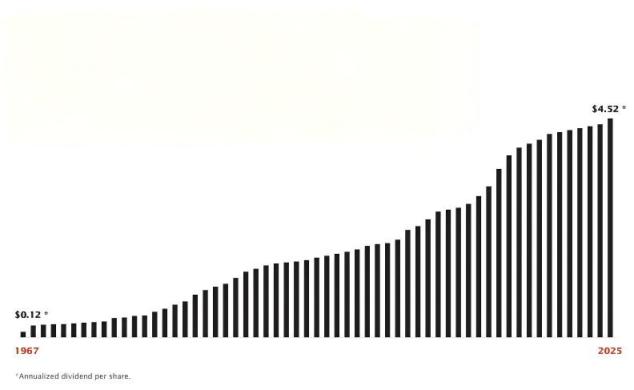
Among them, Federal Realty best reflects the long - term evolution of high - quality US community commerce. The company was established in 1962 and operates as a REIT. It is a component stock of the S&P 500 and is also regarded as the "dividend king" among REITs for its long - term continuous increase in dividends. Its growth path can be roughly divided into four stages:
From the 1960s to the 1980s, it started with community - type and neighborhood - type shopping centers, holding assets driven by supermarkets, pharmacies, and daily services in communities with dense populations, high incomes, and limited retail supply;
From the 1990s to around 2000, it shifted from passive rent collection to active redevelopment, increasing the rent and passenger flow of mature projects through expansion, renovation, re - leasing, and public space optimization;
After the 2000s, it entered the mixed - use stage, represented by Santana Row, Pike & Rose, Assembly Row, etc., integrating retail, residential, office, hotel, dining, and public spaces into a walkable, stayable, and livable living block;
From around 2015 to 2025, it entered the mature platform stage. On the one hand, it continued to operate community commerce and mixed - use communities; on the other hand, it carried out capital recycling by selling mature assets, investing funds in redevelopment and portfolio optimization opportunities with higher returns.