The godfather of AI enters the startup scene: Silicon Valley starts to bet on the "next-generation AI paradigm"
In the past three years, the AI industry has been racing at high speed in almost the same direction.
From GPT - 4 to Claude, from Gemini to DeepSeek, the consensus in the entire industry seems to be becoming clearer: As long as one has more data, larger models, and stronger computing power, one can continuously approach Artificial General Intelligence (AGI).
This logic has driven the largest global technology investment wave in the past few years. OpenAI's valuation has exceeded hundreds of billions of dollars, Anthropic has become one of the most important players in the enterprise AI market, and a large amount of capital has poured into the foundation model track. Almost all startups are thinking about how to build applications using these models, while few people are re - examining a more fundamental question - Is today's large - model approach really the ultimate answer to AGI?
Just when the entire industry is constantly chasing larger models, a scientist regarded as one of the founders of modern artificial intelligence has chosen to start anew.
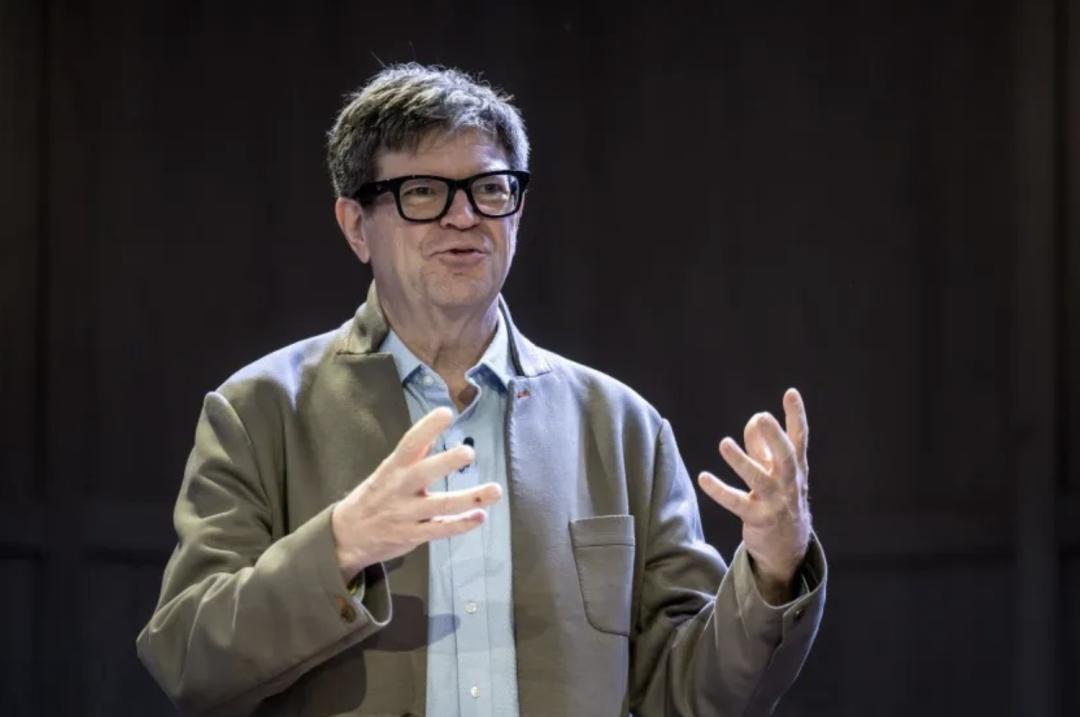
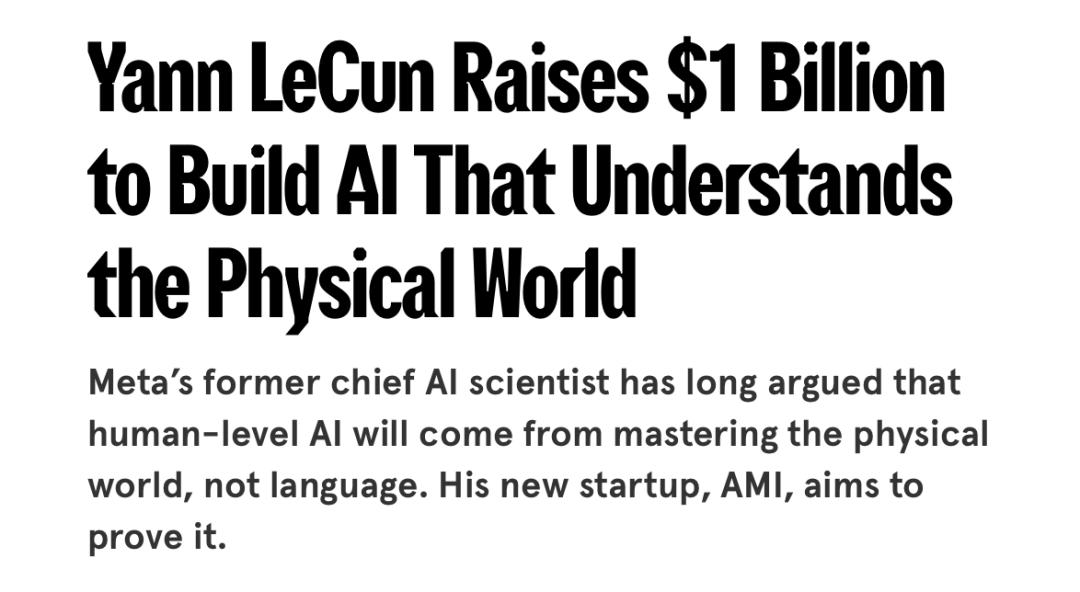
He is Yann LeCun, the winner of the 2018 Turing Award, the chief AI scientist at Meta, a professor at New York University, and one of the three giants of deep learning. His newly founded company, AMI (Advanced Machine Intelligence), is trying to solve a problem that is completely different from the current mainstream direction in the industry.
01┃ What is LeCun thinking about when everyone is chasing GPT?
In the past three years, the AI world has been almost dominated by the same logic: larger models, more parameters, more training data, and stronger reasoning ability...
The entire industry seems to default that as long as the scale is continuously expanded, one can gradually approach AGI. OpenAI is doing this, Anthropic is doing this, Google DeepMind is doing this, and even emerging players such as xAI, Mistral, and DeepSeek are also moving along a similar path.
But Yann LeCun has always stood on the other side. In fact, in the past few years, he has been one of the top scientists who have publicly questioned the large - language - model approach most frequently. He repeatedly emphasizes a point:
Large language models are powerful, but they don't really understand the world.
This statement may seem counter - intuitive. After all, today's GPT can write code, write papers, do analysis, and even pass various exams. But LeCun believes that these abilities mostly come from statistical patterns in massive data, rather than an understanding of the real world itself. In other words, the model knows which word is most likely to appear next, but doesn't know why it appears.
It can describe the world, but doesn't really understand it.
02┃ Something a three - year - old child can do, but AI can't
LeCun often gives a very simple example: Place a ball on the edge of a table, and a three - year - old child will almost immediately know that if the ball continues to roll forward, it will fall. He has never even studied physics or read any textbooks, but he can predict the future.
Because he understands how the world works.
Today's most advanced large models actually don't have this ability. They don't have real physical intuition, causal understanding, world cognition, or long - term planning. Most of the time, they just guess the most likely answer based on the training data.
This is also why LeCun has been promoting another concept in the past few years:
World Model.
In his view, the core of human intelligence is not language, but the ability to predict the world. Language is just a tool for expression, and understanding the world is the real source of intelligence.
He believes that the vast majority of information humans obtain does not come from language, but from vision, space, movement, and environmental interaction. Language is just the way to express intelligence, not intelligence itself. A real AI system close to the human cognitive level needs to not only understand text, but also understand how the world works, how causal relationships are formed, and what results its own actions will produce.
This is also the core research direction of AMI.

03┃ The next revolution in AI may not be about larger models
If we look back at the technological history of the past decade, we will find an interesting pattern. Almost every major technological change in the history of technology is not simply making the previous generation of technology larger. Google is not a larger Yahoo, the iPhone is not a larger Nokia, and ChatGPT is not a larger search engine. What really changes the industry landscape is often a new technological paradigm.
More and more researchers are now beginning to realize that Transformer may not be the end. It is more likely just a stage in the development of AI. This is why more and more top - level laboratories are starting to conduct new research on:
- World models;
- Long - term memory;
- Active learning;
- Causal reasoning;
- Physical world modeling;
- Embodied intelligence...
And AMI was born in such a context.
The real problem it tries to solve is not how to generate better text, but how to make AI understand the real world like a human being.
04┃ Why are investors starting to chase scientists crazily?
For investors, the most attractive thing about AMI is not today's business revenue.
In fact, many top - level investors do not view such a company with the logic of a traditional software company. Because its truly scarce asset is neither the product nor the users, but the possibility of creating the next - generation technological paradigm.
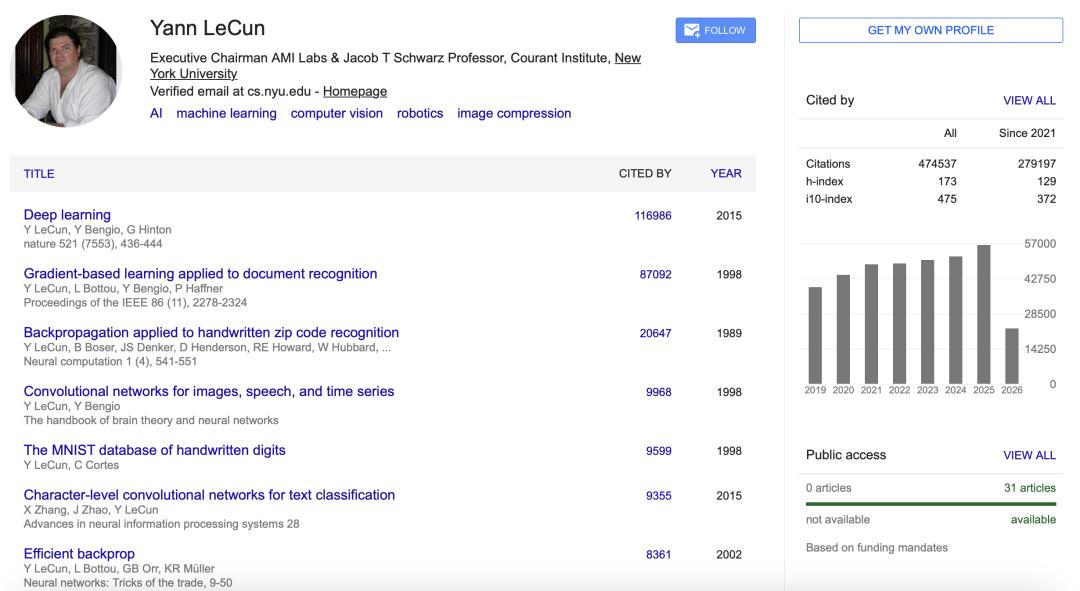
In the past two decades, Yann LeCun has participated in promoting the development of convolutional neural networks, and this technology has later become the infrastructure in the field of computer vision. Later, the deep - learning revolution reshaped the entire AI industry.
Therefore, when such a scientist decides to start a new business, what capital focuses on is not how much revenue the company can generate this year, but whether it has the opportunity to influence the technological route in the next decade. From this perspective, AMI is more like a long - term bet on the future.
05┃ How large is the market that AMI is really competing for?
Many people, when seeing AMI, will subconsciously think that it is just another large - model company.
But in fact, the market it aims at far exceeds chatbots. Because once the world model is truly mature, the impact will not only be on the software industry, but on the entire real world.
- Autonomous driving needs to understand the physical environment;
- Robots need to understand spatial relationships;
- Industrial automation needs to predict complex systems;
- Medical AI needs to understand causal relationships;
- Scientific research needs to establish world models;
- Defense systems need to simulate real environments.
Almost all scenarios involving real - world interaction may benefit from the development of this direction. These scenarios together form an AI economy worth trillions of dollars in the future. From this perspective, what AMI is competing for is not a specific application track, but the standard for the underlying cognitive architecture of future AI.
06┃ Why are Silicon Valley investors so excited?
If we regard OpenAI as the Microsoft of the AI era and Anthropic as the Oracle of the AI era, then many investors want to know: Who will be the Bell Labs of the AI era?
Who will define the technological direction in the next decade? Who will create the next real architectural revolution?
The appeal of AMI lies precisely here: it represents not a product innovation, but a paradigm innovation. And history has proven countless times that the companies that truly create the greatest value are often not those who are the first to make products, but those who define the rules.
Conclusion┃ After GPT, there is a second act for AI
In the past three years, the story of AI has revolved around one question: Who can train the most powerful large model?
In the next decade, the industry may start to revolve around another question:
- Who can make AI truly understand the world?
- Who can establish the next - generation cognitive system?
- Who can define the technological route to AGI?
Yann LeCun's establishment of AMI may be precisely an answer to this question.
For most investors, the greatest value of this company today is not revenue, not products, and not even valuation. It represents a new possibility: While the entire industry is optimizing GPT, someone is trying to re - define AI.
This article is from the WeChat official account “Silicon Rabbit King” (ID: gh_1faae33d0655), author: Silicon Rabbit King. Republished by 36Kr with authorization.