WeChat takes the lead and launches a full-scale attack on AI
It has to be Zhang Xiaolong. Once he makes a move, you'll know his prowess.
Market news indicates that Tencent is accelerating the development of an AI agent embedded in WeChat. Currently, the project has entered the prototype testing phase. This AI assistant will be deeply integrated into the WeChat interface in the form of a right - swipe entry, which is expected to completely reshape users' daily usage experience and drive WeChat's evolution from a social tool to a "super intelligent assistant".
It is understood that this AI agent has been listed as the company's top strategic priority. The compliance process will be launched as soon as this month, followed by small - scale testing and phased roll - out. Users can swipe right on the WeChat main interface to bring up the dialogue window and use natural language commands to automatically call mini - programs to complete tasks such as hailing a taxi, ordering takeout, booking tickets, and making payments.
This also means that WeChat has officially joined the battle for the AI super - entry.
As soon as the news broke, the capital market was the first to react.
At the close of trading, Tencent's stock price soared by 10.46%, indicating the market's high expectations for the WeChat AI agent.
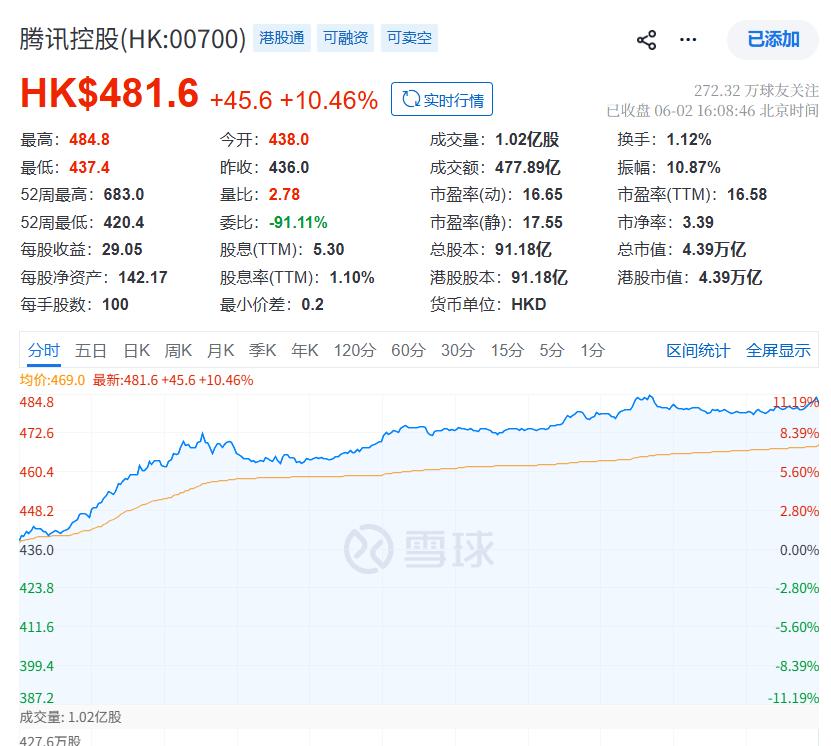
After all, this is WeChat, a super app with 1.4 billion users.
Every previous iteration of WeChat has reshaped the landscape of the Internet industry and directly boosted Tencent's performance. Now, in the AI era, the market has finally waited for Zhang Xiaolong to make a move.
This is likely to be a turning point, not only for Tencent but also for the entire AI agent industry.
Long - awaited
The progress of WeChat's AI agent has come faster than expected.
In March this year, market news indicated that WeChat was developing an AI agent, which was launched at least in the first half of last year and was expected to be fully launched as early as the third quarter of this year.
At the same time, at Tencent's annual general meeting of shareholders, Ma Huateng made it clear: "Agent partners hope to have their own traffic and entry, but they also don't want to be simply called. This is a more long - term consideration, and everyone may need to be a little patient. This can't be rushed."
Even at the earnings conference call on May 13th, when investors asked about the progress of the WeChat AI agent, Tencent's management gave no hint at all.
The market originally expected that WeChat's Agent was unlikely to be launched in the near future.
But now it seems that Tencent's previous efforts to lower expectations may be to surprise the market.
Market news shows that the WeChat AI agent has passed the product experience test. The compliance approval process will be launched as soon as this month, and the final official launch time will mainly depend on the progress of regulatory approval. In a nutshell, the product is ready and just waiting to be launched.

With the launch of the WeChat AI agent, it means that WeChat has finally taken a substantial step in the field of AI.
In fact, since ChatGPT triggered a new round of AI wave in 2023, the market has been eagerly looking forward to WeChat's actions.
For a long time, WeChat has remained as restrained as ever. It didn't blindly follow the trend to launch its own AI - native products. At most, it embedded Yuanbao in scenarios such as contacts and search boxes to divert traffic to Yuanbao in line with the group's strategy.
But this doesn't mean that Zhang Xiaolong has no thoughts on AI. In fact, he has already determined WeChat's AI path internally.
Zhang Xiaolong once clearly expressed his view on AI in an internal sharing: He doesn't think WeChat should develop an independent AI product. Instead, he prefers to integrate AI into specific WeChat scenarios "like the scan function", making it appear naturally when needed and quietly leave after solving the problem.
In other words, WeChat will focus on AI agents rather than AI - native applications.
Now that the WeChat AI agent is finally coming, perhaps for Zhang Xiaolong, the biggest headache is that it's time for another 100 million people to teach him how to make products every day.
Anyway, WeChat has to take this step.
Must Step Up
Zhang Xiaolong once summarized the driving forces of WeChat into two points:
1. Create a good, up - to - date tool product.
2. Help creators realize their value.
It is these two points that determine that WeChat itself must evolve towards AI.
On the one hand, AI is entering the Agent era of helping users with tasks. WeChat's product philosophy has always focused on serving users' experience. At this time, it also needs to iterate to the next stage of helping users with tasks to provide a better experience for 1.4 billion users.
On the other hand, the interaction logic of AI Agents has subverted the traditional interaction mode between users and apps. The millions of mini - programs in the WeChat ecosystem are also facing the situation of being restructured. WeChat urgently needs to explore a path to make the WeChat Agent a "digital butler" for users and build a commercial closed - loop for the entire mini - program ecosystem under the AI Agent system.
The greater significance lies with Tencent.
"A year ago, we thought we were on the boat, but later we found the boat was leaking. Now we feel we're on it, but we can't sit down. We still hope the boat can go faster." The words Ma Huateng said before directly revealed Tencent's anxiety about AI.
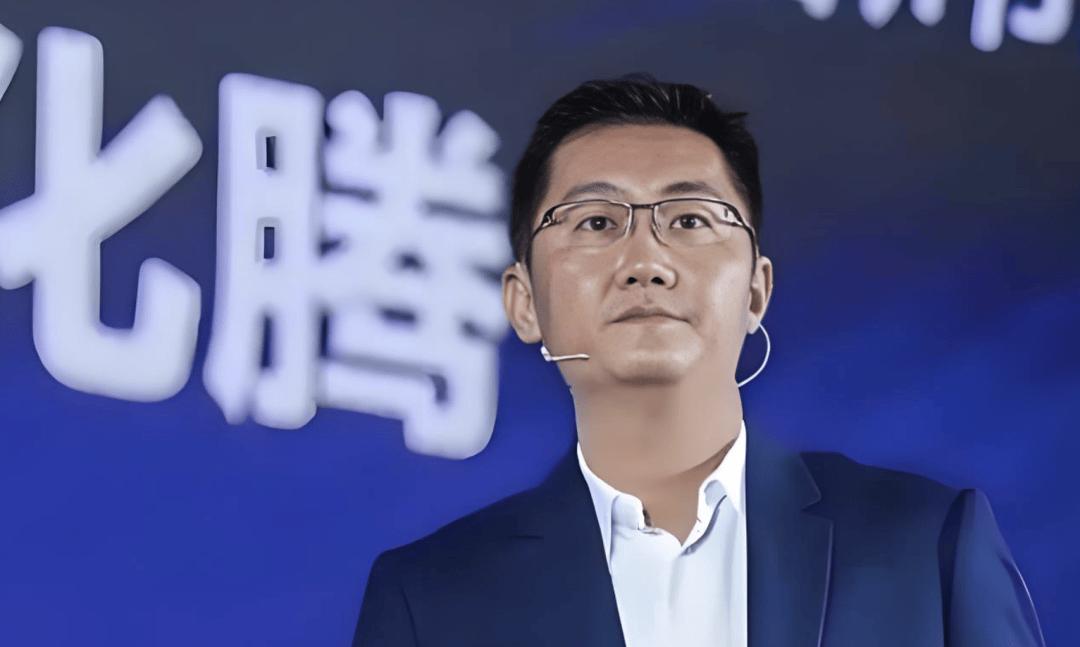
The key problem is that Yuanbao, targeting the C - end, still hasn't broken through.
In the past year, even though Tencent supported the Yuanbao app with the strength of the whole group, the results were below expectations. Even after launching the Spring Festival red - envelope war, Yuanbao still failed to achieve a major breakthrough.
Data released by QuestMobile shows that as of March this year, Yuanbao's monthly active users were 57.35 million, ranking fourth, far behind Doubao with 345 million monthly active users and Qianwen with 167 million.
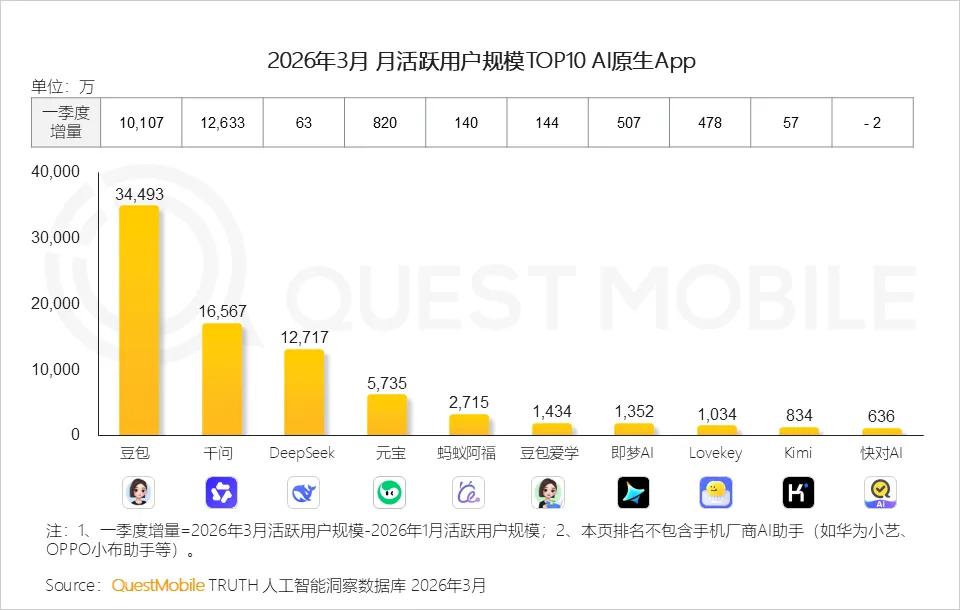
This has directly led to Tencent's lag in AI.
WeChat's entry at this time is likely to directly help Tencent in the current AI competition and reverse Tencent's unfavorable situation in the battle for the AI super - entry.
Although the competition among major companies in the market for the AI super - entry is mostly concentrated in the dimension of AI - native applications, no one can ignore WeChat.
Different from independent AI assistants that users need to download and open separately, WeChat is a national - level infrastructure with three underlying scenarios of high - frequency social interaction, life services, and mini - programs. It naturally has a user stickiness that other products are difficult to replicate.
Other manufacturers need to continuously invest in marketing costs to educate users to actively open AI software to cultivate AI usage habits. However, WeChat can embed the AI Agent into the native paths of daily chatting, searching, and service calls, and complete the implementation of AI in users' imperceptible usage.
For a long time in the past, in Tencent's AI super - entry strategy, WeChat mainly played an auxiliary role. But now, WeChat has finally joined the battle for the AI super - entry.
This article is from the WeChat official account "AI Blue Media Club", author: Ye Er. It is published by 36Kr with authorization.