This low-key company, almost invisible, has taken "light" to the extreme.
Why is a company so low - key that it's almost invisible attracting wide attention in the era of artificial intelligence?
In the era of artificial intelligence, a company that ordinary readers are not familiar with, Coherent, whose Chinese name is "Gaoyi", is attracting more and more widespread attention. This company doesn't manufacture GPUs, develop large - scale models, nor does it have popular consumer products. However, not long ago, NVIDIA announced a $2 billion investment in it, along with a long - term procurement and production capacity cooperation agreement.
Why has a company so low - key that it's almost invisible suddenly attracted wide attention? To figure out what kind of company Gaoyi really is, perhaps we have to start with a laundry room in Silicon Valley.
The Starting Point of a Beam of Light
In 1966, in the laundry room of an ordinary house in Palo Alto, USA, physicist James Hobart and several engineers were adjusting a CO₂ laser.
This was not a standard startup scene.
The device required a 220 - volt power supply, and the most convenient place to connect the power in the house happened to be next to the washing machine and dryer.
Even when suitable parts were lacking, the team used a section of rain gutter as a temporary replacement.
A few months later, they launched the first commercial CO₂ laser and founded Coherent.
Later, when people talked about startups in Silicon Valley, they often thought of software, the Internet, and consumer electronics.
But what Hobart's laundry room led to was not those bustling businesses, but a beam of light that hadn't been truly commercialized - laser.
At that time, laser was still a novel technology in the laboratory in the eyes of most people, mysterious and dazzling, and far from real industrial production.
What Hobart really wanted to do was to turn it into a tool that could be sold to customers, installed in equipment, and operate reliably for a long time.
Therefore, from its very beginning, Coherent didn't choose the mass consumer market but directly targeted factories, hospitals, laboratories, and semiconductor production lines.
Because professional scenarios such as laser cutting, chip marking, medical surgery, and precision measurement are far from ordinary people, but they especially need stable, precise, and repeatable technical support.
However, the laser itself alone couldn't support the later large - scale "Gaoyi".
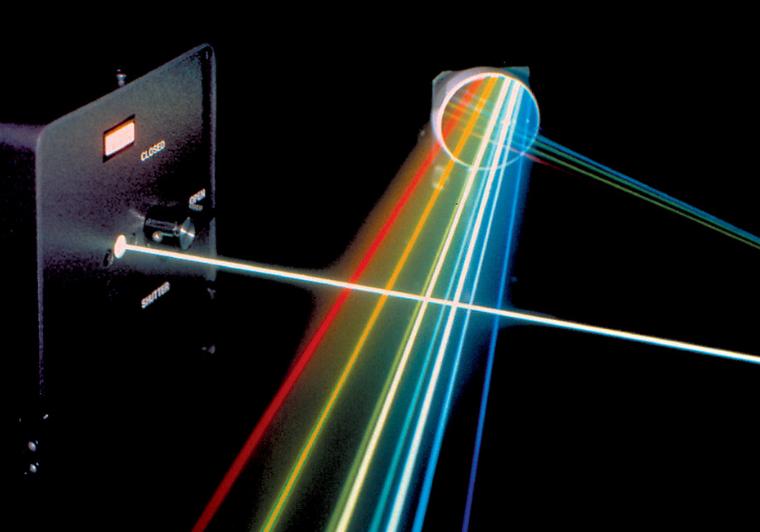
Five years later, another technological thread quietly extended in Saxonburg, Pennsylvania.
In 1971, engineer Carl Johnson and his partner James Hawkey founded a company named II - VI.
This name comes from Group II and Group VI elements in the periodic table. It sounds less like a brand and more like a material code in the laboratory.
II - VI also started with a focused and niche area: researching compound materials that can withstand the continuous output of high - power lasers.
At that time, as the power of CO₂ lasers continued to increase, traditional optical materials were no longer able to bear the load.
For laser technology at that time to enter more complex and demanding industrial scenarios, it not only needed advanced lasers but also had to be based on more stable and durable material bases.
And what Johnson and Hawkey chose to enter was precisely a key node that was far from the mass market but could be precisely connected to the industrial chain.
In this way, two companies, one starting with lasers and the other with laser materials, seemingly doing different businesses on the surface, were actually solving the same fundamental problem: how to transform "light" from a precision instrument in the laboratory into a productive force that can operate stably and for a long time in factories and equipment.
In 2019, IIVI acquired Finisar for approximately $3.3 billion and officially entered the high - speed optical communication field.
After experiencing the severe shocks of the Internet and optical communication bubble around 2000, Finisar was still able to maintain strong competitiveness in core areas such as optical transceivers, optical devices, and communication subsystems.
For IIVI, this acquisition also meant that it entered the high - speed data transmission system track for the first time from upstream materials and optical devices.
But this was not the end.
Three years later, IIVI acquired Coherent for approximately $7 billion.
In fact, this deal was not easy at that time. Industrial giants such as Lumentum also participated in the bidding.
What everyone was competing for was not just a laser company but a whole set of long - accumulated technologies and customer resources.
After the merger was completed, II - VI finally decided to keep the name "Coherent" - a name that had been deeply rooted in the laser and optical industries for more than half a century and carried customers' recognition and the consensus of the industrial chain.
By this point, Gaoyi's identity had changed.
It was no longer just a company that simply provided materials, lasers, or discrete devices. Instead, it had become a technology platform that integrated core technologies and high - speed optical communication capabilities.
And this integration is reshaping its business image.
What Does Gaoyi Really Sell?
Many people will classify Gaoyi as a laser company when they first come into contact with it.
This is not wrong, but it is no longer sufficient to describe it today.
Now, Gaoyi's business has extended in two seemingly distant directions: one end goes deep into factory workshops, serving cutting, welding, marking, and precision detection in the industrial field; the other end enters data centers, supporting high - speed optical interconnection between servers, switches, and even the entire AI computing power cluster.
These two things seem far apart on the surface. Factories deal with metals, chips, and production lines, while data centers deal with data, cabinets, and computing power scheduling.
But looking deeper, what Gaoyi really focuses on is actually the same thing: ensuring that "light" works continuously, stably, and reliably in extremely complex real - world scenarios.
It may sound easy.
But once placed in a real industrial or data center environment, the challenges are completely different.
Materials, devices, lasers, and modules, every link needs to be stable and reliable. They also need to be incorporated into customers' equipment and go through repeated certifications, tests, and mass - production verifications.
After the system is actually launched, if the parameters are unstable, the yield rate fluctuates, or there are problems with the delivery, Gaoyi still has to continue to adjust together with the customers.
Therefore, what Gaoyi delivers is not a single part, nor an isolated beam of light, but a set of systematic capabilities to ensure that "light" operates stably and reliably for a long time under complex conditions.
This business is not easy. Its real threshold is precisely hidden in these seemingly trivial but error - intolerant links.
Because what customers really need is never a beautiful independent part, but a complete solution that "never fails" in their production processes or business systems.
In a factory environment, this means that the laser system must undergo strict long - term tests in terms of the precision, yield rate, efficiency, service life, and comprehensive maintenance cost of cutting, welding, and marking.
In a data center, optical modules are by no means independent. They must be deeply coordinated with servers, switches, network protocols, and even the overall delivery and deployment rhythm.
From lasers, detectors, and optical components to packaging processes and final tests, even a tiny deviation in any link may delay the launch progress of the entire cabinet cluster.
And the deep - seated barriers of companies like Gaoyi are built on the in - depth understanding, precise control, and systematic integration capabilities of each of the above details.
It doesn't win by a single popular product but by the long - term cooperation between materials, devices, systems, manufacturing, and customer engineering, gradually embedding itself into the most critical processes of customers.
Especially in AI data centers, time itself is an expensive cost.
A delay of a few months may mean that the cabinets cannot be launched, the GPUs cannot operate at full capacity, and the money invested by cloud service providers becomes idle assets.
This change can be seen from Gaoyi's revenue structure.

Today, Gaoyi's business can be roughly divided into three parts: high - speed optical connections for data centers, traditional laser business serving industry and scientific research, and key materials supporting the upstream of the industrial chain. This structure clearly shows its evolution path.
In the fiscal year 2025, Gaoyi's annual revenue was $5.81 billion. Among them, the revenue from the high - speed optical connection business was $3.421 billion, a year - on - year increase of 49%, accounting for nearly 60% of the total revenue; while the revenues from the material and traditional laser businesses were $954 million and $1.435 billion respectively.
It can be seen that although Gaoyi started with laser technology, its growth engine has clearly shifted to high - speed optical connections driven by AI.
However, the change in the revenue structure has not been synchronously translated into stable profits. Factors such as merger and integration, debt burden, and industry cycle are still continuously affecting its profitability.
This brings up a more realistic question: Growth has arrived. When will the profits catch up?
The answer to this question not only concerns Gaoyi's own business quality but is also becoming the key for the capital market to re - evaluate its value.
The appearance of NVIDIA has completely changed the background of this conversation.
The $2 billion investment from this AI giant has directly pushed Gaoyi from the financial statements into the spotlight of the global AI supply chain.
What NVIDIA Buys Is Actually Time
In March 2026, NVIDIA announced a $2 billion investment in Gaoyi, along with a long - term procurement and production capacity cooperation agreement.
On the surface, it seems that NVIDIA is optimistic about Gaoyi.
But against the background of a highly tense AI supply chain, this $2 billion is not just a financial investment. It is to make up for a short - board that cannot easily go wrong in advance.
This short - board is the high - speed connection in AI data centers.
In the past few years, the AI industry has almost been dominated by the GPU narrative.
Whoever can get more GPUs is closer to the computing power advantage; whoever can truly organize more GPUs has the opportunity to train stronger models.
But as more and more GPUs are piled up, the problems become more obvious.
Because no matter how powerful the chips are, they can't calculate independently. During model training, massive amounts of data need to be continuously exchanged between chips, servers, and cabinets; after the inference scale expands, network, storage, and data scheduling will also continuously consume system efficiency.
At the stage of a ten - thousand - GPU cluster, what really determines whether the computing power can be released is no longer just the GPUs themselves, but whether these GPUs can be efficiently connected into a whole.
In other words, AI data connection is becoming a new key node in global computing power.
For NVIDIA, there is no shortage of optical communication suppliers in the market.
What is really scarce is a company that can connect materials, light sources, devices, module delivery, and customer verification.
This company cannot just do the final packaging or simple OEM work. It has to complete testing, certification, and mass production together with the customers.
Gaoyi exactly meets this requirement.
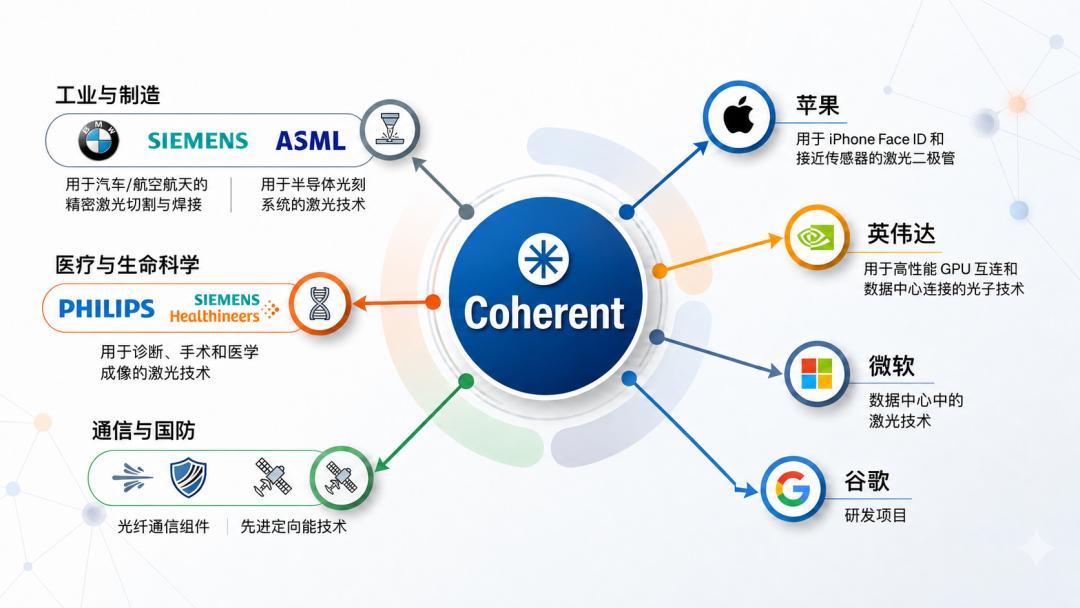
This ability usually seems like industrial chain integration, but in the large - scale construction stage of AI data centers, it will turn into a very real time advantage.
After all, once the specifications of new - generation products change, suppliers have to adjust materials, light sources, devices, and packaging accordingly, and then retest and recertify.
The problem is that for many companies, any change in one link may involve a series of external suppliers.
The difference with Gaoyi is that it can coordinate a considerable part of the work within the system, reducing the time for back - and - forth communication, repeated scheduling, and waiting for each other.
Today's AI supply chain is most afraid of time being delayed.
More and more cloud providers are building clusters with tens of thousands or even hundreds of thousands of GPUs.
At this scale, the focus of competition is no longer just about buying how many GPUs, but whether the entire system can be delivered on time, launched on time, and run on time.
The specifications need to keep up, the devices cannot be out of stock, the production capacity needs to increase, and the delivery cannot be in a mess. If any link goes wrong, the entire cluster may be stuck.
For NVIDIA, this is no longer just a supply chain management problem.
Once the supply chain is stuck, it will not only affect the delivery of a certain part, but also a series of problems such as whether the GPUs can be shipped, whether the customers' data centers can be launched, and whether the revenue can be recognized on schedule.
What's more troublesome is that a core supplier like Gaoyi cannot be easily replaced by a second - tier supplier.
The new supplier needs to be recertified, the test parameters need to be recalibrated, the yield rate data needs to be re - accumulated, and the mass - production ramp - up process needs to be repeated.
This process usually takes months rather than days.
For ordinary hardware companies, a few months may just mean a delayed order, but for AI infrastructure, a few months may very likely mean that a batch of GPUs cannot be launched on schedule, a data center cannot operate at full capacity, and even the shipment rhythm of billions of dollars is disrupted.
And this is the most notable aspect of NVIDIA's investment in Gaoyi.
In fact, the cooperation relationship between Gaoyi and NVIDIA has a history of 20 years.
Therefore, the $2 billion that NVIDIA invests in Gaoyi is essentially not a temporary bet, but a way to help an old partner that can "take full responsibility from the light source to the connection" strengthen its production capacity and balance sheet.
At the same time, NVIDIA is also locking in a scarce vertical integrator for itself.
However, the money for expanding production and the money for repaying debts are not the same thing.
NVIDIA is making up for the short - board in the supply chain. Gaoyi still has to work its way out of the debt and profit deficit left by the mergers on its own.
Because the up - trend will magnify opportunities, but it will also magnify old debts.
The Up - trend Will Also Settle Old Debts
Optical communication has never been an easy track.
Every time there is a technological upgrade, although it seems like an opportunity on the surface, it is often followed by price drops, production capacity expansion, yield rate ramping - up, and fluctuations in gross profit margin.
The same is true for today's 800G and 1.6T.
The faster the specifications increase, the more suppliers have to reinvest in R & D, rerun certifications, and ramp up the yield rate. Once the demand rhythm changes, inventory, depreciation, and price pressure will also quickly emerge.
This is not the first time the optical communication industry has experienced a frenzy.
Around 20