Has NVIDIA "reinvented" the PC? Has Lei Jun heard the call?
A heavyweight player has joined the battlefield of AI PCs.
On May 30th, NVIDIA, Microsoft, and Arm almost simultaneously hyped up "A new era of PC" on social platforms, with the event location pointing to the Taipei Computer Association Show.
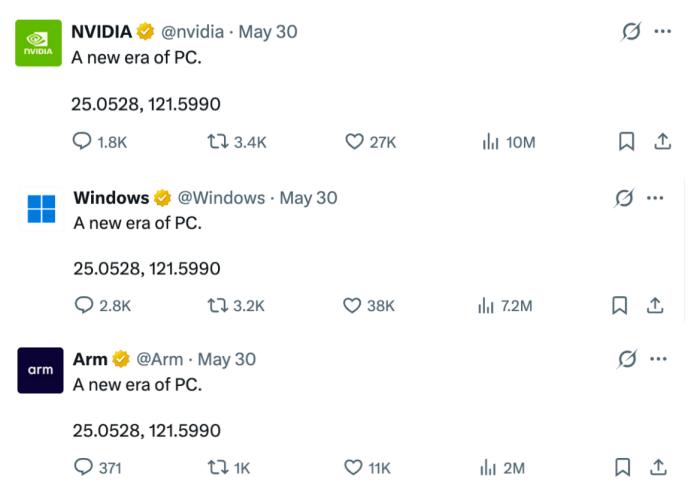
Today, NVIDIA officially launched RTX Spark, a new Windows PC superchip for personal AI Agents. Microsoft also published a blog post simultaneously, stating that the two companies have launched a new generation of Windows PCs accelerated by NVIDIA RTX Spark, targeting developers, creators, and high-end users, and designed for the new wave of Agent applications.
The first batch of RTX Spark devices includes Microsoft Surface Laptop Ultra, Dell XPS 16, Lenovo Yoga Pro 9N, HP OmniBook X14/Ultra 16, Asus ProArt P14/P16, MSI Prestige N16 Flip AI, etc. They are expected to hit the market this fall.
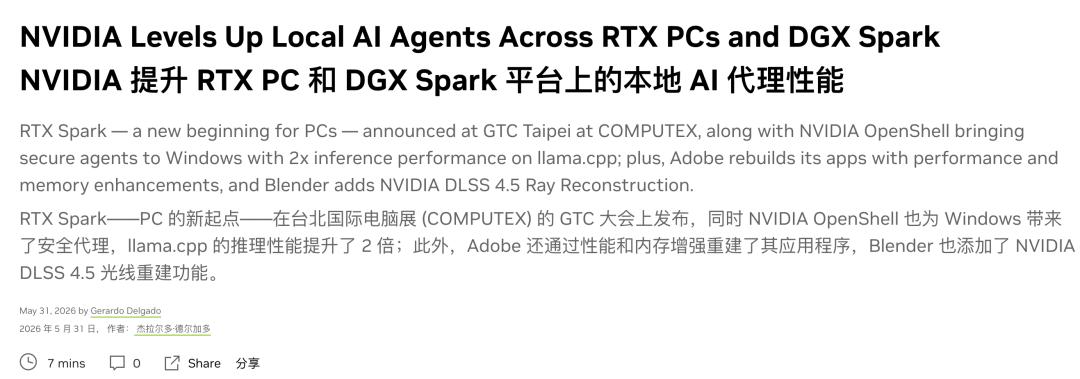
In the past, the PC market was mainly dominated by Intel, AMD, and PC manufacturers. Now, NVIDIA, Microsoft, and Arm have stepped forward, making AI PCs no longer just terminals that access cloud models via the Internet, but workstations capable of local AI computing and hosting system-level Agents.
The capital market has already started to revalue this round of AI hardware in advance. According to Reuters, Dell raised its revenue forecast for AI servers in fiscal year 2027 from $50 billion to approximately $60 billion. Its revenue in the first fiscal quarter was $43.8 billion, a year-on-year increase of 88%, and its after-hours stock price rose by about 39% at one point.
Lenovo also responded enthusiastically. After releasing better-than-expected financial reports on May 22nd, Lenovo's stock price jumped by 15%. The financial reports showed that the company's revenue in the fourth fiscal quarter exceeded expectations, with strong PC sales and a 37% increase in the revenue of its infrastructure solutions business. By the end of May, according to financial media statistics, Lenovo's stock price had risen by more than 100% in a single month driven by the narratives of AI servers and AI PCs, making it one of the most typical PC manufacturers in the revaluation of AI hardware.
AI servers have made traditional PC manufacturers like Lenovo and Dell visible again in the capital market. The joint bet of NVIDIA, Microsoft, and Arm on Windows PCs has further extended this round of AI hardware revaluation to personal computers.
On the other hand, the mobile phone industry is experiencing a cold winter.
The latest forecast from IDC shows that the global smartphone shipments in 2026 will decline by 13.9% year-on-year, dropping to 1.09 billion units. This could be the most severe annual contraction in the history of smartphones, more pessimistic than the 12.9% decline forecast by IDC in February this year. Meanwhile, the average selling price of smartphones is expected to rise to $550, about $100 higher than in 2025. The mobile phone market is facing an awkward situation: selling fewer units at a higher price.
The higher price is mainly due to the cost pressure being passed on to mobile phone manufacturers. Xiaomi's net profit in the first quarter of 2026 decreased by 43% year-on-year, mainly affected by the rising costs of components such as memory chips and intensified domestic competition. Among them, smartphone shipments decreased by 19% year-on-year to 33.8 million units, mobile phone revenue decreased by 12.5% year-on-year to 44.3 billion yuan, and the mobile phone gross profit margin also dropped from 12.4% in the same period last year to 10.1%.
End-side AI experiences do require larger memory, stronger computing power, and higher storage configurations. The problem is that the costs have increased first, but the replacement demand driven by AI has not been proven yet. Mobile phone manufacturers have to pay for AI configurations but have not fully obtained the AI premium.
For full-ecosystem companies like Xiaomi and Huawei, the next main screen after mobile phones is pointing to PCs.
NVIDIA, Microsoft, and Arm Join Forces to Push AI PCs to the Forefront
In the past few years, the focus of AI hardware has been on data centers. NVIDIA's data center revenue in the first quarter of fiscal year 2027 reached $75.2 billion, a year-on-year increase of 92%. Dell also raised its annual revenue forecast for AI servers to $60 billion. The HBM market is expected to double to $76 billion in 2026. GPU, AI servers, and HBM are the most familiar AI hardware keywords in the capital market. PCs were more like access portals, where users opened browsers to access cloud models, and local devices did not bear much AI computing.
However, in the Agent era, the role of PCs has changed.
In a previous article, we wrote about Googlebook. Google has realized that in the Agent era, PCs are becoming the main battlefield for AI workflows. Mobile phones are suitable for accessing AI at any time, but computers are more suitable for integrating AI into files, browsers, applications, and system operations.
The joint efforts of Microsoft, NVIDIA, and Arm mean that AI PCs are evolving from the product narrative of a single company to a larger industrial convergence.
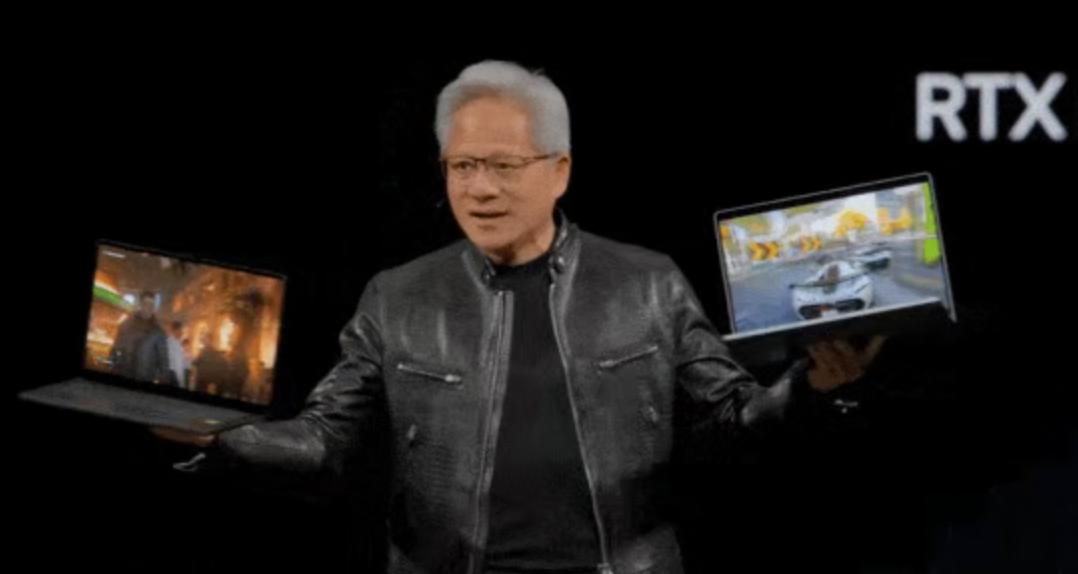
For NVIDIA, this is an extension of AI computing power from data centers to personal computers. NVIDIA has almost reaped all the core benefits of AI infrastructure. Cloud providers, model companies, and enterprise customers are all competing for GPUs. AI servers have made NVIDIA the most typical "shovel seller" in the entire AI era.
However, for Agents to enter personal workflows, computing power cannot be concentrated only in data centers. More and more local Agent tasks require PCs to have stronger local capabilities, especially in scenarios with requirements for privacy, low latency, and continuous operation. Computers themselves must have stronger local execution capabilities.
NVIDIA's official entry into the PC chip market brings not only processors but also GPUs, AI computing, drivers, developer ecosystems, and local model capabilities. It reaped the benefits of AI infrastructure in data centers in the past and now aims to bring these capabilities to personal computers.
According to NVIDIA, RTX Spark can provide up to 1 petaflop of AI computing power and 128GB of unified memory, which is sufficient to support more complex end-side Agent tasks. At the same time, NVIDIA will also bring the OpenShell runtime to Windows and combine it with Microsoft's new Agent security mechanism to ensure that Agents operate in a secure environment under user control. Applications such as Hermes Agent and OpenClaw will also access this set of capabilities.
For Microsoft, this is a step forward in the Windows AI experience. Copilot + PC has introduced the concept of AI computers, but many current AI PC experiences are still relatively basic. To enable Copilot to further integrate into the Windows local workflow from cloud-based Q&A, Microsoft needs stronger chips, a more unified hardware platform, and devices that can attract developers and high-end users.
Arm also needs this opportunity to make the Windows PC market break through its limitations. Windows on Arm is not a new story. Microsoft and Qualcomm have been working on it for many years, and the Snapdragon X Elite was once highly anticipated. However, Windows users have always had concerns about Arm PCs, including performance, software compatibility, gaming ecosystem, and development tools. These issues directly affect the popularization of Windows on Arm.
After NVIDIA's entry, the narrative of Arm PCs is no longer just about low power consumption and long battery life. According to The Verge, the first batch of confirmed RTX Spark devices includes Microsoft Surface Laptop Ultra, Dell XPS 16, Lenovo Yoga Pro 9N, Asus ProArt P14/P16, HP OmniBook X14/Ultra 16, MSI Prestige N16 Flip AI, etc. NVIDIA also emphasizes that creative software such as Adobe, Blender, DaVinci Resolve, and Maxon already support or optimize the Arm platform, and Microsoft and game manufacturers are also promoting game compatibility for Windows on Arm.
NVIDIA aims to bring AI computing power to PCs, Microsoft wants to make Windows the work entry point in the Agent era, and Arm hopes to enter the high-performance personal computer market. The interests of the three parties intersect in AI PCs.
The fact that the three parties have stepped forward in the PC market also means that AI PCs are no longer just about PC manufacturers adding an AI function to laptops. Chip architecture, GPU capabilities, operating systems, developer ecosystems, application compatibility, and local model capabilities all need to be advanced together.
In the Agent era, PCs are getting closer to the core of the AI industry chain. In the past, they were access terminals for cloud-based AI, but now they are becoming local entry points for Agent work.
Mobile Phone Manufacturers Need the Next Main Screen
While AI PCs are gaining popularity, mobile phone manufacturers are facing a different situation.
Mobile phones are not only a hardware business but also the most frequent connection point between users and brands. They represent the entry point, accounts, payment, content consumption, and system services, and are almost the remote control of the entire IoT ecosystem. Xiaomi talks about the "full ecosystem of cars, homes, and people," Huawei talks about the HarmonyOS ecosystem, and OPPO and vivo are also expanding their product lines around mobile phones, including earphones, watches, tablets, in-car systems, and system services.
Once the growth of mobile phones slows down, it not only affects the mobile phone business itself but also the growth of the entire ecosystem.
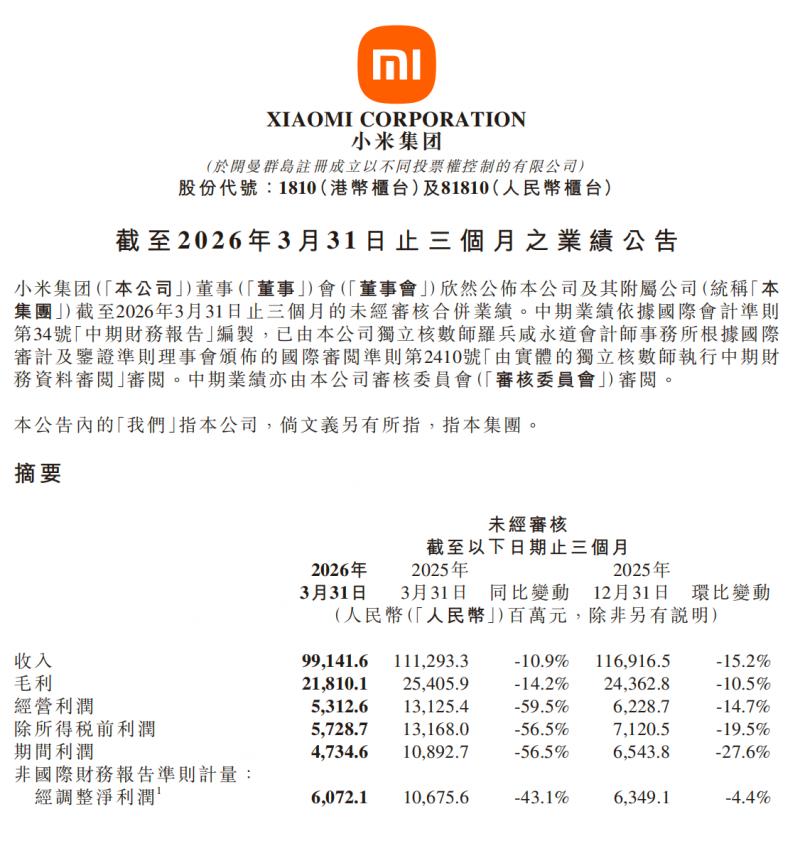
Xiaomi's financial reports clearly show this pressure: In the first quarter of 2026, Xiaomi's revenue decreased by 10.9% year-on-year to 99.1 billion yuan, and its adjusted net profit decreased by 43.1% year-on-year. Smartphone shipments decreased by 19.0% year-on-year to 33.8 million units, mobile phone revenue decreased by 12.5% year-on-year to 44.3 billion yuan, and the mobile phone gross profit margin also dropped from 12.4% in the same period last year to 10.1%.
Behind these figures lies the real dilemma of "AI + mobile phones" (adding AI capabilities to existing smartphones). End-side AI experiences require larger memory, stronger computing power, and higher storage configurations, all of which increase the BOM cost. If mobile phone manufacturers want to promote AI, they must upgrade the configurations, which in turn increases the cost.
However, at present, users' perception of AI functions is not very direct, and it has not been strong enough to significantly drive the replacement demand.
The pressure on OPPO and vivo is not as transparent as Xiaomi's financial reports, but their price adjustment actions speak volumes.
Since March, brands such as OPPO, OnePlus, vivo, and iQOO have successively adjusted the prices of some models. Related reports indicate that the price increase is mainly due to the rising costs of storage and semiconductors, with the price increase of some models reaching 500 to 1,000 yuan.
This kind of price increase is most likely to affect mid-range phones and models with large storage capacities. Flagship phones can absorb some of the cost through features such as imaging, screens, chips, and brand premiums, but mid-range phone users are more sensitive to price increases. In the past, domestic Android manufacturers were good at stuffing high configurations into price ranges such as 1,999 yuan, 2,499 yuan, and 2,999 yuan. Once the costs of memory and storage increase, this strategy will face greater cost pressure.
In the Agent era, traditional mobile phone manufacturers are in an awkward position.
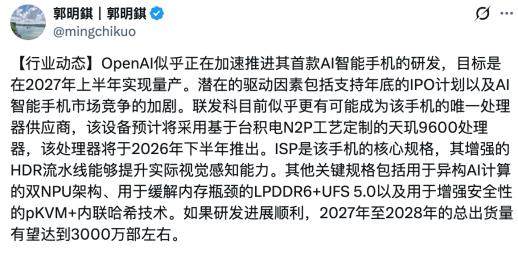
Mobile phones are still the most popular and most frequently used screens. There have been reports about the progress of Doubao Mobile 2.0. ZTE mentioned at its performance briefing that it is collaborating with ByteDance and other ecosystem partners to develop and certify the new generation of Doubao AI mobile phones. Rumors about OpenAI's mobile phone are also heating up. Guo Mingji said that OpenAI is collaborating with MediaTek and Qualcomm to develop smartphone processors and may advance the mass production time of AI mobile phones to the first half of 2027 (originally reported as 2028).
AI companies are still eyeing the mobile phone market as an entry point, but for traditional mobile phone manufacturers like OPPO and vivo, "AI + mobile phones" first brings configuration and cost pressure.
They want to promote AI and keep up with new functions such as system-level assistants, end-side models, and cross-application operations. However, when these functions are implemented in hardware, it means larger memory, higher storage, stronger chips, and more complex software adaptation. The cost has increased first, but it is not clear whether users are willing to pay more for these functions.
Xiaomi's situation is more complex. Its mobile phone business is also under pressure, but it is not just adding AI to mobile phones. Lei Jun previously announced that Xiaomi will invest at least 60 billion yuan in the AI field in the next three years. This statement was made after the release of MiMo-V2-Pro, and the latest MiMo-V2.5-Pro also continues to strengthen its Agent and local workflow capabilities.
Mobile phones are still important, but they are more suitable for meeting on-the-go and daily AI needs, such as taking photos, voice commands, translation, payment, and smart home control. Truly complex and continuous Agent tasks are more likely to occur on PCs.
In the past, when mobile phone manufacturers entered the PC market, it was mainly to supplement their product lines, cover office scenarios, and enable multi-screen collaboration. Computers were like peripheral devices of the mobile phone ecosystem, used to make the experience between mobile phones, tablets, and watches more complete. However, in the Agent era, PCs have become important workstations for handling long-term tasks, complex files, and multi-application collaboration.
For Xiaomi, AI PCs can integrate mobile phones, cars, home appliances, IoT, and the MiMo model into a more complete workflow. Users can initiate requests on their mobile phones, process complex tasks on PCs, and continue to receive services in cars and at home. This scenario is closer to the complete form of the "full ecosystem of cars, homes, and people."
Huawei is even more suitable for this logic: Huawei already has mobile phones, MateBook laptops, tablets, HarmonyOS, in-car systems, and office collaboration. According to reports, HarmonyOS computers have integrated AI capabilities at the system level and connected to the Pangu large model and DeepSeek. If AI PCs become more mature, they will become a