Jensen Huang has become the favorite man of people from Henan.
Recently, the cultivated diamond sector in the A-share market has gone wild.
Many concept stocks, such as Huifeng Diamond, Sifangda, and Huanghe Whirlwind, have successively hit strong limit - up. According to the Wind financial terminal, as of May 29, the increase of the cultivated diamond concept index since the beginning of the year has exceeded 90%, and a large amount of capital is pouring in crazily.
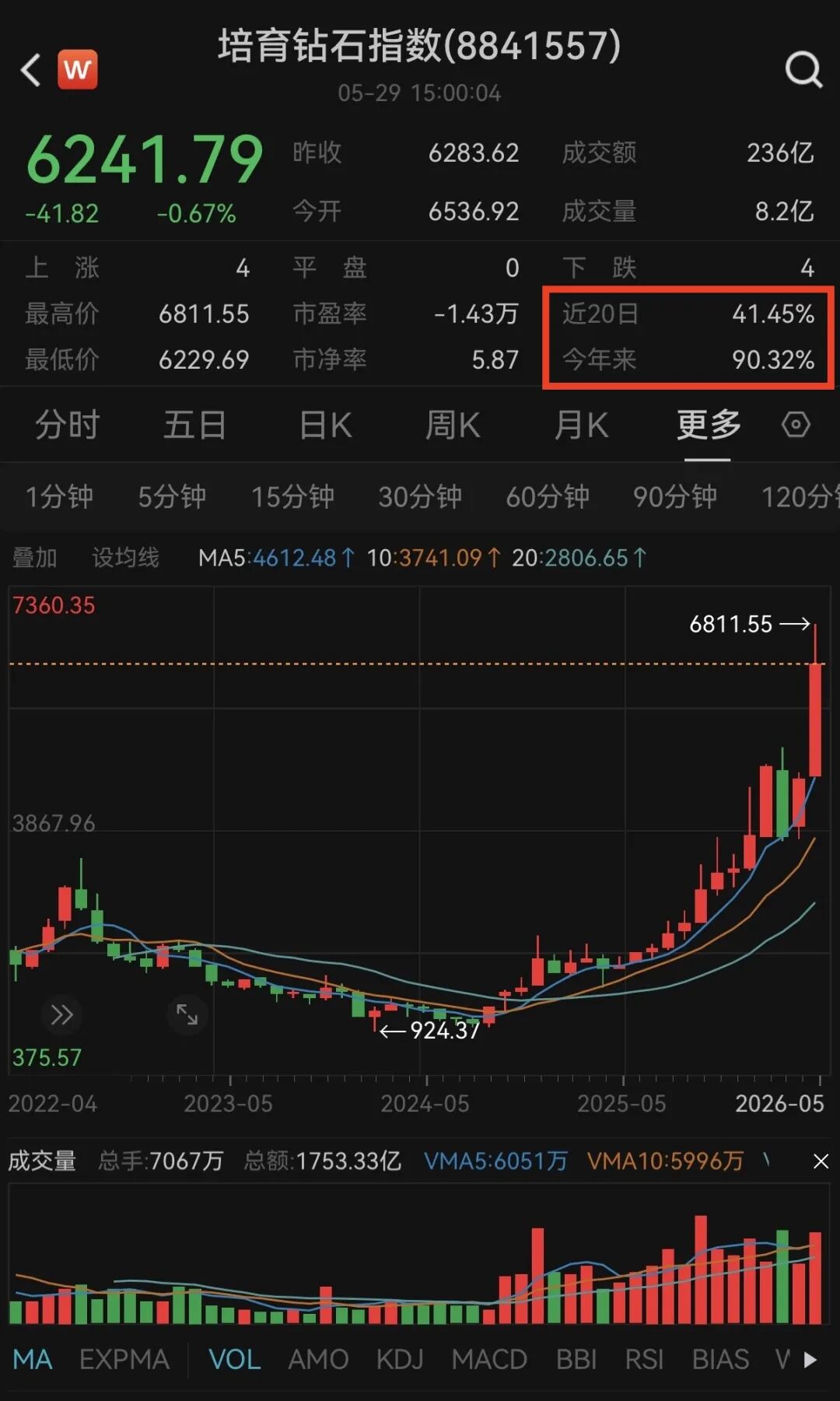
Picture/Wind Financial Terminal App
Obviously, this great fortune has nothing to do with the romantic myth of "a diamond is forever". De Beers, the world's largest diamond producer, only cut prices again at the beginning of this year. The price war of cultivated diamonds has been raging for several years, and diamonds in the consumer market are experiencing a price slump.
What really makes the diamond industry take off again in the capital market is NVIDIA on the other side of the Pacific Ocean. The cultivated diamonds that used to lie in jewelry counters have now transformed into the top "fever - reducers" in the eyes of technology giants to save AI computing power.
Can AI save diamonds?
To understand why diamonds have suddenly crossed over from the jewelry circle to the technology circle, we first need to see how "hot" today's AI chips are in a physical sense.
As semiconductor technology approaches its limit, there are more and more transistors in chips, and the power density has soared accordingly. Take NVIDIA's next - generation architecture GPU as an example. The peak power consumption of a single chip exceeds 2300 watts. Under such extreme heat, copper - based materials, which used to be the absolute main force for heat dissipation, have approached the physical limit of "inability to conduct heat".
At this time, diamond (polished diamond is what we call a diamond), the fourth - generation semiconductor material, makes its appearance. In the physical world, it is currently the material with the strongest thermal conductivity known, about five times that of copper.
This is not just a concept hype in the laboratory.
Huaxin Securities clearly pointed out in a recent research report that as the semiconductor industry develops towards the 2 - nanometer and even angstrom levels, if heat dissipation is not timely, the rapid rise in chip temperature will directly affect performance and reliability. With its extremely high thermal conductivity, diamond has broad development prospects. A research report from China Galaxy Securities even mentioned that in scenarios where the power consumption of a single chip exceeds 1400 watts, diamond is a must - have option.
The commercialization process is also accelerating, especially with NVIDIA's participation, making all this more real and tangible.
In February this year, NVIDIA announced that its next - generation GPU chips would fully adopt a new heat - dissipation solution of "diamond composite material + liquid cooling". Soon after, Akash Systems, a pioneer in diamond heat - dissipation technology and a partner of NVIDIA, announced that it had delivered the world's first batch of NVIDIA GPU servers equipped with diamond cooling technology to an Indian sovereign cloud service provider. Subsequently, the relevant technology applications were also extended to AMD's high - end AI chips.
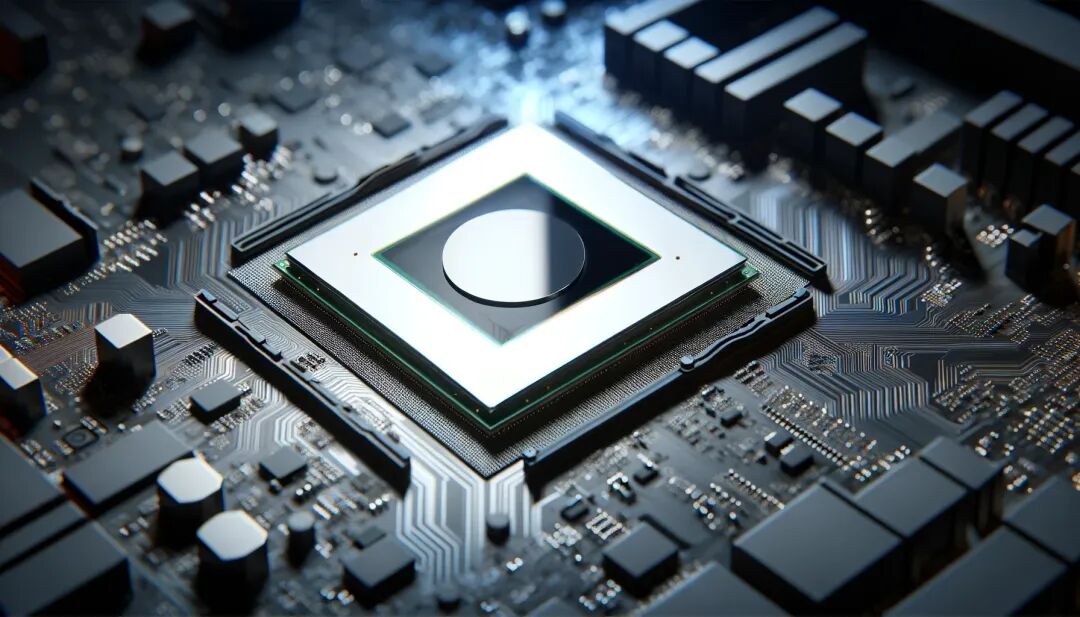
Picture/Akash Systems official website
"Whether making chips or gemstones, in essence, it's all about materials." Equity investor Wu Xiao pointed out the connection. He mentioned that the current heat - dissipation solution does not completely replace copper with diamond. It is mainly a combination of "diamond + copper". Diamond is responsible for absorbing heat crazily at the most critical local core heat - generating points, while copper continues to undertake the main structure and signal transmission tasks.
Although the price of diamond is obviously higher, Wu Xiao said that compared with top - end AI chips that cost tens of thousands of dollars, the cost of heat - dissipation materials is acceptable. For today's AI giants who are going all out, in order to pursue extreme performance, they can completely compromise on price and even invest regardless of the cost.
However, in the face of this wave of heat in the capital market, some industry insiders have given a more sober judgment.
Bai Wenxi, the deputy chairman of the China Enterprise Capital Alliance, told "Interesting Report" that the current capital enthusiasm is more of a theme hype. The large - scale mass production of diamond heat - dissipation is still a long way off, and the current sharp rise is mainly driven by emotions. But he also pointed out that in the long run, if the technology is verified, there is indeed room for a re - evaluation of the underlying value of the entire cultivated diamond industry chain.
Can this emerging trend be grasped?
Whether it is a long - term value re - evaluation or a short - term emotional hype, this computing power heat - dissipation revolution initiated by Silicon Valley has pushed Henan, China, to the center of the stage.
China has absolute dominance in the field of artificial diamonds.
The "2025 Cultivated Diamond Industry Development Report" shows that currently, China accounts for about 63% of the global cultivated diamond rough production capacity. Henan is the global production capacity core area. Just in Zhengzhou alone, there are 122 enterprises in the industrial chain, constructing a complete industrial chain from R & D to application.
Facing this new blue ocean worth hundreds of billions brought by AI, the "Henan Legion" represented by Zhongnan Diamond (parent company Zhongbing Hongjian), Huanghe Whirlwind, Liliang Diamond, and Huifeng Diamond seems to have encountered an excellent opportunity to transform from low - profit jewelry to high - value - added semiconductor materials.
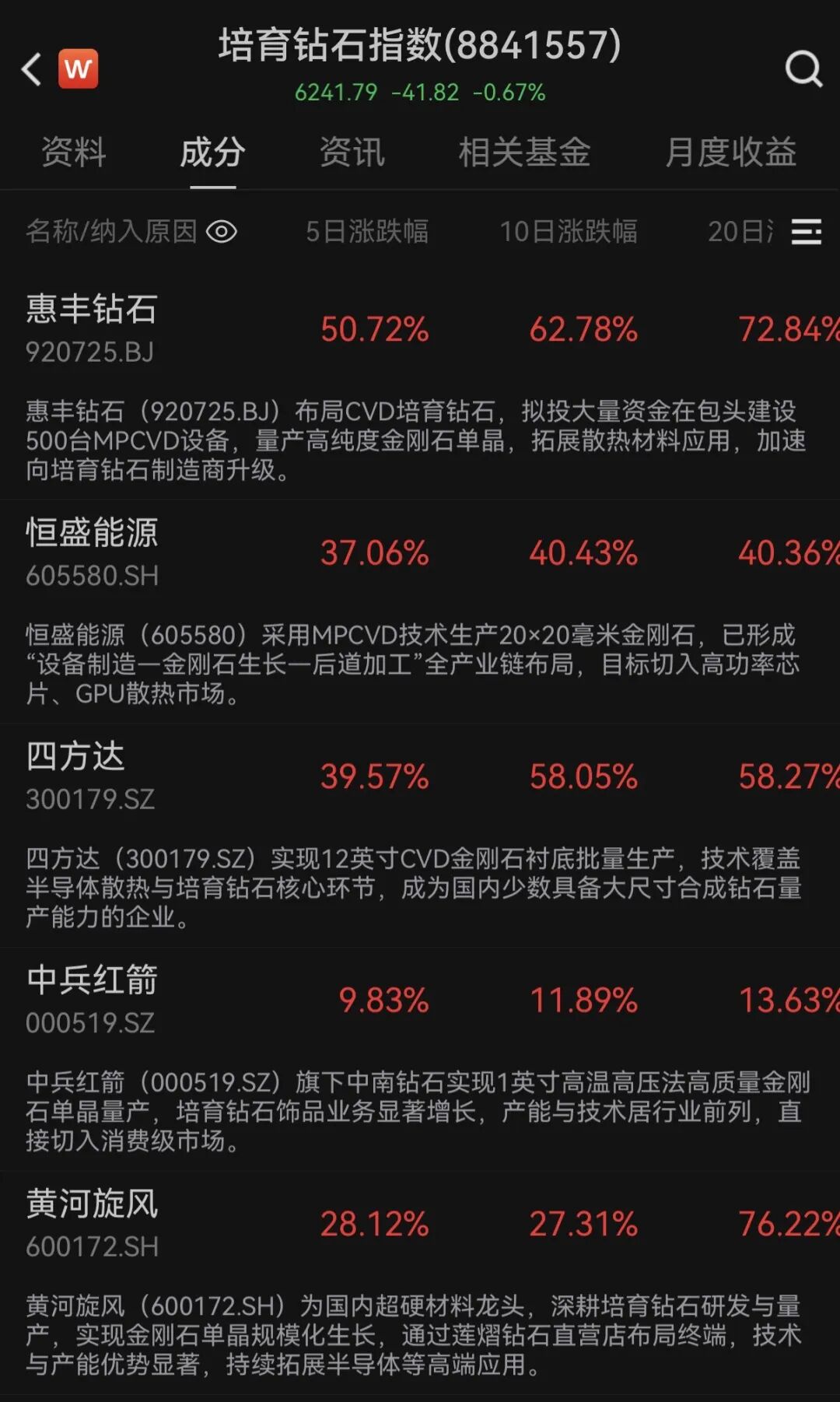
Picture/Wind Financial Terminal App
However, it is much more difficult to complete this cross - border transformation than expected.
The first challenge is the change of technical route. Currently, most of the cultivated diamond processes dominated by domestic enterprises use the high - temperature and high - pressure method (HTHP), which has low cost and is suitable for making jewelry. However, high - end semiconductor heat - dissipation materials rely on chemical vapor deposition (CVD).

A jewelry store under Zhongnan Diamond. Picture/WeChat official account "ZNDJewelry Diamond Brilliance"
Bai Wenxi said that the threshold for this cross - border transformation is extremely high. First, there is the technical barrier. Enterprises not only need to spend a lot of money to purchase specific equipment but also need to understand the complex production processes and parameter settings. What's more difficult is purity control. For diamonds used in semiconductors, impurities must be controlled at an extremely low level of one - billionth (less than 1 ppb). In addition, the verification process of downstream wafer factories is also very strict, and it often takes two to three years to pass the certification.
Zhongbing Hongjian also admitted in a recent investor interaction that although the company adheres to a dual - technology route, its production capacity for products such as CVD single crystals is currently still in the "steady improvement stage" and cannot be achieved overnight.
In addition to the difficulties in technology and certification, market demand and cost control are also challenges.
The secretary of the board of Zhongbing Hongjian said that the current applications of diamond heat sinks are mostly in the experimental verification stage of engineering prototypes of downstream enterprises, and a mature market has not yet been formed. More importantly, due to the extremely high current production cost, downstream enterprises are difficult to accept the current price. How to significantly reduce the cost is the key that the industry urgently needs to overcome.
The most realistic problem facing these enterprises is the financial pressure in operation. The price war in the jewelry market that has lasted for two or three years has seriously damaged the vitality of many cultivated diamond enterprises. Looking at the financial reports of several leading companies in the past two years, their performance has almost all been in a state of decline or loss.
Against the background of severely strained cash flow of enterprises themselves, Bai Wenxi believes that in the face of the long and high - risk semiconductor R & D cycle, most enterprises actually do not have much capital reserve to consume. Except for a few leading enterprises with the ability to continuously inject capital, small and medium - sized players are difficult to support. Once the technical route is chosen wrongly or the capital chain breaks, the enterprise will face elimination.
In this regard, Bai Wenxi also suggested that for domestic diamond manufacturers caught in the price war, the way out may not be to fight alone. Abandoning the idea of covering the entire industrial chain, focusing on a single link such as heat sinks or substrates, or even seeking joint R & D with semiconductor material giants may be a more reliable survival rule.
The urgent demand for heat dissipation in AI chips has indeed pointed out a new way out for the currently over - capacity cultivated diamond industry. However, for domestic diamond enterprises to transform from jewelry processing factories into semiconductor material suppliers, they still have a long way to go in terms of technology R & D and market verification.
This article is from the WeChat official account "Interesting Report", author: Liang Tingting. Republished by 36Kr with authorization.