The open-source programming language Zig says "no" to AI-generated code.
In the era of AI, embracing AI is obviously the general trend. Even the famous Linux founder, Linus Torvalds, has started using AI for programming in his personal projects since the beginning of this year.
However, there are always some holdouts with a clear stance: they do not accept AI-generated code. The open-source modern programming language Zig is one of the representatives.
Zig is maintained by a non-profit organization and a group of contributors. Any programmer can submit code to its code repository as long as they abide by the project's code of conduct.
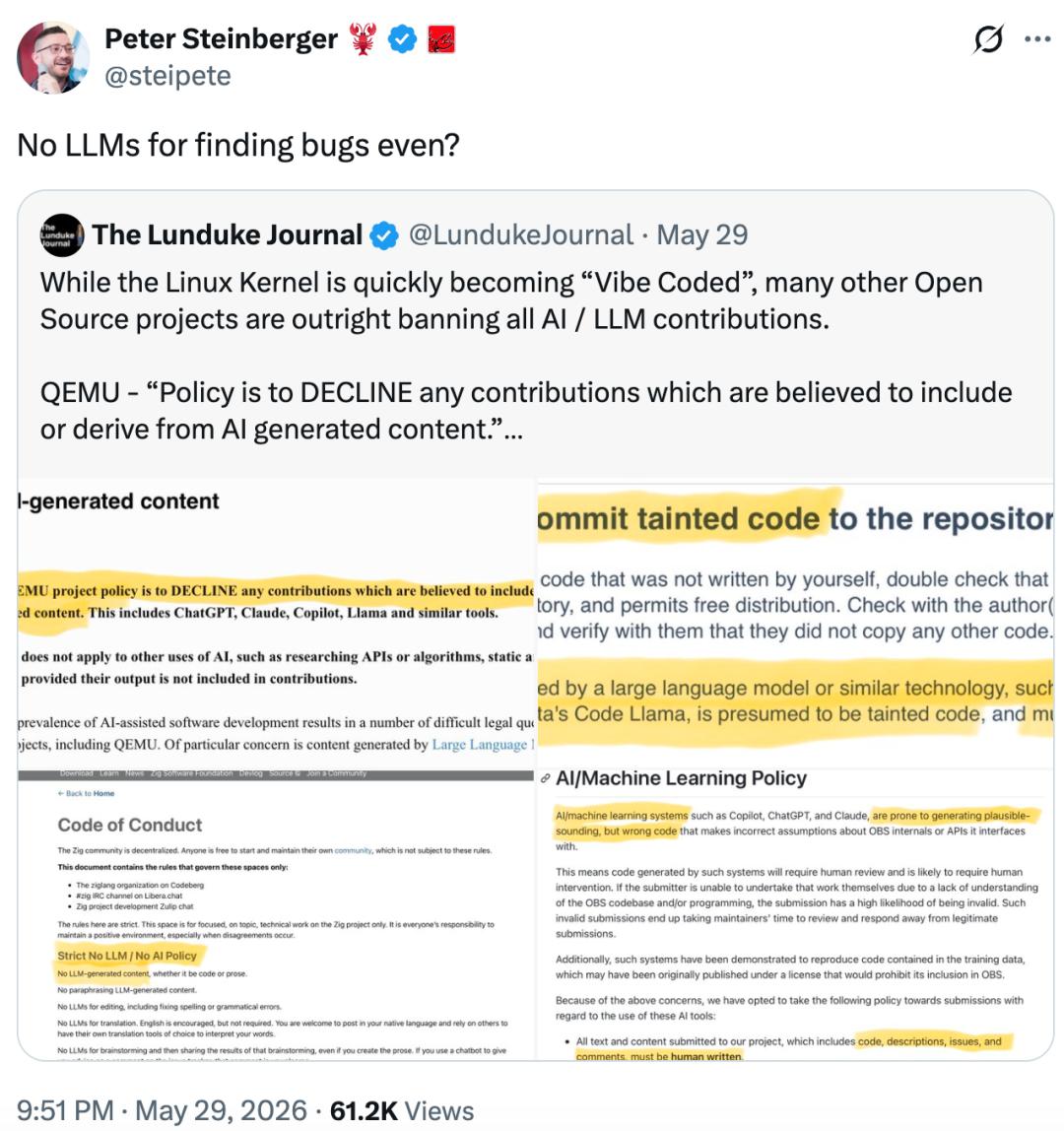
One of the rules is: submitting AI-assisted generated code is prohibited. The policy clearly states that it does not accept any content generated by large language models, nor content rewritten, polished, edited, brainstormed, or debugged by large language models. Simply put, it keeps AI away from code contributions to Zig.
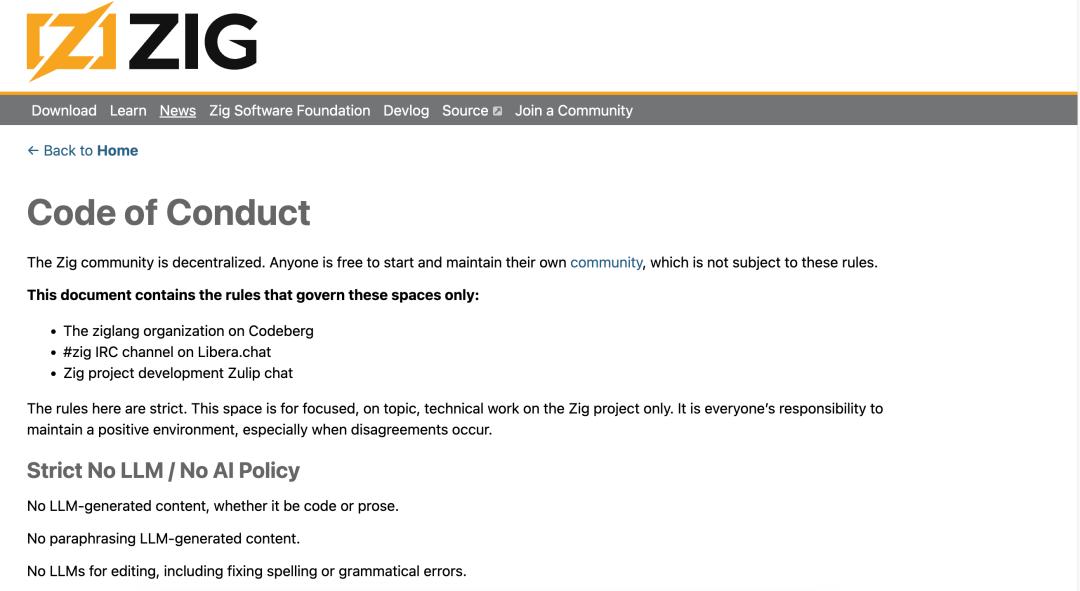
For the full content, see the link: https://ziglang.org/code-of-conduct/
In a recent JetBrains podcast, Andrew Kelley, the creator and chief developer of Zig, referred to AI-assisted contributions as "junk".
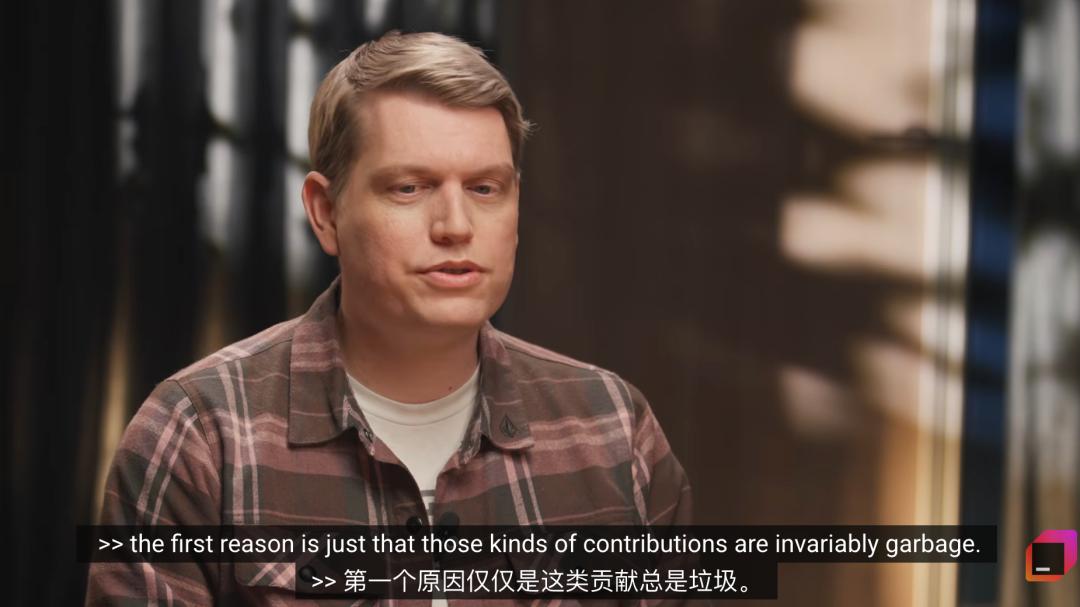
Kelley said, "Some people submit completely worthless contributions to us. They are even of negative value because they take up the limited code review time of the team."
The code contributions to Zig are mainly reviewed by a small number of core team members. This is exactly what Kelley emphasized as the project's "bottleneck": the number of submitted pull requests exceeds the processing capacity of the reviewers. In the interview, Kelley mentioned that there were still 200 unprocessed pull requests for Zig at that time.
He further stated that when they receive "junk contributions" generated by AI and after several reviews, they find that the contributors don't know what they are doing at all. "Some contributors just copy and paste what we said back into the dialog box and try to pretend they didn't use the AI chat function by cleaning the chat history, but we can still tell and realize that there will never be high-quality contributions."
Therefore, these "junk contributions" will only further slow down the entire team. "We waste everyone's time, and the code submitted by other patient contributors doesn't get reviewed and merged."
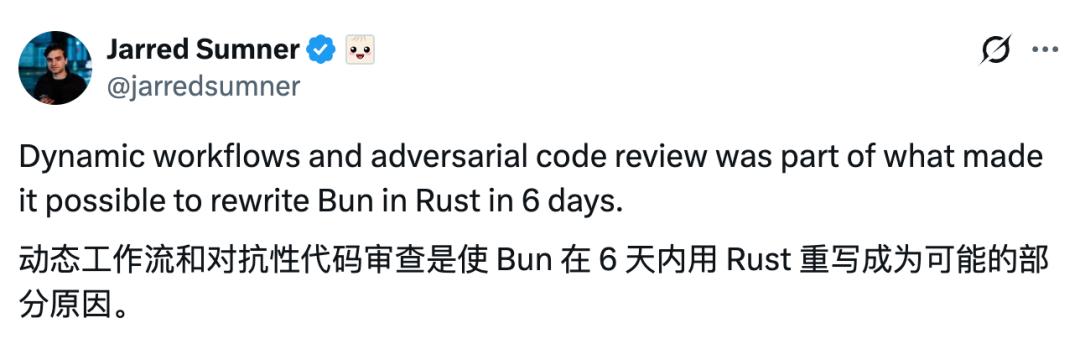
Although Zig is relatively small in scale, its influence is not small. For example, Bun is developed using Zig, and Bun was later acquired by Anthropic. Different from Zig, Bun embraces AI. A few days ago, Jarred Sumner, the creator of Bun, tweeted that he used the new dynamic workflow feature of Claude Code to port Bun from Zig to Rust.
Driven by tools like Claude Code and OpenAI Codex, AI-assisted coding has swept through Silicon Valley. Some people use AI to modify code, while others directly let AI draft entire sections of code. Large technology companies have also set high goals, emphasizing what proportion of code should be written by AI in the future, and even claiming that a considerable proportion of code already comes from AI.
However, Zig doesn't have "maximizing efficiency" as its sole goal like these listed companies. Kelley said that for Zig, "mentoring" is part of the project's core mission, so AI contributions would have the opposite effect. "We are all trying to become better programmers. Those who submit AI pull requests don't help achieve this goal."
In his view, these AI code submitters are more like "passing contributors": they may submit one or two pull requests, but will never really join the core team.
At the same time, a complete ban on AI also simplifies the rules. Kelley said that if he said only "good" AI pull requests could be accepted, then the reviewers would have to judge one by one which ones are good and which ones are not. "But if I say no AI contributions are accepted, then this policy is very easy to implement."
Actually, besides Zig, there are other open-source projects that say "No" to AI, including the open-source machine simulator and virtualization tool QEMU (which rejects any contributions considered to contain AI-generated content or originate from AI-generated content), the veteran open-source Unix-like operating system NetBSD (AI-generated code is considered contaminated code by default and cannot be submitted), and the very popular open-source screen recording and live streaming software OBS Studio (the code must be written by humans).
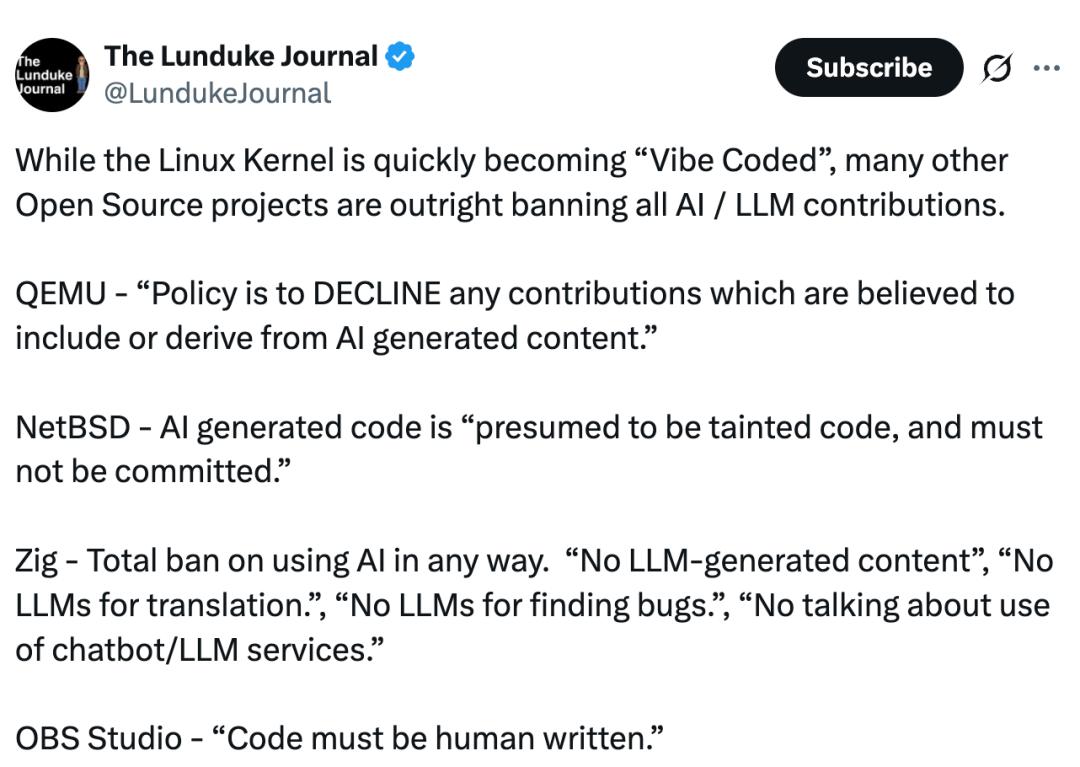
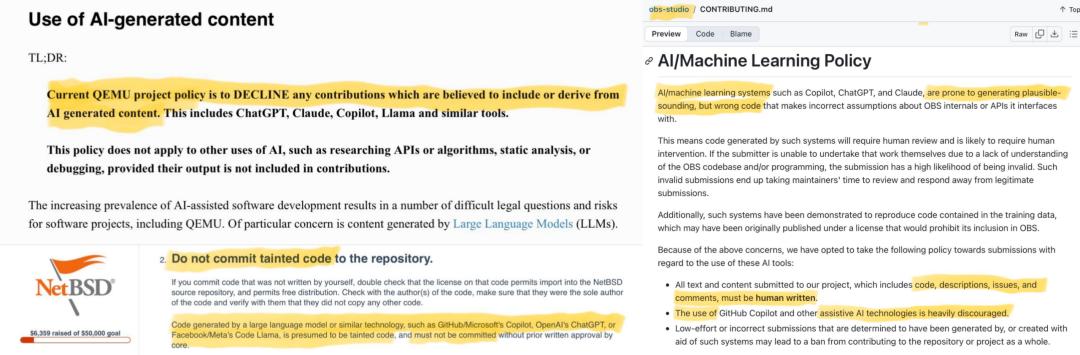
The perseverance of these projects made Peter Steinberger, the father of Lobster, can't help but exclaim, "Can't LLM even be used to find bugs?"
It's still too early to tell what the final result of their perseverance will be. But in the current situation where AI coding has almost become a trend, these open-source projects that choose to hit the pause button are at least worth being seriously noticed.

Original link:
https://www.businessinsider.com/zig-programming-language-ai-rules-2026-5
This article is from the WeChat official account "Machine Intelligence" (ID: almosthuman2014). The author is someone who focuses on AI. It is published by 36Kr with authorization.