At which step is county-level education stuck?
Introduction
County - level education has been repeatedly mentioned in recent years. However, most of the time, people are still discussing the same issue - whether there are enough resources.
More money is being invested, teachers are being transferred, equipment is being introduced into schools, and policies are being implemented one after another. On the surface, county - level education seems to be "continuously strengthened". But if we take a longer - term view, we will find another feeling that is not easy to express directly: many problems have not naturally disappeared with the increase of resources; instead, they have become more complex. Teachers are flowing, but the high - quality supply is unstable; the funds are increasing, but the gap has not significantly narrowed; equipment has entered the schools, but the changes in the classrooms are limited; schools in the county seat are becoming more concentrated, while schools in rural towns are gradually being marginalized.
These changes are not isolated cases. For example, in terms of teacher allocation, empirical research on the "county - level management and school - based employment" reform shows that teacher mobility has indeed brought an average increase of about 12.2% in education quality. However, this effect varies significantly in different regions, and it has not changed the problems of insufficient teacher stability and structural imbalance. Looking at the funding level, the investment in compulsory education at the county level has been continuously increasing in recent years. However, the differentiation between counties has shown a trend of spatial agglomeration and has not naturally disappeared due to the increase in investment.
This means that the problem is no longer just "whether there are resources", but rather whether the resources can form capabilities and change the structure after they enter.
01 County - level education is no longer as simple as "running schools well"
If we still regard county - level education as a simple educational issue today, it is easy to underestimate its complexity.
The county level is in a very special position. It connects cities on one end and rural areas on the other, and is the place where resource flow and problem aggregation are the most intensive. In the past, it mainly played the role of "ensuring basic education". Now, it has gradually become a central hub under the pressure of multiple goals: it needs to maintain fairness and improve quality; it needs to stabilize rural schools and accommodate the population in the county seat; it needs to respond to the anxiety about college entrance examinations and cooperate with the local development rhythm.
From a research perspective, the importance of county - level education lies not only in its large scale but also in the fact that it is a key carrier for the integration of urban and rural education - promoting the transformation of urban and rural education from "separation" to "reorganization" through the flow of factors such as teachers, courses, and technology. However, the problem is that this "reorganization" does not happen automatically; it often needs to be promoted under the pressure of multiple goals.
In reality, a county hopes to strengthen its high schools to retain good students, but it also dare not let rural schools be completely emptied; it wants to promote the concentration of the population in the county seat, but it is worried about the negative effects of educational imbalance; it wants both balance and good academic performance. These goals are likely to conflict with each other when put together.
This is why county - level education is becoming less like a single system and more like a complex field affected by multiple development logics.
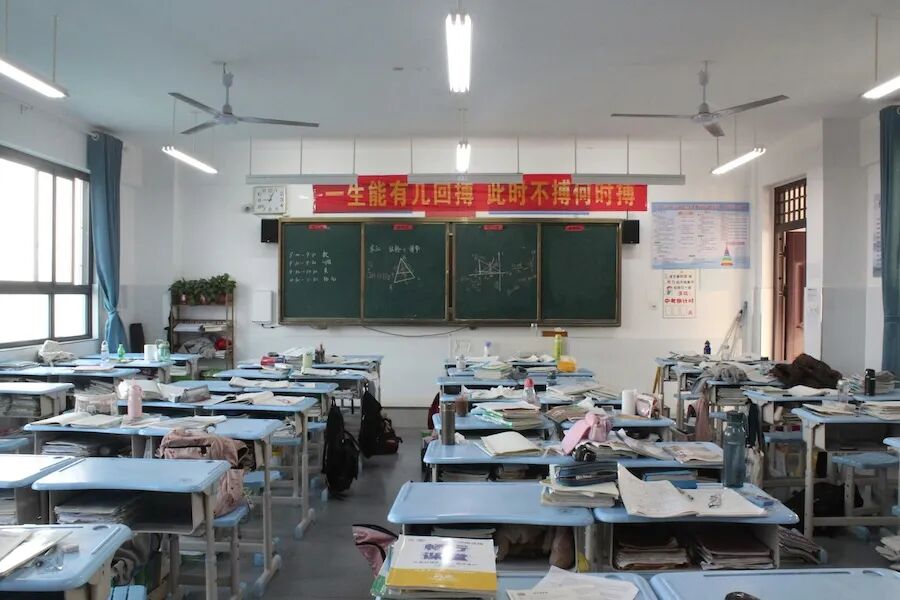
02 Resources have come in, but not fully transformed into capabilities
From the perspective of investment, there have been many actions in county - level education in recent years. However, the problem is that many of these actions have only reached the stage of "arrival" and have not yet achieved "transformation".
Teacher mobility is a typical example. The "county - level management and school - based employment" reform has indeed broken the barriers between schools, allowing teachers to be re - allocated within the county and bringing a certain degree of quality improvement. However, the same research also points out that there are obvious regional differences in the reform, and in some areas, there are even problems such as the formalization of policy implementation and the decline of teachers' sense of belonging. This means that the transfer of teachers does not mean that teaching ability has become stable, and the organizational ability within schools has not automatically formed.
The same is true for the funding issue. Although the financial investment has been continuously increasing, from the county - level perspective, the gap has not simply narrowed; instead, it has shown new structural differentiation. Research has found that the differences in county - level education funds not only exist but are also closely related to fiscal decentralization and the regional economic structure. In other words, although the money is increasing, it is difficult to convert it into an overall quality improvement without a more effective overall planning mechanism.
The digital transformation can better illustrate this state of "arrival but not transformation". On the one hand, relevant research emphasizes that digitalization can restructure resource allocation, improve governance ability, and even change the unbalanced pattern of urban and rural education. On the other hand, it also clearly points out that there is still the problem of "technological hollowness" in reality - the equipment has entered the schools but is under - used, the platforms are online but are out of touch with teaching, and the resource allocation still favors urban areas. The technology is present, but the system has not really changed.
The situation of vocational education further magnifies the problem of "structural disconnection". County - level vocational education is expected to support industries and promote employment, but in reality, it generally faces problems such as a shrinking student source, a mismatch between majors and industrial needs, and the difficulty of implementing industry - education integration. These problems cannot be simply solved by investment; they are more the result of the long - term lack of matching between the education system and the local industrial structure.
Looking at these phenomena together, we can find a common point: the resources are coming in, but there is no synergy. Teachers, funds, technology, and schools operate independently but have not really formed a system.
03 Education is no longer just affecting schools
When the resource issue is no longer the only contradiction, the changes in county - level education begin to expand outward.
The most obvious point is that education has a more direct impact on population flow. Especially at the high - school level, the quality of a county high school often directly determines whether students will flow out. Research has clearly pointed out that once high - quality students leave and the school quality declines, it will form a cycle of "student outflow - quality decline - further outflow", which may even affect the entire county - level education system.
Because education begins to affect population movement, it has gradually been incorporated into the logic of county - level urbanization. Some research has found through on - the - spot observation that some places promote the concentration of schools, students, and teachers in the county seat by strengthening educational resources in the county seat, thereby driving the population to buy houses in the county. This model can indeed promote the development of the county seat in the short term, but it also brings obvious risks, such as the weakening of rural education, the increasing burden on families, and the possibility of "false prosperity" in county - level development.
In this context, education is no longer just about education itself but has become part of population flow, family decision - making, and even changes in spatial structure.
At the same time, the differences in goals between different levels are also constantly emerging in education. At the central level, the emphasis is on high - quality balance and educational fairness, while local areas often need to consider population agglomeration, financial pressure, and regional competition in actual implementation. This difference will be reflected in resource allocation, such as the concentration of high - quality resources in the county seat and the siphon effect of "super high schools".
The complexity of county - level education largely comes from the superposition of these multiple logics - it is both a public service and is constantly shaped by real - world development needs.
04 The next step for county - level education is not to continue to pile up resources but to straighten out the structure
When the problem reaches this stage, simply increasing resources has limited significance. The more crucial thing is to re - organize the relationships among the resources that have already entered the system.
The flow of resources should not be just one - way transfer but needs to form a cycle within the county, enabling stable connections between different schools and between urban and rural areas. Research on the integration of urban and rural education has pointed out that the key is not single - point supplementation but to drive structural optimization through the flow of factors and ultimately improve the system function.
Balance also needs to be re - understood. It should not be about the convergence of conditions but about a clearer position of different schools in the whole. County high schools can be the leading ones, but not at the expense of rural schools; rural schools need to maintain vitality rather than being passively maintained; vocational education must form a real connection with local industries, otherwise, it is difficult to play a role.
Equally important is the relationship between education and local reality. Especially in the field of vocational education, if the education system is out of touch with local industries, no matter how much investment is made, it is difficult to convert it into actual value. This has been repeatedly verified in the research on county - level vocational education.
The same is true for technology. The key is not whether there are platforms but whether these tools can be used in daily life. If it always stays at the "display level", no matter how much technology there is, it is difficult to change the system.
After all, what county - level education lacks now is not "a little more" but "using what it has as a whole".
Conclusion
The reason why it is becoming increasingly difficult to clarify county - level education is that it is undergoing changes itself.
In the past, the problems were more straightforward - making up for what was lacking; now, the problems are more hidden - how to make the existing resources really work. Why do resources not bring stable improvement after they come in? Why does the spread of technology not change the classroom? Why are schools increasingly involved in population and spatial changes? These problems are magnified at the county level.
For this reason, county - level education is likely to be the place where we can best see the direction of China's education changes in the future.
What needs to be solved next is not "making up a little more" but making this system truly develop.
This article is from the WeChat official account "Blackboard Insight" (ID: heibandongcha). The author is Erdong. It is published by 36Kr with authorization.