Chinese automakers are in a decisive battle for "Series 9" cars.
In the past, it was not optimistic for Chinese car brands to sell luxury cars.
However, with the continuous increase in the penetration rate of new energy vehicles in the Chinese auto market, leveraging the leading technologies mastered in the new energy vehicle field, domestic brands have built their own brand value, redefined luxury cars, started to gain pricing power in the high - end market, overtaken competitors by changing lanes and entered the luxury car track originally led by foreign brands, and achieved a leading position in some high - end new energy vehicle segments.
Even today, Chinese automakers are gradually setting their own rhythm in the competition for the luxury car market. They not only compete with foreign brands such as BBA but also engage in "internal battles". The most typical manifestation is the competition for the "Series 9" car market.
DoNews noticed that the dispute in the Series 9 car market emerged in 2025. In less than five months of 2026, news of more than a dozen Series 9 cars from Chinese automakers about to be launched has been released, and the smoke of intensified competition in the luxury car market is gradually rising.
01. Betting on "Series 9" Cars
What are "Series 9" cars?
Strictly speaking, "Series 9" is not an official term. It is a term naturally formed by the Chinese auto industry based on industry development trends. It is a general term for flagship models with "9" in their names launched in the Chinese new energy vehicle market. However, it should be noted that some models without "9" in their names are still included in the Series 9 car lineup.
Generally speaking, Series 9 cars generally have several characteristics: in terms of models, they are usually over 5 meters long, mostly large SUVs or MPVs; in terms of configuration, they have a very high degree of intelligence in areas such as intelligent driving and intelligent cockpits, and are usually the culmination of automakers' advanced technologies; in terms of price, most are priced above 300,000 yuan and are models in automakers' product portfolios targeting the high - end market; in terms of user groups, they are aimed at high - net - worth customers, mainly for business or high - end family scenarios.
In 2026, the Chinese auto market witnessed a peak in the release of Series 9 cars. Statistics show that at the Beijing Auto Show alone, more than a dozen Series 9 cars were unveiled, including Li L9 Livis, the new - generation AITO M9, NIO ES9, Volkswagen ID.ERA 9X, ZEEKR 9X, Yijing X9, BYD Datang (Tang Series 9), etc.
As a new entrant in the auto industry, Yijing, a mid - to high - end intelligent car brand jointly launched by Dongfeng Motor Group and Huawei, has bet its first model on a Series 9 car. On April 24th, the Yijing X9 was globally exhibited at the Beijing Auto Show and is expected to be launched in the third quarter of 2026. Zeng Qinglin, the general manager of the Yijing car brand, described the value and positioning of the Yijing X9 as "the supreme status", hinting that it will enter the high - end price range above 500,000 yuan.
What supports the high - end positioning of the Yijing X9 is obviously the cutting - edge technological configuration empowered by Dongfeng and Huawei. It is reported that the Yijing X9 is the first mass - produced carrier of Huawei's Kunlun ADS 5.0 intelligent driving and Hongmeng Cockpit 6.0. In terms of intelligence, it is equipped with the current highest - specification 896 - line lidar for mass - produced vehicles, pushing high - level intelligent driving hardware to a new height; in terms of safety, the whole series is standard - equipped with Huawei's latest generation of Kunlun CAS 5.0 anti - collision system. The body uses 2400MPa ultra - high - strength steel for the first mass - production application and is equipped with a three - layer bulletproof - grade battery armor, which is an industry - first.
Zeng Qinglin said that Yijing hopes to become a "tech geek" in the Huawei ecosystem. Currently, Yijing is building an independent sales network and has been deployed in 80 cities across the country, with 80% of the stores being former BBA stores.
Great Wall Motors also pins its hopes for high - end development on Series 9 cars. On April 17th, the AI - powered luxury six - seat flagship, the WEY V9X of Great Wall's WEY brand, started global pre - sales. The car is over 5.2 meters long and offers three options: a luxury extended version, a luxury family version, and an executive extended version, with pre - sale prices of 371,800 yuan, 381,800 yuan, and 411,800 yuan respectively.
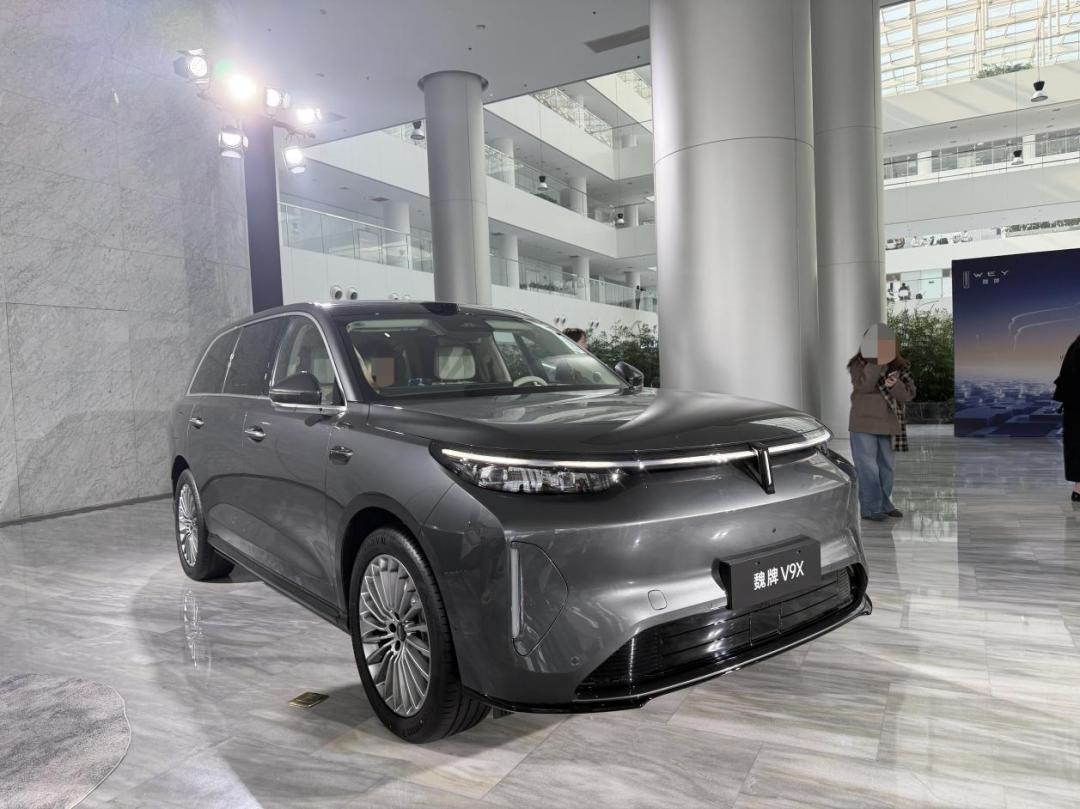
Source: Photo taken by DoNews
The WEY V9X is a "showcase of technology" by Great Wall Motors. It is the first flagship model of the Guiyuan S platform, integrating all the self - developed technologies of the platform. It deeply integrates multiple power systems, Super Hi4, Super Intelligent Chassis, and the native AI cockpit - driving intelligent system. Not only does it have excellent body strength and safety performance, but in terms of driving experience, it has compressed the minimum turning radius of a nearly 5.3 - meter - long car to less than 5 meters. In terms of intelligence, the WEY V9X has established a full - domain perception system, with 1 lidar, 3 millimeter - wave radars, 12 ultrasonic radars, and 11 5MP high - definition ultra - wide - angle cameras; it is equipped with AEB, RAEB, and AES emergency steering assistance systems and has achieved the industry - exclusive 160km/h high - speed dual - wheel flat - tire stability control.
It is worth noting that Wei Jianjun, the chairman of Great Wall Motors, personally serves as the spokesperson for the WEY V9X, endorsing it. "We have put a lot of effort and invested a huge amount of money in building the Guiyuan concept. The V9X is finally launched. I believe it will be the best - selling product in the large six - seat category, and there will also be a five - seat version in the future," Wei Jianjun said confidently.
Two days before the launch of the WEY V9X (on April 15th), XPeng Motors launched an "atypical Series 9" car, the first full - size flagship SUV, the XPeng GX. Although there is no "9" in its name, the outside world still classifies it as a Series 9 car.
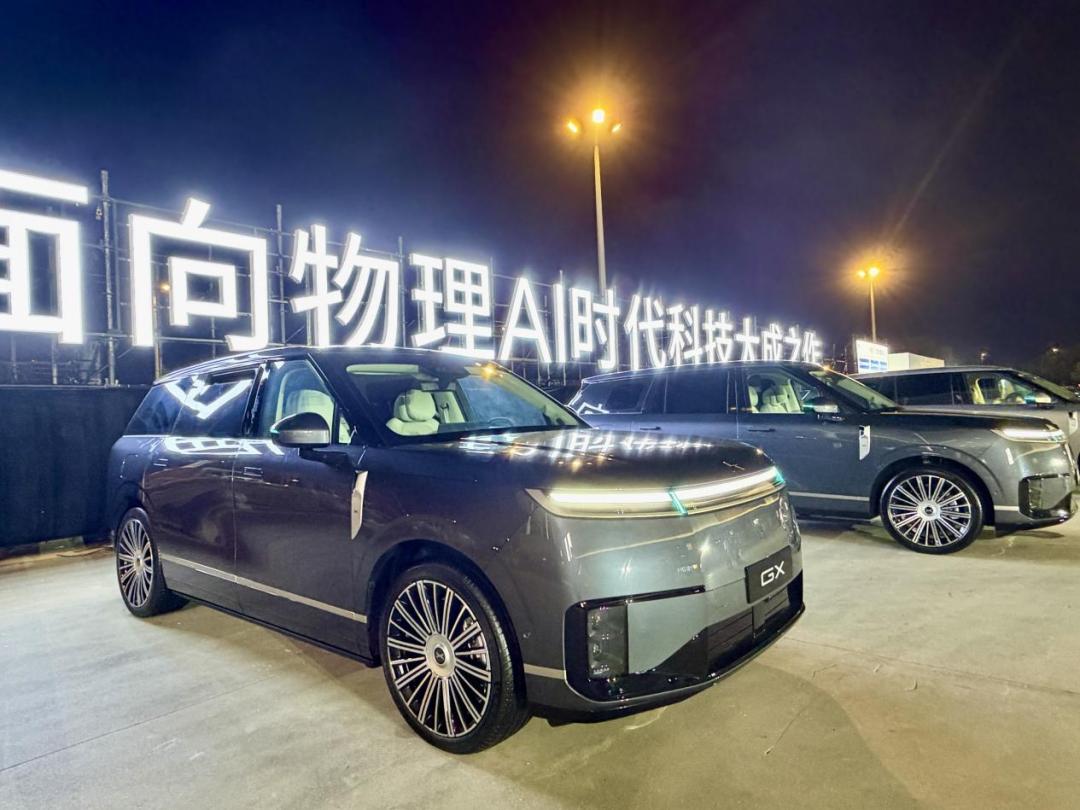
Source: Photo taken by DoNews
When talking about the competitiveness of the XPeng GX in the Series 9 product system, He Xiaopeng, the chairman and CEO of XPeng Group, said, "I think the GX and other Series 9 cars in the industry will learn from each other and grow together. Why can the XPeng GX be a bit different? It's because the GX is our first full - size model. We have fewer constraints and don't need to build on the original modular basis. We are building on the comprehensive capabilities of all our cars and all our flying car models. For example, the three - row folding function is a growth process based on the combination of our previous integrated die - casting and XPeng X9 series capabilities."
In summary, this is just the tip of the iceberg of the Series 9 car launches in 2026. We can't elaborate on the advantages of each automaker's Series 9 cars one by one. However, it can be seen that Chinese automakers have placed their ambitious goals of brand - upgrading on Series 9 cars. They have concentrated their most advanced technological achievements on these cars to show the world. Even the leaders of the companies have staked their reputations to support these cars, showing their greatest sincerity to the high - end market.
02. Demand Verified by Sales
Behind the wave of Series 9 car launches is the confidence given by real and hot sales data.
Taking the sales data of representative Series 9 car models as an example, according to the information released by Li Auto on March 25th, since the Li L9 started delivery in August 2022, it has had more than 270,000 owners and has remained at the top of the hot - sales list in the market.
The sales of the AITO M9 are also impressive. As of March 3rd, the cumulative delivery of the AITO M9 has exceeded 280,000 units, and it has long remained the "triple champion" in terms of sales, word - of - mouth, and depreciation rate among 500,000 - yuan - level luxury cars. On May 1st, Hongmeng Smart Mobility announced that the small - order volume of the new AITO M9 had exceeded 25,000 units. It is worth noting that the Zhijie V9, the first MPV model under Hongmeng Smart Mobility, also performed well, with pre - sales exceeding 22,500 units in 72 hours.
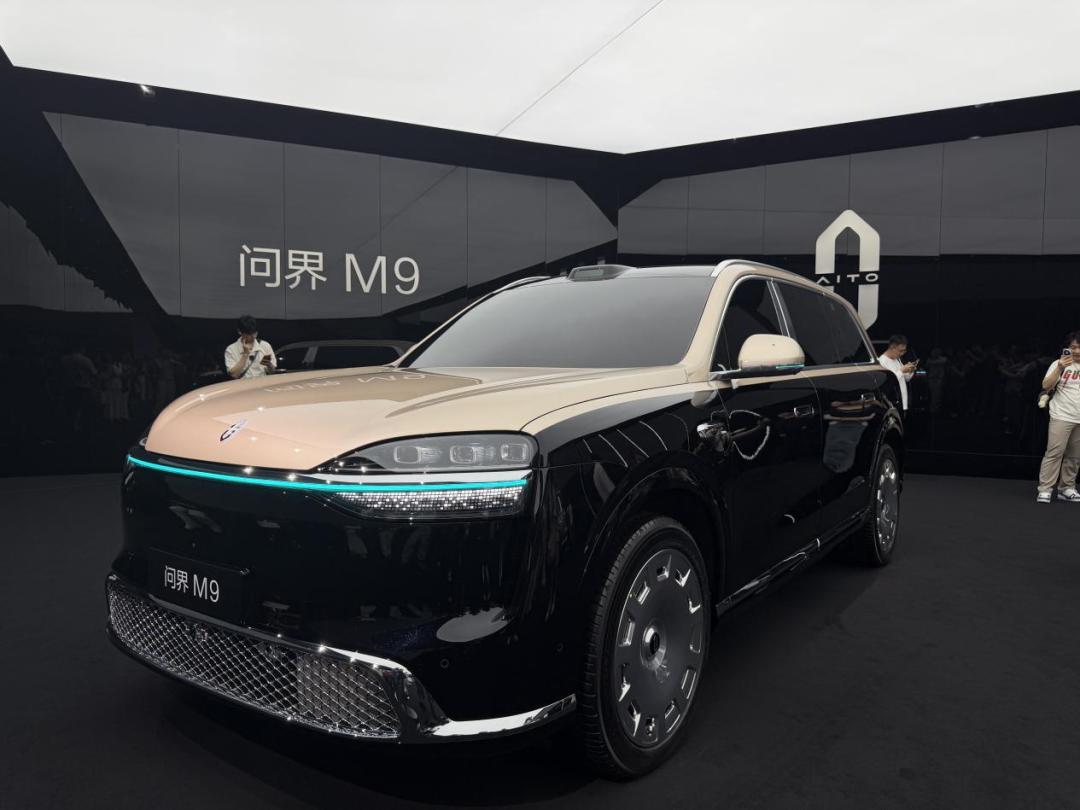
Source: Photo taken by DoNews
Looking at the overall situation of the auto market, the two labels of Series 9 cars, "high - end" and "large cars", have performed well in the sales end. According to data from the China Association of Automobile Manufacturers, in 2025, the cumulative sales of new energy passenger cars in the price range of 400,000 - 500,000 yuan reached 300,000 units, a year - on - year increase of 43.6%; the cumulative sales of new energy passenger cars above 500,000 yuan reached 352,000 units, a year - on - year increase of 17.4%. According to data from the China Passenger Car Association, in the first quarter of 2026, the sales of large SUVs reached 110,000 units, a year - on - year increase of 169%.
The hot sales of a certain type of vehicle mean that there is real consumer demand driving it.
In terms of products, Series 9 cars generally have many common features, such as large passenger and storage space, ultra - hard - core safety, strong intelligent driving control, powerful power and long - range, and comfortable and luxurious interiors.
The large passenger and storage space, comfortable and luxurious interiors, etc. meet the travel comfort needs of multi - person families and high - end business scenarios; the active and passive safety configurations such as the ultra - hard - core body meet the users' vehicle safety needs; the cutting - edge intelligent assisted driving technology and power system meet the users' driving experience needs during travel.
In summary, Series 9 cars combine the advantages of luxury cars in the fuel - powered vehicle era and the new energy vehicle era, reflecting the latest value orientation of Chinese high - end car consumers. This also means that automakers have achieved a complete qualitative change from the original product - oriented thinking to the current user - oriented thinking in product development.
03. The Survival Question for Automakers
From the perspective of the development of the auto industry, the intensive launch of Series 9 cars means the gradual transfer of the right to speak in the luxury car market from foreign brands to domestic brands, and it is also an important sign that the Chinese auto industry has entered a new stage.
In the fuel - powered vehicle era, the standards for luxury cars were set by foreign brands. The key to competition lay in the three core technologies of automobiles, such as engines, gearboxes, and chassis, in which foreign brands had a first - mover advantage. The brand awareness and historical heritage accumulated by foreign brands over a century were also the focus of luxury car buyers.
However, in the new energy vehicle era, the core technologies of cars have evolved into the three - electric and intelligent technologies in which Chinese automakers have a leading advantage. Especially intelligent technology, which is playing an increasingly important role in promoting car replacement and upgrading of car consumption, has gradually changed from a "bonus item" to a "must - have item", while the influence of the brand on the decision - making of luxury car purchases has gradually weakened.
According to the "2025 Urban NOA Vehicle Assisted Driving Research Report" released by the China Association of Automobile Manufacturers, in 2025, the penetration rate of new cars with L2 - level and above intelligent driving functions reached 66.1%, and more than two - thirds of new cars were standard - equipped. The "2025 China Auto Consumer Insight Report" by McKinsey pointed out that in 2025, ADAS (Advanced Driver Assistance System) functions had jumped to the third most important factor in car purchases.
With the gradual transfer of the right to speak in the luxury car market, users of traditional luxury cars are also shifting to domestic luxury car brands. A research report from Tengyi Research Institute shows that among the intended repeat - purchase users of AITO, Li Auto, Tesla, and Xiaomi, the proportions from BBA are as high as 36.81%, 27.22%, 24.21%, and 19.15% respectively.
Under such a trend, traditional luxury car brands like Audi are also starting to seek cooperation with Huawei's intelligent driving technology to attract luxury car consumers in the new era.
However, while Series 9 cars are "showing off their muscles" in the luxury car market, demonstrating the strong competitiveness of Chinese automakers, new problems are emerging one after another.
Research data from Guotai Haitong Securities shows that based on the number of insured passenger cars in 2025, cars priced below 100,000 yuan accounted for 20% of sales, those priced between 100,000 - 150,000 yuan accounted for 28%, 150,000 - 200,000 yuan accounted for 18%, 200,000 - 250,000 yuan accounted for 12%, 250,000 - 300,000 yuan accounted for 7%, and those above 300,000 yuan accounted for 15%.
It can be seen that the price range of Series 9 cars is not the mainstream, and the market growth space is limited. In this limited market, more and more Series 9 cars are pouring in, which means intensified competition.
However, when talking about the competitiveness of the Yijing X9, Zeng Qinglin pointed out that the demand of family users for large space and high - end features is still increasing, and the market for large six - seat cars in the 500,000 - yuan range is still in a growth stage. "This market is very competitive, but many products are 'unbalanced'. Some have good intelligence but insufficient hardware, while others have strong hardware but insufficient intelligence," he said. He also said that if a car can achieve the top - level performance in the three dimensions of safety, chassis, and intelligence, there are still structural opportunities.
Currently, the competition in the Chinese auto market has entered a deep - water stage. Under the continuous price war, the profit margins of Chinese automakers have been declining, and their survival ability is being severely tested. According to data from the China Passenger Car Association, the profit margin of the auto industry has dropped from 6.1% in 2021 to 4.1% in 2025, and the profit margin in December 2025 was only 1.8%.
The high - end luxury car market is the pinnacle of automaker competition, and the profits are undoubtedly the most substantial. This is a huge attraction for Chinese automakers facing survival challenges. At the same time, the increase in the penetration rate of new energy vehicles has opened up development opportunities in the luxury car market. Domestic brands are no longer willing to struggle in the cost - effective market to earn hard - won money. Instead, they are all transforming into "value creators" and competing