Humanoid robots enter the deep end: Prioritize job applications over hype.
In 2026, the real test field for humanoid robots lies in specific job positions.
The embodied intelligence track is extremely hot. Since the beginning of the year, financing news has been flooding the screens. All kinds of bipedal, wheeled, and humanoid robots are performing flashy moves such as playing football and dancing, becoming a standard feature on the stages of large - scale events.
Under the hustle and bustle, an embarrassing reality is that the vast majority of enterprises still remain at the stage of "creating a humanoid form" and are far from reaching the stage of "making good use of the humanoid form". The commercialization path for large - scale delivery, calculable ROI, and stable job performance remains unclear.
Humanoid robots are more like a strategic symbol, existing in attractive capital stories.
While the industry is indulged in the competition of "who is more human - like", a company that has been focusing on embodied intelligence for 16 years chooses to give an answer at this juncture.
On May 25th, the new small humanoid robot XMAN - L1, K - boy, of Keenon Robotics made its debut at a trendy brand event. So far, its embodied humanoid matrix has been critically completed. The large - sized humanoid robots carry the core service capabilities, while the small - sized ones supplement the lightweight interaction and movement performance.
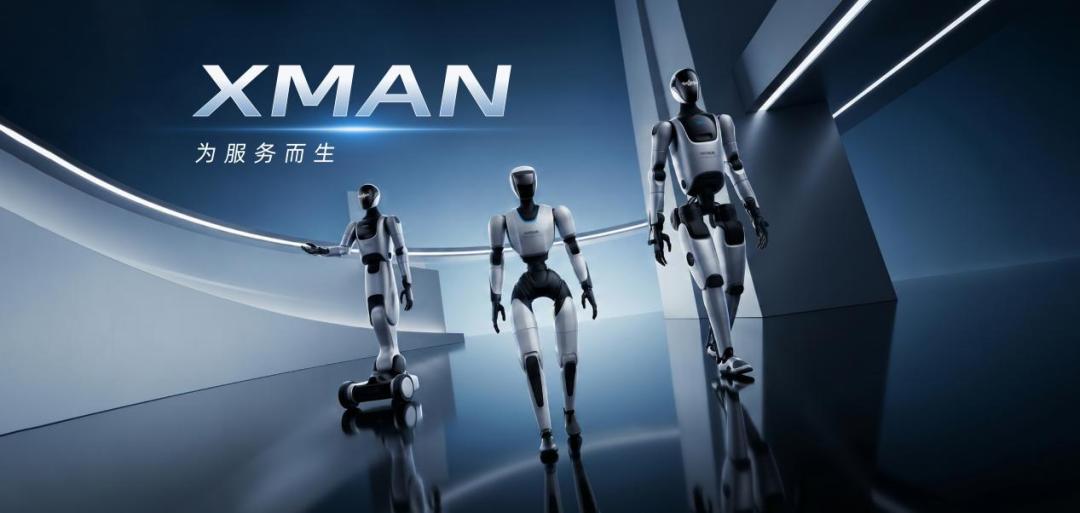
This is not a follow - up release. On the contrary, it is an inevitable choice made by this enterprise, which has shipped over 100,000 units globally and has mature commercial verification, based on real scenarios, real customers, and real needs.
"In fact, customers have no demand for the humanoid form. Customers only care about what you can do for them and how much it will cost. They don't care whether it's a humanoid or a box." A statement by Li Tong, the CEO of Keenon Robotics, reflects the current actual situation. "For us, we need to use the most suitable form at present to solve those 'unspoken but existing' pain points of customers. The humanoid form happens to be a new option in the toolbox."
Keenon Robotics is not limited to the label of a "service robot company". It is breaking this perception and returning to the essence of a robot enterprise: commercial service is just the scenario it first breaks through. Special - purpose robots are the foundation for large - scale revenue and customer base, and humanoid robots are the extension of capabilities and the improvement of the matrix.
It tries to prove one thing with a practical path of "job - based implementation, collaboration between general - purpose and special - purpose robots, and full - chain commercialization": the future of embodied intelligence does not lie in the demos in the laboratory, but truly exists in the deliverable job value.
01
Starting from industrial needs
While the humanoid robot industry is still discussing "form, movement, and concepts", Keenon Robotics has long shifted its focus back to the essential industrial proposition: why are robots built?
In the logic of most embodied intelligence startup teams in the market, the R & D path is clear and one - way: first achieve key technological breakthroughs, create a humanoid prototype with a complete form and smooth movements, then find suitable scenarios for the formed product, and finally verify the commercial value in the market.
This is a typical technology - driven route, which is cool and cutting - edge but also full of uncertainties. Since the product is not bound to real needs at the beginning of its birth, enterprises are prone to fall into the passive situation of "looking for nails with a hammer".
Through 16 years of industrial practice and the experience of deploying 100,000 units, Keenon Robotics has taken a completely opposite and more business - oriented path: first deeply understand the pain points of customers, then use technological capabilities to make precise responses, and finally complete the delivery with a suitable robot form. For Keenon, robots have never been just R & D results in the laboratory, but solutions to serve jobs, scenarios, and real customer problems.
This seemingly subtle difference is precisely the core difference between Keenon and most humanoid robot startup companies in the current market.
Having long been rooted in high - density service scenarios such as hotels, restaurants, shopping malls, and hospitals, Keenon has seen the huge and silent "elephant": special - purpose robots are already powerful enough, but they cannot cover all jobs in the service industry.
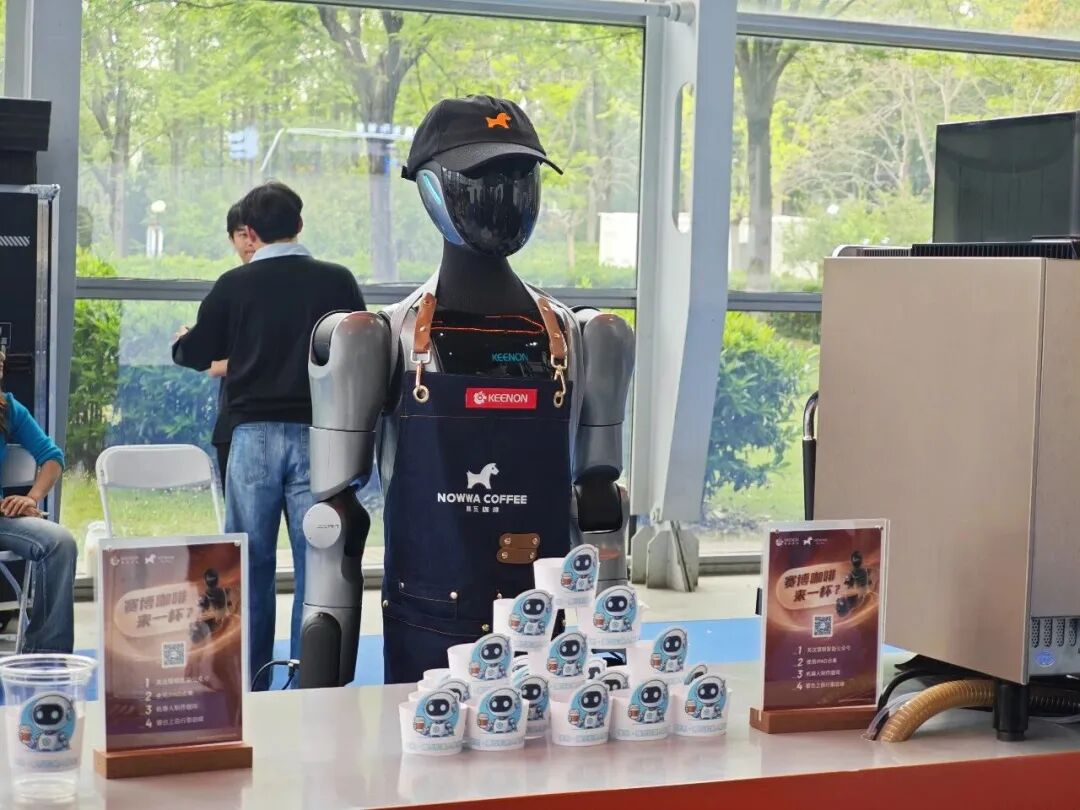
Special - purpose robots for tasks such as delivery, cleaning, and transportation are the foundation of Keenon. These robots are deeply optimized for high - frequency, repetitive, and standardized work processes. They are highly efficient, with controllable costs and clear and calculable ROI. They have obtained long - term repeat purchases from a large number of chain customers globally and have become reliable infrastructure for service industry automation.
However, the reality is more complex than ideal. While these special - purpose robots are operating efficiently day after day in their respective niche jobs, the corners in the service scenarios that cannot be standardized and pre - set remain unfilled.
In the hotel lobby, guests ask for directions, request to store luggage, or make temporary complaints; in the restaurant, guests wave to ask for an extra set of tableware, inquire about dishes, or complain about the order of serving; in the shopping mall, customers can't find products, need guidance, or encounter unexpected situations... These jobs naturally have the characteristics of flexibility, interactivity, cross - task operation, and non - standardization. They require robots to have three core capabilities of movement, operation, and interaction simultaneously, and need to deal with a series of dynamic challenges such as changes in the flow of people, temporary needs, complex communication, and multi - scenario switching. And these are precisely the blind spots of special - purpose robots.
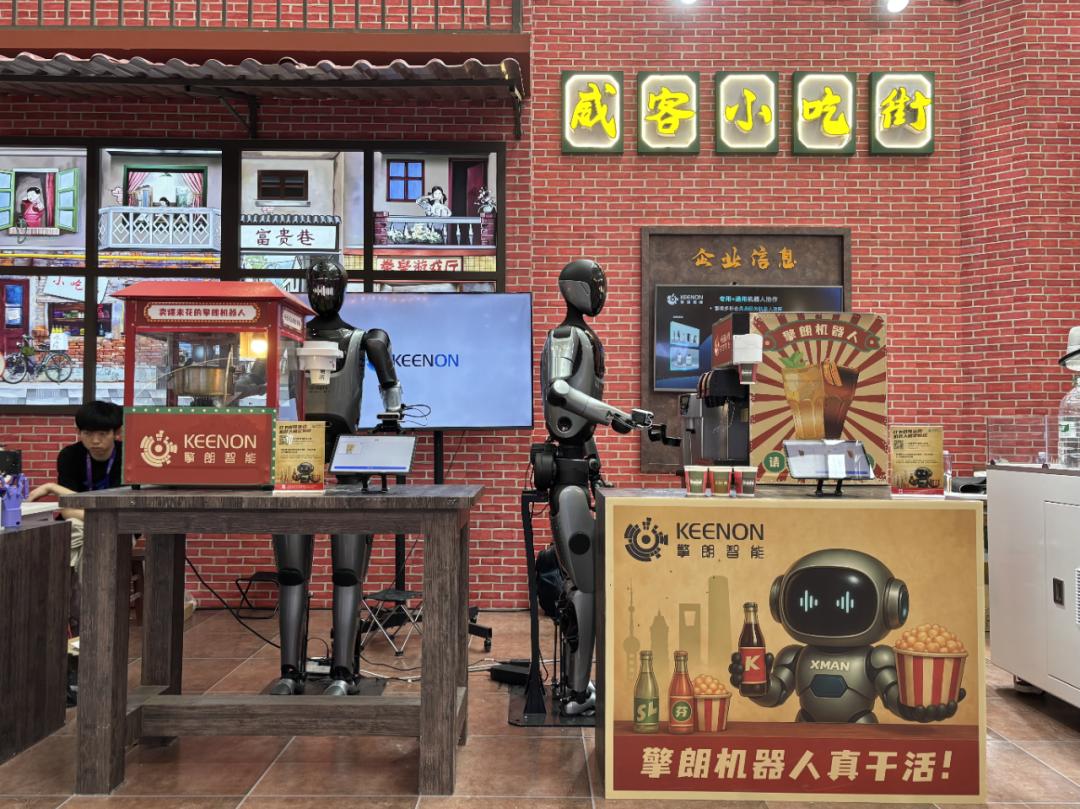
Li Tong, the CEO of Keenon Robotics, told 36Kr that the most real, urgent, and difficult - to - meet pain points of customers lie here: "What a large number of jobs need is comprehensive capabilities. Special - purpose robots cannot cover these gaps, which are not about the ultimate efficiency of a single function. So, these tasks can only continue to be handled by humans. And the cost of labor is getting higher and the gap is getting larger."
The continuous rise in labor costs, high staff turnover, and the difficulty in unifying service standards are long - standing problems that have plagued the service industry. The popularization of special - purpose robots has solved some of these problems, but they have not been fundamentally resolved.
In long - term communication with global customers, Li Tong found that customers only care about four very simple questions: Can the robot really take up a job? Is its operation stable? Is it safe to use in the scenario? Is the overall investment cost - effective? As for what the robot looks like, whether it is a humanoid or a box, they don't care.
Li Tong once again confirmed his judgment: what the market really needs is a robot that can solve problems, is stable and reliable, and has a calculable cost - benefit ratio, rather than a conceptual device with the gimmick of a "humanoid form".
The explosion of large - model and embodied intelligence technologies has enabled robots to achieve a qualitative leap in environmental awareness, task generalization, and multi - modal interaction capabilities. The "general - purpose robot" has also gradually become a possibility for real - world implementation.
However, technological feasibility does not equal commercial feasibility. While a large number of startup companies are rushing towards the long - term goal of "all - purpose household use", Keenon has chosen a more practical approach. The direction of all - purpose general - purpose robots is correct, but the cycle is too long and the commercialization is extremely difficult. In contrast, "job - level general - purpose" is a more realistic and short - term commercially rewarding path.
"It can complete describable, quantifiable, and verifiable tasks within a clear job boundary, quickly generate value, and accumulate data and iterate capabilities in the process." Li Tong believes that with the breakthrough in technological development, the real and urgent customer needs, and the clear and controllable implementation scenarios, all three conditions are met, which is the best time for Keenon to layout humanoid robots.
02
Job - based implementation is the only way
Instead of pursuing the infinitely generalized and one - step - in - place general performance in the short term, the goal is to first become a reliable "employee" capable of handling a single job and stably deliver value within a clear boundary. This path may not be very flashy, but after entering the actual scenario, it is currently one of the few embodied intelligence application paths that are in the stage of large - scale verification, can be quickly replicated, and continuously implemented.
Keenon's definition of job - based implementation is concise and clear, which is to deploy robots to real commercial jobs with describable responsibilities, quantifiable tasks, and verifiable results.
However, there is a real contradiction. In service scenarios, there are both flexible and changeable tasks such as greeting guests, information inquiry, item delivery, and route interaction, as well as highly standardized jobs such as delivery, cleaning, and handling. The former requires cross - task interaction capabilities, while the latter pursues ultimate efficiency and ROI. If only special - purpose robots are used to cover all jobs, the R & D cost is high, the cycle is long, and large - scale implementation is impossible. If only general - purpose humanoid robots are used to handle everything, the efficiency in standardized tasks is insufficient and the ROI cannot be calculated.
This structural difference in job types determines that it is difficult to rely on a single robot form to dominate future service scenarios. Keenon's solution is to build a division - of - labor system of collaborative operation between "special - purpose robots + general - purpose humanoid robots".
In essence, this system is far more than just "each doing its own thing". It is based on the precise calculation of the cost structure, capability boundaries, and commercial returns of the two types of robots.
Specifically, the economic model of special - purpose robots is "extreme single - point optimization"; a delivery robot is repeatedly optimized for a fixed route from point A to point B. The motor power, sensor layout, and charging strategy are all designed around this task. It has no redundant components and no extra computing power, so the marginal cost of a single task is extremely low.
The economic model of general - purpose humanoid robots is the "amortization logic": its R & D cost is high, and the single - unit hardware cost is also high. However, once deployed, it can be reused across jobs and complete long - term task cycles. A humanoid robot can greet guests at the front desk in the morning, guide guests in the restaurant at noon, conduct interactive displays in the mall in the afternoon, and even undertake simple item delivery at night. Although the efficiency of general - purpose robots in a single task is not as high as that of special - purpose robots, considering the overall job coverage rate and all - day utilization rate, its overall ROI may be better.
In other words, special - purpose robots are good at achieving the ultimate in a single task, while general - purpose humanoids are good at performing multiple tasks above the passing line. Only by combining the two can the optimal solution be found between cost and coverage. They each perform their own duties and cooperate with multiple robots to form a complete service cycle.
If the collaboration between general - purpose and special - purpose robots solves the problem of "who will do different jobs", after clarifying the division - of - labor logic, the next question to answer is: what products should be used to carry out this division of labor?
Previously, in July 2025, Keenon launched the full - size bipedal humanoid robot XMAN - F1, which is designed for the full - job service cycle in complex scenarios such as restaurants, hotels, and retail, and can complete comprehensive tasks such as greeting guests, guiding, and item delivery. On May 25th, Keenon further improved its product line and launched a lightweight, small - sized humanoid robot.
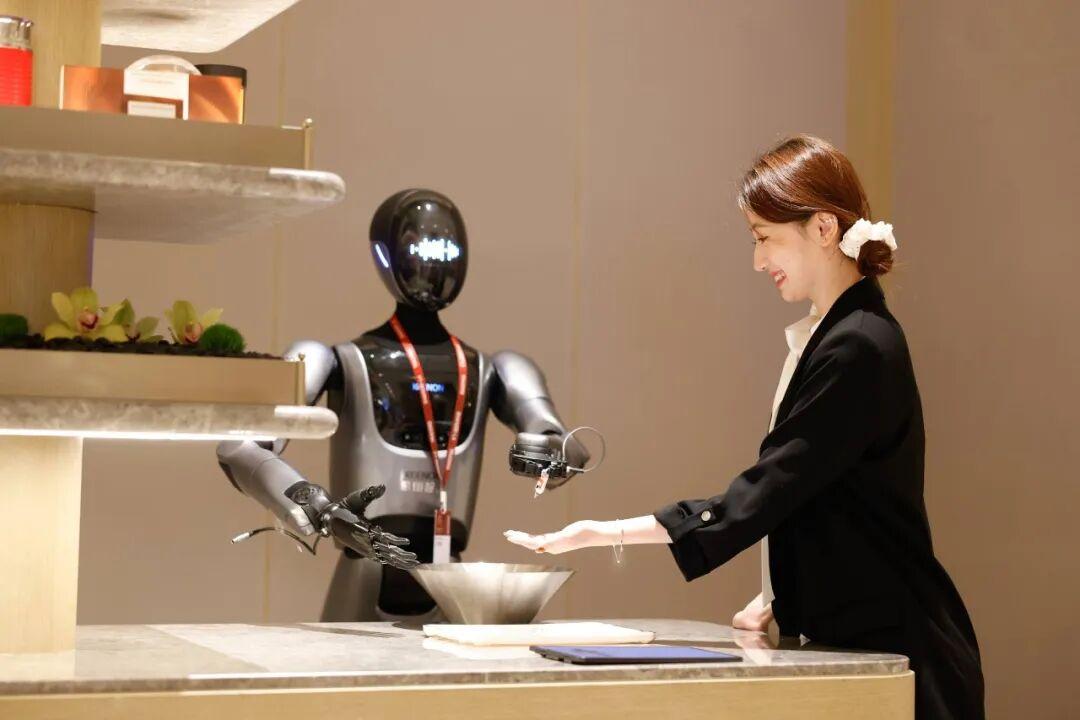
If the full - size humanoid robot represents the upper limit of Keenon's capabilities in the humanoid field, then the small - sized humanoid is a precise response to the needs of niche scenarios.
So far, Keenon's embodied product matrix has been built. From special - purpose robots to general - purpose humanoids, from full - size humanoids to small - sized humanoids, the hierarchical product spectrum is gradually becoming clear, matching the all - around job needs of customers from standardization to flexibility, from high - frequency to long - tail.
Among them, special - purpose robots are continuously iterated to consolidate the foundation of standardized businesses such as delivery and cleaning, providing cash - flow support for large - scale revenue; full - size humanoid robots are targeted at core commercial jobs in hotels, shopping malls, restaurants, etc., with complete capabilities of movement, operation, interaction, and generalization, and are the main force for future commercialization; the small - sized humanoid robot launched this time is characterized by light - weight, high flexibility, and strong movement performance, and precisely targets niche scenarios such as greeting guests, interaction, display, and lightweight performances, forming a high - low combination and complementary capabilities with special - purpose and full - size humanoid robot products.
The core logic of this product matrix is straightforward: don't pay for concepts, only serve jobs. Whatever capabilities the scenario requires, Keenon will provide the corresponding form of robots.
In the choice of mobile solutions, Keenon is also practical. While the industry is investing a large amount of resources in the R & D and flashy demonstrations of bipedal humanoids, Li Tong pointed out that Keenon currently mainly takes wheeled humanoids as the core direction for commercial implementation. This decision is not due to technological conservatism, but an engineering judgment based on the experience of deploying 100,000 units globally and operating in a large number of real scenarios, and a deep understanding of the dense flow of people, complex environment, and the unbreakable safety bottom - line in the service industry.
"A bipedal humanoid robot may fall uncontrollably after a power outage, posing a huge risk in the service industry scenarios with dense crowds. If a robot falls in the hotel lobby, it is not only a problem of equipment damage, but may also cause injuries to the elderly or children, which is unacceptable to any commercial company. A wheeled humanoid robot can remain stable and stationary after a power outage and will not fall. Its safety, stability, implementation speed, and cost control are more suitable for large - scale commercial use." Li Tong told 36Kr that the core of job - based implementation is stability, safety, and deliverability, which are precisely the irreplaceable advantages of wheeled humanoids at the current stage.
Job - based implementation, collaboration between general - purpose and special - purpose robots, hierarchical matrix, and prioritizing wheeled robots constitute the core path of Keenon's layout in embodied intelligence. However, a clear path is only the first step. To make the whole system operate efficiently and achieve large - scale implementation, the enterprise must break through the common shallow - level competition in the industry.
03
Centering on commercialization
The competition logic in the industry is quietly evolving. Compared with the superficial competition of single - point technical parameters and bionic movements, which is difficult to form long - term differential advantages, what can really support an enterprise to stand firm in the long run and build core barriers is the full - chain commercialization ability of implementation, mass production, and profitability.
After 16 years of establishment, Keenon Robotics has proved through the market practice of hundreds of thousands of devices that the ultimate competition in the robot industry centers around the comprehensive industrial strength jointly built by scenario adaptation, engineering mass production, global delivery, cost control, and customer trust