Zhong Shanshan, who makes his fortune from selling water, is eyeing solid-state batteries with an investment of 500 million yuan.
The former richest man in the water - selling business has found a new source of wealth.
Recently, a financing news quietly emerged. A company named Zhejiang Zhibang Lithium - Ion New Materials Co., Ltd. announced the completion of its Series A financing. The participating investors include investment institutions such as Kunshan Ge Wu Zhi Zhi Fund, Quzhou Zhina, and Xianfeng Changqing. The specific amount was not disclosed.
At first glance, there doesn't seem to be anything special. However, after penetrating the equity structure, a mysterious figure emerges. The "Kunshan Ge Wu Zhi Zhi Phase I Venture Capital Fund", one of the leading investors, holds about 10% of the shares in this financing, with a subscribed capital of up to 500 million yuan. And the largest shareholder behind this fund is Yangshengtang Co., Ltd., with an 81% stake.
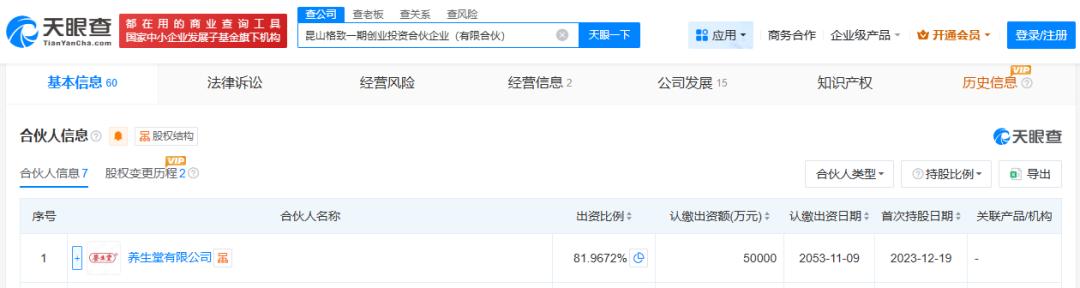
The actual controller of Yangshengtang is Zhong Shanshan, the founder of Nongfu Spring and the former richest man in China, who personally holds 98.38% of the shares. Through this structure, it means that Zhong Shanshan indirectly holds about 10% of the shares in Zhibang Lithium - Ion.
This is also the first time that Zhong Shanshan, whose investment style is always known for being "prudent", has extended his capital tentacles to the new - energy lithium - ion battery field.
01 Not Directly Manufacturing Batteries
Investing 500 million yuan for the first time is by no means a small amount. Moreover, what Zhong Shanshan has targeted this time is solid - state batteries.
However, he doesn't directly manufacture solid - state batteries. Instead, he has chosen the material end at the very upstream of the industrial chain - solid - state electrolytes.
As is well - known, solid - state batteries are recognized as the "ultimate route" for power batteries because, compared with traditional liquid lithium - ion batteries, they use solid - state electrolytes to replace the flammable liquid electrolyte, completely eliminating the safety hazards of spontaneous combustion and explosion.
With an energy density of 400 - 500 Wh/kg, they can easily achieve a pure - electric range of over 1000 kilometers.
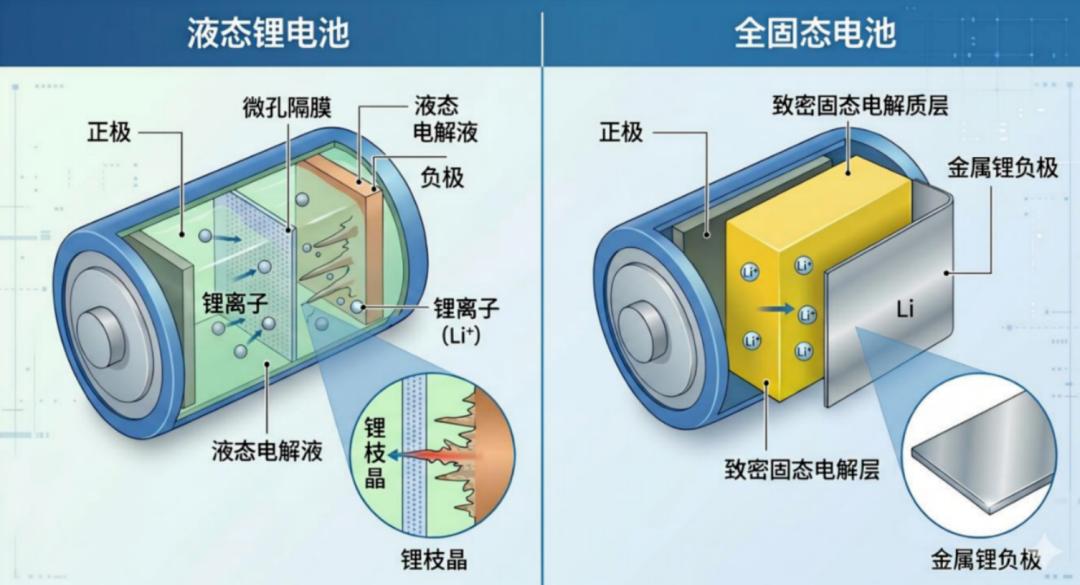
Whoever masters the core materials of solid - state electrolytes will have the "upstream say" in the next - generation batteries, just like lithium mines in lithium - ion batteries.
However, the industrial application of solid - state batteries is stuck at the mass production of "solid - state electrolytes". Each technical route, such as sulfides, oxides, and polymers, has its own problems.
Zhibang Lithium - Ion, in which Zhong Shanshan has an indirect investment, is precisely starting to tackle this toughest problem.
Public information shows that Zhibang Lithium - Ion is a company that focuses on the research, development, and production of solid - state electrolytes, the core materials of solid - state batteries. It also lays out three mainstream technical routes: polymers, oxides, and sulfides.
It was established in March 2024. In the lithium - ion battery field, it is a typical start - up company. It doesn't seem very eye - catching, and there is very little public information. It doesn't even have an official website. However, there are several key clues: The founder of this company, Xu Xiaoxiong, who is also the technical leader, has nearly 20 years of experience in the lithium - ion battery material field and is a technical expert in the solid - state battery field.
He was also a core executive of Ganfeng Lithium. He joined Ganfeng Lithium in April 2017 and served as a director of the company's fourth - term board of directors, the chief scientist, and the general manager of its subsidiaries, Zhejiang Fengli and Ningbo Lisai Kang.
During his tenure at Zhejiang Fengli, Ganfeng Lithium agreed that its wholly - owned subsidiary, Zhejiang Fengli, would invest no more than 250 million yuan of its own funds to invest in the construction of the R & D pilot production line for the first - generation solid - state lithium - ion batteries.
It is not difficult to see that in the early R & D line of Ganfeng Lithium's solid - state batteries, Xu Xiaoxiong was the absolute core figure. According to the disclosure in Ganfeng Lithium's 2020 annual report, Xu Xiaoxiong was mainly responsible for the R & D and industrialization of solid - state lithium - ion battery products and had more than 10 years of research experience in materials science.
Moreover, the second - largest shareholder of Zhibang Lithium - Ion is backed by Quzhou's state - owned assets, holding 15% of the shares. Among the three companies introduced in this Series A financing, Quzhou Zhiyuan is backed by Quzhou's state - owned assets. This means that this company not only has technology but also government resources and industrial support.
In addition, in April this year, Zhibang Lithium - Ion applied for a patent named "A High - Performance PVDF - Based Solid - State Electrolyte Material and Its Preparation Method". The core innovation of the patent lies in improving the flexibility and tensile strength of the electrolyte membrane by optimizing the combination of the PVDF matrix, electrolyte salt, and conductive filler.
The PVDF - based solid - state electrolyte is an important branch in the current solid - state battery material route. Compared with the oxide and sulfide routes, the PVDF - based composite electrolyte has advantages in processability and flexibility, is easier to be compatible with existing lithium - ion battery production lines, and is also regarded as one of the more feasible technical directions in the early stage of solid - state battery industrialization.
More importantly, Zhibang Lithium - Ion participated in the formulation of the industry standard "Test Method for Air Stability of Sulfide Solid Electrolytes" led by the Guolian Automobile Power Battery Research Institute Co., Ltd. This standard was jointly completed by 31 units, including CATARC, BYD, and Weilan New Energy.
The fact that a company established only two years ago can participate in formulating industry standards itself shows its technical strength.
Currently, Zhibang Lithium - Ion has planned a project with an annual production capacity of 11,000 tons of solid - state battery electrolytes in Quzhou Intelligent Manufacturing New City. It is expected to achieve small - batch mass production of hundreds of tons from 2026 to 2027, indicating that it has moved from the laboratory stage to engineering.
It is not surprising that Zhong Shanshan has taken a fancy to this start - up company.
02 Why Choose the Upstream of Solid - State Batteries
The story of a water - selling tycoon crossing over into the new - energy field still sounds like an "off - track" story.
In the public's perception, Zhong Shanshan's business map is firmly tied to "water" and "medicine". Nongfu Spring firmly holds the leading position in China's packaged drinking water market, and Wantai Biotech is deeply involved in the biomedical field. One is in the fast - moving consumer goods industry, and the other is in the pharmaceutical industry, which form the core foundation of his business empire.
Solid - state batteries belong to high - end new - energy manufacturing, with high technical barriers, long R & D cycles, and heavy asset investment, which is completely different from the track logic of his previous layouts.
Looking back at Zhong Shanshan's wealth map, two important pillars in the past two decades: One is water, with annual revenues in the tens of billions and a gross profit margin close to 60%, and it has long dominated the top position in China's bottled water market. The other is medicine. In 2001, he acquired a nearly bankrupt company for 17 million yuan. Eighteen years later, the market value of Wantai Biotech once approached 200 billion yuan, making it the leader in the A - share vaccine sector.
However, both companies are now facing a slowdown in growth. The ceiling of the water business is already visible. The 26% market share of the packaged water market is close to the upper limit, and the growth space is limited. The golden age of vaccines has also passed. The revenue of Wantai Biotech dropped sharply from 11.2 billion yuan in 2022 to 2.2 billion yuan in 2024, and it fell into a loss.
Therefore, Zhong Shanshan needs a large and sustainable track to undertake the wealth growth in the next decade. Now it seems that investing in solid - state batteries is just his regular operation to find the next "rich mine".
Actually, there are many investable directions in the lithium - ion battery track, including energy storage, lithium mines, and recycling. A large amount of capital has poured into each direction, but Zhong Shanshan has chosen the most upstream electrolyte materials.
Zhong Shanshan once said: "For a small enterprise to grow and expand, the types of business it operates must be unique and must be highly profitable."
In his business map, both Nongfu Spring and Wantai Biotech's HPV vaccine meet this principle. For example, water has the barrier of the exclusive right to the water source. He bought the exclusive right to exploit the water quality of Qiandao Lake for 50 years, and no competitor can replicate it. Vaccines have technical and approval barriers. Wantai Biotech's nine - valent HPV vaccine is the first approved and launched in China.
Solid - state electrolytes also meet this principle precisely because in the entire solid - state battery industrial chain, the barriers in the material link are the highest. Compared with the downstream assembly link, equipment can be bought, production lines can be built, and it can be replicated with money. However, the formula and process of electrolyte materials are accumulated through time and R & D and cannot be broken through in the short term by just throwing money at it.
In other words, whoever can master the core technology and production capacity of solid - state electrolytes will master the say in the next - generation battery industry. And Zhong Shanshan's investment in Zhibang Lithium - Ion is precisely betting on the scarcity of the material link.
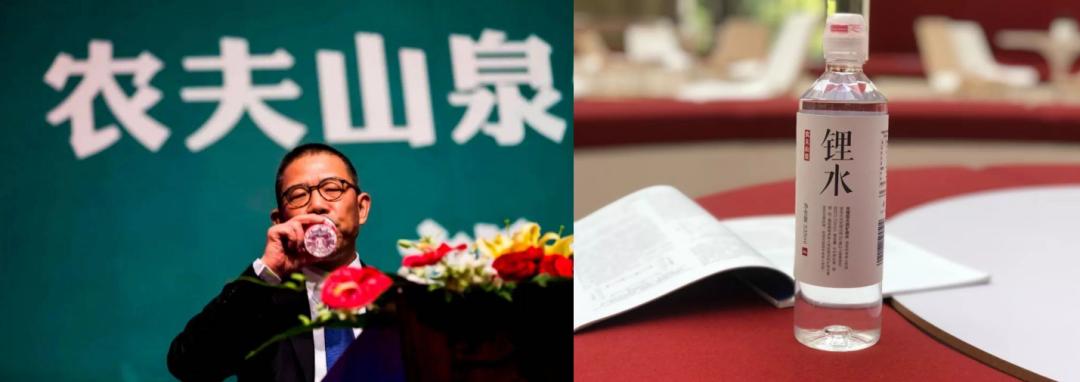
There is also an interesting detail. Zhong Shanshan has long had a connection with "lithium". In 2019, Nongfu Spring launched natural water containing a trace amount of "lithium" elements, priced at 5 yuan per bottle, targeting middle - aged and elderly people for daily trace - element supplementation.
Of course, it would be too far - fetched to say that he entered the lithium - ion battery track just because he sold lithium - containing water. What really made him decide to invest 500 million yuan is the mass - production schedule of the solid - state battery industry.
03 Positioning Before the Industry Explosion
Judging from the actions of major battery companies and automobile manufacturers, 2026 has become the first year for the verification of all - solid - state batteries.
For example, CATL's sulfide all - solid - state pilot production line in Hefei was put into operation. It will complete vehicle - grade verification in 2026, achieve small - batch mass production in 2027, with an energy - density target of over 500 Wh/kg, and achieve large - scale implementation in 2030.
BYD's 20 GWh all - solid - state production line will also be put into operation in 2026, conduct batch demonstration vehicle installations in 2027, be first installed in the high - end Yangwang series, and achieve large - scale production in 2030.
In addition, Chery's "Rhino S" all - solid - state battery module has an energy - density target of 600 Wh/kg and is planned to be mass - produced in 2027. GAC has also built the first large - capacity all - solid - state battery pilot production line in China. The 400 Wh/kg quasi - solid - state battery will be installed in the Haobo in 2026. FAW's all - solid - state battery prototype vehicle rolled off the production line in January 2026 and entered the road - test stage. Mass production will start in 2027.
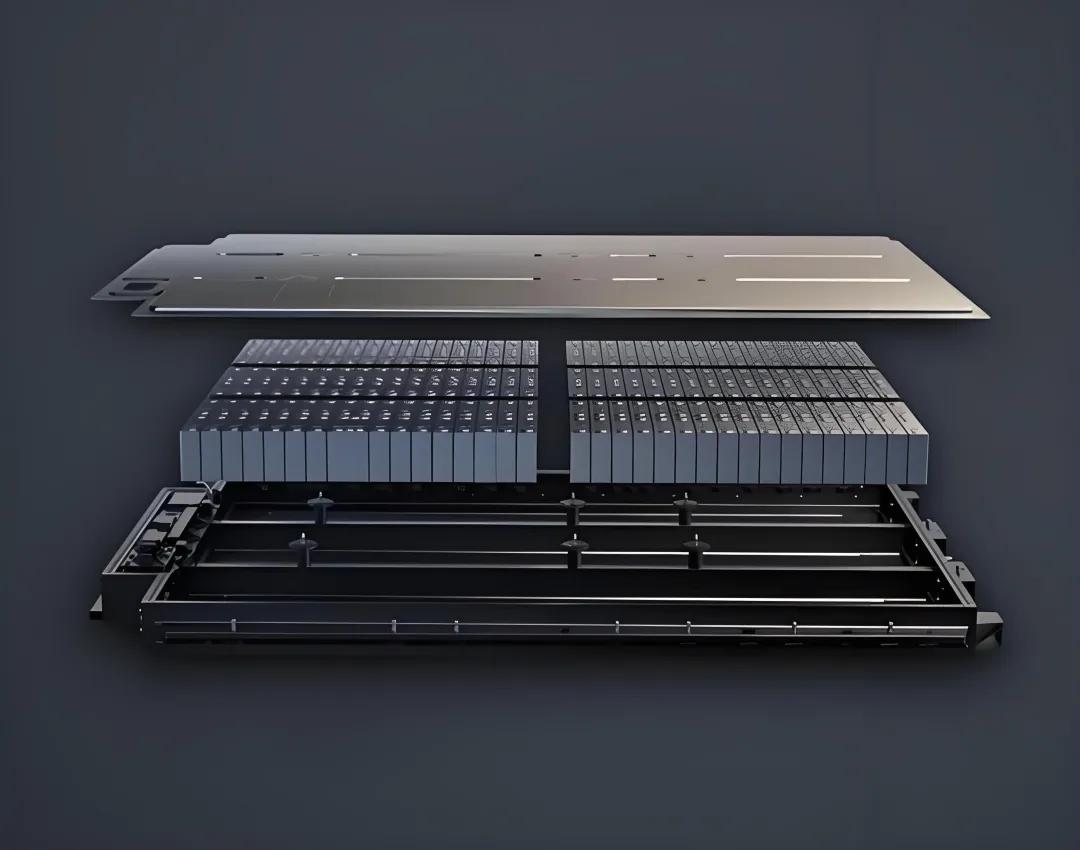
More than ten days ago, China Battery Network also published a report titled "Consensus on the Step - by - Step Commercialization of Solid - State Batteries Reached", pointing out that EVTank predicts that semi - solid - state batteries will be gradually installed in vehicles in 2026, and all - solid - state batteries will gradually enter the small - scale mass - production stage from 2027. It is expected that the global shipment of solid - state electrolytes will reach 229,000 tons in 2030, with a CAGR of over 120% from 2025 to 2030.
This undoubtedly means that the eve of the explosion of the solid - state battery industry has arrived. Perhaps for Zhong Shanshan, it doesn't matter if solid - state batteries can't make money within three years. What he needs is to have a big ship that can ride the wind when the industrialization of solid - state batteries explodes.
Moreover, the signaling significance of this investment far exceeds the amount itself. The fact that even the former richest man in China has started to target solid - state batteries shows that the certainty in this track is becoming higher and higher.
This article is from the WeChat official account "SuperEV - Lab" (ID