The primary school classrooms across the country are turning into AI pet parks.
Imagine that you're an elementary school student who has just gotten your first beloved pet in life. You want it to thrive and take great care of it. However, it doesn't need to eat or drink in the real sense. The only nourishment it needs is your outstanding performance at school, in the class, and during the lessons. If your performance is less than satisfactory, the pet will stop growing, start getting sick, and sometimes even die.
While you're still hesitating whether to take on this sweet responsibility, tens of thousands of elementary school class teachers have already made the choice for the students.
Two months ago, a "class pet - raising" program started selling like hotcakes on major platforms such as Douyin and Xiaohongshu. Priced at 9.9 yuan, it sold thousands of copies in just a few days. Subsequently, with the booming productivity of AI coding, similar competing products emerged like crazy. Currently, there are at least over 100 similar AI class pet products across the internet, with a cumulative sales volume of over 100,000 copies. Elementary school classrooms across the country have thus rapidly evolved into AI zoos.
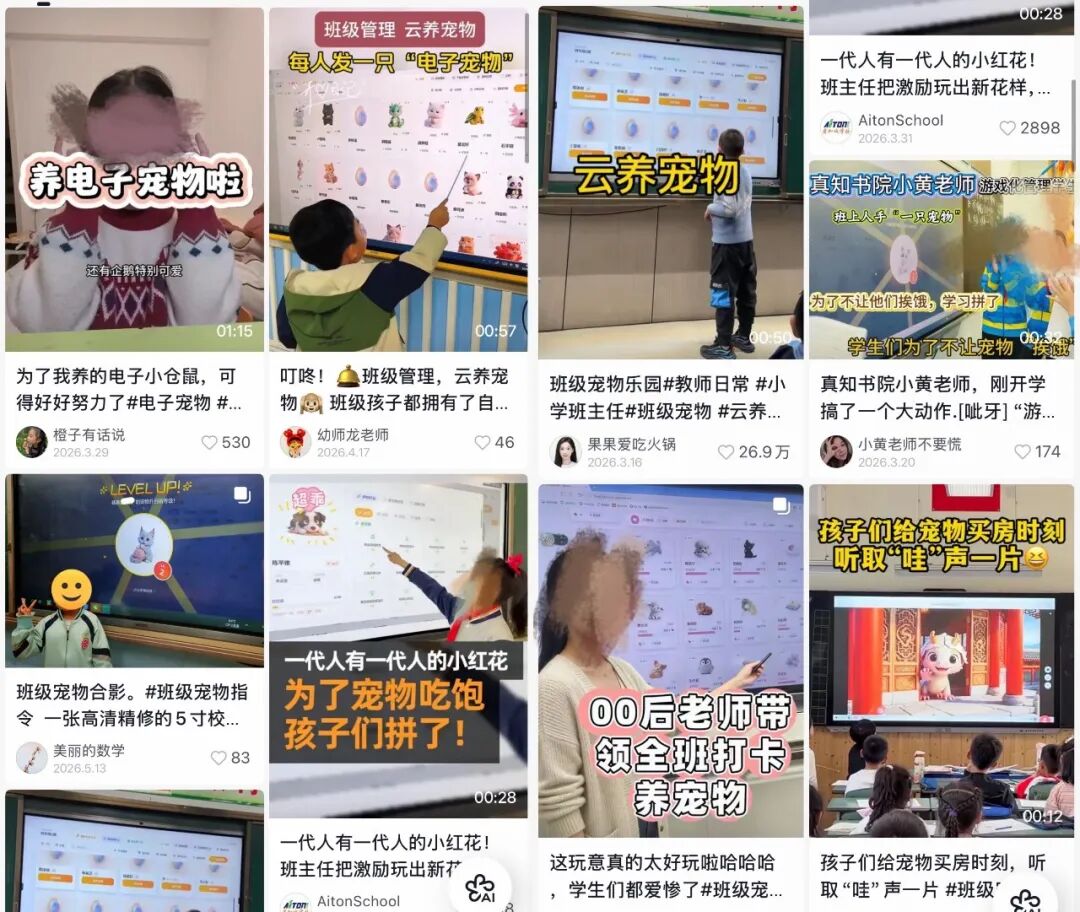
Elementary schools across the country have started raising AI class pets. Image source: Douyin
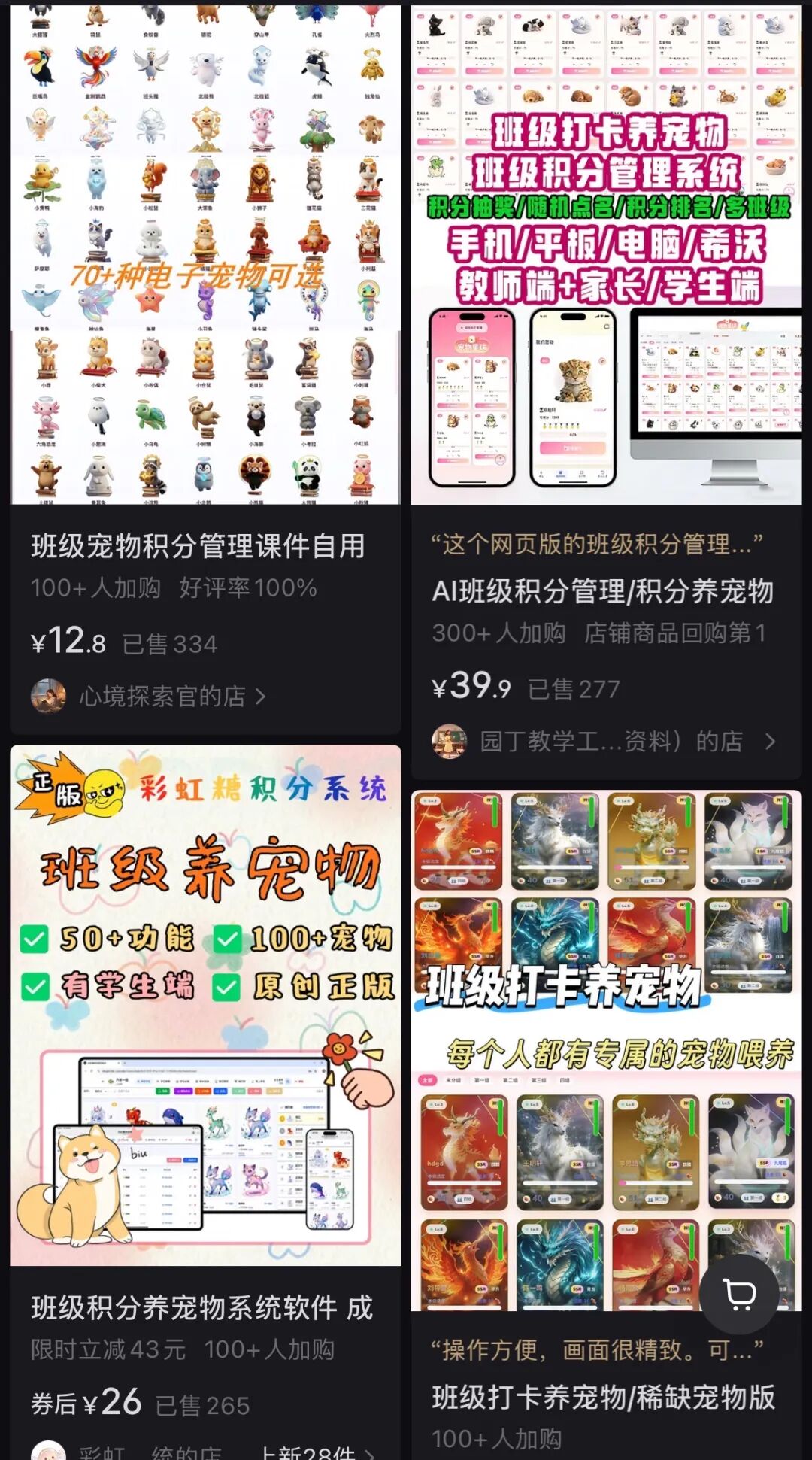
The class pet systems on the market are dazzling. Image source: Xiaohongshu
Are AI class pets a blessing for class management?
The fact that AI class pet products have achieved such high sales and popularity in a short period must mean that they have effectively addressed a long - neglected need of front - line educators.
If you randomly click into the detail page of an AI class pet product, you'll find that its essence is just a class quantitative management system: raising your hand to speak earns 2 points, doing duty seriously earns 3 points, being late deducts 2 points, and swearing deducts 5 points... Teachers can set the items and weights by themselves and can query the score rankings and change trends. These cumbersome record - keeping tasks used to be done by teachers themselves, but now they can be handled by AI programs.
Using a quantitative system for class management is not new. Information - based point - system class management software like "Class Optimization Master" has been popular in primary and secondary schools for many years. Before the era of electronic teaching, there were also hand - written scoreboards on the blackboard, little red flowers, and honor rolls. Now, this set of quantitative indicators customized for student management has once again caught the wave of technology, binding the students' school performance with a seemingly living and cute AI pet image.
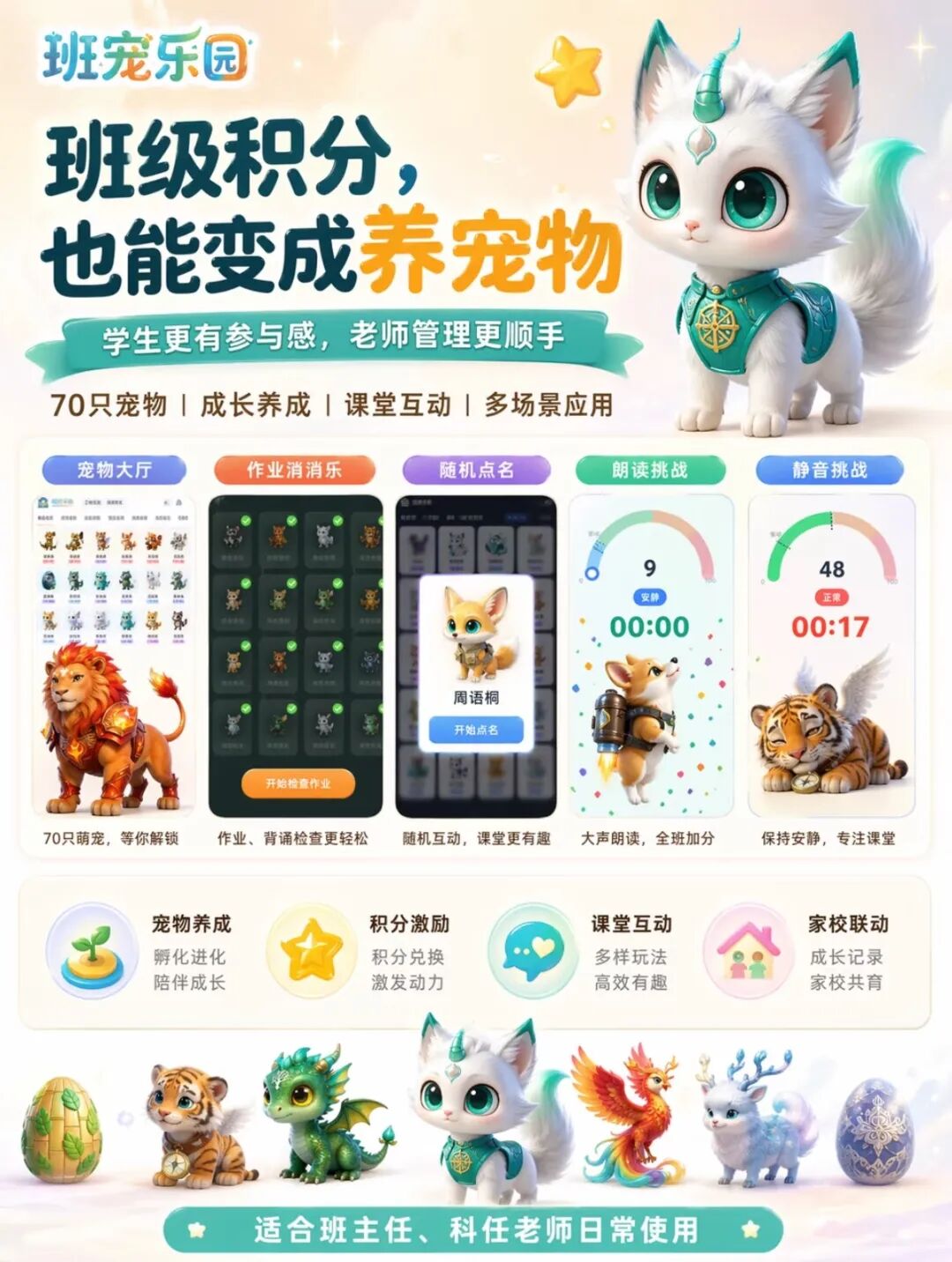
Image source: Xiaohongshu @Liangdeng Liulang
From the records of teacher bloggers on social media, the implementation of AI class pets has achieved immediate results among lower - grade students. Lower - grade students' simple enthusiasm for electronic life remains the same as ever. Just as Tamagotchi captured the hearts of the current adults back then, AI class pets are now captivating today's children.
It is reported that in a primary school class in Shanghai, a student who used to attract the teacher's attention through confrontation has changed significantly since the introduction of the pet point system, and his overall behavior has become more positive. A teacher in Henan has also made raising class pets a ritual. Well - behaved children will officially adopt pets in front of the whole class and receive symbolic adoption badges.
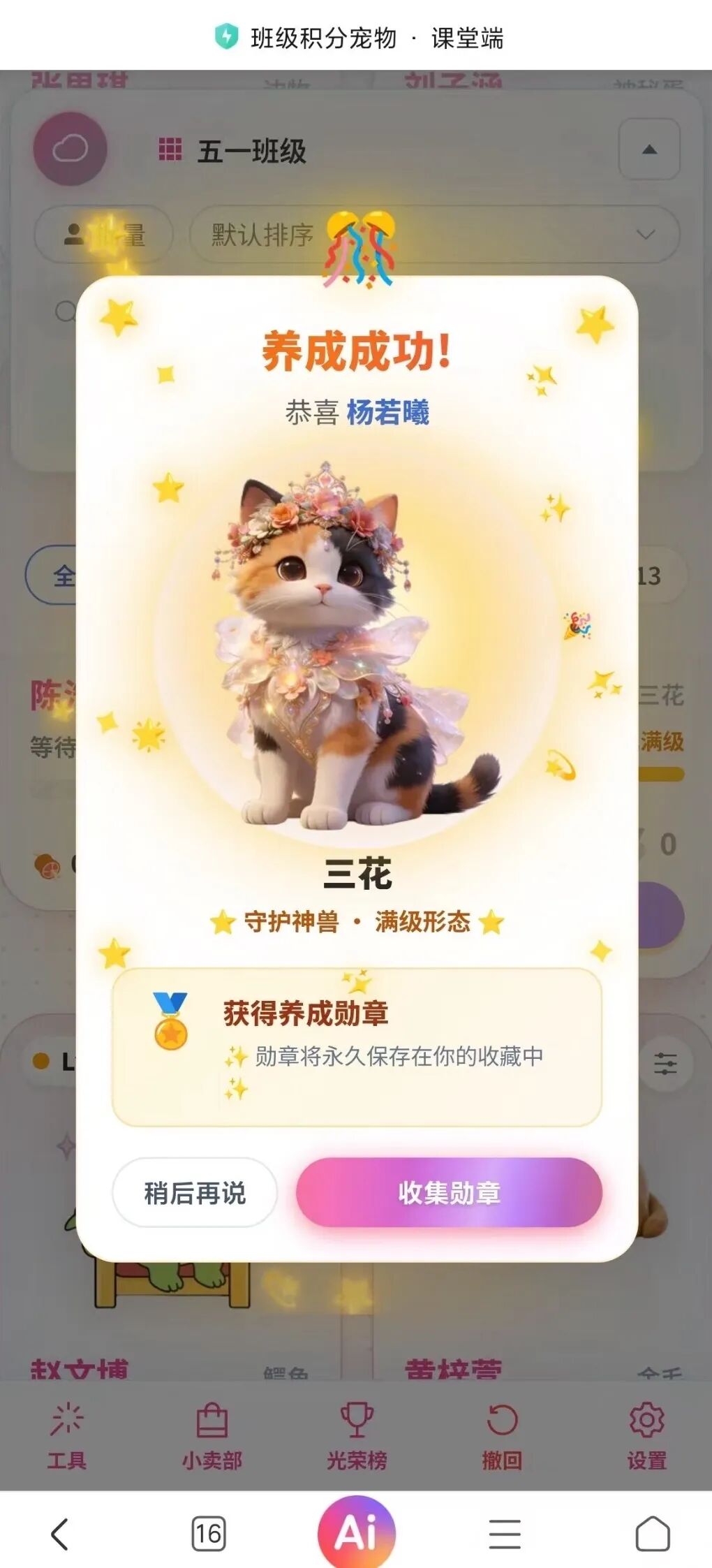
The higher the score, the more amazing the pet. Image source: Xiaohongshu @Knowledge Sugar
Traditional point systems often have a strong assessment flavor, while AI class pets wrap the points in an emotional relationship, making the implementation of rules seem like a voluntary effort by students. Psychological research shows that when people perceive that they are responsible for taking care of another individual (whether it's a person, an animal, or even a plant), their pro - social behavior and self - restraint ability will be improved.
Children are not only performing for scores but also taking responsibility for a life that depends on them. This is where AI class pets are most effective. Ranking is competitive, while pet - raising is personal. Of course, this mechanism is also controversial. AI pets seem to have become a system that links primary school students with the soft part of their hearts. The most direct question is about motivation: Do children study for knowledge or to prevent their pets from getting sick?
The answer to this question varies from person to person. If a child starts to listen to the class attentively just because the pet might starve to death, then when the pet system fails, the motivation driving him will also disappear. The current good results may be built on an unstable foundation. When students reach a higher grade and AI class pets can no longer provide enough motivation, adolescent students may change from being busy keeping their pets alive to thinking about 1000 ways to let the pets die -
However, that can also be regarded as a vivid death education class.
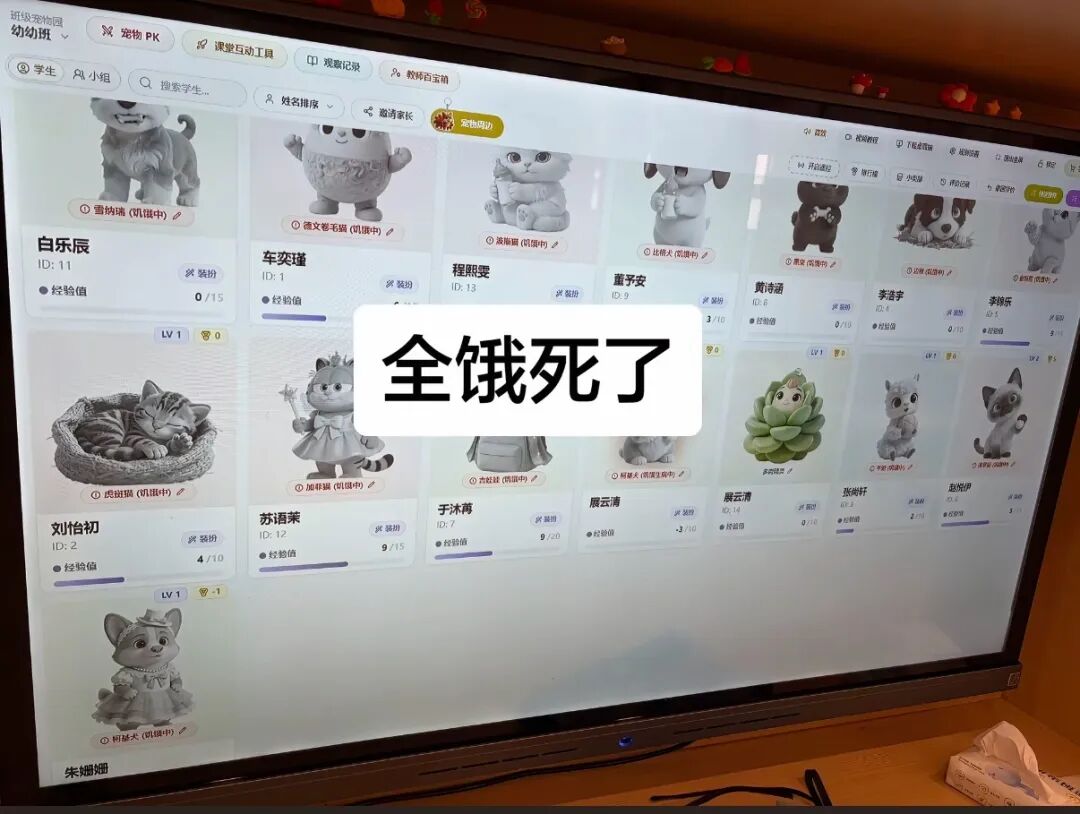
Image source: A kindergarten on Douyin
Teachers may be the profession most in need of AI assistance
Another frequently mentioned selling point of AI class pets is that they save teachers' time. In the AI class pet system, children are the direct caregivers, but the ones who really need this software are the adults standing on the podium.
Elementary school class teachers are a group whose work intensity has long been underestimated. They often have to take on multiple responsibilities such as teaching, discipline management, psychological counseling, and home - school communication at the same time. Whenever a tool that can reduce the execution cost of these cumbersome tasks appears, class teachers are often the first to try it out.
In 2025, a survey covering primary and secondary school teachers in 28 cities across the country showed that 98.3% of teachers worked more than 8 hours at school on weekdays, and 9.3% of them worked more than 12 hours. In 2023, the Journal of South China Normal University provided more detailed work data of front - line teachers through nearly 50,000 questionnaires: primary and secondary school teachers work an average of about 9.8 hours a day, among which about 2.2 hours are spent on non - teaching - related work, ranking second only to lesson preparation and class preparation.
In other words, teachers spend nearly a quarter of their daily time on tasks such as record - keeping, statistics, and form - filling that have little to do with teaching itself. From the overtime tasks, it can also be seen that the daily tasks of primary and secondary school teachers are extremely complicated and trivial.
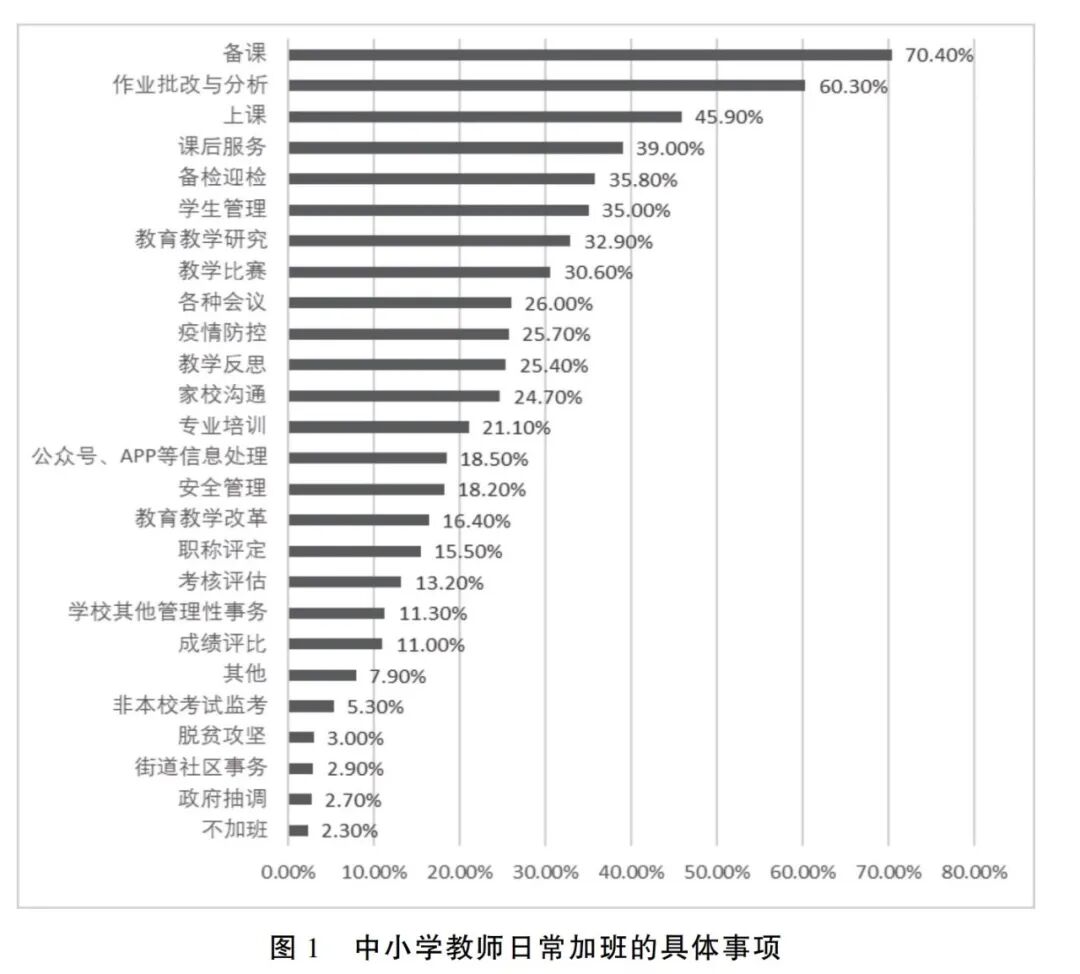
Image source: Journal of South China Normal University
Under such a high - density workload, an AI program that can conveniently record students' behaviors, automatically convert and calculate points, and retrieve historical information only costs a dozen yuan, requires no training, and can be used right away. The pain point it addresses is exactly the most basic need of this high - pressure professional group: to process another pile of data in an orderly manner.
This explains why AI tools are penetrating the teacher group much faster than the outside world imagines. Teachers are not passively accepting AI but actively looking for solutions. From using AI to generate teaching plans for lesson preparation, using AI to screen error patterns when grading homework, to using AI to track points for class management and using AI to draft notices for home - school communication, this chain has quietly taken shape in the daily work of many front - line teachers.
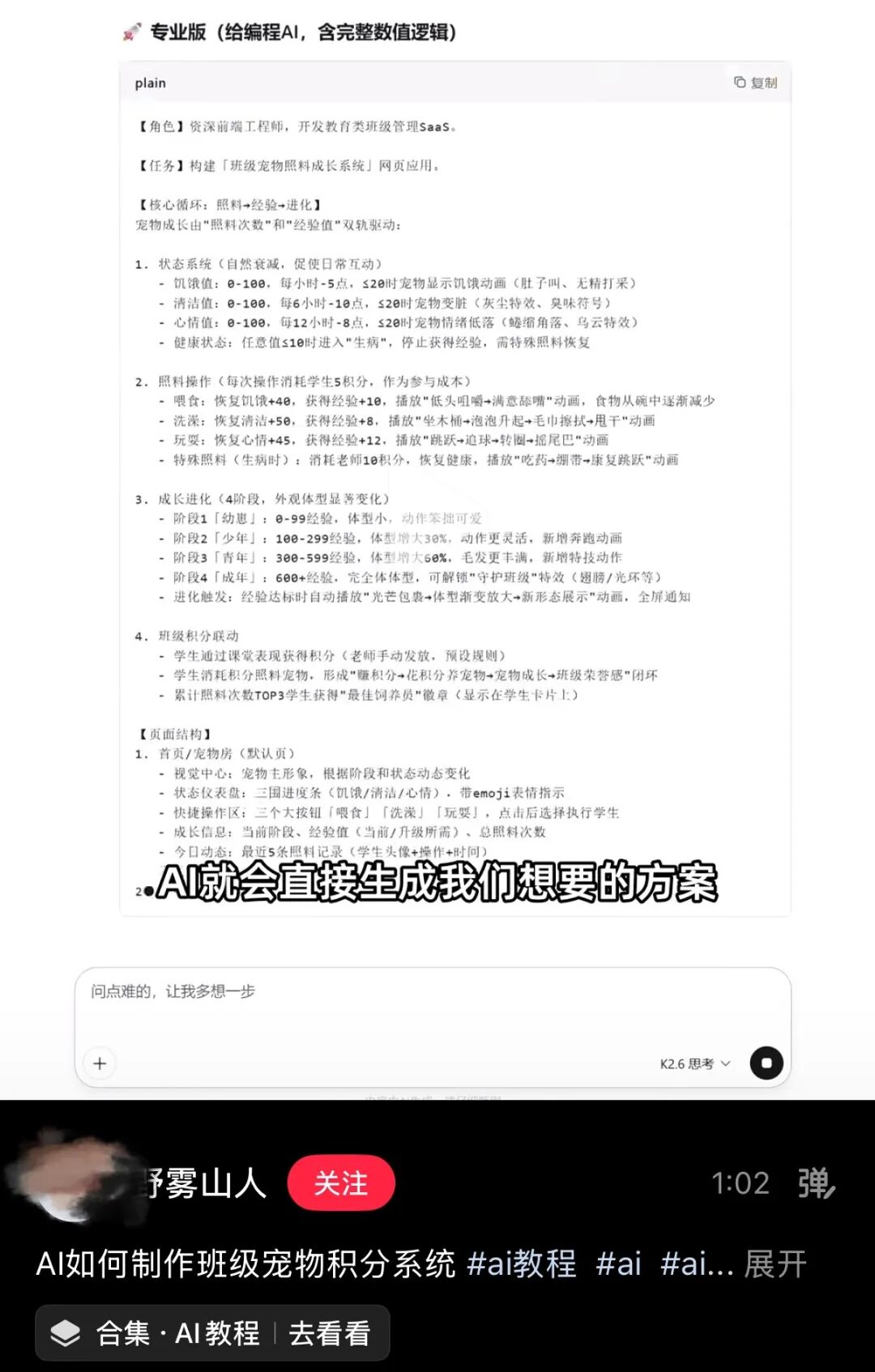
There are also many guides for educators to make their own pet systems using AI. Image source: Xiaohongshu @Yewu Shanren
The plan issued by the Beijing Municipal Education Commission last year proposed that starting from the fall semester of 2025, all primary and secondary schools in the city will offer general courses on artificial intelligence. This means that teachers not only need to use AI themselves but also take on the responsibility of teaching students to use AI. Thus, teachers have become a dual - role in the entire AI education ecosystem: both users and promoters of the tools.
Teachers' embrace of AI sometimes seems even more enthusiastic than front - line practitioners. While employees in technology companies are still slacking off and worrying about being replaced by AI, teachers have never missed any life - saving straw that can improve their work efficiency.
The reason why AI class pet products have spread so rapidly is that they don't need top - down promotion or school procurement projects. Most of them are spread through word - of - mouth among teachers and online communication. When front - line teachers have voted with their feet and flocked to this AI teaching - aid product market with no entry barriers, the structural dilemma behind it also deserves our attention.
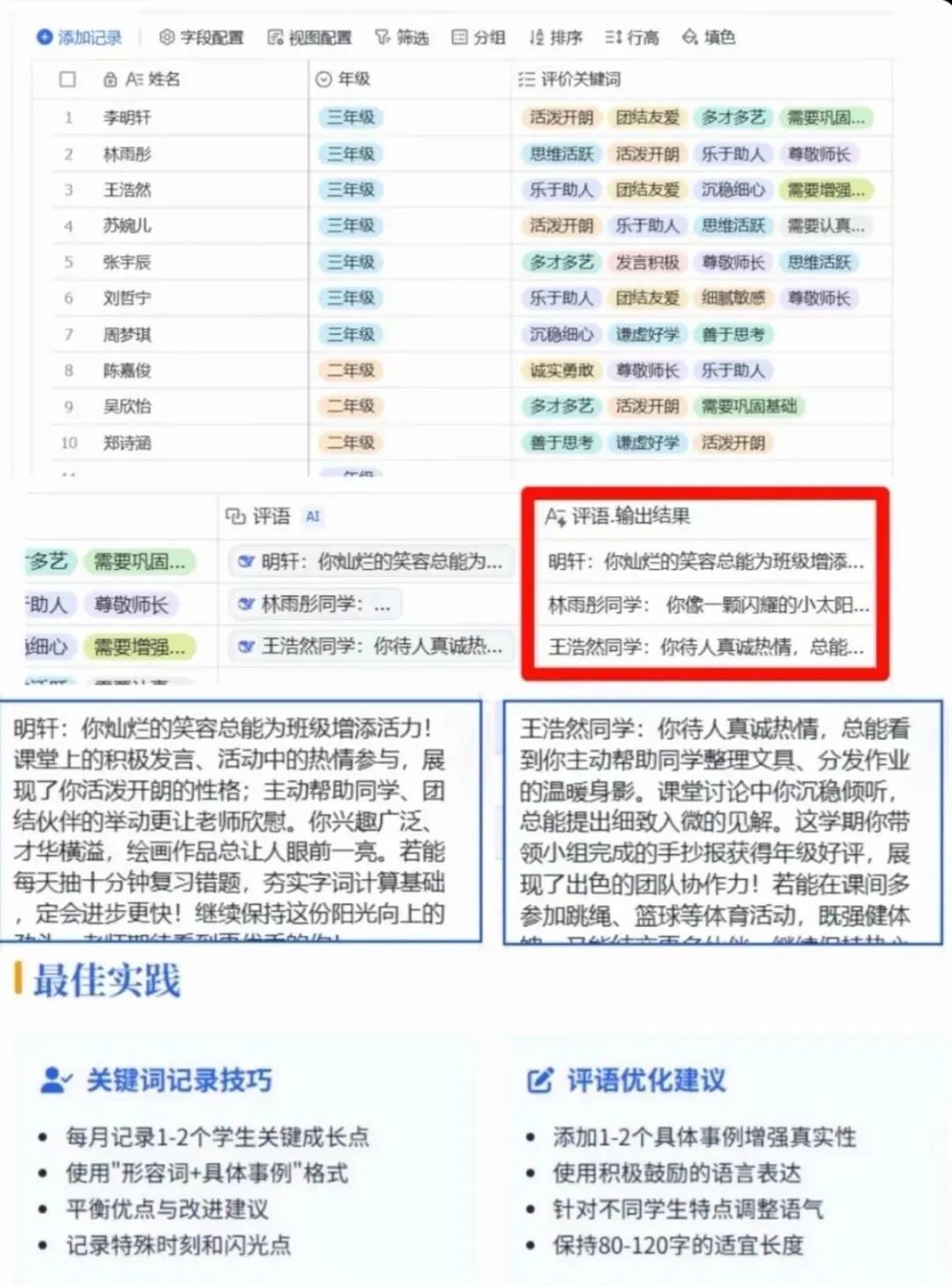
Many AI products that help teachers with work only cost 9.9 yuan. Image source: Internet
The possibility of gamified education in the AI era
AI class pets can actually be classified into a broader educational concept - gamified education. This concept refers to the introduction of game elements such as levels, unlocks, points, and medals into general teaching activities to stimulate learners' enthusiasm and improve teaching effectiveness.
It is different from "Game - based Learning". The latter involves developing a dedicated game with teaching goals directly incorporated into it, and learners complete teaching tasks by playing the game. In the application scenario of AI class pets, teaching activities are still traditional classrooms, Q&A sessions, and discussions, but students can get rewards similar to those in games when completing tasks.
Gamified education can provide immersive experiences, clear feedback, shareable and improvable skills, and most importantly, fun. Traditional classrooms lack these elements, while games almost naturally incorporate them.
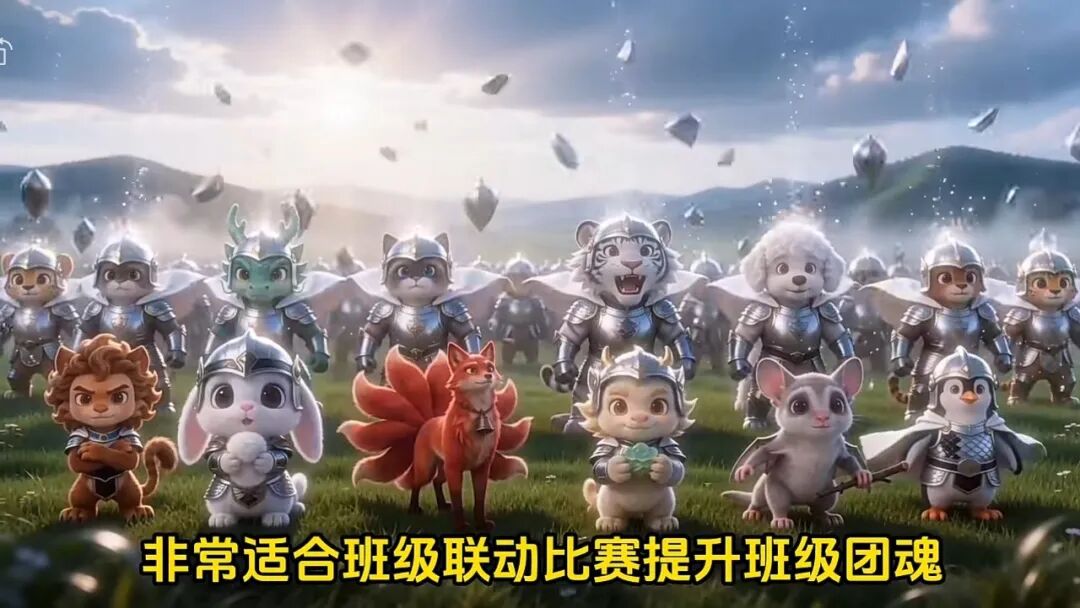
The pet class PK mode makes people think of web games. Image source: WeChat video account @OurTeacher
Although the concept of game - based education has existed for decades, there are very few widely implemented game - based education cases in China. Designing a game with reasonable level design, a perfect feedback mechanism, and that can also meet teaching goals is much more difficult than designing an ordinary game. It has to satisfy two picky clients: children and knowledge itself.
Before the emergence of AI, the threshold for designing a real educational game was very high. In AI class pets, most of the pets loved by children, such as Shiba Inus, Cole Ducks, and West Highland White Terriers, are not carefully designed images for children's education but the cheapest output of AI productivity overflow.
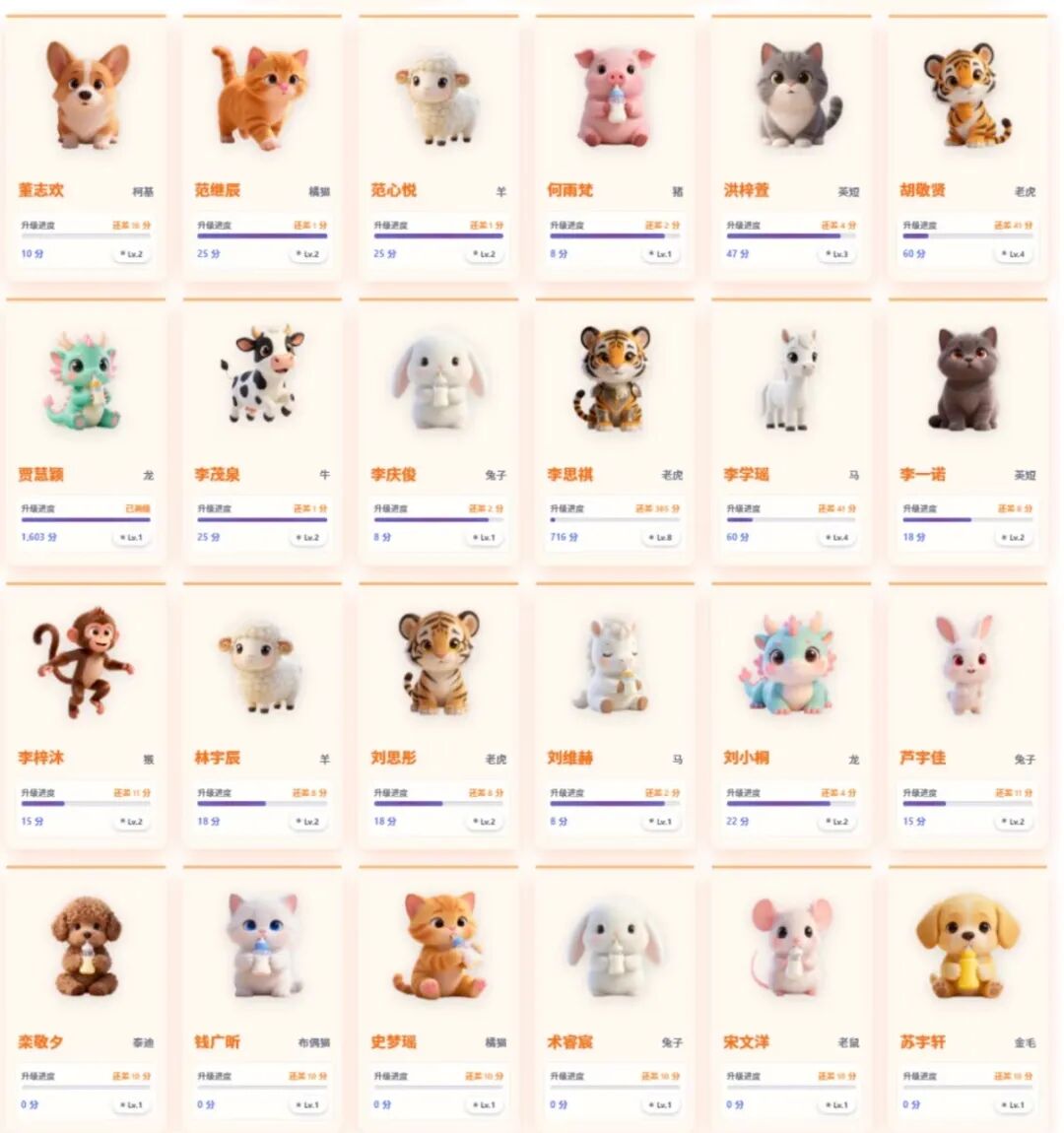
The pet images generated by AI are actually quite rough. Image source: Internet
Even so, the content generation and image design work completed by AI have still greatly reduced the burden on teachers. And those extremely detailed data tracking and analysis tasks, which used to require teachers to create long Excel sheets and print stacks of class lists, are now just basic capabilities of AI.
AI class pets are the starting point for the imagination of future gamified education. Although it is now just a very rough version, it still proves that students are willing to adjust their behavior for a virtual image with an emotional connection.

The reasonable application of the class pet system still needs to be discussed. Image source: Xiaohongshu
In the past, a systematic gamified teaching plan often involved curriculum designers and product art teams from educational companies. After the wave of 9.9 - yuan AI class pets, a class teacher with ideas and operational skills may be able to complete a better version in an afternoon. AI is making the cost of creating interactive and personalized learning materials lower and lower. It not only relieves some of the burdens on front - line workers but also gives teachers the ability, willingness, and platform to practice their new educational concepts.
The hot sales of AI class pets are an exposure of educational needs in market competition. Children need more interesting classrooms, and teachers need more powerful tools. The long - vacant position between the two is being filled with answers by more and more AI products. As for whether the answers are appropriate, there is no professional reviewer to give an opinion for now.
References:
Yuhui Yin, Yuguo Wang: How to Reduce the Burden on Teachers Caused by After - School Services -