Will robotics experience a ChatGPT-style explosive moment?
God Translation Bureau is a compilation team under 36Kr, focusing on fields such as technology, business, the workplace, and life, and mainly introducing new technologies, new ideas, and new trends from abroad.
Editor's note: The explosion of ChatGPT has made people expect a similar inflection point for robot technology, but the development of the robot industry cannot rely on a single breakthrough moment. The maturity of the robot industry requires the coordinated use of AI tools, hardware iteration, and the accumulation of practical experience in various scenarios. This technological revolution is destined to be a long - term and gradual exploration. This article is from a compilation, and we hope it will inspire you.
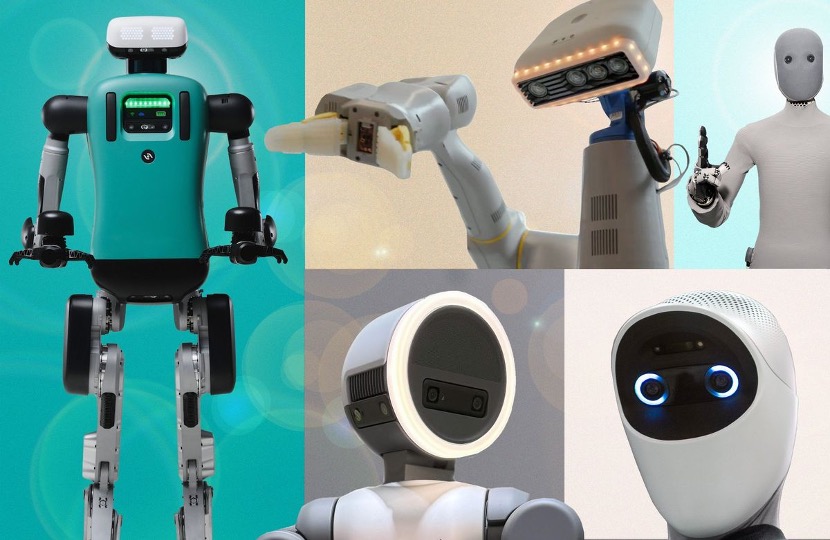
Don't expect to solve the problems in the robot field with a miraculous breakthrough. The progress of the industry depends on long - term and down - to - earth efforts. The sources of the pictures in clockwise order are: AGILITY ROBOTICS; EVERYDAY ROBOTS; PHILLIP FARAONE/WARNER MUSIC GROUP/GETTY IMAGES; ZHANG HAOFU/XINHUA/GETTY IMAGES; KYODO NEWS/GETTY IMAGES
This article is written by two senior experts in the field of robotics: Jonathan Hurst is the co - founder and chief technology officer of AGILITY Robotics, and also a professor of robotics at Oregon State University. Hans Peter Brondmo served as the vice - president of Google X Lab from 2016 to 2023, founded and led the Everyday Robots project.
In the next few decades, billions of AI - powered autonomous robots will enter various industries. They will work in factories, handle complex tasks in warehouses, take care of the elderly, conduct rescue operations in dangerous disaster areas, deliver meals and packages door - to - door, and finally enter thousands of households to assist with daily housework. Robots come in different shapes, some resembling humans, while most have different forms. One thing is certain: regardless of their appearance, robots rely highly on AI to create real value in real - world scenarios.
In 2025, the total financing of robot companies reached a record high of $40.7 billion, accounting for 9% of all venture capital. A core question worth hundreds of billions of dollars then arises: What conditions must AI robots meet to have a significant impact on economic development? Many robot and AI companies have made bold claims, saying that humanoid robots will soon enter households, but there is still a huge gap between the ideal and the reality.
The idea of robots accompanying humans in work and life has long existed only in science - fiction works. Although many researchers have tried to turn this idea into reality, the real world is complex, and traditional program codes are difficult to handle the ever - emerging situations. With the help of AI technology, robots no longer rely on fixed program instructions to operate, but adapt to the real environment through self - learning. After continuous training, robots can perceive and recognize the surrounding things, and complete various practical, stable, and safe tasks based on logical judgment.
In the past decade, the two authors of this article have been deeply involved in the forefront of AI and robotics. One is a university professor and has founded a robot company, while the other was in charge of the forefront robot project at Google X Lab. Years of experience in implementing intelligent robots in the field have made us clearly recognize the practical value boundary of AI in complex robot systems and distinguish which technologies still remain in the realm of science - fiction concepts. We believe that AI will drive the robot industry to an inflection point, but the take - off of the industry depends on the coordinated use of multiple AI tools and precise overall planning, rather than a single technological breakthrough like ChatGPT.
The development of AI is full of opportunities, but also accompanied by many unknowns. The following five objective realities will determine the development direction of AI in the field of robotics.
1. There is a significant gap between the demonstration effect and the actual application
For many years, wonderful demonstration videos of humanoid robots have been everywhere on the Internet, showing them dancing flexibly and crossing obstacle courses. There is a consensus in the industry: never trust the robot demonstration videos on the Internet. The performance robots that are carefully choreographed and edited have a huge performance gap with the physical robots that can work stably in the unregulated human living environment.
Recently, the program of the Yushu humanoid robot in the 2026 Spring Festival Gala on CCTV has attracted much attention. The performance was very spectacular, but all such performances are carefully choreographed and designed. The robots' movements are precisely controlled and synchronized, but their intelligence and autonomy are only equivalent to industrial robots in car - manufacturing factories, and there is still a long way to go before they can really enter ordinary households.
The wonderful performances also make people wonder: if robots can do flips, dance, and perform martial arts moves, why haven't they been introduced into factories on a large scale? And why can't they help with washing dishes and tidying up at home? The answer is simple: it is still extremely difficult to develop intelligent robots that can work in various life scenarios. The eye - catching technology demonstrations like those in the Spring Festival Gala can easily make people think that the technology is almost mature. However, the AI in the demonstrations is only used for basic limb balance control, far from meeting the technical requirements of general - purpose robots in the complex human living environment.
2. Training data remains a difficult problem to be solved
Large language models such as ChatGPT were initially trained with a large amount of Internet text data. At the end of 2022, ChatGPT emerged, enabling AI to communicate with people smoothly in text and discuss various topics. Large models have excellent generalization ability and can now receive various types of information such as text, pictures, and videos, and generate diverse output content. This kind of training data is huge in volume and all created by humans, making it a high - quality template for AI training.
It is still an unsolved problem to endow AI with a physical robot body and enable it to interact and cooperate with people in the real world. The general - purpose robot AI model needs to operate in an unregulated and dynamically changing environment, while taking into account multiple mutually restrictive conditions such as physical form, spatial structure, and time rhythm. To improve the model's generality, high - dimensional scene data needs to be collected, covering many elements such as picture light and shadow, mechanical movement amplitude, power intensity, and safety boundaries, and the data must cover infinite and variable real - world scenarios to ensure the quality of the samples.
Currently, the reserve of high - quality data that meets the standards is seriously insufficient. The industry can only collect data through methods such as remote control, image analysis, human motion capture, virtual simulation, and on - site autonomous exploration, which involves a huge amount of work. For example, the Google Everyday Robots team ran 240 million robot simulation programs in the simulation system in 2022 just to train the garbage classification model. Each practical skill requires the same scale of data for training, and at present, the capabilities of robots still cannot reach the human level.
3. There is no unified general - purpose AI model for robots
In the short term, it is impossible to create a general - purpose robot that can accompany humans in all aspects of life and work with a single AI model.
Robots come in a wide variety of forms, including wheeled and legged structures, with different numbers of robotic arms, and different models for flying, underwater operations, and road driving. The real - world scenarios are extremely complex, and robots also have to deal with variables brought by humans and various organisms. It is currently impossible to have a single model that can adapt to all scenarios and ensure the safe and stable operation of robots.
We believe that in the future, the intelligent agent AI will lead the breakthrough in robot technology. This kind of high - level overall model has the ability to think, plan, call tools, and learn from experience, and can complete complex tasks with little human intervention. The intelligent agent main control model will mobilize various specialized small models to meet different work requirements. In the future, multiple robots can also cooperate with each other based on the intelligent models they carry.
Various AI tools are continuously exploring the potential of robots, giving rise to new technical solutions and business markets. Many models are gradually being opened to the public, and some are even open - source. Just as the popularization of the Internet has brought about qualitative changes in the industry, the opening of technology will also promote the rapid development of robots. As the technical threshold decreases, the complex operation capabilities of robots will become more widespread.
4. There are still significant bottlenecks in hardware technology
The structure of robots is precise and complex, and all components need to operate in a highly coordinated manner. To ensure the practicality, reliability, and safe operation of robots, the perception system, central control program, and power transmission components must cooperate seamlessly.
The driving components such as power motors and transmission gears are typical technical short - boards. The driving devices of existing mass - produced industrial robots cannot be adapted to work in the human living environment. Once these robots accidentally collide with external objects, the strong impact can easily cause equipment damage. In contrast, human limbs are flexible and can adjust their postures according to the contact with external objects and complete actions through touch feedback.
Take inserting a key into a lock as an example. Humans do not deliberately aim precisely at the keyhole but feel for the position and shake the key to complete the insertion. For robots to achieve the same level of flexibility, they must be equipped with force - sensing driving components to adapt gently to the external environment. Although such flexible driving accessories have been developed, they cannot be widely applied to household and daily - use robots.
5. Practical value comes from basic daily operations
There is an essential difference between cool performances and work tasks with actual benefits. This also conforms to Moravec's paradox: tasks that humans find difficult, such as computational work, can be easily completed by robots, while simple physical movements that a child can do easily are extremely difficult for machines.
Serving customers is the best way to test the real level of technology. Users only care about whether practical problems can be solved. The commercial robot solutions must be better than traditional work models while ensuring stable performance and safe operation. After AGILITY Robotics put humanoid robots into commercial use, the first problem they encountered was safety. Robots that move and carry objects in the human living space bring new safety hazards. In the early stage of the project, only physical protection barriers could be set up. The team spent several years optimizing the overall design and relying on AI technologies such as human recognition and behavior control to solve the safety hazards.
The Google Everyday Robots team launched an office service robot in 2019, which can clean tables and sort garbage autonomously. After practical application, they really realized that the real - world environment is messy and changeable, posing great challenges to the operation of robots. These practical experiences have not only optimized the AI architecture but also accumulated real - world scene data, which are combined with simulation data to upgrade the model.
Only by creating products that meet the actual needs of customers and testing and operating them in real - world scenarios can the AI system be steadily improved and the application scope of robots be gradually expanded. There is no sudden technological leap, and there is no universal algorithm. Without a large amount of practical experience in the field, it is impossible to develop a mature general - purpose robot even with a large amount of data.
AI robots are moving forward steadily
There is no doubt that AI is entering real life through robots, and the intelligent device industry is about to experience explosive development. AI is not a single technology but a huge technological system that continuously explores new capabilities and has a profound impact on the future economic pattern.
The industry will not experience a one - time disruptive inflection point but will grow gradually through small and large technological innovations. Intelligent robots will first create value in some basic work and then continuously expand their application fields, leveraging multiple industries worth hundreds of billions of dollars and effectively improving the quality of people's lives.
Translator: Teresa