Latest interview with Google CEO: Google leads in multimodal capabilities, but lags behind in coding.
After the Google I/O Conference concluded, Google CEO Sundar Pichai gave an exclusive interview to the well - known tech podcast Hard Fork.
Regarding the capabilities of Google's large - scale models, which are of the most concern to the outside world, Pichai stated that Google's models are highly competitive in overall intelligence. However, in areas such as agentic coding and long - cycle tasks, they still lag behind the industry's leading level. The newly released Gemini 3.5 Flash model has issues with artifacts and performance degradation, and the team is quickly fixing them through post - training.
We've sorted out the core information from this interview. Here are the key points:
1. Google's models are at the forefront in multimodal capabilities but lag in programming and long - cycle task capabilities
In response to the outside world's concern about the strength of Google's large - scale models, Pichai said that Google's models are at the highly competitive forefront of the industry in overall intelligence dimensions such as text, multimodal input, voice and audio processing, and general reasoning. However, in agentic coding, instruction following, and long - cycle task processing, Google currently lags behind. Long - term tasks performed by senior developers on complex codebases are an important area that Google must firmly hold and strive to catch up in.
In addition, regarding the performance degradation and abnormal behavior issues of the newly released Gemini 3.5 Flash model, Pichai said that this is a common phenomenon in the exploration of new fields. The team will quickly fix these issues through post - training and gradually relax the usage restrictions set to prevent service interruptions.
2. Google Search will not aggressively switch to the full - AI mode, and sources and links will exist for a long time
Google will not aggressively switch Search to the full - AI mode. Pichai said that it is crucial to guide users through the technological transformation and ensure that the product meets users' expectations. Although Google is fully promoting AI, users still need the quick connection method provided by search nodes. Therefore, sources and links will always be part of the search.
On the business model level, Pichai believes that economic value always depends on the total value that technology provides to users. In the AI mode, agents will create more total value for users than in the past. Therefore, Google will continue to adopt a business model that combines subscriptions and advertising, and this business rule will not change in the new technology cycle.
3. Google's agent products will adopt a gradual promotion strategy to gain user trust and prevent hacker attacks
Google's latest agent product, Spark, is scheduled to be released this summer. Pichai shared his personal test experience: Spark can independently read meeting schedules, directly color - code them by category in the calendar, and clearly mark different meeting categories and working hours.
When talking about the promotion strategy of agents, Pichai said that the key to winning user trust lies in a step - by - step approach, providing people with absolute control and system transparency. If an agent behaves unexpectedly, users will be hesitant. In addition, from a security perspective, agent systems are at risk of being attacked by external hackers. Therefore, in the process of technological advancement, it is necessary to ensure boundary security and avoid overstepping boundaries in the wrong way.
4. Google opens up TPU computing power to competitors to maintain its hardware's leading edge
To meet the huge computing power requirements for model iteration, while supplying its self - developed models, Google still sells access to TPU chips to competitors and external companies. Providing technology allows Google to stay at the forefront, encourages the team to develop the best next - generation hardware, and gain economies of scale in all aspects. Without a large external cloud business, the company would never plan to manufacture chips in such high volumes.
5. The evolution speed of AGI in the past one or two years has exceeded the original expectations
The advancement of underlying technology towards AGI is an inevitable trend. Although Pichai did not give a specific timeline for achieving AGI, he admitted that the technological evolution speed in the past one or two years has exceeded the original expectations, making the realization of this goal seem closer. Even if it takes time to fully achieve AGI, the technology three years from now will be much more powerful than it is today. Therefore, the public cannot relax their preparations just because they think it will take some time to achieve AGI. The whole society must be prepared in advance for internalization and response.
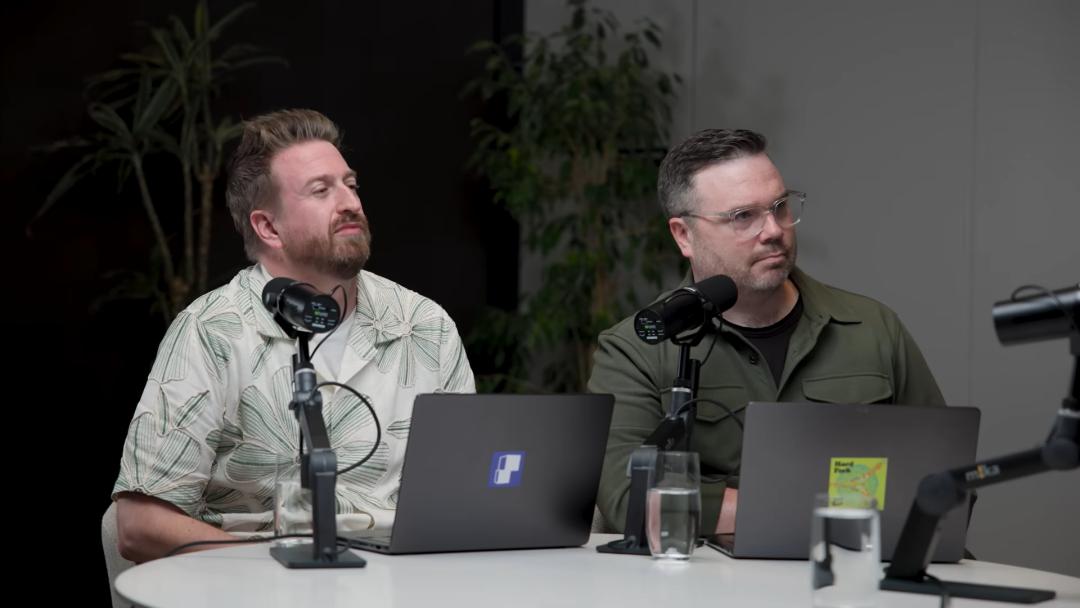
Here is the transcript of the interview with Sundar Pichai:
1. Evaluation of Google's model capabilities in the AI competition
Kevin Roose: Sundar Pichai, welcome back to Hard Fork.
Sundar Pichai: Thank you for the invitation. I'm glad to be here.
Kevin Roose: The last time we invited you to the show was in 2023. At that time, Bard had just been released, and I think the general view at that time was that Google was in a catching - up state in the AI field. How do you view your position in this competition now?
Sundar Pichai: This brings back memories. It feels like that was a long time ago, and these three years have felt like an eternity. But I think it's amazing to see the progress this technology has made. As a company, we've also made great progress. I think it's an exciting time for the entire industry.
Our models are at the forefront in some areas, and we also lag behind in some areas. It's a co - existing situation. If you look at the overall capabilities including text, multimodality, voice or audio, and general reasoning ability, I think we are very competitive in terms of overall intelligence. When it comes to agentic coding combined with tool use, instruction following, and long - cycle tasks, I think we are a little behind at present.
But we're working hard. This field is full of vitality. All leading labs have their own pre - training cycles, so there will be different rhythms and they may not be completely in sync. The competition is very fierce at the moment. Three months ago, people were saying, "We're in the lead, and no one can catch up with us," and now the public opinion has reversed. But this is the norm when you're at the forefront.
We're the only large company truly at the forefront of this field. Currently, several startups have made remarkable progress. We've been deeply involved in this area for a long time, and I think we've taken a big step forward with Gemini 3.5 Flash. It really addresses some of the areas where we were lagging behind. Pushing the model into the real world and iterating based on the feedback data is very helpful to us.
I think programming is a very important area for accessing data streams. We may not have had enough coverage at that time, such as Claude Code or Anthropic's similar cooperation with Cursor. So, after launching Anti - gravity 2.0, we've been using it within Google for some time.
I shared the token usage at the Google I/O Conference. I've never seen such a situation within the company. Our scale is doubling every week, and people are really putting these models into practical work. This is helping us keep climbing and making great progress. Although the forefront is very dynamic, I'm very optimistic and confident that we'll make a breakthrough there.
Casey Newton: It sounds like if there's an area where you feel you haven't fully reached the leading position you really want, it's programming. Is that right? Is this where you're applying pressure?
Sundar Pichai: I think programming will ultimately be the foundation of everything we do, so it's an important frontier that we must hold. In the programming field, we've always performed very well. We're very good at creating single - generation web front - ends and related content. But in terms of long - running tasks for senior developers working on complex codebases, we're making progress, but there's still a gap compared to the leading level of others. But we're working hard, we're very clear about this, and we're making progress in this area.
Casey Newton: Gemini 3.5 Flash has been released for one day. I really think it usually takes a few days to really conduct a comprehensive stress test on these models. However, we've also seen some complaints about pricing and model quality. I'm curious about your thoughts on the market response so far.
Sundar Pichai: I'm looking forward to finishing this interview so that I can spend more time with the team. It takes a day or two to adjust. This is a new model in a new area where we've made some progress. There may be some performance degradation, but I think we'll be able to solve it very quickly through post - training.
We've observed some artifacts and behavioral issues, which are easy to solve, so we'll handle them. Considering that just one day after we released a lot of content, we tightened the usage restrictions to avoid service interruptions. But you'll soon see our progress in relaxing the usage restrictions. When you encounter such a situation, it's natural to feel frustrated, and I feel the same way. But these are the areas we'll solve, and we'll make progress soon.
Kevin Roose: It seems that one of the secrets to the success of some AI companies is focus. Anthropic and OpenAI have an almost obsessive focus on the programming field, and OpenAI was criticized last year for over - diversifying its investments because they were trying to do too many things at the same time. Now they've scaled back and strengthened their focus. Do you think Google is investing enough energy in the programming field, or are all the other things you're trying to do diverting the resources, time, and focus needed for the main offensive?
Sundar Pichai: We've all seen a turning point in the programming field. We're all responding to it, and we have a fairly serious layout in this area, so I don't think it will be a problem. We're a large company with scale advantages, so we can focus on a few different areas at the same time. I don't think there's any fundamental problem as long as we're making progress. I think in this field, 30 to 60 days feel like five years.
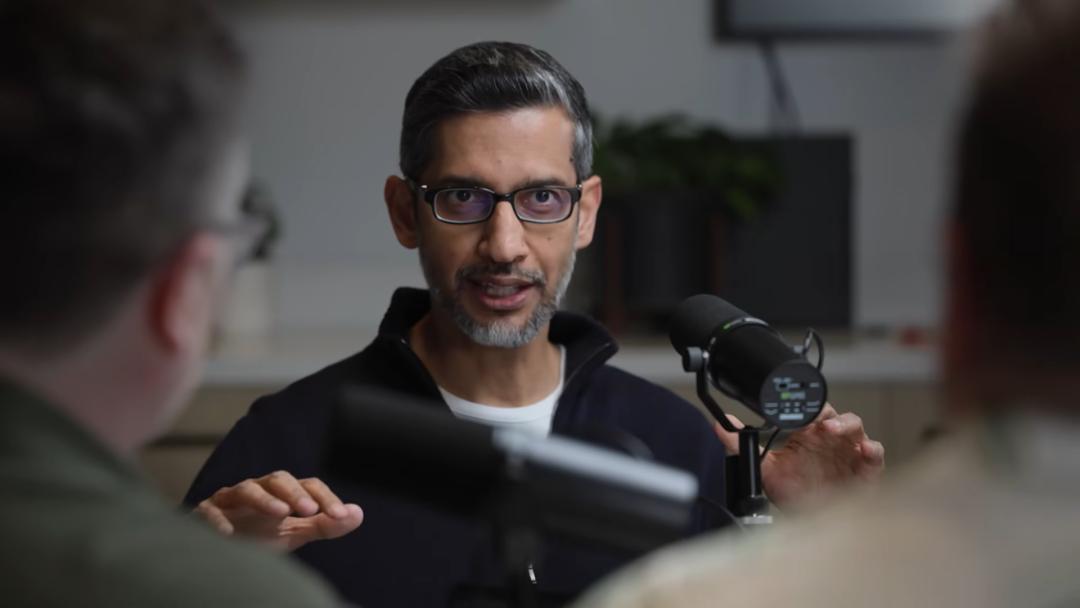
2. AI search transformation and the future of the business model
Kevin Roose: Another thing that has attracted wide attention is the changes you've made to the Google portal - the search bar this week. This is the biggest change in 25 years. I think many people expected that at some point in the future, the traditional classic Google search interface would disappear, those 10 blue links might disappear, and you would directly make the AI mode the default option. But you haven't done that yet. Although there's a lot of integration, users can still see those 10 blue links if they want. Do you think this situation will disappear at some point? Will you just rip off the Band - Aid and go straight to the full - AI mode?
Sundar Pichai: It's important to guide users through this process and ensure that the product meets their expectations. So I try not to rush. It's very clear that as we go through these changes, people's reactions are positive. We can see this very clearly from the long - term product indicators, so we understand this.
However, people want search to be fast and use it to connect with content on the web, which is important to us. So you'll see us continuously and methodically improving the product. We didn't have the AI mode a year ago, but now many people are experiencing it, and we've made the process of entering this mode more seamless than before. This is a continuous process. Sources and links will always be part of the search.
Kevin Roose: Casey told me on the way here that he feels he hasn't done a traditional Google search in the past year and is now doing this AI search completely. When you hear this, is your reaction "That's so cool, this is the kind of user I want now"? Or do you feel a little worried because the traditional search advertising business is a pretty good business for you?
Sundar Pichai: If anything, in the AI mode, agents will be able to do more for you than 10 years ago. I think economic value always depends on the total value you provide to users. We all believe that over time, the value we provide to users is increasing, the competition is more intense, and there are more choices. So I'm comfortable with the model that combines subscriptions and advertising. The right business model will continue to exist. In this new world, Adam Smith's law won't change.
3. Public anxiety about AI and social response
Kevin Roose: Let's talk about the public's perception of AI. A poll conducted by The New York Times and CNN this week found that only about 16% of people think AI is mainly positive, and about 35% think it's mainly negative. How do you view the current resistance to AI that we're seeing? How much influence do you think Google has in changing this perception?
Sundar Pichai: I've always regarded AI as the most profound technology that humanity will develop. It's advancing at an extraordinary speed. Humanity's current level of evolution is not enough to cope with such a huge change. I think it's natural for people to be anxious about the future that this technology will bring, and I completely understand. With such a profound technological change, this reaction is natural.
We've experienced much simpler technological changes that also caused anxiety, and this time the scale is different from anything we've ever seen. As an industry, we must make more efforts to continuously promote and demonstrate the benefits that this technology can bring. This is something we can control. We still have more work to do when expanding the scale of infrastructure investment to ensure that these systems run better.
But I think people's concerns are more fundamental, and the anxiety surrounding this transformation goes beyond these technological aspects. A natural part of this is that people are anxious about their economic prospects in this world. Many discussions point out that there will be radical changes in jobs, and some jobs will disappear.
I tend to think that the future prospects are better than those pessimistic predictions. But as a society, if people aren't anxious, I'd be surprised. The change is happening so fast, and we need citizens to get involved, realize that all this is happening, and express their preferences. This is what drives social action. So this ongoing dialogue has a healthy side. Considering the speed of technological progress, both the concerns and our attitude of taking it seriously are completely correct.
Casey Newton: You're going to give a commencement speech at Stanford next month. Recently, many commencement speakers have been booed by college students because of the public's concerns about AI. What are you going to talk to the graduates about regarding AI? Do you have a strategy for dealing with the booing?
Sundar Pichai: Whenever we promote technological progress, it helps to move the world forward. These graduates will be an important part of driving this process and dealing with the impact of technology, and we must pay close attention to this. I've always been extremely optimistic about the next generation. Although we're always anxious about the world and worried about the next generation, I believe they'll meet the challenges and build a better world. This is no different from other turning points in history, and my goal is to share my experience.
Kevin Roose: I'd like to hear more details about that view. Although jobs may change a lot, the economic prospects for new graduates entering the workplace are still bright. What's that situation like in your mind?
Sundar Pichai: At a basic level, all of us will have a whole new ability to handle various things. I wasn't in the industry when spreadsheets became popular among the public, and I have no idea how people did financial analysis before that. Spreadsheets changed everything, and similarly, AI will change the starting point for many people. Just in programming, looking at the progress we've seen so far, more people in the world will be able to write code. I heard that you two might be examples of this. In this process, we'll solve those previously underestimated problems in new and even accidental ways. People will become more efficient and have more leisure time, and both of these will become a reality.
In many fields, such as the medical industry, the burnout rate among doctors is very high. Their duty is supposed to be spending time taking care of patients, but in fact, the proportion of time they spend on patients is very small. AI will actually help them invest more in patient care. The analogy of radiologists has been very fascinating